Nicotine Hydrochloride: A Deep-Dive Commentary
Historical Development
Nicotine hydrochloride comes out of a history that stretches well beyond the rise of modern chemistry. Chemists isolated nicotine back in the early 19th century after thousands of years of humans cultivating and consuming tobacco. Researchers soon realized that pure nicotine, in its oily form, caused storage headaches and dosing errors. By the early 20th century, drug manufacturers started seeking a salt that could tame nicotine’s volatility. Nicotine hydrochloride answered that call. Adding hydrochloric acid to nicotine transformed the compound from a fussy, irritant oil into a more manageable crystalline salt. This move gave scientists more control over purity, stability, and dosage, which isn’t just a matter of progress — it’s a matter of public safety. Chemists kept refining their processes, recognizing that better nicotine salts could give clearer results in pharmacological studies and more predictable reactions in the lab.
Product Overview
In commercial and academic circles, you see nicotine hydrochloride pop up as a refined, usually white or off-white powder. Lab supply catalogs and ingredient lists for research kits often list it under synonyms like “nicotine monohydrochloride” or “pyridine, 3-(1-methyl-2-pyrrolidinyl), hydrochloride.” Anyone who’s handled regular nicotine oil knows just how challenging it can be. The hydrochloride salt form resists oxidation, packs tighter, and doesn’t evaporate at room temperature — which changes handling significantly.
Physical & Chemical Properties
Nicotine hydrochloride appears as small, crystalline granules. The solid form dissolves in water at several hundred grams per liter, making it far easier for technicians to work with compared to freebase nicotine. It melts after 230°C, decomposes soon after, and gives off that unmistakable nicotine aroma. Chemically, each molecule pairs a nicotine cation with a chloride anion. The salt is stable in normal room light and humidity but absorbs water easily, so techs usually store it in tightly sealed containers with desiccants. Its measured pH in water hovers just under neutral, allowing safer and more predictable actions during experiments.
Technical Specifications & Labeling
Pharmaceutical and laboratory-grade nicotine hydrochloride carries exacting standards. Certificate of analysis reports break down purity by high-performance liquid chromatography, sometimes showing four-nines (99.99%) purity. Impurity profiles flag alkaloid byproducts, metals, and solvent residues. Hazard labels specify acute toxicity, flammability concerns, and requirements for ventilation and spill control. Regulatory bodies from the US, EU, and China set maximum limits for naturally-occurring tobacco-specific nitrosamines. Finished bottles show batch number, expiry date, and emergency contact data so anyone handling or transporting the product knows the stakes behind every gram.
Preparation Method
Making nicotine hydrochloride starts with isolating pure nicotine from tobacco leaf extracts. Extraction uses organic solvent washes and distillation. Once the nicotine stands as a dry oil, technicians dissolve it in a cold, dry solvent like ether or ethanol before dripping in measured amounts of hydrochloric acid. Instantly, the nicotine base grabs the acid, forming nicotine hydrochloride salt that drops out of solution as a solid. Workers filter, wash, and dry this salt, purifying further by recrystallization. Efforts go into minimizing exposure to light, oxygen, and excess acid — every corner of the process demands careful monitoring to preserve integrity and cut contamination down to a minimum.
Chemical Reactions & Modifications
Nicotine hydrochloride serves as a reliable building block for new compounds or analytical standards. Researchers sometimes swap out the chloride ion with other acids, creating alternative nicotine salts to test new delivery or stability options for pharmaceutical development. On its own, the hydrochloride salt dissolves far more readily in water and interacts dependably with acids or bases during buffer preparation or chromatography. It also behaves predictably in Maillard-type reactions, which researchers monitor when studying tobacco flavor chemistry. For anyone aiming to synthesize nicotine derivatives, starting with the salt form takes much of the risk out of handling and guarantees more repeatable yields.
Synonyms & Product Names
Nicotine hydrochloride doesn’t go by just one name. Suppliers and researchers might list it as Niconell, 3-(1-Methyl-2-pyrrolidinyl)pyridine hydrochloride, or plain old nicotine HCl. Pharmacological texts sometimes reference older terms like spirit of tobacco hydrochloride, reflecting legacy products from the early days of medicinal tobacco alkaloids. These names confuse newcomers, but the underlying molecular formula remains the same; recognizing all synonyms helps spot relevant studies, regulations, and material safety data sheets.
Safety & Operational Standards
Nicotine hydrochloride falls under strict regulation due to its toxicology profile. Even low exposures through skin or inhalation cause nervous system effects: rapid heartbeat, nausea, headaches, and — at higher doses — convulsions or fatal respiratory paralysis. Site managers must fit every handler with nitrile gloves, splash goggles, and lab coats. Storage needs locked, ventilated cabinets away from acids or oxidizers. Disposal follows hazardous chemical waste protocols, often involving incineration under controlled conditions. Accidental release drills and emergency showers stand ready outside every mixing room. These aren’t theoretical measures; they protect real people from lasting nerve injury or poisoning.
Application Area
The main uses of nicotine hydrochloride show up in pharmaceutical research, analytical chemistry, and tobacco product testing. For clinical drug assessment, it serves as a standard in dose-response studies or for calibrating nicotine replacement therapies. Chemists add it to simulate “smoke-free” nicotine intake during cell or animal studies, letting scientists probe addiction biology without the cloud of hundreds of burning tobacco chemicals. Analytical labs rely on known-purity samples for calibrating chromatography instruments during regulatory audits of e-cigarettes or nicotine gums. In manufacturing, the salt’s easy solubility supports injection or patch formulation with tight quality control.
Research & Development
R&D in the nicotine hydrochloride space runs along a few key themes. One major push focuses on safer and less addictive nicotine derivatives. Scientists use the hydrochloride salt as a clean starting point to build new analogs, testing how each affects receptor binding, metabolism, and toxicity. Quality control technologies also improve yearly, with mass spectrometry and trace impurity tracking making it easier to pick up batch deviations before products hit the market. Several research teams investigate advanced salt forms for more predictable oral or transdermal absorption, targeting precision therapies for nicotine addiction.
Toxicity Research
Studies into the toxicology of nicotine hydrochloride show just how narrow the gap lies between an active, stimulant dose and a dangerous, even lethal one. Researchers learned from accidental lab exposures and animal trials that the hydrochloride salt, like all nicotine products, crosses the blood-brain barrier within minutes. Symptoms set on quickly: agitation, vomiting, hypertension, then possible muscle paralysis. Toxicologists mapped out human and animal LD50 levels, helping authorities set strict workplace and consumer limits. The compound’s high water solubility increases exposure risk, so toxicological data feeds directly into stricter handling and packaging mandates. Ongoing studies look for ways to improve detection in biological fluids and reduce accidental poisoning rates, especially for children and industrial workers.
Future Prospects
The future for nicotine hydrochloride sits at a crossing point between tradition and innovation. As governments press for lower-risk products and better tools to combat cigarette addiction, demand rises for reliable, high-purity nicotine salts. Pharmaceutical innovators keep tweaking molecular structures, aiming at safer and more effective nicotine medications. Public health researchers look for detailed, long-term data about chronic exposure and low-dose toxicity across populations. On the technical front, automation trends in chemical manufacturing point toward fully enclosed, AI-monitored production lines that can minimize both human risk and batch variability. Regulatory bodies move towards global harmonization, which may give a more unified approach to safety data and impurity limits. Overall, nicotine hydrochloride will likely remain essential for decades — not just in labs, but in real-world efforts to balance human health, scientific discovery, and the ongoing challenge of nicotine dependence.
What is Nicotine Hydrochloride used for?
Behind the Chemistry: Where Nicotine Hydrochloride Shows Up
Walk down the street, and it's tough not to notice folks vaping. In the world of alternatives to old-school cigarettes, nicotine comes in many forms. Nicotine hydrochloride stands out for its role in pharmaceutical products and nicotine replacement therapies. Unlike freebase nicotine found in traditional tobacco and many e-liquids, this compound has a unique place in how nicotine gets delivered, especially in medical and regulated products.
Why Pharmacies and Researchers Turn to It
Nicotine hydrochloride dissolves well in water. This property helps it shine in pharmaceutical applications, like nasal sprays and inhalers designed to help people quit smoking. These products rely on precise, reliable dosing. Folks at the Food and Drug Administration expect that if a product promises a certain nicotine kick to help someone step down their addiction, it must deliver just that. Safety depends on control.
Scientists have also used nicotine hydrochloride in research labs to study how nicotine affects the body and brain. The form matters because this type carries predictable acidity, and that steadiness is important for comparing research results. Smoking already carries enough risk. When researchers look for safer approaches or better understand nicotine’s effects on attention, addiction, or withdrawal, having a standardized ingredient makes experiments more reliable.
Not Your Average Vaping Ingredient
Regular e-cigarette liquids often rely on freebase or nicotine salts. Even though the word "hydrochloride" marks a chemical cousin to some of these salts, most commercial vaping products don't use it. That’s because nicotine hydrochloride has a different absorption profile and an effect on taste some users describe as harsher or more medicinal. Companies making nicotine therapy products actually lean into that controlled, less-appealing effect. The focus isn’t to create a recreational experience—but to help people step down their cravings safely and systematically.
A Regulated Substance for a Reason
Regulators keep a close watch on nicotine hydrochloride. Mishandling, accidental contact, or inappropriate use can become dangerous fast. This material’s water solubility, while helpful in precise dosing, also increases risk if it gets mixed into things it shouldn't. Chemists, pharmacists, and public health officials agree: Enforcement and safety rules around nicotine hydrochloride matter just as much as they do for prescription opioids or stimulants.
Stories have surfaced about unapproved products showing up online or in less reputable shops, aimed at people hoping for a new form of nicotine fix or quick withdrawal aid. Here’s where trust comes in. Only a tiny slice of adults need pure nicotine hydrochloride, and then only under medical supervision. Pharmacies and health agencies act as careful gatekeepers for a reason.
The Road Ahead: Reducing Harm, Saving Lives
Across the globe, more countries encourage nicotine replacement products so people can leave combustible tobacco behind for good. Using high-purity ingredients like nicotine hydrochloride—lab-tested for contaminants—means lowering risks of accidental poisoning and uncharted health issues. Drawing from my own work coaching young adults dealing with addiction, I've seen how the right delivery method supports real change. It’s not about avoiding all risk but making a safer path for people who want a way out of smoking.
Nicotine hydrochloride remains a tool for doctors, addiction counselors, and researchers serious about helping people quit and stay quit. Safe, controlled, and subject to strict rules, it plays its best part in hands that respect what it can do—and what it ought never do outside the lab or pharmacy.
Is Nicotine Hydrochloride safe to use?
Looking Beyond the Label
Plenty of new names pop up when tobacco companies and vaping brands look for safer or cleaner ways to deliver nicotine. One of those is nicotine hydrochloride. People ask, if nicotine by itself is harmful, does adding a hydrochloride salt somehow make it safer? The promise sounds good: nicotine hydrochloride dissolves more easily in water, which might mean smoother blends for certain types of e-cigarettes or research uses. Still, before anyone assumes safety, it’s important to remember that the core problem remains. This is still nicotine, the chemical that hooks millions and hits heart, lungs, and brain in ways science has documented for decades.
Straight Facts About Nicotine
Pulling data from public health journals and cases on file with poison control, nicotine acts as a powerful stimulant. Doctors still see poisonings in kids who find replacement products. Adult users try patches, gums, and vapes seeking less risk than cigarettes, but the drug’s fast impact on blood pressure, heart rate, and the brain stays the same. Switching from base nicotine to nicotine salts like hydrochloride doesn’t change the body’s reaction to the molecule itself. It might change how quickly it absorbs or how strong it feels, but the journey for nicotine in the bloodstream doesn’t lose its risks by adding a different side group.
What Experts Are Actually Saying
Trusted health authorities—physicians, toxicologists, and regulators—still place nicotine hydrochloride in the same category as other high-purity nicotine products. Research on animal cells and live tests shows that both regular nicotine and its salts, whether hydrochloride or benzoate, can damage developing brains, encourage dependence behaviors, and raise heart risks. With nicotine hydrochloride, exposures outside of smoking and vaping still pose dangers. Touching, inhaling, or swallowing even a small dose can cause nausea, tremors, or in rare cases seizures. No major health body calls nicotine hydrochloride safe for non-medical use.
Why It Matters
Communities wrestle with nicotine addiction in many forms. High schoolers and young adults often hear these “new” salts get pushed as safe, with misleading claims popping up in forums or flashy ads. Talking to parents, teachers, and smokers trying to quit, I hear the same confusion: if products drop the harshness or hit smoother, does that mean danger drops too? The short answer: smoother doesn’t mean safer. Keeping kids and lifelong users safe means getting real about what science shows and not just buying claims from the next market trend.
Finding Safer Paths
The real answer to nicotine safety never lands on “try another version.” What actually cuts harm comes down to support for quitting—the proven methods like counseling, FDA-approved quit aids, and honest conversations with health providers. Many community programs make progress by sharing science-based facts. Smokers who switch to vaping or other novel products hoping for safety still see medical sites urging eventual freedom from all nicotine. Honest labeling, tough regulation on how companies describe these chemicals, and real help for people trying to quit—these steps show what works, not just a new twist on an old addictive story.
What You Can Do
Always check science-backed sources before trusting what a brand or online poster says about nicotine hydrochloride or salt products. Healthcare workers and poison control centers offer the best advice in case of an exposure or if you are thinking about quitting. Nicotine, whatever the form, deserves caution. Choosing support over shortcuts does more for health than any new chemical label ever could.
What is the recommended dosage for Nicotine Hydrochloride?
Navigating Dosage for Safety and Results
Nicotine hydrochloride sounds technical, but it’s basically a salt form of nicotine, often used in research, lab settings, and some medical applications. Discussions about dosage can get muddled, especially with online retailers and forums full of opinions and incomplete science. When talking about something as potent as nicotine, I always remind folks—this isn’t just another supplement or vitamin you pick up off the pharmacy shelf. Nicotine’s strong grip on the central nervous system and its addictive nature raise the stakes. Safe use relies on knowing the numbers and respecting the boundaries set by real-life toxicity cases and clinical research.
Dosage Details Drawn From Real Data
Most reports put the minimal toxic dose for adults at about 0.5 to 1.0 mg of nicotine per kilogram body weight. This is not a reference for use; it's an indicator that this substance works in extremely small quantities. For many decades, researchers stuck to low single-digit milligram ranges for controlled medical or scientific settings. People who smoke cigarettes typically take in about 1-2 mg of nicotine per stick. Comparing that to nicotine hydrochloride in pure or pill form, the absorption rate can change, depending on the method—sublingual, inhaled, or oral.
For nicotine replacement products like gums and lozenges, doctors recommend no more than 4 mg per dose and typically up to 24 pieces daily, spaced out, to avoid nausea, dizziness, and more serious symptoms. These products go through heavy regulatory checks, unlike powders or liquids sourced online, where you’re really playing with fire. The patch releases nicotine slowly, anywhere from 7-21 mg over twenty-four hours, all designed to keep blood levels steady and avoid the spikes that cause toxicity and cravings.
When Science Meets Personal Experience
I’ve seen people underestimate pure solutions, thinking that a tiny bit can’t hurt, only to feel rapid heartbeat, confusion, even vomiting within minutes. In hospitals, nicotine toxicity mostly comes from young kids accidentally swallowing cigarettes or e-cigarette liquid. For adults, rare accidents still occur, underscoring how fine the lines are. Even with medical guidance, reactions can vary depending on weight, metabolism, and if someone already has high tolerance from previous tobacco use. Real conversations with pharmacists and toxicologists echo one message: precision dosing and caution matter much more with nicotine than most other substances, because the risk curve is steep.
Regulation, Knowledge, and Practical Steps Forward
The evidence leads me to a tough truth—not everyone handling nicotine hydrochloride understands the risk, or follows guidelines. The medical community looks to agencies like the FDA and CDC, which emphasize using nicotine only through approved channels and with medical oversight. The reality out there is more chaotic, with DIY labs and home experiments blurring the rules. The only lasting solution builds on education, standardized packaging, and clear regulations. That means lock-tight labels, portioned single-use packaging for research or therapy, and strict online sales controls. It also takes honest, open conversations between patients and healthcare providers. Nicotine’s long, complicated history tells us that respect for its power isn’t optional—it has to become routine.
How should Nicotine Hydrochloride be stored?
The Risks Behind Everyday Handling
Nicotine hydrochloride isn’t something people want to take lightly. Most folks don’t realize just how potent and toxic this compound can be, even in small amounts. I remember working in a lab where even a trace spill of nicotine meant gloves went straight into a hazardous waste bin. It doesn’t take much to cause harm, so every step matters. When nicotine hydrochloride lands on the skin, especially in the wrong dose, things get bad quickly—dizziness, nausea, shortness of breath, and, in the worst cases, seizures or death. There’s a reason tobacco extracts and chemicals call for strict rules, and those rules start with storage.
Stable Environments Save Lives
Humidity and heat can turn a perfectly safe chemical into a risky mess. Nicotine hydrochloride breaks down when left out in open air, especially if things get damp or warm. Over time, this can set up dangerous byproducts and change its effectiveness. At the very least, that means failed experiments or poor product quality. At its worst, it makes storage rooms a hazard zone. My own experience with poorly stored chemicals left our group scrubbing out shelves after containers sweated and leaked—an ordeal nobody wants to repeat.
Dry, cool, and well-ventilated spaces keep nicotine hydrochloride in check. Temperatures around 4°C, the level of most lab fridges, prevent the chemical from breaking down. These spaces also stay locked and marked, no exceptions. A label showing the date, who stored it, and what’s inside is standard practice. If a container gets downgraded from sealed to cracked, the spillover risk jumps. Often overlooked, this simple routine makes life safer for everyone in the lab or shop floor.
Contamination Turns Up Fast
Open containers invite dust, moisture, or cross-contamination. Once, a bottle of nicotine hydrochloride picked up the smell of ammonia from a neighboring shelf—an easy mistake, but one that changed its properties right away. Closed containers do more than stop spills. They cut down on air exchange, so chemical changes inside happen slower or not at all. These details might sound picky, but they’re the difference between safe handling and a dangerous mix-up.
Safety Requires Vigilance
Proper containers tell their own story. Most labs use amber glass with tight-fitting lids, blocking out light and stopping accidental leaks. Some folks rely on plastic, but only certain types hold up to bioactive compounds like nicotine hydrochloride. Routine checks—weekly or monthly—spot leaks, temperature jumps, or tampered seals before they grow into disasters.
Solutions That Actually Work
Investing in solid training beats any set of written instructions. Seasoned staff bring practical wisdom: always double-check, keep the storage clean, and never work alone with nicotine salts. Simple tweaks like dedicated fridges or lockable cabinets lower risk all around. Pharmacies and research facilities owe part of their safety record to these steps. In a supply chain, a single slip-up puts people downstream at risk—nobody wants unintentional nicotine exposure, especially in environments with little kids or pets. Insurance rarely covers injuries caused by poor chemical storage, so business owners have a lot at stake, too.
In the end, handling nicotine hydrochloride is about respect for its power and an honest commitment to basic protocols. I’ve seen firsthand how careful storage habits protect people, property, and the reputation of honest businesses. That extra minute of effort goes a long way, and it’s advice worth taking to heart.
What are the potential side effects of Nicotine Hydrochloride?
What Happens to the Body with Nicotine Hydrochloride Use?
Nicotine Hydrochloride, often featured in vaping products and certain oral devices, isn’t shy about stirring up reactions in the human body. Anyone stepping into its zone quickly finds out it spikes the heart rate and blood pressure. The buzz isn’t subtle—the body ramps up, making anyone already dealing with heart issues or high blood pressure feel like their system’s running on a short fuse. Some folks just want to take the edge off a craving, but end up with pounding headaches or a fluttery feeling in their chest they didn’t bargain for.
Throwing the Body Off Balance
The punch nicotine delivers goes beyond that first rush. I’ve watched people around me get hit by more than just the jitters. Hands start to tremble, and there’s a wave of nausea that sends them reaching for a chair. A friend once described a sudden urge to vomit after trying a nicotine pouch for the first time. Stomach cramps and queasiness came along for the ride, making the experience less about enjoyment and more about regret.
Nicotine salicylate and hydrochloride share a reputation for disrupting the natural flow in the gut. Many users face heartburn, diarrhea, or constipation. Feelings of dizziness and light-headedness tag along, especially in those not used to its power. It shakes up concentration, worsens anxiety, and can leave people more irritable than before.
Impact on the Mind and Mood
The addictive nature of nicotine gives rise to a rough tug-of-war in the brain. Anyone who’s tried to quit can confirm how withdrawal creeps in fast—restlessness, trouble sleeping, and frustration at the drop of a hat. Some who pick up products thinking vaping sidesteps tobacco’s pitfalls later feel stuck in an addiction that’s tricky to untangle.
Studies back up these stories. Harvard Medical School points out how nicotine rewires brain chemistry, especially for teens and young adults. Their brains, still sculpting decision-making and impulse control, become more susceptible to mental health swings. Teens in my neighborhood who grabbed vapes in high school found themselves anxious and short on patience months later.
Breathing Trouble and Long-Term Risks
Breathing changes speak volumes. Nicotine Hydrochloride in vape aerosols can sting the throat and airways. Users sometimes cough more or feel their lungs tickle uncomfortably. Research in the journal Tobacco Control also speaks to the risk of longer-term lung damage, especially when nicotine mixes with other chemicals in e-liquids. Once lungs start complaining, those issues don’t always pack up and leave, even if someone cuts back.
Looking Ahead: Reducing Harm
It helps to stay honest about the risks and talk openly about cravings. Health professionals stress that clear, direct information matters. Some find progress using nicotine replacement therapies under doctor supervision, easing down the dose and relying on counseling for the habit side of things. Sharing stories in community groups draws strength from shared experience, and helps break the cycle. Giving the body time to recover—choosing healthier ways to manage stress, even a walk or deep breathing—rewards more than just the lungs and heart. Staying informed and leaning on support makes quitting less about willpower and more about building a lasting routine that doesn’t serve addiction.
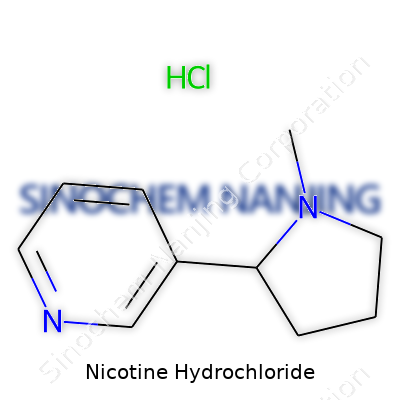
| Names | |
| Preferred IUPAC name | (2S)-1-Methyl-2-(pyridin-3-yl)pyrrolidine hydrochloride |
| Other names |
Nicotine hydrochloride nicotine monohydrochloride nicotine chloride nicotine hydrochloride salt |
| Pronunciation | /naɪˈkəʊtiːn ˌhaɪdrəˈklɔːraɪd/ |
| Identifiers | |
| CAS Number | 21903-34-4 |
| 3D model (JSmol) | `JSmol.loadInline("data/mol/SDF/nicotine_hydrochloride.sdf")` |
| Beilstein Reference | 3586797 |
| ChEBI | CHEBI:38739 |
| ChEMBL | CHEMBL1231010 |
| ChemSpider | 151176 |
| DrugBank | DB13843 |
| ECHA InfoCard | ECHA InfoCard: 100.033.589 |
| EC Number | 214-129-0 |
| Gmelin Reference | 7542 |
| KEGG | C20309 |
| MeSH | D009538 |
| PubChem CID | 61397 |
| RTECS number | QS6295000 |
| UNII | YB2T12VK3H |
| UN number | 1654 |
| CompTox Dashboard (EPA) | DTXSID8030261 |
| Properties | |
| Chemical formula | C10H15N2Cl |
| Molar mass | 162.65 g/mol |
| Appearance | White crystalline powder |
| Odor | Odorless |
| Density | 1.01 g/cm3 |
| Solubility in water | Very soluble in water |
| log P | -2.46 |
| Vapor pressure | 0.01 mmHg (25°C) |
| Acidity (pKa) | 8.0 |
| Basicity (pKb) | 8.02 |
| Magnetic susceptibility (χ) | -74.0×10⁻⁶ cm³/mol |
| Refractive index (nD) | 1.515 |
| Dipole moment | 4.48 D |
| Thermochemistry | |
| Std molar entropy (S⦵298) | 160.6 J·mol⁻¹·K⁻¹ |
| Std enthalpy of formation (ΔfH⦵298) | -250.1 kJ/mol |
| Std enthalpy of combustion (ΔcH⦵298) | -3911 kJ/mol |
| Pharmacology | |
| ATC code | N07BA01 |
| Hazards | |
| Main hazards | Toxic if swallowed, in contact with skin or if inhaled; causes skin irritation; causes serious eye irritation. |
| GHS labelling | GHS02, GHS06, GHS07 |
| Pictograms | GHS06,GHS07 |
| Signal word | Danger |
| Hazard statements | H301: Toxic if swallowed. H311: Toxic in contact with skin. H331: Toxic if inhaled. H410: Very toxic to aquatic life with long lasting effects. |
| Precautionary statements | P264, P270, P273, P301+P310, P330, P391, P405, P501 |
| NFPA 704 (fire diamond) | 3-3-1-W |
| Autoignition temperature | > "240°C |
| Lethal dose or concentration | LD50 (oral, rat): 50 mg/kg |
| LD50 (median dose) | 50 mg/kg (rat, oral) |
| PEL (Permissible) | 0.5 mg/m³ |
| REL (Recommended) | 0.5 – 2 mg |
| IDLH (Immediate danger) | 5 mg/m³ |
| Related compounds | |
| Related compounds |
Anabasine Nornicotine Myosmine Cotinine Nicotine sulfate Nicotine salicylate Nicotine bitartrate |



