Nicotine Bitartrate: Old Molecule, New Eyes—A Deep Dive from Past to Future
Tracing the Roots: The Story Behind Nicotine Bitartrate
Nicotine bitartrate didn’t just pop up in a modern lab. Its roots go back more than a century, back to when pharmaceutical researchers searched for ways to harness nicotine’s effects in tidier, more stable forms. Early synthetic chemists understood the dangers of pure nicotine and looked for safer ways to handle and deliver it. Enter bitartrate, a salt formed by combining nicotine with tartaric acid, which both stabilized the molecule and made it easier to use in medicines and later, in products meant for smoking cessation. Medical texts from the last century tell a story of gradual acceptance: what started as a potential poison became a tool in the fight against tobacco’s grip, especially during the mid-late 1900s, as dependence and addiction research picked up steam.
Inside the Product: What Sets Nicotine Bitartrate Apart
Packed as a white, crystalline powder, nicotine bitartrate doesn’t look much different from table sugar. That plain appearance masks what’s inside: a salt that dissolves quickly in water, allows for consistent dosing, and resists the humidity and temperature swings that challenge other formulations. People familiar with how drugs are made appreciate the technical advantages this salt brings. It stands up to scrutiny in quality checks because it doesn’t easily break down and has a sharp melting point. Formulators like that it keeps nicotine stable and safe until it’s delivered, whether that means a lozenge, patch, or even a laboratory beaker for research.
Getting to Know the Chemistry
At the heart of this molecule lies a straightforward reaction: mix pure nicotine with tartaric acid, often in ethanol or water, and let the chemistry take over. What you end up with is a 1:1 or 2:1 salt, depending on how much tartaric acid you use, always showing up as that clean, white powder. Its formula, C10H14N2•C4H6O6, gives chemists a quick reference for how much actual nicotine they’re handling—crucial for both efficacy and safety in every batch. It’s hygroscopic, soaking up water from the air, which means handling needs to stay careful and storage conditions stay crisp and dry.
Labeling and Technical Demands: What Counts in Production
Doses and purities aren’t just suggestions with nicotine bitartrate; they shape safety and consumer trust. Pharmaceutical standards ask for near-total purity—over 99 percent in most countries—and companies must show their results by batch. Chewing up regulations and passing inspections means every bottle has to show its strength, trace back to raw materials, and pass through stability studies that make sure potency doesn’t leak away in storage. The label carries weight: it tells health providers and researchers exactly what they’re working with.
Behind the Scenes: How It's Made, Handled, and Worked With
Anyone who’s stood in a pharmaceutical plant will tell you, handling nicotine salts demands respect. Workers use secure storage, personal protection, and automated dosing to keep contact minimal. Chemical synthesis runs through stainless steel tanks with real-time checks for purity and contamination. Lab professionals lean into precision, mostly running titrations and chromatography to nail purity and identity: it’s about avoiding slip-ups that could lead to overdosing or cross-contamination. Training isn’t take-it-or-leave-it—most plants keep fresh drills and updates running so everyone stays sharp, aware that nicotine can be deadly if mishandled.
Names on the Bottle: Synonyms and Brand Aliases
Walk into a chemist’s supply room or read a label from an e-cigarette cartridge, and you might spot “nicotine bitartrate,” “nicotine hydrogen tartrate,” or “(-)-nicotine bitartrate.” Some research texts drop the name “nicotine double tartrate.” This cluster of synonyms grows from different production methods, slight variations in molecular ratios, and language conventions in academic papers. Still, each means roughly the same thing in clinics and labs: this is the safer, measured version of nicotine.
Putting Rules into the Real World: Operational and Safety Standards
The world has learned, slowly and often painfully, what happens when you don’t guard against nicotine risks. Mistakes can lead to poisoning by skin contact, inhalation, or a spill no one noticed fast enough. Modern workplaces handling nicotine bitartrate treat it like the hazardous material it is. Workers line up protocols—lab coats, gloves, ventilation, spill clean-up kits, and careful inventory logs. Law says keep exposure below numbers most of us can barely grasp, and for good reason: the compound’s toxicity has been repeatedly proven by decades of clinical reports. Emergency rooms still see accidental poisonings, often because storage at home drifts from the careful handling demanded in a factory or research lab.
Who Uses It and Why: Applications Old and New
Early on, nicotine bitartrate landed in the pharmacy, first as a potential treatment for certain nervous system problems, only later switching to a central role in nicotine replacement therapy. Pharma companies found that making gum, lozenges, and patches with the salt form cut down on variability—think fewer side effects, more predictable absorption. In recent years, the rise of vaping and electronic nicotine delivery has pulled the compound into new forms and flavors, though strict regulations in many countries keep a close eye on formulations and purity. Scientists keep their hands in the mix, using it to probe addiction triggers or model nicotine metabolism in the lab.
The Research Engine: Investigating the Unknowns
Every few years a new headline grabs attention—someone has discovered a previously unrecognized link between nicotine and some corner of health. Much of this research leans on salts like nicotine bitartrate for consistency. Clinical trials in smoking cessation depend on dosing that won’t surprise participants or introduce new risks. Neurobiologists use it to tease apart brain chemistry, mapping the tangle of addiction and reward. There’s a steady flow of toxicology studies, too, especially as questions mount over long-term exposure or potential impacts on teenagers and children whose brains and bodies absorb drugs differently from adults.
Sizing Up the Risks: Toxicity Research Under the Microscope
Nicotine’s dangers are old news. The focus now sits on what happens when you remove burning tobacco but keep the drug. Toxicologists dive into questions no one asked fifty years ago: does long-term use of gums and lozenges damage tissues in unexpected ways? Are there off-target effects, perhaps on the cardiovascular system or developing brains, that haven’t come to light yet? Answers are slow, but journals fill with data each year. Even so, the margin between a useful dose and a toxic one remains razor-thin. That fact keeps regulators and researchers on full alert, demanding manufacturers chase better, more precise delivery systems and even safer handling in the field.
Looking Ahead: What the Future Holds for Nicotine Bitartrate
Reputation and innovation will battle over nicotine bitartrate for years to come. Some see it as a stepping stone, a necessary evil as public health gradually edges away from cigarettes and chewed tobacco. Pharmaceutical designers keep watching for new uses, hoping tweaks to the original salt might improve delivery or cut risks further, maybe even reduce the draw of recreational products. At the same time, regulators weigh up data from ever more sophisticated toxicity and addiction studies, shifting policy in small but meaningful ways. If history is any guide, the next generation of nicotine bitartrate products won’t only look different—they’ll come wrapped in tougher regulations, sharper warnings, and likely, new questions around safety and social use.
What is Nicotine Bitartrate used for?
What Nicotine Bitartrate Brings to the Table
People have spent decades talking about nicotine, almost always in the same breath as cigarettes and tobacco. Dig a little deeper, and you find chemicals like nicotine bitartrate playing a behind-the-scenes part. This compound gets a lot less attention than the word “nicotine” alone, but it’s been part of the medical and pharmaceutical world for years. Unlike the pure form, nicotine bitartrate attaches with tartaric acid, which gives it a more stable form for real use.
Doctors and chemists have relied on nicotine bitartrate in products designed to help folks quit smoking. It shows up in lozenges, chewing gum, patches, and even inhalers. Instead of taking in everything that comes with burning tobacco, people use these products to nudge their way off cigarettes slowly. The logic is clear: by swapping out a cigarette for a measured dose of nicotine, cravings and withdrawal might get a little less fierce. Public health research backs up the idea that this process saves lives over the long run. The U.S. Food and Drug Administration (FDA) has approved these sorts of nicotine replacement therapies. The goal is to tackle nicotine dependency, not ignore it or wish it away.
The Reality Behind Nicotine Bitartrate
Some skeptics wonder why anyone would want to keep taking nicotine at all. Here's the thing. The biggest danger in smoking isn’t just nicotine—it’s the thousands of chemicals released when tobacco burns. Many of those chemicals, especially tar and carcinogens, are the ones linked to cancer and lung disease. Pure nicotine, in controlled doses, doesn’t carry the exact same risk profile. That said, it isn’t free from complications. Nicotine raises heart rate and blood pressure, and it can still hook new users. Nicotine bitartrate isn’t a magic bullet, but it’s much less harmful than a cigarette. The Centers for Disease Control and Prevention (CDC) and similar agencies stand by these therapies for people trying to get clear of tobacco-loaded products.
Room for Improvement in Smoking Cessation
Access to nicotine bitartrate-based products exists in pharmacies and clinics, but not everyone who needs help gets it. Socioeconomic gaps show up pretty quickly. Low-income neighborhoods often have more smokers but fewer resources, including trained support staff and affordable nicotine replacement options. What’s missing isn’t the science, but the reach. I remember seeing my own family run into sticker shock at the pharmacy counter, choosing the cheapest cigarettes over more expensive quitting aids. Bridging the gap takes more than a new patch or gum flavor. Policies supporting coverage for smoking cessation, free clinics, and widespread public health education help make a dent in tobacco addiction rates.
There’s also the question of keeping these products out of the hands of teens and non-smokers. Misuse can turn into a gateway to nicotine addiction, especially in flavored forms. Stronger regulation and better education go a long way. The medical world needs to keep an eye on emerging research, too—some people simply don’t respond to nicotine replacement. Tailoring options to different groups, including counseling, prescription medication, and community support, works better than pushing one solution for everyone.
Looking Forward
Nicotine bitartrate isn’t just another chemical in a bottle; it’s one tool among many aimed at giving smokers a fighting chance. Used with intention and good information, it fits the bigger picture of harm reduction. Pharmacists, doctors, and public health guides lean on this science for a reason. The hope is to keep lowering the number of people hurt by tobacco, even if the journey takes more than a single step.
Is Nicotine Bitartrate safe to use?
The Basics of Nicotine Bitartrate
Nicotine bitartrate turns up mostly in pharmaceutical and vaping products. Pharmaceutical companies pick this form because nicotine bitartrate dissolves easily in water, which works well for oral or inhaled therapies. In some products advertised to help smokers quit, nicotine bitartrate promises to ease cravings. Still, nicotine is nicotine. No salt form takes away the risks it brings to the body.
Nicotine—No Matter the Form—Has Risks
I smoked for years. Quitting meant learning everything I could about nicotine’s grip. Nicotine boosts heart rate and blood pressure. That holds true for nicotine bitartrate, too. Children, teens, pregnant women, and people with heart problems face greater risk. Accidental exposure, especially in concentrated forms like commercial e-liquids, sends people to emergency rooms with nausea, sweating, and even seizures. Once, I saw a friend’s e-liquid spill at a family gathering. Kids were around, and the clean-up reminded me: nicotine products need real caution.
Scientific Evidence and Regulatory Views
Let’s look at what researchers have learned. Cigarettes, gums, patches, and e-liquids in the U.S. often use nicotine bitartrate for consistency and dosing. The Food and Drug Administration (FDA) does regulate nicotine replacement therapies containing this salt. The FDA requires makers to show that they deliver safe doses and label packages correctly. In the medical field, studies report that nicotine gum and lozenges rarely trigger life-threatening problems if used as directed, but taking too many in a short time—whether bitartrate or another salt—brings serious side effects like elevated heart rate and stomach issues.
Doctors warn that teens and young adults stand to lose the most. The adolescent brain responds to nicotine differently than adults. Nicotine can impact attention, learning, impulse control, and mental health, and early use leads to easier addiction later in life. Vaping products using nicotine bitartrate claim smoother hits, so users might unknowingly consume higher doses. The worry here is less about the salt form and much more about how easy it becomes to take in larger amounts.
Potential Solutions and Personal Choices
A lot comes down to personal responsibility and transparent product information. People deserve to know exactly how much nicotine they’re taking in and what those doses can do—especially with e-liquids or DIY mixing. Strict labeling, clear warnings, and proper child-resistant packaging keep risks lower, as do public health campaigns about nicotine harms.
Some support banning flavored vaping products, worried that young people get drawn in before knowing any risks. Another option comes from the world of cessation: health providers could steer patients toward proven nicotine replacement therapies with built-in support and guidance, rather than DIY approaches with no oversight.
Anyone with existing heart conditions or those who struggle with anxiety or mental health should speak with medical professionals before using any nicotine product—bitartrate or otherwise. Community dialogue, consistent regulations, and honest marketing all make a difference in how people use—and understand—the risks of nicotine.
Looking Ahead
Every form of nicotine carries some risk, but how it’s used shapes those risks. From my own experience quitting, I saw how easy it feels to trade one delivery method for another. Nobody should assume any salt, including nicotine bitartrate, is free from harm. Informed choices, strict safety standards, and strong warnings belong at the forefront. These steps give people a better shot at making choices that keep them healthy.
What are the side effects of Nicotine Bitartrate?
The Realities of Nicotine Bitartrate Use
Nicotine Bitartrate gets attention in products designed to help people quit smoking, but it isn’t free from side effects. As someone who's talked with friends trying to kick cigarettes, and spent time reading clinical research, I’ve seen firsthand how real these reactions can be. Similar to other forms of nicotine, the bitartrate salt delivers nicotine into the body, and with it, a set of possible drawbacks.
Short-Term Effects That Show Up Fast
Some folks notice side effects almost immediately after starting with nicotine products. Nausea comes up a lot — a queasy stomach is pretty hard to ignore, and it can make using lozenges or gum downright uncomfortable. Light-headedness hits some people, especially if they’re new to nicotine or accidentally take too much at once. These sensations can lead to anxiety, or a feeling like you ought to sit down for a moment.
Nicotine’s impact on the body shows in the heart. It speeds up the heart rate and can raise blood pressure. For people with conditions like hypertension or any type of heart risk, this effect can stack up quickly. Doctors and pharmacists often warn patients about these risks, pointing to clinical studies that show even replacement products like nicotine bitartrate can create health concerns if misused.
Longer-Term Concerns
Use nicotine for longer periods, and other problems can crop up. Symptoms like mouth irritation show up. If you use gum or lozenges, the lining of your mouth takes the brunt, sometimes leading to sore gums or redness. These are more than just annoyances; ignoring them could mean chronic pain, making it harder to keep using the product as planned.
Sleep problems sometimes surface, too. People share stories about restlessness at night or waking up more often. Scientific reviews support this, showing that nicotine acts as a stimulant. The later in the day people dose, the more likely sleep gets disrupted.
It’s easy to overlook how much nicotine affects mood and the nervous system. Jitters, headaches, and sometimes even aggressive feelings make life tougher, both for those using the product, and their families and coworkers. Over time, the body adapts, but in the process, dependency forms. Quitting, even with substitutes, often means dealing with strong cravings and a dip in focus or mood.
Why Side Effects Matter
The real issue comes down to balancing the expense of these side effects against the harms of cigarette smoking. While switching to nicotine bitartrate can cut out tar and over 60 cancer-causing chemicals, it doesn’t erase the risks that come with nicotine itself. For people with preexisting heart or mental health conditions, using any nicotine product brings its own dangers.
Steps to Handle the Risks
Getting advice from medical professionals makes a difference. Pharmacists and doctors guide you on dosage, timing, and possible interactions with other drugs. Reading every instruction, not doubling up on doses after a craving, and reporting any odd symptoms are practical steps anyone can take. Health experts encourage honest conversations — sharing every medication or condition you have, including mental health concerns, gives your provider a clearer picture.
Building healthier routines goes hand in hand with quitting smoking. Exercise, sleep hygiene, and connecting with community resources have made it easier for friends to cut down on medication and manage cravings without pushing their bodies too far. For anyone thinking about using nicotine bitartrate, clear information and guidance go further than wishful thinking.
How should Nicotine Bitartrate be stored?
A Practical Look at Storing Nicotine Bitartrate
Nicotine bitartrate may look like a run-of-the-mill fine powder, but ignoring its handling can bring real trouble. Anyone who has reached for an ingredient in the lab only to find it spoiled, discolored, or, worse, unsafe knows this frustration. With nicotine bitartrate, the risks only get sharper. Not just a potential poison, it’s a compound that turns unstable fast if left to the mercy of heat, moisture, or sunlight.
Why Storage Matters for Potency and Safety
Nicotine bitartrate supports labs, pharmaceutical manufacturing, and sometimes research settings, but only if its properties stay true. Moist air messes with stability—exposing it to a humid room can lead to clumping and early degradation. That means greater risk, reduced shelf life, and the dose in the finished product won’t match what’s on the label. Pharmacy techs and researchers might remember the stress of retesting after compromised batches—every shortcut on safety measures can cost everyone involved.
Simple choices can stave off all these problems. A dark-colored, tightly sealed container keeps moisture at bay. Plastics might feel light and cheap, but glass containers with screw tops have become a go-to for a reason. Even so, the best container loses its value if it sits in direct sunlight or warmth from nearby equipment. Finding a shelf away from windows and heat sources matters as much as the jar itself.
Real-World Storage Conditions
Rooms with temperature swings mess things up. Temperature control pays off in ways you’ll feel in your workflow: fewer calls about spoilage, fewer complaints about missing inventory, and less wasted money on failed batches. Industry standards call for temperatures below 25°C, and most professionals prefer a steady 15–20°C range to hedge their bets. That’s not just arbitrary. The crystalline structure of nicotine bitartrate doesn’t hold up well as things warm up—chemical breakdown jumps in a warm, humid room.
Science backs this up. Published work shows that exposure to too much light or air accelerates nicotine’s conversion into less active, sometimes toxic, compounds. Chemical changes sneak up quickly, not just at the limits of shelf life. Many professionals recall surprise audits where stored stock tested below spec months sooner than expected—all because a storeroom’s air conditioner failed.
Labeling and Risk Control
Any compound with known toxicity needs clear labeling, not only for regulatory reasons but also for the safety of everyone nearby. Hazards, expiration dates, and lot codes should meet local rules. Most veteran lab workers have faced a “mystery container” at some point. Clear labeling avoids panic or confusion.
Absorbent pads can help in storage bins, absorbing stray moisture. Silica gel packets work well, too—they’re cheap insurance against an overlooked humidity spike. Purchase records and inventory logs support traceability in case questions arise. Locking cabinets and proper signage stop the curious or untrained from stumbling into serious danger.
Cost-Effective Best Practices
Some might see extra storage steps as time-consuming, but many avoid downstream costs by doing it right. Fewer failed batches, less chemical waste, and safer workplaces keep budgets in check. In my experience, teams that invest in simple, common-sense storage protocols sleep better—and worry less about surprises at audit time.
Problems with nicotine bitartrate usually trace back to avoidable storage mistakes. Simple fixes—airtight glass jars, steady temperatures, low moisture, and clear labeling—aren’t about luxury, but peace of mind. That’s not just theory—it saves lives, money, and plenty of headaches.
Can Nicotine Bitartrate help with smoking cessation?
Understanding Nicotine Bitartrate
Nicotine bitartrate shows up in nicotine replacement therapy (NRT) products. Most people know about patches and gum, but this salt form gets less attention. Its use dates back decades, giving researchers time to learn what it does in the body. This compound dissolves well in water, making it easier for manufacturers to create products like lozenges and sprays. Pharmacies sometimes stock these over-the-counter NRT options, aiming to offer smokers another tool for quitting.
Why Smokers Look for New Solutions
Lighting up a cigarette hooks the brain fast because nicotine hits the bloodstream within seconds. That rush triggers a deep pattern of reward. Once hooked, quitting turns into a physical battle and a mental standoff. Many people try to quit cold turkey—most don’t make it far. The Centers for Disease Control and Prevention says only about 7% of smokers successfully quit in a given year.
I’ve watched close friends go through patch after gum after lozenge, trading one challenge for another. They rarely want to quit just to suffer craving after craving. They want something that matches the punch of a cigarette, minus the tar and toxins. Fast-acting NRT products, those that let nicotine bitartrate hit the bloodstream almost as quickly as a cigarette, address this craving gap. Lozenges and tablets work best for folks who need that fast relief when a craving sneaks up during stress or social times.
The Science Behind the Switch
Nicotine bitartrate’s absorption profile matters here. Fast absorption can reduce withdrawal symptoms and cut down the urge to reach for a cigarette. More traditional nicotine gum or patch doesn’t hit the mark as quickly. According to research from the Journal of Clinical Psychopharmacology, nicotine bitartrate lozenges show strong results for people who want quick relief. Each lozenge brings nicotine’s comfort, without the cancer-causing chemicals found in tobacco smoke.
No product fixes addiction overnight. Dependence on nicotine digs deep, and breaking the bonds demands more than just a chemical replacement. Quitters who successfully replace cigarettes with lozenges or sprays often combine them with support groups, therapy, or apps that track progress. Support makes a huge difference. The U.S. Food and Drug Administration recognizes NRT products, including those made with nicotine bitartrate, as helpful aids for quitting.
Potential Issues with Nicotine Bitartrate
No tool comes without risk. Too much nicotine, even via lozenge or spray, can create dizziness, headaches, or nausea. Some people trade smoking for long-term NRT use. That cycle rarely feels good in the long run. It often helps to set clear limits and check in with a healthcare provider to avoid trading one habit for another.
Kids and teens face particular risks. Flavored lozenges sometimes look too much like candy on the outside. Households with children should keep these out of easy reach and locked up to avoid accidental poisoning.
Building a Better Quit Plan
Quitting smoking stands among the toughest challenges a person can take on. No product removes the challenge, but some make it manageable. Nicotine bitartrate gives another choice for those seeking to quit, especially for people struggling with sudden cravings. Combining it with peer support, counseling, and long-term planning stacks the odds in favor of success. Unfiltered advice from former smokers points to the same truth—using more than just one tool gets better results.
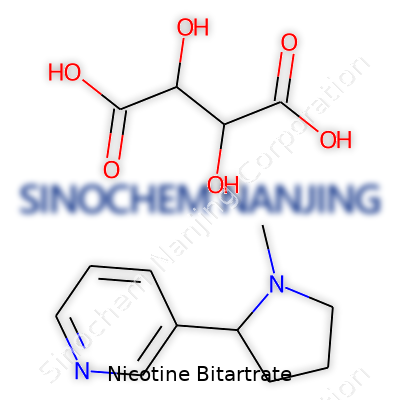
| Names | |
| Preferred IUPAC name | (2S)-1-methylpyrrolidine-2-(pyridin-3-yl)pyridine-1-ium hydrogen (2R,3R)-2,3-dihydroxybutanedioate |
| Other names |
Nicotine hydrogen tartrate Nicotine bitartrate dihydrate Nicotinic acid tartrate |
| Pronunciation | /naɪˈkəʊtiːn bɪˈtɑːrtreɪt/ |
| Identifiers | |
| CAS Number | “6019-69-0” |
| Beilstein Reference | 3906078 |
| ChEBI | CHEBI:34973 |
| ChEMBL | CHEMBL2106659 |
| ChemSpider | 64418 |
| DrugBank | DB00879 |
| ECHA InfoCard | 100.016.882 |
| EC Number | 206-956-7 |
| Gmelin Reference | Gmelin Reference: "8683 |
| KEGG | C08215 |
| MeSH | D009538 |
| PubChem CID | 61453 |
| RTECS number | QS6300000 |
| UNII | 95BO07057Y |
| UN number | UN1659 |
| CompTox Dashboard (EPA) | DTXSID7020821 |
| Properties | |
| Chemical formula | C10H14N2·C4H6O6 |
| Molar mass | 406.32 g/mol |
| Appearance | White crystalline powder |
| Odor | Odorless |
| Density | 1.2 g/cm³ |
| Solubility in water | Very soluble in water |
| log P | -2.0 |
| Vapor pressure | Negligible |
| Acidity (pKa) | 7.84 |
| Basicity (pKb) | 7.84 |
| Magnetic susceptibility (χ) | -8.46 × 10⁻⁶ cm³/mol |
| Refractive index (nD) | 1.521 |
| Dipole moment | 2.97 D |
| Thermochemistry | |
| Std molar entropy (S⦵298) | 290.7 J·mol⁻¹·K⁻¹ |
| Std enthalpy of formation (ΔfH⦵298) | Unknown |
| Pharmacology | |
| ATC code | N07BA01 |
| Hazards | |
| Main hazards | Toxic if swallowed, in contact with skin or if inhaled; causes skin and serious eye irritation; may cause respiratory irritation |
| GHS labelling | GHS02, GHS06, GHS07, GHS08 |
| Pictograms | GHS06,GHS08 |
| Signal word | Danger |
| Hazard statements | H301 + H311 + H331: Toxic if swallowed, in contact with skin or if inhaled. |
| Precautionary statements | P264, P270, P273, P280, P301+P310, P302+P350, P304+P340, P308+P311, P330, P405, P501 |
| NFPA 704 (fire diamond) | 3-1-2 |
| Autoignition temperature | 287 °C |
| Lethal dose or concentration | LD50 (rat, oral): 50 mg/kg |
| LD50 (median dose) | 50 mg/kg (rat, oral) |
| NIOSH | QN3675000 |
| PEL (Permissible) | PEL: 0.5 mg/m³ |
| REL (Recommended) | 0.7 mg/kg |
| IDLH (Immediate danger) | 5 mg/m³ |
| Related compounds | |
| Related compounds |
Nicotine Nicotine sulfate Nicotine polacrilex Nicotine salicylate Cotinine Anabasine |



