N-Propylbenzene: An In-Depth Commentary
Historical Development
Looking back at the history of n-Propylbenzene, it offers a snapshot of how petroleum-derived compounds have made their way into modern chemistry. Chemists first talked about this molecule as part of the broader investigation into aromatic hydrocarbons. They pursued ways to substitute benzene rings with different alkyl chains, hoping to learn more about structure-activity relationships. Commercial production gained speed once fractional distillation and catalytic alkylation techniques reached industrial scale in the twentieth century. The oil and gas industry, searching for molecules to boost octane ratings and find new synthetic routes, gave a strong nudge towards n-Propylbenzene’s growth. It became more noticeable in industry settings, laboratory reference materials, and even in academic textbooks detailing aromatic chemistry.
Product Overview
N-Propylbenzene, sometimes just called propylbenzene, is a colorless liquid with a sweet, pleasant odor. As an alkylbenzene, it acts as both a solvent and an intermediate—a role it shares with isomers like cumene and isopropylbenzene. This compound doesn’t get as much attention as its more famous cousins, but it holds a quiet presence in many manufacturing and research labs. Its odor reminds me of walking past an old-fashioned print shop, where the scent of solvents and ink hung in the air.
Physical & Chemical Properties
Looking at the numbers, n-Propylbenzene comes off as a low-viscosity liquid with a boiling point near 159°C and a melting point under -50°C. Its molecular formula is C9H12, and it carries a density a shade below water—good for phase separation in extractions. N-Propylbenzene barely dissolves in water, though it mixes well with most organic solvents like ethers, alcohols, or hydrocarbons. Its flash point sits between 44 and 50°C, which signals obvious fire risks in the workplace. On the chemical side, its benzylic hydrogens, and the stable aromatic ring, lend themselves to classic substitution reactions and side-chain modifications.
Technical Specifications & Labeling
Industry standards ask for high purity in technical and reagent-grade n-Propylbenzene, with impurity levels brought down below 0.1% for many uses. Companies provide labeling according to GHS, including flame pictograms and warnings about vapors. Product drums bear UN numbers and CAS registry details. While working with n-Propylbenzene, precise measurement stands at the center of quality analysis: gas chromatography and spectroscopy determine both content and trace contaminants like benzene or toluene left over from production runs.
Preparation Method
Manufacturers create n-Propylbenzene through alkylation of benzene with propylene, typically with an acid catalyst such as AlCl3 or zeolites. The Friedel-Crafts method allows for selectivity, but keeping side-products low means tight process control. The quality depends on how efficiently the system maintains temperature and pressure, plus how thoroughly purification steps remove remaining acids and feedstock residues. In my own time working in process labs, this step often took the longest to optimize—small changes in propylene feed could swing yields by several percent.
Chemical Reactions & Modifications
N-Propylbenzene reacts much like other alkylbenzenes in side-chain and ring chemistry. The molecule copes well with oxidation at the propyl group to yield n-propylbenzoic acid or further down the line into benzaldehydes. Nitration, sulfonation, and halogenation operate smoothly on the aromatic ring, though the propyl side chain shields ortho positions somewhat. The benzylic position proves susceptible to halogenation and further alkylation, which chemists use for polymerization initiation and for making bespoke intermediates.
Synonyms & Product Names
N-Propylbenzene answers to a few different names, with 1-phenylpropane, phenylpropane, and n-propylbenzol cropping up in catalogs. CAS Number 103-65-1 makes for a quick reference in regulatory lists, and material safety data sheets repeat these synonyms alongside brand-specific product codes. Trade-grade n-Propylbenzene sometimes appears under broader blends—called “alkylbenzenes light” or “propyl-substituted aromatic hydrocarbons”—especially in fuels and cleaning products.
Safety & Operational Standards
Dealing with n-Propylbenzene requires a firm grasp of risk management. Its flammability means any spills or open handling close to ignition sources can end badly fast. Vapors cause headaches, dizziness, or worse at high concentrations, so I always relied on strong ventilation—not just a window cracked open. For storage, metal drums with tight seals keep the product fresh and safe from moisture. Protective gloves, goggles, and flame-resistant lab coats are the norm, with regular training on spill response. Regulatory agencies, including OSHA, list threshold limits for exposure and stipulate rules about labeling, transport, and workplace air monitoring.
Application Area
In chemical industry circles, n-Propylbenzene plays a supporting role in producing plasticizers, detergents, and perfumes. Its intermediate status means it shows up in the middle of the process, not always in end products. In fuel research, it sometimes acts as a marker or tracable additive to test engines and refinery equipment. Analytical chemists use it as an internal standard in gas chromatography, especially for volatile organic compound measurements. Its underlying structure sits close to compounds found in essential oils, so it crops up in fragrance synthesis and even in agricultural chemical work. Researchers probing combustion mechanics take advantage of its simple structure for controlled burn studies.
Research & Development
Active labs dive into n-Propylbenzene’s transformation pathways, especially looking at catalytic oxidation and selective substitution. There’s a real push to design new catalysts that turn it into more valuable specialty chemicals with less waste and lower energy usage. Work in environmental science looks at how n-Propylbenzene breaks down in soil and water, mapping out biodegradation steps and seeking solutions for contaminated site cleanups. Its performance as a tracer molecule in advanced combustion and air quality studies makes it the subject of new sensor technologies and real-time monitoring equipment.
Toxicity Research
Toxicology teams keep a close eye on exposure risks. Large doses cause narcosis, and chronic inhalation leaves workers open to organ impacts over time. Animal studies warn of liver and kidney effects, though much of the early data relied on high-concentration exposures. Modern studies don’t see n-Propylbenzene as especially potent compared to other alkylbenzenes, yet regulations ask for caution all the same. Health and safety programs now stress routine biological monitoring and bloodwork for personnel in handling roles. Environmental groups look into aquatic toxicity, given its slow breakdown and tendency to float on water.
Future Prospects
N-Propylbenzene’s future depends on new process developments, green chemistry standards, and the shifting needs of chemical manufacturing. Towards sustainable industry goals, there’s research into bio-based benzene and greener alkylation. Lowering emissions, expanding recycling of process solvents, and devising safer handling protocols will likely drive ongoing improvements. In this shifting landscape, those seeking smart, eco-conscious aromatic chemistry will find n-Propylbenzene sticks around—not the flashiest molecule, but a reliable workhorse that sees steady use behind the scenes.
What is N-Propylbenzene used for?
Daily Life and Industry: A Silent Role
N-Propylbenzene rarely makes the headlines or sparks debates at dinner tables, yet this clear, colorless liquid keeps many diesel engines and factories running, all without a crowd cheering it on. Workers in petrochemical plants often know it as a “solvent” or “intermediate.” The name doesn't roll off the tongue, but its job profile covers a lot—fuel testing, chemical synthesis, and research.
Keeping Fuels Reliable
A large chunk of diesel fuel blends owe their consistent performance to this compound. Fuel producers mix it in to mimic real-world fuel behavior in the lab, helping chemists see how engines respond to changing fuel formulas or contamination. Test kits use it as part of their baseline, so truck drivers and big rig mechanics aren’t putting their trust in guesswork. If emissions rules tighten, teams can adjust recipes using data gathered from controlled N-Propylbenzene experiments.
Building Blocks and By-Products
Every bottle of over-the-counter painkillers, every kitchen cleaner, traces a tangled web back to basic aromatic hydrocarbons. N-Propylbenzene works like a do-it-all handyman in the chemical world, stepping in as a starting material for more complex molecules. From flavoring agents to specialty polymers, the supply chain quietly counts on such intermediates to keep shelves stocked and shoppers happy.
Lab Life: Not for Beginners
Hands-on experience taught me that N-Propylbenzene doesn’t throw tantrums like some other chemicals—no strong smells or wild reactions—yet it demands respect. Safety goggles aren’t just for show, and gloves stop stray splashes from causing skin trouble. In controlled conditions, skilled technicians can steer it toward cleaner or more targeted outputs. Chemists running distillations or syntheses rely on its stability for reproducible results.
Handling the Downside
Unmonitored use, careless spills, or dumping waste can turn this helper into a polluter. Stories pop up of backyard workshops pouring odd residues into the ground, poisoning water and animals. Regulations in countries like the United States flag N-Propylbenzene as a hazardous material. Waste collection and ventilation aren’t extra steps—they’re minimum requirements. Training workers to recognize the signs of exposure lowers accident rates.
Cleaner Practices and Safer Substitutes
Plenty of research teams keep hunting for greener, safer chemicals for fuel testing and synthesis. Some European labs swapped N-Propylbenzene out for bio-based alternatives, showing it’s possible to balance safety and performance. Companies also install capture systems to trap vapor leaks and recycle solvents, cutting both emissions and bills.
Forward Thinking: Better Oversight and Knowledge Sharing
People who work with N-Propylbenzene value up-to-date data and tools. Tracking its use through digital logs or RFID tagging prevents stockroom mix-ups. Bridging the gap between research and shop floor can improve safety routines and spark creative solutions. At the end of the day, making chemicals work for society means sharing what we know, respecting limits, and giving credit to the quiet contributors waiting on backroom shelves.
What are the physical and chemical properties of N-Propylbenzene?
Getting to Know N-Propylbenzene
N-Propylbenzene has a simple structure: a benzene ring with a straight three-carbon propyl group attached. Most folks never bump into this chemical on purpose, but it shows up as a trace compound in petroleum products and sometimes in the lab. Most of the attention it gets comes from specialists who care about air quality, fuel formulations, or the behavior of organic chemicals.
The Physical Side of Things
Pour n-propylbenzene into a beaker, and you’ll get a colorless liquid that smells distinctly sweet and aromatic. That sharp, familiar scent often brings back memories of time around gasoline, paint thinners, or even nail polish remover—although it’s not as sharp as acetone. Looking at standard measurements, n-propylbenzene boils at roughly 159°C (318°F) and freezes close to -30°C (-22°F). These points let it stay liquid across the range of typical outdoor temperatures. Its density sits around 0.86 grams per cubic centimeter at room temperature, so it floats on water, a handy mental note if it ever spills in a lab or the field.
This liquid doesn’t dissolve well in water—the hydrophobic ring shrugs off a polar environment. That low solubility is exactly why folks spend energy removing it from industrial waste or keeping an eye out for it downstream from refineries. On the other hand, it mixes easily with organic solvents like ether, alcohol, or other hydrocarbons.
Chemical Behavior
Everyday experience in the lab shows n-propylbenzene to be pretty stable under typical conditions. As with other aromatic compounds, it resists breaking apart unless pushed hard, such as with strong acids or under high-energy reactions. The benzene ring holds onto its electrons tightly, but that propyl side chain changes the way the molecule reacts. Toss it into a chlorination reaction, and the propyl group sometimes attracts the bulk of the action, making substitutions a bit easier compared to plain benzene.
High temperatures or catalysts can push it through oxidation, eventually transforming it into benzoic acid and propionic acid. This is more relevant in environmental chemistry, where scientists worry about how easily these compounds break down in soil or air. Although stable, n-propylbenzene can create harmful compounds if burned incompletely—never something to ignore for someone working in a refinery or lab.
Why All This Matters
Not every chemical property jumps off the page unless you’ve worked in an industry that wrestles with air quality or water pollution. I’ve seen firsthand how a chemical like n-propylbenzene can slip through the cracks during fuel storage and handling, only to pop up as a contaminant downstream. The physical resistance to mixing with water means it can form small, persistent layers at the surface of ponds and streams. The slight volatility (think evaporation at room temp) means it can escape into the air, and over time, enough of it can have a measurable impact on local air quality.
Researchers keep tabs on n-propylbenzene to track industrial emissions. Chemists, especially those concerned about environmental stewardship, use its durability and telltale signature to trace petroleum contamination. Community health experts look for patterns where exposure reaches higher-than-safe levels. The unique fingerprint of n-propylbenzene—including its physical “feel” and stubbornness to break down—makes it a go-to marker for tracking the movement of pollutants in the environment.
Potential Solutions and Cautions
One way forward comes from adopting stronger monitoring tools. Gas chromatography, for example, works well for picking up trace levels of n-propylbenzene before they build up in water supplies or air. Treatment systems that force a combination of oxidation and filtration can cut down risks in wastewater. For chemical plants or fuel depots, best practices remain simple: fast cleanup of spills, limits on venting to the air, and attention to the solvents allowed on site. The fewer chances there are for n-propylbenzene to slip from tanks or hoses into the world, the easier life becomes for the people checking the quality of local air and water.
Everyone benefits when chemicals like n-propylbenzene turn from anonymous ingredients into substances understood for what they bring and what they threaten, grounded in physical facts and chemical realities. That’s the kind of understanding that keeps labs safer and water cleaner.
How should N-Propylbenzene be stored and handled safely?
Taking Chemicals Seriously at Every Step
N-Propylbenzene isn’t a chemical the average person keeps around the garage. For anyone working in a lab or chemical plant, though, it pops up in production and research. Hazards tied to n-propylbenzene look subtle on a label but can turn real fast. Flammability sits at the top of the list. A forgotten cap, a cracked container, or a leak can cause a chain of trouble nobody wants to answer for. The best defense is rooted in day-to-day habits, not wishful thinking.
Choose Containers Like Your Job Depends on It
In my early days on the production floor, cutting corners on containers felt tempting. Old jugs with mystery stains sometimes stood in for new ones. That shortcut led to headaches, since poor seals let fumes drift or even corrode through. Steel drums fitted with tight lids and chemical-resistant liners hold up well. Glass suits smaller volumes, but one slip leaves shards and a spill to handle. No room for guesswork or “good enough”—a few dollars saved upfront can cost plenty in damaged material and safety calls.
Keep N-Propylbenzene Far from Ignition
Flammable liquids act fast around open flames or hot equipment. Every time a worker lets a bottle sit near lights or heaters, the risk jumps. Static charges from clothing or ungrounded machinery also build up, setting off sparks that don’t care how careful a label looks. Using proper grounding and venting cuts the risk. Vapors can travel; one spark can flash up from the floor, not just at the workbench.
Ventilation Matters More Than Rules Say
Even without spills, fumes add up in tight spaces. I once stepped into a storage closet and picked up a sweet smell before my eyes watered. Long-term exposure does more than cause headaches; the central nervous system can take a hit. Fans and hoods that move air out, not just around, make a difference you can feel. It feels easy to skip small checks, but consistent ventilation works best when treated as non-negotiable.
Spill Response: Preparedness Trumps Panic
Spills don’t check the clock or care if it’s right before a shift ends. Absorbent materials and chemical suits tucked away in a dusty corner won’t help much. Dedicated spill kits kept close at hand—along with dry sand, not water—smother leaks before fumes escape. Quick action means more than calling it in; it means having the confidence and practice to keep a small problem from growing.
Training Turns Policy Into Habit
Training isn’t just new employee orientation. Most serious accidents happened after someone said, “I’ve done this a hundred times.” Annual refreshers, honest drills, and clear signage keep everyone tuned in. A personal story: after one rushed batch transfer, a coworker’s sleeve caught on a sticky handle. Quick retraining led the whole team to rethink habits, switching to gloves and sleeves designed for chemical work. That memory keeps me honest every time I open a new drum.
Personal Responsibility and Culture Build Trust
Safe chemical handling grows out of teamwork. Raising your voice about an old seal or a loose valve isn’t nagging—it prevents silent mistakes. Wherever leadership takes safety feedback seriously, small problems stop turning into big news stories. Success shows in clean records, calm workers, and storage rooms that never smell too sweet.
Solutions Take Patience, Not Just Money
Good storage and safe handling mean staying on top of details. People who deal with n-propylbenzene every week know problems show up in sloppy habits long before audits spot them. Regular container checks, consistent ventilation, ongoing training, and a willingness to speak up pay off in less waste, safer air, and days that end the way they started: quiet and uneventful.
Is N-Propylbenzene hazardous to health or the environment?
Understanding N-Propylbenzene
N-Propylbenzene often flies under the radar, slipping into many industrial processes without too much attention. This clear, colorless liquid shows up in places like oil refining, solvent production, and sometimes even in flavor and fragrance manufacturing. Its chemical structure puts it into the large family of aromatic hydrocarbons—a group that, over the years, has given rise to more than a few concerns about health and environmental safety.
Health Risks That Deserve Attention
Many people working around chemicals, including N-Propylbenzene, trust that safety data keeps them protected. From my own time spent consulting for industrial hygiene projects, I’ve seen firsthand how easy it is for workers to overlook invisible threats. Exposure basically happens through inhalation—vapors in the air—or skin contact. Short-term effects might show up as eye or skin irritation, headaches, or dizziness. Honestly, in a poorly ventilated area, that headache can strike hard, something I’ve seen happen to plant technicians before a supervisor could even spot the warning signs.
Long-term effects concern folks the most. Studies from organizations like the National Institute for Occupational Safety and Health highlight that aromatic hydrocarbons, especially if inhaled over months or years, could contribute to persistent respiratory problems or even impact organs like the liver. Of course, not all hydrocarbons carry the same risks, and regulatory bodies have not flagged N-Propylbenzene as carcinogenic to humans. Current research hints at a lower risk compared to notorious chemicals like benzene, yet I wouldn't brush off the harm it can cause if safety standards slip.
Ventilation, personal protective equipment, and routine air monitoring stand out as effective measures. In plants I’ve visited, those who skipped wearing gloves or face shields usually complained about irritation later. Risk drops quite a bit with simple habits—washing up after work, using well-fitted masks, and keeping work areas aired out.
What About the Environment?
Just because something fades from sight doesn’t mean it’s gone. N-Propylbenzene rarely grabs headlines, but environmental watchdogs keep their eyes open for it because it sticks around in groundwater and soil if not handled properly. The substance breaks down slowly when dumped or leaked, creating a long-term pollution problem in places near oil storage and chemical manufacturing sites. I’ve watched community groups rally to test water near old industrial lots, all because a long-forgotten tank started leaking years later.
Aquatic life takes a hit when concentrations climb up. Fish and other wildlife won’t bounce back easily if water gets tainted. Responsible operators track spills with spill kits and emergency plans, but accidents and small leaks persist across the industry. A lot can be done here: regular site inspections, real-time leak detection, secondary containment barriers, and worker training build real confidence in stopping small problems before they snowball.
Better Choices for a Safer Future
Technical information aside, one thing stands clear: relying on hope and luck rarely works out. Manufacturers can swap in less hazardous solvents, look for ways to recycle vapors, and upgrade old storage tanks. Lawmakers and workplace safety inspectors work best together by pushing regular reviews and clear, easy-to-understand rules. In my own experience, companies willing to invest in safer alternatives or better controls tend to see fewer incidents and happier employees.
Even though N-Propylbenzene isn’t grabbing the spotlight like some chemical giants, a basic respect for its risks and a plan for handling it safely can go a long way. People at all levels—from plant workers and managers to neighbors and regulators—should keep talking and acting together for better health and cleaner land.
What is the CAS number and molecular formula of N-Propylbenzene?
Digging Into the Basics
N-Propylbenzene goes by the chemical formula C9H12, and carries the CAS number 103-65-1. In the world of organic compounds, this colorless liquid emerges as a regular guest in both labs and industry settings, holding its place among the family of aromatic hydrocarbons. Its structure tells a simple story: a benzene ring connected to a straight-chain propyl group. The molecular formula may not fire up most people's curiosity, but it matters beyond textbooks. Accurate identification—by both name and number—keeps research labs, manufacturers, and those who regulate chemicals on the same page.
Tracing Its Footprint
I’ve heard folks wonder why details like a CAS number spark so much fuss. In my own work with chemical inventories, that number felt like a safe haven—lots of compounds share shorthand names, but the CAS number offers a unique identity. Mistaking one molecule for another in a lab leads to confusion or worse. N-Propylbenzene, for instance, shows up in trace amounts in fuels and solvents. Getting the molecular formula right means everyone from scientists to shipping crews avoids mix-ups with similar substances.
Daily Consequences and Real-World Uses
Even if you don’t handle N-Propylbenzene directly, its journey weaves through several segments of modern life. Facility workers rely on clear labeling to stay safe. I’ve walked through storage rooms full of drums—one wrong label could set up a chain reaction no one wants. N-Propylbenzene plays a role in research on fuel compositions and sometimes finds a spot in chemicals used to make fragrances or flavoring agents. Some labs turn to it as a solvent or an intermediate on the path to building more complex compounds.
Health, Environment, and Responsibility
Every molecule comes with a story—and some baggage. Exposure to significant amounts of aromatic hydrocarbons can cause headaches, dizziness, or worse. Proper ventilation, clear labeling, and solid protocols help lower the risk. From an environmental standpoint, N-Propylbenzene doesn’t just vanish if spilled. It can leach into soil and water, affecting wildlife. I remember reading field reports where slow leaks led to months of cleanup. Scientists track such compounds not only to avoid accidents but also to monitor industrial emissions and safeguard public health.
Building on Precision and Trust
Access to the right information—such as the unique CAS number 103-65-1—lays the foundation for science, industry, and trade. This accuracy means suppliers can guarantee product quality and regulators know exactly which substances to monitor. For smaller businesses especially, cutting down on confusion helps protect both their operations and their workers. As someone who’s seen both sides—the paperwork and the factory floor—I appreciate efforts that keep chemical data unambiguous.
Room for Improvement and Moving Forward
Transparency and training remain critical. Companies build trust by investing in staff education and using up-to-date safety data sheets. Research continues on how aromatic hydrocarbons behave in the environment and ways to break them down effectively after use. Digital tracking systems for inventory now make it easier to avoid errors. Still, fostering a culture that treats every detail—the right formula, the correct CAS number—as a non-negotiable builds a safer and more responsible industry for everyone involved.
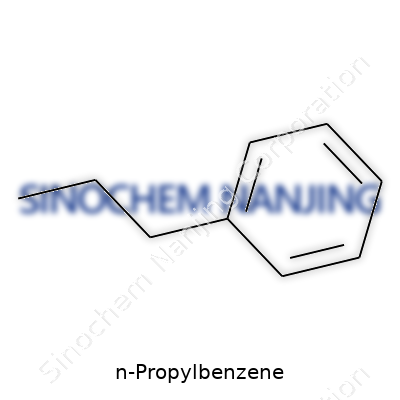
| Names | |
| Preferred IUPAC name | propylbenzene |
| Other names |
1-Phenylpropane n-Propylbenzene Propylbenzene |
| Pronunciation | /ɛn-ˈproʊpɪlˌbɛnziːn/ |
| Identifiers | |
| CAS Number | 103-65-1 |
| Beilstein Reference | **693873** |
| ChEBI | CHEBI:28699 |
| ChEMBL | CHEMBL46433 |
| ChemSpider | 12622 |
| DrugBank | DB14040 |
| ECHA InfoCard | 100.063.604 |
| EC Number | 202-373-2 |
| Gmelin Reference | 7317 |
| KEGG | C06588 |
| MeSH | D010470 |
| PubChem CID | 7698 |
| RTECS number | DA0700000 |
| UNII | 9DLQ4CIU6V |
| UN number | UN1279 |
| Properties | |
| Chemical formula | C9H12 |
| Molar mass | 120.19 g/mol |
| Appearance | Colorless liquid |
| Odor | aromatic |
| Density | 0.862 g/mL at 25 °C (lit.) |
| Solubility in water | Insoluble |
| log P | 3.4 |
| Vapor pressure | 0.97 mmHg (25°C) |
| Acidity (pKa) | 43.38 |
| Basicity (pKb) | 18.66 |
| Magnetic susceptibility (χ) | -66.7·10⁻⁶ cm³/mol |
| Refractive index (nD) | 1.491 |
| Viscosity | 0.719 mPa·s (25 °C) |
| Dipole moment | 1.10 D |
| Thermochemistry | |
| Std molar entropy (S⦵298) | 353.0 J·mol⁻¹·K⁻¹ |
| Std enthalpy of formation (ΔfH⦵298) | -4.5 kJ/mol |
| Std enthalpy of combustion (ΔcH⦵298) | -6342.8 kJ/mol |
| Hazards | |
| GHS labelling | GHS02, GHS07 |
| Pictograms | GHS02, GHS07 |
| Signal word | Danger |
| Hazard statements | H226, H304, H315, H319, H335 |
| Precautionary statements | P210, P243, P261, P271, P280, P301+P310, P304+P340, P312, P331, P370+P378, P403+P235, P501 |
| NFPA 704 (fire diamond) | 1-2-0 |
| Flash point | 86 °C (closed cup) |
| Autoignition temperature | 535°C (995°F) |
| Explosive limits | 1.1% - 5.0% |
| Lethal dose or concentration | LD50 rat oral 4,060 mg/kg |
| LD50 (median dose) | LD50 (median dose): Oral rat LD50 = 6.8 mL/kg |
| NIOSH | 'SKY59100' |
| REL (Recommended) | 5 ppm |
| IDLH (Immediate danger) | 500 ppm |
| Related compounds | |
| Related compounds |
Toluene Ethylbenzene Cumene n-Butylbenzene Isopropylbenzene Styrene |



