N-Octanenitrile: A Comprehensive Commentary
Historical Development
The story of N-Octanenitrile fits into the broader movement of chemical innovation that kicked off in the early 20th century. Researchers started with shorter-chain nitriles, exploring their possibilities in synthetic chemistry. As chemical industries sought new building blocks, longer-chain nitriles like N-Octanenitrile entered the scene. Demand for specialty organic intermediates kept growing, especially in the post-war era, and chemists discovered how these molecules could serve as flexible precursors in all sorts of manufacturing—from pharmaceuticals to pest control agents. My experience working with legacy chemical catalogs shows that every time a new application popped up, suppliers rushed to refine their methods. N-Octanenitrile adaptation followed the same path: what began as a laboratory curiosity shifted toward industrial relevance as techniques for selective synthesis improved. The shift wasn’t accidental; it sprang from real needs in polymer and flavor chemistry, with chemical process engineers recalibrating operating methods to bring higher yields and purities at scale.
Product Overview
N-Octanenitrile bears the formula C8H15N, with a structure made up of an eight-carbon chain capped by a nitrile group. Experience in the lab teaches that such molecules occupy a niche: they’re more volatile than long-chain nitriles but bring more substance and flexibility than their short-chain relatives. Producers typically supply this colorless to pale yellow liquid to those who know how to manage its volatility and reactivity, often for use as an intermediate. There’s no one-size-fits-all pathway to using it; you’ll spot the molecule in fragrance labs, agrochemical projects, and custom synthesis campaigns. This isn’t the sort of chemical anyone uses off the shelf. It lands on inventory lists when there’s a purposeful reason to tap its reactivity or to build longer, more useful chains.
Physical & Chemical Properties
From hands-on experience, you’ll find N-Octanenitrile not especially tricky to recognize. It has a boiling point in the neighborhood of 194°C, staying comfortably liquid at room temperature. Its faint almond-like odor acts as a reminder that this isn’t just another hydrocarbon—it carries the distinct signature of the nitrile group. The compound is somewhat soluble in polar solvents like acetone and ethanol but doesn’t mix well with water, thanks to that long hydrocarbon chain. Flammability comes with the territory, as does the need for ventilation. Technicians watch storage conditions, shielding the compound from strong acids and bases because those will trigger hydrolysis or amine formation. The molecule has a density slightly less than water and a vapor pressure that rises with heat, pointing to the need for sealed storage and careful temperature management. Most suppliers stamp containers with batch numbers, purity levels, and clear hazard labels—those little details that mean the difference between a safe lab and a hazardous one.
Technical Specifications & Labeling
Commercial N-Octanenitrile usually arrives with stated purity above 98%, with trace impurities flagged by their own regulatory codes. Certificates of Analysis tell the story batch by batch: water content, acidity, residual solvents, even GC-MS traces for forensic checks. The labeling follows international chemical safety guidelines, including hazard pictograms and detailed first-aid information. From experience, seeing a container with a UN number and hazard diamond earns instant respect—the regulations don’t just fill space. Technical data sheets serve as roadmaps for engineers, spelling out reactivity limits, shelf life, and other critical features. Without this clarity, mixing operations or downstream syntheses risk costly errors. The way the chemical world has standardized this documentation owes everything to decades of learning where things can—or did—go wrong.
Preparation Method
Manufacturers turn to several methods to produce N-Octanenitrile, and the choice depends on available raw materials and the target market. The classic approach starts with 1-octanol or 1-bromooctane, reacting with sodium cyanide or copper(I) cyanide in a polar solvent, usually under controlled heat. Not only does this route have economic appeal—the starting alcohol comes from plant oils—it also keeps the process relatively simple. Catalytic dehydration of oximes or the ammoxidation of octane offer alternative routes, especially where cost or environmental restrictions shape strategy. Over the years, researchers trimmed waste and optimized reaction steps to boost yields and cut side product buildup. From hands-on work with these syntheses, anyone can see that tiny changes—stirring rate or solvent choice—can swing the process from frustration to success, and safety oversight never fades into the background.
Chemical Reactions & Modifications
N-Octanenitrile’s charm comes from how that nitrile group opens doors for transformation. Chemists value it for reactions like hydrolysis, reduction, and Grignard additions. Acidic or basic hydrolysis yields octanoic acids or amides, both with their own uses in flavor and plasticizer chemistry. Reduction with lithium aluminum hydride steers production toward primary amines, unleashing possibilities for surfactants, lubricants, or pharmaceutical intermediates. Alkylation or acylation of the hydrocarbon chain changes the product profile, opening up specialized applications tailored to a customer’s needs. Experience on pilot plants shows that even minor tweaks—temperature ramps, reagent quality—mean the difference between an efficient, selective reaction and an unmanageable jumble of side products. N-Octanenitrile stands neither too reactive nor too inert, just useful enough to solve pressing synthetic challenges.
Synonyms & Product Names
This compound appears on labels and catalogs under several names. Some folks call it caprylonitrile. Others stick with octanenitrile or n-octyl cyanide. Chemical suppliers sometimes slip in translation-driven names like octanecarbonitrile or 1-cyanooctane. These differences don’t change the core chemistry, but missing a synonym in a purchase search leads to confusion or delays. In the lab, you learn to triple-check the CAS number—124-12-9—because marketers, regional standards, or translation quirks all create noise in the field.
Safety & Operational Standards
Working with N-Octanenitrile teaches a sharp lesson in respect for chemical hazards. It enters the body through inhalation, ingestion, or skin contact, so gloves, lab coats, splash goggles, and smart ventilation keep operators out of trouble. The compound flashes readily, so open flames or static discharge must stay away. Safety data sheets warn about acute toxicity and possible delayed health effects. In my years as a laboratory chemist, drills and walk-throughs always turn up overlooked risks—the hasty disposal of a rag, the open vent on a transfer drum—so careful handling and adherence to OSHA and REACH requirements cannot slide. Spill kits and cyanide antidotes hang nearby in every well-managed lab where N-Octanenitrile comes out to play.
Application Area
N-Octanenitrile’s main calling comes as an intermediate for specialty chemicals. Flavor and fragrance teams grab it as a precursor for synthetic musks and fruit esters. Agricultural researchers find it handy for making certain pesticides and fungicides, relying on that nitrile reactivity to build more complex structures. In pharmaceutical development, the compound’s eight-carbon backbone often makes it the backbone for drug intermediates, helping build molecules that hit specific bioactive targets. Engineers in lubricant and surfactant manufacture also tap N-Octanenitrile when tweaking properties of consumer or industrial products. My own interactions with R&D managers point to a constant back-and-forth about environmental impacts—which means they run continuous pilot studies, looking for effective but safer alternatives. The molecule’s balance of reactivity and handling still gives it a place in both established and cutting-edge projects.
Research & Development
R&D teams have never stopped searching for ways to unlock more potential from N-Octanenitrile. Improvements target every step, from greener synthesis techniques to new uses in pharmaceuticals and materials science. Catalysts that squeeze more product from less raw material now dominate the scene. With growing concern about waste and emissions, researchers devote resources to recycling catalysts and cutting energy use. Analytical chemists refine purity and control trace residues, often using NMR, FTIR, and GC-MS to stay ahead of regulatory standards. Many see promise in crafting new materials—polymers or specialty lubricants—where the molecule’s stable structure holds up under stress. I’ve seen interdisciplinary teams come together unexpectedly—materials engineers, organic chemists, regulatory experts—linked by this single, unassuming molecule as they hunt for market edges or new intellectual property.
Toxicity Research
Much of what’s known about N-Octanenitrile’s toxicity comes from animal studies and industrial exposure reports. Acute exposure tends to stress the central nervous system, with symptoms like headaches, dizziness, or more serious convulsions in high doses. Chronic effects remain under active investigation, with some studies hinting at liver and kidney impacts. Regulators restrict emission levels and set workplace exposure limits based on hard-won experience—real harm has happened in places where monitoring failed or training lagged. I’ve seen firsthand how toxicity tests push for alternative solvents and reactants. On balance, diligent engineers and chemists try to keep exposures low with air monitoring, closed handling systems, and regular medical reviews. The push for sustainable processes keeps the pressure on: making sure every step, from storage to waste management, lines up with best practices to protect workers and the environment.
Future Prospects
The chemical industry stands at a crossroads. N-Octanenitrile’s future depends on steady demand for specialty intermediates, but shifts in regulation and green chemistry shape every decision. I see researchers pushing for bio-based production methods, not just to lower environmental impact but to meet customer pressure for transparent sourcing. Digitization and artificial intelligence offer help, letting plants monitor every batch in real time, spot quality drifts, and streamline supply chains. As new applications in advanced materials and pharmaceuticals emerge, attention turns to replacing older, less safe compounds through innovation. These pivots don’t come easily; it takes investment and clear vision to keep pace. From what I’ve observed, every major breakthrough happens after years of small improvements—better yield, lower risk, new market—and the companies that commit for the long haul end up with safer, more versatile products. N-Octanenitrile carries opportunity, discipline, and risk; the choices today shape the landscape for years.
What is the chemical formula of N-Octanenitrile?
Understanding N-Octanenitrile
N-Octanenitrile, also called 1-cyanooctane or caprylonitrile, carries the chemical formula C8H15N. Think of it as an eight-carbon chain with a nitrile group latched onto the end. That “–CN” group may look like some trivial chemical tag, but its presence shapes every interaction this molecule has, whether it’s on a laboratory bench or turning up in manufacturing processes.
Real-World Uses and What’s at Stake
You don’t come across n-octanenitrile at the supermarket, but it plays a quiet role in specialty chemicals and pharmaceutical development. Organic synthesis teams use it as a building block for making more complicated molecules. Research teams have turned to it in the hunt for new materials, testing its chemical backbone as part of bigger projects.
Handling nitriles like this brings responsibility. The molecule’s relatively short carbon chain makes it a liquid at room temperature. Unlike its cousin acetonitrile, n-octanenitrile’s vapor isn’t going to leap out of a beaker so quickly, but it packs its own hazards. Those eight carbons create a molecule that absorbs well through the skin and travels easily. Once inside the body, that “–CN” group shifts toxic potential, so workers and researchers wear gloves, use fume hoods, and respect its label in ways that sometimes get glossed over with more familiar chemicals.
While many chemists learn these details in textbooks, working with the actual substance changes your sense of responsibility. A spill becomes more than a nuisance. Exposure can mean real health consequences. Having the formula C8H15N at your fingertips keeps you mindful: this is not just another organic solvent. The name points to specific risks, as does MSDS information, but the formula spells it out for anyone with a chemical background: this molecule can enter the body, break down, and release cyanide. A handful of incidents have shown that even brief contact calls for immediate action.
Testing, Monitoring, and Safer Handling
Testing environments aren’t all the same. A company pushing new product development makes different decisions than an academic lab. Either way, knowing C8H15N lets safety officers map out what kind of personal protective equipment makes sense, what kind of air handling is needed, and what kind of spill responses get priority.
I’ve worked in setups where people got casual with less “notorious” nitriles—only to find that a stubborn headache or rash pointed to incomplete safety habits. The formula on a chemical bottle is often the difference between routine work and an emergency. It taps a tradition that, dating back centuries, clear labeling and accurate formulas are one foundation for safer chemistry.
Building a Smarter Chemistry Space
Chemical names get long and unwieldy. The formula, C8H15N, boils everything down to what truly shapes risk, reactivity, and usefulness. This shorthand keeps project managers, students, and seasoned chemists tuned into what matters for handling, storage, and disposal. Spelling out this formula before any work supports smarter decision-making, from glove selection to fire preparedness.
If companies and labs keep learning from accidents and successes, the formula on the bottle remains a small but mighty part of the process. Understanding how C8H15N shapes the behavior and safety profile of n-octanenitrile makes science and industry safer for everyone.
What are the primary uses of N-Octanenitrile?
Beyond the Basics: Why N-Octanenitrile Matters
N-Octanenitrile doesn't get much limelight outside a chemistry textbook, but plenty of interesting work happens behind the scenes because of it. Years ago, fresh out of the lab, I watched a mentor quietly rely on this pale liquid for reactions that didn’t tolerate much fuss. Seeing its role in industrial research changed my perspective — a single molecule, stringing together progress in ways many never notice.
The Real Workhorse in Fine Chemical Synthesis
Industrial chemistry often turns to N-Octanenitrile for intermediate steps in organic synthesis. I've seen colleagues head straight for this compound when searching for a starting point in making specialty reagents, particularly ones leading into longer alkyl chains. This reliability isn't just tradition; the molecule’s straight-chain nitrile group offers a useful entry to making carboxylic acids, amines, and amides through methods we can count on.
If you read up on fragrance chemistry, you’ll notice N-Octanenitrile showing up early on. Companies making perfume bases use it in their toolbox because it helps build up the sorts of flexible, long-chain compounds that give softness and warmth to fragrances found on most store shelves. Knowing a molecule from its scent feels odd, but people who’ve spent time blending prove there’s method to that artistry.
A Quiet Contributor in Agrochemicals and Pharmaceuticals
Some of the most common agricultural products owe a debt to N-Octanenitrile. Its role sits quietly under the hood, shaping the backbone of herbicides or insecticides that help keep crops healthy. No one in the field sees the molecule at work, but without intermediates like this, many modern solutions just wouldn’t reach the market.
On the pharma side, things get technical quickly, but the practical reality is simple. Chemists reach for N-Octanenitrile when looking for efficiency in producing new building blocks. With more demand for tailor-made drugs, having a reliable platform to launch chemical modifications saves time. My own experience working on early-stage projects showed me that cutting out steps with trusty chemicals can mean reaching testing phases weeks sooner, which is a big advantage.
Why Safety and Handling Can't Be Ignored
With all this good, every synthetic chemist also carries a healthy respect for risks. Nitriles can be hazardous, and N-Octanenitrile has serious safety tags — eye, skin, and respiratory irritations, and more if handled poorly or in large amounts. People working with these substances every day rely on real-world protocols, not just textbook advice. You need solid ventilation and reliable personal gear in every step. Corporate safety records back that up — facilities with regular audits recorded fewer incidents by sticking to strict guidelines. As more industries look at sustainability, greener reactions and safer alternatives stay in focus, but for now, careful storage and handling make all the difference.
What Could Change?
Some research groups focus on bio-based routes to make N-Octanenitrile and related compounds. If better methods take hold, N-Octanenitrile production might shift from petrochemical sources, which means a smaller carbon footprint and fewer toxic by-products. Investment in recycling nitrile waste from labs and factories could also help. I watched one team successfully cut down disposal costs by capturing and processing used nitriles into safer chemical feeds.
The story behind N-Octanenitrile shows how the right molecule, trusted chemical routines, and tough safety rules shape progress in more places than we notice. Solutions won’t arrive overnight, but the mix of tradition and new ideas keeps industries and researchers pressing for improvements.
What safety precautions should be taken when handling N-Octanenitrile?
Understanding N-Octanenitrile’s Hazards
Working with chemicals like N-Octanenitrile demands real-life vigilance. This colorless liquid brings fire risk and toxicity straight to the bench. Its vapors irritate eyes, nose, throat, and cause headaches or worse if inhaled too much. Repeated skin contact leads to redness or cracking. Long-term exposure impacts organs—and for those with respiratory issues, it’s even more dangerous. Flammable vapors spread quickly, especially in warm and enclosed spots, making fire prevention a top priority.
Personal Protective Gear Means Business
Putting on nitrile gloves, chemical splash goggles, and a sturdy lab coat protects skin and eyes. Tight-fitting respirators guard lungs—especially in poor air flow. It takes extra minutes to set up, but that layer stands between a routine day and a trip to the ER. Years in the lab have shown me more people regret skipping gloves than regret wearing them. Shoes should cover the whole foot; spills slip under sandals faster than you think. Clothes matter just as much—synthetics melt, so cotton wins out.
Ventilation Is Not Optional
A well-running fume hood matters as much as the right gloves. Open doors and windows only spread vapors through a building; hoods trap and whisk them away. In my early days, we ran tests without working hoods, pretending they wouldn’t make a difference. Our sore throats, watery eyes, and headaches gave us the answer. Air monitoring doesn’t lie: N-Octanenitrile levels bounce up without real extraction fans. If you can smell it, you’re exposed—so fix the airflow before a reaction starts.
No Shortcuts with Storage
Flammable liquids need proper homes. Metal safety cans or grounded cabinets block sparks and sunlight. Leaving a bottle on a crowded bench or near an open flame runs real risks—the kind of reckless choices that turn into safety meetings later. I saw a small spill touch a hot plate once, and the fire taught us fast. Store unopened stock away from incompatible chemicals like strong acids or oxidizers—never together on the same shelf. Labeling always beats guessing.
Cleaning Up Matters as Much as Mixing
Spills happen even if you’re careful. Absorbent pads, a handy bucket of sand, and a real plan keep a small mistake from growing big. Trying to mop up flammable solvents with paper towels means risking ignition. Toss soiled gear into waste bins made for chemical hazards, never regular trash. For skin contact, don’t wait: wash under running water for a full fifteen minutes, then see a medic if redness or pain sticks around.
Building a Better Routine—Not Just Rules
In my experience, the best safety comes from habits built daily. Checking gloves, monitoring that hood, and double-checking the label get automatic over time. A close-knit team calls out slipped goggles instead of letting it slide. Training stays fresh only if people talk openly about mistakes, not just successes. For labs and warehouses, regular drills pay off when the unexpected happens. Reporting small leaks, upgrading air filters, and always running inventory make for a safer workplace, not endless paperwork.
Solutions Rooted in Responsibility
Real safety starts with recognizing N-Octanenitrile’s risks instead of ignoring them. Modern labs benefit from quicker spill kits, better fume hoods, and built-in fire barriers. Investing in good gear makes a difference everyone feels. But culture matters more—where looking out for each other is routine, not burden. With the right habits, training, and tools, risks become manageable, leaving the chemistry—not the accident—to remember.
What is the boiling point of N-Octanenitrile?
N-Octanenitrile: More Than Just a Chemical Compound
N-Octanenitrile, a clear liquid with a faint, almost fruity aroma, doesn’t pop up on most people’s radar outside of a lab. But in the real world of industrial chemistry and experimental synthesis, getting a handle on its boiling point—an unglamorous 205°C—turns out to matter a lot. Whether it’s the right temperature for distillation or knowing the limits for safe handling, the number isn’t just trivia. Ask anyone who’s spent time sweating it out in a chemical lab: that detail often separates a safe procedure from an accident.
Why Boiling Points Matter in Practical Chemistry
Look beyond the data sheets and you find people who need this information to make honest decisions. Organic synthesis often involves steps where compounds need to be separated or purified, and that usually brings distillation into play. For N-Octanenitrile, with its boiling point at 205°C, standard lab equipment needs precise control. Too much heat and you risk decomposition or fires. Go too low and your compound never leaves the flask. Real-life chemists rely on this type of data to balance efficiency and safety.
During my own time in synthesis work, boiling points didn’t just come up at the bench. They shaped storage choices, dictated the materials we could use in apparatus, and even touched on the type of gloves or hoods required. A nitrile like N-Octanenitrile, with a boiling point on the high side, means setups need to be more robust. You wouldn’t use cheap plastic joints; you’d step up to glass or Teflon. Plotting a recipe without double-checking boiling points means trouble down the line. It’s the type of thing that sharpens instincts fast—once you’ve cleaned a sticky residue from glassware, you pay attention.
Health, Safety, and Environment Perspective
The importance of knowing benchmarks like 205°C also stretches into the realm of occupational health and safety. At this boiling point, there’s increased risk of vapors if systems leak or ventilation isn’t set up well. Long-term exposure to nitriles has been linked to headaches and irritation, so respecting the limits matters for everyone in the vicinity. Institutions like OSHA and NIOSH publish clear guidelines, yet personal vigilance—double-checking equipment and not rushing steps—does as much as any manual.
In industrial use, this boiling point informs the scale at which companies process, store, or transport N-Octanenitrile. Heat exchangers, condensers, and closed-loop systems become non-negotiable basics. Engineers factor this number into calculations for energy use and mitigation strategies for possible spills. Around the globe, companies that work with organonitriles watch the thermometer closely, not just to meet legal requirements, but to keep their employees and neighborhoods safe.
Building Trust with Data and Experience
Trust in chemistry comes from a blend of data and firsthand experience. Whether it's pulling figures from Material Safety Data Sheets or relying on a mentor’s advice, every detail supports safer, smarter science. N-Octanenitrile’s 205°C boiling point isn’t up for debate, but how we use that knowledge tells the real story—whether we're in the lab, at the plant, or drafting safety policies. Focusing on both the facts and the lived reality ensures that science stays grounded in both evidence and human judgment.
How should N-Octanenitrile be stored?
The Real Risks Involved
Working with N-Octanenitrile means dealing with a chemical that won’t forgive carelessness. This liquid, clear as water, releases vapor that can leave you with headaches, dizziness, and trouble breathing if it escapes into the air. A splash, even a small one, would not go unnoticed on skin or in the eyes—expect irritation at best. Fires and explosions stay rare only for those who keep it away from sparks. In short, storing it right matters more than any official regulation or textbook description.
The Role of Ventilation and Secure Sealing
I’ve found that the single most effective step for keeping volatile liquids like N-Octanenitrile under control is sealing them up tight. Screw caps beat flip-tops every time. Local exhaust fans lower headaches and complaints from anyone working close by. If you store this stuff in a sealed glass or metal container, fumes stay in, and so does safety. I’ve seen enough leaks to know plastic containers sometimes give way, especially if you pick the wrong kind—and cleanup rarely goes smoothly.
A Temperature Worth Respecting
Some folks leave solvents anywhere there’s shelf space, but with this chemical, that attitude feeds trouble. Storage rooms should hold steady below room temperature, never above 25°C. Extreme heat speeds up evaporation and can push internal pressure up until the cap lets loose. On cold winter days, condensation from temperature swings brings water into the mix—bad news for both purity and safety. In my lab, we use a dedicated cabinet far from sunlight, tucked away from heaters or hot water pipes.
Keeping Away from Incompatibles
Stacking bottles next to strong acids, oxidizers, and ignition sources will eventually go wrong. Once, in a shared store room, I found N-Octanenitrile a foot from a jumbled spill of nitric acid. A single spill or careless move could end up as a disaster. So, separate shelves by hazard class, not by convenience, and place this substance with the flammables—never alongside acids or bases.
Fire Safety Demands Preparation
Too many storage areas skip the basics: no open flames, no hot plates, no coffee makers. One story I remember—a forgotten extension cord caught fire in a corner too close to a chemical shelf. The result: a mess that took half the day to clear and an emergency call that management won’t forget. A simple flameproof cabinet won’t cost more than a single cleanup, and insurance companies often specify them for good reason. I keep a CO2 fire extinguisher nearby, checking it every few months.
Labeling and Accountability
Every bottle gets a clear, dated label. It surprises me how often I come across containers with smudged notes or none at all. Without this, confusion reigns, especially during emergencies or audits. Inventory logs provide real control—our team tracks amounts and dates. Letting small leaks or mystery bottles pile up always leads to waste, expense, and risk.
Staff Training Makes All the Difference
All the best systems fall apart if the people using them don’t understand why it matters. Even outside specialized labs, I take a few minutes to explain risks and walk through safety checks. A trained pair of hands can spot warning signs or equipment failures early. Recycling these reminders—once a month, not once a year—keeps awareness alive and the workplace safer for everyone.
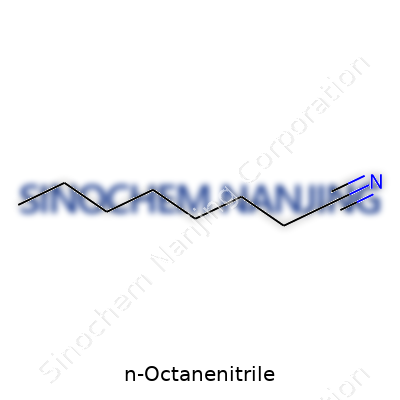
| Names | |
| Preferred IUPAC name | octanenitrile |
| Other names |
1-Cyanoheptane n-Octyl cyanide Octanenitrile Octyl nitrile |
| Pronunciation | /ˌɛnˌɒkˈteɪnɪˌtraɪl/ |
| Identifiers | |
| CAS Number | 629-73-2 |
| Beilstein Reference | 1469903 |
| ChEBI | CHEBI:43050 |
| ChEMBL | CHEMBL13978 |
| ChemSpider | 8022 |
| DrugBank | DB02475 |
| ECHA InfoCard | 100.115.315 |
| EC Number | 208-876-7 |
| Gmelin Reference | 8227 |
| KEGG | C01792 |
| MeSH | D009779 |
| PubChem CID | 8171 |
| RTECS number | RA3850000 |
| UNII | T9032T98H6 |
| UN number | UN3282 |
| CompTox Dashboard (EPA) | DTXSID6020246 |
| Properties | |
| Chemical formula | C8H15N |
| Molar mass | 127.22 g/mol |
| Appearance | Colorless to pale yellow liquid |
| Odor | penetrating |
| Density | 0.783 g/mL at 25 °C (lit.) |
| Solubility in water | Insoluble |
| log P | 2.9 |
| Vapor pressure | 0.266 mmHg (25°C) |
| Acidity (pKa) | pKa ≈ 25 |
| Basicity (pKb) | pKb ≈ 4.7 |
| Magnetic susceptibility (χ) | -5.93 × 10⁻⁶ cm³/mol |
| Refractive index (nD) | 1.4100 |
| Viscosity | 0.754 cP (20°C) |
| Dipole moment | 4.05 D |
| Thermochemistry | |
| Std molar entropy (S⦵298) | 253.6 J·mol⁻¹·K⁻¹ |
| Std enthalpy of formation (ΔfH⦵298) | -53.7 kJ/mol |
| Std enthalpy of combustion (ΔcH⦵298) | -4778 kJ/mol |
| Hazards | |
| GHS labelling | GHS02, GHS07 |
| Pictograms | GHS07 |
| Signal word | Warning |
| Hazard statements | H226, H302, H312, H332 |
| Precautionary statements | P210, P261, P264, P271, P301+P312, P304+P340, P312, P330, P405, P501 |
| NFPA 704 (fire diamond) | 1-3-0* |
| Flash point | 79°C (174°F) |
| Autoignition temperature | 530°C |
| Explosive limits | Explosive limits: 1.1–6.4% |
| Lethal dose or concentration | LD50 oral rat 195 mg/kg |
| LD50 (median dose) | LD50 (median dose): Oral rat 282 mg/kg |
| NIOSH | NA0160 |
| PEL (Permissible) | PEL (Permissible Exposure Limit) of N-Octanenitrile: "5 ppm (skin), 24 mg/m³ (skin) |
| REL (Recommended) | 20 ppm |
| IDLH (Immediate danger) | IDLH: 140 ppm |
| Related compounds | |
| Related compounds |
Octan-1-ol Octanal 1-Octanamine Octanoic acid Octane Heptanenitrile Nonanenitrile |



