N-Nitrosodiphenylamine: A Closer Look at Its Past, Present, and Tomorrow
Historical Development
This compound, first prepared in the late 19th century, quickly grabbed attention among chemists looking for new synthetic intermediates. Early labs used it in dye chemistry and research on rubber accelerators. Period scientific journals recorded shifts in interest as researchers sought alternatives that balanced performance and health. Through the decades, industrial use sometimes outpaced toxicological understanding, which only later sparked more comprehensive scrutiny and caution.
Product Overview
N-Nitrosodiphenylamine appears as a pale-yellow solid, sometimes found in powder or flaky form. People have used it as an antioxidant in rubber manufacturing. The molecular structure, with two phenyl rings attached to a nitroso group via a nitrogen atom, confers stability to free radicals, delaying degradation. This property drove broad adoption before stricter health regulations. Availability shifted from general chemical suppliers toward specialty distributors as scrutiny around nitrosamines deepened.
Physical & Chemical Properties
This substance melts around 70°C, and it dissolves only sparingly in water, better in organic solvents like benzene and ethanol. It stands up well to moderate heat and typical handling, though exposure to strong acids, bases, or oxidizers can trigger breakdown or hazardous byproducts. The lightfast yellow tint signals the presence of its extended aromatic system, which absorbs visible energy rather efficiently. These properties underline its function where long-term stability matters, like industrial rubber processing.
Technical Specifications & Labeling
Chemical suppliers sell N-Nitrosodiphenylamine with well-defined specifications: minimum purity usually above 98%, residual solvent levels documented, and typical packaging in sealed, moisture-resistant drums. Each shipment carries hazard and precautionary statements: known carcinogenic potential, precautions for storage away from oxidizing agents, and required use of gloves, goggles, and fume hoods. Labels must display the chemical name, major hazard symbols, and lot-specific identifiers to ensure traceability in case of exposure or recall events.
Preparation Method
Most manufacturing relies on nitrosation of diphenylamine, reacting with sodium nitrite and hydrochloric acid under cold conditions to form the desired molecule. The method seems straightforward, but scale-up introduces greater risk: nitrite-based chemistry can generate carcinogenic gases or explosions with careless temperature control. Facilities manage risk with automated dosing, closed reactors, and continuous monitoring of byproducts—measures sharpened by historical accidents and regulatory intervention.
Chemical Reactions & Modifications
Beyond its primary synthesis, N-Nitrosodiphenylamine participates in electrophilic substitution and reduction reactions. Derivatives can emerge through addition of various groups to the aromatic rings or reduction of the N–N=O bond to amine forms. These modifications cater to changing research and production needs, such as tailoring rubber elasticity or investigating mechanistic questions in nitrosamine chemistry.
Synonyms & Product Names
Over the years, researchers and suppliers have referred to this substance by several synonyms: NDPA, N,N-Diphenylnitrosoamine, and Diphenylnitrosamine. Some safety documents list registry numbers: CAS 86-30-6. Trade names often reflect the manufacturing origin but rarely diverge from the root chemical name given tightening international standards designed to avoid confusion in labeling and emergency protocols.
Safety & Operational Standards
People working with nitrosamines face real accountability to both coworkers and the public. The strong association with carcinogenic risk, especially with long-term inhalation or dermal contact, has prompted regulatory agencies such as OSHA, NIOSH, and ECHA to issue tough exposure limits and strict training requirements. Responsible labs use enclosed handling, badges to monitor cumulative exposure, and frequently reviewed safety data sheets. Rigid standards for waste management and spill response draw on years of reports about accidental discharges that exposed workers or polluted groundwater.
Application Area
The largest historic consumer has been the tire and synthetic rubber industry. N-Nitrosodiphenylamine once improved product life by trapping oxidative radicals, thus preventing cracking and brittleness. Specialty areas such as corrosion inhibitors and lubricant additives have seen intermittent use, though mounting health evidence has sharply pushed many users toward alternatives. Regulations often phased out its direct employment in consumer products, but legacy uses sometimes emerge in environmental cleanup efforts or forensic analysis.
Research & Development
Academic and industrial labs shift their focus as regulations and science move forward. For years, curiosity about nitrosamines drove mechanistic studies of how these substances form inside living organisms or industrial systems. Analytical chemists have refined detection down to part-per-billion levels, enabling wide surveys of environmental and workplace exposure. These efforts fed into research programs on green chemistry, as scientists seek antioxidants or stabilizers without the cancer risk—though few replacements match the unyielding oxidative resistance of the old standard molecules.
Toxicity Research
Toxicologists flagged N-Nitrosodiphenylamine for causing cancer in animals as far back as mid-century studies. Chronic exposure in test species led to bladder, liver, and lung tumors. Human data remains limited but worrisome, justifying the preventive approach in industrial hygiene and incident response. Ingested or inhaled, the compound can also induce hepatic and renal stress, sometimes subtle or delayed in onset, making routine monitoring and health surveillance a necessity. Countries across Europe, North America, and Asia classify it as a substance of very high concern, limiting permissible exposure and use to the barest minimum.
Future Prospects
Increasingly strict health and environmental mandates all but ensure further decline in direct application of N-Nitrosodiphenylamine. Companies invest in finding safe substitutes or process changes that eliminate nitrosamine formation. While the compound itself fades from routine use, the lessons from its story shape best practices, from precautionary principle adoption to ensuring worker right-to-know in chemical management. Emerging analytical and engineering controls reduce the risks that once defined chemical manufacturing, keeping both local communities and the broader environment safer as old and new hazards draw fresh scrutiny.
What is N-Nitrosodiphenylamine used for?
Understanding the Substance
N-Nitrosodiphenylamine is a synthetic chemical, often referenced in discussions about products made from rubber. The name might trigger concern—anything with “nitroso” in it doesn’t sound like something you’d want near your dinner table. My own first encounter with this chemical came during a stint working alongside an engineer in an industrial setting. The place reeked of rubber and machinery, and safety posters—faded around the edges—warned workers about exposure to different compounds, including nitrosamines. That’s where this chemical hangs its hat.
Main Application: The Rubber Industry
Rubber workers know that additives can make or break tires, hoses, and seals. N-Nitrosodiphenylamine acts as a stabilizer in certain rubber blends. What does that mean for the finished product? When rubber gets exposed to heat, oxygen, or ozone, it tends to crack or break down over time. Manufacturers put protective additives in the mix to slow down this process. N-Nitrosodiphenylamine landed in this role back in the early days of the synthetic rubber boom because it helped rubber weather rough conditions for longer. Some records show its use as an antioxidant, keeping products from falling apart before they reach shelves or vehicles.
Even though it got its start as a solution, concerns began to crop up about health risks. Lab tests pointed toward possible cancer risks—especially for folks handling it regularly, like those working on factory floors before stricter guidelines. By the mid to late 20th century, safer alternatives started to take over. Demand dropped in North America and Europe, mainly because public health agencies, including the United States Environmental Protection Agency, raised red flags about its safety.
Lingering Concerns and Health Impacts
A big chunk of the story now revolves around residue and environmental persistence. Regulatory groups review scientific evidence on chemicals like this all the time. The International Agency for Research on Cancer (IARC) categorized N-Nitrosodiphenylamine as possibly carcinogenic to humans—based on animal studies rather than direct human cases. Anyone who’s ever worked near industrial discharge knows contamination doesn’t stick neatly to factory borders. Small leaks, spills, or improper disposal end up in the ground or water, sticking around through the years.
Finding Better Answers
Safer alternatives give hope. Once manufacturers realized the risks, they didn’t just wipe their hands and walk away—they had to come up with different stabilizers. Some moved to diphenylamine itself, minus the nitroso group, which showed less toxicity. Rubber chemists, much like creative cooks, often experiment with blends to find that sweet spot: tough, long-lasting materials that don’t put workers or communities at risk. Rules from groups like OSHA and the EPA now steer the industry toward less hazardous additives.
Personal experience in industrial health and safety taught me not to trust the status quo just because something “works.” It takes vigilance from workers, managers, and regulators to ask tough questions about what gets used, why it’s in the mix, and whether there are safer paths forward. Informed choices—on the factory floor and in the supply chain—shape a healthier future for people and the environment. N-Nitrosodiphenylamine’s chapter in rubber manufacturing now looks less like a main event and more like a cautionary tale. New research, tighter rules, and shared stories keep that lesson alive.
What are the safety precautions for handling N-Nitrosodiphenylamine?
What Makes N-Nitrosodiphenylamine Hazardous?
N-Nitrosodiphenylamine doesn’t get much public attention, but the people who work with it understand its risks. Researchers flagged this chemical for its potential to cause cancer. It has also shown liver toxicity in animal studies. So, even for seasoned lab professionals, this is not something you want on your skin or in your lungs.
Putting Personal Protection First
Daily experience in a chemistry lab teaches a simple rule: pick up your personal protective equipment before you pick up anything else. Gloves matter a lot here—nitrile and neoprene block this compound better than plain latex. Lab coats and consistently-worn goggles also go a long way in preventing accidental splashes. Respiratory protection isn’t optional if you’re working with powders or dust; a well-fitted respirator keeps danger out of your lungs.
Ventilation is Non-Negotiable
A good fume hood makes a huge difference. Many mistakes I’ve seen in labs happen when people work outside the fume hood or let clutter pile up. Clean airflow isn’t just a checklist item; it’s the reason a risky job becomes manageable. Even if the chemical doesn’t smell, the vapor can still harm you over time. OSHA data and decades of case reports back that up.
Handling and Storage: Slow Down, Do It Right
Rushing to transfer or weigh chemicals leads to spills—a lesson I learned the hard way early in my career. Always use scoops and spatulas set aside for just this chemical. Lab staff need to label everything clearly because confusion can result in someone handling this like a benign material, or worse, mixing it with something reactive.
N-Nitrosodiphenylamine needs to sit in a cool, dry place away from sunlight and incompatible reagents. Moisture, heat, or the wrong solvent can increase risk. Lock it up, track who uses it, and never leave a container sitting open.
Emergency Measures: Don’t Wait for “What If”
Every team should drill what to do if things go wrong. I’ve seen quick responses minimize what could have been serious harm. Eye washes and emergency showers should be within easy reach. Spills need to be cleaned up by people who know what this chemical does—not just any janitor. Use absorbent pads rated for organics, and place contaminated materials straight into a sealed hazardous waste bin.
Health Monitoring and Training
Nobody should handle N-Nitrosodiphenylamine without getting thorough hazard training. I’ve seen short-cuts—people ignoring required safety videos or briefings—lead to real accidents. Use worksite monitoring to catch any vapor in the air above target levels. Some workplaces schedule regular medical screenings for those on high-exposure tasks. It’s not just bureaucracy; it’s how colleagues stay healthy over the long haul.
Solutions for a Safer Workspace
Switching to safer substitutes has real value if the chemistry allows. When I’ve worked on projects where we could swap out a hazardous chemical, the whole lab got less stressful. Still, if N-Nitrosodiphenylamine must stay, an open culture about safety helps—employees have to feel comfortable reporting hazards, asking for new gloves, or stopping a process if danger feels too high. Sharing knowledge, staying vigilant, and using the right tools keep everyone safer.
Is N-Nitrosodiphenylamine carcinogenic?
History Hides in the Details
Most folks haven’t heard of N-Nitrosodiphenylamine (NDPhA), but this chemical has popped up in some important places. In the past, companies used it mainly in rubber manufacturing, especially for tires. By the late 1970s, worries started to bubble up about all sorts of nitrosamines, not just NDPhA. Some nitrosamines definitely cause cancer in animals, and that set off alarms for public health. Before this, little attention landed on whether it posed a direct risk to people.
The Cancer Question: What Do We Know?
Looking for answers about NDPhA and cancer raises more questions than it clears up. The U.S. Environmental Protection Agency (EPA) once listed it as a probable human carcinogen, mostly out of caution. That label came from older studies and by association, since a lot of nitrosamines really do cause cancer in lab animals. But NDPhA stands out as an oddball—researchers didn’t find clear links between it and tumors in animal studies at the kinds of doses that sent other nitrosamines off the charts for cancer.
The World Health Organization and the International Agency for Research on Cancer (IARC) both looked at it, too. They landed somewhere in the same gray area—no solid proof NDPhA causes cancer in humans, and animal data look shaky. But the lack of clear evidence isn’t the same as proof of safety. Regulators stay cautious, and with good reason. The history of chemical safety is full of slow-moving disasters that crept up over decades, and sometimes a little extra scrutiny pays off.
Exposure: Out of Sight, but Not Necessarily Gone
NDPhA isn’t as common as it used to be—tire companies changed their ways once concerns started piling up. Still, traces show up in water, sometimes slipping out of industrial waste or sticking around near landfills. For most people, the chance of running into NDPhA in daily life dropped way down, especially in countries that tightened industrial rules. But it hasn’t vanished. Well water and public water systems can get contaminated if nobody checks, or if an old factory leaks.
This kind of chemical story sticks with me. I grew up in a part of the Midwest where people saw legacy pollution turn up in local streams. More than once, my neighbors found themselves asking why so many kids had asthma or cancer. Nobody could say for sure, but it always traced back to decades-old misunderstandings, slow oversight, and chemicals that the world once shrugged off.
What Does Good Sense Say We Should Do?
Even if NDPhA lingers in the “maybe” column, it makes little sense to take risks. Regulators can keep an eye on old sites, double-check municipal water, and press for more frequent testing. Modern water treatment removes many contaminants, but only if folks know to look for them in the first place.
Communities near past manufacturers deserve transparency about their water and soil. If contamination shows up, companies need to step up for cleanup. Nobody wants a mystery about cancer risk hanging over their neighborhood—especially not with a chemical that nearly faded from memory.
Science may spend years sorting out the fine print, but people live with the consequences. Time and again, the smartest move involves reducing exposure where possible and staying honest about the uncertainties. That’s the only way to build trust and keep hard lessons from repeating.
How should N-Nitrosodiphenylamine be stored?
Understanding the Real-World Risks
N-Nitrosodiphenylamine rarely gets much press, but for those who spend their days handling industrial chemicals, its name stands out for one reason: it’s a potent nitrosamine. Having worked around chemical warehouses, I have seen what happens when folks grow too comfortable around hazardous materials. Complacency in storage practices breeds accidents. Across the globe, safety lapses linked to improper handling cause serious health problems and hefty fines each year. Time and again, nitrosamines make headlines for their carcinogenic properties. It’s not enough just to know this compound isn’t something to leave lying around.
Why the Details Matter
N-Nitrosodiphenylamine calls for respect, not paranoia. This chemical breaks down under heat or light, releasing toxic fumes like nitrogen oxides and aniline. Even moderate warmth or a sunny window can turn a stable container into a hidden danger. Leaks and vapors don’t just stay on the shelf, either; they spread through shared spaces, putting people at risk without warning. Years ago, I watched a colleague underestimate a sealed drum near a heat source. Emergency responders cleaned up a costly mistake that day. Nobody should have to learn that lesson the hard way.
Common-Sense Storage, Backed by Science
It’s tempting to find shortcuts in a busy workplace, but science leaves no room for improvising with compounds like this one. Researchers and regulatory agencies set clear expectations for a reason. Keeping N-Nitrosodiphenylamine in tightly sealed containers blocks out moisture and air. Plastic and polyethylene won't hold up as well as stainless steel or glass. Humidity shortens shelf life and increases the chances of leaks, so low-moisture areas work best. I’ve noticed some veteran handlers push containers into corners “out of the way”—usually, those areas turn out warm or exposed to sunlight. That approach never ends well. Choose a cool, well-ventilated room, with storage cabinets that lock.
Protection Beyond the Label
Labels fade, employees rotate in and out, and standard operating procedures sometimes get dusty in a hurry. In my experience, hazards become most real when the paperwork doesn’t match reality. Strong, visible labels with hazard icons help. Training every employee to handle N-Nitrosodiphenylamine as if exposure could ruin their week—or their life—makes a bigger difference. Respirators, gloves, and goggles aren’t extras; they save skin, lungs, and eyesight.
Local fire codes and chemical storage laws demand more than common sense, so always review material safety data sheets (MSDS) and consult with certified chemical safety officers. Insurance audits and government inspections expose problems without warning; everyday habits set apart a safe site from a risky one.
Simple Fixes for Lasting Safety
Risk doesn’t have to hang over a workplace like a cloud. Good storage boils down to consistent checks—read the thermometer on your chemical storage, examine the shelf for leaks, run refresher training sessions. If a container looks compromised, replace it immediately. If a storage area warms up, relocate the chemicals, no matter how inconvenient. Clean recordkeeping catches errors before they slip through the cracks.
Every time I see evidence of strict storage practices, I see fewer incidents and healthier workers. At the end of the day, keeping N-Nitrosodiphenylamine under control is a sign of a company that knows experience, not luck, leads to lasting safety.
What are the physical and chemical properties of N-Nitrosodiphenylamine?
The Basics of N-Nitrosodiphenylamine
N-Nitrosodiphenylamine, sometimes referred to in technical circles as NDPhA, carries a track record that dates back to early rubber manufacturing processes. In the real world, it looks like a yellowish, crystalline solid. You would not call this an everyday household item, but anyone involved in rubber production or industrial chemistry knows the name. It doesn’t dissolve well in water. Runoff or waste rarely moves far without intervention.
The structure tells its own story. With two phenyl groups and a nitroso functional group hooked onto two nitrogens, this molecule proves why simple changes in structure can have big consequences in reactivity and toxicity. NDPhA often melts right around 173 degrees Celsius. This melting point means it doesn’t break down under normal storage conditions, but it stays stable under moderate heat. I’ve always thought about how important it is for industrial users to know how a compound responds to temperature, because rubber curing and chemical manufacturing rarely happen at room temperature.
Chemical Traits: Reactivity and Stability
NDPhA doesn’t light up easily — the flash point sits above 200 degrees Celsius. You would need considerable effort to set this compound ablaze. This trait makes it safer for manufacturers, though not entirely without risks. Oxidizing agents change NDPhA’s chemical structure, leading to potentially dangerous byproducts. If you’ve spent time in a lab, you’ve heard about nitrosamines and their links to health risks. Mixing NDPhA with strong acids or bases can cause decomposition, so control during reaction conditions carries real weight.
This molecule resists many attempts at breakdown. It carries moderate solubility in organic solvents like benzene, ether, and chloroform. Most workers avoid water as a solvent and rely on these organics for processing or contaminant removal. Once, in a quality control setting, I watched a batch require reprocessing simply because the solubility values didn’t match predictions — just a small shift can throw off an entire process line.
Health and Environmental Considerations
It doesn’t take a seasoned toxicologist to notice N-Nitrosodiphenylamine’s dark side. Studies have shown that prolonged exposure to nitrosamines, including this one, can impact liver and bladder health. Some evidence even points toward mutagenic and carcinogenic effects. Regulatory agencies like the EPA and European Chemicals Agency keep an eye on industrial discharge levels for this reason. NIOSH and OSHA recommend limited worker exposure, and industry knows to limit open handling.
NDPhA does not break down quickly in the environment. Companies that process or dispose of it bear a responsibility to prevent leaching and accidental spills. Advanced filtration systems and stringent containment requirements can help. In my experience with compliance inspections, any sign of NDPhA contamination triggers immediate remedial action. Soil and groundwater contamination from improper disposal remains a documented risk, and policy keeps getting stricter each year.
Practical Solutions for Safer Handling
Limiting exposure starts with closed handling systems and improved ventilation. Automated material transfer cuts risks for workers. Regular health monitoring makes sense for facilities that process NDPhA in bulk. Adopting greener alternatives in rubber processing could help curb future health and environmental concerns. For now, transparent monitoring, waste reduction, and investment in cleanup technology form the backbone of responsible use. Anyone working with this compound benefits from staying vigilant and keeping up with new safety updates. Reading the technical sheet doesn’t hurt either.
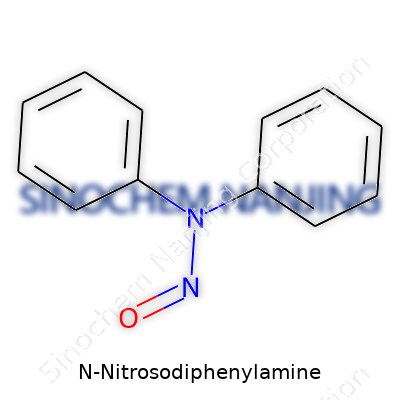
| Names | |
| Preferred IUPAC name | N-nitroso-N-phenylaniline |
| Other names |
NDPA N,N-Diphenylnitrosamine Nitrosodiphenylamine |
| Pronunciation | /ɛn-naɪˈtrəʊsoʊ-daɪˈfɛnɪl-əˌmiːn/ |
| Identifiers | |
| CAS Number | 86-30-6 |
| Beilstein Reference | 1207843 |
| ChEBI | CHEBI:34609 |
| ChEMBL | CHEMBL35719 |
| ChemSpider | 13657065 |
| DrugBank | DB14031 |
| ECHA InfoCard | 100.006.139 |
| EC Number | 202-153-2 |
| Gmelin Reference | 8469 |
| KEGG | C06581 |
| MeSH | D009636 |
| PubChem CID | 7696 |
| RTECS number | JJ9800000 |
| UNII | 7D33P786WR |
| UN number | UN2579 |
| Properties | |
| Chemical formula | C12H10N2O |
| Molar mass | 198.23 g/mol |
| Appearance | Pale yellow crystals |
| Odor | odorless |
| Density | 1.22 g/cm³ |
| Solubility in water | insoluble |
| log P | 3.5 |
| Vapor pressure | 3.72E-7 mmHg at 25°C |
| Acidity (pKa) | 18.4 |
| Basicity (pKb) | 8.20 |
| Magnetic susceptibility (χ) | -78.5·10⁻⁶ cm³/mol |
| Refractive index (nD) | 1.6540 |
| Viscosity | 2.7 cP (25 °C) |
| Dipole moment | 2.95 D |
| Thermochemistry | |
| Std molar entropy (S⦵298) | 340.2 J·mol⁻¹·K⁻¹ |
| Std enthalpy of formation (ΔfH⦵298) | -5.6 kJ/mol |
| Std enthalpy of combustion (ΔcH⦵298) | -63.4 kJ/mol |
| Pharmacology | |
| ATC code | C01EB22 |
| Hazards | |
| Main hazards | Suspected carcinogen; harmful if inhaled, swallowed, or absorbed through skin; causes irritation to skin, eyes, and respiratory tract. |
| GHS labelling | GHS02, GHS07, GHS08 |
| Pictograms | GHS07,GHS08 |
| Signal word | Warning |
| Hazard statements | H350: May cause cancer. |
| Precautionary statements | P261, P280, P301+P312, P304+P340, P308+P313, P405, P501 |
| NFPA 704 (fire diamond) | Health: 2, Flammability: 1, Instability: 1, Special: - |
| Flash point | 162°C |
| Autoignition temperature | 540°C |
| Lethal dose or concentration | LD50 oral (rat): 1120 mg/kg |
| LD50 (median dose) | 500 mg/kg (rat, oral) |
| NIOSH | Registry of Toxic Effects of Chemical Substances (NIOSH): JJ0525000 |
| PEL (Permissible) | PEL (Permissible Exposure Limit) of N-Nitrosodiphenylamine: 5 mg/m3 |
| REL (Recommended) | 1 mg/m³ |
| IDLH (Immediate danger) | 100 mg/m3 |
| Related compounds | |
| Related compounds |
Diphenylamine N-Nitrosodimethylaniline N-Nitrosodiphenylhydroxylamine |



