N,N-Dimethylpropylamine: Chemistry’s Quiet Workhorse
Walking Through History’s Lab
N,N-Dimethylpropylamine doesn’t flag headlines like the giants in organic chemistry, but its story reaches back nearly a century. As industrial synthesis spread in the early and mid-1900s, researchers dug for new amines to serve as solvents, intermediates, and catalytic helpers, and this compound slipped into service thanks to its manageable backbone—just a three-carbon tail with a couple of methyl caps. The historical roots run through early pharmaceutical work and rubber manufacturing, fields that often turned to simple tertiary amines for their excellent reactivity without unmanageable toxicity or volatility. The chemistry community didn’t just stumble across this molecule; demand for better synthesis routes and more reliable intermediate reactions brought it to the fore. Over the decades, as lab techniques and standards improved, so did the understanding and handling of N,N-Dimethylpropylamine rather than it just fading into obscurity.
Behind the Bottle: Product Realities
With a clear, colorless appearance and a fishy odor familiar in amine chemistry, N,N-Dimethylpropylamine seldom confuses anyone at the bench. Its boiling point and moderate solubility get engineers and formulators a practical, mobile liquid that won’t easily escape a closed flask but still blends well in process streams. The molecule’s basic structure and three-carbon chain let it slot into established synthetic logic—no need for exotic reagents, fussy storage, or elaborate preparation. Most suppliers list it in bulk by standard purity percentages. Minor tweaks, like water content or slight impurity traces, matter for downstream applications but rarely cause insurmountable headaches for those who know how to handle reactive amines. The physical and chemical steadiness of the compound means it slides well into many process lines, carrying other ingredients along toward their final form.
Preparation: Hitting the Right Reaction
Most of us learned early that making a tertiary amine like this involves an alkylation of a primary or secondary amine. Laboratories and manufacturers favor the reaction of 1-bromopropane or 1-chloropropane with excess dimethylamine. The key lies in controlling temperature and pressure so a clean, high-yield reaction proceeds without an explosive surprise or endless workups. Sometimes, the process co-produces other dialkylated amines, but a bit of fractionation usually fixes that. The technical specs demanded in many fields—purity over 98%, minimum water—flow from these manageable, controllable preparation lines that don’t require scenery-chewing equipment or complex purification steps. Most labels flag standard concentrations, solvent compatibility, and shipping restrictions, focusing mostly on how safely and stably the stuff will arrive.
Names on the Packaging
Chemistry collects synonyms the way cities collect side streets. N,N-Dimethylpropylamine often appears as 1-propanamine, N,N-dimethyl-, or just DMPrA in shorthand. More trade-focused documentation puts the IUPAC or CAS nomenclature up front, but even at a research conference, most people grasp the common names without much confusion. Keeping track of synonyms matters more as a practical concern—confusing it with similar-sounding amines can derail an experiment or a shipment. But, among chemists, a short list of common names keeps everyone on the same page.
The Reaction Playground: Modification and Utility
This compound steps up in reactions that reach for nucleophilic substitution or involve creating quaternary ammonium salts; it’s nimble and responsive, a fact researchers appreciate in pharmaceutical and polymer design. Its basic nitrogen atom eagerly grabs loose protons or carbon electrophiles, meaning it functions well as both a base and a nucleophilic partner. Some laboratories turn to N,N-Dimethylpropylamine as a phase-transfer catalyst in halogenation reactions, especially where water and organic phases must cooperate. Tweaking this amine—by adding more carbons, sticking on functional groups, or making salts—unlocks further chemistry, especially when searching for new surfactants or chasing down antimicrobial activity in drug discovery. Formulators and organic hackers often lean on straightforward compounds like this because the risk profile is well charted and the reactions seldom produce hazardous offshoots or environmentally persistent byproducts at the scale most operators use.
Safety: More Than Gloves and Goggles
Every chemical comes with risks, and even “mild” amines like this demand respect. Skin and eye contact cause burning and irritation, and the vapor—though not as punishing as some—can still irritate airways. Handling it in a well-ventilated hood stands as a minimum, and those familiar smelly whiffs alert workers to a spill or a leak long before it gets lethal. Chronic exposure stories don’t stack up like they do with aniline or heavier amines, but no one wins by being careless. Strict standards in most developed regions set occupational exposure limits on airborne concentrations, and manufacturers often build in engineering controls rather than relying on personal protection alone. Containers stay tightly sealed and marked with internationally recognized hazard symbols. Safety data sheets are a required read, not a dusty reference, so that even seasoned hands don’t let a routine job turn dangerous by forgetting how nasty even small amines can act in the wrong context.
Fields of Application: Why It Matters
Much of the everyday impact of N,N-Dimethylpropylamine hides behind more famous names. This amine plays an essential role in synthesizing surfactants, rubber accelerators, and certain pharmaceuticals. In the dye and textile arena, its functionality unlocks coloration steps that larger, slower amines can’t handle. Water treatment plants count on its ability to modify pH and aid in removing impurities during complex purification steps. Some agrochemical research uses derivatives as intermediates when scouting new pesticides and herbicides. Not every bottle shapes the world, but in settings from synthetic rubber lines to drug discovery, this simple amine handles jobs where more complex molecules bring drawbacks or unproven toxicity. In short, keeping industry moving sometimes depends on quiet, reliable helpers.
Following the Research: What Scientists Chase
Researchers don’t just tolerate N,N-Dimethylpropylamine as a background ingredient. Ongoing projects explore new reactions involving this compound, especially as cleaner, metal-free processes grow in demand. Its performance as a phase-transfer agent attracts attention in green chemistry journals, where reducing waste matters more than ever. Toxicity remains under active review, particularly in studies focused on chronic exposure and breakdown products in industrial wastewater. Environmental scientists seek better ways to capture amine residues before they enter streams, constantly refining active carbon or advanced oxidation treatments. Academic groups have also started probing the molecule’s role in catalyzing complex, multi-step reactions now that sustainability and atom economy sit center stage. Even in digital chemistry, machine-learning models reference amines like this one when mapping pathways for new pharmaceuticals.
What the Data Say on Toxicity
Published reports show that N,N-Dimethylpropylamine won’t immediately threaten life at low concentrations, but nobody wants it in drinking water. Direct exposure produces well-documented irritation in test animals—a reason why strict protocols surround its use in regulated workplaces. Chronic toxicity, mutagenicity, and environmental fate studies haven’t flagged overwhelming dangers, but the landscape shifts quickly as better analytical tools come online. Regulatory agencies focus more on air and water emissions, keeping thresholds tight enough to prevent cumulative harm. Emerging work in biomonitoring and analytical chemistry means future risk rankings might change, especially as more data accumulates outside strictly industrial settings.
Charting the Road Ahead
Innovators and manufacturers continue to revisit “commodity” amines like N,N-Dimethylpropylamine. Sustainable chemistry isn’t a slogan anymore—it’s a demand. Future process design will have to minimize emissions and capture byproducts much more effectively. Some green startups already look for biocatalytic routes or seek to upcycle amines from waste streams, hoping to make their own supply chains less reliant on energy-hungry classical synthesis. The demand curve for reliable amine intermediates never flattens for long; new polymers, drugs, and coatings keep opening doors. As regulations tighten and customers ask more probing questions about life cycle impacts, those connected to this compound—whether they’re lab techs, plant managers, or researchers—will play a key role in shifting industrial chemistry toward a cleaner, safer, and smarter future.
What is N,N-Dimethylpropylamine used for?
A Closer Look at N,N-Dimethylpropylamine
N,N-Dimethylpropylamine, sometimes shortened to DMPA, often goes unnoticed outside of academic or industrial circles. This clear, colorless liquid has a strong ammonia-like smell and features a structure that lets it act as both a base and a solvent. While quite a few chemicals with similar names float around the market, DMPA stands out for its role in making several everyday products safer, stronger, or even just possible in the first place.
Role in Agriculture and Crop Protection
One of the main places you'll find DMPA is in the agricultural sector. Farmers use more than just seeds and water to raise healthy crops; they often rely on complex herbicides, fungicides, and pesticides to protect their fields. DMPA acts as an intermediate—a sort of building block—in the manufacture of these crop protectants. By helping to create chemicals that manage weeds, pests, and plant diseases, DMPA plays a quiet part in the story of global food security.
Production of Pharmaceuticals
DMPA finds its way into pharmaceutical labs, too. Medicine depends on safe, reliable chemistry, and many common drugs start with chemicals like DMPA. Manufacturers use it to synthesize compounds for medications that treat anxiety, pain, and heart conditions. Finding a consistent supply of reliable intermediates becomes crucial, not only for the business running the lab but also for the people lining up at the pharmacy.
Contribution to Manufacturing
Ask folks working with coatings, adhesives, or dyes, and many will tell you they’ve come across DMPA. In paint or ink production, its properties help deliver a final product that spreads evenly and lasts longer. In rubber and plastic manufacturing, DMPA assists in controlling the texture and strength of finished goods, from car parts to household containers.
Risk and Responsible Use
With so much utility, it’s easy to forget that chemicals like DMPA demand respect—and sometimes a bit of caution. Breathing its vapors or spilling it onto your skin can cause irritation. Lab workers and plant operators know the drill: gloves, goggles, and good ventilation. It's not the sort of chemical you’ll find in a home garage.
Regulation steps in to set ground rules for use and storage. Agencies like OSHA and the EPA monitor how DMPA gets handled, shipped, and disposed of. These rules help keep workers safe and cut down on environmental spills. In my own experience working alongside industrial workers and health experts, those who take shortcuts with chemical safety often regret it. Vigilance in storage and handling helps prevent unnecessary exposure and costly cleanups.
Improving Practices for Safety and Environment
There’s a push for greener chemistry in nearly every major industry that uses intermediates like DMPA. Replacing harsh solvents, improving ventilation, and engineering better containment systems all help reduce risk. Teams trained to recognize warning signs—like strong odors or skin tingling—tend to have fewer accidents.
Alternative chemicals sometimes get the spotlight, yet DMPA remains valued for reliability and cost. Manufacturers consistently look for new ways to minimize waste, recycle solvents, or switch to less hazardous options. Better process controls and automation also limit how much workers come into direct contact with chemicals.
N,N-Dimethylpropylamine may lack consumer name recognition, but it quietly backs progress in farming, health, and industry. Keeping it safely in check means safer communities and better products for all.
What is the chemical formula of N,N-Dimethylpropylamine?
Getting to Know N,N-Dimethylpropylamine
N,N-Dimethylpropylamine stands out for its role in both scientific research and industry. This organic compound often appears in discussions among chemists and people working with chemical synthesis. The formula, C5H13N, helps us break down the molecular structure and reveals more than just letters and numbers. Knowing the formula helps with everything from handling the material safely to designing the next batch in the lab.
Why This Compound Matters
Plenty of folks outside the chemistry lab might not recognize this name at first glance. But anyone working in adhesives, coatings, or even pharmaceuticals benefits indirectly from compounds like this. The structure of N,N-Dimethylpropylamine—made up of five carbon atoms, thirteen hydrogens, and one nitrogen—means it features an amine group attached to a propyl backbone, with two methyl groups squeezed onto the nitrogen. This unique arrangement lets it act as a building block for larger molecules, supporting the development of goods that hit store shelves or help power research.
Over the years, professional experience in a chemical environment drives home how important it is to respect formula details. During a job at a specialty chemicals plant, one small misstep in reading a compound’s makeup could derail an entire synthesis. Knowing C5H13N for N,N-Dimethylpropylamine isn’t about trivia; it keeps workflows on track and safety in check.
Safety and Handling: The Practical Side
Any time a compound contains nitrogen and small hydrocarbons, safety deserves extra care. From memory, a container of N,N-Dimethylpropylamine gave off a strong, fishy odor—the kind you don’t forget. These amines can irritate eyes, skin, and respiratory tracts. Knowing the formula helps teams predict and mitigate risks, guiding choices like ventilation, gloves, and protective eyewear. Fact sheets from agencies like the National Institute for Occupational Safety and Health (NIOSH) state the need for careful handling, mainly due to its volatility and flammability.
Impact on Industry and Research
The versatility of C5H13N plays a big part in its appeal. During work on research projects, this amine often shows up as an intermediate or catalyst. Each atom in the formula pulls its weight in how the molecule interacts with others. Manufacturers value its solvent roles or as a step toward creating surfactants and resins.
The flip side comes through regulation and the environmental angle. Several regulatory agencies track the environmental and workplace impact of compounds like N,N-Dimethylpropylamine. Issues crop up during production or disposal, with the potential for air emissions or contaminated water. Fact is, those in the field face a duty to limit waste, cut down on emissions, and follow disposal protocols set by organizations such as the EPA.
Better Use and Future Outlook
There’s room to do better in both how folks use and dispose of amines like this one. Substituting greener chemicals, recycling solvents, and investing in employee training all go a long way to reduce risks. Consider how green chemistry principles now guide new research, sparking creative approaches to old challenges. The more accurate the knowledge about formulas and properties, the higher the chance for innovation without sacrificing safety or the environment.
Is N,N-Dimethylpropylamine hazardous or toxic?
Understanding N,N-Dimethylpropylamine
You probably haven’t seen a bottle of N,N-Dimethylpropylamine at your local hardware store. Still, it shows up behind the scenes in science labs or chemical manufacturing. What matters most is how this stuff behaves and how people treat it. For folks who work around chemicals every day, knowing what’s inside the bottle means safety comes first, not after something goes wrong.
Recognizing the Hazards Up Front
N,N-Dimethylpropylamine releases sharp, ammonia-like odors. Breathing in vapors can irritate the nose and throat. Brief exposure sometimes leads to headaches or dizziness. Cracking open a scientific safety data sheet shows even more risks: long-term or high-level contact brings skin burns, eye injuries, and possible damage to the respiratory system. That’s not scaremongering—these are real-world dangers managed every day in chemical work.
Having handled many chemicals over the years, I’ve watched colleagues learn the hard way that ignoring proper gloves or eye protection never pays off. Once, a quick spill became a mad dash for the eyewash station because someone “only needed a second” for a small task. Training and attention make all the difference. Chemicals don’t care about intention.
Toxicity: What the Research Says
Most toxicology studies on N,N-Dimethylpropylamine involved rodents or cell cultures. The acute toxicity isn’t through the roof compared to some aggressive solvents or acids, but it isn’t mild either. Ingesting or breathing concentrated amounts can damage organs like the liver. Direct contact with eyes or skin does real harm in just a few seconds. Those published figures don’t even cover what’s possible with years of low-level exposure. There’s anxiety about unknowns—long-term risks, hidden health costs, or compounding effects from mixes of chemicals.
Government rules in places like Europe and the U.S. don’t call N,N-Dimethylpropylamine a major carcinogen, but it’s labeled corrosive and dangerous to aquatic life. Pouring leftovers down a drain causes a problem downstream—literally. These details matter if you live near an industrial site or care about where your tap water comes from.
Getting Safety Right—And Why It Matters
Complacency makes for the worst accidents. Regular air monitoring, solid ventilation, proper gloves or eye shields, and knowing where spill kits are stored turn curiosity into routine. Every one of these steps proves practical. I’ve watched new hires improve their health just by using better gloves and cutting out short-cuts. For folks who handle this substance every day, policies and equipment become part of the rhythm at work, but never background noise.
No single rule fixes everything. The most useful system gives everybody, from entry-level staff to management, a voice in safety. In my own workplaces, nobody got in trouble for sounding the alarm. If someone dropped a bottle or caught a whiff of strange vapor, ventilation and quick cleaning jumped into gear within minutes. Taking these actions seriously meant a lot more than reading numbers on a label.
Where We Go From Here
Some say regulation is the only real motivator for safer handling. Others rely on common sense. From my time around labs, what changes things is not just paperwork or checklists but a persistent culture of accountability at every level. No chemical belongs on autopilot. Whether you mix, transport, or simply live nearby, treating N,N-Dimethylpropylamine with respect saves lives, prevents illness, and cares for surroundings most people never see.
How should N,N-Dimethylpropylamine be stored?
Why Safe Storage Even Matters
People barely take a glance at chemical storage until things go wrong. I’ve spent years in laboratories and learned mishaps usually come from underestimating what seems ordinary. N,N-Dimethylpropylamine fits this pattern—a clear liquid, mild odor, nothing threatening at first sight, but its storage sets the stage for either safety or a headline-making accident.
What This Chemical Can Do
N,N-Dimethylpropylamine belongs to the group known as secondary amines. It’s flammable. It releases toxic fumes if it finds heat or flame. Accidents can lead to severe irritation to eyes, skin, and the respiratory system. The chemical also reacts with strong oxidizers, acid chlorides, or peroxides, releasing dangerous gases. So the question shifts from “How should I store it?” to “How do I keep people and property safe?”
Keep It Cool, Keep It Ventilated
Every time I walk into a storage room, I look for temperature and air control above everything else. High temperatures turn N,N-Dimethylpropylamine into a fire risk. Standard practice means keeping it in a cool, dry area, away from direct sunlight or heat sources like hot water pipes or radiators. Flammable liquid storage cabinets with self-closing doors create an extra layer of safety.
Avoid Water and Reactives
Leaky roofs, spilled drinks, or even humid air cause damage. Water can react, forming irritating vapors and building pressure in closed containers. Always store this chemical away from water sources and strong acids, oxidizers, or even open flasks of other reactive chemicals.
Choose the Right Container
Storing this amine in steel, polyethylene, or glass containers works best. I’ve seen cheap plastic jugs eaten away by amines, leading to sneaky leaks. Thick-walled bottles with tight-fitting lids keep vapors in. A good rule: never use a damaged or unlabelled container. Every bottle must clearly state what’s inside. Labels save lives.
Keep the Storage Area Honest
Chemicals like this don’t belong next to food, cleaning supplies, or random odds and ends. Strict segregation lowers the odds of cross-contamination or a lucky mistake. Signage ought to make it obvious who should enter and who shouldn’t. I always insist the area stays locked with inventory logs up to date—limiting access helps prevent unauthorized handling or theft.
Fire Suppression: Non-Negotiable
All storage rooms holding flammable organics demand fire extinguishers rated for chemical fires. Sand buckets and spill kits fit nearby. I keep emergency eyewash and showers just outside the door. Local fire codes usually require exhaust ventilation to keep fumes from building up.
Training and Inspections
Storage plans look nice on paper, but regular inspections catch the cracked lids, corroded labels, or forgotten containers. The best safety equipment sits useless unless staff know the risks and how to respond if things go sideways. Regular drills, documented procedures, and real training provide confidence for emergencies.
Final Lessons
In my experience, safe storage means genuine respect for what a chemical can do—not fear, but real attention. Flammable amines like N,N-Dimethylpropylamine reward good habits and punish shortcuts. A cool, stable, labelled corner in a secure, dry place with the right gear close at hand—these details bring peace of mind and keep injuries off the books.
What are the safety precautions for handling N,N-Dimethylpropylamine?
Why Safety Deserves Attention
N,N-Dimethylpropylamine gets used in making industrial chemicals, surfactants, and pharmaceuticals. The sharp, fishy odor gives a warning, but don't count on smell alone to stay safe. I've spent years in labs where unfamiliar names can turn dangerous if you cut corners, and with this chemical, respect goes a long way. It's flammable. It can irritate skin, eyes, lungs. Handling it the same way you'd handle paint thinner or ammonia won’t cut it. You need to do better, and consistent habits decide who makes it through the day unscathed.
Personal Protective Gear: No Stock Photo Routine
Never trust your bare hands with N,N-Dimethylpropylamine. Nitrile gloves resist the chemical well enough, and a long lab coat keeps splatter from sneaking onto your skin. Forget your usual reading glasses; chemical splash goggles seal out vapors and liquid. If you set up large syntheses, a face shield beats simple goggles every time. Respiratory protection also matters — vapor cartridges rated for organic amines filter out the fumes if levels climb. Skip protection, and you risk serious chemical burns or breathing difficulty. There’s no heroism in scrubbing chemicals from your arm later.
Ventilation and Storage Habits
This is not the sort of liquid you pour by a window and hope for the breeze to pull out the fumes. I always go for a well-maintained fume hood — not just a fan swirling air around. Good airflow pulls vapors out, protecting your lungs and the lab crew. Pour out only what you need, then put the bottle away. Look for tight-fitting lids. Store it in a cool, fire-protected area. None of this “just in case” thinking—fire from a stray spark, static, or hot surface spells trouble. Keep it away from acids and oxidizers; these mix-ups lead to more than a mess on the bench.
Spill Response: Get It Right the First Time
Spills with this chemical aren’t about shrinking into the corner or grabbing a handful of paper towels. If it happens, leave fans off. Alert anyone nearby before doing a thing. Don the right gear, scoop the liquid with absorbent pads specially made for organic solvents. Bag everything in a proper waste drum, and label the drum honestly. Fast and honest cleanup can be the difference between a normal day and hours spent with medics or at the sink, cursing hindsight. Have a shower and eyewash nearby, ready for real use. I've seen what delays do — nobody looks good running with stinging eyes and hands.
Training and Respect Over Routine
Reading the safety data sheet before the first use isn’t a box to check. You actually learn what not to do. From my experience doing university research and industry work, the ones who skip this step wind up surprised too often. Rely on practical habits, honest reporting, and real teamwork. Don’t fake experience to impress anyone. Ask, teach, and stay humble. Knowledge, not bravado, keeps you moving safely through a day with N,N-Dimethylpropylamine or any reactive chemical. Take safeguards seriously, no matter how routine things feel. This is how people come home with all their stories and fingers still intact.
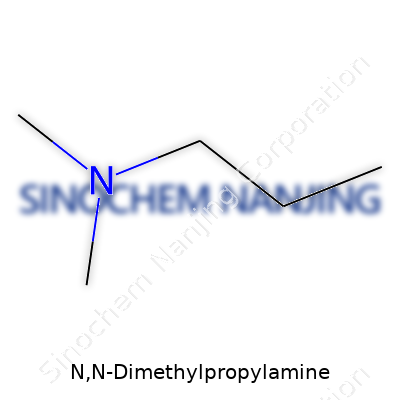
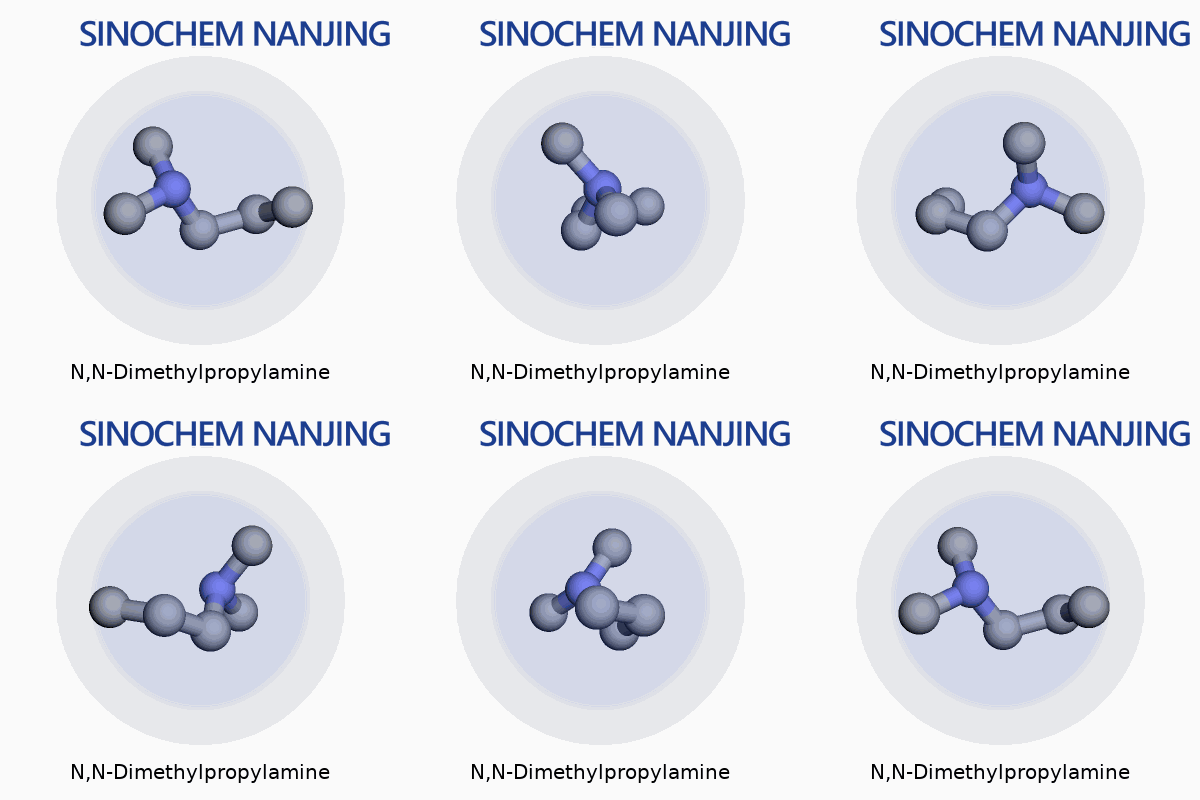
| Names | |
| Preferred IUPAC name | N,N-Dimethylpropan-1-amine |
| Other names |
DMIPA Dimethyl-1-propylamine N-Propyl-N,N-dimethylamine 1-Propanamine, N,N-dimethyl- N,N-Dimethyl-1-propanamine |
| Pronunciation | /ˌdiːˈmɛθɪlˈproʊpɪlæmiːn/ |
| Identifiers | |
| CAS Number | 926-41-4 |
| Beilstein Reference | Beilstein Reference: 605347 |
| ChEBI | CHEBI:51870 |
| ChEMBL | CHEMBL15334 |
| ChemSpider | 11823 |
| DrugBank | DB02109 |
| ECHA InfoCard | 100.062.590 |
| EC Number | 202-739-6 |
| Gmelin Reference | 8987 |
| KEGG | C06378 |
| MeSH | D014007 |
| PubChem CID | 7847 |
| RTECS number | XN8225000 |
| UNII | DAV44A7L9D |
| UN number | UN2382 |
| CompTox Dashboard (EPA) | DJ99N1T1CR |
| Properties | |
| Chemical formula | C5H13N |
| Molar mass | 87.18 g/mol |
| Appearance | Colorless liquid |
| Odor | Amine-like |
| Density | 0.718 g/mL at 25 °C |
| Solubility in water | soluble |
| log P | 0.96 |
| Vapor pressure | 3.3 kPa (at 20 °C) |
| Acidity (pKa) | 10.73 |
| Basicity (pKb) | 3.38 |
| Magnetic susceptibility (χ) | -7.48 × 10⁻⁶ cm³/mol |
| Refractive index (nD) | 1.394 |
| Viscosity | 0.59 cP (20°C) |
| Dipole moment | 2.23 D |
| Thermochemistry | |
| Std molar entropy (S⦵298) | 252.1 J·mol⁻¹·K⁻¹ |
| Std enthalpy of formation (ΔfH⦵298) | -48.3 kJ/mol |
| Std enthalpy of combustion (ΔcH⦵298) | -3657.0 kJ/mol |
| Pharmacology | |
| ATC code | N04BX09 |
| Hazards | |
| GHS labelling | GHS02, GHS07 |
| Pictograms | GHS02,GHS07 |
| Signal word | Danger |
| Hazard statements | H226, H302, H312, H314, H332 |
| Precautionary statements | P210, P233, P260, P280, P305+P351+P338, P312, P337+P313, P403+P235 |
| NFPA 704 (fire diamond) | 2-3-0 |
| Flash point | 8 °C (46 °F; 281 K) |
| Autoignition temperature | 205 °C (401 °F; 478 K) |
| Explosive limits | 1.7% - 10.1% |
| Lethal dose or concentration | LD50 oral rat 372 mg/kg |
| LD50 (median dose) | LD50 (median dose): Oral rat LD50 = 237 mg/kg |
| NIOSH | UN1237 |
| PEL (Permissible) | Not established |
| REL (Recommended) | 1 ppm (3 mg/m³) |
| IDLH (Immediate danger) | IDLH: 400 ppm |
| Related compounds | |
| Related compounds |
Trimethylamine Diethylmethylamine N-Methylpropylamine Isopropylamine N,N-Dimethylethylamine |



