Rethinking N,N-Diisopropylethylamine: Utility, Risks, and Where It Might Lead
Tracing the Path: From Lab Curiosity to Industry Standard
N,N-Diisopropylethylamine, known to most as DIPEA or Hünig’s base, started its journey as an academic curiosity and now shows up everywhere you look in synthetic organic chemistry, particularly in pharmaceuticals and fine chemicals. Back during the chemical expansion of the 1960s and 1970s, chemists weren’t just looking for any base—they needed something with real selectivity, a base that didn’t randomly attack reactive centers or unexpectedly react where it shouldn’t. DIPEA offered a way to control reactions better, sidestep byproduct headaches, and cut down on wasted starting materials. Just observing how its use has shaped the discipline, one can’t ignore how central it’s become for tasks like peptide synthesis, protecting group chemistry, and pretty much anything involving acylations or alkylations where timing and precision matter.
What Makes This Compound Tick?
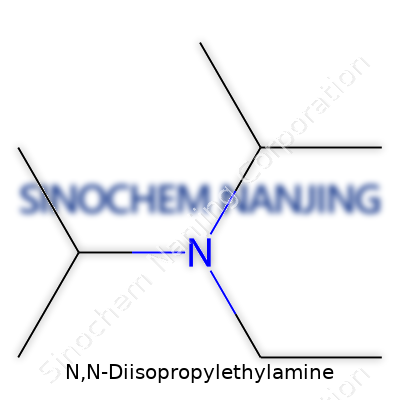
Take one look at the structural formula—triethylamine’s backbone swapped for isopropyl groups flanking the ethylamine center—and you get a sense of the built-in steric hindrance. This bulkiness keeps DIPEA from acting too aggressively as a nucleophile even though it’s a tertiary amine. Clear, colorless, and sporting a pungent, amine-like smell, its physical properties stick pretty closely to colleagues in the same family: a boiling point around 127°C under atmospheric pressure, a tendency to take up moisture, and high miscibility with common organic solvents. These seem like basic textbook details, but anyone who's handled it knows that volatility and odor come with real-world implications, especially in a busy lab where poor ventilation quickly turns DIPEA from useful base to workplace nuisance.
How the Lab World Handles and Labels It
Labels typically list DIPEA as CAS 7087-68-5, but on my own shelves, I’ve seen names ranging from Hünig’s base to its full IUPAC designation, N,N-diisopropylethylamine. Because its distinctive, sour odor makes contamination obvious, most labs double-check storage and train even seasoned chemists to use sealed containers and fume hoods. No one wants mysterious wafts of amines, especially when cross-contamination could lead to sensitive reactions going sideways. In the academic setting, prepping pure DIPEA often means distillation over potassium hydroxide to dry out any lurking water—practices hammered in by supervisors who remember ruined batches from a few drops of moisture.
Prepping, Tweaking, and Putting DIPEA to the Test
Most DIPEA for commercial and research purposes gets synthesized by alkylation of diisopropylamine, which itself comes from propylene derivatives—think catalytic amination steps performed on an industrial scale. In the small-scale academic setting, the main challenge is purification; clean, water-free DIPEA gives reliable results, contaminated batches leave you second-guessing every yield. Its well-known strength as a base—pKa around 11—lets chemists selectively deprotonate, trap acids, or buffer reactions while steering clear of unwanted side reactions. Few other tertiary bases combine this level of non-nucleophilicity with strong proton-abstracting capability, a fact that’s been hammered home in advanced organic synthesis courses and passed down lab-to-lab through practical trial-and-error.
Toxicity, Exposure, and Staying Safe
Despite all these chemical advantages, handling DIPEA demands respect. Inhalation can irritate the respiratory tract, and splash risks make goggles and gloves crucial—not just recommended, mandatory. Short-term exposure brings headaches and sore throats, and in one particularly memorable week as a student, a small spill ruined half a day with persistent, stinging fumes. Long-term risks remain less clear, but EU and US authorities both classify DIPEA as hazardous, flagging it for acute toxicity and the need for careful storage, especially in educational or scale-up environments. Experienced chemists still treat DIPEA like any other base with bite: spills get neutralized right away, bottles returned tightly capped, and waste sent for professional disposal.
Applications—Why Chemists Keep Coming Back
Peptide chemistry brings DIPEA to the forefront. Any large-scale peptide synthesis, whether for research or drug discovery, benefits from DIPEA’s ability to scavenge acid without disturbing the rest of the molecule. Solid-phase methods—where a growing peptide chain gets anchored to resin beads—almost always reach for DIPEA to wash away excess acids released from protecting groups. Beyond peptides, it plays a critical role in preparing esters, amides, and even some carbamate-protected amino acids. The non-nucleophilic nature turns it into the go-to for acylation reactions in drug intermediates, preventing those frustrating side reactions that can derail whole projects. Students quickly realize that switching out DIPEA for a bulkier or less hindered base means rolling the dice with selectivity and clean products.
New Frontiers and Ongoing Research
Research into bases rarely steals headlines, but innovation continues. Efforts now look at greener preparation methods, recycling spent bases, or inventing analogues that cut down on environmental impact without sacrificing efficiency. Process chemists in industry spend considerable resources squeezing every last bit of selectivity and yield from their synthetic routes—DIPEA remains the standard to beat. Analytical labs push for even more sensitive detection and quantification, because trace contamination puts regulatory approvals at risk. Anyone looking for alternatives faces a tough road: few compounds balance reactivity, availability, and cost with such reliability. As more pharmaceutical and agrochemical firms pivot toward sustainable chemistry, there’s urgency to learn if DIPEA’s production and disposal can adapt, or if future generations will move to bio-based or recyclable alternatives.
What the Future Holds
Drawing on years spent in research settings, the value of DIPEA comes down to consistency, availability, and a decades-long track record of tried-and-true results. Up-and-coming green chemistry methods might push for replacements or processes that reduce emissions, but until new discoveries break through, chemistry labs and factories across the world will keep returning to DIPEA. The demand for fine chemicals, specialty pharmaceuticals, and the constant churn of new synthetic targets means DIPEA’s story isn’t close to finished, and its legacy as a workhorse base looks secure—even as chemists face pressure for cleaner, safer, and more sustainable routes.
What is N,N-Diisopropylethylamine used for?
The Unsung Helper in Chemical Synthesis
N,N-Diisopropylethylamine—folks in labs often call it DIPEA or Hünig's base—works as a problem-solver in the hustle of chemical reactions. You won’t spot it on drugstore shelves, but behind new drug launches, crop science breakthroughs, and the latest materials for electronics, you’ll find DIPEA helping reaction mixtures do what they’re supposed to. With more than ten years spent working close to chemistry labs, I’ve seen people reach for this stuff like a chef grabs salt for soup. That quiet confidence shows it gets things done with little drama.
Why DIPEA Stands Out among Bases
Anyone who’s mixed chemicals knows that sometimes you need a base that’s tough enough to neutralize acids, but not so pushy that it causes side effects. DIPEA nails this role. It acts as a strong base but doesn’t jump into the fray too early or bully the other molecules on the playground. That makes it popular in organic chemistry, especially among people working with peptides or poking at tiny, sensitive molecules where just a nudge can change everything.
Peptide synthesis gives a big example—making the building blocks for proteins that might end up as life-saving drugs. Chemists use DIPEA to keep reactions smooth, minimize waste, and keep quality up while avoiding unwanted side products. Since DIPEA itself doesn’t form sticky by-products, clean-up is more straightforward, and the risk of gunk piling up in reaction tanks drops. That’s not just convenient; it cuts costs, saves time, and keeps the process safer for people and the planet.
What Makes It Special in the Real World?
Some of the best tools in life work because they don’t steal the show. DIPEA’s low boiling point and ability to dissolve in many solvents put it in the sweet spot for people who want flexibility. Not every base can handle water-sensitive reactions, keep its cool near delicate compounds, and vanish as needed during processing.
Pharmaceutical companies in particular look for these traits. DIPEA lets them scale up reactions from a beaker to a mega-batch, helping move molecules from research to factory runs. I’ve watched as small labs moved to pilot plants and saw how using the right base helped keep workflows smooth, predictable, and repeatable.
Risks and Responsible Use
No chemical makes things easier without raising safety concerns. DIPEA gives off fumes that hurt the eyes and lungs if the air gets stuffy. Spills leave oily spots that can hang around. That’s why people working with DIPEA lean on strong safety habits: gloves, goggles, good ventilation, and up-to-date training. The Environmental Protection Agency and international health bodies push for clear handling rules, and companies have caught on. Better storage and stricter air monitoring have brought injury stats down—a win for workers and their families.
Solving Challenges, One Reaction at a Time
DIPEA carries its weight in a chemistry lab without taking up the spotlight. It’s saved chemists hours of troubleshooting, given businesses more control over costs and safety, and set standards that newer, greener alternatives try to match. The next step involves designing greener, less toxic alternatives, so the good work can go on while shrinking the chemical footprint.
For the person at the benchtop, DIPEA represents a tool that just works, letting inventors and problem-solvers focus on building, healing, and improving the world one reaction at a time.
What is the chemical formula of N,N-Diisopropylethylamine?
A Close Look at the Structure — C8H19N
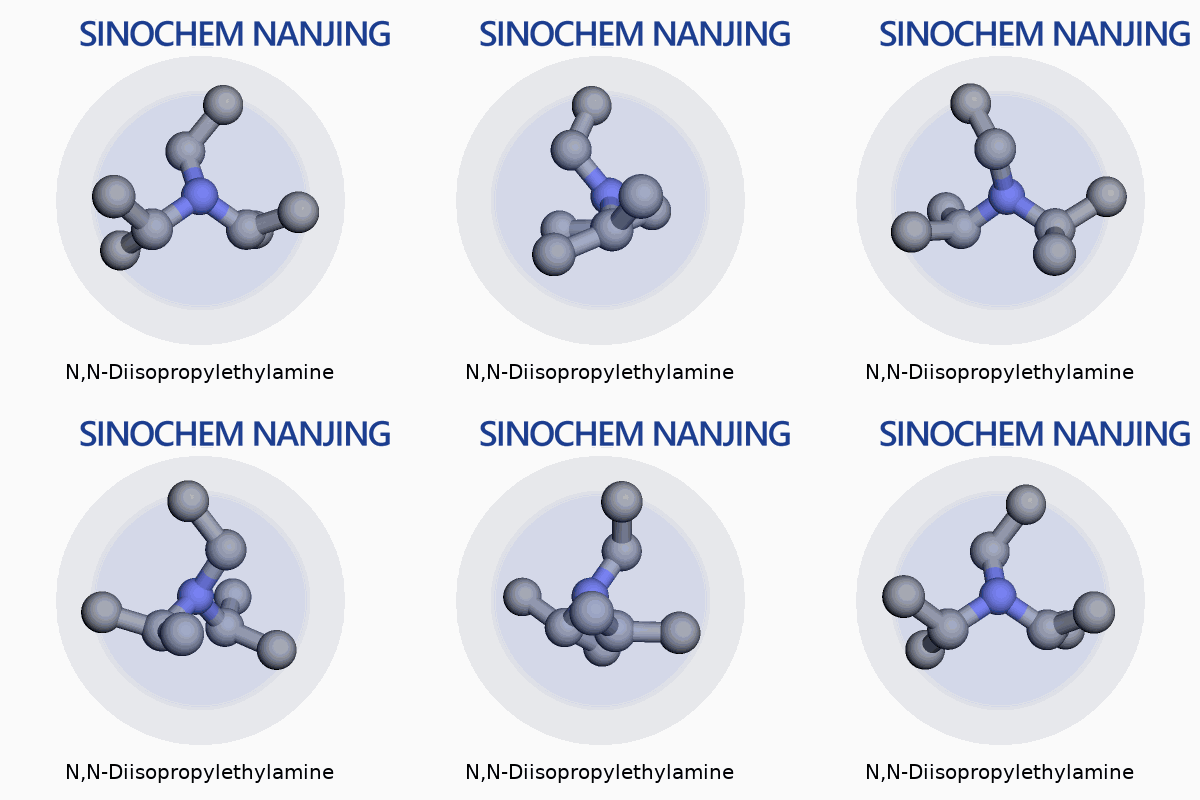
N,N-Diisopropylethylamine, with the chemical formula C8H19N, carries a reputation in labs around the world. The molecule itself holds two isopropyl groups and an ethyl group attached to a nitrogen atom. This arrangement makes it a classic "hindered base." Those who work in organic chemistry recognize it by the nickname "DIPEA," or sometimes "Hünig’s base," and it rarely sits on the shelf for long in any university or industrial lab I’ve visited.
Why the Structure Matters
Working in a chemistry lab, the structure of compounds like DIPEA shapes how a reaction unfolds. The isopropyl and ethyl groups around its nitrogen shield it from attacking protons with too much eagerness. This means DIPEA stands out when a process needs a non-nucleophilic base. You get less unwanted side reaction, cleaner products, and typically, higher yields. For anyone trying to synthesize sensitive molecules or run peptide couplings, the importance becomes obvious. Many textbooks list it right alongside triethylamine, but the added bulk of those isopropyl groups increases selectivity in demanding reactions.
The Formula’s Footprint in Chemistry
DIPEA isn’t just a niche tool. Investigations into pharmaceuticals, agricultural chemistry, and advanced materials all lean on it for controlled deprotonation or as a scavenger for acids. Its boiling point sits higher than some simple amines, so the work-up can demand more careful attention – especially on hot summer days, as I found out running a scale-up reaction in a room without reliable ventilation. The volatile nature of many amines creates hazards, and the pungent odor lingers in the air, so double layering gloves and good fume hoods start to feel indispensable. These safety tips aren’t written just for compliance – I learned that the hard way, after having a spill that cleared out the workspace for an hour.
Safety and Environmental Impact
Persistent use of compounds like DIPEA raises concerns about health and waste. "Amine burns" on skin prove quick to teach caution, and the headaches or eye irritation that follow careless handling reinforce the necessity of personal protection gear. Regulations on storage keep the risk in check, but proper disposal needs planning. This goes beyond pouring used solutions down the drain; responsible labs neutralize or collect DIPEA waste for specialized treatment. Awareness matters. News from several regions has highlighted amine emissions in industrial settings, driving new protocols for monitoring air quality and exposure limits over time.
Alternatives and Ongoing Questions
Researchers keep searching for "greener" analogues with less impact and similar performance. Synthetic chemists now aim for ways to recycle spent bases, reduce volatility, and limit user exposure without sacrificing efficiency. Some teams turn to solid-supported bases or ionic liquids, each with their own quirks. There’s no universal fix, but the journey toward safer and more efficient lab practices moves forward step by step.
Staying on Top of the Game
In the fast-paced world of synthetic chemistry, knowing the formula C8H19N lets professionals recognize the molecule behind "N,N-Diisopropylethylamine," but the real value lies in using it well. Each bottle comes with lessons about safety, efficiency, and respect for both the product and the impact left behind. This awareness shapes not just chemistry, but the future of sustainable science.
Is N,N-Diisopropylethylamine hazardous or toxic?
Working With Chemicals That Don’t Grab Headlines
Some lab chemicals never become household names. N,N-Diisopropylethylamine shows up in organic chemistry labs on a regular basis, usually as a base for reactions. Colorless and smells a bit fishy, the bottle often comes with strict handling instructions. This isn’t the sort of chemical you find in a kitchen, yet researchers trust it to do important work behind the scenes.
Hazards You Can’t Ignore
Behind that half-forgotten name hides real risk. The main problem isn’t some dramatic explosion; it’s the steady, irritating way this chemical can affect health when people skip the gloves or breathe too much of the vapor. Swallowing a mouthful or splashing some in the eye would bring an immediate need for a doctor. It stings, it burns, and it brings painful inflammation. Skin contact leaves red patches that last hours, sometimes longer, as the solvent quality strips protective oils right off.
Inhalation matters, too. Routine mistakes like popping the cap in a stuffy room bring headaches, sore throats, or dizziness. Over time, the vapor can wear down the sensitive lining in noses and lungs. Sometimes, chronic exposure leaves a user more sensitive to chemicals than before. The workplace data back this up: repeated or prolonged exposure to N,N-Diisopropylethylamine increases risks for workers who don’t respect its punch.
Digging Into Toxicity and Exposure Limits
This isn’t a legend passed from chemist to chemist. The National Institute for Occupational Safety and Health (NIOSH) made it clear that N,N-Diisopropylethylamine brings enough risk to warrant personal protective equipment and proper ventilation. Its toxicity sits at a middling range—less menacing than some more famous lab nasties, but enough to cause concern with careless handling.
Animal studies show the compound can cause liver and kidney stress, especially at high doses. Eye contact does real damage. There’s no hard proof of long-term cancer risk, but chemical burns and allergic reactions show up often enough in case reports that a reckless approach never pays off. Even a small splash on clothes soaks through, bringing both health and comfort problems.
Practical Steps for Safer Labs
Wearing nitrile gloves, goggles, and a decent lab coat cuts most risk right away. Scrubbing up before and after each use keeps skin irritation away. Good fume hoods work well, pushing vapors away and keeping them out of the breathing zone. Responsible labs make sure eye wash stations and safety showers sit close at hand—in case something unexpected happens, not if.
Disposal needs thought, too. Pouring leftovers down the sink doesn’t just break a rule—it puts people and the local water supply at risk. Most research institutions train staff in handling chemical waste, making spill kits and sealed disposal containers normal.
Knowing how these precautions fit together comes with real value. Mistakes don’t always make headlines, but taking shortcuts or skipping steps can turn a simple reaction into a trip to the emergency room. People new to chemistry sometimes scoff at the extra steps, but the costs of ignoring N,N-Diisopropylethylamine’s hazards catch up faster than many expect.
Respect Is Key to Prevention
Treating this chemical with steady hands and serious respect sets a strong example for others. Experienced workers tend to pass down stories about close calls—stories that make the safety basics sink in. The underlying risk stays the same, every day, even when it feels routine. Safer routines, clear expectations, and honest communication make a bigger difference than any label ever could.
Personal experience, and stories from countless lab-mates, make it clear: risk never fully vanishes in lab work. What matters is keeping every line of defense in place, respecting the chemistry, and never letting shortcuts become habits.
How should N,N-Diisopropylethylamine be stored?
Safe Handling Starts Before Use
Working in the lab, you learn to respect your materials. N,N-Diisopropylethylamine—sometimes called DIPEA—seems harmless to newcomers, but even experienced chemists remember the first time they caught a lungful of that potent, fishy odor. This liquid doesn’t just smell strong; it reacts quickly with acids, oxidizers, and a few unsuspecting materials. Storing DIPEA in a safe way isn’t some bureaucratic formality—it’s a necessity for your health and the lab’s safety.
Flammable Liquids and the Cost of Ignoring Warnings
DIPEA burns. That might feel like basic knowledge, but plenty of people stash bottles on crowded benches, near hot plates, or sunlight-drenched window sills. That’s taking a risk. Storage cabinets designed for flammable chemicals serve a real purpose, protecting both staff and property. One incident from my grad school days still sticks: a bottle left near an old light fixture cracked, releasing fumes. Nobody got hurt, but the evacuation cleared up any debate about appropriate storage locations.
Sealing, Labeling, and Managing Risk
DIPEA absorbs water and carbon dioxide from the air, turning cloudy or forming gas bubbles. That means screw caps must shut tight; parafilm doesn’t cut it for the long term. Once a bottle’s open, keep it labeled, dated, and in a place where only trained people can access it. I’ve seen lab techs treat their labels like an afterthought, which leads to confusion or—worst of all—mix-ups. Unlabeled or poorly sealed solvents end up unusable, raising disposal costs and workload.
Temperature Matters, Not Just For Shelf Life
Direct sunlight speeds up degradation. Storage at room temperature in a dry, dark place reduces the chance of decomposition. Refrigeration isn’t always required, but keeping the chemical away from any source of heat or open flame provides real peace of mind. Labs sometimes push the limits of “room temp,” especially in summer, making flammable material cabinets more than just a compliance checkbox—they’re vital risk control.
Personal Protection Goes Beyond Gloves
Storing DIPEA in small, sturdy bottles helps. Glass or plastic approved for amines works best, because leaky containers or unexpected reactions can ruin a batch or cause injury. Spills can happen during retrieval, so goggles and gloves make sense, but so do ventilation and awareness. Never underestimate the sharp sting of amine fumes or the challenge they create for those with allergies or sensitivities.
Practical Steps to Protect People—And Budgets
Storage in dedicated, fire-rated cabinets, tight sealing, and clear labeling are minimum standards. Beyond that, regular checks, inventory control, and periodic training on handling practices keep people safe and cut down on expensive waste. Responsible use of DIPEA protects the environment too—improperly stored amines leach into waste streams more easily than you’d think. Chemical stewardship isn’t just regulatory red tape; it keeps families from getting emergency calls and organizations out of legal hot water.
Looking Ahead
Even experienced professionals sometimes treat storage as a back-burner issue, focusing instead on synthesis or productivity. Stories of minor incidents—leaks, fumes, wasted reagents—show how routine attention to details pays off in safety and efficiency. Mindful storage benefits everyone in the lab, from the greenest intern to the most seasoned professor.
What are common synonyms for N,N-Diisopropylethylamine?
Understanding Its Many Names
N,N-Diisopropylethylamine pops up a lot in lab conversations, usually under a different name. Most chemists I know just call it DIPEA. It rolls off the tongue easily, saves time during a hectic synthesis, and keeps everyone on the same page. It also goes by “Hunig’s Base,” after Edgar Hunig, who developed it in the 1950s. The story goes that Hunig needed a sterically hindered, non-nucleophilic base for his research, and hit on this compound. The nickname stuck because science seems to like honoring the people behind breakthroughs.
Then you see the IUPAC name roll out—N,N-diisopropylethanamine. It’s a mouthful, mostly reserved for official records, regulatory filings, or academic publications. You spot it on chemical safety data sheets, maybe if your professor insists on IUPAC in write-ups, or you’re searching the research literature. Some lab supply catalogs drop the “N,N,” but it’s still the same molecule—just with a trimmed-down alias.
In the Real World of the Laboratory
I remember early on, colleagues switching effortlessly between “DIPEA,” “Hunig’s Base,” and even “Hünig’s base” (if they wanted to show off a bit of German spelling). The synonym “DIPEA” means you’re talking with people who actually use the material at the bench, rather than just those who sell or regulate it. “Triethylisopropylamine” and “Diisopropylethylamine” also sneak into catalogues, but these rarely echo through a crowded lab unless something funny’s happened with an order.
Sometimes, someone will mention its Chemical Abstracts Service number: CAS 7087-68-5. This isn’t a true synonym, but it’s as specific as you get for inventory and regulatory checks. Lab inventories and procurement systems often rely on this number to avoid confusion. Even large companies, for all their size, can ship a case of the wrong base if the name isn’t precise.
Why the Synonyms Matter
Mix-ups carry real consequences. I’ve seen procedures ruined, yields tanking, and solvents wasted just because somebody grabbed triethylamine instead of DIPEA, fooled by a similar name. The use of clear synonyms helps avoid expensive mistakes and supports safe chemical handling. In regulated industries, especially pharmaceuticals, clarity keeps projects compliant—regulators know what’s being used and why.
Synonyms don’t just save time. They reflect real knowledge transfer between people at the bench, educators, suppliers, and safety officials. In my experience, a lab group that agrees on a set of names runs smoother, discusses hazards more clearly, and trains newcomers faster. There’s less waste, fewer accidents, and everyone knows what’s going into the flask.
Keeping Language Clear Across Borders
Language around chemicals can get tricky, especially if teams stretch across countries or specializations. European colleagues sometimes reach for “Hünig’s base,” while American catalogs almost always list “DIPEA.” Safety officers tend to prefer full systematic names. Good communication comes from recognizing the meaning behind each synonym, not letting jargon create confusion.
In the end, I’ve found that a running list of accepted synonyms on blackboards or lab handbooks keeps everyone on the same wavelength. Training sessions for students and new hires always include a little rundown of these names, bridging gaps between generations of scientists and between languages.
DIPEA, Hunig’s Base, N,N-diisopropylethylamine, triethylisopropylamine, and its CAS number all point to the same handy molecule. Recognizing each synonym—context and all—means more efficiency, fewer mistakes, and safer chemistry all around.
| Names | |
| Preferred IUPAC name | N-ethyl-N,N-di(propan-2-yl)propan-2-amine |
| Other names |
DIPEA Hünig’s base Diisopropylethylamine N-Ethyl-N,N-diisopropylamine |
| Pronunciation | /ˌdiː.aɪˌaɪ.səʊˌprəʊ.pɪlˈeθ.ɪlˌæm.iːn/ |
| Identifiers | |
| CAS Number | 7087-68-5 |
| Beilstein Reference | 1209270 |
| ChEBI | CHEBI:39057 |
| ChEMBL | CHEMBL617 |
| ChemSpider | 5341 |
| DrugBank | DB14011 |
| ECHA InfoCard | 03d622db-8b7d-435d-9452-957ed7df1ee5 |
| EC Number | 603-469-6 |
| Gmelin Reference | 79535 |
| KEGG | C06147 |
| MeSH | D017209 |
| PubChem CID | 7963 |
| RTECS number | KH2975000 |
| UNII | YNMTZBJQJFIZSCQSTRING |
| UN number | UN1154 |
| CompTox Dashboard (EPA) | DTXSID5020716 |
| Properties | |
| Chemical formula | C8H19N |
| Molar mass | 129.24 g/mol |
| Appearance | Colorless liquid |
| Odor | Amine-like |
| Density | 0.742 g/mL at 25 °C |
| Solubility in water | Miscible |
| log P | 2.95 |
| Vapor pressure | 0.5 mmHg (20 °C) |
| Acidity (pKa) | 10.75 |
| Basicity (pKb) | 3.0 |
| Magnetic susceptibility (χ) | -61.5 × 10⁻⁶ cm³/mol |
| Refractive index (nD) | 1.387 |
| Viscosity | 2.4 mPa·s (25 °C) |
| Dipole moment | 2.20 D |
| Thermochemistry | |
| Std molar entropy (S⦵298) | 389.6 J·mol⁻¹·K⁻¹ |
| Std enthalpy of formation (ΔfH⦵298) | -322.2 kJ/mol |
| Std enthalpy of combustion (ΔcH⦵298) | -4596 kJ/mol |
| Hazards | |
| GHS labelling | GHS02, GHS07 |
| Pictograms | GHS02,GHS07 |
| Signal word | Warning |
| Hazard statements | H226, H302, H312, H315, H319, H335 |
| Precautionary statements | P210, P233, P240, P241, P242, P243, P280, P303+P361+P353, P304+P340, P305+P351+P338, P312, P337+P313, P370+P378 |
| NFPA 704 (fire diamond) | Health: 2, Flammability: 3, Instability: 0, Special: |
| Flash point | 41 °C (105.8 °F; 314.15 K) |
| Autoignition temperature | 215 °C |
| Explosive limits | 4% - 7.8% |
| Lethal dose or concentration | LD50 Oral Rat 926 mg/kg |
| LD50 (median dose) | LD50 (oral, rat): 552 mg/kg |
| NIOSH | KK8225000 |
| PEL (Permissible) | Not established |
| REL (Recommended) | No REL established |
| Related compounds | |
| Related compounds |
Diisopropylamine Triethylamine N,N-Dimethylethylamine N,N-Diisopropylmethylamine |



