N-Hexylamine: A Down-to-Earth Commentary on Its Science and Significance
Historical Development
The story of N-Hexylamine traces back to early research in the amine family, which stretches over a century. Chemists searching for practical amines noticed that adding longer carbon chains brought out different behaviors in these compounds. N-Hexylamine, with its six-carbon structure anchored onto an ammonia core, showed promise early on. Early researchers didn’t just mix chemicals unintentionally; they learned through hard work and plenty of mistakes how changing molecular structures could affect smell, reactivity, and even usefulness in everyday materials. Laboratories in the 1920s and 1930s methodically cataloged amines like N-Hexylamine, each time finding a little more detail, a little more potential.
Product Overview
In industry, N-Hexylamine doesn’t hide in a dark corner. It pops up as a colorless liquid, a bit of an oddball with a strong, fishlike odor you won’t soon forget. Chemists use it as a starting point for surfactants and corrosion inhibitors. The compound slots comfortably among alkylamines, where it easily forms bonds, mixes with organic solvents, and stands up to some of the rough stuff in chemical processes. End-users often see it in products like pharmaceutical intermediates, agrochemicals, and lubricants. Each application pulls from its straightforward structure, which helps it blend, react, or stabilize in many ways.
Physical & Chemical Properties
N-Hexylamine comes as a colorless, oily liquid. At room temperature, it emits a recognizable, pungent smell. The boiling point lands around 131°C, which means it doesn’t escape into thin air too easily once you start heating it. Its density sits at about 0.77 g/cm3. This amine dissolves well in alcohol, ether, and other organic solvents, but it dodges water pretty well—not much solubility there. The molecular formula, C6H15N, keeps things simple. What stands out is how it reacts—the lone pair on the nitrogen atom makes it a strong nucleophile, and the six-carbon chain adds a bit of hydrophobic punch. It doesn’t mess around with metals; it can corrode copper and its alloys, so storage containers call for careful material choice.
Technical Specifications & Labeling
N-Hexylamine products usually need a purity of 98% or higher if destined for lab or industrial use. Vendors often display gas chromatography analysis numbers, showing off the absence of major contaminants like heptane, water, or other amines. Labels must read “Corrosive,” warn about toxic fumes, and carry proper GHS symbols. Typical packaging includes steel drums or HDPE containers with sealed lids, and they must list batch number, gross weight, net weight, and supplier’s details. MSDS sheets explain exactly what to do if things go sideways, like accidental splashes or vapor exposure. The industry’s no-nonsense approach reflects the need to protect both users and those who transport N-Hexylamine from place to place.
Preparation Method
Most commercial N-Hexylamine starts its journey in reactors that mix 1-chlorohexane with ammonia under pressure. Catalysts like Raney nickel speed up the reaction, and operators closely control temperature between 80°C and 150°C. Other methods draw from hydrogenation of nitriles—hexanenitrile, for example—using metal catalysts under a hydrogen atmosphere. The goal is the same: break a strong triple bond, add ammonia, simplify things down to the amine. The best batches require proper distillation. The product can come out dirty, so manufacturers employ fractional distillation, pulling off pure N-Hexylamine while kicking out low-boiling impurities and heavier amines. Process monitoring isn’t just paperwork; it means fewer batch failures and safer workplaces.
Chemical Reactions & Modifications
Chemists find N-Hexylamine a bit of a workhorse in the lab. Its primary amine group reacts briskly with acids to make hexylammonium salts, and it teams up with acid chlorides to form amides. If you mix it with aldehydes or ketones, you get imines—valuable for building new molecular scaffolds. It can take on alkylation, giving birth to secondary and tertiary amines. It also plays a role in modifying surfactant backbones, since adding the six-carbon chain changes how molecules sit on water or interact with dirt. N-Hexylamine stands up to oxidation, converting to hexyl nitrite or hexanoic acid derivatives under strong conditions. The practical upshot is a compound that expands choices in organic synthesis and opens doors in polymer chemistry, textile auxiliaries, and even electronic chemicals.
Synonyms & Product Names
Anyone working with N-Hexylamine eventually runs across its aliases. Sometimes you see “1-Aminohexane,” other times just “Hexylamine.” Regulatory registries stick with CAS 111-26-2. Old catalogs and safety data sheets call it “Hexan-1-amine,” reflecting the chain’s backbone. Tradename variations pop up depending on supplier or application: some call out “Hexylamine (primary)” to separate it from branched or secondary hexylamines. Consistency matters less in conversation, more in documentation. Farm hands and lubrication chemists care more about performance than technical tags, but clear labeling prevents costly mix-ups.
Safety & Operational Standards
The safety profile of N-Hexylamine demands respect on the shop floor and in the R&D lab. Its vapors irritate mucous membranes, eyes, and the respiratory tract. Splashes can burn skin, and inhaling even modest levels leads to coughing and headaches. Industrial hygienists call for goggles, gloves, and good ventilation. Emergency showers should sit within sprinting distance. Storing the product means steel drums lined with anti-corrosive coatings, kept cool and sealed tight, out of sunlight. Safety data points show that the compound’s flash point hovers near 27°C, so fire risk never really leaves the picture. Fire suppression plans will include both foam and CO2 options, clear evacuation routes, and training drummed into everyone’s routine. Proper disposal involves neutralizing spills with dilute acid before flushing with copious water, all while keeping environmental agencies in the loop.
Application Area
Use cases for N-Hexylamine stretch across many fields. Oilfield service companies add it to corrosion inhibitor blends, keeping pipelines safer for longer. Crop protection firms turn it into intermediates for herbicides and fungicides, chasing better yields and disease control. In rubber and plastics, it acts as an accelerator or stabilizer, making sure compounds set up fast and stay durable. Lubricant formulators appreciate how it tweaks viscosity and reduces friction, especially under high heat. Pharmaceutical developers patch N-Hexylamine into synthesis routes for antihistamines and anti-psychotic drugs, often relying on its primary amine for new chemical bonds. If you look close, it even turns up in cleaning fluids and water treatment chemicals. All these roles rest on its chemical stability and reliable reactivity.
Research & Development
In research circles, N-Hexylamine draws interest not just for what it does now but for untapped potential. Universities and private labs use it as a probe for understanding amine reactivity, testing new catalytic systems or chasing more sustainable process chemistry. Analytical chemists evaluate its breakdown in natural systems, looking for environmental impacts and potential degradation byproducts. Some biotech outfits investigate its modulation of membrane properties, hoping to leverage the hydrophobic chain in drug delivery experiments. Material scientists blend it into new polymer networks, chasing flexibility, antistatic behavior, or controlled conductivity. Researchers know the compound stands up to detailed analysis—HPLC, GC-MS, and NMR each map out how it fits and what impurities hang on. Questions about safer handling, greener preparation routes, and new product classes drive ongoing collaborative projects across continents.
Toxicity Research
N-Hexylamine doesn’t offer a free ride when it comes to health risks. Toxicological studies point to acute toxicity in rodents at low hundreds of milligrams per kilogram, and long-term exposure can sensitize the skin or respiratory tract. Animal studies show liver and kidney stress with repeated dosing. Epidemiologists evaluate workplace exposures, using decades of industrial monitoring data to define safe levels. Current official guidelines set low exposure thresholds, usually under 1 ppm for an 8-hour workday. The compound’s volatility, coupled with skin absorption potential, pushes firms to build engineering controls and select PPE not on cost, but on proven protection. Carcinogenicity studies are ongoing, but no firm links show up yet in the literature. Still, prudence rules, and new studies on metabolic breakdown products keep popping up, with a focus not just on acute harm, but also reproductive risk and environmental toxicity.
Future Prospects
Looking forward, N-Hexylamine finds its name in conversations around green chemistry and advanced materials. Researchers hope to swap harsh synthesis routes for bio-based ones, aiming for fermentative production from renewable feedstocks. Startups experiment with upcycling plastic waste streams, tacking alkyl chains onto amines using less energy and fewer toxic reagents. In water treatment, firms want to tweak the molecule’s structure to work at lower dosages with less byproduct. The march toward digital manufacturing puts N-Hexylamine in focus for specialty 3D-printing resins, where precise control over amine reactivity means better print quality and new properties. Strict regulations will press manufacturers to prove cleaner emissions, less hazardous waste, and sustainable sourcing for every drum produced. This will push the industry to innovate continuously, as customer needs and environmental expectations grow together.
What is N-Hexylamine used for?
A Look Into N-Hexylamine
N-Hexylamine doesn’t show up in television commercials, so most people haven’t heard about it. Yet, this clear, colorless liquid with a fishy odor shapes several important industries. Its main use centers around acting as a building block for other chemicals. The agriculture sector, drug makers, and manufacturing all find a use for it—often where you least expect.
Behind the Scenes in Agriculture
In farming, the battle against insects and weeds never ends. N-Hexylamine steps in as a key part of some herbicides and pesticides. These bug-fighting and weed-killing compounds keep crops from falling victim to pests. Consistent yields matter, and crop losses hit a farmer's bottom line. Reliable chemicals cut these risks. N-Hexylamine-based solutions have held their ground for years, playing a part in making food more affordable and available.
Makes Pharmaceuticals Possible
The story doesn’t stop in the fields. Pharmaceutical chemists turn to N-Hexylamine when they need to create drugs with complicated structures. Drugs often come packed with all sorts of chemical groups, and sometimes the only way to get that structure right is with a helper like N-Hexylamine. For instance, it serves as a starting point for compounds that fight infections or help manage chronic conditions.
My years studying chemical engineering showed me how much hinges on the properties of such “invisible” chemicals. The lab work often involves careful handling and strict measuring, but the results show up on pharmacy shelves or in better crop prices.
Other Roles: From Rubber to Coatings
Manufacturers that make rubber goods—think hoses, tires, seals—rely on substances that improve durability and flexibility. Chemicals like N-Hexylamine play a part in these blends, influencing how tough and long-lasting the finished material turns out. Coating specialists use it in corrosion inhibitors and surface treatments, protecting metal parts from rust. Infrastructure, from bridges to pipelines, sees the benefit.
What Should Concern Us?
Working with chemicals such as N-Hexylamine brings health and safety worries. Breathing too much can bother the lungs, and the liquid irritates the skin. Factories must train staff well and monitor indoor air. Wastewater containing N-Hexylamine needs strict treatment to keep waterways and soil clean. Without that vigilance, communities near production sites end up exposed to unnecessary risks.
Safety guides and monitoring technology can help. Real-time air quality sensors, robust training, and community right-to-know programs build trust and transparency. On a broader level, new research has begun to look for greener alternatives or better containment approaches, aiming for the same industrial benefits without as many downsides.
What The Future Holds
More industries use N-Hexylamine each year. At the same time, environmental standards keep rising, putting pressure on companies to manage risks closely. Regulatory agencies, including the EPA and EU counterparts, have set rules about how much can be used and how to dispose of waste. Compliance isn’t optional, but many producers now go further by investing in safer processes and cleaner technologies.
Anyone buying farm produce, driving a car, or using cleaned tap water might not see N-Hexylamine’s name, but its footprint is close by. It’s a classic background helper—something rarely noticed, yet hard to replace.
What is the CAS number of N-Hexylamine?
Understanding the Role of CAS Numbers in Chemistry
A CAS number, or Chemical Abstracts Service number, gives every chemical its own digital fingerprint. The CAS number for N-Hexylamine lands at 111-26-2. This string of digits does more than just fill out regulatory forms. In labs and factories, one wrong number can trigger a cascade of errors. I remember in my own days working next to a research lab, using the wrong CAS number in a database caused weeks of lost experiments. This number doesn't describe what N-Hexylamine does. Instead, it stands in as its unambiguous ID, packaging up all safety, purity, and compliance info into one searchable point.
Why 111-26-2 Matters in Real Life
If you work in chemical manufacturing, pharmaceuticals, or quality control, you know confusion around chemical identities can threaten both health and business. A slight spelling mistake or incorrect synonym can mean using the wrong chemical. N-Hexylamine pops up as a solvent, a building block for agrochemicals, even as an intermediate for dyes and pharmaceuticals. Its CAS number eliminates ambiguity. No guesswork. Just certainty, instantly.
In practice, I’ve seen how regulations now hang on accurate CAS numbers. Importers can't move chemicals across borders without them. Workers use them in Safety Data Sheets to find out exactly what hazard training they should take. If there’s an incident—maybe a chemical spill—the emergency team looks up the CAS number and knows right away which neutralizing agents fit. Speed matters. So does accuracy.
Supporting Safe and Responsible Usage
Risk sits around every corner in the chemical business. N-Hexylamine, for example, carries risks if you breathe the vapors or get it on your skin. The CAS number 111-26-2 threads through every document tied to its safe use: storage guidelines, PPE recommendations, first-aid instructions, waste handling procedures. Workers can’t afford to mix chemicals up—real lives depend on those details. Even labs working on green chemistry solutions depend on precise identification so they can choose safer alternatives or track down suppliers with the right paperwork.
Problems With the System and Smarter Solutions
Of course, systems never work perfectly. Smaller labs and businesses sometimes rely on trade names or generic labels out of habit or to save money, opening themselves up to risk. In my experience, language differences or old habits lead to confusion. People want shortcuts, but with chemistry, those shortcuts can be dangerous. Mislabeling in warehouses or labs can trigger product recalls, regulatory fines, or worse—injuries.
To push back against these problems, digital inventory systems paired with barcoding have helped. Scanning a barcode linked to the CAS number cuts down on manual entry errors. More training matters, too. In the best-run labs I’ve seen, every new employee learned to check the CAS number first, not just chemical names. Strong communication between purchasing, safety, and warehouse teams supports better accuracy. In short, the number 111-26-2 does more than represent N-Hexylamine on paper—it underwrites the safety, efficiency, and reliability of entire operations.
What are the storage conditions for N-Hexylamine?
Understanding N-Hexylamine in Simple Terms
N-hexylamine stands out as a strong-smelling, colorless liquid that finds heavy use in the chemical industry. From personal experience working around small labs and industrial settings, this compound demands respect and attention in storage. Accidents happen fastest with chemicals that seem harmless at a glance, and N-hexylamine can catch people off guard. Breathing in too much vapor or touching it with bare hands leaves you feeling pretty rough—so a safe storage plan isn’t just some piece of paperwork for the shelf. It could save a trip to the hospital, or even a life.
Spotlight on Simple Storage Rules
Smart storage for N-hexylamine starts with its basic properties. The liquid boils well below the temperature of boiling water, at around 131°C (268°F), and it lights up easily with a spark or flame. These facts make two risks clear: fire and vapor release. That’s why you see N-hexylamine locked up in cool, well-ventilated storerooms away from anything that could light it up, including static electricity and open flames. I’ve come across a few near misses, and it’s always the same story—an overlooked container, clogged vent, or something powered up too close.
Look at guidelines from health and chemical safety agencies like OSHA and the CDC. They echo years of workers’ shared experience:
- Store in tightly sealed containers built for solvents. Metal drums with good grounding or thick-walled approved plastic containers both work well.
- Keep it below 25°C (77°F), out of sunlight, and far from any heat sources. Too much warmth cranks up pressure and volatility.
- Make sure each room stays dry. Any water can cause a pressure buildup in bottles or drums, risking leaks or explosions.
- Shelve N-hexylamine apart from acids, oxidizers, or halogens. These pairings spell trouble; you never want to see a runaway reaction up close.
- Stick to well-marked areas—no mystery jugs tucked behind boxes. Every container gets a clear label and a hazard sticker that’s legible from a distance.
Human Stories Behind Chemical Safety
I once watched a newcomer in a facility ignore a warning and stack a drum of N-hexylamine next to bleach. The supervisor caught it, but not before everyone realized how quick things could have gone bad. Mixing amines like N-hexylamine with hypochlorite bleach can pump out clouds of toxic gas. People in the chemical field get used to handling tricky goods, but even routine tasks become risky without a culture of safety and responsibility.
Ventilation goes hand-in-hand with storage. If you walk into a storeroom and catch a whiff of anything strong or fishy, that’s a problem. Reliable exhaust fans, regular checks for corrosion or leaks, and spill kits nearby keep unexpected surprises manageable. There’s no excuse for skipping safety gear—gloves, safety goggles, and sometimes a respirator, especially when moving larger drums.
Looking for Better Solutions
Too many places cut corners with chemical storage. In my view, the answer lies in regular training and clear emergency protocols. Checking containers every few months for wear or damage takes minutes and saves hours of cleanup or worse. The best-run shops share updates from safety boards and encourage staff to speak up without fear of blame. Anyone working with or around N-hexylamine earns the right to be heard about the risks and how best to handle them.
Research and real-world experience join forces in the guidelines for storing N-hexylamine safely. Keeping this simple liquid out of trouble means balancing old-school caution with fresh reminders and a dose of humility. No one’s immune to mistakes, but clear habits, honest conversations, and a little stubborn attention go farther than any fancy lock or alarm. Chemicals don’t forgive inattention—people can’t afford to either.
Is N-Hexylamine hazardous or toxic?
N-Hexylamine in Everyday Context
N-Hexylamine turns up in more places than many people realize. It plays a role in making chemicals that show up in everyday products, whether it's rubber goods in cars, water treatment additives, or specialty surfactants. Few of us think about what goes into these materials, but coming across such chemicals at work or in the industrial sphere reminds me how often safety questions get brushed off.
Direct Health Risks and Exposure
Not everyone working near N-Hexylamine gets handed the right facts about its risks. Touching the liquid, getting it in your eyes, or breathing its vapors can cause problems. Irritation to the skin and eyes often feels immediate. Headaches, nausea, or shortness of breath sometimes follow even at lower air concentrations. A friend of mine in industrial cleaning said a minor splash once left him with red, burning skin for hours. These symptoms don’t sound dramatic, but real discomfort is never “minor” to the person experiencing it.
Longer or repeated exposure creates bigger concerns. Rats exposed daily to N-Hexylamine vapors in studies developed nose and lung problems, signaling the risk to respiratory tracts in humans, too. N-Hexylamine isn’t classified as a cancer risk by major agencies, but ignoring the irritation and possible lung issues makes little sense. I think about workers who might not have the option to avoid it—people doing their jobs, often without top-quality protection. It’s easy to say “follow the rules,” but in practice, eye protection and respirator use depend on what’s supplied, the pace of the work, and training.
Environmental Spillover
Chemicals that affect people often hit the environment too. N-Hexylamine can seep into water or soil during transportation accidents or improper disposal. It has moderate water solubility and doesn’t stick around in soil for years, but fish and water fleas show toxic effects at small doses. As a hiker who values clean streams, I know how even temporary pollution damages fragile waterways. Washing down chemical residues into drains or onto the ground brings those risks home to both nature and, indirectly, to us.
Managing Hazards—What Really Works?
Reading through chemical safety data sheets or government advisories, you see a clear message: minimize vapor and liquid exposure. Lab settings use fume hoods, gloves, and good ventilation. This should not only be a standard, but also a reality in all settings, from small workshops to big plants. I have seen some workplaces try swapping out N-Hexylamine for less harsh amines, or switching to more automated processes to keep workers out of harm’s way.
Strict labeling remains key. No one should pour a mystery liquid from an unmarked container. Emergency eyewash stations and clear spill procedures help limit problems when something does go wrong. Employee training sessions—hands-on and not just a safety video—make the biggest difference in my experience.
Path Forward: Awareness and Accountability
Hazardous doesn’t have to mean unavoidable suffering or risk. Promoting better awareness and giving people both the right tools and the information helps everyone stay safer. Regulators and employers share this responsibility. Knowing exactly what’s in play, understanding how it can go wrong, and giving everyone the means to work safely ensures N-Hexylamine’s place in industry doesn’t come at the expense of health or environmental quality.
What is the chemical formula and molecular weight of N-Hexylamine?
The Details Behind N-Hexylamine
N-Hexylamine stands out in a world of chemicals with a formula of C6H15N. This set of letters and numbers gives away a lot about the substance. Six carbon atoms, fifteen hydrogens, and one nitrogen build this molecule from the ground up. In the lab, this simple look underpins a substance that shows up across a range of applications, from rubber additives to corrosion inhibitors. Every time I see a three-part formula like this, I remember the nights spent balancing equations and wondering where compounds like this fit into daily life. Turns out, they fit into more places than I imagined.
Molecular Weight: Why It Matters
N-Hexylamine carries a molecular weight of 101.19 g/mol. That number does more than just fill a line in a safety data sheet. Knowing the exact mass of a molecule gets chemists through complex calculations, helps factories measure out just the right amount, and prevents disasters in production. Too much or too little, and the whole process starts to buckle. During my time handling reagents, the difference between a successful synthesis and a wasted morning often hinged on not rounding off weights or ignoring purity. Here, the math isn't just academic—it pays off at scale.
Straight-Chain Amines Have Their Own Stories
If you line up the structure of N-Hexylamine, you get a straight chain of six carbon atoms capped with an amine group. That amine makes it reactive, ready to link up with acids to form salts, or get involved in organic syntheses for dyes, drugs, and surfactants. Looking back, I remember tracking down leaks in a lab, nose catching the sharp, fishy scent of an aliphatic amine—hexylamine included. That smell gets your attention in a way MSDS warnings never really can.
Health, Safety, and Handling: Beyond the Page
The use of N-Hexylamine comes with real hazards. It doesn’t take a large dose to irritate the skin, eyes, or lungs. One splash or inhale can leave a mark, making gloves and goggles non-negotiable. The volatile nature of amines also makes for headaches—not just literally, but in storage protocols and spill plans. The chemical formula gives hints, but a real-world understanding of risk picks up where the textbooks leave off.
Environment and Industry: Choices Drive Outcomes
Industries rely on N-Hexylamine for its versatility. Its production and disposal demand recycling efforts and containment strategies. Too many stories circulate about chemical runoff making its way into water supplies, and local authorities stepping in with fines or shutdown orders. Preventing these problems comes down to a mix of individual responsibility and smart design. Closed systems, better monitoring, and investment in waste processing pay off in the long haul—not just for compliance, but for community trust.
Looking Ahead: Responsible Chemistry
Curiosity about a chemical formula or molecular weight can lead deeper, past raw data to the choices people make around safety, process improvement, and sustainability. From my experience, the difference between textbook knowledge and wise chemical use rests on the willingness to ask better questions—and an openness to learn from both numbers and mishaps. N-Hexylamine is just one piece of that much larger story.
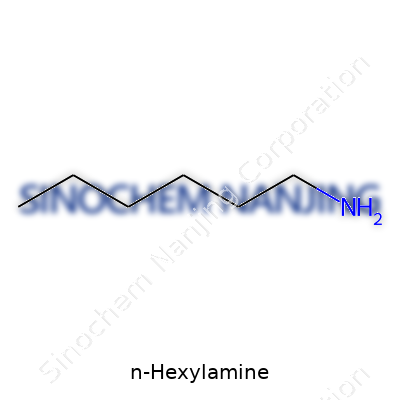
| Names | |
| Preferred IUPAC name | hexan-1-amine |
| Other names |
Hexylamine 1-Aminohexane Hexan-1-amine |
| Pronunciation | /ɛn-ˈhɛk.sɪl.əˌmiːn/ |
| Identifiers | |
| CAS Number | 111-26-2 |
| Beilstein Reference | 1718735 |
| ChEBI | CHEBI:35719 |
| ChEMBL | CHEMBL1337307 |
| ChemSpider | 14068 |
| DrugBank | DB01941 |
| ECHA InfoCard | DTXSID7031807 |
| EC Number | 203-683-8 |
| Gmelin Reference | 52768 |
| KEGG | C01876 |
| MeSH | D006621 |
| PubChem CID | 8103 |
| RTECS number | MR1400000 |
| UNII | E5936K1WCL |
| UN number | UN2733 |
| Properties | |
| Chemical formula | C6H15N |
| Molar mass | 101.19 g/mol |
| Appearance | Colorless to yellowish liquid |
| Odor | Ammonia-like |
| Density | 0.767 g/mL at 25 °C(lit.) |
| Solubility in water | soluble |
| log P | 1.84 |
| Vapor pressure | 3.7 mmHg (20°C) |
| Acidity (pKa) | 10.64 |
| Basicity (pKb) | 3.37 |
| Magnetic susceptibility (χ) | -5.9×10⁻⁹ |
| Refractive index (nD) | 1.411 |
| Viscosity | 0.586 mPa·s (20 °C) |
| Dipole moment | 4.93 D |
| Thermochemistry | |
| Std molar entropy (S⦵298) | 234.6 J·mol⁻¹·K⁻¹ |
| Std enthalpy of formation (ΔfH⦵298) | -176.5 kJ/mol |
| Std enthalpy of combustion (ΔcH⦵298) | -4172.7 kJ/mol |
| Hazards | |
| GHS labelling | GHS02, GHS05, GHS06 |
| Pictograms | GHS02,GHS05,GHS07 |
| Signal word | Danger |
| Hazard statements | H226, H302, H314, H410 |
| Precautionary statements | P210, P261, P264, P280, P301+P312, P305+P351+P338, P310, P330, P405, P501 |
| NFPA 704 (fire diamond) | 3-3-2-A |
| Flash point | 35 °C |
| Autoignition temperature | 285 °C |
| Explosive limits | 1.2% - 7% |
| Lethal dose or concentration | LD₅₀ (oral, rat): 1,160 mg/kg |
| LD50 (median dose) | LD50 (median dose): Oral (rat) 415 mg/kg |
| NIOSH | UN1185 |
| PEL (Permissible) | PEL: 5 ppm (18 mg/m³) |
| REL (Recommended) | REL: 5 ppm |
| IDLH (Immediate danger) | 100 ppm |
| Related compounds | |
| Related compounds |
Aniline Cyclohexylamine Dihexylamine Hexan-1-ol Hexyl isocyanate Trihexylamine |



