N-Ethylpiperidine: An Industry and Research Commentary
Historical Development
Chemists first started exploring piperidine derivatives in the late nineteenth century, after the isolation of piperidine from black pepper. As chemistry advanced in the twentieth century, researchers experimented with changing the nitrogen substituent to see how this would affect properties and applications. N-Ethylpiperidine entered the scene as a more specialized derivative, picking up interest during the post-war boom in synthetic organic chemistry. Its rise owes much to its role as both a building block and a solvent, especially for people exploring pharmaceuticals, flavor chemistry, and fine chemicals. Demand from those working in organic synthesis pushed improvements in both its commercial production and laboratory handling.
Product Overview
N-Ethylpiperidine stands out as a six-membered ring with one nitrogen atom, with an ethyl group replacing a hydrogen on the nitrogen. This slight tweak creates notable shifts in both reactivity and toxicity, making it more lipophilic and a preferred base or intermediate over some of its more volatile or less specific cousins. Companies tend to offer it as a clear liquid, regularly packaged in dark glass bottles or stainless steel drums for bulk applications. Depending on the source and specifications, the purity often falls above ninety-nine percent, with trace water and related piperidines being the main impurities. Its ready reactivity and compatibility with a range of organic solvents turn it into a common sight in labs that deal with alkylations, cyclizations, or even specialty polymer syntheses.
Physical & Chemical Properties
Anyone with a background in organic chemistry can recognize the faint amine odor right away. N-Ethylpiperidine boils around 137 to 139 degrees Celsius and freezes near minus 40. This volatility brings both advantages and hazards, so fume hoods become mandatory in any well-run lab that sees frequent use. The compound dissolves readily in most organic solvents like diethyl ether or acetone, but it won’t mix with water in significant amounts. On the chemical front, the ethyl group boosts electron density at the nitrogen, tuning its basicity, reactivity, and its role as a catalyst or reactant in quaternization reactions. Unlike simple piperidine, it tends to resist oxidation under normal conditions, thanks to the added bulk of an alkyl group.
Technical Specifications & Labeling
I’ve seen plenty of chemical labels, and those on bottles of N-Ethylpiperidine tell an experienced user what’s inside. Manufacturers usually highlight CAS number 530-41-0, noting batch number, purity, and precautions. Labels often point out the need for gloves, goggles, and fume protection. Most certificates of analysis include water content, sometimes below 0.2%, and other related amines in the range of tenths of a percent or less. Packaging gets sealed tightly, often with a tamper-evident ring, since exposure to air or light can slowly degrade the product through amine oxidation. Safety data sheets break down key warnings—flammability, corrosivity to eyes and mucosa, and possible CNS effects if inhaled or absorbed in large amounts.
Preparation Method
Industrial-scale production of N-Ethylpiperidine usually involves alkylation of piperidine with ethyl halides, such as ethyl bromide, in the presence of a strong base. Laboratories often prefer the use of sodium hydroxide and reflux conditions, which favor production of the mono-alkylated product over di- or tri-alkylated analogues. After completion, careful distillation and washing remove unreacted starting material and byproducts. The challenge often lies in minimizing dialkylated side-products, so careful control of stoichiometry and temperature pays off. Some process engineers use phase-transfer catalysts or continuous flow reactors to improve yields and safety, reducing worker exposure to volatile amines.
Chemical Reactions & Modifications
Once made, N-Ethylpiperidine does a lot of heavy lifting in synthetic chemistry. It acts as a nucleophile in SN2 reactions, pushing out leaving groups and tacking itself onto carbon frameworks. Sometimes, a chemist might use it as a mild organic base, favoring it over triethylamine where less steric hindrance helps foster reactivity. In pharmaceutical synthesis, this amine sometimes becomes part of a larger heterocyclic scaffold, or acts as a temporary blocking group, later removed through hydrolysis or oxidation. It rarely stays inert; exposure to strong acids, oxidizing agents, or nitration procedures alters its ring structure or replaces the ethyl, making it a springboard for further functionalization.
Synonyms & Product Names
Anyone scanning a material inventory should watch for alternative names like 1-Ethylpiperidine, N-Ethyl-hexahydroazepine, or simply Ethylpiperidine. CAS numbers and batch records help avoid confusion, but inconsistent synonyms sometimes lead to mislabeling. In research articles or patents, synonyms appear interchangeably, which can create headaches if you’re searching chemical databases or regulatory lists. Some suppliers might brand their product based on the application, touting pharmaceutical, analytical, or technical grade, but the core chemical remains the same.
Safety & Operational Standards
I once witnessed a spill in a crowded teaching lab, and the powerful odor made folks stop in their tracks. The lessons stick—a clear risk of chemical burns or respiratory irritation demands strict safety protocols. Standard operating procedures mean gloves made of nitrile, splash goggles, lab coats, and constant ventilation. N-Ethylpiperidine burns easily, and any whiff of vapor spells trouble for people with asthma or allergies. Occupational standards differ by region; OSHA in the United States lists it as a hazardous substance, and European regulatory bodies flag it for REACH reporting. Disposal requires incineration or chemical neutralization, never by pouring down a drain. Emergency response plans need updating if working on a scale big enough to matter to regulators or public safety officials.
Application Area
Just about every research chemist has crossed paths with N-Ethylpiperidine, whether as a building block for small-molecule pharmaceuticals or as a specialty base for organic reactions. In drug discovery, its framework pops up in antihistamines, local anesthetics, and even veterinary agents. Agrochemical manufacturers sometimes use it as a precursor to more elaborate pesticides, targeting specific species based on ring modifications. Analytical chemists tap into its volatility and solubility, using it for sample preparation or extraction. Once, I ran a synthesis where this amine helped out as a phase-transfer catalyst in a tricky polymerization. It keeps surfacing in patents for dyes, aroma compounds, and even lubricants, showing off its versatility in the hands of a skilled formulator.
Research & Development
The push for greener chemistry keeps researchers busy, trying to replace older toxic amines with less persistent and less hazardous substitutes, and N-Ethylpiperidine often steps in where it outperforms the bulkier or more reactive alternatives. Academic groups, especially those in the business of designing combinatorial libraries, still favor it for preparing intermediate scaffolds. Industry partnerships, too, rely on it in high-throughput workflows, where speed, purity, and predictable reactivity matter. Machine learning models for reaction optimization now use datasets full of piperidine derivatives, with N-Ethylpiperidine as a reliable point of comparison. Students and postdocs right now are probably testing its limits in custom reactions, trying out photochemical reactions, or figuring out how best to tweak solubility without sacrificing safety.
Toxicity Research
Labs examine the acute and chronic toxicity of N-Ethylpiperidine through a mix of in vitro and in vivo models. At high doses, it triggers central nervous system depression, a detail flagged in safety datasheets. Even modest exposure sometimes causes skin or eye irritation, and inhaling the vapor can bring on headaches, coughing, or in bad cases, pulmonary edema. Animal studies set the oral LD50 in rats at several hundred milligrams per kilogram, placing it in the moderate hazard category. Its breakdown products can sometimes be even more troublesome, especially if they escape into the environment, so waste management becomes crucial where quantities get significant. Regulatory trends point toward stricter tracking, especially where accidental contamination might reach workers or nearby communities.
Future Prospects
Looking ahead, the fate of N-Ethylpiperidine depends on its adaptability in a changing regulatory and research landscape. Demand from pharmaceutical manufacturing looks steady, barring major shifts to greener or more biodegradable alternatives. Emerging technologies like flow chemistry and continuous processing make handling safer, reduce worker exposure, and help maximize yield. Novel catalysts and bio-based feedstocks may lower total emissions from its production. As privacy and intellectual property concern labs worldwide, labeling and traceability will get tighter. I’d expect more studies looking at both occupational epidemiology and long-term environmental fate, with significant investment in alternatives waiting in the wings if evidence ever points to major risks.
What is N-Ethylpiperidine used for?
Peeking Behind the Lab Door
Talk to any chemist who spends their days hunched over a bench, and pretty soon you’ll start to hear about substances like N-Ethylpiperidine. It’s not a household name. Most people have no clue how often the building blocks crafted in chemistry labs end up shaping real-world products. N-Ethylpiperidine falls straight into that “quiet helper” category—it makes things possible without standing in the spotlight.
Key Role in Pharmaceuticals
Think of N-Ethylpiperidine as a builder, but instead of bricks and mortar, it works with molecules. This chemical steps up most in pharmaceutical manufacturing. Specialists use it as a base and catalyst. That means it joins up with other chemicals, or helps reactions happen faster and cleaner. The medical industry credits its efficiency—it gives drug manufacturers the ability to produce tough chemical bonds that show up in many modern medicines.
People who follow pharmaceutical development know that making a drug takes patience and reliable tools. Errors in creating chemicals can mess up an entire batch or, worse, waste months of effort. Every time a company can trust a chemical to work as intended, healthcare moves forward, and patients benefit. Without reliable, high-purity materials like N-Ethylpiperidine, some life-saving medicines could take much longer to reach the people who need them.
Beyond Medicine: Industrial Uses
N-Ethylpiperidine covers ground far beyond medication. The chemical world relies on it for making agrochemicals—those sprays farmers need to keep crops growing strong. Farmers today have more mouths to feed than ever. They depend on safe, effective chemicals to keep plants healthy, and that’s only possible by starting with chemicals that perform as expected in complicated reactions.
If you’ve ever wondered how paints, coatings, or dyes stick to your walls and clothes without breaking down immediately, start looking at the molecules behind them. N-Ethylpiperidine helps chemists build those, too. Its influence stretches into materials we touch and use every day, where strength and consistency matter.
Safety Comes First
Chemist or not, anyone working with chemicals knows that every advantage comes with risk. N-Ethylpiperidine is no exception. Used the wrong way, it brings danger. It can irritate the skin, eyes, and lungs. Inhaling its vapors, handling without gloves, or spilling it on your workspace—all lead to trouble. Factories and labs must train people to respect the risks, using protective gear and carefully managing ventilation.
Manufacturers have responded by publishing clear guidelines and updating safety data sheets. Regular training for every person who might open a drum or bottle matters just as much. I remember the anxiety of my first solo work with strong reagents—double-checking goggles and fume hoods, knowing a small mistake could lead to big problems. That caution and respect never fade in this business.
Responsible Chemical Use: The Path Forward
Demand keeps rising for chemicals like N-Ethylpiperidine. At the same time, people inside and outside the industry expect companies to handle these substances responsibly. Efforts to find safer substitutes run in parallel with pressure to recycle or neutralize waste products. Chemical makers investing in greener production methods can make a real impact. Teams tackling chemical waste, recycling, and safety culture help everyone who depends on modern chemistry.
The foundation stays the same—science supports medicine, farming, art, and industry. As more eyes focus on sustainability, specialists must prove that progress can happen without cutting corners on safety or ethics. N-Ethylpiperidine isn’t just a textbook compound. It works as a reminder: new advances always depend on balancing innovation with responsibility.
What is the chemical formula of N-Ethylpiperidine?
Understanding Chemical Formulas Beyond the Lab
Staring at a name like N-Ethylpiperidine might not spark excitement outside a chemistry class, but that small string of letters and numbers—C7H15N—matters way past the bench in a laboratory. Formulas like this aren’t just for memorization or slogging through tests. They lay the foundation for safety, reliability, and progress in both research and industry.
Chemistry Up Close: Personal Experience and Everyday Application
Back in school, seeing organic molecules drawn out on notebooks felt like a puzzle for experts, not folks like me. Once I spent time in the field, accuracy stopped being an academic exercise. In chemical research, messing up the formula doesn’t just throw off calculations—it can send an entire project sideways. Think about pharmaceuticals. Synthesizing a compound like N-Ethylpiperidine with the wrong formula means the drug recipe goes off-course, quality control falls apart, and people’s health is left up in the air.
Breaking Down C7H15N
N-Ethylpiperidine is made up of seven carbon atoms, fifteen hydrogens, and one nitrogen. Each part of this formula points to both the function and potential hazards of the molecule. That single nitrogen atom plays a big role in its reactivity and the kinds of products it can help create. This compound has a place in both organic synthesis and the manufacturing of specialty chemicals.
Safety Hinges on Chemistry Knowledge
It’s not always obvious, but knowing the specific makeup of a chemical like N-Ethylpiperidine lets you make real decisions about storage, handling, and protection. That experience comes into play especially in smaller lab settings where people wear multiple hats and rely on shared knowledge. I recall colleagues double-checking container labels and formula sheets after an odor in the lab made us question a delivery. Avoiding a serious incident wasn’t about some abstract chemical safety theory, it was about recognizing what N-Ethylpiperidine really contains.
Industry Impact: From Research to Manufacturing
Misidentifying structures or assuming the composition only affects textbooks misses the bigger picture. Take chemical supply chain logistics. Suppliers face pressure to provide accurate specifications, not just for regulatory reasons but for cost and efficiency in real-world use. One misstep can result in scrapped batches, lost contracts, or even legal trouble. From my own time working with chemical suppliers, I’ve seen disputes arise because a detail as simple as an extra hydrogen makes a world of difference in outcome and safety tests.
Pushing for Better Practices
Getting the formula right should happen before any shipment heads out or any new synthesis starts. Regular refresher training, even for veterans, cuts down on mix-ups. Trusting but verifying with tools like mass spectrometry and NMR in the QC lab, especially with complex or new stock, adds a valuable layer of protection. Companies need digital databases updated in real time to avoid copy-paste mistakes from old catalogs. Simple checks get overlooked in fast-paced settings, but those routine habits become the backbone of both progress and safety.
Conclusion
Chemical formulas like that of N-Ethylpiperidine do more than explain the science in a classroom. They stand between productivity and problems—sometimes even accidents. The right formula connects curiosity, business, and safety, making it more than just a sequence of letters and numbers.
What safety precautions should be taken when handling N-Ethylpiperidine?
Respecting the Risks
N-Ethylpiperidine shows up in labs as a handy reagent for chemical synthesis, but it doesn’t come without its own set of headaches. Working with this compound without proper protection or know-how can affect health in a big way. Over the years, I’ve seen experienced researchers get careless because they feel familiar with chemicals like this; unfortunately, that sense of routine often leads to trouble. N-Ethylpiperidine gives off a strong, sharp odor—enough to make your eyes sting or make you cough—and that’s the body’s way of signaling it needs respect. Inhaling the vapors, even just a little, can irritate the lungs and eyes. Prolonged exposure sometimes brings out more severe health problems, so taking shortcuts only increases risk.
Essential Precautions
Gloves—nitrile over latex—keep hands safe when pouring, measuring, or wiping surfaces. No bare skin should touch this stuff, since it’s not just the fumes; spills or splashes can burn fast, and I’ve seen folks wind up with red, irritated skin simply because they let their guard down. Eye protection isn’t a nice-to-have; goggles stand between someone and a very painful accident. I’ve heard way too many “almost got it in my eye” stories during chemical handling drills, and luck doesn’t last forever. No open-toed shoes, either.
For the air, use a well-ventilated fume hood every single time. Rooms without proper airflow let the vapors collect, and breathing those for long periods can ruin someone’s day—or worse. If that sharp smell lingers after handling, the ventilation probably isn’t strong enough or the filters are overdue for replacement.
Storage and Cleanup
Storing N-Ethylpiperidine isn’t tricky, but complacency invites problems. Never set it on a shelf just anywhere—a cool, dry cabinet with a firm, labeled cap is basic protocol. Keep it away from heat or sunlight since temperature swings speed up evaporation or, worse, bump up the risk of fire. Avoid storing it next to acids or oxidizers; mix-ups invite chemical reactions that become a lot harder to deal with.
After a spill, don’t reach for paper towels or rags. Instead, use chemical absorbent pads and make sure to have proper waste containers on hand. I once watched a colleague dab up a puddle out of habit, then realize the room suddenly smelled a lot more than before—the pad keeps things under control and limits the area for cleanup. Always clean hands and dispose of all used gloves or pads in the right containers before calling it done, and never put waste down the drain.
Training and Emergency Prep
The biggest difference between a safe lab and a dangerous one comes down to proper training. Folks who have been to a safety session know what to do if something spills or contacts skin—grab the nearest eyewash station, rinse thoroughly, and alert someone immediately. Everyone should know where the nearest eyewash and shower stations sit, not just hope they remember during a panic. A quick response limits the long-term impact and cuts out the guesswork.
Printed safety sheets need to sit close to where chemicals are used. Many accidents start small but spiral when nobody knows what steps to take. Calling for help early, knowing the emergency line, and keeping poison control numbers handy can make a real difference.
Staying Vigilant
Trust builds up through routine, but letting your guard down around N-Ethylpiperidine never turns out well. Every new season brings new students and staff into labs, and it’s easy to forget just how powerful these chemicals can be until something goes wrong. Approaching every bottle with a plan in place, sticking to simple rules about gloves, goggles, ventilation, and storage, creates a workplace where people trust the process and each other. Experience teaches that these habits don’t take much extra time, but they keep everyone safer in the long run.
What are the storage conditions for N-Ethylpiperidine?
Understanding What’s at Stake
N-Ethylpiperidine matters to a lot of industries. Chemists reach for it during synthesis. Laboratories stash it for experiments ranging from pharmaceuticals to specialty materials. This isn’t a benign substance. Exposure can irritate skin and eyes—its vapors sting the air. I remember my own early days, gloves sticky with sweat under the lab hood, double-checking flask labels because a mix-up could mean more than a ruined experiment. Storing chemicals like this isn’t about routine. It’s about keeping folks safe, protecting investments, and making sure the work keeps rolling without an accident shutting things down.
What Proper Storage Looks Like
N-Ethylpiperidine isn’t forgiving. Its vapors bite and its liquid can corrode plastics not built for battle. Instead of tossing it on a random shelf, real safety starts with a tightly sealed, chemical-resistant container. High-density polyethylene or amber glass with a solid cap does the trick—no chance for air exposure or leaks.
I’ve seen labs cut corners, letting bottles sweat in sunlight or rest against aging wooden shelves. That’s a recipe for disaster. N-Ethylpiperidine thrives in cool, dark storage. Direct sunlight transforms it, speeding up degradation and turning a relatively stable liquid into a hazard. In my experience, a decent chemical fridge away from direct heat sources keeps both volatility and risk down.
Keeping Out Air and Water—For Good Reason
Moisture invites trouble. N-Ethylpiperidine can react with water, and the presence of even a bit of humidity inside a bottle can start unwanted chemical changes before you need it for a reaction. Desiccators or cabinets with a solid seal are more than a nice touch—they give peace of mind. I’ve learned this the hard way after finding a bottle crusted with residue, its contents wasted because storage skipped the basics.
Air also speeds up oxidation. Screwing caps and checking for well-fitted seals prevent the kind of reaction that creates extra work and risk. Scrupulous labeling and routine inventory checks matter. Even experienced teams lose track of chemicals when labels fade, so standardized log sheets and secured cabinets make life easier and safer.
Sensible Storage Cuts Down on Bigger Problems
Up-to-date Material Safety Data Sheets (MSDS) save time. During audits or emergencies, grabbing information on safe temperatures, incompatible compounds, and spill procedures gets everyone aligned. I keep printouts in a dedicated binder within arm’s reach, which clears confusion if questions ever come up.
N-Ethylpiperidine interacts badly with strong oxidizers, acids, and certain plastics. Keep these separate—one wrong shelf judgment can lead to toxic fumes or even fire. In bigger operations, color-coded racks flag hazards before something goes wrong, which beats relying on memory, especially at the end of a long week.
Looking Ahead—Small Steps Pay Off
Storing chemicals like N-Ethylpiperidine isn’t just paperwork or box-ticking; it’s an act of care for everyone moving through a space. Regular reviews, solid labeling, and a culture of speaking up when something looks off push safety from theory into daily reality. Leading by example—taking a few minutes each week to clean up and remind the team—can keep the workspace safe and ready for breakthroughs, rain or shine.
Is N-Ethylpiperidine available in different grades or purities?
Looking Deeper at N-Ethylpiperidine
N-Ethylpiperidine doesn’t come up in casual conversation, but it pops up on chemical inventories and in research labs pretty regularly. This simple structure holds big value in making drugs, specialty chemicals, and even pesticides. One of the main conversations around it centers on purity: do you get a finer, cleaner sample? Or does lower purity work in some settings? This isn’t just a picky question for chemists. A lot rides on the answer.
Grades: Not All Chemicals Are Created Equal
Walk down the chemical supply aisle. You can spot bottles labeled technical, laboratory, or reagent grade. Each signifies a different level—and purpose—of chemical purity. N-Ethylpiperidine appears in more than one of these forms. Technical grade pops up in industry where exact purity isn’t always top priority, maybe in producing polymers or as an intermediate. Lab and reagent grades get reserved for research or anywhere a reaction’s success depends on clean starting ingredients.
This matters at every step. In my own experience running organic reactions, lower purity solvents or reagents led to surprise byproducts or yields dropping to half. There’s nothing more frustrating than fighting an invisible contaminant. Even tiny traces of water or other amines in something like N-Ethylpiperidine can mess up a synthetic plan, create mystery peaks, or send a project back to the drawing board. So, in the eyes of a working chemist or a QC analyst, the difference between grades isn’t academic. It keeps projects running and budgets in line.
How Industry Determines Purity
Producers report purity by percent, measured with methods like GC-MS or HPLC. For high-stakes work, numbers like 98%, 99%, or even 99.5% show up on the label. In large-scale manufacturing, technical grade often dips to 90%—sometimes less. That gap between 99% and 90% can spell trouble in pharmaceutical synthesis, because regulatory agencies demand certainty about what goes into every pill or vial.
At the same time, cranking up purity means more reprocessing and tighter quality control. That costs money. Some smaller operations might cut corners to reduce cost, but risk trace impurities that could bring trouble for their customers. In regulated industries, even a tenth of a percent of the wrong impurity can bring lawsuits, recalls, or health risks.
Why Transparency and Testing Matter More Than Ever
Demands for “trusted sources” in the chemical supply chain aren’t just paranoia. Bad players sometimes cut powerful drugs with toxic residue, or swap in sub-standard intermediates to boost their profit margin. The good suppliers work closely with customers to match the right grade to the need at hand. They offer full paperwork—certificates of analysis, clear batch records, detailed methods, and open lines of communication if a client has concerns. In the wake of high-profile contamination scandals, some buyers now send samples for independent testing before full purchase.
Finding Solutions for Everyone Along the Supply Chain
Getting the right purity of N-Ethylpiperidine takes some effort from all sides. Purchasers can lay out clear specs, ask for transparency, and inspect paperwork. Suppliers have a responsibility to offer honest testing and flag possible shortcomings, helping buyers avoid hidden risks. Industry groups can support new testing standards so everyone looks for the right things in every bottle. At the end of the day, matching the right purity to the right project isn’t just about lab protocol—it’s about saving money, avoiding disaster, and keeping customers safe.
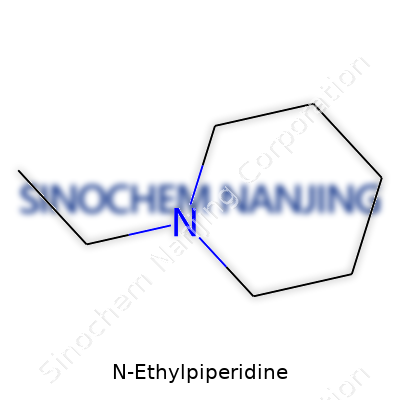
| Names | |
| Preferred IUPAC name | N-ethylpiperidin-1-amine |
| Other names |
1-Ethylpiperidine N-Ethyl-hexahydropyridine |
| Pronunciation | /ɛn-ˌɪθ.ɪl.pɪˈpɛr.əˌdiːn/ |
| Identifiers | |
| CAS Number | 3976-21-2 |
| Beilstein Reference | 1209247 |
| ChEBI | CHEBI:35797 |
| ChEMBL | CHEMBL14677 |
| ChemSpider | 14333 |
| DrugBank | DB03248 |
| ECHA InfoCard | 100.007.864 |
| EC Number | 202-825-3 |
| Gmelin Reference | 9678 |
| KEGG | C06347 |
| MeSH | D010969 |
| PubChem CID | 12586 |
| RTECS number | EK7525000 |
| UNII | 6F1R9MEP7U |
| UN number | UN2382 |
| Properties | |
| Chemical formula | C7H17N |
| Molar mass | 113.21 g/mol |
| Appearance | Colorless liquid |
| Odor | amine-like |
| Density | 0.802 g/mL at 25 °C |
| Solubility in water | soluble |
| log P | 0.99 |
| Vapor pressure | 1.9 kPa (at 20 °C) |
| Acidity (pKa) | 11.2 |
| Basicity (pKb) | 3.24 |
| Magnetic susceptibility (χ) | -6.13×10⁻⁶ |
| Refractive index (nD) | 1.427 |
| Viscosity | 0.824 cP (20°C) |
| Dipole moment | 2.25 D |
| Thermochemistry | |
| Std molar entropy (S⦵298) | 329.57 J·mol⁻¹·K⁻¹ |
| Std enthalpy of formation (ΔfH⦵298) | -76.5 kJ/mol |
| Std enthalpy of combustion (ΔcH⦵298) | -4105.6 kJ/mol |
| Hazards | |
| GHS labelling | GHS02, GHS07 |
| Pictograms | GHS02,GHS07 |
| Signal word | Danger |
| Hazard statements | H226, H302, H311, H314, H332 |
| Precautionary statements | P210, P264, P280, P301+P312, P305+P351+P338, P330, P337+P313, P405, P501 |
| NFPA 704 (fire diamond) | 1-3-0-Alk |
| Flash point | 26 °C (Closed cup) |
| Autoignition temperature | 215 °C |
| Explosive limits | 3.1–10.7% |
| Lethal dose or concentration | LD50 (oral, rat): 210 mg/kg |
| LD50 (median dose) | LD50 (median dose): Oral rat LD50 174 mg/kg |
| NIOSH | RN203 |
| PEL (Permissible) | PEL: 2 ppm (7 mg/m3) as TWA |
| REL (Recommended) | 100 ppm |
| IDLH (Immediate danger) | IDLH: 100 ppm |
| Related compounds | |
| Related compounds |
N-Methylpiperidine N-Propylpiperidine Piperidine N-Ethylaniline N-Ethylmorpholine |



