N-Butyric Acid: A Deep Dive into One Unassuming but Powerful Compound
Historical Development
People have used n-butyric acid longer than most might guess. Chemists first isolated it in the early 19th century. The French scientist Michel Eugène Chevreul uncovered this pungent acid while breaking down animal fats, noticing its distinctive, highly disagreeable smell. Scientists at the time struggled to tame its odor, yet they kept circling back because the compound revealed so much about the links between fats, acids, and the building blocks of life. Over the years, labs and industries both picked it up for wider experimentation as knowledge grew on fermentation, metabolism, and organic synthesis. It proved itself in the production of flavors, fragrances, pharmaceuticals, and even as a subject in microbial studies because butyrate appears in human colons, a clue that's pushed medical research forward.
Product Overview
N-butyric acid, also named butanoic acid, carries the formula C4H8O2. Clear in its pure state, this oil flows easily yet can stop traffic with its scent, much like old cheese or rancid butter. Despite the smell, butyric acid lands on ingredient lists in flavors and fragrances. It’s a linchpin in chemical syntheses, year after year. The acid helps craft esters for fruity notes, solvent blends, biodegradable plastics, animal feed, veterinary clinics, and pharmaceutical exploration. I first discovered just how widespread the reach was after seeing it in applications from European cheese production to liquid nutritional medical foods.
Physical & Chemical Properties
With a melting point near -5 °C and a boiling point around 163.7 °C, n-butyric acid handles temperature swings well. Its density sits close to 0.96 g/cm3. The acid mixes easily with water, ethanol, and ether, but stands apart thanks to its sharp, nauseating aroma. The molecular structure, a four-carbon carboxylic acid, allows reactions with a large range of compounds. Chemists often use these properties during formulation design, as the acid’s reactivity and solubility set the stage for downstream blending or modification.
Technical Specifications & Labeling
Producers ship n-butyric acid with shelf-life data, purity indicators, and storage recommendations. Industrial suppliers publish purity percentages—most often above 98%—along with information on moisture, specific gravity, and acid value. A certified batch label or certificate of analysis accompanies every delivery, a practice pushed by both international and local chemical safety regulations. Labels show the UN number for transport (UN 2820), hazard warnings, and emergency procedures for spills or exposure. Some companies go even further, tracking batch traceability from source materials to finished lots.
Preparation Method
Production started with the classic fermentation route: bacteria eat sugars, then spit out butyric acid in anaerobic conditions. Many manufacturers still rely on this method thanks to its lower energy demand and renewable feedstocks. Synthetic routes—oxidizing butyraldehyde or hydrolyzing esters—offer higher purity and better yield control. I once observed a plant running both fermentation and oxidation tracks side by side, picking between eco-credentials and process economics based on international orders. Both methods demand careful temperature control, tight exclusion of air (where necessary), and rapid purification to keep quality up and off-odors down.
Chemical Reactions & Modifications
In the lab, n-butyric acid shows flexibility. React it with alcohols and esters pop out, ready for use in food flavoring and perfumery. Lay it alongside ammonia or amines, and it forms butyramides—important for drug development and biodegradable materials. Combine it with bases, and salts emerge, like sodium butyrate, valued for their roles in biotechnology and animal nutrition. Hydrogenation and halogenation round out its main roads, opening doors to other specialty chemicals. The backbone invites re-engineering so production planners can chase what buyers need—sometimes just the acid, other times a string of derivatives.
Synonyms & Product Names
Whether buyers call it n-butyric acid, butanoic acid, or n-butyrylic acid, suppliers know what they’re getting. Trade and technical names can vary by supplier, sometimes falling under Buttersäure in German-speaking regions or Acide butyrique among French buyers. I’ve seen old documents still use “butyric acid” as a catch-all for the entire family of related acids, but in regulated marketplaces, more precise naming shows up. Chemically, the CAS number 107-92-6 provides a universal reference.
Safety & Operational Standards
Few chemicals teach respect like n-butyric acid does. That pungent smell carries a warning all its own—one drop and the whole facility knows about it. Its vapors irritate nose and skin, and eye splashes require fast rinsing to avoid damage. Workers who handle it use gloves, goggles, lab coats, and sometimes respirators for good reason. Industry guidelines set exposure limits, demanding good ventilation and spill controls. Fire risks remain present as the material is combustible, so safety data sheets walk users through storage away from ignition sources and incompatible reactants. Over the years, regulatory agencies shaped clear protocols—OSHA, REACH, and local health departments all require training before anyone moves even a drum of the stuff.
Application Area
Butyric acid blends into daily life more than most realize. Food processors use it as a flavor component, pitching it at low concentrations into snack foods and dairy products to mimic natural fermentation. Winemakers turn to it in controlled doses to add character, despite its strong smell at higher concentrations. The world of animal nutrition counts on its salts and esters to boost feed flavor and gut health. Pharmaceutical developers study its role as a histone deacetylase inhibitor, probing for ways to unlock gene expression and improve outcomes in cancer treatment. Polymer engineers incorporate it in the making of biodegradable plastics. Environmental scientists, watching for soil health and waste management strategies, use butyric acid concentrations as an indicator of decomposition and pollution pathways.
Research & Development
Research circles keep returning to butyric acid because of its role in the gut microbiome. Teams study how it modulates inflammation and strengthens the gut barrier, looking at connections to chronic diseases, obesity, and neurological function. Industrial R&D explores more energy-efficient fermentation processes, cutting down waste and boosting sustainable output. There’s interest in designer esters and amides, important for next-generation synthetic flavors and medical agents. Green chemistry finds its way into development, hunting for low-impact catalysts and renewable feedstocks to meet stricter environmental standards and rising demand from specialty applications.
Toxicity Research
Toxicologists pay close attention to butyric acid’s effects at different doses. At low concentrations—often in natural foods—the acid proves harmless and even beneficial, supporting digestive function. Rising concentrations, though, cause cell irritation and can trigger respiratory and skin problems with extended contact. Animal studies draw attention to oral toxicity at high doses, with careful work on threshold levels for both acute and chronic exposure. Ecotoxicological research checks its fate in soil and water, weighing how much gets broken down and at what speed. These studies shape guidelines, inspection schedules, and workplace controls, backing up both public health and environmental stewardship.
Future Prospects
N-butyric acid’s reputation continues to evolve. Synthetic biology may soon deliver custom microbes designed to output even purer acid from unconventional feedstocks—anything to make the production cleaner and less dependent on fossil fuel inputs. Medical science still pushes boundaries, studying its impact on inflammation, cancer, and metabolic disease, hinting at more pharmaceutical products down the pipeline. Materials scientists blend it into new polymers for eco-friendly packaging that can break down without leaving a legacy of waste. I see growing food trends backing more “natural” flavors and functional foods, with butyric acid taking a quiet but central part. Stricter safety and environment rules will challenge producers to reinvent process safety and emissions, especially as regulators expect traceability and transparency in the global supply chain. This material, first sniffed out centuries ago, looks set for even broader influence tomorrow.
What is N-Butyric Acid used for?
Daily Encounters with N-Butyric Acid
N-Butyric acid hardly comes up in friendly conversation, but most people have run into it even if they didn’t know it. Known for its powerful smell, this compound shows up everywhere from yogurt to farm fields. I stumbled across it during a stint working in a small cheese plant. Its distinctive scent stuck in my memory long after a batch finished aging, though that same sharp profile reveals a lot about its role in food and beyond.
Digestion and Animal Nutrition
Butyric acid plays a big part in how guts—both human and animal—keep working. Some bacteria in the colon break down fibers from food and release butyric acid as a by-product. This simple fatty acid feeds colon cells, helping them stay healthy and lowering risk for certain digestive troubles. In livestock farming, feed producers add butyric acid or its derivatives to improve gut health in animals. It encourages beneficial bacteria, cuts down on harmful bugs, and supports digestion. Healthier animals resist disease, need fewer antibiotics, and produce better milk or meat. That kind of feed optimization makes a difference when margins are tight.
Flavor and Fragrance
Most folks would never sprinkle butyric acid on food by itself, but flavorists and food scientists turn to it for a reason. Mixed just right, it shapes the taste and aroma of cheeses, yogurts, butter, and tropical candies. Its fruity undertones pop out at very low concentrations, and its presence in stinky cheeses is essential—it rounds out aroma and taste. Manufacturers also use it to create buttery or dairy flavor notes in snacks. Constant quality checks keep production safe, and regulatory bodies in the U.S. and Europe classify it as a generally recognized as safe (GRAS) ingredient when used as intended.
A Role in Pharmaceuticals
Some doctors and researchers see butyric acid as more than a flavor chemical. It’s under investigation as a supplement for gut conditions and immune problems. Lab studies suggest it helps control inflammation, repairs the lining of intestines, and balances immune reactions. Over-the-counter supplements made from its salts (such as sodium butyrate) promise digestive support. Still, anyone interested in adding a supplement ought to talk with a medical professional, since there’s a risk with going off research headlines alone.
Industrial and Environmental Uses
Butyric acid isn’t just waiting in yogurt factories or feed mills. Chemical manufacturers use it as a starting point for making plastics, coatings, and some perfumes. It helps produce butyrate esters, which smell far better than the pure acid and can give fruity notes to artificial fragrances. On the environmental side, butyric acid appears as an intermediate in wastewater treatment, breaking down organic matter under certain conditions. Keeping tabs on its presence there matters since it influences odors from sewage processing plants and the effectiveness of some waste conversion systems.
Looking Ahead
Hands-on experience with butyric acid proves that chemicals influence daily life in subtle and unrecognized ways. Researchers still find out new benefits to gut health, and manufacturers seek ways to make production cleaner and better for the environment. Traceability and quality control stay front and center, especially in food. For anyone working with animal feed, food processing, or environmental science, understanding this acid’s roles and impacts matters more than ever. A bad smell might catch attention, but there’s more to butyric acid’s story than meets the nose.
Is N-Butyric Acid safe for human consumption?
Understanding the Basics of N-Butyric Acid
N-butyric acid shows up in everyday life more often than most realize. This short-chain fatty acid gives parmesan cheese and some fermented foods their sharp kick. Our own gut bacteria make it, breaking down fiber and keeping the colon lining strong. Without it, gut health takes a dive—ask anyone with chronic digestive problems.
On the chemistry side, n-butyric acid appears as a clear, oily liquid with a smell that reminds most people of spoiled butter. Despite the odor, small amounts sneak into many foods through natural processes. The food industry uses it for its flavor, especially in dairy products and some snacks.
What Research Says About Safety
Scientists have studied n-butyric acid for decades. The U.S. Food and Drug Administration lists it as “Generally Recognized As Safe” (GRAS) when used in food. European food safety agencies agree: reasonable exposure through diet does not present a danger. The key word is “reasonable.”
Large doses cause obvious problems—nausea, gastric discomfort, and strong smells nobody wants at the dinner table. Still, reaching those levels through normal eating sounds unlikely. Animal studies show big concentrations over time may harm the digestive system, but doses used in food production stay far below those levels.
People with certain health conditions sometimes take butyric acid as a supplement, aiming to ease gut inflammation or support colon health. Doctors usually recommend getting it through diet—fiber-rich foods feed the bacteria that make this acid naturally. Supplements need careful medical oversight because pure n-butyric acid smells bad, irritates tissues, and can upset stomachs if swallowed straight.
Why It Matters for Everyday Eating
Most folks eat n-butyric acid every day, never thinking about it. Foods like butter, cheese, pickles, sourdough, and sauerkraut all carry small amounts. Fermentation creates more of it, so cultures with traditional diets heavy on these foods have eaten it for generations.
I once tried a home-fermentation project with vegetables—the smell in the kitchen caught everyone off guard, but the health effects felt good. The batch lasted through the winter and brought back memories of visiting relatives who swore by fermented foods.
Despite the sharp aroma, benefits for gut health look solid. Studies tie higher butyric acid levels in the colon to lower rates of colon inflammation and possibly better immune health. People struggling with conditions like irritable bowel syndrome may see improvement with a butyrate-rich diet.
Smart Use and Limitations
No single component replaces the benefits of a full, balanced diet. N-butyric acid gives us one part of the digestive health puzzle. Instead of chasing supplements, filling plates with beans, oats, and vegetables lets good bacteria do their job—and build up butyric acid right where it helps most.
Food companies use it for flavor, but keep concentrations low to avoid digestive upsets. Self-experimentation with strong butyric acid products doesn’t replace real medical advice. If strange symptoms show up with a new supplement, talking to a doctor beats searching for answers online.
Paths Forward for Consumers
Clear labeling helps shoppers make informed choices. Anyone with allergies or gut problems should take a closer look at ingredients, printed in plain language on food packages in many countries. For those interested in fermentation or gut health, traditional foods bring n-butyric acid in safe, time-tested ways.
The evidence says eating foods with n-butyric acid doesn’t raise safety issues for healthy adults. Getting it the old-fashioned way—through home-cooked meals—keeps things simple and tasty. Watching your diet and paying attention to how your body responds usually solves more problems than grabbing the latest supplement off the shelf.
What are the storage requirements for N-Butyric Acid?
The Nature of N-Butyric Acid
N-Butyric acid always catches attention in discussions about industrial chemicals because of its strong, unmistakable smell. This compound, found in everything from flavorings to pharmaceuticals, stirs up more safety questions than you might expect. Anyone who’s handled a bottle of it knows that storing N-Butyric acid isn’t just another routine chemical chore. A small spill can chase people out of a lab. So, the question of proper storage goes beyond avoiding inconvenience; it means keeping people healthy and property safe.
Why Storage Makes Such a Difference
What matters most starts at basics: N-Butyric acid reacts with air, moisture, and incompatible substances. It’s a corrosive liquid. A leaky bottle can damage shelving and corrode metal. Early in my career, I saw an old storage container fail and it taught me the real cost of underestimating such chemicals—not only equipment loss but a building-wide evacuation.
Sturdy, airtight, chemical-resistant containers are the only way to go. Glass and high-quality plastic work, but regular steel lids won’t hold up. Polyethylene or Teflon-lined closures seal out moisture and block fumes. Clearly labeling bottles cuts down on mistakes and panic later. Proper chemical storage isn’t glamorous, but it heads off bigger problems down the line.
Environmental Controls Matter
Heat speeds up chemical breakdown and boosts vapor pressure. N-Butyric acid quickly becomes more volatile in a warm space, making vapors easier to inhale and more corrosive. Keeping storage areas cool—ideally below 30 °C—slows vapor formation and extends shelf life. No one enjoys the surprise of opening a warm cabinet and catching a breath full of noxious fumes.
Ventilation helps a lot. Good air exchange keeps vapors from building up. Fume hoods or dedicated solvent cabinets with venting take a big load off HVAC. In smaller setups, a room with constant fan circulation provides basic safety. No one strategy fits all facilities, but letting fumes collect always leads to trouble.
Keep It Away from Trouble
N-Butyric acid does not play nice with strong oxidizers, acids, or bases. Mixing any of those brings fire and toxic gases into the picture. Keeping storage segregated reduces risk by leaps and bounds. Painting storage shelves, bins, or whole cabinets in bold colors helped my crew stay alert—more than one accident got prevented by a bright warning stripe.
Accidental mixing can happen fast if storage protocols slip, especially in busy labs and warehouses. Spill trays underneath acid containers handle leaks and drips. For larger quantities, securing drums with secondary containment avoids runaway puddles that soak through floors or reach drains.
Supporting Responsible Handling
Staff education means more than handing out safety sheets. Training sessions and regular reminders keep protocols fresh in minds. Supervisors walking the floor spot shortcuts and can step in before they turn into problems. Over time, building a culture where everyone checks labels and respects chemical hazards makes a world of difference.
Regulations from agencies like OSHA and EPA exist for a reason. Proper storage serves as the backbone for compliance, worker safety, and protecting the environment. No corner gets cut—flimsy shelves or ignored warning labels lead to fines, injuries, and disrupted operations.
Looking Ahead
Every step toward better storage pays itself back. Upgraded cabinets, regular inspections, and staff buy-in keep N-Butyric acid under control. That notorious smell will always turn heads, but smart storage choices let everyone breathe easy and focus on their real work.
What is the shelf life of N-Butyric Acid?
A Practical Look at N-Butyric Acid Storage
N-Butyric acid, with its distinct smell sometimes compared to rancid butter, often finds a home in labs and industries working with flavors, fragrances, and specialty chemicals. I still remember my first whiff during university lab work—it stuck with me for days. Handling this acid asks for some extra caution, especially with how long it keeps before turning on you.
Shelf life for N-butyric acid matters more than people think. Once this acid gets too old or stored wrong, it loses potency, turns color, and becomes a real headache for quality control. Most manufacturers stamp a shelf life between 12 and 24 months on their labels when stored tight and sealed, away from heat and sunlight. That stretch isn’t a throwaway detail. In my own experience with chemical stocks, acid that looked fine on the outside sometimes showed changes once I twisted open the cap. Oxidation hits hard if left in even slightly open containers, so don’t kid yourself into casual storage practices.
What Makes Shelf Life Tick Down?
Exposure sits at the top of the threats to N-butyric acid's shelf life. Air sneaks in through loose caps—moisture or oxygen both start kicking off slow changes. Over time, acids can darken, grow cloudy, or take on new odors even worse than before. A temperature swing in a warehouse can set off this process even faster. I learned the hard way that a bottle kept near a sunlit window rarely makes it the whole 24 months. Keep it cold, dry, and tightly closed for the best shot at keeping things fresh. Glass usually outlasts plastic, so I reached for glass bottles whenever possible. Some storage rooms only check temperatures once a day, but I say check your acids on the regular—no shortcuts.
Quality: More Than Just a Number
Some folks think expired N-butyric acid just gets a little weaker. That isn’t the case. Foul-smelling impurities often creep in, even in sealed containers. Once those show up, purity slips. In labs or industries aiming for tight specs, relying on expired stocks risks entire batches. I’ve seen analysts lose time and money troubleshooting mysterious aromas, only to backtrack it to old acid stashed in the back of a dusty shelf.
Keeping it Safe—and Solving the Real Problem
In my time in chemical storage management, setting up strict FIFO (first-in, first-out) practices cut down on surprises. Ensuring date tracking on every bottle—pen on tape, right on the cap—helps. Relying on inventory software also helps cut down on accidental use of old stock. Facilities with temperature and humidity control consistently see longer shelf life. In smaller shops without fancy storage, insulated cabinets make a difference. Regularly scheduled quality checks—pulling a sample, checking appearance, and giving it a sniff—have saved my team from a few disasters. If you work somewhere that can’t afford lab analysis, set a strict discard date and stick to it. No one wants degraded acid contaminating key ingredients or damaging equipment with unexpected residues.
Every time N-butyric acid changes hands, risks to shelf life climb. Producers, shippers, and end-users need to communicate and keep conditions documented. No one wants to realize too late that their product’s turned bad because of a few hot days in transit.
Looking Ahead
N-Butyric acid can sit in storage, but that’s not a license for neglect. Treat shelf life as a line you don’t cross. With clear routines—and a healthy respect for quality checks—you avoid the long-term pain of degraded supplies. That’s an approach born from both industry data and personal missteps. Handle it right, and you get the results you expect, no unpleasant surprises down the line.
How should N-Butyric Acid be handled in case of a spill?
Understanding the Problem
N-Butyric acid packs a punch long before you see it on the ground. With a smell that rivals the worst locker room, a spill often makes itself known well before anyone locates the source. That sharp odor is more than just unpleasant—it signals genuine risk. Aside from irritating noses, eyes, and throats, splashes burn skin and eat through certain materials. Let’s not kid ourselves: this isn’t something for a quick mop-and-go. People often bring up complicated chemical terms, but real danger needs straightforward habits and reliable information.
Stop the Spread Fast
In any workplace—lab, warehouse, factory—spilled N-Butyric acid should halt the normal pace. Picture a janitor, maintenance worker, or process operator walking into those fumes. Panic follows quickly if nobody knows what to do. Keeping it contained gets top priority. Workers who spot the spill deserve a clear plan: block off the area, alert coworkers, and get everyone not trained in cleanup out of harm’s way. Nobody ought to play the hero when strong acids are involved.
Gear Up or Get Out
Many forget that most injuries come from skipping basic protection. N-Butyric acid chews up gloves made of latex, so nitrile or butyl gloves stand as better choices. Eyes demand goggles or a face shield because a splash there ends with a long hospital visit. Old jeans and sneakers do nobody favors—acid-proof aprons and boots make a huge difference. Ventilation matters: open up doors, run the fans, and never rely on the bare minimum.
Clean Up, Don’t Cover Up
Once the space feels secure and everyone’s dressed for the job, cleanup moves fast. Absorbent granules or sand soak up the liquid better than rags or paper towels, which often just spread it around. Scoop up the sludge, then seal it in containers built for corrosives. This isn’t regular trash. Get with your hazardous waste team or call a disposal expert right away. Acids dumped down a drain can ruin pipes and pose real risk downstream.
The Long-Term Picture
Spills of N-Butyric acid often mean bigger headaches down the line. Short-term exposure can turn into lingering headaches, breathing problems, or rashes. OSHA lists it as a hazardous substance and lays out clear rules for storage, handling, and disposal. Training days often get brushed aside until an accident lands on someone’s shift. Real safety comes from building good habits—emergency drills, clear signage, and easy-to-find spill kits. It only takes one mistake for lessons to hit hard.
Building a Safer Workplace
Companies can invest a lot in equipment—but knowledge matters even more. Get teams talking about what works and what doesn’t. Regular walk-throughs make sure supplies are stocked and instructions stay up-to-date. Technology can help too: digital tracking for chemicals, emergency notification systems, quick access to safety sheets. The best solution grows from a mix of clear rules, honest experience, and a healthy respect for the threats that harsh acids bring to the table.
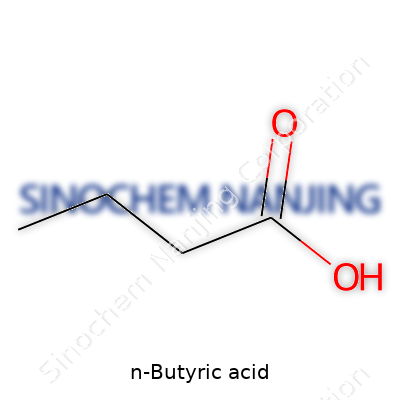
| Names | |
| Preferred IUPAC name | butanoic acid |
| Other names |
Butanoic acid Butyric acid n-Butanoic acid Propanecarboxylic acid |
| Pronunciation | /ɛn ˈbjuː.tɪr.ɪk ˈæs.ɪd/ |
| Identifiers | |
| CAS Number | 107-92-6 |
| Beilstein Reference | 1900225 |
| ChEBI | CHEBI:30772 |
| ChEMBL | CHEMBL415 |
| ChemSpider | 821 |
| DrugBank | DB04238 |
| ECHA InfoCard | 100.003.276 |
| EC Number | 200-532-5 |
| Gmelin Reference | 1756 |
| KEGG | C00246 |
| MeSH | D002012 |
| PubChem CID | 264 |
| RTECS number | EO0700000 |
| UNII | GJH2ABJ7R1 |
| UN number | UN2820 |
| Properties | |
| Chemical formula | C4H8O2 |
| Molar mass | 88.11 g/mol |
| Appearance | Colorless to yellowish liquid with a strong, unpleasant odor |
| Odor | Unpleasant, rancid, butter-like |
| Density | Butyric Acid Density: 0.96 g/cm³ |
| Solubility in water | Miscible |
| log P | 0.79 |
| Vapor pressure | 0.4 mmHg (20°C) |
| Acidity (pKa) | 4.82 |
| Basicity (pKb) | pKb ≈ 10.24 |
| Magnetic susceptibility (χ) | -7.6×10⁻⁶ |
| Refractive index (nD) | 1.399 |
| Viscosity | 2.2 mPa·s (25 °C) |
| Dipole moment | 1.73 D |
| Thermochemistry | |
| Std molar entropy (S⦵298) | 229.7 J mol⁻¹ K⁻¹ |
| Std enthalpy of formation (ΔfH⦵298) | −393.5 kJ mol⁻¹ |
| Std enthalpy of combustion (ΔcH⦵298) | –2186.9 kJ/mol |
| Pharmacology | |
| ATC code | A16AX01 |
| Hazards | |
| GHS labelling | GHS02, GHS05, GHS07 |
| Pictograms | GHS05,GHS07 |
| Signal word | Danger |
| Hazard statements | H226, H302, H314, H332 |
| Precautionary statements | P210, P233, P260, P264, P273, P280, P301+P330+P331, P303+P361+P353, P304+P340, P305+P351+P338, P312, P321, P370+P378, P403+P235, P405, P501 |
| NFPA 704 (fire diamond) | 2-3-0-Acido |
| Flash point | 72 °C |
| Autoignition temperature | 310 °C |
| Explosive limits | 1.8% - 7.0% |
| Lethal dose or concentration | LD50 oral rat 790 mg/kg |
| LD50 (median dose) | 0.790 g/kg (Rat, oral) |
| NIOSH | WI6650000 |
| PEL (Permissible) | PEL = 2 ppm (parts per million) |
| REL (Recommended) | 200 ppm |
| IDLH (Immediate danger) | 200 ppm |
| Related compounds | |
| Related compounds |
Acetic acid Propionic acid Valeric acid Caproic acid |



