N-Butylcyclopentane: Evolution, Properties, and Industry Insights
Historical Development
Synthetic organic chemistry has always moved in step with industrial demand. Starting in the twentieth century, the interest in cycloalkanes like n-butylcyclopentane stemmed from the growing field of petrochemicals. In the post-war period, chemical engineers aimed to create stable, saturated hydrocarbons as intermediates and solvents. Advances in catalytic hydrogenation and alkylation laid the foundation for scalable synthesis. Laboratories first produced n-butylcyclopentane in small quantities, comparing its properties with those of related cycloalkanes. Over time, production ramped up as refiners explored new fuels and chemical feedstocks, appreciating the compound’s combination of volatility, manageability, and hydrocarbon structure.
Product Overview
N-Butylcyclopentane stands out as a clear, colorless liquid hydrocarbon that falls under the category of saturated cycloalkanes. Chemically, it joins a cyclopentane ring and connects a normal butyl group at one position. This flexible carbon chain branching from a five-membered ring gives it distinct physical behavior compared to its straight-chain cousins or its branched isomers. Its low reactivity and balanced volatility have drawn researchers and manufacturers toward its use in blending, solvent activity, and specialized syntheses where a neutral hydrocarbon is required.
Physical & Chemical Properties
This compound has a molecular formula of C9H18, reaching a molar mass of about 126.24 g/mol. At room temperature, it remains a mobile, transparent liquid. Its boiling point hovers near 160°C (320°F), which allows it to survive moderate heating without rapid loss to evaporation. The melting point sits below zero at approximately -91°C (-131.8°F), making it fluid even under harsh cold. Water solubility remains negligible due to its nonpolar character, while miscibility with most organic solvents (like ether and benzene) remains high, reflecting its carbon backbone. N-Butylcyclopentane resists oxidation under ambient conditions, but exposure to strong oxidants prompts breakdown, often leading to potentially hazardous byproducts.
Technical Specifications & Labeling
Producers of n-butylcyclopentane must adhere to international standards for purity and labeling. Typical technical grades set minimum purity above 98%, with tight limits on water, aromatic impurities, sulfur content, and unsaturated contaminants. Labels need to include chemical name, CAS number (1678-23-5), batch information, safety hazards, recommended storage conditions, and supplier identification. Exact gradation matters: in specialties like analytical chemistry or electronics, trace impurities impact results or process stability. Rigorous testing for refractive index, density, and distillation range assures the customer receives a consistent product matching laboratory or industrial parameters.
Preparation Method
Large-scale facilities generally rely on catalytic alkylation for preparation, starting with cyclopentane as the core. A butyl halide, such as 1-chlorobutane or 1-bromobutane, reacts with cyclopentane under acidic catalysis. Techniques optimize temperature to favor selective attachment of the n-butyl group at a single position, preventing formation of isomers or over-alkylated products. Afterward, distillation and liquid-liquid extraction separate n-butylcyclopentane from unreacted starting materials and byproducts. Tight process control reduces formation of hazardous volatile organics and keeps costs in check.
Chemical Reactions & Modifications
In the hands of an organic chemist, n-butylcyclopentane serves as a bench test for reactions involving saturated hydrocarbons. Its resistance to common oxidants and acids makes it a control substance when studying more reactive molecules. Still, it does submit to radical halogenation, where chlorine or bromine in UV light can replace hydrogen with a halogen atom. More aggressive transformations, such as those involving strong oxidizers, break its carbon ring, leading to a cascade of smaller fragments, including acids and carbon dioxide. Its stable backbone also supports exploration into dehydrogenation under catalytic conditions, where the ring can form aromatic hydrocarbons under heat and pressure, a valuable transformation for some industries.
Synonyms & Product Names
N-butylcyclopentane goes by a handful of names in scientific circles, industry, and commerce. Common synonyms include 1-butylcyclopentane and cyclopentane, n-butyl-. Catalogs sometimes index it under its registry number, and occasional trade names might appear, especially from suppliers who tailor it for specific sectors. These alternate names help analysts and procurement specialists confirm product identity when working across languages or distribution channels, facilitating transparency throughout the supply chain.
Safety & Operational Standards
No one should treat saturated hydrocarbons lightly. Like many similar substances, n-butylcyclopentane brings fire, inhalation, and skin risks. Its flash point (the lowest temperature at which the vapor ignites) sits near 40°C, so storage requires cool, ventilated conditions far away from open flames. Entry-level exposure typically causes skin dryness or irritation, and inhalation of high concentrations can lead to dizziness or respiratory discomfort. Safety data sheets stress the necessity of chemical-resistant gloves, protective eyewear, and strict ventilation in production and laboratory settings. Disposal aligns with hazardous waste regulations, ruling out dumping or uncontrolled burning because incomplete combustion might yield toxic fumes. Following OSHA rules, European REACH recommendations, and local environmental codes, handlers reduce occupational accidents and environmental incidents by sticking to standard protocols at every step.
Application Area
Solvent use forms the bedrock of n-butylcyclopentane’s industrial profile. Its lack of polarity and moderate boiling point suit it for dissolving oils, resins, and hydrophobic compounds in adhesives, coatings, and cleaning agents. Some studies target its role as a physically inert medium for reactions requiring isolation from moisture and polar contaminants. It finds a seat at the table in fuel and lubricant blending, where it influences volatility and lubricity without aggressive side reactions. In research, especially in organic synthesis labs, it often pops up as a reference substance or gentle diluent, letting chemists calibrate equipment or test new purification protocols. While not as ubiquitous as hexane or cyclohexane, it fills a distinct niche wherever risk of unwanted side reactions must stay low.
Research & Development
Explorers of green chemistry have begun to revisit n-butylcyclopentane for its potential as a greener alternative to more hazardous solvents. Modern analytical tools now enable teams to map trace environmental footprints, supporting lifecycle assessments. In the last decade, R&D invested in optimizing alkylation pathways, utilizing modern solid acid catalysts to cut down on waste and improve selectivity. Research teams in material science probe its use in compatibilizing polymers, noticing that subtle changes in the aliphatic structure lead to differences in transparency and flexibility. Environmental chemists model its persistence and breakdown in soil and water, preparing for stricter regulatory review in the future.
Toxicity Research
The toxicological profile of n-butylcyclopentane aligns with that of many low molecular weight hydrocarbons: acute toxicity remains low, but chronic exposure at high concentrations raises concern. Short-term tests in animals and cell cultures show minimal mutagenic or carcinogenic potential. Extended exposure can trigger central nervous system depression in mammals, especially through continued inhalation. No strong link exists between the compound and organ toxicity under reasonable workplace scenarios, provided that protective measures shield workers from regular skin or lung exposure. Toxicologists continue to monitor hydrocarbon metabolites since breakdown products sometimes bring more biological reactivity than the parent compound. As with all petrochemical products, comprehensive risk assessment stays front and center for both manufacturers and end-users.
Future Prospects
Emerging trends in renewable chemistry and circular economy are starting to reshape the petrochemical landscape. As regulatory pressure mounts on hydrocarbon solvents, n-butylcyclopentane faces renewed scrutiny alongside its peers. Innovators try to tweak production until it fits synthetic routes powered by biogenic feedstocks or harness carbon capture to shrink the overall environmental footprint. Still, demand for stable, predictable aliphatic solvents won’t evaporate overnight. Technical teams experiment with blends containing cyclopentane derivatives in insulation foams, green coatings, and even specialty purpose lubricants where full compliance with food safety or medical safety standards takes center stage. The continued drive to balance performance, safety, and sustainability keeps n-butylcyclopentane in play as a candidate for re-engineered formulations across the chemical enterprise.
What is the chemical formula of N-Butylcyclopentane?
The Structure of N-Butylcyclopentane
One thing that always stands out in chemistry is how much information a simple formula can pack in. The chemical formula for N-Butylcyclopentane is C9H18. Looking at the name, a chemist quickly picks up that this molecule builds on a five-carbon ring (cyclopentane), attaching a straight-chain four-carbon group (n-butyl) to it. If you draw it out, you see a ring of five carbons, each stacked with enough hydrogens to reach a stable state, and a snaking tail that stretches off as the butyl group. It looks like a mishmash of round and straight, but that's where the practical value hides.
Why Knowing the Formula Matters
Anyone working in the lab or involved in industrial production wants more than just names. Processes call for pinpoint accuracy—in molar calculations, reaction planning, and safety data. The formula C9H18 gives you that count. Chemists use it to check purity, assign molecular weights, and balance reactions. A slip-up on the formula adds up to wasted time or worse, unsafe outcomes. I have seen plenty of cases where someone misreads a compound or grabs the wrong flask just because of a missing number or a misnamed side chain.
Transparency matters in research and scale-up just as much. The wrong formula in documentation can stall regulatory approval or lead to hiccups in downstream synthesis. Years ago, a small mistake in an upstream intermediate’s formula during our project forced us to backtrack days of work. It sounds simple, but C9H18 on the right label and sheet kept the next batch running and gave the QA team something solid to stamp.
Applications and Handling Concerns
N-Butylcyclopentane belongs to the world of hydrocarbons used in organic synthesis, fuels, and even as specialty solvents. Similar to its molecular cousins, it boils at a range expected of low-weight hydrocarbons and burns just as easily. You smell it, you know what family it’s from—there’s that sharp, gasoline edge common to alkanes. In settings where it helps dissolve or carry other chemicals, you have to pay attention not only to its volatility but how it might interact or linger in the environment.
Proper tracking, from formula to container, curbs mistakes and keeps everyone safer. Detailed safety data sheets spell out hazards, like flammability and health risks upon inhalation. It’s easy to overlook these everyday chemicals until something goes wrong—like the time a lab mate discarded a bottle too close to a heat source, which nearly sparked a fire. Respect for the formula translates to respect for the substance, and in busy labs, it’s more than just protocol.
Potential Solutions for Safer and Smarter Use
One improvement lies in education—making sure anyone new learns to translate names to formulas and back. Better labeling systems in storerooms help too, especially for storage with other alkanes and cycloalkanes. Digital inventory tracking has made a difference in my own work, by flagging outliers and catching similar-sounding or similarly formatted chemicals before anyone can grab the wrong bottle. Labs and facilities that build in regular audits and safety checks find fewer mishaps with flammable and potentially hazardous reagents like N-Butylcyclopentane.
In short, the chemical formula C9H18 turns into practical action: safer labs, clearer data, and smoother syntheses. This compound, like so many hydrocarbons, reminds us that accuracy and routine can’t be separated from safety and quality, no matter the scale of work.
What are the main applications of N-Butylcyclopentane?
N-Butylcyclopentane—It’s More Useful Than It Sounds
The name might not roll off the tongue, but N-Butylcyclopentane has become a small workhorse across a few unexpected corners of manufacturing. Most folks outside of chemistry circles have never come close to it, but if you spend time around paint, coatings, or advanced electronics, you may cross paths with products that owe their function to this hydrocarbon. The chemical itself is a clear, colorless liquid, and it doesn’t boast any wild properties at first glance. In my time writing about industrial supply chains and talking with formulators, these so-called “secondary solvents” turn out to matter quite a bit in specialty applications.
Painting, Coatings, and What It Takes to Go On Smooth
If you look into how paints and varnishes are made, there’s a constant struggle to balance drying time and workability. Quick-drying paints get the job done faster, but they can leave brush marks or uneven surfaces. N-Butylcyclopentane finds its niche here because it helps balance out evaporation rates when mixed with other solvents. It keeps paint from skinning over or clumping before it’s been spread, especially in high-speed industrial lines. This is a feature you only appreciate after watching a production team scramble to sand out entire batches ruined by cheaper alternatives.
This solvent acts as a reliable thinner in some specialty lacquers and automotive coatings, too. In the auto body world, a finish marred by dust pimples or sags means a day’s labor gets undone in an instant. Suppliers searching for something that won’t react badly to pigments or resins land on N-Butylcyclopentane. It stays chemically stable while still managing to be volatile enough for spray methods. That combination reduces rework and wasted coatings—a concern for both shopfloor workers and their bosses trying to keep costs down.
Electronics, Adhesives, and How Things Stick or Don’t
The electronics industry operates with a different set of priorities. The wrong solvent can eat through sensitive plastics or leave residues that short-circuit tiny contacts. Makers of specialty adhesives and conformal coatings use N-Butylcyclopentane thanks to its gentle solvency. It dissolves certain polymers just enough for smooth application, leaving behind little residue and not interfering with insulation. There aren’t many substitutes that deliver both this level of purity and evaporation speed without risk of static buildup or surface cracking.
Some of the most common technical adhesives, especially those requiring controlled evaporation for “open time,” rely on this compound. If you’ve ever tried hanging wallpaper or assembling electronics with sticky-backed pads, you know that getting something to tack, but not too quick, takes precision. N-Butylcyclopentane works in adhesive mixes that need to deliver just-right peel strength and minimal odor for enclosed workspaces.
Fuel Research and High-Purity Extraction
On the R&D end, chemists experiment with N-Butylcyclopentane as a calibration fluid in advanced fuel systems. Its structure, similar to some hydrocarbons in jet fuel, gives engineers a benchmark for combustion tests. In laboratories, folks use it as a medium for extracting sensitive flavors, fragrances, or pharmaceutical agents without risking the alterations that harsher solvents can cause.
Regulation is always a talking point, since solvent misuse leads to environmental headaches. No one wants another case of contaminated water or workplace exposure. So, the focus has turned to using closed systems, recycling, and smarter personal protective gear. In my reporting, I’ve seen companies start reclaiming and purifying spent solvent instead of discarding it—all in the name of safety and sustainability.
The Bottom Line
N-Butylcyclopentane won’t get much press outside the plants and labs that use it, but it’s a fine example of how specialty chemicals grease the wheels of modern manufacturing. Tracking its safe, efficient use keeps business running and protects both people doing hands-on work and those living nearby.
What safety precautions should be taken when handling N-Butylcyclopentane?
Why Respecting N-Butylcyclopentane’s Hazards Matters
Anyone who’s spent time in a lab or on a factory floor gets a quick lesson on how some chemicals don’t give out second chances. N-Butylcyclopentane looks clear as water, but the health risks go beyond what you see. My first encounter with this kind of volatile compound taught me fast: This isn’t the stuff to take lightly.
It’s a hydrocarbon solvent, similar to many you find in industrial settings, but it packs flammability and health risks that could turn an average workday sour if you let your guard down. I remember a colleague mishandled a similar solvent on a hot summer day, and the fireball that followed took out several weeks’ worth of effort—not to mention the risk to everyone in the building. That drove home a simple truth: Shortcutting safety steps isn’t a time saver, it’s gambling with your health and life.
Personal Protective Equipment is Non-Negotiable
Eye protection and chemical-resistant gloves always come before unscrewing a cap. N-Butylcyclopentane evaporates fast, and the fumes sting the eyes and can mess with the central nervous system in high doses. I rarely work with solvents without my goggles and nitrile gloves. For skin protection, long sleeves and lab coats keep unexpected splashes from catching you by surprise. Anyone handling substantial quantities or working in close quarters also benefits from a properly fitted respirator. Don’t forget sturdy, closed-toe shoes to protect your feet from accidental spills.
Ventilation Makes All the Difference
Too often, I’ve seen folks treat proper ventilation as a ‘nice to have.’ That’s a good way to invite headaches and dizzy spells. Solvent vapors fill a closed room quickly and just as fast can reach explosive levels if left unchecked. Good labs and shops run strong mechanical ventilation or local exhaust systems—like fume hoods—before opening a bottle. If you work somewhere that ignores this, it’s worth speaking up with your supervisor or safety officer. Long-term exposure to hydrocarbon vapors can also raise cancer risks, which no job is worth.
Fire Precautions Won’t Wait for a Wakeup Call
N-Butylcyclopentane lights up like a torch when it meets a spark. Keeping sources of ignition—open flames, static, even cell phones—far away limits flash fire danger. Grounding and bonding containers before transferring this solvent prevents static discharge. Fire extinguishers rated for chemical fires (dry chemical or CO₂ types) should always stay within reach, checked monthly by someone who knows what to look for. If you store volumes larger than a liter, explosion-proof refrigerators and flammable storage cabinets are worth the investment.
Storage and Spill Response—No Excuses
Storing N-Butylcyclopentane in tightly sealed containers, out of direct sunlight, and separated from oxidizers keeps risk down. In my experience, even small leaks get out of hand quick, spreading fumes through open spaces. Training everyone on site to handle spills makes a difference: absorb with non-reactive materials, ventilate the space, and dispose of waste through designated chemical waste channels. Keep spill kits stocked and know where they are before trouble starts.
Constant Training and Vigilance
Ongoing training helps, not just for newcomers but for veterans too. Guidelines change, and so do the chemicals in use. The more folks understand about why a compound demands respect, the less likely unsafe shortcuts end up in someone’s daily routine. I’ve seen firsthand how one person’s carelessness can threaten the whole team. The safest labs and plants I’ve set foot in foster clear communication, regular drills, and honest accountability. Respect for safety isn’t just an individual responsibility, it’s how you look out for those working next to you.
What is the physical state and appearance of N-Butylcyclopentane?
Getting to Know the Substance
N-Butylcyclopentane isn't one of those chemicals you hear about on the news every day. Still, its physical state and appearance matter a lot to folks in labs and industries. This compound shows up as a clear, colorless liquid—no cloudiness or weird hues that can hint at contamination. The absence of color tells me it's fairly pure, straight out of the drum or glass bottle. If you've ever worked in a chemical lab, you know pure, colorless liquids often mean smooth processes with fewer surprises in reactivity.
Why the State Matters
Seeing N-Butylcyclopentane in liquid form at room temperature tells a story about its molecules. The boiling point lands around 151-153°C, and the melting point sits well below room temperature, meaning it stays liquid even if a warehouse gets chilly in winter. That makes this compound easy to handle, measure, and pour without worrying about clumps or crystals jamming up pumps or pipettes. In hands-on settings, there’s value in not needing to heat or cool just to move a material from one vessel to another. Reduced hassle means less chance for mistakes or wasted product.
Appearance Speaks Volumes
Transparency and lack of color go beyond aesthetics. Any hint of yellowing, suspended particles, or cloudiness usually means impurities. Safety data sheets flag N-Butylcyclopentane as flammable, so handling it safely matters as much as purity. In my experience, pouring out a clean, colorless liquid builds trust in what’s inside the bottle and lets technicians focus on the job, not troubleshooting surprise goo or off-odors. Contaminated chemicals can throw off results, damage equipment, or start unpredictable reactions. Cleanliness in appearance feels reassuring for anyone working with it daily.
Environmental and Health Impacts
Most people never hear about N-Butylcyclopentane unless they read chemical labels or safety data sheets. It smells faintly sweet, almost gasoline-like. That clue helps if you’re ever concerned about solvent leaks, since a chemical’s smell tells you if something’s gone wrong—at least before detectors pick it up. Because it evaporates at a moderate rate, you don’t want to breathe it for long. Knowing it stays a liquid also means cleanup in the event of a spill becomes easier than if you had a fine powder or sticky resin. Gloves, goggles, and a well-ventilated space become standard procedure, no compromise. Familiarity with the liquid nature means everyone in the lab or handling facility can set procedures that keep exposure low and reactions predictable.
Quality Control and Practical Use
Companies, researchers, and teachers rely on N-Butylcyclopentane staying clean and colorless. Anything else signals a problem. Labs invest time checking visual cues as much as they do reading labels. After all, a crystal-clear liquid with the right faint scent and quick evaporation gives a lot of peace of mind. If you store it right—in tightly sealed containers, kept cool and out of sunlight—it keeps that clean appearance for plenty of time. Experience taught me not to skip these checks. It takes seconds to look and a big budget to clean up if you guess wrong.
Paths Forward
For anyone who handles chemicals, quality assurance forms the backbone of good science and safe work. Tools like transparent containers, color comparison charts, and regular training make a difference. Data from regulators back up this approach—catching off-spec chemicals early cuts costs and accidents. Focusing on straightforward traits like state and clarity helps keep things working as they should, both in small lab experiments and on the warehouse floor. N-Butylcyclopentane only needs a glance to tell a story, and in the world of chemistry, that’s key for staying safe and delivering results.
How should N-Butylcyclopentane be stored and transported?
Reality of Handling Flammable Liquids
N-Butylcyclopentane isn’t the sort of thing most people keep in their shed. It’s a clear, flammable solvent with a very low flash point. That fact sticks out to anyone who has spent time near hazardous chemicals. If it gets around an open flame or sparks, it can ignite fast, so attention to safe storage and transport goes way past rules on paper. In my experience, anyone who handles flammable solvents day in and day out ends up turning into something of a checklist enthusiast—trust in actual habits keeps accidents rare.
Key Factors: Storage Means Physical Barriers
No matter the level of training, memory slips. Tanks and drums get used hard, so closed, tightly-sealed steel containers turn into the first line of protection. Vents must avoid clogging, because pressure from heat or rough handling leads to ruptures. I’ve seen too many facilities try to stretch the life of plastic barrels, but solvents like N-Butylcyclopentane can soften seals and create slow leaks that nobody notices until it’s too late.
Get ventilation right in the storage room. Vapors add up if fresh air sits still. An open window doesn’t cut it—dedicated exhaust hoods and good cross-draft settings pull fumes away and keep small spills from becoming disasters. Safety data from the European Chemicals Agency points out that N-Butylcyclopentane vapors can irritate breathing passages and cause central nervous system effects, making ventilation more than just a box to tick.
Fire Safety: Prepare for Sparks and Static
Flammable vapors like to find a way to a spark, and static builds up where plastic containers or synthetic work gear rub against metal. Before filling drums, a simple grounding wire puts everyone at ease. In one plant I visited, a spark from a rolling cart with a plastic wheel set off a fire that cost the company a whole season of lost product and a tough talk with safety inspectors.
Storing N-Butylcyclopentane near oxidizers magnifies the risk. You would think this is obvious, but in a busy warehouse, space runs tight and labels fade. Regular safety walkthroughs and clear signage help, but hands-on checks—actually reading the drum labels—reinforce safe spacing better than memos or training slides.
Transport: Shipping Hazards Don’t Take a Day Off
Moving N-Butylcyclopentane means taking weather, traffic, and human error seriously. Specialist hazmat carriers use steel drums approved by regulatory bodies, and trucks carry clear hazard placards from departure to delivery. I watched a seasoned driver refuse a load once simply because it lacked an updated manifest—those details keep lives unharmed and cargo secure.
Driver training pays off most during spills. Knowing how to block storm drains, don protective gear, and contain leaks on the spot limits lasting damage. On hot days, closed trucks without temperature control become rolling fire hazards, so companies invest in climate-controlled transport even if it costs extra. The U.S. Department of Transportation lists flammable liquids like N-Butylcyclopentane under Class 3 hazardous materials, which means strict packaging, labeling, and routing requirements.
Security matters as much as storage, since theft or tampering with solvents causes headaches from small-time vandals and can feed illegal trade in certain chemicals. Locks, tracking devices, and strong hiring standards aren’t just corporate paranoia—they make sure dangerous material lands only where it should.
Routine Beats Luck Every Time
Good storage and shipping habits turn into a safety net: tight seals, grounded containers, aired-out rooms, driver checklists, and trained eyes. In a business where flammable solvents have long memories but short patience, checking off simple tasks every shift keeps lives and jobs safe.
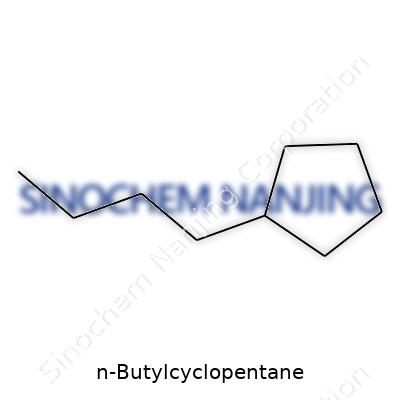
| Names | |
| Preferred IUPAC name | N-butylcyclopentanamine |
| Other names |
Cyclopentane, N-butyl- n-Butylcyclopentane Butylcyclopentane 1-Butylcyclopentane |
| Pronunciation | /ɛn-ˌbjuːtɪl.saɪ.kləʊˈpɛn.teɪn/ |
| Identifiers | |
| CAS Number | 1518-74-7 |
| Beilstein Reference | 1699801 |
| ChEBI | CHEBI:78093 |
| ChEMBL | CHEMBL1403337 |
| ChemSpider | 134439 |
| DrugBank | DB16695 |
| ECHA InfoCard | 17b11be3-b523-4732-be3b-e684d7cf2312 |
| EC Number | 203-691-3 |
| Gmelin Reference | 82882 |
| KEGG | C21141 |
| MeSH | D017648 |
| PubChem CID | 123156 |
| RTECS number | EK2975000 |
| UNII | F60E9O6XY2 |
| UN number | UN2907 |
| Properties | |
| Chemical formula | C9H18 |
| Molar mass | 140.27 g/mol |
| Appearance | Colorless liquid |
| Odor | Gasoline-like |
| Density | 0.745 g/mL at 25 °C |
| Solubility in water | Insoluble |
| log P | 3.9 |
| Vapor pressure | 2.2 mmHg (25°C) |
| Magnetic susceptibility (χ) | -8.9 × 10⁻⁹ |
| Refractive index (nD) | 1.422 |
| Viscosity | 0.670 cP (20°C) |
| Dipole moment | 0.00 D |
| Thermochemistry | |
| Std molar entropy (S⦵298) | 249.9 J·mol⁻¹·K⁻¹ |
| Std enthalpy of formation (ΔfH⦵298) | -138.3 kJ/mol |
| Std enthalpy of combustion (ΔcH⦵298) | -3679.9 kJ·mol⁻¹ |
| Hazards | |
| GHS labelling | GHS02, GHS07 |
| Pictograms | GHS02 |
| Signal word | Warning |
| Hazard statements | H226, H304, H411 |
| Precautionary statements | P210, P240, P241, P280, P370+P378, P403+P235 |
| NFPA 704 (fire diamond) | 1-2-0 |
| Flash point | 44 °C |
| Autoignition temperature | 230 °C (446 °F) |
| Explosive limits | Explosive limits: 1-6.3% |
| Lethal dose or concentration | Lethal Dose (LD50) oral, rat: > 5000 mg/kg |
| LD50 (median dose) | LD50 (median dose): Oral rat LD50 > 5000 mg/kg |
| NIOSH | NA0277000 |
| PEL (Permissible) | PEL (Permissible Exposure Limit) for N-Butylcyclopentane: Not established |
| IDLH (Immediate danger) | IDLH: 1,500 ppm |
| Related compounds | |
| Related compounds |
Cyclopentane N-Butylcyclohexane N-Pentylcyclopentane Sec-butylcyclopentane Cyclopentylbutane |



