N-Butyl Acetate: From Laboratory Curiosity to Industrial Mainstay
Out of the Lab: The Development of N-Butyl Acetate
Before n-butyl acetate made its way into factories and laboratories worldwide, researchers in the 1800s were learning how acids and alcohols could shape new substances. Scientists first isolated n-butyl acetate by combining butanol and acetic acid, pushing forward the understanding of esterification. As industrial needs grew, production ramped up through more efficient methods, with major chemical companies scaling up output during the 20th century. By the time heavy manufacturing and advanced coatings became common, n-butyl acetate had already claimed its place due to its solvent power and agreeable scent.
Getting to Know the Product
Walk into any paint shop or chemical plant, and chances are high you’ll spot drums or containers labeled with n-butyl acetate. It’s a clear, colorless liquid, best known in the world of solvent chemicals. It smells faintly like pears, a trait that makes it less harsh than many of its chemical cousins. Companies prize it for its strong dissolving ability, but also because it doesn’t linger long after use, making it valuable in industry and even in nail polish remover bottles or flavors and fragrances.
Physical and Chemical Properties
With a boiling point pegged around 126°C and a melting point dropping to −78°C, n-butyl acetate handles temperature swings with ease. It hardly mixes with water, but blends easily with organic solvents. Like many esters, it surprises many by burning clean, giving off a blue flame, and generating little smoke. Not just that, its vapor can become flammable in the right mix with air, so safe storage requires careful attention. N-butyl acetate evaporates quickly, which professionals count on during painting and coating jobs where rapid drying beats slow progress.
Technical Specs and How Labels Tell the Story
Manufacturers put significant emphasis on purity—most technical grade n-butyl acetate tops 99 percent. Key numbers on product labels include minimum purity, moisture content, acid number, and residue after evaporation. Labels list hazard warnings, shipping information, and safety measures—everything needed for transparent handling and regulation compliance. Across the world, product names and identifiers remain consistent: CAS number 123-86-4, UN number 1123, and EINECS 204-658-1. Each helps buyers and users identify what they're dealing with and avoid confusion with isomers or closely related esters.
How Industry Produces N-Butyl Acetate
Though n-butyl acetate occurs naturally in some fruits, most finds its way into bottles through chemical synthesis. Factories blend n-butanol with acetic acid, with sulfuric acid or another catalyst speeding up the process. Engineers often choose continuous distillation setups, separating the product from water and leftover reactants to wring out the purest possible yield. Over time, tweaks such as better catalysts and process monitoring have pushed both the quality and efficiency rates, trimming waste and cost for businesses.
Chemical Reactions and Modifying the Molecule
In the hands of a skilled chemist, n-butyl acetate does more than dissolve resins or thin paint. It can break down under strong acid or base, giving back n-butanol and acetic acid in a reaction called hydrolysis. Under the right lab conditions, it can also serve as a building block for more complex esters, or react further with other substances to produce flavors, fragrances, and specialty chemicals. Most modifications keep safety and environmental consequences in mind, since even small changes can introduce new hazards or alter how the product is handled.
Names and Names: Synonyms in Use
People working with n-butyl acetate run into a variety of names, sometimes depending on the region or intended use. Beyond n-butyl acetate, labels might read butyl ethanoate, n-butyl ethanoate, or even butyl ester of acetic acid. International trade sharpens this identity to its CAS number or its UN shipping code, yet, in factory hallways or supply offices, folks might simply call it “butac” or “butyl ester.”
Safety, Handling, and Industry Standards
N-butyl acetate doesn’t present the worst dangers in the solvent world, but it still calls for respect. High concentrations of vapor, especially in closed spaces, can cause headaches or dizziness and, at higher doses, respiratory or nervous system effects. Contact with skin dries it out, and liquid splashes can irritate the eyes. Good practice in plants means using chemical gloves, splash goggles, and ventilation. The chemical world builds its rules on facts from safety data sheets, with regulations matching standards set by OSHA, REACH, and other oversight agencies. Special storage away from open flames, direct sunlight, and strong oxidizers keeps accidents away.
Where N-Butyl Acetate Fits in Modern Industry
This solvent pops up in more jobs than most people expect. Paints and coatings depend on it for its rapid evaporation. It helps inks dry on printing presses, cleans up in industrial degreasers, and plays a quiet but vital role in adhesives and chemical extractions. Fragrance chemists tune its scent profile as a blending agent in perfumes, and food scientists trace it as a flavor in some fruits. Tough regulations keep n-butyl acetate's content within set limits in food-related use, backed by long-term safety evidence.
Research, Innovation, and What’s Next
Universities and industry R&D labs keep finding new ways to use, produce, and monitor n-butyl acetate. Recent work looks at green production—using renewable feedstocks, bio-catalysts, and energy-saving processes. Environmental impact gets close attention, leading to methods that recycle solvents or minimize emission leakage. Analytical chemists use instrumentation like gas chromatography-mass spectrometry for rapid detection, especially as regulatory bodies push for tighter quality control. Hybrid uses in nanomaterials, specialty plastics, and sustainable coatings emerge as research links fields together in unexpected ways.
Toxicity and What Science Shows
While n-butyl acetate doesn’t rank high on lists of dangerous organics, extensive testing has mapped out its effects. Researchers tracked thresholds for acute and chronic exposure, outlining levels that cause irritation, nervous system symptoms, or damage in animal models. Most cases of exposure trace back to poorly ventilated spaces or improper handling, a fixable cause with education and enforcement. Regulatory bodies in Europe and America continue to update safety values, and toxicologists keep monitoring new data to refine guidance for high-use workers and industries.
Looking Forward: Where Does N-Butyl Acetate Go from Here?
As manufacturing leans into green chemistry and stricter safety, n-butyl acetate stands out as a proven tool that adapts to changing needs. Future developments most likely come from renewable feedstock chemistry, better emission control, and advanced recycling methods. With more sectors seeking sustainable materials, demand could rise for biobased n-butyl acetate, especially if performance and price keep up with traditional product. Science and regulation will keep shaping its path, but as long as people need solvents that work quickly and cleanly, n-butyl acetate won’t leave factory shelves any time soon.
What is N-Butyl Acetate used for?
Everyday Uses and Its Reach
N-Butyl acetate turns up more often than most people realize. Many will recognize its sweet, fruity smell from fresh paint. This solvent helps paints go on smoothly and dry with fewer brush lines. In my own experience, painting a living room teaches you that not all paints smell the same. Water-based paints rarely create that sharp, almost banana-like odor, but most oil-based products rely on chemicals like n-butyl acetate to carry pigments and resins, then evaporate quickly as the surface dries.
The Backbone of Industrial Coatings
On a site visit to an auto-body shop, I noticed technicians reaching for thin cans to prep their spray guns. N-butyl acetate stood out on many labels. In automotive coatings, this solvent makes spray application easier because it quickly dissolves tough resins and then vanishes without a trace as the finish cures. Reliable spray patterns and consistent color make a big difference for anyone who has spent too much time fixing uneven finishes or peeling clear coat.
This solvent doesn’t just help cars look glossy; it also strengthens protective layers on everything from machinery to furniture. Woodworkers and metal fabricators often depend on n-butyl acetate for smooth, durable finishes—far more than water alone could offer. Large-scale production benefits because teams can move faster between coats, saving time and labor costs.
Cleaning Power in Manufacturing
Factories and workshops use n-butyl acetate to clean tools and equipment. Grease and sticky residues dissolve easily, so it beats soapy water in heavy-duty settings. I’ve watched maintenance crews wipe tough adhesives and oil-based ink from rollers and presses using solvent-soaked rags. In those busy workspaces, cleaning up quickly can keep lines running and minimize downtime.
Printing and Ink Formulations
Visit any commercial print shop, and chances are, you’ll find n-butyl acetate on-site. Printers rely on it for its fast evaporation, which helps keep inks from running and lets images cure almost instantly on packaging, posters, or magazines. In packaging design, ink smudges or slow drying can mean lost contracts. This solvent brings the speed that the market demands.
Challenges in Safety and Sustainability
Despite its usefulness, n-butyl acetate doesn’t come without risks. Prolonged exposure brings headaches and irritation. Anyone rolling fresh coats of lacquer should air out rooms and use gloves or masks when possible. Factories try to keep air quality high, using improved ventilation and closed mixing systems.
Growing concern over workplace health and environmental safety drives companies to look for safer alternatives. Water-based and plant-derived solvents show promise, but may not deliver the same finish or drying speed. The best solution comes from a combination of improved workplace practices, smarter ventilation, and safer handling—while research investment brings greener chemical choices for the years ahead.
What This Means for Consumers
For most shoppers, n-butyl acetate stays invisible, but it shapes the quality of paints, coatings, and even beauty products. Nail polish, for instance, gets its quick-drying shine from this same solvent. Knowing what’s behind each product on the shelf helps people make informed choices and opens the door to discussions about safe and sustainable manufacturing. Responsible use, clear labeling, and consumer awareness matter more than ever in a world looking for both performance and safety.
Is N-Butyl Acetate hazardous to health?
Understanding the Chemical
N-Butyl acetate shows up in a bunch of workplaces: paint shops, printing rooms, labs. Anyone who's opened a can of nail polish remover or fresh paint probably caught a whiff of it. This chemical isn’t rare. It comes with a sweet, fruity odor, which can fool people into thinking it’s pretty harmless. The reality? With regular or heavy exposure, nobody should just shrug off its potential impact on health.
Breathing it in: Immediate Effects
Step into a workshop where the stuff is in the air, and you’ll know right away if it’s not ventilated. Even short-term exposure may leave you with headaches, a sore throat, or dizziness. In worse cases, too much in the air causes people to feel nauseous, confused, or even pass out. Research from the National Institute for Occupational Safety and Health (NIOSH) supports stories from workers who report lightheadedness and irritation after a day around heavy fumes.
Touch and Eye Trouble
Touching the chemical or getting splashed can sting your eyes and irritate your skin. After painting a set of shelves at home, my arms felt dry and itchy until I scrubbed all traces off. Eyes react fast to splashes, so eye protection can't be an afterthought. Extended contact will only make things worse, and since everyone’s skin is different, sensitivity varies. Some folks develop redness or blisters after long shifts.
Long-Term Effects Don’t Get Enough Attention
It gets riskier with time. Chronic exposure, even at low concentrations, ramps up risk for central nervous system issues. That means memory loss, trouble concentrating, or worsened moods. Several workplace studies link solvents like n-butyl acetate to nervous system symptoms after years on the job. There’s also talk in the medical field about how these chemicals stress the liver and kidneys. The science keeps evolving, but the direction remains clear: less is safer.
Protecting People at Work and Home
No one should rely on luck to dodge health issues with this chemical. Steps are clear, and they start with fresh air. Open windows, fire up ventilation fans, or work outdoors when possible. A decent respirator keeps fumes out of lungs. Gloves and safety glasses become non-negotiable during any serious project. For larger industries, strict exposure limits should be standard. The American Conference of Governmental Industrial Hygienists, and OSHA, recommend no more than 150 parts per million in workplace air over an 8-hour shift. I’ve seen teams do it right by using exhaust fans and regular air checks. It makes a real difference.
Better Choices in the Market
Plenty of manufacturers offer lower-solvent or water-based products today. If there’s a less volatile paint or lacquer that does the job, give it a try. It’s worth checking labels and asking questions before buying products for hobbies or renovations. More consumers steering towards safer options encourages companies to keep improving formulas.
Everyone’s Responsibility
Health and safety won’t take care of themselves. Anyone working with n-butyl acetate needs to take honest stock of daily exposure. Supervisors do well by keeping safety data sheets handy and making sure workers understand what they’re dealing with. Whether at home or at work, it only takes one careless moment to cause problems no one wants to deal with for years.
What is the boiling point of N-Butyl Acetate?
Why Boiling Points Matter in Everyday Chemistry
Step out into the world of paints, cleaning agents, or industrial coatings, and n-butyl acetate pops up in recipes more often than salt in home cooking. Its role traces back to a simple property: how soon it turns from liquid into vapor. N-butyl acetate boils at about 126 degrees Celsius (259 degrees Fahrenheit). That number sounds like something for textbooks, but it runs the show behind the scenes.
Practical Lessons from a Painter’s Mask
Lifting the lid off a can of paint, you can smell a sweet, fruity scent—n-butyl acetate wafting up even in winter. Years ago, I noticed how different jobs called for taped window edges or open garage doors. Painters, workers, and even hobbyists trust this boiling point. Outside, on a dry, sunny day, paint flashes off the surface fast, and the solvent’s vapor escapes quickly. Indoors or on a rainy day, everything lingers. When the solvent boils at 126°C, that means it’s safe from normal summer heat, but a little spill can evaporate in a closed room, filling the air with fumes. That doesn’t just affect comfort; it changes safety. Real-world professionals keep this number in mind when choosing drying times, thinners, and safety routines.
From Factory Floor to Home Shop—Risks and Solutions
Get a group of people together who work with solvents, and everyone has a story about headaches, dizziness, or surprise spills. Safety starts where the boiling point tells you it’s not just about flammability but also about exposure risk. At normal temperatures, n-butyl acetate evaporates slowly, building up in closed spaces. Too much exposure irritates eyes, nose, and throat. Chronic exposure brings bigger health worries. Factories rely on proper ventilation, personal protective gear, and strict storage rules because that 126°C boiling point sets the flow of vapor. I once saw a co-worker shrug off his respirator to ‘just finish the job’—not a risk worth taking.
Evidence backs up these habits. The Occupational Safety and Health Administration (OSHA) and similar agencies cap workplace concentrations. Data shows that safe workspaces, with exhaust systems pulling out solvent vapors, have far fewer health complaints and accidents compared to closed workshops without airflow. Following the numbers—126°C—keeps paints smooth, staff safe, and air clear.
The Value of Knowing—And Acting—On That Number
Parents reaching for craft supplies, contractors loading up for a remodel, and production teams in bustling factories all rely, knowingly or not, on a detail like n-butyl acetate's boiling point. Unlike water, which boils at 100°C and rushes into steam, this solvent hangs on a little longer. Boilers and fire safety teams respect that. Thinner application and brush cleaning routines get shaped by it. Teaching shop students or apprentices about vapor risks can sound alarmist, but it’s rooted in fact. Every smart choice points back to details like 126°C.
Better Habits Grow from Better Understanding
Clear labeling, honest conversations in workshops, and real attention to how fast these vapors leave a can make everyone safer. Using low-odor or “green” paints—solutions the industry continues to pursue—cuts down risky fumes at the source. Good airflow, plain information, and respect for ‘just a number’ on a label turn ordinary work into safe, smart practice.
How should N-Butyl Acetate be stored?
Understanding the Stakes
N-Butyl acetate pops up in many factories and labs. Paints, coatings, inks, adhesives — many common items rely on this clear liquid. Its sweet smell can fool people into thinking it’s harmless, but hazards lurk beneath the surface. Highly flammable, volatile, and capable of causing harmful vapors, this solvent brings more risk than meets the eye. News stories have shown how careless storage often sits behind industrial fires and toxic exposures. It always takes just one overlooked drum or someone ignoring safety basics to ruin many lives, even close a business for good.
The Right Space Makes All the Difference
You don’t leave n-butyl acetate lying around the shop or warehouse. One spark and you’ll have a massive fire faster than anyone can react. That’s why every expert I’ve ever met keeps this solvent behind closed, well-marked doors. Steel cabinets designed for flammables change the safety game. These cabinets slow the spread of fire if disaster hits. Ventilation should be built into any safe storage area since even a small vapor leak creates headaches, dizziness, or worse depending on how long someone breathes those fumes.
I once saw a warehouse where the drums sat inches from a welding station, missing all labeling, and everyone just shrugged. The fire marshal nearly shut them down on the spot. Not only does this show poor training, but insurance won’t even cover you if you ignore basic rules. The National Fire Protection Association spells out minimum standards, and OSHA fines pile up quickly for violators. Nobody needs that stress.
Keep Enemies of Safety at Bay
Water shouldn’t mix with n-butyl acetate, so keep it away from sprinklers or humid corners. Humidity eats away at drum lids and risks corrosion, mixing water with solvent, which causes new hazards or weakens product quality. Sparks, heat, or any uncontrolled ignition source deserve special distance from any storage site. Just parking a forklift with a leaky battery near a drum presents a danger most workers ignore. Once, I heard a worker mention using a light switch in storage. Static electricity, even unexpected friction from plastic containers, can set off fumes.
Keeping containers sealed tight is smart. Vapors from even a loose cap will float to ground level due to their density. Any pilot light, heater, or even a faulty electrical socket provides enough heat to spark tragedy. I’ve seen operators overlook vents in drums, thinking it’d help with “pressure,” but all they do is invite vapor leaks. Store only in original containers or drums rated for chemical compatibility. Swapping into soda bottles or random jugs ruins batch traceability and nearly cost one warehouse an entire insurance claim.
What Actually Works for Real-World Safety
Signs, training, and checklists can’t replace the mental habit of caution, but these things help a lot. Eye-level hazard warning signs won’t get ignored. Safety Data Sheets in the storage room means no one has to leave the area or guess about emergency action. Color coding matters too — often one mistake happens because two similar drums sit next to each other.
Spill kits designed for chemicals and not just water mop-ups should always stay near the door. Absorbent pads, neutralizers, and even a simple bucket have prevented plenty of headaches. Routine checks find rusty lids, sticky valves, and container bulges before they get worse. Key lessons always circle back to one thing: don’t cut corners or trust shortcuts. Real experience shows every short-term saving turns costly later on.
A safe workplace keeps people healthy, insurance companies satisfied, and the business running smoothly. Proper storage for n-butyl acetate deserves every bit as much attention as the products and profits built on its use.
Is N-Butyl Acetate soluble in water?
Understanding N-Butyl Acetate
N-Butyl acetate often comes up in conversations about paints, coatings, and even the everyday nail polish remover. Its reputation rides mostly on two things: its effectiveness as a solvent and its mild fruity odor. Many labs and industries use it to dissolve, thin, or clean. But the question about its relationship with water isn’t as simple as it sounds.
Mixing N-Butyl Acetate with Water: Why It Matters
A lot of people assume most liquids will mix without much fuss, especially if they look clear and pour easily. But slip n-butyl acetate into a beaker of water and nothing close to perfect blending happens. Even after a vigorous swirl, most of the n-butyl acetate floats back up, splitting off into its own layer. Its solubility—the scientific way of saying how much will actually blend into water—lands at around 0.7 grams per 100 milliliters at room temperature. That’s far from impressive compared to table salt or sugar.
Curiosity about this topic led me through safety data sheets, chemistry handbooks, and manufacturer reports over years spent as a science writer. The numbers never vary much: n-butyl acetate dissolves just a tiny fraction in water, leaving most of it unmixed. Go to any manufacturing floor where folks work with both chemicals, and you’ll catch warnings—keep them apart to avoid spills and wasted product.
Why Does Low Solubility Matter?
When two liquids mix poorly, problems and risks rise up for workers and the environment. Big drums of n-butyl acetate often sit in painting or printing shops next to sinks. Any accidental dumps send a layer floating across the top of the water, rather than whisking it away to treatment plants for safe breakdown.
This behavior means more effort goes into handling, cleanup, and safety training. Local rules tend to treat poorly water-soluble chemicals differently, demanding better containment and quick attention to spills. Once, in a small lab, we had a leak from an old n-butyl acetate bottle. We landed in a hurry, shoveling up absorbent pads, because the liquid wouldn’t just rinse away. The residue stuck on the floor and left a strong, sweet smell for days, impossible to ignore.
Supporting Data and Daily Impact
Data from reputable sources, such as the National Institute for Occupational Safety and Health (NIOSH), confirm n-butyl acetate’s poor showing in water. Most chemical reference books stick with that same 0.7 grams per 100 milliliters figure. OSHA safety standards stand on that fact, requiring proper venting and the use of gloves, goggles, and spill kits around it.
Factories and small workshops know all too well how a low-solubility solvent affects process design. To get n-butyl acetate off hands or tools, you can’t just use water—you need other solvents, often alcohol or specialized cleaners. In fields chasing greener solutions, low solubility becomes a sticking point. The chemical’s persistence in water makes it harder for treatment plants to catch and neutralize.
Moving Toward Safer Practices
Most industries make up for these headaches in two ways: they switch to less hazardous materials when performance allows, or they invest more in staff training and containment. Information campaigns, clearly marked containers, and strong ventilation systems all help. Community guidelines and local audits back up these steps, cutting down the chances of a spill turning into an expensive, hard-to-clean problem.
The science on n-butyl acetate has been clear for decades. It won’t dissolve much in water, which shapes not just chemistry but daily routines and safety habits in all sorts of industries. For those working closely with it, knowing its limits pays off in fewer mistakes and a safer workspace.
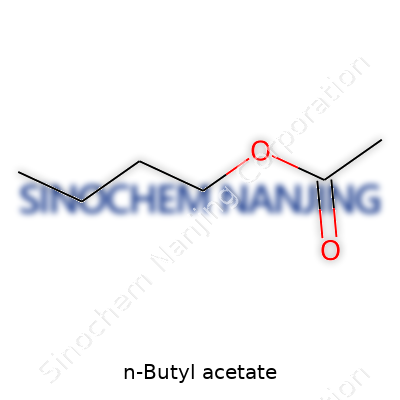
| Names | |
| Preferred IUPAC name | Butyl ethanoate |
| Other names |
Acetic acid n-butyl ester Butyl acetate n-Butyl ethanoate Butyl ethanoate |
| Pronunciation | /ˌɛnˈbjuːtɪl əˈsiːteɪt/ |
| Identifiers | |
| CAS Number | 123-86-4 |
| Beilstein Reference | 'Beilstein 1742765' |
| ChEBI | CHEBI:31328 |
| ChEMBL | CHEMBL25383 |
| ChemSpider | 6925 |
| DrugBank | DB02195 |
| ECHA InfoCard | 03f0b8d7-047a-414b-91b5-7f52eae90701 |
| EC Number | 204-658-1 |
| Gmelin Reference | 6073 |
| KEGG | C01552 |
| MeSH | D009995 |
| PubChem CID | 31272 |
| RTECS number | AF7350000 |
| UNII | LRH9Y6DVT4 |
| UN number | UN1123 |
| Properties | |
| Chemical formula | C6H12O2 |
| Molar mass | 116.16 g/mol |
| Appearance | Colorless liquid |
| Odor | Fruity odor |
| Density | 0.882 g/cm³ |
| Solubility in water | 5.3 g/L (20 °C) |
| log P | 1.82 |
| Vapor pressure | 11.5 mmHg (20°C) |
| Acidity (pKa) | pKa ≈ 25 |
| Basicity (pKb) | pKb: 15.76 |
| Magnetic susceptibility (χ) | -52.5·10⁻⁶ cm³/mol |
| Refractive index (nD) | 1.394 |
| Viscosity | 0.83 mPa.s |
| Dipole moment | 1.82 D |
| Thermochemistry | |
| Std molar entropy (S⦵298) | 229.6 J·mol⁻¹·K⁻¹ |
| Std enthalpy of formation (ΔfH⦵298) | -479.8 kJ/mol |
| Std enthalpy of combustion (ΔcH⦵298) | −3132 kJ·mol⁻¹ |
| Hazards | |
| GHS labelling | GHS02, GHS07 |
| Pictograms | GHS02, GHS07 |
| Signal word | Warning |
| Precautionary statements | P210, P233, P240, P241, P242, P243, P261, P271, P280, P303+P361+P353, P304+P340, P305+P351+P338, P312, P337+P313, P370+P378, P403+P235, P501 |
| NFPA 704 (fire diamond) | 2-3-1 |
| Flash point | 24°C (75°F) |
| Autoignition temperature | The autoignition temperature of n-Butyl Acetate is **400°C**. |
| Explosive limits | 1.7–7.6% |
| Lethal dose or concentration | LD50 oral rat 10,768 mg/kg |
| LD50 (median dose) | LD50 (median dose): 13 g/kg (oral, rat) |
| NIOSH | NA1123 |
| PEL (Permissible) | PEL (Permissible Exposure Limit) of N-Butyl Acetate: "150 ppm (710 mg/m³) TWA |
| REL (Recommended) | 150 ppm |
| IDLH (Immediate danger) | 1700 ppm |
| Related compounds | |
| Related compounds |
Ethyl acetate Isobutyl acetate Methyl acetate Propyl acetate Butyl alcohol Acetic acid |



