N-Butanol: A Deep Dive into Its History, Properties, Production, and Prospects
Historical Development
N-Butanol didn’t just turn up overnight. Chemists have worked with it for over a century, at first discovering it among the byproducts of fermentation and later harnessing its usefulness in synthetic chemistry. After World War I, the discovery shifted towards commercial-scale production. Factories pivoted from using biological fermentation of grains and molasses to petrochemical manufacturing once oil refineries gained the upper hand. My early days in chemical laboratories showed me how the legacy of these industrial shifts still shapes the current landscape—old patents on fermentation, newer ones on hydroformylation, all rearranging the chemistry set beneath the modern chemicals industry. Every practical leap depends on the hard lessons learned by those early tinkerers.
Product Overview
N-Butanol stands out for its clear, colorless appearance and musty, somewhat sweet scent—anyone who’s opened a bottle in the lab knows the smell. Developed and manufactured in bulk, it serves as both an important solvent and a valuable intermediate in other syntheses. Producers label drums and containers with straightforward names like n-butyl alcohol, 1-butanol, and butan-1-ol, making it easier to keep track against a backdrop of complex chemical inventories. Among common alcohols, it bridges the gap between ethanol’s volatility and the greasier touch of higher alcohols.
Physical & Chemical Properties
N-Butanol boils at 117.7°C, making it less flammable than lower alcohols while still burning bright enough to require careful handling. It mixes poorly with water but blends well with organic solvents, which chemists exploit in everything from extraction to cleaning. This alcohol features a straight, four-carbon backbone with a hydroxyl group tucked at one end. It’s dense enough to puddle in glassware, yet not as viscous as heavier alcohols like hexanol. It evaporates slower than acetone or ethanol, lending staying power in paints and coatings. Its vapor feels heavier than air; workers who’ve handled spills notice how it clings to low spots in a room.
Technical Specifications & Labeling
Suppliers classify n-butanol based on purity, water content, and absence of impurities—critical for high-stakes applications like pharmaceuticals or electronics where residues can spoil results. Labels show “N-Butanol, 99.5% min, Water 0.1% max, Peroxides < 5 ppm,” along with hazard warnings and clear manufacturer contact details. Regulations push for clear labeling of flammability, toxicity, and transport details, so warehouses and shipping yards spend more time double-checking compliance. Packing includes UN numbers and GHS icons because safe transport is non-negotiable.
Preparation Method
Today’s main approach uses the hydroformylation of propylene, followed by hydrogenation of the resulting butyraldehyde—a far cry from fermentation but far more efficient at scale. This method uses high pressure, precious metal catalysts, and exact temperature control, demanding vigilance and technical know-how from process engineers. Not every plant has the appetite for these conditions, so smaller producers still use fermentation with Clostridium species, turning renewable feedstocks into butanol—an approach that feels both old-fashioned and ahead of its time given today’s push toward green chemistry. I’ve watched operators sweat it out over both systems: steel reactors humming or fermentation tanks bubbling away, each needing its own kind of attention.
Chemical Reactions & Modifications
N-Butanol reacts readily, forming esters used as food flavorings or plasticizers, and can dehydrate to yield 1-butene, a building block in polymers. Reacting it with strong acids converts it into n-butyl chloride, while oxidation turns it into butyric acid, familiar in food science and fragrance chemistry. Mixing with phosgene or isocyanates forms carbamates and urethanes, products important to the coatings and plastics sectors. Few chemicals invite such a broad reaction portfolio—engineers and researchers chase new transformations every year, trying out different catalysts and reaction conditions.
Synonyms & Product Names
N-Butanol can get confusing with its aliases. I’ve read shipping manifests listing it as 1-butanol, butan-1-ol, and methylpropylcarbinol, with each industry holding on to a favorite name. “Butylic alcohol” shows up in older literature; newer databases twist things further with numbers and abbreviations. Labs slap on their own product numbers or codes to make internal tracking easier, but in paperwork, sticking to standardized IUPAC names and CAS numbers keeps misunderstandings at bay.
Safety & Operational Standards
Workers ingesting or breathing in fumes over extended periods can suffer from dizziness, headaches, or even kidney and liver problems, so regulation puts high demands on personal protective equipment and ventilation. In my experience, it takes constant vigilance; I’ve seen how quickly a forgotten fume hood or leaky valve turns into a safety report. Training programs stress the risky side: flash points, explosive limits, and the long-term toll on health. Facilities adopt strict cleaning and spill containment procedures, following OSHA and REACH standards even where local enforcement gets slack. Emergency protocols get drilled into every new hire, so no one gets caught flat-footed in the event of a spill or fire.
Application Area
N-Butanol’s reach goes beyond just laboratory benches. Large-scale coatings and paint manufacturers use it as a solvent for resins, improving flow and finish. It finds a home in lubricants, adhesives, and cleaning agents; even perfume makers rely on its blending powers. Producers of butyl acrylate and butyl acetate, used in plastics and textiles, treat it as an irreplaceable feedstock. In fuel research, it draws eyes as a possible gasoline blend component—offering more favorable energy density than ethanol, while still burning cleaner than pure hydrocarbon fuels. Schools use small quantities to teach organic chemistry, while the food industry manipulates its esters to sweeten up baked goods and drinks.
Research & Development
Current research circles around sustainability and efficiency. Academic teams investigate ways to shift away from fossil-based routes, spurred by both regulations and public demand for renewable chemicals. I’ve seen biotechnologists tweak microbial strains to turn corn stover and even municipal waste into high-yield butanol, trying to scale up without breaking the budget or environment. In process engineering labs, digital modeling and sensors improve real-time control—leading to fewer surprises, less waste, and safer operations. Industry partnerships pour capital into pilot projects for cellulosic feedstocks, hoping to crack the code on cost-effective, carbon-neutral production.
Toxicity Research
Long-term testing reinforces the message: n-butanol needs careful handling. Studies on workers and laboratory animals indicate the risk of neurotoxicity at high exposure, with regulators setting occupational limits near 50 ppm over eight hours in the air. Researchers hunt for metabolic byproducts in blood and urine, mapping the subtle but real effects of chronic exposure. Recent studies dig into risks to aquatic and terrestrial life from waste streams and spills; bioremediation approaches involve specific bacteria and fungi able to clear up low-level contamination, but it remains a worry near large production sites. Every new toxicological finding prompts updates in gloves, goggles, and respirators, as facilities put worker safety at the top.
Future Prospects
Global demand keeps pushing higher, especially with interest in greener production. Biotechnological advances open pathways for turning plant waste into valuable butanol, and several countries roll out grants and tax breaks to jumpstart new bioprocessing facilities. Researchers keep tweaking catalytic systems, trying to recycle more carbon dioxide during synthesis. As electric vehicles grow, n-butanol faces pressure in the fuels space, but its uses in coatings, plastics, and specialty chemicals remain robust. Next-generation tech may lower costs and carbon footprints enough to make bio-butanol a real contender against its petrochemical cousin. Companies that invest in process innovation and strict environmental controls stand to lead the market—and protect both workers and environments in the decades ahead.
What is N-Butanol and what are its common uses?
What You Find in N-Butanol
N-Butanol shows up in places you wouldn’t expect. Many folks walk past lab doors and factory floors daily, never wondering what’s in the barrels and bottles stacked behind those walls. N-Butanol, also called 1-butanol, looks like a clear liquid and smells a bit like bananas. It’s a staple in a lot of industries, but unless someone works with chemicals, they might never hear the name.
This alcohol comes from both petrochemicals and fermentation. Yeast, for example, can crank it out through a tweak in the fermentation process. For big players in chemical manufacturing, making this from oil byproducts helps keep plants running and supply chains moving. If markets shift and push for greener products, fermentation from renewable sources gives a backup plan.
Easy to Overlook, Tough to Replace
One place N-Butanol gets a lot of use is as a solvent. In my own experience, nothing gets strong old paint to dissolve quite as thoroughly. Artists, auto-body shops, and small manufacturers count on this. Its chemical structure lets it break down sticky substances while not evaporating as fast as lighter alcohols. That means no rush to finish a job before the solvent escapes.
Many industries run on coatings and paints that need to dry smooth and hold up in harsh weather. N-Butanol gets added to spread pigment and keep paint from clumping or streaking. Boat paint, road markings, car bodies—modern life would look dull and chip faster without the help of solvents like this. People painting houses often don’t get told what’s in the can, but quality and shelf life depend on these behind-the-scenes chemicals.
Glue, Perfume, and Gas Tanks
Folk who handle adhesives benefit from N-Butanol, too. Glue manufacturers use it to adjust how sticky and fast-drying their formulas get. Craft supply makers and construction companies require precise performance from glues, whether for making particle board or putting together shoe soles.
Perfume shoppers might be surprised that N-Butanol sometimes lands in the bottle. A bit of it helps blend scents or act as a carrier for fragrant oils. It’s not the main note anyone smells, but it helps keep expensive fragrances stable and spread smoothly on skin.
As the world tries to cut back on fossil fuels, attention shifts to renewable fuels. N-Butanol turns out to burn clean and packs more punch per drop than ethanol. Research teams and some biofuel startups look at ways to swap out gasoline for N-Butanol blends. They find cars run smoother, and engines like the higher energy content. Bringing the cost down and scaling up production pose the biggest hurdles. Still, any step away from raw petroleum counts as progress for those worried about climate change.
Risks and the Need for Smart Handling
N-Butanol isn’t free of problems. Exposure to high levels can irritate the eyes and skin. In small workspaces or when spilling large amounts, fumes linger and can cause headaches or worse. Factories and labs pull out extra fans, special gloves, and training to keep workers safe. Few people realize how much invisible work safety inspectors do, but a sharp eye on chemical handling keeps accidents down. People at home using hobby paints should read labels and keep windows open just to be sure.
Where to Go From Here
The future asks more from every chemical, including N-Butanol. Producers seek cleaner pathways, and green chemistry labs try to limit toxic byproducts. The push for circular economies and minimal waste applies here as well. With pressure from buyers and new laws, companies have started shifting to renewable production and better worker training. Smart sourcing, strong safety habits, and ongoing research may help keep this hidden helper both safe and available for years ahead.
Is N-Butanol hazardous to health or the environment?
Understanding N-Butanol
N-Butanol turns up in a lot more places than people might realize. You’ll find it in industries making paints, coatings, resins, and even everyday products like solvents and cleaners. Its familiar alcoholic smell lingers in factories and labs, but that doesn’t mean it’s safe to breathe in or spill into a river.
Health Risks in Daily Use
Nobody likes headaches or dizziness. Even brief exposure to N-Butanol vapor can bring those symptoms fast. I remember visiting a small manufacturing site as a young worker and catching a strong whiff near a row of barrels. Some coworkers joked about it, but the stinging eyes and slight nausea weren't funny. OSHA recognizes that N-Butanol vapor irritates the nose, throat, and lungs, making it a hazard for anyone working without protective gear.
Liquid N-Butanol also soaks through skin. Factory workers who don’t keep gloves on risk rashes and dry patches. Over time and with enough exposure, more severe problems could show up — from nervous system depression to gut trouble. Frequent handling without breaks for fresh air or proper ventilation isn’t worth the risk.
Accidents do happen. Large spills or unsafe handling create short-term risks like breathing trouble, but there’s growing concern about what happens over the long haul. Chronic exposure has been tied to slower reaction times and memory problems. Nobody signs up for a job expecting their hands to tingle or their brain to fog after clocking out.
Kids and folks with asthma or sensitivities react worse, since their lungs can’t clear the fumes as quickly. Experience tells me, factory protocols that skip over real-world usage — like closing a window “just this once” — open the door for trouble.
Impact on the Environment
Industrial chemicals drift beyond four walls. N-Butanol evaporates from tanks and spills, ending up in soil and water. Fish and small aquatic life run into problems at low concentrations, with studies showing behavior changes and even death among sensitive species.
N-Butanol breaks down a bit faster than some big-name pollutants, but it doesn’t disappear overnight. High concentrations in a stream bring a sharp drop in oxygen for everything living there. The solution isn’t just to rely on air and sunlight to clear up a spill. Responsibility starts with proper storage, regular inspections, and decisive action after an incident.
Runoff from manufacturing or poor disposal slips into drainage systems, making its way to rivers and larger bodies of water. When that happens, the effects ripple through food webs, eventually affecting communities that rely on those waters for drinking or fishing. That’s a lesson the Gulf Coast learned the hard way with other industrial spills over the years.
Finding the Balance: Safety & Prevention
Nobody’s suggesting tossing N-Butanol out of every lab or factory tomorrow. Safer use starts with airtight safety protocols. Working with this chemical means routine air-quality checks, strict handling rules, and full training for new staff. Personal experience shows that even simple steps — fresh gloves and face protection, dedicated storage spaces, and regular spill drills — reduce risks.
Groups like the Environmental Protection Agency and the National Institute for Occupational Safety and Health set exposure limits based on hard data. Still, local factories and labs owe it to their neighbors to go beyond the minimum. Investing in real-time sensors, spill barriers, and better cleanup plans protects both workers and the environment.
Down the road, switching to less hazardous chemicals makes sense. Until then, keeping N-Butanol in check means education, vigilance, and never taking safety shortcuts — because small exposures can stack up, and nobody wants to pay for mistakes after the fact.
What are the storage and handling requirements for N-Butanol?
Why Pay Attention to N-Butanol Storage?
N-Butanol, a solvent you’ll spot in paints, coatings, and even some cleaners, comes with risks most folks overlook. With a relatively low flash point, it catches fire more quickly than water boils. Forgetting this puts workers and entire facilities at risk. On top of flammability, vapors from N-Butanol can irritate eyes, noses, and throats. It isn’t just about spilled liquids or broken containers—airborne fumes cause headaches or dizziness if they build up. This isn’t theory; over the years, I’ve seen techs cutting corners, thinking “just a little bit” out in the open doesn’t matter—then they wind up lightheaded or worse. These small oversights often snowball.
Choosing Storage: More Than a Lock and Door
Tucking N-Butanol away in a random storage room misses the point. Standard steel drums or plastic containers marked for flammable liquids work best. Storage areas need real ventilation. Relying on one window or a fan leaves vapor hanging around, which increases the odds for flash fires. Pallet racking can help with organization, but keeping drums off the ground avoids corrosion from accidental leaks. Shelving above ground floor pays off in flood-prone areas.
N-Butanol gets moody with heat. Temperatures climb, vapors fill the room faster. Direct sunlight heats drums quickly and can raise container pressure, so shady, well-ventilated spaces aren’t just “nice to have”—they keep the stuff from blowing its top. After hearing stories of bulging barrels left on asphalt in summer, I’d always check for shaded, insulated storage—avoiding any guesswork.
Handling Practices That Cut Down on Incidents
Nobody wins from rushing. PPE includes gloves resistant to chemicals, splash goggles, and flame-retardant clothing. Once, I watched a new hire try latex gloves, which melted a little just from a spill. Choosing correct gloves—nitrile or neoprene—means skin stays untouched. For loading or decanting, using self-closing valves and grounding lines blocks static buildup—a spark is all it takes to set off a chain of trouble. Stretching cables isn’t overkill; it’s a basic safeguard.
Open flames, pilot lights, and hot machinery should stay out of the picture. Ventilation hoods work well for bench-scale handling. Pouring or transferring N-Butanol isn’t a task for the corner of a crowded shop. Designating a low-traffic, well-marked station cuts cross-traffic and distractions. No amount of training replaces a layout designed for safety. In the event of a release, sand, clay, or commercial absorbents keep leaks contained, slowing spread until cleanup arrives.
Spill Response and Fire Controls
Anyone storing this solvent owes it to staff to have clear emergency plans. Fire extinguishers rated for flammable liquids (Class B) need to sit within reach, not buried at the back of a cluttered storage cage. Emergency showers and eyewash stations save sight and skin after an accidental splash—one of the first things I check on a walkthrough. Spill kits belong as close as possible, not locked up in the main office.
Training drills transform “just in case” into muscle memory. Employees respond better if they’ve handled the equipment once or twice, not just read about it. Labels with hazard warnings stay sharp and readable, renewing them as soon as they start to fade. Regular walk-throughs pay off more than sporadic seminars or posters; hazards don’t wait for calendar reminders.
What It Boils Down To
People handling and storing N-Butanol make mistakes not from malice, but from rushing or cutting corners. A safe site, reliable containers, good ventilation, clear process, and well-placed emergency supplies keep risks in check. Taking shortcuts with flammable, toxic chemicals paves the road to injury and property loss—close attention blocks those routes before anyone gets hurt.
What is the chemical formula and physical properties of N-Butanol?
The Bare Facts: Chemical Formula of N-Butanol
N-Butanol carries the chemical formula C4H10O, which tells a simple story of four carbon atoms, ten hydrogens, and one oxygen. You’ll find it written out in textbooks as CH3CH2CH2CH2OH—just a straight carbon chain, no rings or double bonds. That structure gives it the name “n” for normal or straight-chain butanol.
Look, Feel, and Smell
N-Butanol isn’t some mysterious lab chemical hidden in rarefied corners; it shows up clear, with a faint alcoholic scent—nothing overpowering, but hard to miss. At room temperature, it stays liquid, with no extra fuss. Boiling begins near 117 degrees Celsius, which marks it apart from shorter alcohols like ethanol that evaporate much quicker. Try pouring a little on your hand: you’ll notice it leaves a slight oily layer that sticks around longer than water or even ethanol. That’s the higher boiling point at work.
Solubility and Why It Matters
Here’s a practical detail that comes up constantly in labs and industry: N-Butanol mixes with many organic solvents but only dissolves in water up to a point. That halfway behavior makes it valuable. Oil and water usually don’t mix, but add N-Butanol, and they start talking to each other. This property gets used in making paints and coatings, where you need something that helps polar and non-polar ingredients mingle. As a college student handling these chemicals, I saw firsthand how it lent itself to making reagents blend in, especially for organic syntheses.
Flammability and Storage
N-Butanol burns pretty easily. Its flash point sits just above typical room temperature, at about 35°C. So any workspace handling large quantities keeps it away from sparks and open flame. I once spent a summer assisting in a paint testing lab and saw the safety obsession—metal cans, flame arresters, and proper grounding during transfers. These habits stem from well-earned caution; fires fed by N-Butanol move fast and get intense. Safety protocols stick with you after that sort of experience.
Impact Beyond the Lab
For most folks, N-Butanol works under the radar. Yet, it shapes a long list of everyday materials: plastics, brake fluids, flavorings, and synthetic textiles. Quality matters here. For example, a batch of paint only flows and dries properly if the butanol stays pure and stable. I remember a production run ruined by contaminated supply; the paint separated and dried rough. Reliable suppliers and vigilant quality checks keep those headaches away.
Challenges and Better Practices
Workers in factories or research labs deal with N-Butanol exposure risks. Direct skin contact can cause irritation, and heavy fumes bring on headaches or nausea. Adequate ventilation cuts down fumes, and gloves plus goggles block splashes. Engineering teams now install air monitors and exhaust hoods as standard. I’ve seen training sessions where teams walk through a spill drill, and these exercises pay off with quick, composed responses to accidents.
Looking Ahead
Finding greener ways to source and use N-Butanol stands out as the next big step. Some plants now churn out fermentation-based N-Butanol from renewable feedstocks—reducing the carbon footprint. The tech isn’t everywhere yet, but it’s coming. Regulations get stricter each year, so manufacturers push for lower emissions and safer workplaces. These moves help keep the chemical practical and safe, all without losing sight of its value in modern life.
What safety precautions should be taken when working with N-Butanol?
Understanding N-Butanol in Everyday Workplaces
N-Butanol pops up in labs, factories, and smaller workshops that deal with solvents and coatings. The smell gives it away, strong with a sweet hint, enough to remind you this isn’t water or a harmless cleaner. Raising safety standards with this chemical always means acknowledging that the dangers sneak up mostly through skin absorption, inhaling vapors, or accidental spills.
Personal Experience: Gloves Matter More Than You Think
One afternoon in a paint shop, I watched someone wipe a spill off their sleeve with a bare hand, not thinking much of it. By evening, the nausea and headache kicked in, and a day off was wasted because of what looked like a minor splash. After that, we never allowed work with N-Butanol unless everyone wore solid nitrile gloves and proper goggles. Disposable options fall short—a little stain, and it works through, causing burns and long-term issues you’d never expect.
Eye and Skin Protection Isn’t Optional
N-Butanol burns on contact with the eyes or skin. Safety goggles or face shields stop accidental sprays from turning into a trip to the hospital. Lab coats and sleeves that fit close to the wrists make a big difference, especially when pouring or transferring the liquid. A single drip on exposed skin can pump toxins into your body faster than you’d think, so covering up matters just as much as using a fume hood.
Good Ventilation: The Best Insurance
Poor airflow may not smell like trouble until too late, but N-Butanol vapors quickly reach dangerous levels in a closed room. One case I recall: an exhaust fan broke during a long shift, and by mid-morning, noses were numb, and people felt dizzy. Proper, functioning fume extractors—checked before every shift—keep the air fresh. Air monitoring tools, like real-time gas detectors, flag issues fast.
Spill Response: Quick Action Saves Hassle
A spill kit should stay within reach every time anyone works with N-Butanol. Paper towels or regular rags only spread the danger. Proper absorbent pads and neutralizers—found in any well-stocked chemical safety kit—do a safer cleanup. Training matters here. If staff don’t know the fastest way to deal with a spill, confusion turns a small problem into a contamination headache. Posting instructions on the wall helps when nerves get the better of memory.
Storage and Labeling: No Corners Cut
Leak-proof containers, always tightly capped, stop N-Butanol from evaporating into workplace air. Flammable safety cabinets give that extra layer of protection, and clear, bold labeling keeps coworkers from mistaking it for water or a harmless solvent. Storing it away from oxidizers like chlorine bleach cuts down on the risk of a fire.
Training and Awareness: Keeping Everyone Safe
Regular safety drills, refreshers on using personal protective equipment, and basic first-aid training protect everyone from avoidable mistakes. The CDC and OSHA stress proper labeling, eye-wash stations within 10 seconds of every workstation, and a safety data sheet that’s always accessible. These aren’t just checkboxes on a safety audit—they’re habits that protect lives.
Solutions Worth Considering
Day-to-day safety with N-Butanol comes down to three things: keeping people educated, following routines, and never taking shortcuts. Even budget-strained businesses can cut risk by sharing equipment checks, using group training, and trading best practices within their industry. In places that recognize these threats and treat them seriously, injuries rarely happen, and work productivity actually improves because people spend less time dealing with fallout from mistakes.
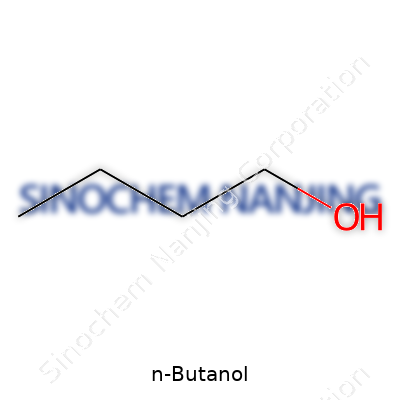
| Names | |
| Preferred IUPAC name | butan-1-ol |
| Other names |
n-Butyl alcohol 1-Butanol Butan-1-ol Butyl alcohol Propylcarbinol |
| Pronunciation | /ɛnˈbjuː.tə.nɒl/ |
| Identifiers | |
| CAS Number | 71-36-3 |
| Beilstein Reference | 603873 |
| ChEBI | CHEBI:28885 |
| ChEMBL | CHEMBL43038 |
| ChemSpider | 5207 |
| DrugBank | DB02160 |
| ECHA InfoCard | 100.004.254 |
| EC Number | 200-751-6 |
| Gmelin Reference | 878 |
| KEGG | C00474 |
| MeSH | D017066 |
| PubChem CID | 263 |
| RTECS number | EO1400000 |
| UNII | 3K9958V90M |
| UN number | UN1120 |
| Properties | |
| Chemical formula | C4H10O |
| Molar mass | 74.12 g/mol |
| Appearance | Colorless liquid with a characteristic odor |
| Odor | Characteristic, banana-like |
| Density | 0.81 g/cm³ |
| Solubility in water | Moderate (70 g/L at 20 °C) |
| log P | 0.88 |
| Vapor pressure | 0.56 kPa (at 20°C) |
| Acidity (pKa) | 15.0 |
| Basicity (pKb) | pKb = 5.7 |
| Magnetic susceptibility (χ) | -7.3×10⁻⁶ |
| Refractive index (nD) | 1.399 |
| Viscosity | Viscosity: 2.948 mPa·s (at 20 °C) |
| Dipole moment | 1.66 D |
| Thermochemistry | |
| Std molar entropy (S⦵298) | 282.7 J·mol⁻¹·K⁻¹ |
| Std enthalpy of formation (ΔfH⦵298) | -327.6 kJ/mol |
| Std enthalpy of combustion (ΔcH⦵298) | –2674 kJ/mol |
| Pharmacology | |
| ATC code | J02AX10 |
| Hazards | |
| GHS labelling | GHS02, GHS07, GHS08 |
| Pictograms | GHS02,GHS07 |
| Signal word | Warning |
| Hazard statements | H226, H302, H315, H318, H335, H336 |
| Precautionary statements | P210, P261, P264, P271, P280, P301+P312, P303+P361+P353, P305+P351+P338, P312, P337+P313, P405, P501 |
| NFPA 704 (fire diamond) | 2-3-0 |
| Flash point | 35°C |
| Autoignition temperature | 343 °C |
| Explosive limits | Explosive limits: 1.4–11.2% |
| Lethal dose or concentration | LD50 Oral Rat 790 mg/kg |
| LD50 (median dose) | LD50 (median dose) of N-Butanol: 790 mg/kg (rat, oral) |
| NIOSH | PB9125000 |
| PEL (Permissible) | 100 ppm |
| REL (Recommended) | 50 ppm |
| IDLH (Immediate danger) | 1400 ppm |
| Related compounds | |
| Related compounds |
Isobutanol sec-Butanol tert-Butanol Methanol Ethanol Propanol |



