N-Amylamine: Unpacking the Story, Science, and Future Potential
Historical Development
Chemistry often surprises with its rhythmic dance between discovery and necessity, and N-Amylamine is no different. The journey started as chemists learned to tweak carbon chains and amine groups, searching for more versatile building blocks. N-Amylamine, with its five-carbon backbone and primary amine function, offered fresh approaches for synthesizing pharmaceuticals, agricultural chemicals, and polymers. Research papers from the early 20th century document the compound’s preparation, mainly through reductive amination techniques or direct amination of pentanol derivatives. As organic chemistry matured, large-scale production methods became more reliable. Industry leaders soon recognized how this modest molecule bridged gaps in larger synthetic schemes, opening the door for its growth in relevance and commercial production.
Product Overview
N-Amylamine, also known as 1-pentanamine or pentylamine, delivers a sharp, ammonia-like scent reminiscent of other simple amines. It usually appears as a clear to slightly yellowish liquid. This primary amine slot fits nicely into many reaction schemes, making it handy as an intermediate for dyes, pharmaceuticals, solvents, and agrochemicals. Commercial suppliers often offer the compound in drums or bottles, ready for both large-scale and lab-scale users. Chemists value it as a straightforward amine with just enough carbon to provide unique reactivity but not so bulky as to complicate isolation or processing.
Physical & Chemical Properties
The physical character of N-Amylamine helps to determine safe handling and best routes for use. It has a boiling point around 104°C and a melting point near –60°C, making the liquid suitable for various synthesis methods. Water solubility is moderate; the compound forms miscible solutions with many organic solvents, such as ethanol, ether, or chloroform. On the chemical front, it behaves as a typical primary amine—its lone pair on nitrogen acts as a good nucleophile, while the molecule itself readily accepts protons. Slightly alkaline, it reacts briskly with acids to yield stable salts. N-Amylamine is flammable and gives off strong, unpleasant fumes, signaling the importance of adequate ventilation during handling.
Technical Specifications & Labeling
Producers label N-Amylamine by clear technical parameters: purity (often >98% for lab-grade), water content, color index, and impurity limits such as residual solvents or secondary amines. Labeling typically mentions UN numbers for transport safety, hazard pictograms required by GHS, and first-aid instructions for fire or exposure risks. Bottles and containers carry batch-specific information, helping end users maintain traceability in research or production. These standards support consistent product quality, aligning with broader regulatory trends aimed at both user safety and environmental stewardship.
Preparation Method
N-Amylamine production usually starts with n-pentanol or n-pentanal as a feedstock. The older but reliable process involves a two-step synthesis: first, pentanal condenses with ammonia under controlled conditions, yielding the imine. Subsequent hydrogenation, using nickel or ruthenium as a catalyst, produces the amine. Routes using direct alkylation of ammonia with pentyl halides also exist, though yields and selectivity vary. Over the years, process engineers have favored hydrogenation, as it scales cleanly and generates fewer problematic byproducts. Modern operations rely on continuous flow reactors, more efficient catalysts, and careful separation to keep product purity high.
Chemical Reactions & Modifications
N-Amylamine slots neatly into many chemical transformations as both a base and a nucleophile. It attaches to carbonyls, forming imines and Schiff bases, or reacts with acid chlorides to give pentyl-substituted amides—a staple for pharmaceutical synthesis projects. Chemists modify the pentyl chain for steric tweaking or extend the molecule for polymer production. Functional group transformations such as acylation, sulfonation, or diazotization come naturally. The amine’s reactivity makes it an ally for making surfactants, corrosion inhibitors, and cationic agents in paint formulations. Experience shows that the relatively straightforward structure provides a platform, yet its flammability and volatility demand respect in every step.
Synonyms & Product Names
N-Amylamine travel through the literature under various names: 1-pentanamine, n-pentylamine, pentamethylene amine, and CAS registry number 110-58-7. Commercial labels often reflect both the systematic nomenclature and trade styles, but reputable suppliers always list the IUPAC name for clarity. Locally in Southeast Asia, ‘pentylamine’ pops up among pesticide manufacturers or dye producers. This array of synonyms sometimes creates confusion, highlighting the necessity for precise chemical labeling, especially with cross-border shipments or compliance audits.
Safety & Operational Standards
Anyone who has worked with N-Amylamine recalls the sharp odor, skin irritation, and headaches that can result from careless handling. Safety sheets list the chemical as hazardous: it can cause burns to skin and eyes, while inhalation irritates respiratory passages. With a flash point near 38°C, even moderate heat sources turn it into a fire risk, so labs and plants must use explosion-proof equipment and handle the liquid in chemical fume hoods. Gloves, goggles, and splash shields become part of the daily routine. Emergency protocols focus on fast ventilation, eyewash stations, and reliable fire suppression. Environmental disposal takes place through controlled incineration or by treating small spills with acidic neutralization before waste water discharge, reducing local ecosystem harm. Strong governance of these operational steps, together with staff training, remains the gold standard for safely working with volatile amines like this.
Application Area
N-Amylamine finds roles in multiple industry verticals. In pharmaceuticals, it anchors the synthesis of analgesics or local anesthetics, often by acting as a chain extender for active molecules. Agrochemical producers use it as an intermediate for herbicides, insecticides, and fungicides, where the amine function attaches to various aromatic or aliphatic scaffolds. Polyurethane and epoxy resin manufacturers incorporate it to bring flexibility or surface activity. In sensors, pentylamine layers modify surfaces, increasing selectivity for target molecules. Personal experience in polymer research underscores its value because the amine reacts with epoxides or isocyanates, giving fine control over polymer architecture. In water treatment and flotation systems, its surfactant properties assist with separating fine minerals. While food or cosmetic use faces regulatory limitations due to toxicity, N-Amylamine remains crucial in technical applications where operator skill and engineered controls are strong.
Research & Development
Research on N-Amylamine rarely stays static. Scientists push into greener, less energy-intensive synthesis, aiming to swap fossil-based pentanol with bio-based routes or continuous flow chemistry to cut down on waste. In academia, functionalization projects focus on creating new ligands for metal-catalyzed transformations. Pharmaceutical developers tweak its chain length or combine it with other functional groups to hit specific medicinal targets. Industrial labs prioritize improving catalyst selectivity and reaction throughput. Collaborations between academia and business speed up the translation of bench research to pilot scale, moving new derivatives or formulations toward market. As regulatory pressure mounts on solvent and emission controls, R&D shifts towards lower-energy separation and recycling methods as well.
Toxicity Research
Toxicologists view N-Amylamine with caution. Animal studies document clear dose-dependent toxicity: exposure causes respiratory distress, skin and eye injuries, and—at high enough doses—central nervous system symptoms. Chronic exposure studies raise some flags about potential reproductive effects and liver stress, though data gaps remain for low-level, long-term human effects. Environmental studies show persistent aquatic toxicity, partly because amines shift water pH and can form harmful reaction products. Regulatory agencies call for strict threshold limits in workplace air and wastewater. Experience has shown that regular medical screening and robust protective measures keep occupational risks low, but community and aquatic safety depend on careful effluent monitoring and emergency response plans. Modern assay techniques improve risk prediction, though comprehensive toxicology still needs more longitudinal studies.
Future Prospects
Looking forward, the landscape for N-Amylamine will keep changing. As sustainable chemistry projects mature, greener production methods will take market share from petrochemical-derived processes. Researchers chase new applications in smart coatings, biosensors, and custom pharmaceuticals, leveraging the amine’s reactivity and modifiability. The compound’s sharp smell and toxicity may limit direct use in consumer goods, but downstream derivatives could enter more fields as safety data accumulates and handling practices evolve. Regulatory moves toward lower emission limits and better workplace air quality may spur innovation in closed-loop process design or alternative functional group transformations. N-Amylamine stands as a prime example of how even simple molecules continue to inspire, challenge, and feed into the vast engine of chemical innovation.
What is N-Amylamine used for?
Everyday Chemistry Few Notice
Step into any major chemical plant or research lab, and odds are you’ll find N-Amylamine lurking in the background. Most folks outside the industry haven’t heard of it, but this clear, pungent liquid does a lot more than just fill bottles in backroom labs. I first crossed paths with N-Amylamine years ago in a college organic chemistry course, hands still tingling from stubborn reactions gone wrong. From then on, at every turn, its presence kept surprising me.
Key Building Block for Manufacturing
N-Amylamine plays a huge role in chemical manufacturing. Its main job: acting as a raw material for producing bigger, more complex molecules. Pharmaceutical companies rely on it to make certain medicines, especially medications rooted in synthetic chemistry. Some antihistamines and local anesthetics trace a part of their family tree back to this compound. Real-world stories from people in those companies talk about struggling to source high-purity N-Amylamine because a small impurity can derail an expensive drug process.
Specialty Chemicals and Household Items
Beyond medicine, N-Amylamine helps bring everyday products to life. Take pesticides and agricultural chemicals. Farmers desperate for better crop yields depend on advanced pest-control formulations—N-Amylamine helps make some of those work. Its reach extends into rubber processing, and even into certain plastics that shape countless products in our kitchens and offices. If you’ve ever popped open an ink marker and felt a sting in your nose, there’s a chance compounds like N-Amylamine helped that product perform as intended.
Synthesis Challenges and Safety Matters
My first real experience handling N-Amylamine left an impression—both literally and figuratively. The strong, fishy smell hangs in the air even with good airflow. Direct exposure can burn skin or eyes, and the vapor isn’t kind on lungs. Factories that use this compound invest real effort into safety measures. This focus on safety isn’t just about regulations—local communities don’t want harmful vapors drifting beyond factory walls.
Reports show workers face risks if the ventilation systems fail or if storage tanks corrode. Responsible companies train employees to handle spills, equip them with proper gear, and design emergency shutdowns. Such investment keeps accidents low, but stories still pop up in the news about poor safety leading to dangerous incidents.
Environmental Impact and Solutions
Most chemical manufacturers struggle with waste. N-Amylamine byproducts pose risks if dumped untreated. Water contamination can wipe out fish populations and threaten drinking supplies. I’ve visited wastewater treatment plants near chemical facilities where special filtration and neutralization systems keep these risks in check. Pressure from environmental groups has pushed companies to develop better recycling and reclamation systems, turning waste back into reusable chemicals or less toxic material.
Ongoing Innovation
Scientists keep looking for greener ways to make and use N-Amylamine. Universities and companies team up to tweak production processes, aiming for less pollution and less hazardous waste. Some chemists explore using plant-based feedstocks to replace fossil-derived raw materials. Switching to renewable sources could shrink the environmental footprint and answer growing public demand for cleaner manufacturing.
Facing Real-World Challenges
Anyone working with chemicals like N-Amylamine feels the balancing act. This compound powers industries that keep modern society running, but each step from synthesis to disposal carries risk. Tackling those risks needs real investment, honest communication with neighbors, and a commitment to improve, not just for the bottom line but for everyone who lives near a plant’s fence line or drinks from the same river.
What is the chemical formula of N-Amylamine?
A Closer Look at Structure and Daily Relevance
N-Amylamine's chemical formula is C5H13N. N-Amylamine shows up in labs and factories worldwide, often overlooked unless you spend a lot of time in chemistry circles. Its name might sound intimidating, but the basics are simple: it’s an amine with a five-carbon chain attached to a nitrogen atom. Think of it as a close relative to other common amines found in household cleaning products and industrial solvents.
Breaking Down the Formula and Uses
N-Amylamine carries the structure C5H11NH2, but we usually write its summary formula as C5H13N. To someone familiar with organic chemistry, this points to a straightforward linear chain of five carbons (pentyl group) bonded to an amino group (-NH2). This small tweak—the presence of nitrogen in the chain—changes everything. Amines aren’t just random chemicals; they serve as stepping stones to a lot of materials we use daily, from medications to dyes.
Lab work has shown that N-Amylamine acts as a building block for bigger molecules. It appears in research into agricultural chemicals, surfactants, polymer additives, and even fuel additives. For example, researchers in Europe explored N-Amylamine as a precursor in the production of herbicides. I’ve watched chemists mix amines with acids in order to create new drug candidates for treating infection and inflammation. So, the simple formula carries weight when looking at its practical reach.
Potential Risks and Responsible Handling
Chemical safety weighs heavy on the minds of anyone handling N-Amylamine. Exposure can lead to skin, eye, and respiratory irritation. It carries a strong fishy odor—scent alone tips off anyone that this substance demands respect. Proper storage away from acidic compounds and open flames lowers the risk of dangerous reactions, especially since amines can react vigorously with some oxidizers. Long-term, national safety data and OSHA recommendations guide safe handling. In my experience training new lab workers, nobody diminishes the importance of gloves, goggles, and fume hoods. Accidents often begin with carelessness or shortcuts, not from the chemical itself being inherently dangerous.
Why Accurate Knowledge Matters
Getting the formula right matters much more than it seems on the surface. One misplaced atom can spell disaster in chemical manufacturing. Years spent working on chemical syntheses taught me the pain of chasing a contamination problem due to sloppy record-keeping or confusion between similar names. Detailed knowledge—such as distinguishing N-Amylamine from isomeric amines—protects products, workers, and the end users who count on safe chemicals in medicine, food, and industry.
The link between expertise and trust runs deep in the chemical world. Much of the value in a synthetic pathway hinges on the ability to verify every step, from raw material through final purification. That’s why it pays to double-check the basics, from the formula (C5H13N) through to the chemical’s reactivity and storage history.
Supporting Responsible Innovation
Research continues to push amines into new spaces: alternative energy, biodegradable materials, and advanced drugs. Each breakthrough depends on foundational chemical awareness. I’ve seen firsthand how careful documentation and hands-on familiarity with compounds like N-Amylamine open the door to fewer supply chain errors and more ethical outcomes in global research. Clear, correct information remains the backbone of safe and effective science.
Is N-Amylamine hazardous or toxic?
What is N-Amylamine?
N-Amylamine, also known as 1-pentanamine, appears as a clear, colorless liquid with a strong fishy odor. Used in making pharmaceuticals, agricultural chemicals, and dyes, this chemical isn’t something people run into every day. Still, plenty of folks working in labs and factories handle or transport substances that sound just like it. That makes questions about hazards and toxicity less abstract and more a matter of day-to-day safety in real life.
Toxicity and Exposure Risks
Breathing in vapors from N-Amylamine irritates the nose, throat, and lungs. Liquid contact burns skin or eyes, sometimes badly. Depending on how much gets on you, effects can range from redness to blisters. Swallowing it brings nausea, vomiting, and burning pain. The U.S. National Institute for Occupational Safety and Health (NIOSH) lists it as a chemical that can cause acute health effects and sets recommended exposure limits.
Long-term exposure makes an entirely different set of problems. Some amines, especially those with similar structures, show links to nervous system effects in animals. No clear human cancer data popped up in searches through major health bodies like the EPA, NIOSH, or IARC. Still, anything that burns and injures skin — and which has been shown in animal studies to cause health effects — deserves caution and respect in any workspace.
Why Worker Protection Should Come First
Having spent time in labs, it’s easy to slip up — no matter how careful you try to be. Splashing a caustic chemical like N-Amylamine on your hand can make you appreciate gloves and eye goggles in a whole new way. Even the best fume hood loses value if someone sneaks in for a quick task without proper gear. A Health and Safety Executive (HSE) report from the UK pointed out that regular chemical accidents stem less from poor intent and more from routine or “shortcut” habits.
Yet, not every workplace keeps up the same standards. OSHA and NIOSH both push for good ventilation, the right gloves (often nitrile over latex for many amines), and splash-proof eye protection. Emergency showers and eyewash stations are more than a formality here. Each of these makes a direct difference for someone who ends up with N-Amylamine on their skin or in their eyes.
Environmental and Community Impacts
Spills don’t just stay on the concrete or bench — many volatile amines, including N-Amylamine, turn into vapor and can travel. Chemical releases into drains or outside soil fail to just “vanish.” Accidental releases have led to fish kills or temporary restrictions around water intakes. According to the European Chemicals Agency (ECHA), N-Amylamine poses acute hazards to aquatic life. Proper chemical storage, spill planning, and clear labeling protect not just workers but entire communities downstream or downwind.
Moving Toward Safer Handling and Better Policies
Education stands out above all. People who know how and why chemicals like N-Amylamine harm them take prevention seriously. Reading Safety Data Sheets (SDS), practicing emergency drills, and replacing open bottles frequently gives confidence to any team. Facilities can switch to less hazardous alternatives, cut down on needed amounts, or use closed systems to minimize vapor exposure.
Enforcing regulations, encouraging reporting of incidents, and keeping up with new toxicity data lets companies address risks before they balloon. Chemical safety isn’t only about avoiding fines — it’s a daily investment in everyone’s well-being.
What safety precautions should be taken when handling N-Amylamine?
Understanding What You’re Working With
N-Amylamine isn’t a household name, but it shows up in places where chemistry drives progress. This colorless, flammable liquid packs a strong, fishy smell. Those using it in labs know that inhaling it or letting it touch your skin causes problems. Exposure can burn eyes, irritate airways, and trigger headaches. Industry data points to acute toxicity with repeated exposure. Personal experience from working in research labs taught me never to get complacent with compounds like this—complacency puts people in urgent care.
What PPE Makes a Difference
A good pair of nitrile gloves will block skin contact. Latex gloves often degrade under amines, so don’t rely on them. Splash goggles prevent liquid from reaching eyes—safety glasses won’t do the trick for splashes. Wear a lab coat or a chemical-resistant apron if there’s any risk of spill. Long pants and closed shoes keep drips away from your legs and feet. Respiratory protection comes up if there’s a chance of vapor getting out in a big way. In my lab, one colleague once fumbled a pour, and his open shoes made for a painful lesson—now, he wears sturdy shoes like the rest of us.
Ventilation Makes or Breaks Safety
N-Amylamine vapors build up fast. Opening a window won’t help, because this stuff evaporates quickly and can hang at ground level. Fume hoods take that out of the air before anyone can breathe it. Setting up work near a running fume hood is a basic rule—working without one, people end up with headaches or worse. If people ask, “Do I really need the hood for just a quick transfer?” my answer is simple: one breath is already a risk. A friend ignored that advice once and coughed for hours after a quick spill. That changed his habits. Regular checks on ventilation systems pay off as well—clogged fans don’t protect anyone.
Storing N-Amylamine Safely
Proper storage matters because this chemical can set off fires or eat through materials. Always keep N-Amylamine in tightly sealed, labeled glass bottles. Metal cans might react. Flammable chemical cabinets keep heat away. Don’t ever store it near acidic substances—mixing them starts reactions, sometimes violently so. In one shared facility where I worked, someone left amines near nitric acid; storage safety procedures caught the error before any mishap. These cabinets also stay away from sunlight and electronics, both which raise the risk of ignition.
What to Do in a Real Emergency
If N-Amylamine splashes onto skin, it needs to be washed off right away with running water for at least 15 minutes. Eyes require an eyewash station and immediate rinsing. Breathing in the vapors means stepping outside to fresh air and alerting coworkers immediately. Fire calls for a Class B or carbon dioxide extinguisher, not just any chemical powder. Having clear written steps near workstations helps even seasoned chemists avoid mistakes. My own lab group rehearses these drills twice a year—during a real incident, nobody wants to improvise under stress.
Building a Culture of Chemical Safety
Lab safety grows from shared responsibility as much as from official rules. Training new staff on proper handling matters, and one person’s oversight can risk the whole team. Labels, safety data sheets, and a habit of looking out for one another reinforce wise choices. I’ve seen places where colleagues take shortcuts because “nothing bad has ever happened.” That habit often gets broken by one scary event. Instead, taking the time to use protective gear, double-check storage, and keep safety top-of-mind means fewer near-misses and a healthier workplace. Shared stories and honest reminders keep everyone on track.
What is the storage condition for N-Amylamine?
Understanding the Risks from Experience
N-Amylamine comes with a sharp odor and a volatility that catches the unprepared off guard. The first lesson from years working with amines in labs is clear: ignore storage, and small mistakes snowball into health hazards or property damage. It only takes one cracked cap or missed fume hood check to turn a routine Monday into a scramble. Anyone who’s handled these chemicals over time learns a kind of respect — not out of fear, but from seeing what happens when safe habits slip.
Temperature is Everything
This liquid doesn’t play nice with heat. It evaporates quickly, and those fumes irritate eyes, nose, and throat. Store N-Amylamine somewhere cool, ideally under 25°C. A temperature-controlled cabinet sets the gold standard here. Keeping a flask at room temperature in a warm lab means losing some of it to the air each time a technician walks in, not to mention the headache of overstuffed air-conditioning.
Air Tight Means Trouble Free
Every time I’ve seen someone cut corners with a lid, they’re calling about odors or explaining the yellow stains on paperwork. Sealing containers right after use is crucial. Polyethylene, glass, or Teflon containers all hold up against the chemical’s aggressive nature. No need for fancy gadgetry; just a tight screw-cap does the trick, keeping vapors in and moisture out.
Keep it Dry or Risk the Consequences
N-Amylamine draws in water from humid air, and that extra moisture triggers unwanted chemical reactions, even inside the bottle. Leave it open too long, and you’ve got a mess on your hands. Desiccators filled with silica gel or anhydrous calcium chloride inside the storage cabinet help control this risk. Checking the indicator beads gives a quick visual read about whether the humid air is creeping in. This habit, picked up from senior chemists in a shared lab, has dodged many headaches over the years.
Ventilation Matters More Than Most Realize
Inhalation is a real risk. Vapors build up quickly, especially in cramped storage areas. Properly ventilated storage cabinets — those with built-in exhaust or fume hood systems — take the edge off any accidental leaks. I’ve seen well-meaning newcomers try to store these bottles on open benches, but headaches and complaints follow soon after. Keeping N-Amylamine in a ventilated spot keeps workspaces healthier for everyone.
Fire Risk and Chemical Compatibility
This amine catches fire at low temperatures. Keeping it away from open flames and heat sources isn’t negotiable: hotplates, Bunsen burners, even electrical outlets should stay distant. Experienced teams also learn to read the labels on neighboring chemicals: strong acids, oxidizers, and alkyl halides escalate risks. Segregate those bottles with physical dividers or designated shelves. Flammable safety cabinets, clearly marked, limit the fallout if something ever goes wrong.
Clear Labeling, Regular Checks
Labels should include the date of receipt, the last inspection, and emergency information. Sharpies fade; dry-erase rubs off; investing in chemical-resistant labels once saves repeated confusion. Routine checks for leaks or container integrity, scheduled every quarter, catch issues early. It isn’t bureaucracy — it’s prevention born of regret from past spills.
Final Thoughts from Hands-On Work
Safe N-Amylamine storage never comes down to one rule. It’s a set of habits, built from seeing what works and remembering what’s gone sideways in the past. A cool, dry, ventilated cabinet with sealed, compatible containers and clear labeling turns several potential disasters into just another ordinary day at the bench.
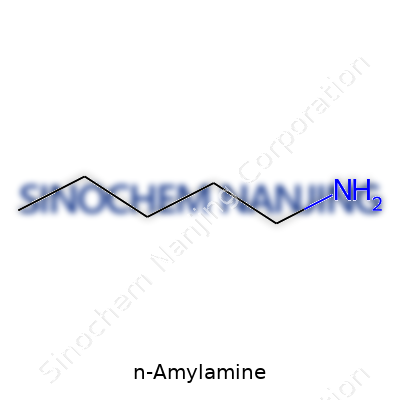
| Names | |
| Preferred IUPAC name | Pentan-1-amine |
| Other names |
1-Pentanamine Pentylamine Pentyl amine N-Pentylamine |
| Pronunciation | /ˈɛn ˈæm.ɪl.əˌmiːn/ |
| Identifiers | |
| CAS Number | 110-58-7 |
| Beilstein Reference | 635933 |
| ChEBI | CHEBI:35046 |
| ChEMBL | CHEMBL33323 |
| ChemSpider | 7734 |
| DrugBank | DB01935 |
| ECHA InfoCard | 06b53e0d-ef54-4ac8-b905-090cfa245f85 |
| EC Number | 205-685-1 |
| Gmelin Reference | 7487 |
| KEGG | C01879 |
| MeSH | D000706 |
| PubChem CID | 8067 |
| RTECS number | BQ0525000 |
| UNII | LX6L523YXI |
| UN number | UN2331 |
| Properties | |
| Chemical formula | C5H13N |
| Molar mass | 87.16 g/mol |
| Appearance | Colorless to yellowish liquid |
| Odor | Ammonia-like |
| Density | 0.767 g/mL at 25 °C (lit.) |
| Solubility in water | miscible |
| log P | 0.97 |
| Vapor pressure | 3.3 kPa (at 20 °C) |
| Acidity (pKa) | 10.8 |
| Basicity (pKb) | 3.34 |
| Magnetic susceptibility (χ) | -7.6×10⁻⁶ |
| Refractive index (nD) | 1.406 |
| Viscosity | 0.586 cP (20°C) |
| Dipole moment | 1.15 D |
| Thermochemistry | |
| Std molar entropy (S⦵298) | 204.6 J·mol⁻¹·K⁻¹ |
| Std enthalpy of formation (ΔfH⦵298) | -54.4 kJ/mol |
| Std enthalpy of combustion (ΔcH⦵298) | -3863.7 kJ/mol |
| Hazards | |
| GHS labelling | GHS02, GHS05, GHS07 |
| Pictograms | GHS02,GHS07 |
| Signal word | Danger |
| Hazard statements | H226, H302, H314, H332 |
| Precautionary statements | P280, P261, P305+P351+P338, P310, P405, P501 |
| NFPA 704 (fire diamond) | 1-3-0-Alk |
| Flash point | 43 °F (6 °C) |
| Autoignition temperature | 260 °C |
| Explosive limits | 1.1% - 11.5% |
| Lethal dose or concentration | LD₅₀ Oral Rat 680 mg/kg |
| LD50 (median dose) | LD50 (median dose): Oral rat LD50 = 410 mg/kg |
| NIOSH | WA8400000 |
| PEL (Permissible) | PEL (Permissible Exposure Limit) of N-Amylamine: 5 ppm |
| REL (Recommended) | 30 ppm |
| IDLH (Immediate danger) | 100 ppm |
| Related compounds | |
| Related compounds |
1-Pentanol Pentyl bromide Valeraldehyde |



