N-Aminoethylpiperazine: From Discovery to Future Horizons
Historical Development
N-Aminoethylpiperazine has an origin story that echoes the broader pace of twentieth-century chemistry. Early synthetic chemists started by exploring piperazine’s modifications, seeking new building blocks for pharmaceuticals and industrial materials. Their work on related amines in the mid-1900s led to the development of useful derivatives, among which N-Aminoethylpiperazine emerged as a key intermediate. Over time, researchers found value in its flexibility, using it as a bridge between basic piperazine chemistry and more elaborate functional molecules. Institutions across Europe and North America made strong contributions, fueling a wave of patents and journal articles that chronicled new uses and synthetic routes.
Product Overview
Anyone who has worked in chemical manufacturing or applied synthesis will recognize N-Aminoethylpiperazine by its unmistakable sharp smell and colorless to slightly yellowish fluid. Its practical appeal lies in the presence of both secondary and primary amine groups, coupled with the rigid structure provided by the piperazine ring. This combination opens the door to a range of downstream reactions. Over the years, it has served as more than a laboratory curiosity. I’ve watched it play supporting roles in the production of epoxy curing agents and corrosion inhibitors, with companies large and small closely watching purity and supply chain reliability.
Physical & Chemical Properties
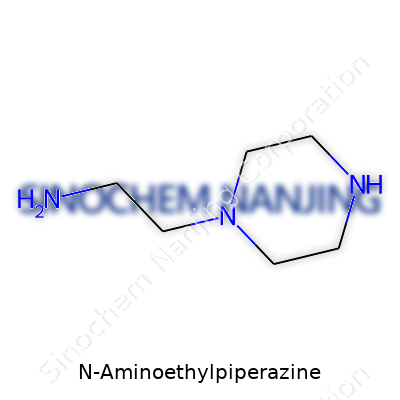
N-Aminoethylpiperazine shows up as a hygroscopic liquid, with a sharp, fishy odor and a relatively high boiling point, traits that show its character as a typical aliphatic amine. The molecular formula features a piperazine ring linked to an aminoethyl chain, providing both rigidity for stable formulations and flexibility for substitutions. Density averages around 0.98 g/cm³ at 20°C. Solubility in water is high, which means easy clean-up but demands attention to personal protection. Its chemical behavior rises from its ability to act as a base, donate protons, and engage in nucleophilic reactions.
Technical Specifications & Labeling
In an industrial context, specifications for N-Aminoethylpiperazine stretch beyond just purity percentages. Regulatory standards require detailed hazard identification, specific gravity, and impurity profile. Labeling on commercial drums or containers routinely highlights its reactivity with acids and oxidizers, and the need for temperature control during storage. Having managed shipping records myself, I know the challenge involved in handling confidential transportation details and satisfying both local and international chemical registries. End users rely on clear documentation to mitigate exposure and ensure compatibility with other process chemicals.
Preparation Method
Chemists usually prepare N-Aminoethylpiperazine through alkylation of piperazine with 2-chloroethylamine or comparable reagents under basic conditions. The chosen route emphasizes yield, reaction speed, and minimization of hazardous byproducts. In large-scale production, process optimization focuses on temperature control and continuous flow techniques to improve consistency. Process engineers and plant operators often spend hours fine-tuning purification to achieve the high purity levels demanded by advanced applications, particularly in pharmaceuticals, coatings, and epoxy formulations.
Chemical Reactions & Modifications
The versatility of N-Aminoethylpiperazine stems from its willingness to participate in condensation, acylation, and alkylation reactions. Its amine functional groups make it a target for cross-linking agents in polymer chemistry and enable the creation of dozens of derivatives. In lab settings, I’ve seen it take part in synthesizing chelating agents or acting as a backbone for functional materials used in water treatment. By reacting the amine moieties with different acid chlorides or isocyanates, chemists have engineered molecules with specific reactivities or solubility profiles, greatly extending the reach of this building block.
Synonyms & Product Names
N-Aminoethylpiperazine appears under a range of names in chemical catalogs, including 1-(2-Aminoethyl)piperazine and AEP. Suppliers sometimes list it by its CAS number for clarity. This diversity in naming can trip up less-experienced buyers, so it pays to double-check before entering a purchase order. In my own procurement experience, I have seen how easy it is for supply chain hiccups to result from simple mislabeling or synonym confusion, leading to unnecessary delays.
Safety & Operational Standards
Anyone routinely working with N-Aminoethylpiperazine soon recognizes the importance of personal protective equipment: gloves, goggles, and proper ventilation matter. The chemical’s strong basicity, reactivity with acids, and sensitizing potential put standard operating procedures front and center. Safety data sheets stress the need for spill containment and the dangers of inhalation or skin exposure. In practice, proper training and immediate access to eyewash stations reduce injury risk, while adherence to OSHA or REACH guidelines stops avoidable incidents. I recall colleagues learning the hard way that complacency around small quantities can lead to costly mistakes, both personal and operational.
Application Area
Manufacturers turn to N-Aminoethylpiperazine in a broad swath of industries. Its ability to harden epoxy resins forms the backbone of much of its commercial use. You’ll find it in floor coatings, industrial adhesives, and composites designed to withstand extreme conditions. Water treatment specialists use derivatives to develop scale inhibitors and dispersants, helping facilities avoid frustrating downtime. In pharmaceuticals, the compound’s amine structure shapes synthesis pathways for active drugs, often in steps that require precise control over reaction conditions to avoid unwanted side products or costly rework. On a pragmatic level, the push for more durable, cost-effective materials has kept demand for this molecule steady, even as supply chains shift and global standards evolve.
Research & Development
Academic labs and industry R&D teams recognize the promise that N-Aminoethylpiperazine offers, particularly as chemical manufacturing seeks greener, lower-energy processes. Scientists have mapped out new routes for selective derivatization and explored the use of this compound in developing next-generation surfactants and specialty polymers. Some research targets antimicrobial agents for textiles, taking advantage of the inherent reactivity of the amine groups. From my perspective, the excitement in scientific circles comes both from the safety challenges—motivating ongoing improvement—and the broad field of applications. Graduate students and process chemists continue to present new findings at international conferences, giving the molecule a steadily growing profile.
Toxicity Research
Toxicologists have cataloged the acute and long-term risks linked to handling N-Aminoethylpiperazine. Concentrated exposure can lead to respiratory irritation, dizziness, and skin burns, while animal studies suggest caution over repeated contact. Occupational health regulations urge regular monitoring of air concentrations and proper disposal of waste streams. In my own workplace, periodic safety refreshers have made clear that even experienced staff can become complacent; minor lapses in eyewear or fume hood use quickly remind everyone of the consequences of underestimating chemical hazards. Current research focuses on refining exposure thresholds and studying chronic effects, responding to the increased drive for safer chemical alternatives in manufacturing.
Future Prospects
Innovation drives the future of chemical intermediates like N-Aminoethylpiperazine. The push for more sustainable synthesis methods means greener processes that cut down on emissions and hazardous waste. Startups and established firms alike are eyeing biotechnology routes that use enzymes to achieve similar modifications under milder conditions. Regulatory scrutiny is rising, especially for chemicals involved in large-scale manufacturing, and this pressure encourages ongoing improvement in both safety and performance. I have watched industrial chemists work with regulatory teams to reformulate products, manage risk, and anticipate stricter guidelines. The trend points toward more varied applications, such as next-generation energy storage materials and specialty surfactants, strengthening the case for ongoing investment in research and responsible use. N-Aminoethylpiperazine stands as a clear example of how chemical know-how, operational discipline, and environmental awareness come together in modern chemical manufacturing.
What is N-Aminoethylpiperazine used for?
On the Factory Floor with N-Aminoethylpiperazine
N-Aminoethylpiperazine, often shortened to AEP, rarely makes the headlines, yet it keeps humming behind the scenes in plenty of industries. Plenty of folks working in manufacturing, paint shops, or oil fields have probably caught a whiff of it—the distinct odor drifts from the drums stashed in warehouse corners. As someone who has seen the inside of a chemical lab and witnessed how ingredients like AEP shape our daily products, it’s easy to see why this compound matters more than its awkward name suggests.
Keeping Pipes Flowing and Paints Looking Fresh
Head to any oil refinery or chemical plant, and AEP plays a part you can’t ignore. It steps up as a curing agent for epoxy resins. Every time someone applies a tough, corrosion-resistant epoxy coating to protect pipes or tanks, AEP gives that epoxy its strength and stickiness. Maintenance crews count on those protective layers to keep critical infrastructure rust-free, especially with the push for greener, longer-lasting tech in energy and construction. In the paint industry, AEP boosts the performance of pigments and coatings. Think of hardwood floors or outdoor furniture holding up against the rain—AEP gets mixed in to help coatings grip tighter and dry faster, helping products last longer and look better.
Tie-In with Personal Care and Cleaners
Look beyond heavy industry, and AEP pops up in more surprising places. Modern shampoos, conditioners, and even household detergents have grown more complex as people look for products that not only clean but also protect. AEP acts as a surfactant building block. Surfactants help dirt and oil lift away more easily from hair, skin, and surfaces. Manufacturers mix AEP derivatives to get the right cleaning power and mildness balance for sensitive applications, all while trying to reduce the amount of harsh additives. Personal experience dealing with sensitive skin led me to research ingredient labels closely—I often spotted AEP-based compounds as gentle alternatives when harsher ingredients didn’t work for me.
Finding AEP in Water Treatment and Fabric Technology
Factories that color textiles or treat water for city supply systems use AEP behind the curtain. Here, it serves as a chelating agent, latching onto metal ions so engineers can pull unwanted minerals and contaminants from water. As city water standards keep getting stricter and clothing companies look to make fabrics that resist staining, AEP’s versatility saves the day. My time consulting for a textile factory taught me how changing a single additive—swapping out a traditional chelator for an AEP-based one—could mean the difference between meeting tough export requirements and facing rejected shipments.
Challenges and Smarter Solutions
No chemical comes without hurdles. N-Aminoethylpiperazine can irritate skin and eyes, so plant workers rely on solid training and good gear. Regulatory pushback in some regions challenges companies to limit emissions and seek even safer alternatives. These days, I see researchers working hard to derive similar performance from greener sources, hoping to keep AEP’s utility while lightening its footprint. Factoring in health, sustainability, and cost, the search continues for formulas that give industry what it needs but leave less environmental baggage.
Bringing It Back Home
N-Aminoethylpiperazine doesn’t draw much public attention, yet it shapes how homes, infrastructure, and even the shampoo bottle on your shelf perform. Tucked away inside essential products, AEP stands out as a quiet workhorse—proof that sometimes the most crucial ingredients rarely get a front-page mention.
What is the chemical formula of N-Aminoethylpiperazine?
The Formula That Says a Lot: C6H15N3
N-Aminoethylpiperazine, or AEP for short, always reminds me of my college days in the chemistry lab where clarity and order mattered. This chemical's formula, C6H15N3, might not seem like much at first glance. Six carbons, fifteen hydrogens, three nitrogens. Each of those pieces plays a role, working together to give you a basic but flexible molecule.
Getting Familiar With the Structure
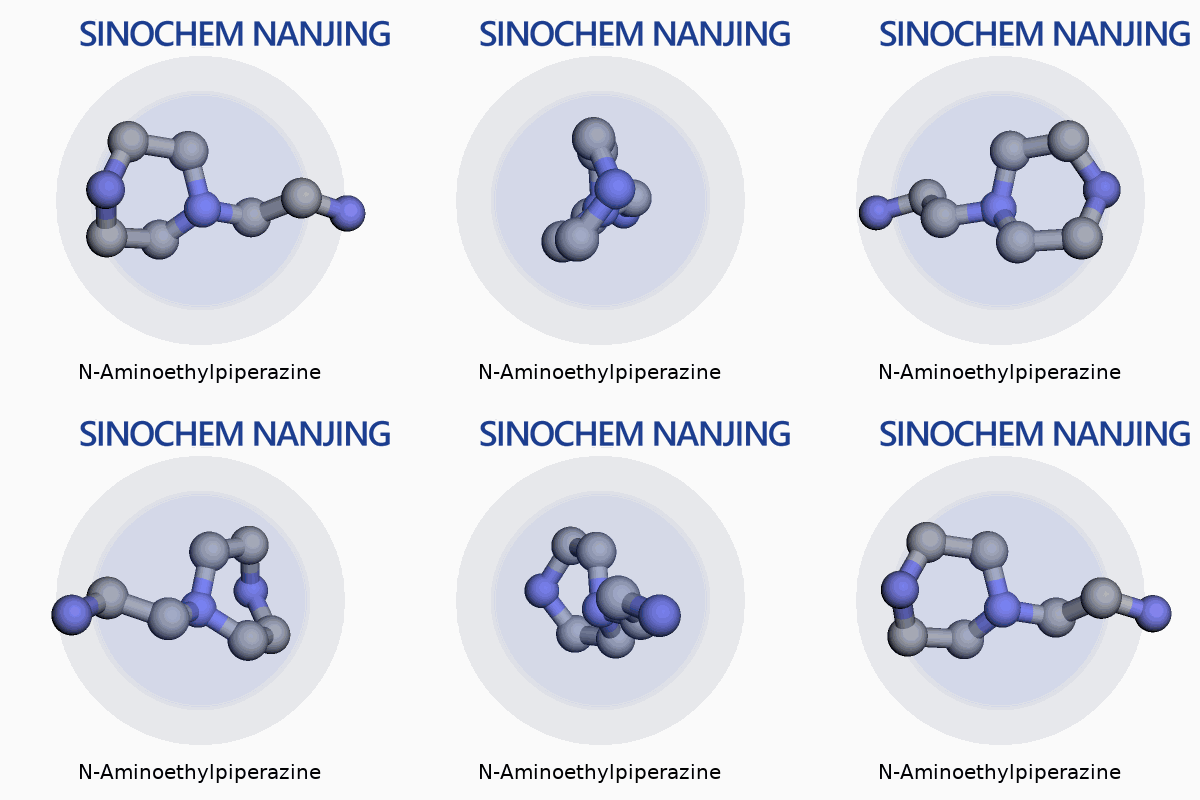
AEP builds on the piperazine ring. It’s a six-membered ring containing two nitrogens opposite each other. Chemists extend this structure with an aminoethyl group dangling off one of the nitrogens. That extra tail opens the door to all sorts of industrial reactions, like a Swiss Army knife with just the right attachments for a job.
Why the Formula Matters for Industry
This isn’t just trivia for exams. Companies depend on accurate information about molecules like this when making things people use every day. Paint companies might use it to help coat surfaces more evenly. Epoxy resin makers rely on its structure for strong, reliable adhesives. Its extra amine group grabs onto other molecules and reacts in predictable ways, which helps chemists control processes and cut down on waste.
Health, Safety, and Getting it Right
One mistake too many labs and manufacturers make is skimping on fundamentals. I’ve seen it; someone hurries through their checks or shrugs off a safety sheet. With something like AEP, knowing that it has three nitrogens makes it clear you’re dealing with a compound capable of multiple types of reactivity. Some amines irritate skin or affect breathing, so understanding the chemical right down to its formula, C6H15N3, makes practical sense, not just scientific sense.
Environmental Considerations and Responsible Use
Better stewardship—both in the lab and at the factory—starts with respect for the molecule itself. I remember troubleshooting a wastewater issue in a small plant. AEP had slipped into a rinse tank and caused a regulatory headache because its breakdown products didn’t match what the plant had anticipated. A precise formula lets environmental staff plan treatment methods and limit damage to local ecosystems. Responsible chemical handling isn’t paperwork; it’s an everyday necessity.
Moving Toward Solutions
Access to solid chemical data is a simple fix that pays off for everyone. Open databases and careful training go a long way. Interns, operators, and even long-time chemists benefit from seeing the structure and the formula laid out clearly. Better charts and easier-to-read product bulletins let everyone work smarter. Industry groups should reinforce these basics and invest in regular updates for safety protocols built around a molecule’s actual risks related to its composition.
The Bottom Line
C6H15N3 isn’t just a string of letters and numbers. It tells scientists and workers what to expect, what to be careful about, and how to succeed in keeping both products and people safe. Every time a new trainee asks about a chemical’s structure or function, a precise answer like this has real value. It saves time, improves safety, and supports a culture that treats the basics as the foundation for everything else.
What safety precautions should be taken when handling N-Aminoethylpiperazine?
Understanding the Risks Upfront
N-Aminoethylpiperazine isn’t a substance most people come across every day, but in chemical plants and labs, it turns up often in processes tied to resins, rubber, and pharmaceuticals. At first glance, the clear liquid looks harmless. The reality is different. N-Aminoethylpiperazine causes severe skin burns, eye damage, and breathing problems if not handled with serious respect. The fumes and splashes catch people off-guard. Having worked in a chemistry lab, I know the temptation to rush or skip a step. Overlooking precautions, even just once, leaves long-lasting regret.
Why Reliable PPE Makes a Difference
Wearing gloves, goggles, and good lab coats stays non-negotiable around this compound. Nitrile gloves stand up better to most amine chemicals than latex or vinyl. Safety goggles stop accidental splashes from reaching eyes—a risk that's real, as hospital records show amine eye injuries can lead to vision loss if washing takes too long. I remember an incident when a colleague didn’t tighten his sleeve cuffs; a minor spill became a chemical burn that required hospital attention. Chemical-resistant aprons go a step further for big pours.
Ventilation and Safe Work Practices
Good ventilation matters. N-Aminoethylpiperazine gives off vapors that burn the throat and lungs. Fume hoods pull those vapors away fast, especially during transfers, weighing, or mixing. In busy labs, keeping the lid closed tight on storage bottles lowers the vapor threat. Sprays or open containers build up enough fumes to trigger headaches or dizziness in minutes, which ends up slowing down work more than it ever saves time.
Spill Control and Safe Storage
Spills happen even with care. Absorbent materials, neutralizers, and clear signage in the work area help teams respond without panic. A real story: a trainee dropped a small bottle once; everyone nearby grabbed protective gear, used spill pads, and kept the area off-limits for others. Planning ahead like that comes from regular drills, not just pamphlets.
Storage gets overlooked sometimes. Metal corrosion, heat, or sunlight increase risk. N-Aminoethylpiperazine needs to sit in dedicated, well-labeled containers, far from acids and oxidizers. Placement on lower shelves prevents bottles from falling, and leak trays catch surprise drips.
Training Brings the Whole Picture Together
Onboarding for new team members starts with the safety data sheet. Knowing symptoms of exposure can make all the difference. Redness, sniffles, or blisters show up quickly; it takes confidence to stop and report problems instead of hiding them. Refresher courses help keep safety steps top of mind, especially for handling waste. Chemical disposal rules serve everyone: undiluted N-Aminoethylpiperazine goes in special hazardous waste bins, not drains or standard trash.
Supporting Each Other
Complacency causes the worst accidents. A culture where team members remind each other about eye shields or loose protective buttons stops injuries in their tracks. Open talk about near-misses keeps everyone alert. Organizations with fewer incidents share these stories in meetings, not just on posters.
Protecting everyone starts with following real habits, not just rules. Personal stories and honest feedback turn safety culture from paperwork into something people believe in every day.
Is N-Aminoethylpiperazine hazardous or toxic?
What Is N-Aminoethylpiperazine?
N-Aminoethylpiperazine, often used in specialty chemicals and epoxy curing agents, pops up in plenty of places where chemistry drives industry. It's a clear, colorless liquid with an ammonia-like smell that’s pretty memorable. Schools and industry labs stock it because it does the trick when creating polymers or resins. But most folks never hear about it unless they work behind the scenes.
Health and Safety Concerns
After years cleaning up outdated bottles in storage rooms, the warning labels leave a real impression: strong corrosive properties, risk for burns, and headaches from the fumes. Toxicology reports show it can do more than sting eyes—long, unprotected exposure can damage skin and lungs. Studies back this up; even inhaling small amounts in a poorly ventilated space leads to coughing and throat irritation.
Direct contact hits hard. Liquid N-Aminoethylpiperazine eats through protective gloves unless you use the right material. The chemical can hurt the eyes badly, causing injuries that sometimes linger if people don’t wash it out fast. More than one friend in a lab found out the hard way that it doesn’t take much on exposed skin to feel pain.
The Long-Term Risks
The hazards don’t stop at burns. A look at safety data sheets shows repeated or high-level exposure links to organ damage, especially in kidneys and liver. Rats exposed in lab testing built up damage over time—research points toward possible links to long-term health problems. The work done by public health agencies like NIOSH and OSHA underlines these facts, and they lay out rules for safe handling for a reason.
Inhaling vapors over time can irritate the respiratory tract and potentially cause chronic breathing trouble. There’s no evidence it causes cancer, but the corrosive and toxic effects are risks for anybody working with it day in and day out.
Why It Matters Beyond the Lab
Most people forget about what goes into making everyday things until a chemical accident makes headlines. Hospitals have reported cases from poorly managed spills, where the stuff ended up on skin and clothes, sending more than one worker to the emergency room. Kids who stumble onto an old bottle in a garage face a real risk because child-proofing never factored into industrial containers.
Municipal water supplies can sometimes land in the crosshairs if factories don’t manage waste correctly. Reports from chemical safety boards mention that poor handling, combined with blocked drains or leaks, has ended with N-Aminoethylpiperazine showing up in groundwater. Communities that drink from wells feel those effects first and hardest, with symptoms pointing doctors right back to chemical exposure.
Ways to Minimize Harm
People who work with N-Aminoethylpiperazine rely on more than just labels. They suit up with gloves, goggles, and well-fitted respirators before opening a bottle, and keep chemical showers and neutralizing agents nearby. Companies can do more by providing real training, not just a handout with fine print. A buddy system and regular safety drills pay off fast—those practices have stopped accidents in their tracks more than a few times.
Communities and businesses have choices. Switching to less hazardous alternatives when possible, investing in waste treatment, and making sure everyone down the line understands what they’re dealing with all make a difference. It comes down to experience—once you’ve seen what happens when people cut corners, you keep pushing for better protection and awareness.
How should N-Aminoethylpiperazine be stored?
Recognizing the Risks Behind the Chemistry
N-Aminoethylpiperazine sits on the shelves of many chemical plants, paint producers, and water treatment facilities. It's a versatile compound but brings more than just industrial promise—it demands respect. I’ve worked in labs where a casual attitude toward storage would have proved costly. Near-misses teach their own sharp lessons, and they echo the advice printed in chemical safety manuals: This chemical interacts fiercely with moisture and strong acids, and it doesn’t forgive forgetfulness.
Why Storage Conditions Matter
In my experience, ignoring temperature and humidity leads to surprises—leaking barrels, swelling lids, or worse, vapor spills. N-Aminoethylpiperazine reacts with air and moisture, corroding containers and sending off strong, irritating fumes. These vapors bite the throat and linger on clothing. Even a seasoned technician can underestimate just how persistent the smell can be. Improper storage stacks up risks for everyone, not just those handling the chemicals directly. Facility maintenance staff, visitors, even emergency responders, all face hidden threats if protocols get sloppy.
The Right Way to Store
I still remember a winter audit some years ago when we discovered a shipment stored near an overhead heater. The vapor levels in the room set off alarms, forcing evacuation. Since then, I never underestimate the need to keep N-Aminoethylpiperazine in a cool, dry location. I keep containers away from heat sources, sealed up in metal drums designed for corrosive materials. The manufacturer's instructions concur: between 20°C and 25°C is the sweet spot. Damp concrete floors become trouble—moisture seeps up, and metal drums corrode from beneath. Wooden pallets or chemical-resistant racks prevent this slow sabotage underneath storage areas.
Label, Segregate, Secure
Bold, legible labels do more than meet regulations; they save time during emergencies. Good practice means marking storage dates, expiration, and hazard warnings right on the drum. If a spill or leak happens, no one should waste minutes reading fine print or hunting through outdated records. Inside our chemical storehouse, incompatible materials never sit side by side. Strong acids, oxidizers, and reactive metals end up on their own shelves, far from anything that could kick off a dangerous reaction. Grouping these chemicals by hazard class, not just convenience, prevents accidents that can close a business in a single day.
Personal Protective Equipment and Training
Training saves lives as much as physical barriers do. I’ve seen new operators fumble—removing caps too quickly, wearing the wrong gloves, or forgetting goggles. Reinforcing habits like checking seals, inspecting containers for corrosion, and reviewing spill response procedures in monthly meetings turns safety from a checklist into a shared mindset. Gloves made for chemical resistance, splash-proof goggles, and full-coverage aprons belong nearby. It never pays to cut corners when short exposure can mean hours in an emergency room.
Leak Prevention and Emergency Response Readiness
No storage plan stays perfect without routine checks and a clear emergency gameplan. Absorbent materials, neutralizing agents, and accessible eyewash stations stand ready near storage locations. Drills and genuine walk-throughs with the whole crew—not just management—keep response skills sharp. Facility managers who take the time to walk their floors, talk to their people, and address faded labels or questionable seals catch problems before alarms ring.
Building a Stronger Safety Culture
N-Aminoethylpiperazine doesn't tolerate carelessness. It’s not just about ticking off compliance boxes—the difference comes through vigilance and mutual accountability on the shop floor. Safe storage depends on more than containers and locks; it relies on experienced hands, honest communication, and the hard-won lessons of those who have seen what can happen when basic steps get skipped. Chemical safety, in the end, is never just theory—it's the daily practice of respecting both the substance and the people nearby.
| Names | |
| Preferred IUPAC name | 2-(Piperazin-1-yl)ethan-1-amine |
| Other names |
AEP 1-(2-Aminoethyl)piperazine N-(2-Aminoethyl)piperazine Aminoethylpiperazine Aminopiperazine Piperazine, 1-(2-aminoethyl)- 2-Piperazinylethylamine |
| Pronunciation | /ˌɛnəˌmɪnoʊˌɛθəlpaɪˈpɛrəˌziːn/ |
| Identifiers | |
| CAS Number | 140-31-8 |
| Beilstein Reference | 1718736 |
| ChEBI | CHEBI:39046 |
| ChEMBL | CHEMBL136600 |
| ChemSpider | 7041 |
| DrugBank | DB04272 |
| ECHA InfoCard | 24-211-032-5 |
| EC Number | 203-150-7 |
| Gmelin Reference | 7549 |
| KEGG | C06427 |
| MeSH | D010275 |
| PubChem CID | 31246 |
| RTECS number | TP3675000 |
| UNII | 6RH7C537DR |
| UN number | UN2815 |
| CompTox Dashboard (EPA) | DTXSID0026071 |
| Properties | |
| Chemical formula | C6H15N3 |
| Molar mass | 129.21 g/mol |
| Appearance | Colorless to pale yellow liquid |
| Odor | Ammonia-like |
| Density | 0.982 g/mL at 25 °C (lit.) |
| Solubility in water | Soluble |
| log P | “-1.4” |
| Vapor pressure | 0.03 mmHg (25°C) |
| Acidity (pKa) | 9.8 |
| Basicity (pKb) | 5.55 |
| Magnetic susceptibility (χ) | -68.0·10⁻⁶ cm³/mol |
| Refractive index (nD) | 1.475 |
| Viscosity | 17 cP (25°C) |
| Dipole moment | 3.09 D |
| Thermochemistry | |
| Std molar entropy (S⦵298) | 336.6 J·mol⁻¹·K⁻¹ |
| Std enthalpy of formation (ΔfH⦵298) | -117.7 kJ/mol |
| Std enthalpy of combustion (ΔcH⦵298) | -4160 kJ·mol⁻¹ |
| Pharmacology | |
| ATC code | C07AG06 |
| Hazards | |
| GHS labelling | GHS02, GHS05, GHS07, GHS08 |
| Pictograms | GHS05,GHS07 |
| Signal word | Warning |
| Hazard statements | H302, H314, H317, H412 |
| Precautionary statements | P280, P305+P351+P338, P310, P302+P352, P332+P313, P362+P364 |
| NFPA 704 (fire diamond) | 3-1-0 |
| Flash point | 82°C |
| Autoignition temperature | 285°C |
| Explosive limits | Explosive limits: 1.7% - 10.7% |
| Lethal dose or concentration | LD50 oral rat 2,149 mg/kg |
| LD50 (median dose) | LD50 (oral, rat): 2140 mg/kg |
| NIOSH | SN1825000 |
| REL (Recommended) | REL (Recommended): 4 mg/m³ |
| IDLH (Immediate danger) | IDLH: 800 ppm |
| Related compounds | |
| Related compounds |
N-(2-Hydroxyethyl)piperazine Piperazine N-Methylpiperazine 1,2-Diaminoethane (Ethylenediamine) 1,4-Butanediamine (Putrescine) N-(2-Aminoethyl)ethanolamine N,N-Dimethylpiperazine Triethylenetetramine Diethylenetriamine |



