Methyl Trichloroacetate: Tracking a Chemical’s Journey and Where It Could Go Next
Understanding the Roots
The legacy of methyl trichloroacetate traces back to the steady expansion of organic chemistry during the late 1800s. Innovations in halogenated compounds saw scientists diving into chlorinated esters, because their unique structures promised new synthetic possibilities. Laboratory journals from that era show the growing interest in trichloroacetic acid derivatives, with methyl trichloroacetate taking shape as a byproduct before its capabilities started turning heads. Widespread adoption didn’t happen overnight. Chemists messed with derivatives, realized methyl trichloroacetate could fill a rare gap, and over time, they started using it as both a tool and a precursor across bench research, especially where other esters couldn’t handle the job. Few outside of the lab talked about it—unless you counted persistent industrial chemists who kept pressing for tools to do targeted chlorinations and intermediate synthesis.
A Closer Look at the Compound
Methyl trichloroacetate rolls off the tongue less than most, but its build is simple: structured as Cl3CCO2CH3. At room temperature, it pools as a clear, slightly yellow liquid, with an unmistakably sharp odor. Down on the molecular level, it walks that thin line between organochlorine and ester—two camps often found at odds. Because of how chlorine atoms dominate the molecule, it pulls in strong electronegative effects, driving up reactivity. In the lab, it boils at roughly 144°C and carries a density of just over 1.5 g/cm3. It dissolves fast in solvents like acetone, ethanol, and chloroform, but it resists blending with water, and that matters for separation processes.
Labeling and Standards: The Quiet Details
Labeling requirements have caught up to its hazards. Anyone handling methyl trichloroacetate sees signal words and pictograms tied to acute toxicity, environmental concerns, and dermal risks. These labels go beyond compliance: they’re there because ill-prepared labs have suffered contamination, spills, and chronic exposure issues. Storage must keep the substance in airtight containers, away from moisture and incompatible reactants. Documentation from regulatory agencies stresses the need for specific hazard phrases—a response to incidents in both academic and manufacturing settings.
How It’s Made and What It Does in the Lab
On the manufacturing side, production generally starts with trichloroacetic acid and methanol, mixing under acidic catalysis. The Fischer esterification method typically rules the day, with dehydration steps involved, then rigorous purification through distillation. By the end, the resulting ester features remarkable purity, showing why researchers rely on it for stepwise syntheses. In my own experience, even minor impurities can compromise downstream transformations, particularly when methyl trichloroacetate acts as a chlorinated building block or alkylating agent. Routine distillation, combined with careful monitoring, reflects how little room there is for error when prepping chemical libraries or specialty polymers.
Tinkering, Transforming, Modifying
The unique structure of methyl trichloroacetate makes it stand out in reaction planning. In synthesis, its value as an intermediate really shines through: it reacts with amines, metal hydrides, and a range of nucleophiles, each time handing over functional groups for more complex molecule generation. Saponification generates trichloroacetic acid; reduction and substitution open the door to specialized halogenated molecules. These modifications play out in pharmaceuticals, agrochemicals, and advanced materials research, where flexibility in molecular construction counts for everything. Chemical literature highlights transformations built around methyl trichloroacetate for scalable processes, artificial amino acid synthesis, and bioactive compound assembly. Every move in this reaction tree is traceable to that trio of chlorines, giving chemists a tool both for challenge and solution.
Different Names, Same Backbone
Every seasoned chemist knows methyl trichloroacetate answers to more than one name. You’ll hear “methyl 2,2,2-trichloroacetate” from precise colleagues or see “trichloroacetic acid methyl ester” scribbled on a project sheet. CAS numbers (nitty-gritty, but memorable for cataloging) tie references together. Whether you’re paging through catalogs or checking a chemical inventory, aliases matter. Failure to cross-reference has tripped up teams in the past, who believed they’d found an alternative, only to realize they already had what they needed—just tucked under the wrong name.
Staying Safe: Working Standards
Handling methyl trichloroacetate calls for strong respect. Even a modest spill can cause skin irritation or inhalation problems—this isn’t the kind of compound you’d leave open. In my own lab days, I saw teams enforce double-gloving, chemical splash goggles, and closed transfer systems. Chemical fume hoods weren’t negotiable. Spills prompted the deployment of neutralizing agents and full incident documentation. Long-term exposure risks—including organ toxicity reported in animal trials—led to time-limited handling schedules. Downstream waste management stepped up too, with spent solutions tagged as hazardous waste and incinerated under rigid controls. Mistakes happened most often when short-cuts did; nobody wishes for repeated headaches from lax standards.
Where It Lands: Industry and Research Impact
Methyl trichloroacetate found a life outside of the synthetic chemist’s toolkit. In fine chemicals manufacturing, it serves as a linchpin intermediate for herbicides, pharmaceuticals, and specialty solvents. Polymer chemists draw on its unique reactivity to modify chain ends and introduce halogen content, while medicinal chemists work it into frameworks for lead compound optimization. Despite its utility, it hasn’t grabbed the attention of many outside these circles. Surveys show production volumes don’t touch those of simple esters or major industrial reagents, but for tailored syntheses demanding strong electron-withdrawing power, it sits on a short list of essential compounds.
The Frontier: New Work and Curiosity
A decade ago, funding agencies didn’t throw much weight behind the study of methyl trichloroacetate itself, but interest surged as halogen chemistry picked up with new environmental regulations and demands for greener syntheses. Research groups now look at selective functionalization, hoping to generate analogs that deliver performance with fewer safety or ecological headaches. Environmental chemists run fate-and-transport experiments, since halogenated esters tend to persist if released by mistake. Academic labs use modern NMR and mass spectrometry to unlock detailed reaction profiles, seeking ways to boost yields or clamp down on waste streams. Development of catalytic and enzymatic procedures picks up, sometimes lowering the environmental impact tied to traditional manufacturing routes.
Digging Into Toxicity: The Hard Realities
Anyone pushing new uses for methyl trichloroacetate has to face toxicity data head-on. Acute exposure risks include respiratory and mucous membrane irritation; animal studies exposed to vapor registered both neurological and hepatic responses. Environmental release matters too—chlorinated breakdown products don’t vanish quickly and can disrupt aquatic systems for years. Industrial hygienists now pressure companies to swap out halogenated intermediates for safer options wherever substitution is possible, but methyl trichloroacetate endures where nothing else matches its power in certain synthetic steps. Risk assessments matter from day one of a new process and keep pushing R&D to engineer out hazards through closed systems or direct substitution.
Looking Ahead: The Next Chapter
Methyl trichloroacetate’s story isn’t finished. A new wave of research asks tough questions about life cycle, sustainability, and synthesis efficiency. Some teams explore bio-based feedstocks, trying to build the compound from renewable sources instead of petrochemicals. Others work to reduce chlorinated byproduct loads, chasing catalytic transformations that spit out less waste without losing the core reactivity that brought the ester to prominence in the first place. In my own conversations with green chemistry advocates, the long-term aim stands clear: if methyl trichloroacetate keeps its place on every synthetic chemist’s short list, future methods must close the loop environmentally and focus just as hard on easy, safe handling. Continuous process intensification and real-time hazard monitoring enter the picture, because no one wants to repeat past mishaps or leave a chemical legacy with more risk than reward.
What is Methyl Trichloroacetate used for?
The Hidden Role of Methyl Trichloroacetate
Methyl trichloroacetate doesn’t turn up in everyday chatter. Still, this small, colorless liquid holds a quiet but critical spot in many industrial and chemical settings. I’ve noticed the chemical world rarely celebrates its workhorses. They do not get the glory, but take them out, and whole processes freeze.
The Building Block in Synthesis
I stumbled onto methyl trichloroacetate while working in a lab focused on organic synthesis. It’s a key ingredient that helps build more complex molecules. Researchers and manufacturers use it mainly as an intermediate, meaning they turn it into other compounds down the production line. For folks working in the pharmaceutical sector, this kind of compound is gold; it provides a reliable way to tweak or construct medicinal molecules. Several insecticides and herbicides also trace part of their lineage to it. Its chlorine-rich structure gives chemists some flexibility when sketching out new molecules.
Solvent Power and Special Coatings
People in labs do not only value this chemical for what it builds. Methyl trichloroacetate works as a solvent where other options fall short. Some reactions only succeed in its presence; some coatings and specialty paints benefit from its ability to dissolve stubborn substances and then evaporate cleanly. Its strong dissolving power and volatility make it suited for applications that demand fast, residue-free evaporation.
Safety and Environmental Tensions
With all its advantages, handling methyl trichloroacetate brings a slice of risk. Years ago, I saw a colleague react quickly to a minor spill—skin contact can irritate or burn, and the fumes will sting eyes and lungs if the ventilation is lacking. Anyone using it should wear gloves and eye protection, and a chemical fume hood is not optional in real-world practice.
Beyond personal safety, there's a bigger issue. Anything with lots of chlorine has a habit of lingering in the environment if it escapes carelessly dumped waste streams or accidental releases. The chemical doesn’t break down easily. Over time, compounds like this can trickle into water and soil, with unknown effects on local wildlife and groundwater purity. Factories that process or use methyl trichloroacetate face tough disposal rules, but rules only help if everyone takes them seriously.
Chasing Safer Alternatives
The world needs chemicals that do tough jobs, but people worry about the long-term cost. Researchers keep searching for alternative solvents and intermediates that break down more easily in nature. Some companies invest in closed-loop systems to catch and recycle chemicals, cutting down on emissions and waste. I believe that real progress comes from a mix of stricter oversight and the creativity of chemists who shape new molecules with less environmental baggage. European regulators, for example, keep pushing for tighter standards in chemical management, which nudges industries in this direction.
Looking Forward
Methyl trichloroacetate fills a real need for chemists and manufacturers. The challenge lies in weighing its usefulness against the health and environmental problems that follow neglect or poor handling. Chemicals like this deserve respect—and a constant eye out for something better or safer on the horizon.
What is the chemical formula of Methyl Trichloroacetate?
Unlocking Methyl Trichloroacetate: The Structure Explained
Methyl trichloroacetate is no stranger to chemistry classrooms or labs. The chemical formula C3H3Cl3O2 tells a lot about its construction: three carbons, three hydrogens, three chlorines, and two oxygens. Break it down, and you can see how it connects to trichloroacetic acid, only with a methyl ester group stitched on. No flowery language needed—knowing that formula helps anyone in synthesis plan for the reactivity and safety protocols involved.
Chemistry Beyond the Blackboard: Real-World Relevance
Most folks encounter methyl trichloroacetate as a chemical intermediate. Whether making pharmaceuticals, herbicides, or new organic materials, chemists reach for this compound because those three chlorines tweak its reactivity, making it useful for adding or switching functional groups in other molecules. The presence of the methyl group can make a difference during esterification reactions, impacting how the synthesis moves forward—or stalls out.
Learning the Risks the Hard Way
My first brush with methyl trichloroacetate came during a university project synthesizing potential drug leads. The pungent smell and the warnings—avoid breathing fumes, prevent skin contact—aren’t just for show. Despite safety data sheets spelling out the risks, sometimes corners get cut under deadline pressure. One dropped flask in a small research lab was all it took for us to scramble and ventilate fast. Chlorinated esters can act as strong irritants and carry long-term health risks if handled without care. Anyone who’s worked with volatile organochlorine compounds knows just how important gloves, goggles, and working under a fume hood are. Physical reminders stick long after lectures fade.
Quality and Purity Mean Everything
The success of any synthesis using methyl trichloroacetate hinges on how pure the starting material is. Even small impurities spell disaster in reactions, throwing yields off or making work-up a real headache. Laboratories keep close tabs on their chemical stocks, running quality checks, because an unexpected side product in a reaction mixture can lead researchers down a rabbit hole, wasting weeks of effort. Standardization bodies and chemical suppliers both play a role, from ISO procedures to batch testing, to ensure that researchers get what they order, not a mixture of close relatives.
Solutions Start with Training and Oversight
To cut down on laboratory accidents and wasted time, solid training and strict oversight form the backbone of every good research group. Nobody learns safe handling from manuals alone. Seasoned lab techs and postgrads model practical habits: measuring in small batches, triple-checking labels, and logging each withdrawal from the chemical store. Institutions investing in proper fume hoods and onsite chemical disposal save future headaches—and potential lawsuits. For anyone new to synthetic chemistry, learning the formula is just the start; understanding that formula’s implications for reactivity, safety, and common sense in the lab can’t be skipped.
Conclusion
In my experience, methyl trichloroacetate brings together the creative and responsible sides of chemistry. The chemical formula—C3H3Cl3O2—is the map, but respect for the real-world risks and reliability in practice is what keeps new breakthroughs and young scientists moving forward.
Is Methyl Trichloroacetate hazardous or toxic?
The Nature of the Chemical
Methyl trichloroacetate usually turns up in specialty chemical labs or industrial production. It plays a role in organic synthesis, especially where laboratories need a reliable reagent for modifying chemical structures or synthesizing pharmaceuticals. The challenge with this compound lies in the fact that “chlorinated” often signals special handling. Too many people treat chlorinated organics like they’re ordinary solvents, but history tells a different story.
Health Risks and Toxicity
You only need to look at the Material Safety Data Sheets to understand the risks. Methyl trichloroacetate emits vapors that can sting the eyes and nose almost right away. A chemical like this, if inhaled in a poorly ventilated space, can lead to headaches, dizziness, or worse—serious damage to the respiratory tract. Spills on the skin create deep irritation, sometimes blistering if it’s left too long. Direct contact with the eyes demands emergency flushing, since the chemical creates lasting irritation and might trigger more severe reactions.
Long-term exposure is another concern. Trichloro compounds have a reputation for leaving residue in the liver and kidneys, and cases of chronic chemical exposure have linked these types of compounds to lasting damage in lab workers. Some scientists flag an increased risk of cancer due to chlorinated compounds’ interactions with cellular DNA. Nobody should wait for years of exposure before choosing to act safely.
Environmental Impact
Chlorinated compounds stick around in the environment after disposal. Pouring methyl trichloroacetate down the drain risks contaminating water, harming aquatic life, and moving up the food chain. A compound like this breaks down slowly. Its breakdown products can cause even more harm—trichloroacetic acid, for example, has its own set of toxic impacts. Local fish populations and water sources pay the price when chemical companies cut corners.
Safe Practices and Solutions
Having spent time in chemical research, I’ve learned that treating every container with the respect it deserves saves lives. Lab coats and gloves alone don’t cut it. Proper chemical hoods, respirators, and chemical goggles stop the most common injuries before they start. Supervisors and team members need to communicate before anyone touches this compound—miscommunication and assumptions endanger everyone in the room.
Disposal needs careful planning. Chemical waste contractors charge more for chlorinated solvents, but skimping on cost causes bigger bills down the road. Setting aside clearly marked chemical waste bins and scheduling routine pickups feels tedious, but failing to do so risks employee health—and costly environmental fines if regulators trace pollution back to a firm.
Why This Matters Today
Anyone working with or near methyl trichloroacetate has a responsibility to read the safety labels and participate in chemical safety training. Too many stories start with ignored safety data or broken fume hoods. I’ve seen firsthand how following the right protocols keeps teams healthy and productive. Employers invest up front in training and proper storage, and that investment pays off by cutting down on sick days, environmental liabilities, and the human cost of chemical accidents.
No shortcut ever justifies risking someone’s health, especially when exposure consequences can last decades. If you notice strong chemical odors, sputtering hoods, or unlabelled bottles, speak up—the message keeps teams safe, and it shapes a workplace culture where dangerous materials earn the respect they demand.
How should Methyl Trichloroacetate be stored?
Understanding the Real Risks
Methyl trichloroacetate comes with a list of dangers that deserve respect. Some see this clear liquid and assume basic storage will do. Take it from those who’ve worked in labs or chemical warehouses—it pays to know what you’re handling. Methyl trichloroacetate boils at low temperatures and releases fumes that can sting the lungs or skin. Direct exposure can lead to headaches, breathing trouble or more serious chemical burns. Breathing in vapors just once is bad enough; chronic exposure can chip away at health over time.
The Right Spot for Chemicals Like This
Look for a spot away from sunlight and heat. Sun can trigger chemical changes, and heat pushes vapor pressure upward, making leaks more likely. A cool, well-ventilated room puts safety first. Solid shelves, no sagging or wobbling, reduce spill risks. If you’re dealing with more than a bottle or two, consider a chemical-resistant, metal storage cabinet. Shelves fitted with lips or contained edges catch drips or glass breaks before they spread.
Keep Moisture and Incompatible Chemicals Away
A major risk with methyl trichloroacetate sits with water. The chemical reacts with moisture, breaking down into corrosive substances like hydrochloric acid. I’ve seen bottles with damaged seals begin to crust over—one whiff tells you mixing these is a bad idea. Don’t overlook the importance of airtight seals. If you spot any signs of moisture, replace the container right away.
Never store acids or bases alongside methyl trichloroacetate, as mixing these can trigger dangerous reactions. Flames and oxidizers also belong elsewhere, as the risk of fire jumps with improper storage. A simple mistake—wrong shelf, crowded cabinet—can deliver painful results.
Good Labeling and Training
Even old pros need sharp labels. Clear names, hazard symbols and date-of-arrival reminders prevent confusion and mix-ups, especially during an emergency. Workers, whether new on the job or decades in, need clear instructions on where and how to store materials. I remember a facility audit where outdated safety sheets led a new hire to shelve a bottle with incompatible materials. One sharp colleague caught the error just in time. Never count on memory alone—keep storage maps and rules posted close to workstations.
Emergency Steps and Spill Kits
No system is perfect. Leaks, broken bottles, and power outages happen, so a spill kit needs to stay close by. Absorbent pads, gloves, splash goggles, and a chemical-resistant apron make cleanup safer and quicker. This isn’t just about ticking regulatory boxes—real emergencies unfold quickly and the best plans favor simplicity and speed. Have an eyewash station in reach if there’s any chance of splashing.
Practical Solutions
Storing chemicals always calls for alertness and planning, but some actions smooth the path. Rotate stock to move older bottles first, checking seals at each handoff. Keep records up to date, don’t let containers gather dust near heat or damp. Choose quality over price in containers. Workplaces that support ongoing training protect health as well as equipment, since the risk of mistakes drops with smart routines.
Approaching methyl trichloroacetate with respect and know-how keeps workplaces safer and people healthier. It only takes one forgotten rule or overlooked label to learn a lesson the hard way. Trust experience, follow facts, and back up every bottle with a safe plan.
What are the physical properties of Methyl Trichloroacetate?
Getting to Know the Material Up Close
Methyl trichloroacetate is a colorless liquid that often flies under the radar, despite its wide application in specialty chemical production. Anyone who has worked with it will tell you it gives off a noticeable, pungent odor. The flash point sits fairly low, around 34°C (93°F), so it catches fire more quickly than many solvents around the lab. If you ever spill a bit during a transfer, evaporation happens fast; that’s volatility showing its true colors.
Liquid Behavior and Environmental Risk
This compound boils right at 146-147°C, which means you need a steady hand if distillation is on your to-do list. Its melting point hovers around -35°C, so if you’re working in northern climates, don’t expect it to freeze on a standard cold day. Density lands at about 1.486 g/cm³ at 20°C, so it feels heavier than most household liquids. Pour a splash into a vessel, and you notice it forms a fairly uniform surface. In the event of a leak, its high vapor density can make the vapors pool low to the ground, creating a bigger safety worry in a closed space.
Mixing and Solubility Patterns
I’ve handled methyl trichloroacetate in bench-top reactions, and one thing’s always stood out: it mixes well with solvents like ether, chloroform, and benzene. Water, on the other hand, doesn’t stand a chance in breaking it down. You end up with two neat layers, no matter how much you shake the flask. That resistance to water helps keep it stable during certain syntheses, but it also means spills linger in the environment if they aren’t managed right away. In fields like organic chemistry, properties like these set a compound apart for controlled reactions, but also ask for careful process management.
Sensory and Handling Insights
The sharp, biting odor signals the need for good ventilation. From personal protection equipment to fume hoods, taking short-cuts isn’t worth the risk. I’ve seen gloves degrade faster than expected around trichloro compounds, so reaching for nitrile gloves offers better hand protection. Short-term exposure to the skin causes irritation for many, and long service in a poorly ventilated space can make breathing uncomfortable.
Why These Properties Matter in the Real World
Stepping into industry, the low flash point and volatility mean safety engineers have to stay alert. Facilities running large batches must invest in temperature control tech and vapor detection. Out in the wild, an unchecked spill heads into soil or water creates trouble, since the low solubility in water means the chemical sits around—posing a hazard to fish and plant life. Emergency teams working on these incidents need sorbents that trap liquids quickly, since mopping up with water only spreads things wider.
Paths Toward Safer Use
Modern labs rely on these facts when they train new anyone on methyl trichloroacetate protocols. Clear labeling, real-time air monitoring, and robust spill kits become just as important as lab coats. Industry professionals develop closed-loop systems to recover any vapor, both for safety and to cut wasted resources. The sharp odor, volatility, and water resistance—these features give the chemical its value but also set the scene for real risk. Supporting strict regulatory oversight and worker training doesn’t slow progress; it just keeps more people out of harm’s way.
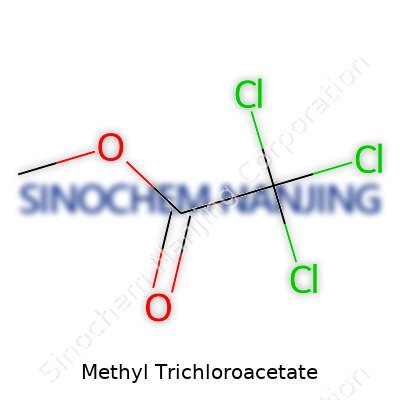
| Names | |
| Preferred IUPAC name | Methyl 2,2,2-trichloroacetate |
| Other names |
Trichloroacetic acid methyl ester Methyl trichloroethanoate Methyl trichloroacetate Methyl ester of trichloroacetic acid |
| Pronunciation | /ˈmɛθ.ɪl traɪˌklɔː.roʊ.əˈsiː.teɪt/ |
| Identifiers | |
| CAS Number | **2758-42-1** |
| 3D model (JSmol) | `JSmol.loadInline("data/mol:Methyl%20Trichloroacetate\n\nC1(Cl)(Cl)ClC(=O)OC\n")` |
| Beilstein Reference | 1209281 |
| ChEBI | CHEBI:132827 |
| ChEMBL | CHEMBL44372 |
| ChemSpider | 16470 |
| DrugBank | DB08731 |
| ECHA InfoCard | 100.007.870 |
| EC Number | 211-481-3 |
| Gmelin Reference | 2478 |
| KEGG | C19261 |
| MeSH | D008770 |
| PubChem CID | 6375 |
| RTECS number | AI0175000 |
| UNII | UJH0H1N833 |
| UN number | UN2810 |
| Properties | |
| Chemical formula | C4H5Cl3O2 |
| Molar mass | 181.41 g/mol |
| Appearance | Colorless transparent liquid |
| Odor | Penetrating odor |
| Density | 1.546 g/mL at 25 °C(lit.) |
| Solubility in water | Slightly soluble |
| log P | 0.94 |
| Vapor pressure | 6.6 mmHg (20 °C) |
| Acidity (pKa) | 1.05 |
| Basicity (pKb) | pKb: 11.6 |
| Magnetic susceptibility (χ) | -51.0e-6 cm³/mol |
| Refractive index (nD) | 1.453 |
| Viscosity | 1.434 mPa·s (20 °C) |
| Dipole moment | 2.12 D |
| Thermochemistry | |
| Std molar entropy (S⦵298) | 186.6 J·mol⁻¹·K⁻¹ |
| Std enthalpy of formation (ΔfH⦵298) | -577.8 kJ/mol |
| Std enthalpy of combustion (ΔcH⦵298) | -555.8 kJ·mol⁻¹ |
| Pharmacology | |
| ATC code | M01AB05 |
| Hazards | |
| GHS labelling | GHS02, GHS05, GHS07 |
| Pictograms | GHS06,GHS05 |
| Signal word | Danger |
| Hazard statements | H301, H311, H331, H314 |
| Precautionary statements | Precautionary statements: P261, P271, P280, P301+P312, P304+P340, P305+P351+P338, P312, P403+P233, P405, P501 |
| NFPA 704 (fire diamond) | 2-2-2 |
| Flash point | 73 °C |
| Autoignition temperature | 385 °C |
| Lethal dose or concentration | LD50 oral rat 720 mg/kg |
| LD50 (median dose) | LD50 (median dose): Oral rat LD50: 450 mg/kg |
| NIOSH | NIOSH Pocket Guide ID: SR4920000 |
| PEL (Permissible) | PEL (Permissible Exposure Limit) for Methyl Trichloroacetate: 2 ppm (parts per million) as an 8-hour Time Weighted Average (TWA) |
| REL (Recommended) | 1 mg/m3 |
| IDLH (Immediate danger) | 100 ppm |
| Related compounds | |
| Related compounds |
Trichloroacetic acid Ethyl trichloroacetate Trichloroacetyl chloride Methyl chloroacetate Methyl dichloroacetate |



