Methyl Thiocyanate: Looking Beyond the Chemical Formula
A Glimpse into the Past
The story of methyl thiocyanate offers a kind of chemistry history lesson tucked into a tiny molecule. As I sift through older scientific papers, I notice how the pursuit of new synthetic routes kept researchers busy through the twentieth century. Way back in the early days of sulfur chemistry, folks stumbled onto methyl thiocyanate while isolating useful compounds from coal tar and experimenting with thioacids. Those years laid the groundwork for later advances in agricultural chemicals, pharmaceuticals, and industrial solvents. In many ways, learning to make and handle this compound opened doors for generations of chemists working on organosulfur chemistry.
Getting to Know the Product
Anyone who has spent time near a bottle of methyl thiocyanate knows its sharp, biting smell—a quick reminder of chemistry’s ability to engage more than just the mind. It shows up as a colorless to pale yellow liquid, packing a punch even in small quantities. Caution grows from experience. Exposure to the vapors or skin contact can lead to discomfort or worse, so proper handling becomes second nature. Its boiling point falls in the 120–130°C range, while its density puts it just above water. My own first lab encounters drilled home the importance of airing out workspaces, as the odor lingers well beyond what common ventilation can clear.
Physical and Chemical Habits
Methyl thiocyanate’s physical features don’t always set it apart—it’s the chemical nature that draws more attention. The molecule’s strong polarity, shaped by the sulfur and nitrogen atoms, makes it a fine intermediate. It dissolves in organic solvents but shuns water. If left to sit, it won’t spoil right away, though it slowly picks up impurities or degrades when exposed to bright light. Curiosity led me to study its reactions: the compound proves quite reactive with nucleophiles and can participate in transformations that flip sulfur and nitrogen connectivity, giving rise to isomers like methyl isothiocyanate.
Chasing High Purity: Technical Matters and Labeling
For anyone buying methyl thiocyanate, accuracy and transparency on the label matter. Purity usually sits above 98 percent, sometimes reaching 99 percent for sensitive lab work. Reputable suppliers disclose not just concentration but also limits on common contaminants—often residual isothiocyanates or free cyanide. Labels list storage guidelines since heat, air, and light speed up decomposition. In my experience, all this detail matters—not just to the buyers, but also to downstream labs trying to trace unexpected results back to their source.
Preparation—A Practical Approach
Making methyl thiocyanate involves direct and indirect approaches, many honed since the middle of the last century. One method starts with methyl iodide and potassium thiocyanate, in an organic solvent, to coax the reaction in the right direction. This method relies on the skillful manipulation of temperature and timing—a lesson in patience for synthetic chemists. Treatment of methyl alcohol with thiocyanic acid also gives the compound, although yields there can run lower. I remember more than a few failed batches and learned quickly that keeping water out prevents unwanted hydrolysis and side reactions. Simple errors, like not scrubbing glassware, sometimes lead to stubborn side-products, a reminder how chemistry leaves little room for shortcuts.
Reactions, Modifications, and Possibilities
Scratch beneath the surface, and methyl thiocyanate morphs from basic lab material into a valuable synthetic building block. Shift the reaction conditions, and it flips into methyl isothiocyanate, a pesticide ingredient. React it with bases or alcohols, and new derivatives quickly spin out. Its sulfur atom can undergo oxidation, producing sulfoxides or sulfones, which have their own uses in medical and material sciences. Given the right conditions, chemists chop or modify the thiocyanate group to graft on tailored side chains—a trick that has helped design new drugs and specialty chemicals. Throughout my own research, using methyl thiocyanate to unlock new transformations often proved more fruitful than sticking to well-worn reaction plans.
What's in a Name?
Chemistry textbooks and catalogs often bury compounds under a heap of names. Methyl thiocyanate goes by others—thiocyanic acid methyl ester, methyl sulfo-cyanide, and a handful of trade monikers. Each name reflects a facet of its identity, from its role as a methyl ester to the stubborn sulfur-cyanide connection in the middle of its structure. An experienced chemist respects these aliases, since older literature and modern supply chains may swap in unfamiliar names that trace back to the same bottle.
Keeping it Safe: Operational Standards
Respect for the hazards of methyl thiocyanate shapes habits in every lab or plant where it shows up. I remember strict training, where gloves, goggles, and fume hoods were non-negotiable. In crowded research settings, ventilated storage with away-from-heat warnings line up with fire codes and chemical hygiene plans. Agencies like OSHA and NIOSH define exposure limits, and those who ignore safe practices quickly find out how biting the vapors and irritating the residue can become. Disposal protocols treat leftovers as hazardous waste, not out of bureaucratic fuss, but because of legitimate risk to health and environment. With increasing scrutiny on workplace safety and environmental liabilities, companies and universities invest in newer detectors and better ventilation, not just as a box-checking exercise, but from the lessons hard-earned after too many near-misses.
Applications That Matter
Applications for methyl thiocyanate stretch beyond the classroom or research bench. Its value as an intermediate hooks it into larger production lines in pharmaceuticals, agrochemicals, and specialty materials. Anyone digging into the roots of new fungicides or herbicides finds intermediates like methyl isothiocyanate—born from simple methyl thiocyanate transformations—woven through their syntheses. In analytical chemistry, its unique structure and reactivity help probe the properties of nucleophiles, push the limits of organic reactivity, and drive forward the synthesis of new ligands for catalysis. Looking at its broader reach, the compound pops up in fragrance chemistry and the preparation of sulfur-containing flavor molecules, where controlled reactivity keeps quality high and risk low.
Paving the Way in Research
Seasoned researchers trace the long arc of sulfur chemistry through the toolkit of methyl thiocyanate. In recent years, chemical biology has found clever new applications, attaching the thiocyanate group to probe enzyme reactions or design new inhibitors. Materials scientists study its sulfoxide and sulfone derivatives for specialized polymers and advanced coatings. For those willing to push the boundaries, methyl thiocyanate stands as a launching pad for main-group and heterocyclic chemistry. Research dollars continue flowing into efforts that wring more efficiency, selectivity, and safety from each transformation, driven by market pressure for better, greener, and less hazardous reagents.
Weighing Toxicity: Lessons in Caution
Nobody who has worked with methyl thiocyanate shrugs off its toxicity. Studies across animal and cell lines draw consistent lines—short exposures at moderate levels trigger respiratory irritation, nausea, and possible nervous system effects. Chronic exposure risks more severe symptoms, so the message from toxicologists rings clear: keep exposures as low as practical and use containment wherever possible. Looking at toxicity data from regulatory filings and academic journals, I see new guidelines pushing allowed concentrations ever lower, nudging labs and factories toward airtight handling and real-time monitoring. Environmental groups, rightly wary of compounds with cyanide-related groups, call for tighter tracking and quicker response plans for spills or emissions.
Looking Forward
The future of methyl thiocyanate will ride on a simple question—can chemists balance its utility with safety and sustainability? As regulations get stricter and green chemistry ideas reshape how labs and plants run, the search intensifies for less hazardous alternatives or new methods to recycle or neutralize byproducts. I hear from colleagues who seek biocatalysts or low-impact energy sources to drive even the most basic methylations and thiocyanations. Evolving analytical tools and automation push researchers to learn more from each experiment, lowering waste and uncovering new applications. As I look out at the shifting landscape of sulfur chemistry, I see methyl thiocyanate still playing a part, but only where innovation, strict safety, and careful stewardship keep it working for us—not against us.
What is Methyl Thiocyanate used for?
What Role Does Methyl Thiocyanate Play?
Methyl thiocyanate shows up in more places than most would guess. This colorless liquid gives off a strong, unpleasant smell that’s hard to forget if you have spent time in a lab or near chemical plants. Its main job comes in the production process for pesticides and herbicides, especially in large-scale agriculture. Crops like potatoes, strawberries, and carrots bring in methyl thiocyanate by way of soil fumigants. These chemicals help keep nematodes, fungi, and weeds from ruining harvests and support farms aiming for a bigger yield each year. Pesticide companies value the potency of this compound behind the scenes, not just for what it does, but for how it helps them meet rising demand in food production.
Herbicides, Soil Fumigation, And Pest Control
On large farms, the fight against plant disease doesn’t end with good habits. Farmers lean on soil treatments, mixing in chemicals like methyl thiocyanate. This compound helps control soil-borne problems before seeds even sprout. Past experiences at farming extension clinics taught me that pest outbreaks can knock out a whole planting season. Methyl thiocyanate gives some insurance, though it brings health and environmental questions. Its use goes well beyond the field. Landscapers and groundskeepers sometimes employ it in turf management for golf courses and sports fields.
The Quiet Role in Industrial Chemistry
Industrial chemists use methyl thiocyanate for synthesis, too. It plays a part in making specialty chemicals that show up in dyes and pharmaceuticals. While its direct medical contributions are small, the role as an intermediate keeps certain supply chains moving. Chemical factories in North America and Asia rely on methyl thiocyanate to unlock other harder-to-make chemicals. These intermediates contribute behind the scenes to products in households, labs, and hospitals.
Safety, Exposure, and Why Oversight Matters
The strong odor of methyl thiocyanate signals more than discomfort—it hints at risk. Workers directly exposed to its vapors feel irritation in the eyes and throat, and chronic exposure creates bigger health concerns. Regulations in the U.S., Europe, and parts of Asia require proper ventilation and protective equipment on work sites. Living near manufacturing plants poses risks for communities, especially if mishandling leads to spills or leaks. Environmental researchers worry about runoff and emissions from large application sites.
As someone who grew up near a chemical plant, news stories about leaks rarely surprised me. Those stories made it obvious that chemicals like methyl thiocyanate need strict oversight. Regular audits and strong emergency plans raise safety for workers and neighbors alike. Community awareness efforts—such as info sessions and transparent reporting—give people a way to advocate for their health and local environment when they feel at risk.
Toward Safer Alternatives?
The conversation around methyl thiocyanate sparks a push for better options. Agricultural scientists, researchers, and industry leaders debate how best to protect food crops without risking worker health or polluting groundwater. Some test bio-based alternatives that accomplish similar pest control goals. I’ve listened to growers weigh short-term benefits against long-term soil and water health. Until less hazardous options can take over, careful management and open communication stand as the best ways to use methyl thiocyanate safely. It’s never a simple balance, but it’s one that matters for both food security and public health.
What are the safety precautions for handling Methyl Thiocyanate?
Understanding the Risks
Methyl thiocyanate isn’t a chemical you want to take lightly. It shows up as a colorless to pale yellow liquid and brings a sharp, foul odor that’s almost impossible to ignore. This stuff can irritate your skin and eyes and, if a bit gets loose in the air, burn your throat or even trigger breathing troubles. Some might think a quick whiff won’t do any harm, but over time, the risks stack up and bring real health problems. Breathing a little too much leads to headaches, sickness, even long-term nervous system damage. Skin contact means burning, rashes, and that harsh dryness that just lingers. Eyes sting and water badly—even a splash can ruin your day. It’s enough to make you pause before opening the drum.
Using Science and Good Habits
After years handling industrial chemicals, experience says one thing: don’t count on luck. Safety measures work. Simple steps, repeated every shift, keep you out of the hospital and keep your workplace healthy. Gloves, goggles, long sleeves—they all play a part. Nitrile or neoprene gloves resist harsh liquids, so I always reach for those before unscrewing a cap. Face shields help too if splashing starts. Tight-fitting goggles shut out those eye-watering fumes. I once tried handling a similar solvent with just safety glasses, and sure enough, my eyes paid the price—won’t make that mistake again.
Open containers in a fume hood or with the fans blasting. Good airflow sucks up poison vapors long before you can breathe them. One stat drives it home: in confined spaces, vapor concentrations can get high enough to knock someone out. More than one story has started with a careless move and ended in a hospital. It’s not just theory; I’ve seen people walk into a room full of chemical smell who came out struggling for air. A solid exhaust system, tested and serviced, gives peace of mind you can’t get from cracked windows alone.
Cleaning Up and Responding to Spills
Spills test how prepared you really are. If you don’t keep absorbent materials—like sand or special spill pillows—at the ready, small accidents can turn into emergencies. Years ago, I watched an untrained coworker try to mop up a puddle with paper towels, only to spread it further and start coughing. What works is immediately isolating the area, sliding on splash-proof boots, and scooping any pooled liquid with materials meant for hazardous chemicals. Dispose of those rags or pads properly—never down a regular drain, never with household trash.
Protecting Your Team
No one should face dangerous chemicals alone—training and teamwork matter. Before anyone picks up a drum, run regular safety drills and refresh on emergency procedures. Swapping stories and tips with other workers reveals small habits that make a big difference, like double-checking glove integrity or taping sleeves at the wrist. These are details you pick up in the field, not from textbooks.
Long-Term Health and Responsible Storage
Methyl thiocyanate can stick around in the environment if not handled right. Keep it locked away in tightly sealed, labeled containers and store them away from heat or any sources of ignition, since this stuff burns hot. Use steel cabinets, clear hazard labels, and limit access to trained staff. The more you plan, the less surprise you face later. Getting lazy with storage leads to more than stains and ruined supplies—it risks explosions, chemical leaks, and lawsuits.
Handling methyl thiocyanate safely isn’t just ticking boxes. It’s about respecting the power and danger of chemicals, taking real steps for your safety, and looking out for others. Every glove, fan, and label plays a role in keeping everyone healthy at work and at home.
What are the physical and chemical properties of Methyl Thiocyanate?
Getting to Know Methyl Thiocyanate
Methyl thiocyanate, a colorless liquid with a sharp and noticeable odor, often surprises folks unfamiliar with sulfur-containing compounds. Its formula, CH3SCN, reveals a blend of carbon, hydrogen, nitrogen, and sulfur. This chemical boils at 130°C, which puts it right in the middle range compared to many organic liquids. A specific gravity around 1.02 lets it sink just slightly in water if spilled. Despite being a liquid, it does not mix with water very well—hydrophobicity wins out, so it forms a separate layer.
Odor and Volatility
Few people forget the smell of methyl thiocyanate once they encounter it. Like many low-molecular-weight sulfur compounds, the sharp, pungent odor calls out danger and demands caution. The compound’s volatility means it evaporates pretty quickly at room temperature, spreading smell and potential danger far and wide. It reminds me of walking into a lab where sulfur compounds infuse the air and every surface with their signature tang. Folks working with it know to open the windows and check their ventilation.
Flammability and Risk Factors
Safety comes to mind immediately. Methyl thiocyanate burns easily, producing toxic gases such as hydrogen cyanide, sulfur oxides, and nitrogen oxides. An open flame or spark triggers a fire risk, making fire extinguishers and proper grounding critical in any workspace handling this chemical. Beyond fire, the substance can also release noxious fumes when heated, so hot equipment and careless storage both become worries. I’ve seen coworkers double-check storage labels and keep containers far from heat sources, even after long shifts.
Chemical Stability and Reactivity
Working with this compound means looking out for acids, strong bases, and oxidizers. Adding acids can break bonds in methyl thiocyanate, giving off hydrogen cyanide—a threat to humans and animals alike. It surprises some that the compound resists breaking down in stable, cool conditions, but the wrong mixture or elevated temperatures quickly turn things nasty. This property keeps lab managers strict about compatibility and inventory controls, and it keeps everyone alert to spills or cross-contamination.
Human Exposure and Protective Measures
Methyl thiocyanate can cause irritation to the eyes, skin, and respiratory tract, even at modest concentrations. Prolonged exposure or high doses can trigger symptoms tied to cyanide poisoning: dizziness, headaches, and in severe cases, more dangerous health consequences. Controlling exposure in manufacturing or research settings calls for proper ventilation, gloves, goggles, and sometimes full respirators. Labs I’ve worked in always tallied personal protective equipment at shift changes and drilled response plans for accidental releases.
Handling, Storage, and Environmental Impact
Storing this chemical in well-sealed containers, away from sunlight, heat, and incompatible materials, goes a long way toward reducing risks. Employees log each move of a container so misplaced stock never sits forgotten in a warm corner or under a sink. Cleanup crews know to contain any spill with absorbents resistant to chemical attack, followed by specialized disposal. Spills into soil or water threaten wildlife and can linger thanks to water insolubility, so environmental protection plans become part of regular operations. I’ve watched seasoned technicians supervise new hires, explaining the reasons behind every protocol, showing that safety with methyl thiocyanate depends as much on habits as technical controls.
Seeking Safer Alternatives
Demand for less hazardous chemicals grows across industry and research. Teams look for alternative compounds where possible, swapping out methyl thiocyanate in some syntheses for less volatile or less noxious options. Chemists balance these choices with cost, efficiency, and safety data, aiming to protect both workers and communities near production or waste facilities. Over the years, regulation and workplace training both increased awareness—helping more people treat this powerful chemical with the respect it calls for.
How should Methyl Thiocyanate be stored and disposed of?
Understanding Methyl Thiocyanate's Risks
Methyl thiocyanate doesn’t pop up in daily conversation, but it’s found in industrial, agricultural, and lab environments. It carries a harsh, unpleasant odor and can release toxic gases if handled carelessly. Prolonged exposure may harm the respiratory system, skin, or eyes. Once, during my time at a research lab, we had a scare: a small vial cracked and stank up half the room, serving as a reminder that common sense and respect for safety procedures carry real weight. This isn’t just regulatory theater. The vapors and liquids have consequences, especially if people don’t prepare for leaks or spills.
Storing Methyl Thiocyanate The Right Way
Leaving a bottle of methyl thiocyanate sitting on any shelf with other chemicals invites trouble. The compound needs space away from heat, sunlight, and sources of ignition. Temperature stability helps prevent unexpected reactions. A locked, well-ventilated storage cabinet with a spill containment tray stops fumes from building up and keeps accidental releases in check. Shared spaces bring extra risk: keeping acids and bases far from methyl thiocyanate reduces accident odds. Safety experts recommend grounding tools and storage shelving to avoid static sparks, since vapors can ignite.
Container labels must remain legible at all times—this limits mix-ups during hurried shifts or maintenance. Anyone trusted with the key to that cabinet should know exactly what’s inside and be trained on what to do if trouble starts. Rushed newcomers missing the dangers leads to mistakes no one can shrug off. Regular inspections help spot cracked seals or bulging containers long before the fumes escape. Even a minor whiff near the cabinet deserves a stop-and-inspect response, not just an open window.
Disposal: Closing the Loop Responsibly
Pouring leftover or expired methyl thiocyanate down the drain marks the start of bigger problems for both pipes and water systems. Municipal waste treatment can’t break down or capture all chemical residues, and the wildlife downstream will pay the price. Regulations from the Environmental Protection Agency draw a bright line: treat this material as hazardous waste, and keep it far from standard trash bins.
Partnering with licensed hazardous waste handlers remains the gold standard. They have trucks built for containment and are trained to treat chemicals like methyl thiocyanate with care. Plenty of companies offer scheduled pickups, letting organizations skip the risk of self-transport and save headaches if an inspection ever arrives. Transferring a used bottle—tight, labeled, and documented—starts a secure journey through professional channels. Even labs with just one or two bottles each year benefit from letting specialists handle what they practice every day.
Preventing Trouble Before It Starts
Routine shows its worth: labeling, audits, secure storage, and regular training all play a part in preventing spills and saving both health and money. Smaller companies often think they can cut corners or deal with everything “later.” That thinking unravels quickly during emergencies or inspections. Chemical safety protocols don’t just keep OSHA happy—they keep workers and neighborhoods safe. Training everyone in chemical handling, spill cleanup, and emergency steps ensures swift action when a problem arises.
Clear, up-to-date written policies mean less guesswork. Sharing information about accidents, even small ones, helps everyone learn and avoid repeat mistakes. Careful handling of methyl thiocyanate keeps both people and the surrounding environment safe, protecting investments and hard-earned trust. Routine checks and open communication show respect for those who rely on a safe workplace every day.
What are the health hazards associated with Methyl Thiocyanate exposure?
Health Risks in Real Terms
Methyl thiocyanate isn’t a household name for most people. Still, if you’ve spent any time around certain pesticides or industrial solvents, you might have already met it without knowing. I remember the first time I caught a whiff of that sharp, sulfur-heavy smell at a crop research site—it clings to your nose and makes the back of your throat itch. That’s the body alerting you to trouble. Simple, clear signals like headaches, skin irritation, or feeling dizzy often get ignored, but those aren’t just passing annoyances: they’re warning signs.
What the Science Tells Us
Breathing in methyl thiocyanate can hammer the central nervous system. Workers exposed over days—or even hours—report everything from nausea to confusion. The chemical doesn’t just stop at headaches; higher doses can put a person at risk for seizures or coma. Researchers connect these symptoms with how methyl thiocyanate disrupts the body’s ability to manage cyanide-like compounds. Long exposure also tends to irritate the eyes and lungs, leading to coughs, watering eyes, or worse—persistent lung damage with repeated contact.
Getting some of this stuff on the skin isn’t just an itchy inconvenience. The chemical soaks in faster than most people think, especially if sweat or cuts are involved. Over time, even low-level contact can spark allergic reactions or chronic dermatitis. It tends to sneak through protective gear that isn’t up to snuff. That’s why solid training on handling and cleanup matters as much as gloves and goggles. Looking back, I remember a buddy shrugging off the rash he got from spilling a little on his wrist. Weeks later, his skin was raw and peeling, and the company nurse made him take time off to heal.
Communities Downwind and Downstream
People living near sites using methyl thiocyanate—like certain agrochemical plants—worry about more than just the workers. Spills and leaks have a way of creeping into the air, soil, and water. Fish kills and wildlife die-offs usually make the headlines, but the slow, steady dribble of pollution does real harm to people’s health, too. In some farm-country clinics, you’ll hear about kids developing odd breathing problems or families reporting persistent sore throats during spray season.
Turning Knowledge Into Change
Nobody wants a toxic cloud hanging over their town or workplace. Speaking from experience, keeping people safe isn’t just about wearing a mask or reading a label; it takes real systems and real buy-in. Substitute less hazardous chemicals when you can. Upgrade ventilation and spill containment so fumes and leaks get trapped before anyone breathes them. Make health monitoring routine for workers who can’t avoid exposure—it’s easier to catch problems before they become crises.
Stay curious and ask questions, especially in jobs or areas where exposure might creep in. Information isn’t just protection for workers—it empowers whole communities to speak up for cleaner, safer conditions. If you ever smell something sharp and unfamiliar, or feel odd at work, don’t tough it out. The body’s warnings matter. It’s your health, and with chemicals like methyl thiocyanate, there’s no sense rolling the dice.
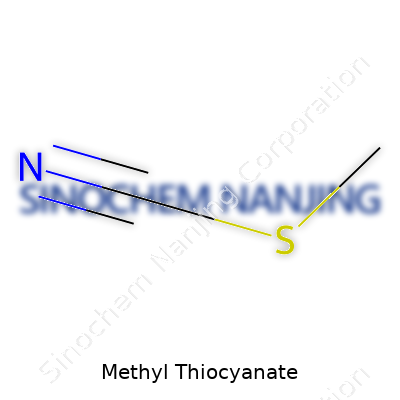
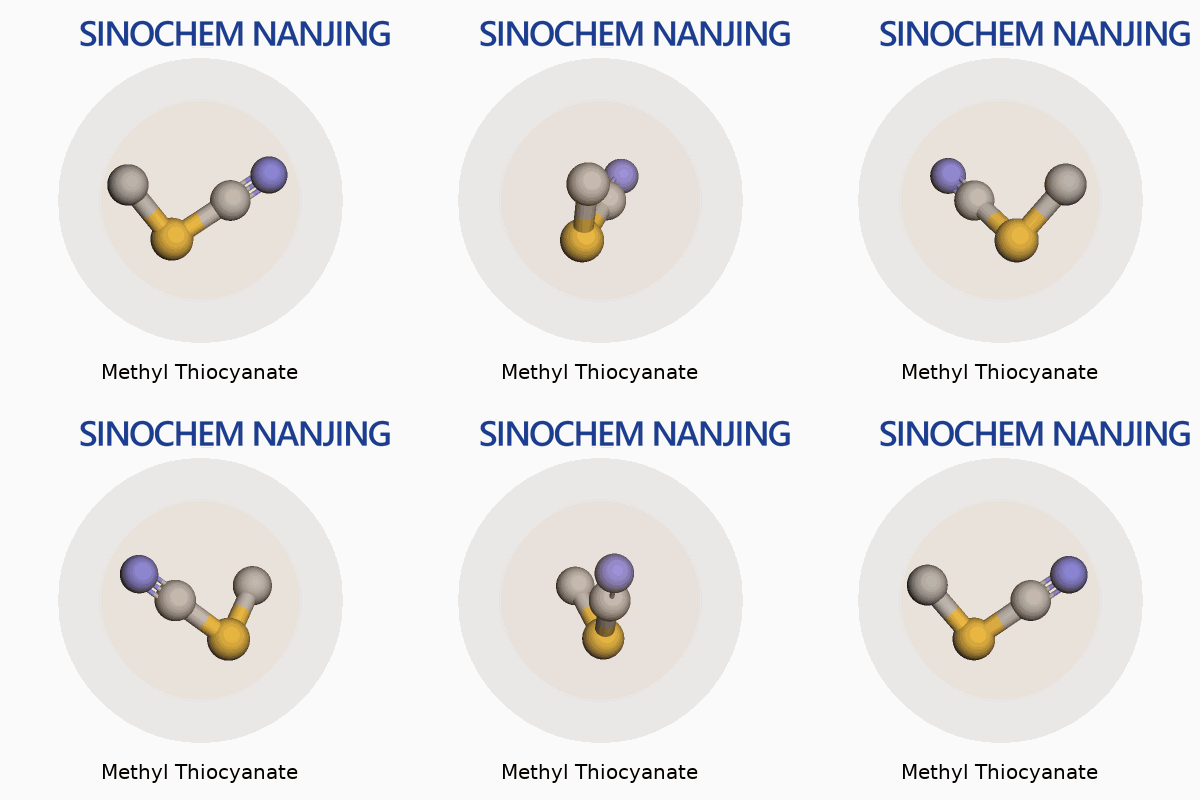
| Names | |
| Preferred IUPAC name | Methyl thiocyanate |
| Other names |
Methyl isothiocyanate MITC Thiocyanic acid, methyl ester Methylrhodanid Methylrhodanate Methyl thiocyanid MTC |
| Pronunciation | /ˈmɛθ.ɪl θaɪ.oʊ.saɪˈə.neɪt/ |
| Identifiers | |
| CAS Number | 628-14-0 |
| 3D model (JSmol) | `CN=C=S` |
| Beilstein Reference | 2811266 |
| ChEBI | CHEBI:35990 |
| ChEMBL | CHEMBL16836 |
| ChemSpider | 12178 |
| DrugBank | DB11441 |
| ECHA InfoCard | 100.014.212 |
| EC Number | 209-740-1 |
| Gmelin Reference | 8286 |
| KEGG | C14315 |
| MeSH | D008746 |
| PubChem CID | 6374 |
| RTECS number | YT1400000 |
| UNII | 7E0396F48R |
| UN number | UN3282 |
| CompTox Dashboard (EPA) | DTXSID7088642 |
| Properties | |
| Chemical formula | C2H3NS |
| Molar mass | 73.12 g/mol |
| Appearance | Colorless to pale yellow liquid |
| Odor | strong; disagreeable |
| Density | 1.09 g/mL at 25 °C |
| Solubility in water | slightly soluble |
| log P | 0.77 |
| Vapor pressure | 32 mmHg (25°C) |
| Acidity (pKa) | pKa ≈ -1.5 (conjugate acid, CH3SCN-H⁺) |
| Basicity (pKb) | -3.75 |
| Magnetic susceptibility (χ) | -31.5·10⁻⁶ cm³/mol |
| Refractive index (nD) | 1.481 |
| Viscosity | 0.53 mPa·s (20 °C) |
| Dipole moment | 3.51 D |
| Thermochemistry | |
| Std molar entropy (S⦵298) | 218.6 J·mol⁻¹·K⁻¹ |
| Std enthalpy of formation (ΔfH⦵298) | 78.2 kJ mol⁻¹ |
| Std enthalpy of combustion (ΔcH⦵298) | -519.7 kJ/mol |
| Pharmacology | |
| ATC code | D06AX05 |
| Hazards | |
| GHS labelling | GHS02, GHS06, GHS07 |
| Pictograms | GHS02,GHS06 |
| Signal word | Danger |
| Hazard statements | H301: Toxic if swallowed. H311: Toxic in contact with skin. H331: Toxic if inhaled. H412: Harmful to aquatic life with long lasting effects. |
| Precautionary statements | P210, P261, P271, P280, P301+P310, P304+P340, P311, P330, P501 |
| NFPA 704 (fire diamond) | 2-3-2-W |
| Flash point | 57°C |
| Autoignition temperature | 527 °C (981 °F; 800 K) |
| Explosive limits | Explosive limits: 1.1% - 6.6% |
| Lethal dose or concentration | LD50 oral rat 60 mg/kg |
| LD50 (median dose) | LD50 (median dose): Oral rat 60 mg/kg |
| NIOSH | KK9275000 |
| PEL (Permissible) | PEL (Permissible Exposure Limit) for Methyl Thiocyanate is 2 ppm (7 mg/m³) |
| REL (Recommended) | REL (Recommended): 1 mg/m³ |
| IDLH (Immediate danger) | 100 ppm |
| Related compounds | |
| Related compounds |
Methyl isothiocyanate Ethyl thiocyanate Methyl cyanide Thiocyanic acid |



