Methyl Isothiocyanate: A Closer Look at Its Story, Uses, and Challenges
Historical Roots and Early Development
Curiosity about plant defense sparked much of the early research leading to methyl isothiocyanate’s (MITC) discovery. Scientists started recognizing its utility in agriculture during the mid-20th century, after tracing its origins to glucosinolates found in mustards and similar crops. Chemists refined ways to synthesize MITC in bulk, fueling the development of products that promised to address the stubborn persistence of soil pests and weeds in a way that older, harsher chemicals couldn’t. Although the heady optimism of the chemical age often overlooked hazards, it’s undeniable that MITC became a go-to soil fumigant through a mixture of agricultural demand and clever chemistry. Demand soared as industrial agriculture spread, each season confirming that high crop yields often rest on clean soils.
What Sets MITC Apart
MITC’s chemical formula, CH3NCS, anchors it among the isothiocyanates—a group known for packing a punch both in flavor and function. It emerges as a colorless, volatile liquid with an acrid smell that’s hard to forget. The sharp, pungent fumes often warn of its presence before any hazard sign can. Water brings out its reactive side, making it less stable but more mobile. MITC boils around 119°C under normal pressure, and its density falls close to that of water. These traits shape how it behaves in the environment and in real-world applications, creating both convenience and risk. It dissolves easily in organic solvents but reacts with water, meaning storage and handling need attention to detail at every step. Too many stories in industry trace back to underestimating this volatility and reactivity.
Technical Considerations and Labels Matter
Clear labeling for MITC doesn’t just fulfill regulatory boxes—it spells out protection for workers and the communities nearby. Chemical suppliers usually stick with strict purity requirements, keeping contamination below tight thresholds, since trace impurities can swing toxicity or reactivity. Every container must carry hazard warnings that highlight not just flammability but also the serious eye and respiratory risks. Even after decades of use, mislabeled containers or faded hazard symbols remain real hazards in both warehouses and fields. Without good information and routine checks, the all-too-human mistakes creep in, with sometimes tragic results.
How Chemists Prepare MITC
The go-to method for making MITC involves breaking down metam sodium or metam potassium, either in water or on soil. As these salts break apart, they release MITC as a gas. Lab-scale routes often involve reacting methylamine with carbon disulfide. From an industrial standpoint, few methods have matched the reliability and scalability of these routes. Each method brings along its own headaches, especially regarding by-products and environmental impact, and small shifts in temperature, pressure, or purity can make the difference between safe production and disaster. Factory floors that produce this compound need tough engineering and sharp attention to process control, not just for efficient yields but to avoid catastrophic releases.
Where MITC Fits in Chemical Reactions
MITC doesn’t let itself sit on the sidelines in the lab. It reacts quickly with nucleophiles—amines, alcohols, thiols—all staples in organic chemistry. These reactions have produced whole families of new molecules, some with pharmaceutical value and others useful as intermediates for dyes or specialty chemicals. Researchers still poke at the edges of MITC chemistry, hunting for ways to turn its quick reactivity into breakthroughs. But speed and utility often introduce risk, especially when the heat of reaction triggers unwanted by-products or releases noxious gases.
Names on the Label: Synonyms and Trade Names
MITC answers to several names, adding confusion for those outside chemistry. Methyl mustard oil and MITC are most common, cropping up in technical documents or supply orders. Trade names for commercial formulations differ by region—among them, labels used in agricultural fumigants, pest control agents, and even some intermediates for chemical synthesis. Skipping over this patchwork of names can spark mistakes, so clear communication and cross-checking product info always matters. Misunderstandings between buyers and sellers rarely stay harmless in the chemical world.
Understanding Safety from the Ground Up
The dangers of MITC are not remote—they’re personal to anyone who has worked with it. Direct contact burns skin and eyes, with worst-case scenarios causing permanent damage. Inhalation hits harder, especially for workers caught in plumes during application or accidental leaks. MITC’s volatility means it slips past weak ventilation and escapes from poorly sealed equipment. Proper personal protective equipment (PPE)—full-face respirators, heavy gloves, and chemical-resistant suits—become a standard part of the job. Yet even the best PPE can’t fix gaps in training or culture. Real safety stems from routines and vigilance more than gear. Regular site inspections, honest reporting of near-misses, and no-nonsense emergency drills lay the real foundation for safety. Firms that treat MITC as “just another chemical” often run into regulatory trouble or face community outrage when leaks or poisoning events occur.
Where MITC Makes an Impact
Farmers have relied on MITC-based soil fumigants to control nematodes, fungi, and stubborn weeds in high-value crops such as potatoes, carrots, and onions. The compound works before planting, breaking pest cycles that other methods can’t touch. MITC steps into the shoes of banned or phased-out compounds like methyl bromide, filling a critical gap. Some wood treatment processes and even certain specialty polymer syntheses also use MITC. People in agriculture appreciate the reliable results but worry about environmental drift, food safety, and worker health. Some communities push for tighter regulations, stricter buffer zones, or even bans where exposure has led to illness clusters or contaminated wells. Balancing food security and chemical safety drives tough debates—debates that won’t end soon.
Fresh Ideas and Ongoing Research
Researchers constantly scan for safer, greener soil treatments that deliver similar results to MITC without its downsides. Biologically derived isothiocyanates, cropping system tweaks, precision dose application, and enhanced formulations form a web of possible solutions. Long-term projects track MITC’s residues in soil and water over time, seeking to refine application rates that protect yields without adding to background contamination. Next-generation polymers and specialty chemicals, meanwhile, draw on MITC as a building block, nudging it into emerging industries such as specialty adhesives or agrochemical intermediates. My experience collaborating with farming co-ops tells me that changes happen fastest when researchers and farmers talk openly—not just when regulations shift. Practical, stepwise improvements often win out over the promise of a revolutionary replacement.
Toxicity: Real Risks and Responsible Use
MITC’s toxicity has moved beyond theory. Documented poisonings affect farmworkers and rural communities exposed to drift or spills. Acute symptoms—nausea, headache, breathing difficulty, eye and skin irritation—emerge quickly, with chronic low-level exposure still under study. Ecological impacts—especially on aquatic life when residues reach waterways—add weight to the regulatory burden. Regulatory agencies in key crop-growing regions have cut back allowable doses or outright banned use near population centers. The big lesson: good intentions never outweigh the need for informed handling, sharp oversight, and community right-to-know.
Tomorrow’s Path—What Comes Next?
With global agriculture under intense pressure to boost yields and cut environmental harm, MITC stands at a crossroads. Advances in formulation—slow-release granules, targeted injectors, vapor barriers—hold out some hope for reducing risk. But scrutiny from eco-conscious groups and food safety researchers keeps the spotlight on every incident, every leak, every case of suspected off-target effects. In the future, soil management practices might rely more on microbial balance and crop rotation, but the transition takes time, investment, and a new mindset. My years consulting on sustainable agriculture projects taught me the real progress comes when old solutions and new ideas meet in the middle. For now, MITC stays in use as a tough, effective tool, but no one can afford to ignore its legacy or its lessons.
What is Methyl Isothiocyanate used for?
What Is Methyl Isothiocyanate?
Methyl isothiocyanate belongs to a class of chemicals known as isothiocyanates. It stands out for its strong, pungent smell and its role as an industrial chemical. Most know it as MITC. Its uses stretch mainly across agriculture and industry, touching both what goes into the ground and what comes out of factories. Awareness matters because of the way it affects both environmental health and personal safety.
Role in Agriculture
Methyl isothiocyanate acts as an active ingredient in several soil fumigants. Farmers rely on it to control pests that don’t show up until crops are harvested or soils are tilled. This chemical handles a range of organisms: weeds, fungi, nematodes, and insects can all get knocked out when treated fields release MITC into the soil. Companies package MITC as a gas-releasing compound—think metam sodium or metam potassium. These products release MITC once they mix with water in the soil. For someone who has spent time in farming communities, the odor of MITC signals field fumigation season. People notice it right away. Crops like potatoes, carrots, onions, and even turf for golf courses have all seen applications. Because it cleans up the soil so well, yields often go up after fumigation. That’s only part of the story, since residue and runoff have generated concerns in more than a few farming towns. MITC doesn’t stick around forever, breaking down with moisture and sunlight, but the effects on beneficial organisms depend heavily on local conditions.
Other Industrial Uses
The story does not stop with agriculture. Manufacturers use methyl isothiocyanate as an intermediate step in making pesticides and herbicides. MITC helps create carbamate pesticides—these end up on shelves as products farmers and professional exterminators turn to when facing tough bugs. Some industries use MITC for making rubber accelerators, too. In this setting, the chemical helps speed up how rubber hardens for tires or industrial components. Whenever factories store, use, or move MITC, the threat of leaks or accidental spills looms large. So many production sites have tight containment and ventilation rules because this stuff irritates eyes and lungs in even small amounts. A single mix-up in handling changes lives. That much is clear from incidents where communities have evacuated when MITC escaped into water or air.
Balancing Benefits and Risks
It is easy to see why MITC keeps showing up across agriculture and industry. It works. More crops reach markets, and factories get better control over their products. The question comes down to oversight and careful usage. Scientists at the EPA and health agencies set limits for exposure in workplaces and communities. Some states, like California, run special monitoring programs during fumigation season to avoid accidental poisonings. Folks who have lived close to treated fields often talk about headaches or stinging eyes on days MITC sweeps through the air. Doctors and environmental researchers track these cases because long-term health effects are still getting studied. There is no single answer, but stricter rules, better technology for applying fumigants, and training for workers can limit risks.
Looking Forward
People who depend on the ground for their living face tough decisions. If a proven tool like methyl isothiocyanate boosts crop yield but leaves questions about health, everyone stands to gain from honest review and smarter practices. Investment in safer delivery systems, buffer zones for communities, and transparent reporting of any incidents offers the best shot at protecting both food supplies and public health.
Is Methyl Isothiocyanate hazardous to humans?
What is Methyl Isothiocyanate?
Methyl isothiocyanate turns up in farming and pest control. It comes from chemical reactions involving methylamine and carbon disulfide. Workers in agriculture and those handling soil fumigants come across it often. This compound has a history—one deeply marked by harmful exposure incidents. Hearing stories from farmers about eye burning, nose irritation, or persistent cough sheds light on how strong and immediate its impacts get.
Exposure and Immediate Effects
People talk about headaches and breathing problems when they inhale this substance. Eyes turn red and water uncontrollably. Skin contact leads to itchy rashes. It doesn’t take much—airborne concentrations as low as 0.6 parts per million have put workers in clinics. The severity grows if safety gear gets ignored or leaks go undetected. In my early journalism days, a rural doctor shared reports of nausea and chest pain among farmhands even days after fumigation. It’s hard to ignore the real threat once the symptoms set in.
Long-Term Risks
Repeated, low-dose exposure leaves effects that linger. Methyl isothiocyanate works its way deep into the respiratory tract and also upsets the nervous system. Chronic bronchitis and asthma don’t only affect the old. I met a kid who started coughing after moving near farmland—his doctor pointed to drifting fumes. Lab studies confirm this risk. The U.S. Environmental Protection Agency recognizes it as a possible carcinogen. Animal tests link it with abnormal cell growth and genetic mutations. Symptoms sometimes show weeks later, which throws off both victims and physicians seeking early treatment.
Wider Reach—Not Just a Worker’s Threat
Neighboring communities pay the price, too. Chemical leaks don’t respect property lines. In 1984, Bhopal, India, saw thousands lose their lives in hours after a leak involving related chemicals, including methyl isothiocyanate. That disaster serves as a stark warning. Storage failures mean wind can carry toxic fumes into homes and schools. People rarely get a choice about their exposure.
Solutions and Safer Practices
Farmers now look at enclosed fumigation and real-time gas detectors as part of their routine. Protective masks and thorough training lower the odds of mishaps. Simple steps—checking valves, using wind breaks, and posting clear warning signs—cut risk for families nearby. Well-ventilated application during certain weather patterns lowers exposure to innocent bystanders.
Manufacturers who take the time to refine application equipment and invest in better leak detection show a clear commitment to safety. Governments joined in, enforcing stricter labeling and storage rules. Labels now underline the worst-case symptoms and urge first responders to use protective suits in emergencies. With enough public pressure, companies phase out the most hazardous uses altogether, nudging the industry toward alternatives.
Awareness Makes All the Difference
People need honest information to stay protected. Doctors in farming regions learn to ask about chemical exposure, not just pollen. Community leaders host meetings to talk plainly about pesticide drift and symptoms. It’s not just up to the regulatory agencies—anyone who sees or smells something strange owes it to their neighbors to speak up. Vigilance gives small communities the power to push back and shape safer, healthier hometowns.
What are the storage and handling requirements for Methyl Isothiocyanate?
Why Storage Matters So Much
Methyl isothiocyanate (MITC) does not forgive mistakes. This stuff gives off a strong, irritating odor that stings the nose and burns the eyes—dealing with it means thinking safety first and thinking all the time. Let a drum get unsealed or a temperature slip out of range, and you’re not just chasing after missing product—you’re risking serious health emergencies, cleanup nightmares, and a visit from regulators.
I’ve worked around chemicals long enough to know that MITC’s danger isn’t just what the label says—it’s how easily fumes will take over a room, get into your clothing, or trigger an asthma attack across the warehouse. This compound goes from liquid to vapor at room temperature. Storing it in a cool, well-ventilated area stops these vapors from building up and putting everyone nearby in harm's way.
Steps to Store MITC Safely
I always look for a tight, clean drum or container. Steel drums usually do the job best. Lids should close snug and tight, sealed each time after use. Any break can let out vapor that lingers and makes noses burn. If you have to open a container indoors, even for a minute, good exhaust fans or fume hoods make all the difference. One whiff is enough to remind you why protective gear exists—think chemical-resistant gloves, splash goggles, and a sturdy face shield.
MITC can break down if it sits out in the sun or gets above about 30°C (86°F). Heat not only puts pressure on the container, but also breaks down the chemical and bumps up the risk of leaks. I learned quick to store containers in a shaded or air-conditioned building. The area should be dry too: water can react with MITC and send out even more harmful vapors. No faucets, no leaky pipes nearby. Some folks say they put absorbent trays or spill pallets under drums. Spills will happen—being ready saves huge headaches.
Safe Handling Practices
Sometimes you find yourself transferring MITC to smaller bottles for use. Here, working in pairs is smart. One person watches for mistakes or leaks, the other handles the job. I remember seeing a friend develop severe skin blisters just from a tiny splash. Since then, I always double-check my gloves and sleeves before touching anything with MITC on it.
Ventilation isn’t a “nice to have.” This vapor likes to spread out and fill unventilated spaces. If you catch a whiff, leave and get some air. Training and clear signage also matter in any facility using MITC. New hires and experienced techs both slip up if they think routines can be bent. It’s not an area where experience alone keeps you safe—having strict rules and sticking to them is what really lowers risks.
Dealing With Emergencies
Even with strict storage, accidents find a way. Everyone should know where the eyewash station is, and emergency showers should work and never get blocked by supplies. I always make sure a spill kit with neutralizers or absorbent materials sits within reach of any storage area. Relying on a phone call to emergency services or hoping the fire department shows up fast enough—those aren’t real plans. Have your own tools and a way to get air in and people out quickly.
Why It Matters
MITC has a place in industry, but it plays rough. Failing at safe storage or sloppy practices invites injuries, lawsuits, and locked-down operations. Safe storage and mindful handling protect workers, the public, and your bottom line. You cannot cut corners here if you value people’s health and your reputation.
How should Methyl Isothiocyanate spills be managed?
Real Risks and Real Consequences
If you’ve ever caught a whiff of a strong, stinging chemical and felt your nose burn, that’s nothing compared to the punch from Methyl Isothiocyanate, MITC. MITC finds its way into many workplaces, especially in agriculture where it plays a role in soil fumigation. But as seen in tragic events like the Bhopal disaster’s aftermath, even small spills can turn deadly in minutes. You don’t simply mop it up and carry on — we’re dealing with a compound that turns to vapor fast, spreads quickly, and leaves people in its path gasping for air. That’s not theoretical; the medical records from Bhopal tracked lung injuries, eye damage, and nervous system problems even months later. No amount of after-the-fact paperwork reverses that kind of harm.
Every Minute Counts
MITC demands a fast, no-nonsense response. I remember working around old pesticide stockpiles, hearing stories from the folks who had to clear them out. Seconds after a crack in a drum, the vapor rushed out, and without gas masks, there was no way to stay safe. Proper spill management starts even before an accident happens: tight storage, leak detection, and employee training. Staging plenty of absorbent material, protective gear, and secure ventilation saves time when every minute counts. It struck me how many workers turned to outdated respirators, and local clinics never had enough oxygen tanks for emergency care. Communities deserve better. Preparedness cannot become an afterthought just to cut corners on cost.
Clear Steps for Safer Cleanup
Soaking up MITC with sand won’t do the job alone. Standard operating procedure should look like this: Evacuate people right away—no debates or delays. Approach the spill only if every responder wears full-face chemical respirators and chemical-resistant suits. Use liquid-tight dikes to stop MITC from spreading, then apply a solution of sodium thiosulfate or bleach. These chemicals break MITC down and make it less volatile, which I learned in an emergency response drill. Workers need to handle that task quickly but without shortcuts, otherwise, the cloud grows and the risks multiply. After neutralization, collect the waste into sealed drums. The clean-up crew must treat the area as a hazardous zone for days, with air monitoring stations sending real-time updates to teams on-site.
Community Protection Over Company Image
Too often, companies worry about headlines more than health. People living close to chemical plants or storage sites rarely see warning systems tested, and almost never receive personal protective equipment or emergency training. Transparent risk communication—something the U.S. chemical safety board has called out for years—should become standard practice. Communities need evacuation plans, alarms that actually reach them, and access to information that doesn’t sit locked behind a company firewall. Installing real-time air quality sensors at plant perimeters also helps catch leaks early, stopping a small problem from becoming a disaster. Funding for this shouldn’t depend on the year’s profit margin.
Strong Rules Backed by Real Investment
Legislation only works if inspectors show up unannounced, not as part of a box-ticking ritual. Governments should require reporting every spill, no matter the size, and back that with serious fines. More than cash, leadership must foster a culture where every worker’s suggestion for safety gets attention, not shrugs. Fast response, honest communication, solid gear—these things truly matter when mistakes can cost lives in seconds. There’s no shortcut that softens chemistry’s bite, but solid preparation sharpens our teeth for the fight.
What are the safety precautions when using Methyl Isothiocyanate?
Why Methyl Isothiocyanate Demands Respect
Methyl isothiocyanate has a reputation in the chemical world. It’s one of those compounds you can almost smell before you open the container. People who have spent any time around pesticides or soil fumigants know this stuff isn’t for casual use. The dangers aren’t hidden—skin burns, breathing trouble, eye damage. I’ve seen what happens when someone underestimates it and skips the basics. Nobody wants to end up in an emergency room, especially over something avoidable.
What Happens if You Ignore Safety
Direct skin contact can bring on rashes, itching, even blisters. It’s not subtle or slow-acting. Eyes sting and water, or worse, develop severe pain. Once, someone forgot to check their gloves; an otherwise diligent lab tech needed medical help before lunch. Breathing in the vapors can send you into a coughing fit, trigger chest pain, and in serious cases, damage lung tissue. Poison control centers get enough calls as it is. It helps to keep in mind that accidents tend to land hardest on people who assume “it won’t happen to me.”
Simple Precautions Pay Off
Experience shows nothing matches basic gear: thick chemical-resistant gloves, a splash-proof apron, protective goggles, and a face shield if there’s splash risk. Proper fitting respirators with the right cartridges matter as much as the gloves. Relying on open windows or a desk fan wastes time—the right fume hood or exhaust is essential. I’ve watched people get sick from thinking the smell is the only worry. Vapors hang in the air, even if you don’t notice right away.
Storage and Handling Mistakes Happen, but They Don’t Have To
Leaky containers have caused plenty of headaches. Store methyl isothiocyanate in tightly sealed containers, out of sunlight, away from water, acids, and strong oxidizers. Cross-contamination with other chemicals can spark violent reactions—this isn’t a chemical to leave unattended on a shared bench. Prepare for spills by keeping neutralizing agents nearby and having a real plan, not just a piece of paper on the wall. If even a small spill happens, treat it as urgent. Dispose of all wipes, gloves, and cleaning materials as hazardous waste; don’t just toss them in the regular trash.
What’s Worth Remembering
The rules for methyl isothiocyanate aren’t there for fun. They come from hard experience. In workplaces where I’ve seen people follow good habits—PPE every time, labeling every bottle, logging their use—nobody gets hurt. Where shortcuts creep in, trouble often follows. No job finishes faster if someone lands in the hospital, and safety shortcuts rarely stay secret for long. Companies and workers both have to stay committed every day.
Making Things Safer for Everyone
Ongoing training, clear labels, and honest communication save lives. People should feel able to speak up if something looks off. Near-misses can be important warnings. Routine checks of emergency showers and eyewash stations prevent small problems from turning serious. Medical monitoring and regular check-ins with health staff catch issues before they blossom. Sharing lessons learned—without blame—helps everyone stay sharp.
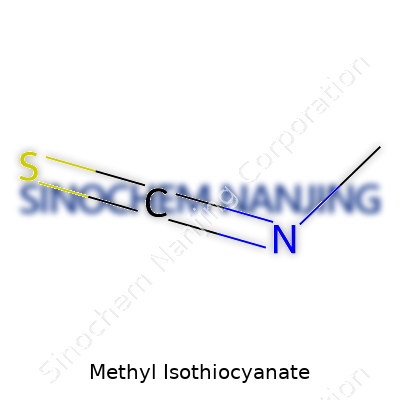
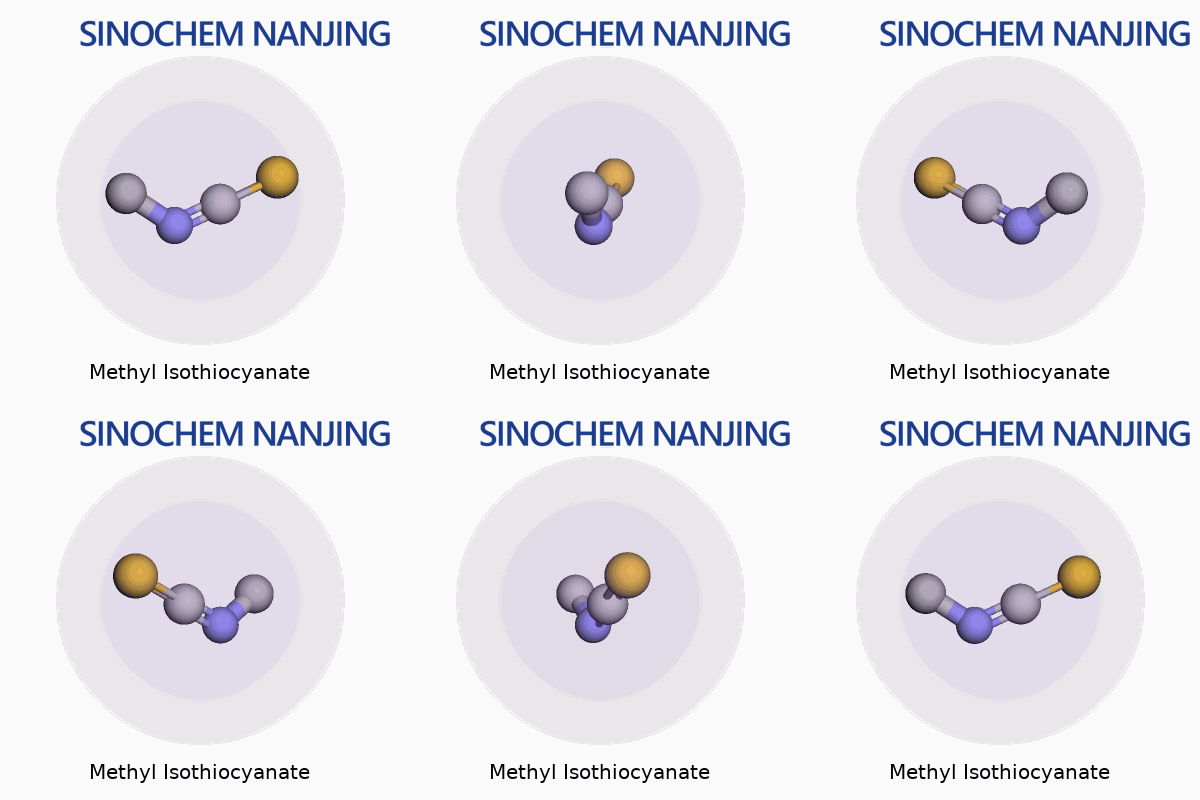
| Names | |
| Preferred IUPAC name | Methyl thiocyanate |
| Other names |
MITC Methyl mustard Methylisothiocyanat Isothiocyanatomethane Methiocarb metabolite |
| Pronunciation | /ˌmɛθɪl aɪˌsoʊθaɪ.oʊsaɪˈəneɪt/ |
| Identifiers | |
| CAS Number | 556-61-6 |
| Beilstein Reference | 1209229 |
| ChEBI | CHEBI:29041 |
| ChEMBL | CHEMBL1349 |
| ChemSpider | 13651 |
| DrugBank | DB14479 |
| ECHA InfoCard | 03e90592-66a9-4356-81d5-9026e7432c87 |
| EC Number | 213-464-6 |
| Gmelin Reference | 6223 |
| KEGG | C07271 |
| MeSH | D008763 |
| PubChem CID | 6371 |
| RTECS number | PM2625000 |
| UNII | Q90VQ850AJ |
| UN number | UN2480 |
| CompTox Dashboard (EPA) | DTXSID3021272 |
| Properties | |
| Chemical formula | C2H3NS |
| Molar mass | 99.15 g/mol |
| Appearance | Colorless to pale yellow liquid with a pungent odor |
| Odor | Pungent |
| Density | 0.960 g/cm³ |
| Solubility in water | Moderately soluble |
| log P | 0.94 |
| Vapor pressure | 23.4 mmHg (20°C) |
| Acidity (pKa) | 14.8 |
| Basicity (pKb) | 8.86 |
| Magnetic susceptibility (χ) | -52.2·10⁻⁶ cm³/mol |
| Refractive index (nD) | 1.527 |
| Viscosity | 0.590 cP (20°C) |
| Dipole moment | 3.96 D |
| Thermochemistry | |
| Std molar entropy (S⦵298) | 274.0 J·mol⁻¹·K⁻¹ |
| Std enthalpy of formation (ΔfH⦵298) | ΔfH⦵298 = 57.51 kJ·mol⁻¹ |
| Std enthalpy of combustion (ΔcH⦵298) | -338.7 kJ/mol |
| Pharmacology | |
| ATC code | V03AX11 |
| Hazards | |
| GHS labelling | GHS02, GHS05, GHS06, GHS08 |
| Pictograms | GHS06,GHS08 |
| Signal word | Danger |
| Hazard statements | H301 + H311 + H331: Toxic if swallowed, in contact with skin or if inhaled. H315: Causes skin irritation. H319: Causes serious eye irritation. H331: Toxic if inhaled. H335: May cause respiratory irritation. H400: Very toxic to aquatic life. |
| Precautionary statements | P261, P273, P280, P284, P302+P352, P304+P340, P305+P351+P338, P312, P320, P330, P363, P405, P501 |
| NFPA 704 (fire diamond) | 3-3-2 |
| Flash point | 23 °C (closed cup) |
| Autoignition temperature | 444 °C |
| Explosive limits | Explosive limits: 2.3–12% |
| Lethal dose or concentration | LD50 oral rat 60 mg/kg |
| LD50 (median dose) | LD50 (median dose): 75 mg/kg (oral, rat) |
| NIOSH | MU8225000 |
| PEL (Permissible) | PEL (Permissible Exposure Limit) for Methyl Isothiocyanate: "0.02 ppm (0.054 mg/m³) as an 8-hour TWA (OSHA, ACGIH) |
| REL (Recommended) | REL (Recommended Exposure Limit) of Methyl Isothiocyanate: "0.02 mg/m3 |
| IDLH (Immediate danger) | MITC: 20 ppm |
| Related compounds | |
| Related compounds |
Methylamine Isothiocyanic acid Methyl isocyanide Methylthiourea |



