Methyl Isocyanate: Roots, Realities, and Responsibilities
Historical Development
Methyl isocyanate didn’t just pop up out of nowhere. Early chemical pioneers ran into this compound by trying to find new paths in organic synthesis—many of them chasing ways to whip up pharmaceuticals, pesticides, and specialty chemicals. The pressure to keep insects off crops in the post-war agricultural boom led manufacturers to embrace methyl isocyanate in the 1960s. By the time the 1970s came around, industrial use had become common, especially in countries chasing self-sufficiency in food production. Events like the 1984 Bhopal disaster forced both regulators and researchers to reconsider how companies handle highly toxic intermediates. Today, that single night remains a painful reminder that profit rarely justifies turning a blind eye to risk.
Product Overview
Methyl isocyanate, better known in industry circles as MIC, shows up most often as a key ingredient in the manufacture of carbamate pesticides (like carbaryl and aldicarb). This colorless liquid carries a sharp, unpleasant odor that stings the nose. To chemists, it acts as both a valued reactant and a hazardous presence. Its tendency to participate in brisk chemical reactions saves steps in the lab and production line but demands plenty of respect and careful containment.
Physical & Chemical Properties
MIC boils at around 39°C, so even a little heat turns it into a vapor—a fact that has caused more than a few emergency shutdowns. Its density hits about 0.96 g/cm³, a little shy of water. It doesn’t mix with water easily but, if nudged into contact, it hydrolyzes, tossing off heat and splitting into methylamine and carbon dioxide. Flammability ranks high: a stray spark near an open vessel can trigger disaster, especially since its vapors spread quickly through poorly ventilated rooms. Chemical stubbornness never defines MIC. Reactions come easily, especially with alcohols, amines, acids, and water.
Technical Specifications & Labeling
Companies buying or selling methyl isocyanate must stick to strict protocols. Packaging requires tough materials like stainless steel and sealed drums. Each drum stands labeled with the UN shipping number 2480, hazard class 6.1 (toxic), and an alert for flammability. Manufacturers specify purity levels at 99% or above, mark limits on water and acid content, and often demand special stabilizers to slow down unwanted side reactions. Transport mandates refrigerated trucks and clear documentation at every stage. If someone cuts corners, the whole chain feels the impact.
Preparation Method
Industries usually make MIC by reacting monomethylamine with phosgene, itself a dangerous gas. This process seems straightforward on paper but demands rigorous engineering controls—closed systems, continuous monitoring, and skilled operators ready for the unexpected. Alternatives developed for smaller-scale synthesis rely on triphosgene or methylcarbamoyl chloride, but large-scale operations stick with phosgene, given the efficiency and cost profile. For anyone handling these processes, constant training and regular equipment checks do more than cut downtime—they save lives.
Chemical Reactions & Modifications
In reaction networks, MIC doesn’t hesitate. It reacts sharply with alcohols to roll out carbamates, with amines for ureas, or with itself and other isocyanates to make polymers and pre-polymers. Chemists like MIC’s ability to slip functional groups into place without too much fuss, saving time and raw material. But the downside calls for careful containment: uncontrolled polymerization or water contact can send both temperature and pressure soaring, with tragic consequences if the setup isn’t designed to withstand surprises.
Synonyms & Product Names
Not everyone sticks to “methyl isocyanate.” On datasheets and shipping manifests, it often gets listed as MIC, isocyanic acid methyl ester, or methylcarbamoyl isocyanate. Product codes and trade names pop up in catalogs for chemical supply houses worldwide, sometimes disguising the dangers with innocuous branding. For those managing chemicals at scale, a clear understanding of synonyms helps prevent storage mistakes and keeps incompatible products from getting too close for comfort.
Safety & Operational Standards
Nobody who’s read about the Bhopal disaster forgets the lessons MIC teaches. Strict safety standards under OSHA and European REACH rules dictate airtight storage, automatic leak detection, strong local ventilation, and protective gear for each worker. Facilities must develop and drill comprehensive emergency response plans, since leaks can drift for miles and cause mass casualties. Regular inspections, up-to-date maintenance, and clear reporting lanes keep the system honest—especially in fast-growing regions where regulatory lapses claim more lives each year.
Application Area
Most methyl isocyanate flows into pesticide manufacturing, where it forms part of products that protect millions of acres of food crops. Some finds its way into pharmaceuticals, serving as an intermediate for certain active ingredients, though less commonly given its risk profile. In polymer labs, researchers and specialist firms test MIC’s capability in producing advanced coatings, adhesives, and elastomers. Despite its toxic badge, many industries stay loyal to MIC because safe, affordable alternatives often remain out of reach.
Research & Development
Researchers, particularly after the legacy left by past accidents, drill into safer reaction pathways, better sensors, and smarter containment tech. Teams in Germany, Japan, and the US published papers on microreactor systems that can keep quantities low and risks manageable. Some labs experiment with genetic engineering to bypass MIC entirely in pesticide synthesis, hoping that biotech breakthroughs ease the chemical load on both workers and environments. Industry-university partnerships fund simulator projects to predict leaks and failures before they ever happen in real life.
Toxicity Research
Methyl isocyanate attacks the respiratory tract, triggers eye and skin irritation, and causes violent coughing fits in exposed workers. Epidemiologists tracking survivors of large-scale releases report chronic lung diseases, vision loss, birth defects, and higher cancer rates. Animal studies led to globally recognized limits on short- and long-term exposure, with OSHA setting workplace air limits at 0.02 ppm averaged over eight hours. Recent laboratory work focuses on exposure biomarkers, hoping doctors get faster at recognizing and treating those affected.
Future Prospects
Over time, regulatory pressure and ethical imperatives push industry to look for replacements or new safety breakthroughs. Green chemistry teams experiment with different feedstocks and less hazardous alternatives to traditional MIC paths. In low-resource countries, foreign investment could help strengthen plant safety infrastructure and response readiness. For high-value applications where MIC still plays a unique role, better training, stronger regulatory oversight, and more transparent incident reporting need real commitment—not just lip service—from corporate leaders and the public sector alike. Sharing lessons learned and keeping open channels between scientists, regulators, and advocates gives society its best hope for using potent chemicals like methyl isocyanate without repeating tragedies of the past.
What is methyl isocyanate used for?
The Role of Methyl Isocyanate in the Chemical Industry
Methyl isocyanate, often called MIC, stands out because of its heavy-duty use in manufacturing pesticides and herbicides. Many chemical plants, especially those producing carbamate pesticides like carbaryl (known by the brand name Sevin), rely on this compound for its reactive nature. I’ve seen firsthand, while visiting agricultural supply warehouses, signs showing products that trace back to processes involving MIC. It turns out, a lot of the pest-control chemicals used on staple crops—from wheat to cotton—involve this substance early in their production.
Why MIC Matters More Than Just in the Lab
Knowing what methyl isocyanate does isn’t enough. The real issue comes with its safety track record. The Bhopal disaster in 1984 serves as a stark reminder. Over 40 tons of MIC leaked from a pesticide plant, causing thousands of deaths and leaving lingering health problems for countless people. That incident lingers in the collective memory of both policy makers and those living near industrial zones. MIC is dangerous even at very low concentrations, which is why its use forces chemical companies to take extra steps to keep communities and workers safe.
The Push for Safer Alternatives
Many experts point out that alternatives to MIC-created pesticides already exist. Growing up in a farming community, I remember older neighbors talking about how less toxic substances could control many pests, if only companies and governments invested in them. Biological pest management and green chemistry have gained ground, offering ways to keep pests at bay without risking such a lethal compound. Large agrochemical companies, nudged by public demand and strict rules, have started to cut back on MIC usage, though progress drags on in parts of the world where crops still get hit hard by bugs and weeds.
Regulation and Community Engagement
Tough government oversight became the norm in countries that remember what unchecked chemical management can cost. After disasters, local people demanded answers, pushing lawmakers to act. Worker training, real-time monitoring, double-walled tanks, and emergency drills came into play. Over the years, I’ve talked with workers at industrial plants who feel these extra steps do make a difference. But gaps remain, especially in poorer regions where equipment and expertise get stretched thin.
What’s Next?
The need for food keeps chemical companies cranking out pesticides, and MIC still figures into many of those production cycles. The only way forward blends strict safety measures, community involvement, and research into safer alternatives. Farmers want tools to protect their crops, but nobody wants a repeat of past tragedies. Plant managers must listen to both workers and neighbors, keeping transparency front and center. Companies will keep MIC in circulation as long as it brings them profit—unless pressure from scientists, regulators, and consumers tips the balance. The legacy of methyl isocyanate reminds everyone what’s at stake when safety gets pushed aside for productivity.
What are the health risks of exposure to methyl isocyanate?
The Immediate Health Threats
Methyl isocyanate holds a notorious reputation for a reason. Even small doses in the air can spark irritation in your eyes, nose, and throat. If someone breathes it in or gets it on their skin, pain isn’t far behind. Within moments, eyes sting, noses run, and coughing kicks in. The most dangerous part comes from its effect on the lungs — breathing in enough of it can trigger chest tightness, shortness of breath, and even swelling in the airways. People who have survived exposure often tell about burning sensations and feeling like they lost control over breathing. I remember reading accounts from Bhopal, India, and it's impossible to forget how so many people reported tearing, choking, and suffocating soon after the gas leak.
Long-Term Impact
Surviving the worst of methyl isocyanate doesn’t mean being free of consequences. Exposure scars airways, setting off asthma and bronchitis that stick around for years. Eyes can suffer from burns, ulcers, and sometimes, blindness — a harsh reality for many in places where industrial accidents forced whole communities to grapple with these symptoms. Doctors tracked survivors for years and noted higher rates of cancers, reproductive problems, and weakened immune systems. Inhalation damages not only the physical body, but also a person’s ability to live normally, work, and care for loved ones.
Why It Matters Beyond the Headlines
This isn’t just a historical or foreign concern. Methyl isocyanate remains part of several manufacturing processes for pesticides and plastics worldwide. Workplace safety reports mention leaks or near-misses in developed countries as well. At one point, I worked in a factory where chemical alarms were standard — and every worker understood the risk of toxic accidents. Establishing emergency protocols wasn’t just about following government rules. It felt personal: one missed alarm or broken seal could change a life forever. Studies from agencies like the CDC and WHO back up the kind of vigilance needed, pointing to how small exposures can still add up to big trouble, especially without regular air sampling or training.
Solutions That Work
Companies can lower risks by switching to safer processes or substituting less hazardous materials. In some cases, shifting away from chemicals like methyl isocyanate altogether makes the most sense. Where it remains necessary, proper containers, leak detection systems, and well-trained staff do far more than any paperwork policy. Real safety demands hands-on, regular drills and true transparency — staff must know and trust how to respond if something goes wrong. Communities living nearby have every right to clear information about what’s produced and stored, since toxic clouds don’t respect factory fences. Governments strengthen protection by inspecting plants, enforcing rules, and listening to whistleblowers who risk their jobs to point out hazards.
Why This Risk Deserves Attention
Methyl isocyanate has proven over decades that it cannot be underestimated. Protecting health means looking past short-term convenience in manufacturing and choosing responsibility, both inside the workplace and out in the community. No one should revisit tragedies of the past; learning from experience and science offers a way forward where health holds priority over profit.
How should methyl isocyanate be stored and handled safely?
Staying Vigilant with Methyl Isocyanate
Methyl isocyanate should always trigger a heightened sense of caution. I remember handling chemicals in college, feeling that unease about what just a small mistake could do. This chemical is infamous not just for its hazards, but for the real-life tragedies that taught us what can go wrong. It hits home for me because cutting corners on safety has lasting consequences.
Recognizing Its Risks
The Bhopal disaster never fades from memory. Over 15,000 deaths tied to a leak no one contained fast enough. Methyl isocyanate reacts quickly with water, giving off heat and highly toxic gases. One whiff can damage your lungs for life, and a small leak can harm people blocks away. No chemical at my old employer sparked more safety talks than this one.
Practical Steps for Safe Storage
Storing methyl isocyanate isn’t only about following a checklist; it’s about building layers of precaution into every decision. Tanks and containers perform best with stainless steel, as it resists the aggressive nature of MIC. I’ve seen operations fall apart from putting the wrong material in place—every bolt and seal should be corrosion-resistant.
Temperature plays a big role. MIC boils at 39°C, so keeping it cool cuts down on vapor pressure and leaks. Insulated, refrigerated storage tanks give peace of mind. In my old lab, temperature alarms saved us more than once from a dangerous spike.
Moisture spells danger. Even a little water triggers violent chemical reactions. I learned the hard way that humidity can creep in after heavy rain, so tanks and pipes need airtight seals and strict dehumidification routines. Trained staff should always double-check for moisture after any maintenance, and humidity indicators give early warning of a breach.
Safe Handling in Practice
Proper personal protection becomes nonnegotiable. Full-face respirators, chemical-resistant suits, and gloves are standard. Showers and eyewash stations should sit within a sprint’s distance. During my internships, drills for exposure response hammered home that seconds matter. Spill containment booms and neutralization kits should be within arm’s reach.
Engineering controls back up personal care. Remote monitoring stands as a priority—no one wants to send a person in if sensors pick up trouble first. Double-walled pipes, automated shutoff valves, and real-time gas monitors speak for the level of investment high-stakes operations demand. Routine inspections, not paperwork, keep systems safe. Every experienced worker knows that a skipped checkup can make all the difference between a safe day and a disaster.
Documented emergency plans save lives. Training doesn’t just mean watching a video—it means practice: running simulations and making sure everyone knows where exits and emergency kits are. Quick communication inside and outside the facility keeps small problems from becoming unmanageable.
Real Solutions for Lasting Change
Reducing risk at the source means minimizing the amount stored at one time. Whenever possible, facilities should switch to producing MIC on demand, using what’s needed and storing less. Some modern plants already do this, and the risk drops dramatically. Community engagement matters, too. Letting neighbors know what’s onsite, what warning signs look like, and how to respond in an emergency helps build trust and keep everyone safer.
Methyl isocyanate has earned its reputation. Safe storage and handling only work with strong culture, reliable infrastructure, and real-world vigilance. Skilled staff, honest risk assessment, and a commitment to learning keep disaster off the table. I’ve seen how attention to detail and courage to call out problems make all the difference.
What are the environmental impacts of methyl isocyanate?
The Weight this Chemical Carries
Methyl isocyanate doesn’t fade quietly into the background. Anyone who grew up within reach of stories about the Bhopal disaster knows the word carries memories. Those events didn’t just affect people. They left a mark on the soil, water, and air. Through my years reporting on environmental issues, I noticed that chemicals like this tend to stick to the environment far longer than anyone plans.
How It Moves and Lingers
Once methyl isocyanate leaks or spills, it can travel through the air. That means people living downwind don’t get much warning. In large amounts, this chemical is a fast-moving gas that burns eyes, lungs, and skin. I walked through old factory sites where this smell still stuck around, years after production stopped. Wind might carry it, but rain pulls it back into the soil and rivers, where plants and fish become the next in line.
Soil and Water Tell Their Own Stories
Soil acts like a sponge, soaking up spills. High levels of methyl isocyanate damage plant roots, disrupt bacterial growth, and harm insects. Crops won’t grow right on land hit by a spill. During past interviews with farmers near old chemical plants, many spoke about how nothing green came up in those patches for years. In water, even tiny doses prove fatal for fish and the insects that feed them. Contaminated streams take a long time to heal, upsetting entire food chains.
No Shortcuts for Breakdown
Methyl isocyanate doesn’t stick around forever, but it doesn’t just vanish. Sunlight and water can break it down, yet the fragments don’t all turn harmless. Some leftover chemicals become just as risky for amphibians and birds. Members of environmental groups working in industrial regions once told me they spent years fighting to get these substances measured at all. It’s not always clear which breakdown products end up in drinking water or food, and that uncertainty rattles any community that lives nearby.
People Matter in Prevention
Industrial plants use methyl isocyanate because it makes pesticides and plastics cheaply, but some companies cut corners on safety. Over the years I’ve seen the difference real safety investment makes. Stronger storage tanks, better warning systems, and regular training lower risks. Workers, local leaders, and scientists asking hard questions do more for public safety than any single piece of equipment. Public records and community vigilance keep companies honest, especially in countries where regulators feel pressure from industry.
Better Choices for the Future
Changing what goes into pesticides and plastics proves tough, but research and public demand for safer chemicals keep growing. Newer alternatives don’t yet solve every problem, though regulators in Europe and North America now push companies to show their chemicals won’t poison the land and water over time. Cleaner manufacturing, coupled with honest risk assessment, offers the clearest way out. Every step away from methyl isocyanate’s risks brings relief down the line, for the field worker breathing the air and for the fishermen pulling up nets downstream.
What should be done in case of a methyl isocyanate leak or spill?
Lessons From Bhopal: A Stark Reminder
No one forgets what happened in Bhopal, India, when methyl isocyanate, or MIC, leaked at a pesticide plant. More than 3,000 died within days. Tens of thousands developed disabling injuries or breathing problems. The true number may be even higher. That’s not just a story belonging to another country, either—factories in the United States and many other countries handle and store MIC. People living nearby, workers, and first responders count on more than luck to stay safe.
Rapid Action Saves Lives
MIC vaporizes quickly and spreads fast. Breathing it in can scar lung tissue in minutes. Every second lost means more people hurt. If a leak happens, the alarm must ring at once. Workers and anyone nearby need to get out, upwind, and away. Local warning systems matter—sirens, text alerts, even social media, as long as people actually get the message. Delays turn a bad situation into a catastrophe. If you’ve ever been near a chemical site, you’re taught to move quickly without waiting for orders. Hospitals, fire departments, and schools close to these plants need clear instructions every year, not just once during orientation.
Preparedness Cannot Stay on Paper
Emergency plans sometimes gather dust instead of being put to the test. Real-world drills beat paperwork. Practicing evacuation routes or reviewing maps in real time matters more than long safety manuals. I saw this firsthand during a volunteer fire brigade drill: knowing the fastest way to call for backup, how to find the wind direction, and where to put the decontamination tent cut our emergency response time in half. Plans also need simple language so neighbors and workers alike can understand them, instead of legalese.
Personal Protection for First Responders
Firefighters and hazmat teams can’t help others if they get hurt themselves. Suits that fit, air tanks that don’t run low, easy-to-understand communication—these stop chaos from spreading. Training helps, but gear matters even more when eyes sting and breathing turns rough after a split second. Local departments need regular funding to keep their MIC kits up to scratch, not just hope federal money rolls in after something goes wrong.
Keeping Communities Informed
People living close to MIC facilities deserve more than vague promises from companies. Transparency means regular meetings, clear talks with community leaders, open reports on inspection results, and honest answers about risks. Children, seniors, and folks with breathing problems should know where shelters are. After I talked to groups near a chemical site, I learned most felt safer once they saw someone listen and explain, not just hand out brochures once a year.
Safer Storage: The Best Defense
Many accidents happen because MIC sits around in bulk tanks. Industry groups urge smaller, “just-in-time” batches, automatic leak-detection sensors, and better ventilation. These cost money, but companies that cut corners put everyone in danger—including their own workers. In some US cities, watchdog groups push for stricter rules and more local control. It helps when employees can speak up about safety problems without losing their jobs.
No Room for Complacency
Technology matters, but the human factor saves lives most often. Staying ready, acting early, and speaking directly—these habits help avoid repeating Bhopal’s nightmare. We owe that to the people who show up to work, to neighborhoods downwind, and to those who remember the lessons written in loss rather than ink.
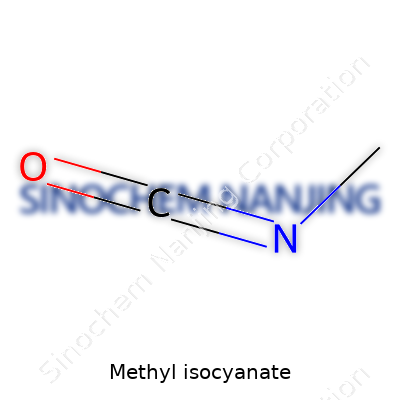
| Names | |
| Preferred IUPAC name | Methyl isocyanate |
| Other names |
MIC Isocyanatomethane Methylcarbamoyl Isocyanic acid, methyl ester |
| Pronunciation | /ˌmɛθ.ɪl aɪ.səʊ.saɪˈə.neɪt/ |
| Identifiers | |
| CAS Number | 624-83-9 |
| Beilstein Reference | 635873 |
| ChEBI | CHEBI:31396 |
| ChEMBL | CHEMBL572 |
| ChemSpider | 6646 |
| DrugBank | DB01980 |
| ECHA InfoCard | 100.003.243 |
| EC Number | 202-870-9 |
| Gmelin Reference | 603 |
| KEGG | C19152 |
| MeSH | D008766 |
| PubChem CID | 6327 |
| RTECS number | OS2100000 |
| UNII | QK487N220O |
| UN number | UN1248 |
| Properties | |
| Chemical formula | C2H3NO |
| Molar mass | 57.05 g/mol |
| Appearance | Colorless to pale yellow liquid with a sharp, pungent odor |
| Odor | Sharp, pungent, unpleasant |
| Density | 0.96 g/cm³ |
| Solubility in water | Reacts |
| log P | 1.16 |
| Vapor pressure | 348 mmHg (20°C) |
| Acidity (pKa) | 12.31 |
| Basicity (pKb) | 11.02 |
| Magnetic susceptibility (χ) | -15.3×10⁻⁶ cm³/mol |
| Refractive index (nD) | 1.382 |
| Viscosity | 0.410 mPa·s (20 °C) |
| Dipole moment | 3.62 D |
| Thermochemistry | |
| Std molar entropy (S⦵298) | 218.0 J·mol⁻¹·K⁻¹ |
| Std enthalpy of formation (ΔfH⦵298) | ΔfH⦵298 = 30.8 kJ/mol |
| Std enthalpy of combustion (ΔcH⦵298) | -2410.6 kJ/mol |
| Hazards | |
| GHS labelling | GHS02, GHS06, GHS08 |
| Pictograms | GHS02,GHS06,GHS05 |
| Signal word | Danger |
| Hazard statements | H331, H311, H301, H314, H317, H334, H410 |
| Precautionary statements | P210, P260, P273, P280, P284, P285, P302+P352, P304+P340, P305+P351+P338, P310, P320, P330, P337+P313, P363, P370+P378, P403+P233, P501 |
| NFPA 704 (fire diamond) | 3-3-2-W |
| Flash point | −7 °C (19 °F; 266 K) |
| Autoignition temperature | 220 °C (428 °F; 493 K) |
| Explosive limits | 6–18% |
| Lethal dose or concentration | LD50 (oral, rat): 50 mg/kg |
| LD50 (median dose) | LD50 (median dose) of Methyl Isocyanate: 50 mg/kg (oral, rat) |
| NIOSH | NIOSH: PS5800000 |
| PEL (Permissible) | PEL (Permissible Exposure Limit) of Methyl Isocyanate: 0.02 ppm (0.05 mg/m³) |
| REL (Recommended) | 0.02 ppm |
| IDLH (Immediate danger) | 17 ppm |
| Related compounds | |
| Related compounds |
Isocyanic acid Methylamine Dimethyl carbonate Methyl carbamate Ethyl isocyanate |



