Methoxylamine Hydrochloride: More Than Just a Laboratory Reagent
Historical Development
The journey of Methoxylamine Hydrochloride reaches back to the early waves of modern organic chemistry, when synthetic reagents transformed simple transformations into reliable building blocks for complex molecules. I remember my own introduction to this compound during graduate work, and I realized its role grows out of a fascinating period in chemical research. Organic synthesis pioneers knew neat tricks would not replace precision, so they searched for reagents like methoxylamine that could selectively react, protect, and reveal functional groups without causing everything else around them to fall apart. Methoxylamine Hydrochloride emerged as a star for converting carbonyl compounds to oximes, an old reaction, but one that never really left the research bench. By stabilizing methoxylamine with hydrochloride, researchers created a convenient, crystalline powder that solved storage and handling problems and kept opportunities open for all sorts of inventive reactions. From labs in the 1960s through today’s bustling medicinal chemistry suites, the role of methoxylamine hydrochloride never waned—if anything, it has become more prized as other protection strategies struggle with cost, environmental restrictions, or reproducibility.
Product Overview
Methoxylamine Hydrochloride lands on most chemical shelves as a white to off-white solid, easy to weigh and dissolve, important for both student and industrial chemist alike. It isn’t flashy, but its reliability keeps work moving rather than bogging chemists down in troubleshooting or second-guessing. Its most famous trick? Forming O-methyloximes with aldehydes and ketones, which helps with the stabilization, analysis, and downstream manipulation of many classes of molecules. Quick solubility in water and various polar solvents means it behaves well even outside ideal conditions. The compact salt form travels better, stores longer, and reduces the risks of volatile emissions, compared to the free base. Its use never seems limited to a single purpose because so many processes in organic chemistry lean on clean oxime formation, allowing researchers to isolate elusive intermediates, mask reactive sites, or chart paths to new drugs.
Physical & Chemical Properties
Methoxylamine Hydrochloride melts at temperatures over 150°C, often decomposing instead of giving a clean melt, so controlled heat is key in reactions. Its crystalline texture means that weighing is straightforward, which speeds up lab work and reduces errors. Water and alcohols swallow it fast, and this helps in setting up quick reactions. As a hydrochloride salt, it avoids the sharp odors and volatility of the base, which matters for researchers working at the bench without the best ventilation. Chemically, it’s both a nucleophile and a good source of the methoxylamine group—traits used in derivatizations, syntheses, and protective group strategies. Its ability to engage carbonyl groups with speed and selectivity continues to attract the attention of method developers and process chemists.
Technical Specifications & Labeling
Labeling tends to be clear and straightforward—anyone with experience in the lab quickly identifies what’s in the bottle and the right way to handle it. Many regulatory databases and catalogs give concentration and purity ranges, and these specs matter during sensitive analyses, such as in pharmaceutical or forensic applications. Purity above 98% is not unusual, and batch-to-batch consistency often determines acceptability for industrial or FDA-driven syntheses. Stability at ambient conditions aids logistics, though for long-term storage many keep it tightly sealed and cool to keep water out.
Preparation Method
Preparation usually means reacting methoxylamine—a compound on the reactive side—with hydrochloric acid. Simple, direct, and scalable, reflecting one of those chemical processes that never seems to go out of style. Producing the hydrochloride salt from the base provides an easier-to-handle product. Many labs steer clear of the more volatile and sometimes dangerous free base by isolating the hydrochloride immediately. For chemists, this approach acts as a risk reducer without limiting synthetic possibilities.
Chemical Reactions & Modifications
No conversation about methoxylamine hydrochloride stands complete without noting its powerful role in carbonyl protection and modification. Reactivity with aldehydes and ketones leads to methyloximes, making molecules easier to analyze by GC/MS or HPLC. Analytical chemists love the predictable chemistry and the way it improves chromatograms. Methoxylamine hydrochloride also turns up during transformations of sugars or in pharmaceutical syntheses, where clean manipulation of functional groups avoids endless purification cycles. The presence of the methoxy group adds selectivity compared to plain hydroxylamine reactions, and this subtle distinction means real savings in time and effort for teams racing to bring new molecules into the world.
Synonyms & Product Names
Anyone digging through catalogs or research papers runs into plenty of alternative names for methoxylamine hydrochloride. Mono-methoxyamine hydrochloride, or sometimes just MAM HCl, both point to the same compound. Familiarity with these synonyms saves wasted time during literature searches. In practice, the community recognizes all these names point to the same salt with straightforward chemistry, so confusion rarely slows progress.
Safety & Operational Standards
Labs around the globe know this salt comes with real safety considerations. Contact with skin or inhalation can cause irritation, so gloves and splash protection stay on the must-have list. In my own work, fume hoods have never seemed like overkill—fumes may seem faint at first, but chronic exposure to reagents adds up over long seasons of research. Spills clean up easily with water, but disposal goes with other nitrogen-containing organics, not down the drain. Emergency guides recommend plenty of ventilation, basic protective equipment, and careful weighing. Training new chemists in these protocols makes for sturdy teams and fewer accidents. Many institutions now favor electronic logs for chemical inventories and near-real-time access to safety sheets, moving away from handwritten notebooks that could easily go missing.
Application Area
Methoxylamine hydrochloride takes on a variety of tasks beyond the narrow confines of academic research. Pharmaceutical labs use it to mask sensitive carbonyls, convert drugs for analytical testing, or stabilize intermediates prone to degradation. In food science, it protects sugars and flavors during analysis. Metabolomics researchers count on it for derivatization, where precise, repeatable performance is crucial for reproducible results. Environmental labs use it to preserve analytes before GC analysis, especially when looking at pesticides or pollutants. It’s no exaggeration to say that a solid supply chain and accessible pricing affect not just the cost of research but the quality of data produced in these areas. Reproducibility remains a challenge in analytical methods, so a reagent with proven pedigree fits neatly into industry efforts to raise standards.
Research & Development
Methoxylamine hydrochloride supports ongoing efforts to streamline synthesis and analysis. Researchers at the bench and in process optimization teams look for ways to squeeze down costs, cut out unnecessary steps, and find derivatives for even greater selectivity. The salt’s role in carbohydrate chemistry sits front and center as advances in glycomics and glycobiology reveal new diagnostic and therapeutic targets. Chemical companies continue to examine sustainable production routes, aiming to cut down on byproducts, energy use, or environmental risks. Some recent interests push toward new formulations or blended salts for greater solubility or stability under extreme conditions—mirroring what has happened for other fine chemicals.
Toxicity Research
Historical reports point to toxicity with overexposure, though risks tend to be manageable under standard lab protocols. There’s an uptick in interest for more detailed toxicological data, especially as environmental and occupational standards evolve. Studies in rodents and cell cultures hint at organ-specific toxicity, though at levels far above those found in normal research settings. Reproductive and developmental studies play a growing role as regulators look more often at chronic, low-dose exposure risks for lab workers and downstream users. Here, collaborative work between academic labs, manufacturers, and regulators speeds up progress. The old days of piecemeal toxicity reports and anecdotal precautions now give way to systematic reviews, LC50 data, and transparent reporting of all known hazards.
Future Prospects
The future for methoxylamine hydrochloride looks promising, especially as new fields appear demanding the protection and transformation of delicate molecules. Expansion of green chemistry may nudge manufacturers toward lower-impact synthesis and packaging solutions. Advances in high-throughput synthesis and automation put stable, reliable reagents at a premium, driving further demand. Emerging areas like single-cell analytics and advanced metabolomics expect derivatization to be both mild and efficient, often with quantities not easily measured by eye. Combined with the need for data transparency and waste reduction, the role of established reagents like methoxylamine hydrochloride only grows, not shrinks. Chemists who remember the frustrations of unreliable batches or impure products know the value in a bottle of material that never throws off a planned synthesis or analysis. This compound bridges old chemistries and new challenges, shaping both daily practice and the broader map of how molecules get measured and manipulated in real life.
What is Methoxylamine Hydrochloride used for?
What Is Methoxylamine Hydrochloride Doing in the Lab?
The name “methoxylamine hydrochloride” rarely pops up in conversation unless you find yourself talking to a chemist or a pharmaceutical researcher. Yet, this simple white powder plays a surprisingly important supporting role in drug development, food testing, and even some environmental analysis. As someone who has spent long hours in both academic labs and small biotech companies, I’ve learned to appreciate the power a small molecule like this brings to the table.
Making Chemistry More Predictable
Methoxylamine hydrochloride isn’t flashy. Its main job is to react with specific parts of other molecules—typically aldehydes and ketones. In practical terms, you’ll see it used to form oximes, which are more stable and easier to analyze than their original forms. This reaction can look trivial, but the value shows up quickly during drug discovery. If you’re trying to find out how a candidate molecule behaves in the body, methoxylamine can help you lock its more reactive parts in a safe “chemical parking spot.” That stability lets chemists collect accurate data, especially during mass spectrometry and chromatography. These tools are the backbone of any lab focused on new treatments or forensic evidence.
Tracing What We Eat—and What We Shouldn’t
Public health teams and food safety labs rely on reliable chemical standards to keep things honest. Methoxylamine hydrochloride steps up in this setting by helping reveal hidden sugars and trace contaminants in complex foods. By stabilizing the reactive bits that might otherwise degrade before testing, food chemists can spot unsafe additives and keep the supply chain clean. This matters for anyone who scans the grocery store and assumes the quality promised on the label holds true at home.
Cleaning Up Environmental Analysis
Scientists tracking down pollutants in soil or water also put this compound to use. Toxic chemicals often hide or transform into hard-to-detect byproducts. Using methoxylamine hydrochloride, researchers can fish these hidden threats out of complex samples and measure them accurately. Years ago, I watched a local team run soil tests after a chemical spill, using this exact technique to learn which dangerous byproducts needed targeting for cleanup. That effort made a real difference for local farmers and families living nearby.
Trouble Spots: Cost, Access, and Safety
Methoxylamine hydrochloride has clear benefits, but a few snag points come up in the real world. The cost of high-purity chemicals keeps climbing, especially for small groups and teaching labs. Unsafe handling also poses a risk, as inhaling its dust or touching it without proper protection can cause illness. I have seen more than one rookie underestimate its irritant effects and regret ignoring their gloves. Safety protocols must be part of training, not just paperwork tucked away in a drawer.
Better Ways Forward
More training and clearer labeling can drop lab accidents and encourage smarter use. Bulk purchasing across departments helps shrink costs and cuts open-bottle time, which reduces waste. Some groups have started running short video tutorials on handling chemicals like methoxylamine hydrochloride—something that helped me a lot as a grad student, and could help others enter the field with less risk.
Trusted Chemistry Means Trustworthy Results
At the end of the day, methoxylamine hydrochloride matters because it helps make tricky science work reliably. By keeping our results consistent—whether in new medicines, safer foods, or cleaner water—this compound lets scientists, educators, and regulators protect public health and scientific progress in ways few people see, but everyone benefits from.
What is the molecular formula and structure of Methoxylamine Hydrochloride?
Digging Into the Substance
Methoxylamine hydrochloride is a compound that shows up quietly in laboratories but holds no less importance in organic synthesis and pharmaceutical research than the more famous names. The precise molecular formula is CH5NO·HCl, often written more simply as CH6ClNO. Looking closely, it combines methoxylamine (CH5NO) with a single molecule of hydrochloric acid (HCl), yielding a white, crystalline powder known for its stability and easier handling compared to pure methoxylamine.
From Atoms to Arrangement
Methoxylamine itself consists of a methyl group (CH3) bound to the oxygen of a methoxy group, which links directly to an amine group (NH2). The whole structure, in simple terms, can be drawn out as CH3ONH2, revealing a short but significant carbon-oxygen-nitrogen chain.
The hydrochloride part anchors a positively charged nitrogen (from the –NH2 group, which picks up an extra hydrogen to become –NH3+) to a chloride anion (Cl−). This salt form fights off volatility and makes shipping and measuring much safer, especially in environments that care deeply about precision and consistency, like pharmaceutical development and chemical synthesis.
Real-World Use and Significance
Working with methoxylamine hydrochloride isn't just a matter of mixing up batches and writing reports. I’ve seen colleagues rely on it for making oximes—these are nitrogen-containing compounds used to identify or protect carbonyl groups in larger molecules. One mistake folks can make: underestimating how small differences in a molecule’s structure can impact an entire project. Methoxylamine hydrochloride’s unique arrangement allows it to react selectively, which gives chemists more control over complex multi-step syntheses.
Real safety concerns exist when handling pure methoxylamine—it evaporates fast and can cause headaches or more severe symptoms if mishandled. The hydrochloride salt brings the benefit of much lower vapor pressure. People who spend hours in a lab know that safer, more stable forms of chemicals keep both the research and the researchers in better shape.
Supporting Trusted Use
The use of methoxylamine hydrochloride in drug research isn’t new. Reports in peer-reviewed journals reflect its role in making intermediates for medicines such as antibiotics and antiviral agents. Having this kind of building block—stable, reliable—translates to less waste and fewer failed batches.
Quality control makes a big difference, especially in regulated industries. Using high-grade methoxylamine hydrochloride reduces risks of side-product formation, which can ruin an experiment or lead to expensive cleanups. It’s important to source the compound from reputable suppliers that provide COA (Certificate of Analysis) and trackable lot numbers, keeping both safety and results above board.
Practical Solutions for Common Issues
Storage conditions play a crucial role. Keeping methoxylamine hydrochloride in a tightly sealed container, away from moisture—even a small desiccator in a lab drawer—can help maintain its purity. Spills need prompt cleanup with plenty of ventilation. Room temperature storage suffices, and the compound's shelf life supports both small-scale experiments and longer projects.
With so many variables in research and industry, even a modest molecule like methoxylamine hydrochloride keeps showing how every detail in chemistry matters. The right formula, handled well, opens doors to reliable reactions and safer chemistry for everybody involved.
How should Methoxylamine Hydrochloride be stored?
Understanding the Substance
Methoxylamine Hydrochloride comes off as a harmless white powder at first glance, but looks deceive. Much like other fine chemicals in research labs, this compound sits near the top of the list for chemicals demanding respect. Known for its role in organic synthesis and analytical chemistry, it isn’t something you toss on a shelf and forget.
The Reason for Careful Storage
Experience shows: chemicals, even those that don’t explode or catch fire easily, can degrade or become dangerous if left unchecked. Methoxylamine Hydrochloride loves water in the air, soaking it up and changing properties. Some older bottles from my university lab caked themselves into crusty lumps just by sitting near a sink. Once moisture gets inside, the material might lose its edge for chemical reactions and could throw off results. Reliable data depends on a stable product.
Finding the Right Space
I’ve worked in labs where humidity sneaks in the back door. One trick is to store sensitive solids like this one in tightly sealed containers. Polyethylene bottles do the job, but always double-check that the seal clamps down tight. The container stays away from windows, away from benches near running water. Dry is the priority, right behind secure and cool surroundings. For me, that means a cabinet, on a dedicated shelf, nowhere near acids or bases that might set off unwanted reactions if there’s a spill.
Why Temperature Matters
Some think room temperature sounds safe, yet “room temperature” in a lab can swing wildly. Heat speeds up chemical changes. A cool cabinet—not a fridge packed with everything under the sun, just a basic storage cabinet—keeps things steady. The chemical won’t sweat in there, won’t transform by surprise. In chemical handling, stability keeps headaches away. I’ve seen students frustrated by erratic results, only to realize later that one reagent baked behind a window all summer.
Keep It Labeled, Keep It Accounted For
Mislabeled bottles confuse everyone, waste money, and, rarely, lead to scary surprises. Every bottle should have a clear label stating not only the name but also the date it came in and the person who last checked it. Quarterly checks—something I learned from an old supervisor—work wonders. That’s when you see if moisture snuck in, or if bottles were left open by mistake. Keeping an updated inventory helps track not just supply, but safety as well. You want to know where each chemical lives at all times.
Ventilation Does the Heavy Lifting
Nobody should ever store chemicals in enclosed, stuffy spaces where fumes might build up unseen. Even “stable” powders can release something into the air if left open. Good ventilation means fresh air, steady conditions, and no nasty whiff of chemical in the room. In my experience, keeping a fan moving or venting to outdoors pays off for everyone’s health.
Training and Access Control
The most expensive bottles and cabinets do nothing if people aren’t careful. Every new person in a lab should hear real stories of careless storage leading to ruined experiments or safety incidents. Passwords or locks on chemical storage areas keep out those tempted to cut corners or grab chemicals just to “see what happens.” In my early days, an open lab meant constant worry. Later, learning from places that stressed access logs and sign-outs, safety felt like everyone’s priority.
What is the purity and appearance of Methoxylamine Hydrochloride?
Why Purity Matters
Chemicals in the lab remind me of how a good meal starts with safe, fresh ingredients. Methoxylamine hydrochloride stands out in research and industry only when it is pure, and purity in this context sets the stage for everything else to work as it should. If you’re using this compound for analytical chemistry, drug development, or synthesis, impurities can wreck an experiment, alter results, or even create harmful byproducts. The accepted standard for purity is usually 98% or higher—sometimes 99% for the most sensitive work. That little extra makes a lot of difference. Imagine baking bread with a teaspoon of salt versus a teaspoon of sand; one mistake and your outcome changes in ways you may not notice until much later.
Appearance: More Than Just Looks
It’s easy to glance past how a chemical looks and just focus on numbers in a certificate, but scientists don’t roll that way. Methoxylamine hydrochloride, in its pure state, turns up as a white or almost white crystalline powder. I’ve seen it in the lab: clean white, not chalky, with a texture that almost feels soft but a little gritty between the fingers. Slight discoloration, clumping, or yellow tones hint that moisture, age, or contamination has crept in.
Sometimes, even a minor deviation in appearance points to trouble under the surface. You can’t skip this step. Even dusty glassware or exposure to light might mess with a compound like this, which tends to be sensitive to both. Strict guidelines exist for a reason—nobody wants to chase down a reaction failure that comes back to a batch gone slightly off color.
Risks Linked to Compromised Purity
Experiments depend on the predictability of the materials used. A less pure batch brings in unknowns. I’ve seen reactions stall or produce odd byproducts because someone cut corners sourcing chemicals. Analysis, like derivatization of ketones and aldehydes for GC-MS, has little tolerance for the unknown. Impurities mean missed targets, strange peaks, wasted money, and time down the drain. Reproducibility, which sits at the core of trust in science, can’t survive long with unpredictable reagents.
Verifying Purity and Appearance in Practice
Sure, you can read a datasheet, but getting hands-on always tells the real story. High-quality suppliers will hand over full certificates of analysis, and smart labs use NMR, HPLC, or melting point tests to check claims. Purity will show up in clear, consistent data. If methoxylamine hydrochloride is pure, its melting point sits tightly between 155-158°C. Off results spark more questions.
Experienced chemists know the smell: slightly fishy but not harsh. Fresh batches, stored dry and cool, hold steady longer. Opening a container, I watch for clumping, changes in color, or a signal of moisture infiltration—immediate red flags for any work requiring reliable numbers.
Better Practices Going Forward
Investing in reliable suppliers takes work but pays off. I suggest buying from those who provide transparent analytical data and strong customer support. Training staff to recognize visual cues and keep records makes a difference, especially in multi-use labs. Good storage—sealed, low humidity, and light-protected—preserves both purity and appearance. Auditing chemical stocks and using older batches first reduce waste and surprises.
At the end of the day, paying attention to details with methoxylamine hydrochloride means higher confidence in every result. Every experiment and process step built on trust starts here—and that’s got real value for both science and industry.
Are there any safety or handling precautions for Methoxylamine Hydrochloride?
Getting Real About Chemical Safety
Working with chemicals in any lab, especially with something like methoxylamine hydrochloride, isn’t just about knowing formulas or pouring liquids. It means respecting what these substances can do, both the good and the bad. Over the years, many new chemists and students learn a harsh lesson—no bottle is too simple to demand attention, and methoxylamine hydrochloride fits right in that category.
Understanding the Risks
Methoxylamine hydrochloride sits on the shelf looking pretty harmless. Looks deceive. It can irritate your skin, eyes, and respiratory system. A fume hood becomes your best friend with this stuff. I’ve seen folks skip basic glasses or gloves for “just a quick prep run” and end up with red, itchy hands. Inhaling the dust burns, and nobody wants to blow their nose and see blood—yes, it happens. The material’s Safety Data Sheet points out risks like vomiting, coughing, or worse if you breathe it in or get it on your skin. There’s also the broader issue of cumulative exposure, something chemists busy with derivatization reactions often ignore.
No Shortcuts With PPE
Personal protective equipment forms a line between getting the job done and getting hurt. Lab coats, nitrile gloves, and tight-fitting goggles protect from splashes or accidental spills. Methoxylamine easily finds the smallest crack in your caution. One bad glove or a loose goggle strap, and you’ll know it by the sting. Wearing protection consistently becomes second nature after seeing a few accidents firsthand.
Keeping the Workspace Clean
Clean and clear benches save lives—or at least save a lot of paperwork and apologies. Methoxylamine evaporates, gets airborne, and leaves residues. I always keep paper towels or spill kits within arm’s reach. Spilled powder sticks to surfaces and clothing; just a brush with your hand transfers it somewhere you didn’t plan. Wet spills create toxicity through skin contact, so blotting instead of wiping helps stop the spread. Small steps like these change the tone in a lab and keep mistakes from turning into emergencies.
Disposal and Storage: Forgetting Is Not an Option
Containers with tight-fitting lids, labeled clearly, sit on the correct shelf. Never on the top, never low enough for a foot to knock over. Alcohol-resistant gloves and a dedicated waste jug for methoxylamine solutions keep cross-contamination out of the picture. Waste collection must follow local hazardous regulations. Once, I found a forgotten bottle pushed behind shared supplies, crusted with solids—accidents waiting for someone to grab the wrong container. Audits stop stuff like that, but personal discipline makes a bigger impact.
Thinking Long-Term in the Lab
People build habits in the lab. Someone skipping handwashing, reusing gloves, or blowing out powder residues sets a tone. Good habits spread just as fast. Most labs I learned from ran short refresher huddles where everyone—undergrads, postdocs, technicians—walked through safe handling of frequent reagents. Investing in a culture of open discussion pulls up everyone’s safety game, not just for methoxylamine hydrochloride but for whatever the next bottle brings.
Taking Ownership Means Safer Labs
Every chemical teaches its lesson if you listen. Methoxylamine hydrochloride tells you not to rush. Putting the right training and respect in place means fewer emergencies, smoother experiments, and more trust between people who share the bench. No one wants to be the reason an ambulance shows up at 3 pm on a workday. Safety sticks for life, and everyone benefits.
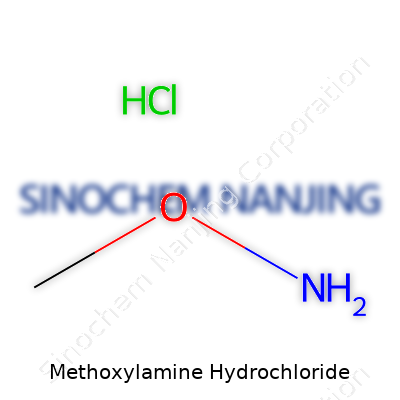
| Names | |
| Preferred IUPAC name | Methoxyamine hydrochloride |
| Other names |
Methoxyamine hydrochloride Methoxyhydroxylamine hydrochloride Hydrochloride of methoxyamine |
| Pronunciation | /mə-ˌthäk-sə-ˈleɪ-miːn ˌhaɪ-drəˈklɔːrˌaɪd/ |
| Identifiers | |
| CAS Number | 593-56-6 |
| Beilstein Reference | 87868 |
| ChEBI | CHEBI:85173 |
| ChEMBL | CHEMBL318457 |
| ChemSpider | 74218 |
| DrugBank | DB04220 |
| ECHA InfoCard | 100.042.938 |
| EC Number | “214-684-5” |
| Gmelin Reference | 80255 |
| KEGG | C00787 |
| MeSH | D008735 |
| PubChem CID | 12004 |
| RTECS number | UU5950000 |
| UNII | MJ8HO1T3UL |
| UN number | UN2811 |
| Properties | |
| Chemical formula | CH5NO·HCl |
| Molar mass | 81.54 g/mol |
| Appearance | White to off-white solid |
| Odor | Amine-like |
| Density | 1.13 g/cm³ |
| Solubility in water | soluble |
| log P | -2.2 |
| Vapor pressure | <0.01 mm Hg (25°C) |
| Acidity (pKa) | 5.98 |
| Basicity (pKb) | 8.75 |
| Magnetic susceptibility (χ) | -54 × 10⁻⁶ cm³/mol |
| Refractive index (nD) | 1.552 |
| Dipole moment | 1.53 D |
| Thermochemistry | |
| Std molar entropy (S⦵298) | 111.6 J·mol⁻¹·K⁻¹ |
| Std enthalpy of formation (ΔfH⦵298) | “-68.0 kJ/mol” |
| Std enthalpy of combustion (ΔcH⦵298) | -391 kJ mol⁻¹ |
| Hazards | |
| Main hazards | Harmful if swallowed, causes skin and eye irritation, may cause respiratory irritation. |
| GHS labelling | GHS02, GHS07 |
| Pictograms | GHS05,GHS07 |
| Signal word | Danger |
| Hazard statements | H302: Harmful if swallowed. H315: Causes skin irritation. H319: Causes serious eye irritation. H335: May cause respiratory irritation. |
| Precautionary statements | P261, P264, P271, P280, P301+P312, P302+P352, P304+P340, P305+P351+P338, P312, P330, P337+P313, P403+P233, P501 |
| Flash point | 123 °C |
| Lethal dose or concentration | LD50 (oral, rat): 105 mg/kg |
| LD50 (median dose) | LD50 (median dose): Oral rat LD50 = 660 mg/kg |
| NIOSH | KM2450000 |
| PEL (Permissible) | Not established |
| REL (Recommended) | 5g |
| IDLH (Immediate danger) | Not established |
| Related compounds | |
| Related compounds |
Hydroxylamine hydrochloride Methylamine hydrochloride Ethoxyamine hydrochloride Methoxylamine sulfate Methoxylamine Hydrazine hydrochloride |



