Mercurous Iodide: Looking at the Past, Weighing the Present, and Questioning the Future
Historical Development and Product Overview
People have been making sense of chemicals in their laboratories for centuries, always looking for new reactions or unexpected colors that signal a discovery. Mercurous iodide came up in this spirit, first recognized in the early 19th century. Chemists noticed its striking yellow hue and started figuring out how it behaved. It wasn’t just an academic exercise, either; curiosity about mercury-based compounds was always strong, even if people didn’t realize the hazards lurking inside. You won’t hear much about mercurous iodide in the average chemistry class today, yet it had its moment as an example of how scientists chased new drugs, disinfectants, and reagents, often pushing forward with only partial knowledge about side effects or long-term risk. Over time, most practical use faded in medicine, but the history sticks around as a reminder that safety and efficacy need to catch up with excitement in the lab.
Physical and Chemical Properties
Anyone who’s worked with inorganic chemistry remembers that first time opening a jar of mercurous iodide. The powder shows off a lemon-yellow color that stands out on the benchtop. It doesn’t dissolve much in water, keeping mostly to itself. This material breaks down in light, making storage and handling a real concern—especially back in the days before tightly controlled laboratory conditions. Its chemical structure, Hg2I2, sets it apart from other iodine or mercury compounds. There’s a simplicity there, but it disguises some tricky behavior. Even small impurities or exposure to heat and light can kick off a cascade of changes, giving off iodine and turning the color from yellow to red, or sometimes even gray. You get the feeling this isn’t something you just leave open by the sink.
Technical Specifications & Labeling
Labels on chemical bottles serve as lifelines in laboratories. They let you know, without a doubt, what you’re handling and the rules you need to play by. With mercurous iodide, the information on toxicity jumps right off the label. Proper handling instructions, storage recommendations, and hazard warnings take up more space than with many other laboratory standards. Purity matters, especially for technical or research work, since contaminants make reactions unreliable and threaten safety. Everyone who deals with potentially hazardous chemicals learns to respect hazard pictograms, precautionary statements, and required personal protective equipment. Mercury poisoning isn’t a historical worry—its effects, from neurological damage to environmental contamination, make it a modern-day concern, too.
Preparation Method
Preparing mercurous iodide in the lab isn’t a basic high school project. The classic approach involves mixing a soluble mercurous salt, like mercurous nitrate, with potassium iodide in an aqueous solution. The yellow precipitate forms right away. It needs thorough washing and protection from sunlight to prevent decomposition. Years ago, some labs did this synthesis as a teaching tool to show the principles of precipitation and light sensitivity, but regulatory caution has made that less common. These days, many schools skip these experiments, focusing attention on safety and greener chemistry principles instead.
Chemical Reactions & Modifications
Mercurous iodide stands out for its stage tricks—reactivity and color changes under light, heat, or in the presence of other chemicals. Chemists note that it decomposes, releasing iodine, fading its yellow color, and sometimes forming compounds like mercuric iodide if conditions line up right. Mercury reacts with halides in ways that intrigue anyone working in synthetic or physical chemistry, especially given the complex balance of oxidation states. This compound might interact with acids, ammonia, or other halogen-based chemicals—with each experiment demanding careful record-keeping and solid lab instincts. It’s not the sort of thing people handle lightly, a fact that really hits home once you’ve seen what spilled mercury can do to a workspace or a set of instruments.
Synonyms & Product Names
In science, a single material often carries a suitcase full of names. For mercurous iodide, “mercury(I) iodide”, “Hg2I2”, or even old-brand pharmacy names pop up in old journals and catalogs. This can be confusing for people jumping between texts or searching archives. These naming variations echo back to a time before chemical standards locked names in place. Each synonym or new moniker brings its own set of research and documentation challenges—especially when tracking down industrial uses or safety studies that don’t always use current nomenclature. It’s a good reason for anyone researching legacy chemicals to stay fluent in the language of their field.
Safety & Operational Standards
From a practical standpoint, nothing trumps safety with mercurous iodide. Mercury compounds come with a list of possible health problems, from tremors and memory loss to organ damage and carcinogenic risks. In the lab, this means strict protocols for handling, including fume hoods, sealed containers, and full PPE. Accidents or improper disposal present long-lasting hazards for people and the environment. Disposal of even small quantities involves calling in hazardous waste professionals, not just washing residues down the sink or tossing bottles in the trash. Regulatory agencies, both local and international, keep a tight leash on transport, storage, and use, forcing chemists to rethink the old idea that anything in the chem closet is fair game for a quick demo.
Application Area
Mercurous iodide's main claim to fame came early on in medical applications, with doctors and pharmacists giving it a shot as a treatment for infections and skin diseases in the 1800s. Hindsight shows this wasn’t always a wise idea, especially since mercury itself brings serious side effects. Science has moved past using this particular compound for medicine, but it stuck around the periphery of research and teaching for decades. Some analytical labs used it as a reagent or reference in specific chemical tests, especially for halide detection and reaction studies. Any modern application draws strict scrutiny, both from ethics boards and from regulatory watchdogs, since balancing benefit against risk has become non-negotiable.
Research & Development
The role of mercurous iodide in research has shifted as science started to prioritize both safety and efficiency. In the past, its unique reactivity and ability to precipitate out other compounds gave it a niche in inorganic chemistry. Research groups in the past sometimes used mercurous iodide to explore solid-state reactions, halide exchanges, or photo-sensitive systems. Modern technology, especially advances in analytical equipment and green chemistry, has left fewer reasons to rely on this compound for cutting-edge work. Instead, labs look to safer alternatives or harness digital models to avoid benchwork risks. Still, the careful study of historical data on mercurous iodide can inform how researchers develop new, less toxic analogs in fields like materials science or electronic component design.
Toxicity Research
Conversations on mercurous iodide always lead to the same bottom line: toxicity. Studies have highlighted the wide range of acute and chronic effects tied to mercury exposure—impaired neurological functions, organ damage, developmental delays in children, and high-profile environmental disasters. Animal studies show accumulation in tissues, and there’s reason to believe vapor or dust exposure poses real occupational health risks. Most developed countries now regulate mercury from cradle to grave, tracing each gram from import or synthesis to eventual destruction or permanent storage. Healthcare and environmental activists keep pressing for better monitoring of legacy contamination sites and real remediation, not just best intentions or wishful thinking. Education campaigns focus on keeping mercury out of landfills and waterways, showing the lingering consequences of old chemical habits.
Future Prospects
Looking at where things stand, mercurous iodide probably won’t make a big comeback in the chemical industry, pharmaceuticals, or teaching. Too many safer, more predictable alternatives exist for most applications. Its legacy sits primarily in the “historically important” column, not the “up-and-coming” one. That said, studying materials like mercury(I) iodide does offer some insights—it teaches the next generation of scientists and policymakers about the long tail of chemical decision-making. The environmental legacy of mercury chemistry still challenges whole communities and governments to find creative solutions for cleanup and prevention. Future prospects point toward surveillance and stewardship, not rediscovery. Innovation in chemistry now prizes safety, transparency, and sustainability over novelty for its own sake. The chapter isn’t entirely closed, but the focus has shifted decisively.
What is Mercurous Iodide used for?
Understanding Mercurous Iodide
Mercurous iodide, a bright yellow substance, used to show up in old pharmacy bottles and chemistry sets. The label on the jar usually read “Hg2I2”, which means it contains mercury and iodine in a chemical partnership. To those of us who spent time with glassware and powders in labs, the name doesn’t exactly recall pleasant memories. Mercury, after all, scares most folks for good reason. Mercury compounds tend to be toxic, sticking around in the body and the environment.
Use in Medicine: A Risky Past
Doctors and pharmacists a hundred years ago saw mercurous iodide as a useful drug. It went into pills and ointments. People took it for syphilis, skin infections, and even as a remedy for constipation. The thinking: mercury compounds could kill germs and flush out “bad humors.” Stories came out about its ability to get rid of parasites and fight infections. The trouble was, it poisoned patients just as often as it helped them. Medical knowledge didn’t have the benefit of long-term studies, so effects like kidney damage and neural problems surprised both doctors and patients.
These days, modern medicine wants medicines that heal more people than they harm. Data drives every decision. Research into safer antibiotics, antivirals, and vaccines made mercurous iodide obsolete. The U.S. Food and Drug Administration and similar agencies across the world banned mercury-based therapies. If a doctor tried to prescribe mercurous iodide today, the local medical board would likely step in. There are better, safer tools for every case where mercurous iodide once filled a role.
Still a Player in the Lab
Most people who work with mercurous iodide now wear lab coats, not white coats. Chemistry textbooks use it to teach basic concepts. Add iodide ions to a solution of mercurous nitrate, you see a yellow cloud form—classic precipitation reaction. In physics research, thin films of mercurous iodide help show how electrical current shifts under X-ray beams. Its ability to register X-rays stems from the heavy mercury atoms, which absorb this kind of radiation really well. Most new X-ray detector materials try to avoid toxic elements, but in some rare cases, scientists can’t find a replacement that works as well.
Uses outside the lab don’t crop up often. Regulatory rules lock mercury sources away. Labs have to count their grams and document disposal. Simple chemistry demonstrations use tiny amounts, and strict rules mean any spills or mistakes don’t wind up in rivers or landfills.
Lessons in Caution and Progress
Chemicals tell stories about the times people lived in. Mercurous iodide’s medical use points to a world desperate for cures, often willing to take big risks. Its story stands as a warning: just because something works in the short term doesn’t mean the long term will go the same way. Old bottles of mercurous iodide sometimes turn up in estate sales or inherited science kits. If you spot one, call your local hazardous waste team—never open or use the powder.
We’ve learned to watch for the hidden costs of “miracle cures.” Scientists developed new ways to tackle disease without endangering people in the process. Teachers and researchers now use mercurous iodide as a lesson: respect chemistry, don’t repeat mistakes, and always look for smarter, safer answers.
What are the safety precautions for handling Mercurous Iodide?
Not Your Average Lab Chemical
Mercurous iodide doesn’t show up in most kitchens or garages. People working in labs or schools sometimes see it, a brick-red powder with a long history in chemistry sets. I’ve always respected compounds that sound a little old-fashioned, because their risks don’t get as much airtime as modern synthetic dangers. Too many folks, especially students, can mistake a pretty red chemical for something harmless, then pay a price.
Hazards Hit Hard
One thing stands out with mercurous iodide: both mercury and iodine pack a punch in biology. Mercury can hit the nervous system, a lesson chemists learned the hard way generations ago. It doesn’t take a big dose to start causing problems. Headaches, tremors, and memory slips can sneak up after exposure. That twitching, metallic taste, or blurriness? Signs the chemical gained the upper hand. Studies from the Agency for Toxic Substances and Disease Registry show mercury exposure can leave permanent effects, especially in kids.
Iodine’s not as insidious as mercury, but as any lifeguard who’s spilled tincture on open skin knows, it can irritate pretty fast. Mix the two in a powder, and the risks stack up fast — especially if the powder gets airborne or spills outside a fume hood. I’ve seen forgotten bottles crusted with red dust hidden behind equipment, waiting to turn into an accident.
Personal Protection Isn’t Optional
It starts with gloves. Nitrile holds up better than latex for this kind of work, and should always be fresh — an old glove that’s split near the thumb won’t protect anyone. Good goggles stay on the whole time. One splash, even a fleck of dust kicked up while weighing, can end up in an eye. Lab coats close snug at the wrists; rolled-up sleeves don’t cut it.
A fume hood acts as insurance. Some folks resist the hassle, especially on quick tasks. That’s a mistake. Even light weighing can make dust; heavier use demands proper ventilation. Rooms need air movement away from noses and mouths. I’ve learned to never ignore the fan, even if the task seems simple.
Handle and Store It Like It’s Trouble
Everyone sets up workspace before they open a chemical. Done right, the benchtop stays clear, with spill kits sitting in reach. Wiping down scales and counters with damp cloths afterward grabs any residue. Waste containers should grab every scrap, label facing out. In storage, sealed bottles sit low — not above head level — with a tough secondary container in case of breakage.
Mercurous iodide doesn’t belong near acids, heat, or anything likely to make it turn into a vapor. Mercury vapor forms easily, especially if things get warm, and once it escapes it’s hard to get out of a building. Signage helps warn others away from shelving or refrigerators holding this compound.
If Spills Happen
Mistakes still happen, even for careful workers. Small spills call for sulfur or special mercury clean-up powder — not just a broom and dustpan. Anything used in the cleanup goes straight to a hazardous waste bin. No exceptions. For bigger spills, the area gets evacuated and the building’s safety crew takes over right away. Experience has shown trying to “fix” large spills solo can leave people exposed or lead to costly contamination.
Training Builds Confidence
Reading about safety matters, but it won’t substitute for regular hands-on training. In every place I’ve worked, the safest labs ran walk-throughs on chemical handling, showed spill kits in action, and made every newcomer practice using the fume hood. These are not busywork tasks. Respect for chemicals like mercurous iodide comes from knowing exactly how to respond, long before anything goes wrong.
Is Mercurous Iodide toxic or hazardous?
Why Caring About Chemical Safety Matters
Most people don’t fuss much about the colorless powders or vivid orange crystals in a lab, but mercurous iodide should get your attention real quick. This compound appears in academic chemistry sets, research labs, and sometimes in old reference books pretending to be a useful medicine. More often, it represents a lesson in chemical vigilance.
The Real Risks Behind the Name
Mercurous iodide — chemical formula Hg2I2 — looks innocent enough, but the “mercurous” part gives away the main story. Mercury in any form deserves respect and a healthy bit of worry. There’s mercuric (Hg2+) and mercurous (Hg1+), both tricky. Sometimes people think “less oxidized” means “less dangerous,” but that logic breaks down with mercury’s toxic games.
Mercurous iodide breaks down easily, releasing both mercury and iodine. Breathing dust, getting some on your skin, or—worse—eating it opens the door for these elements to enter your body. Mercury is notorious for messing with the nervous system. It may cause tremors, memory problems, and even kidney damage. The science is clear. According to the CDC and ATSDR, any mercury exposure over time, even at low levels, can stack up potential harm, especially if mishandled or poorly stored.
Old Medicines, New Problems
I once browsed a secondhand bookstore and found an old medical text suggesting mercurous iodide as a treatment for syphilis and goiter. Manuals from the early 1900s and before often list “red mercury iodide” as an all-purpose drug. That struck me as wild, knowing that even a small spill in a school chemistry class can turn into a hazardous waste call. Scientists pulled mercurous iodide out of pharmacy shelves for good reason. The modern approach to medicine rejects anything that builds up toxic heavy metals in the body, with side effects worse than the diseases they’re meant to treat.
Environmental and Occupational Hazards
Mercurous iodide has environmental baggage, too. Its improper disposal contaminates soil and water, with mercury sneaking its way up the food chain. Fish in affected waterways show the story: mercury contamination means families can’t safely eat their catch. The EPA’s records highlight plenty of cases where mercury compounds linger in local environments long after the original spill.
Anyone working in a lab or handling this compound at any scale has to pay extra attention to personal protective equipment, good ventilation, and proper waste disposal. The rules exist for a reason: mercury exposure can have lifelong consequences. The chemicals we ignore tend to come back and bite communities years later, in unexpected ways.
Moving Toward Safer Practices
Chemistry keeps evolving. Teachers and researchers swap out hazardous compounds for greener ones all the time. For every lab activity featuring a mercury compound, there’s now a safer demonstration using iron salts or other alternatives. In classrooms, school administrators support updated chemical storage policies, and training now covers how to spot risky bottles before things get out of hand.
With a little knowledge and institutional backing, the odds of a risky spill or chronic exposure drop fast. I’ve seen older labs trade out legacy stocks for safer supplies, and students still come away just as curious about the magic of science, minus the long-term risks.
What Responsible Management Looks Like
If your workspace still keeps mercurous iodide on the shelf, it’s time for an audit. Hazard assessments, controlled storage, and clear labeling are always worth the trouble. Partnering with hazardous waste disposal companies makes the process easier, and local agencies can help point out best practices. The more people take responsibility, the fewer mercury horror stories schools and workplaces need to tell.
How should Mercurous Iodide be stored?
Knowing What You’re Dealing With
Mercurous iodide pops up in labs every now and then, mostly for research or as a reagent in some chemical syntheses. It’s bright yellow, catches the eye, and doesn’t like sunlight or heat much. One solid rule with this compound — treat it with respect. Skin contact or inhalation isn’t worth the risk thanks to mercury content. Mishandling this stuff goes beyond ugly chemical burns; it creeps into health and the environment too.
What Experience Teaches About Safe Storage
Through the years, I’ve worked in spaces packed with hundreds of bottles, vials, and powders. Some labels faded, some containers cracked from age. Mercurous iodide doesn’t forgive carelessness; it stays stable for a while but loves to decompose if given a chance. Moisture, sunlight, hot air — all liabilities. I’ve seen containers start corroding faster than anyone expected, mostly in rooms with wild temperature swings or a careless janitor’s mop introducing water into storage cabinets.
Any time this material shows up, it deserves a dry, cool, and dark corner. Never store chemicals like this on open shelves. Lab cupboards with solid doors and no sources of vibration or heat make all the difference. Block out the sunlight, keep humidity low, and don’t toss it next to acids, bases, or anything reactive. Chemicals don’t argue—mixing mistakes invite toxic releases. Keep your iodine compounds away from oxidizing agents.
Container Choices Matter
After seeing glass bottles crack from careless stacking and plastic containers degrade over years, I swear by thick-walled glass with secure lids for mercurous iodide. Teflon-lined caps stand up to the iodine and mercury. Tape a clear, accurate label on the front; nobody should guess what’s inside, especially years down the line when memory fails. Leave a legible note with hazards, storage date, and emergency info in plain sight. Batch details save a mess if spills ever happen.
Regulations and Inspection: Not Just Red Tape
It’s easy to slack off with tight budgets and busy schedules, but this chemical earns regular inspections. I make a point to check storage areas monthly for leaks, crusty white dust, or faded labels. Regulations from agencies like OSHA and local authorities drive this routine, not just common sense. Fines can be eye-watering, but health risks leave longer scars. Disposal also comes with rules—never pour mercurous iodide down the drain or toss it in the trash. Specialized waste handlers take over at end of life.
Factoring Education and Training Into the Equation
I watched young lab techs reading safety data sheets like bedtime stories, but paperwork only gets you so far. Walking through storage rooms, physically checking on things, and training in spill response all guarantee better habits. Safety policies should be living documents, not binders collecting dust behind glass. Mistakes shrink with good habits—gloves, goggles, fume hoods, and a genuine culture of checking in with teammates.
Towards Safer Labs, One Step at a Time
Safety pays off over time. Remember every label, every warning, every temperature check. Running a busy lab, I never found a shortcut worth the risk. Every safe storage practice stacks up to a bigger win—protecting health, the environment, and a bit of hard-earned peace of mind at the end of the day.
What is the chemical formula of Mercurous Iodide?
Understanding Mercurous Iodide
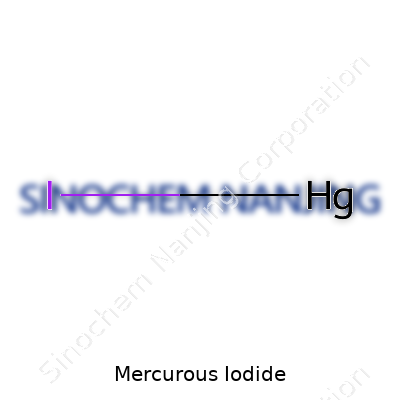
Mercurous iodide carries the chemical formula Hg2I2. Each molecule contains two mercury atoms and two iodine atoms. Instead of sitting around as individual atoms, the two mercury atoms actually pair up, creating a distinctive Hg–Hg bond. This distinctive structure stands out in chemistry and shapes how mercurous iodide behaves, both in labs and in industry.
Why Chemists Don’t Call It Mercury(I) Iodide For Nothing
The “Mercurous” part of the name points to mercury’s +1 oxidation state. Not all mercury compounds share this characteristic. Chemists use the term “mercurous” to flag compounds containing the Hg22+ ion instead of the more common +2 state. This peculiarity affects everything from solubility to stability, and even toxicity. With too many mercury compounds out there, getting the name and formula right avoids confusion, especially in labs, medicine, and industry.
Experience in the Lab: Dealing with Mercurous Iodide
Working with Hg2I2 in the lab, you recognize its pale yellow color. It breaks down under light. Light brings on a reaction, leading to the formation of elemental mercury, free iodine, and mercuric iodide. Past experience shows that handling it outside direct sunlight preserves its original properties. Chemists understand the risks and store it properly to avoid hazardous breakdown and mercury exposure. Safety measures like gloves and ventilation remain standard practice.
Toxicity and Environmental Concerns
Mental images pop up of mercury poisoning stories from history. Mercury compounds all share a toxic nature, but Hg2I2 especially stands out because it breaks down in light, spilling out elemental mercury that can easily vaporize at room temperature. Evidence from industrial spills highlights mercury’s persistence in the environment, showing up in water and food chains — fish caught in contaminated rivers tell this tale. Regulators ban or tightly control non-essential uses. At home, tossing broken thermometers or science kits into the trash won’t cut it, and community disposal programs help keep harmful compounds away from the environment and drinking water.
Medical Uses: A Cautionary Note from the Past
Some old medical books mention “yellow iodide of mercury” as a topical treatment for skin diseases and syphilis. But mounting evidence of side effects over the years — gum ulcers, tremors, and kidney trouble among them — made doctors change course. It’s a reminder: just because something finds use in medicine one decade doesn’t mean it should stick around forever.
Best Practices and Safer Choices
Lab workers can replace mercurous iodide with less hazardous options for educational demos and most analytical procedures. Alternatives mean less danger of mercury exposure and fewer worries about environmental harm. Later advances in analytical chemistry even show better accuracy using digital methods instead of relying on heavy metals.
Solid Facts for Better Decision-Making
Knowing the right chemical formula for materials, especially tricky ones like mercurous iodide, lets chemists and regulators track them, replace them, or handle them safely. Science classes and labs can use this as a conversation starter for balancing invention, health, and responsibility when handling substances with a legacy of risks.
| Names | |
| Preferred IUPAC name | iodidomercury(I) |
| Other names |
Mercurous iodide Mercury(I) iodide Diiodomercury Mercury subiodide |
| Pronunciation | /ˈmɜːrkjʊrəs aɪˈəʊdaɪd/ |
| Identifiers | |
| CAS Number | 7774-29-0 |
| Beilstein Reference | 358669 |
| ChEBI | CHEBI:86459 |
| ChEMBL | CHEMBL1201587 |
| ChemSpider | 22841 |
| DrugBank | DB14531 |
| ECHA InfoCard | 040000011299 |
| EC Number | 231-873-8 |
| Gmelin Reference | 82219 |
| KEGG | C18703 |
| MeSH | D008515 |
| PubChem CID | 16211576 |
| RTECS number | OV7525000 |
| UNII | 9W93V58V8K |
| UN number | UN1638 |
| CompTox Dashboard (EPA) | DTXSID5020700 |
| Properties | |
| Chemical formula | Hg2I2 |
| Molar mass | 454.39 g/mol |
| Appearance | Pale yellow powder |
| Odor | Odorless |
| Density | 8.36 g/cm³ |
| Solubility in water | insoluble |
| log P | -6.4 |
| Vapor pressure | Negligible |
| Magnetic susceptibility (χ) | −82.0·10⁻⁶ cm³/mol |
| Refractive index (nD) | 2.7 |
| Dipole moment | Zero Debye |
| Thermochemistry | |
| Std molar entropy (S⦵298) | 163.5 J/(mol·K) |
| Std enthalpy of formation (ΔfH⦵298) | -75.0 kJ/mol |
| Pharmacology | |
| ATC code | V09AA12 |
| Hazards | |
| Main hazards | May be harmful if swallowed, inhaled, or absorbed through skin; causes irritation to skin, eyes, and respiratory tract; may cause mercury poisoning. |
| GHS labelling | GHS02, GHS07, GHS09 |
| Pictograms | Health Hazard, Exclamation Mark, Environment |
| Signal word | Danger |
| Hazard statements | H300 + H332: Fatal if swallowed or if inhaled. |
| Precautionary statements | Wash thoroughly after handling. Do not eat, drink or smoke when using this product. |
| NFPA 704 (fire diamond) | 1-0-0-OX |
| LD50 (median dose) | LD50: Oral-rat LD50: 20 mg/kg |
| NIOSH | MW4550000 |
| PEL (Permissible) | 0.1 mg/m3 |
| REL (Recommended) | 10 mg/m3 |
| IDLH (Immediate danger) | IDLH: 10 mg/m3 |
| Related compounds | |
| Related compounds |
Mercury(II) iodide Mercurous chloride Mercury(II) chloride |



