Mercuric Oleate: Past, Present, and Emerging Insights
Historical Development
Mercuric oleate carries stories from the days when chemistry blurred the lines between medicine and alchemy. Many of the classic mercurial compounds first appeared in pharmacies during the 19th century. Pharmacists sought out alternatives to earlier, often harsher, mercury preparations, and began mixing mercury salts with fatty acids to temper irritancy and boost absorption. Mercuric oleate rode that wave, finding its place in ointments and liniments, not just for rash treatments but as answers for skin and soft tissue diseases. Chemists saw the unique opportunity to harness both the antimicrobial punch of mercury and the soothing, spreadable qualities of natural plant-based oils. This mix of tradition, scientific experimentation, and a willingness to take calculated risks marked a time when chemists tried and learned right at the bench, often writing their own safety guides from experience.
Product Overview
This compound brings together mercury(II) ions and oleic acid, the fatty acid you might find in olive oil. The result delivers a pale, yellowish or brownish solid, often prepared as a paste or ointment, though sometimes handled as a powder. In the industrial era, its use moved away from pharmacy shelves, becoming a specialty chemical only found in labs and, historically, as a biocide. The modern product finds itself increasingly rare in open commerce, regulated for both human and environmental safety. Its story forms a cautionary but fascinating chapter in how society deals with chemicals once thought benign.
Physical & Chemical Properties
Mercuric oleate stands as a complex, with a formula that combines Hg (mercury) and oleate (C18H33O2). The chemical generally appears as an amorphous, sticky mass that doesn’t quite crystallize. You won’t find it dissolving readily in water; it prefers organic solvents like chloroform or benzene. Chemists note its strong odor, brought on by both the mercury and the fatty acid backbone. Its melting point floats around 60 to 70°C, and the compound holds steady under mild heating but eventually starts to break down well below 200°C, releasing toxic fumes of mercury vapor. Its density outweighs water. Chemists watch its sensitivity to light and air, because oleate’s unsaturation can drive it to form peroxides or yellow with age, and the mercury itself can undergo redox changes that alter both potency and toxicity.
Technical Specifications & Labeling
Labels for mercuric oleate reflect its hazardous nature. Transport and storage containers almost always carry the death’s head skull and crossbones, emphasizing acute toxicity. The label specifies minimum content of mercury (typically above 50%) and maximum free acid content, noting exact protocol for handling. Most technical data sheets demand tightly sealed, light-protected storage, away from acids or alkalis. Each specification gives details on appearance, water solubility, and residue on ignition, and users must document chain of custody. Regulations under local and global frameworks—such as REACH in Europe and the U.S. EPA’s TSCA—mean distributors keep ever-tighter controls on purity, identification, and transportation recordkeeping, with Safety Data Sheets cautioning against inhalation or skin contact, and detailing first aid steps.
Preparation Method
Chemists commonly prepare mercuric oleate by reacting a solution of mercuric nitrate or chloride in alcohol with sodium oleate, itself prepared from oleic acid and sodium hydroxide. The reaction, usually stirred at room temperature or slightly warmed, separates the mercuric oleate as a sticky precipitate. Careful filtration and washing remove residual salts. Some labs dry it under gentle heat under vacuum to yield a smoother, paste-like mass. Researchers tried direct reaction with mercuric oxide and oleic acid as well, but this route often suffers from inconsistent yields and incomplete reaction. Preparing this compound safely demands an experienced hand, steady ventilation, use of gloves, and keen respect for the volatility and toxicity of mercury.
Chemical Reactions & Modifications
Mercuric oleate, built on a backbone of double bonds, offers some routes for chemical modification. Exposure to strong acids liberates oleic acid and mercury(II) ions; bases can break the structure, forming sodium oleate and insoluble mercury salts. Photo-oxidation changes the oleate chain, causing yellowing and production of breakdown products, including potential peroxides. Reductive environments sometimes shift the mercury from Hg(II) to lower oxidation states, which influences both its reactivity and safety profile. In organic synthesis, this fatty acid complex occasionally gets used as a mercury source, though safer and purer options nearly always get the nod in modern applications.
Synonyms & Product Names
Mercuric oleate goes by several names, showing up as mercury(II) oleate, mercurous oleate, or mercuric salt of oleic acid in older technical books. It appears in catalogs as C18H33O2Hg or, less precisely, as "oleic acid mercury salt." Pharmacopeias occasionally refer to it only as "unguentum hydrargyri oleatum" or "oleum hydrargyri oleatum." The compound’s presence in commercial heritage products like “Blue Ointment” or “Oleated Mercury Liniment” gave it a foothold with both doctors and veterinarians, though modern regulations have all but erased these terms from accessible labeling.
Safety & Operational Standards
Working with mercuric oleate requires a strict adherence to safety rules that stem from decades of well-documented risk. Even small quantities release hazardous mercury vapors—much faster in open or heated systems—so respiratory protection and chemical fume hoods become basic necessities. Contact with skin brings serious risk of absorption, with systemic toxicity not far behind. Any spill or residue requires prompt cleanup with specialized mercury-absorbing compounds, and hospitals saw real cases of chronic poisoning among workers before widespread adoption of strong standards. Waste management introduces challenges. Authorities require that every residue goes through specialized mercury reclamation channels or hazardous waste handlers. Regulatory agencies spell out not just handling, but routine blood or urine checks for workplace exposure, and research labs need clear, written protocols for accidental exposure and decontamination.
Application Area
Historically, physicians leaned heavily on mercuric oleate for topical antimicrobial use—especially during the early 1900s. Dermatologists treated syphilitic lesions and chronic ulcers, often relying on the penetrating power of its oily base to reach deeper tissue. Veterinary practitioners applied it to animals for wound management and local parasite control. Later, use expanded to industrial antifungal treatments for leather and fiber, and even as a short-lived additive in specialized paints. Every application, though, now sits under review. The drive to reduce mercury in all environments—spurred by worldwide agreements like the Minamata Convention—means that research facilities and a handful of highly specialized industrial uses are all that remain. Its reputation as a legacy compound reflects growing awareness about sustainable chemistry.
Research & Development
Recent research shifted from developing new uses towards uncovering environmental and biological consequences. Analytical chemists built more sensitive techniques for mercury detection, pioneering atomic absorption and cold vapor spectrometry partly to trace compounds like mercuric oleate. Experimental pharmacology abandoned the push for more bioavailable mercury drugs, turning focus instead toward plant-based or synthetic alternatives that avoid heavy metals. Toxicologists dig deep into old case reports, extracting new lessons about dose dependency, latent symptoms, and pathways for decontamination. Ecotoxicologists model the fate of organomercury residues in soil and waterways, drawing on the migration patterns of legacy pesticides and ointments to inform remediation projects. This shift from product development to after-the-fact management underscores the modern caution that shadows all new chemical innovation.
Toxicity Research
Mercuric oleate carries risks that far outweigh any remaining benefit. Direct exposure, whether through skin or inhalation, rapidly elevates blood mercury levels, leading to neurological, renal, and immune symptoms that persist long after the initial insult. The oleate base may drive deeper penetration, increasing systemic risk compared to inorganic mercury salts. Animal testing—conducted mainly before modern ethical standards—documented acute toxicity at exposures as low as a few milligrams per kilogram. Real-world poisonings among workers and patients led regulatory committees to ban most medicinal uses by the mid-20th century. Environmental scientists found that discarded mercuric oleate lingers in soil, slowly leaching into water, where it disrupts aquatic life and accumulates in the food web. Remediation costs and human health consequences of mercury exposures continue to drive litigation, regulation, and educational efforts on safe handling and disposal.
Future Prospects
Everything about mercuric oleate’s past shapes the cautious approach to its future. Laboratories focusing on legacy waste management and chemical risk assessment keep the compound in their files, but rarely on the shelf. Where real need exists for the unique blend of chemistry and physical properties, teams turn to engineer sealed delivery systems, push for mercury-free analogs, and design environmental controls to catch each microgram released. Research no longer chases new applications for traditional mercury compounds, focusing cultural and scientific energy towards green chemistry and the reclamation of contaminated sites. The legacy of mercuric oleate—like many organomercury compounds—serves as both a technical lesson and a warning: scientific enthusiasm for novelty must dance with humility and precaution, for the cost of cleanup always dwarfs the gains of ephemeral utility.
What is Mercuric Oleate used for?
The Place of Mercuric Oleate in Science and Technology
Mercuric oleate doesn’t make headlines, but people who work in chemical labs or medical device research might have brushed against its name. This compound, a mixture of mercury and oleic acid, shows up in formulas as a white to yellow powder. People use it less than they did decades ago, and that alone tells a story.
Historical Medical Applications
You find mercuric oleate most often in dusty pharmacology books. Doctors from the late 19th and early 20th centuries used it as an antiseptic ointment. Treating skin infections and ulcers, those early physicians trusted its ability to kill bacteria. Mercury blocks proteins and enzymes in germs, so people thought mercuric compounds would knock out disease on contact. Doctors mixed mercuric oleate into creams, applied it to wounds, or used it on persistent skin conditions. Some even rubbed it into the scalp to treat ringworm and other fungal infections.
Modern medicine mostly left these treatments behind, once scientists recognized the risks. Mercury doesn’t just poison microbes—over time, it builds up in the body. Mercury exposure can harm nerves, kidneys, and fetal development. So, safer antibiotics replaced most mercury-based drugs. Still, some historians argue the rapid kill rate and broad antimicrobial activity of mercuric oleate once made a difference, especially before penicillin.
Scientific and Industrial Use
Apart from medicine, chemists use mercuric oleate in test tubes and chemical processes. Sometimes, researchers need an organomercury salt to serve as a catalyst or a reagent—a chemical actor in an experiment. Rarely, metalworking or oil processing companies use similar mercury compounds to control chemical reactions. You won’t find mercuric oleate in consumer cleaning products or on store shelves.
In the paint and pigment industry, mercury compounds used to prevent mold or fungus in cans of paint. Today, environmental rules forced nearly every manufacturer to phase out mercury. Other preservatives now do the job.
Environmental and Health Concerns
Mercury brings a heavy cost. Breathing or touching mercury and its salts can cause tremors and memory loss. Dumping mercury down a drain contaminates rivers and oceans, harming fish and the people who eat them. Communities living near factories dumping mercury-laced waste saw these dangers up close. Laws like the Minamata Convention on Mercury, signed by more than 100 countries, push industry to limit mercury use.
Testing labs that still use mercuric oleate need strong safety training. Spills and leaks must get reported and contained. Many labs look for less hazardous alternatives. It isn’t just about obeying the law—most people in science don’t want to risk their health for a shortcut.
Building a Safer Future
Pulling mercury out of medical and industrial recipes did not happen overnight. Chemists and doctors shared data, pressured manufacturers, and demanded new standards. Some companies now invest in mercury-free reagents and green chemistry. Government agencies work to clean up old dumping sites and watch for signs of exposure in communities. This work shows up in safer products, cleaner water, and fewer poisonings.
I remember the stories from older lab techs who handled mercury without gloves. Today, stricter rules and better education keep people safe. Mercuric oleate will probably fade from regular use, living on in the footnotes of chemical catalogues and old textbooks. Protecting people and the planet asks for that kind of change.
What are the safety precautions when handling Mercuric Oleate?
Facing the Risks Head-On
Anyone working in a chemistry lab eventually runs into the challenge of handling toxic and dangerous materials. Mercuric oleate has always been one of those substances that calls for a healthy dose of caution. I remember my early days in research, gloves slightly too big for my hands, learning to respect the red skull-and-crossbones labels on certain bottles. Chemicals with mercury demand more attention than most. If you don’t already know, mercuric oleate throws a double punch: toxicity from both mercury and the reactive properties of organic compounds. Even seasoned chemists keep their guard up around it.
Personal Protective Equipment That Matters
Every worker in the lab has a PPE routine for a reason. Not just another set of rules—these are habits built to keep you safe. Splash goggles, not just safety glasses, go on before you even uncap a bottle. Lab coats with tight sleeves help reduce the risk of skin exposure. Most folks know not to trust nitrile gloves alone; when I handle mercuric compounds, I always double-glove, sticking to thicker materials like butyl rubber. Mercury seeps through thin layers faster than you might expect.
Ventilation Isn’t Optional
I have witnessed labs cut corners on ventilation because “it’s only a small operation.” That shortcut comes back to haunt people later. Mercuric oleate can give off vapors—good luck protecting yourself if you only work near an open window. If you spot that familiar bottle on a shelf, use a fume hood without argument. Good ventilation is non-negotiable. Fume hoods and certified exhaust fans take away the risk of inhaling toxic mercury, protecting not just the person handling the chemical but everyone in the lab.
What Happens If You Spill?
Accidents do not respect experience. A few years ago, a pipette malfunction left a slick circle of mercuric solution on the bench. The key step was quick identification and clear procedures. Spilled mercury persists for months if not contained, and every small bead can give off toxic gas. I used a mercury-specific spill kit, not just paper towels or regular gloves. Commercial mercury-absorbing powders helped collect the material, and we disposed of contaminated equipment according to strict hazardous waste protocols. In these cases, prompt alerts and open communication save the day.
Waste Disposal Practices
Waste rules matter more than ever with mercuric oleate. Forget pouring leftovers down the drain. Every drop counts as hazardous. Sealed containers marked for mercury waste end up in dedicated storage areas. Your state might enforce different rules, but the EPA offers clear advice. We always relied on our environmental health and safety office for guidance. Regular pickups by certified disposal services keep everyone protected, and the lab’s future intact.
Health Isn’t a Coin Toss
Chronic mercury exposure changes lives for the worse—tremors, memory loss, kidney damage. It only takes one mistake. This isn’t just a scare tactic; published studies from EPA and CDC connect repeated low-level exposure to a real toll on the body. I’ve seen old-timers in chemistry develop symptoms in their later years, so today’s practices matter long term.
Better Habits for Safer Labs
Real safety grows from cautious, repeated habits. Clear signage, up-to-date training every year, spill kits within reach—these practices make handling mercuric oleate less daunting. We practice emergency drills, because stress erases memory. Keeping procedures simple has always helped new interns remember what to do. Laboratories thrive when no one works alone with these toxic substances. Two sets of eyes spot mistakes before they become problems.
Moving Forward with Confidence
The way labs handle mercuric oleate reflects a culture of responsibility. Care in handling, creative safety planning, and teamwork reduce risks. Nobody wants to become the cautionary tale others talk about during safety briefings. Learning from each near-miss, sharing what works, leaning on colleagues—they keep everyone safer and the science on track.
What is the chemical composition of Mercuric Oleate?
Breaking Down Mercuric Oleate
Mercuric oleate is not something you see on the shelves at your neighborhood pharmacy. It’s more familiar to chemists who work with inorganic salts and organometallic compounds. The name itself gives away its basic structure: a combination of mercury with oleic acid. The main chemical formula, Hg(C18H33O2)2, translates to each mercury ion binding with two oleate groups. Mercury in this compound sits in the +2 oxidation state, connecting it to two of the long-chain fatty acid anions.
Oleic acid is what gives olive oil much of its health reputation. Once it loses a hydrogen and becomes the negatively charged oleate ion, it’s ready to team up with metals. Mix it with mercury(II) salts under the right conditions and mercuric oleate forms, usually coming out as a yellowish to brownish, waxy solid. To the eye, it looks far from anything edible or safe, and that’s a good warning.
Why Would Anyone Make This?
Compounds like mercuric oleate once served as topical antiseptics. Back in the early 1900s, pharmacists prepared ointments using it to clean minor wounds and ulcers. There’s an old logic here: mercury salts kill microbes, and the fatty part from oleate helps them stick to the skin. With what we know now, especially about mercury’s toxicity, using it on wounds feels risky. Chronic exposure to mercury leaches into the body, damaging kidneys and nerves. That’s why safer antimicrobial creams replaced mercuric oleate in medicine cabinets decades ago.
The Chemistry in the Real World
Working with mercuric oleate means working with two sides of chemistry. The mercury brings the heavy metal punch—dense, toxic, and persistent. The oleate brings flexibility and oiliness, making the compound somewhat greasy and water-resistant. Sometimes, materials chemists use it in small amounts to prepare specialty coatings or test surface reactions, but its use outside controlled labs doesn’t make sense anymore.
People sometimes forget that “organic” doesn’t always mean “safe.” The carbon-rich tail of oleate comes from a natural source, but paired with mercury, it forms a substance that demands care and experience to handle. Anyone looking to explore chemistry should always respect safety protocols, vent hoods, and secure storage. Mercury, even when locked up with something as gentle as oleate, doesn’t belong anywhere near food, skin, or open waterways.
Seeking Better Alternatives
Modern labs favor compounds that break down without leaving heavy metals behind. The search for better antimicrobial agents has led to silver compounds, hydrogen peroxide creams, and iodine-based solutions. These don’t hang around in the body and cause slow, silent harm. If chemistry can teach a lesson here, it’s that human health and environmental impact deserve as much focus as results in the lab.
Mercuric oleate has almost vanished from medical use, and there’s no good reason for its comeback in consumer products. For researchers, its place is in small-scale synthesis or as a chemical curiosity—never as an ingredient in something meant for everyday life.
How should Mercuric Oleate be stored?
A Closer Look at Practical Safety
Working in a lab, I’ve handled my share of tricky chemicals, but there’s always a special respect for anything containing mercury. Mercuric Oleate sits in that category. It’s not the sort of material you toss on a shelf and forget about. This compound served as a topical antiseptic in earlier decades, but growing awareness of mercury’s risks has pushed it far out of common use. These days, people who keep Mercuric Oleate—educational institutions, specialty collections, or research facilities—have to pay attention to serious safety fundamentals. Organic mercury compounds present both environmental and health threats, so careless storage has wide-reaching consequences.
Temperature and Light: More Than Just a Suggestion
Mercuric Oleate starts to break down at elevated temperatures, and strong light can change its chemistry. Exposure can encourage the slow release of mercury vapor, which brings real danger into the air. That means cool, dark storage isn’t just habit—it’s a real line of defense. Most experienced chemists keep vials in locked, climate-controlled cabinets, away from windows, radiators, and equipment that throws out heat. Keeping containers under 25°C (about 77°F) cuts down on breakdown and vapor risks. Darkness helps avoid photochemical reactions—less light, less chance for trouble.
Container Choice and Security
Glass containers with tight-sealing lids work best. Plastic invites risk, since certain types can interact with mercury salts, breaking down over time. A tightly closed amber glass bottle blocks stray light and stands up to aging better than most plastics. Clear labeling—date received, date opened, clear hazard warnings—shouldn’t just be a paperwork requirement. If you ever grabbed the wrong bottle under pressure, you remember all too well how easy it is to mix up chemicals. Precise labeling stops accidents before they start.
Ventilation and Where to Store It
The mercury risk means the storage spot needs excellent airflow. Dedicated chemical storage cabinets, especially those vented to the outside, add another layer of safety. Locked access isn’t just for keeping out wandering hands; it reminds everyone who enters that you’re dealing with poisons, not pantry goods. Chemical compatibility matters too. Mercuric Oleate must sit apart from acids, metals, and anything reducing. An accidental spill with the wrong chemical can mean toxic gases or nasty residues—problems no one wants to face on a Monday morning.
Personal Experience: Rules Aren’t Just for Show
I worked once in a lab that skimped on safe storage, chalking it up to budget. A slow leak from a poorly capped bottle led to contaminated gloveboxes and headaches for the entire room. Scrubbing down every surface meant weeks without work and enough paperwork to fill a filing cabinet. After that, no one doubted the rules. Clean storage areas, checked weekly, stopped small problems before they grew. Document everything—inspections, temperature checks, and inventory. Over time, these habits mean fewer emergencies and less wasted material.
Solutions Beyond the Lab
Proper storage of Mercuric Oleate protects workers, the public, and the world outside the building. Laws tighten each year, with good reason. Modern shelving, chemical refrigerators, and high-quality containers aren’t luxury—they’re a foundation for safety. Old stock should be reviewed and disposed of following local hazardous waste rules. Training sessions—even refresher courses—keep knowledge up-to-date. No one masters mercury compounds overnight; experience, regular review, and a healthy respect for the risks of Mercuric Oleate help stop mistakes before they start.
Is Mercuric Oleate hazardous to health or the environment?
Mercuric Oleate in Practice
Mercuric oleate is a compound formed by combining mercury with oleic acid, an ingredient found in various fats and oils. Labs and factories use compounds like this for specialized reactions or manufacturing processes. In my years covering chemical safety, rare chemicals like this one always trigger concern because of what their components represent — in this case, mercury.
The Human Health Side
Mercury is infamous for its toxic effects, and most people know to stay clear of old thermometers that break or avoid fish from contaminated waters. Even though oleic acid comes from natural sources, pairing it with mercury changes the equation completely. According to the US Centers for Disease Control and Prevention (CDC), mercury exposure can lead to problems with brain function, kidney damage, and serious developmental harm in children. Vapor, dust, and even skin contact can allow mercury to enter the body, causing health problems over time. It doesn't take a major spill — regular low-level contact can cause long-term health damage, especially in crowded or unventilated workplaces.
Workers near mercuric oleate risk absorbing mercury through their skin or breathing contaminated dust. Protective gear offers a barrier, but not everyone wears gloves and masks consistently, especially in environments with lax safety rules. From personal experience reporting on chemical plants, I have seen situations where workers believed that less-common compounds posed less risk, only to suffer after extended contact. Medical journals report that the dangers of organic mercury are higher than those of inorganic mercury salts, since the body absorbs organic compounds more easily. Mercuric oleate, being an organomercury material, falls squarely in the riskier column.
Environmental Impact
Mercury pollution travels widely. Once released, mercury doesn't just disappear. Waterways quickly pick it up, and microorganisms can turn environmental mercury into methylmercury, which moves up the food chain. Fish build up high mercury levels, passing the poison on to wildlife and people. According to the United Nations Environment Programme, almost every part of the globe already deals with some degree of mercury buildup.
When materials containing mercury, like mercuric oleate, escape industrial control, the contamination can last decades. Soil and water in the area remain hazardous, hurting farming, disrupting communities, and endangering children's futures. The story of Minamata, Japan, serves as a harsh lesson — long-term mercury dumping destroyed lives and livelihoods for generations.
Managing and Reducing the Risk
High costs and irreversible damage make accidents with toxic chemicals especially difficult to clean up. The best approach to mercuric oleate starts with keeping the compound in secure storage and only opening containers in high-quality fume hoods. Waste must move to dedicated hazardous treatment facilities; pouring down the drain or tossing into general trash only spreads the risk.
Training for everyone who handles toxic mercury compounds plays a big role in preventing harm. Anyone who works with these materials — including delivery drivers and cleaners — should know the risks and understand cleanup steps. Regular checks on air and surfaces can catch leaks before people or the environment suffer lasting effects.
Alternatives and Moving Forward
Research into replacement compounds has moved into the spotlight as mercury regulations tighten. Some industries are switching to less toxic catalysts and reagents, though this often comes with higher costs or extra steps. From my time consulting in chemical safety, I have seen that pressure from the public and stronger government rules drive this change faster than in past decades. Choosing safer alternatives and demanding accountability from manufacturers matter for keeping workers, communities, and ecosystems out of harm’s way.
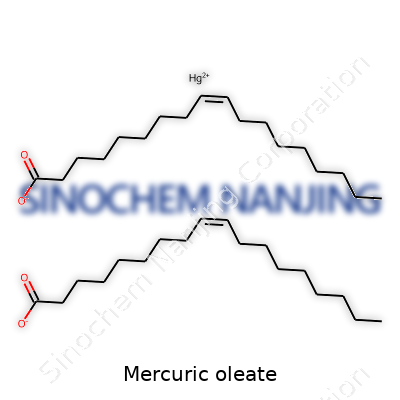
| Names | |
| Preferred IUPAC name | Mercury(2+) dioleate |
| Other names |
Mercury dioleate Oleic acid, mercury(2+) salt Mercury(II) oleate |
| Pronunciation | /ˈmɜː.kjʊr.ɪk ˈoʊ.li.eɪt/ |
| Identifiers | |
| CAS Number | 12056-40-1 |
| Beilstein Reference | 3491204 |
| ChEBI | CHEBI:53152 |
| ChEMBL | CHEMBL3706983 |
| ChemSpider | 50469260 |
| DrugBank | DB14007 |
| ECHA InfoCard | 100.031.187 |
| EC Number | 200-530-4 |
| Gmelin Reference | Gm. 2078 |
| KEGG | C21172 |
| MeSH | D008628 |
| PubChem CID | 69119 |
| RTECS number | OY4475000 |
| UNII | EY1F2JQB6G |
| UN number | UN1641 |
| CompTox Dashboard (EPA) | DTXSID5023302 |
| Properties | |
| Chemical formula | Hg(C18H33O2)2 |
| Molar mass | 617.34 g/mol |
| Appearance | White or yellowish, amorphous masses |
| Odor | Odorless |
| Density | 7.14 g/cm3 |
| Solubility in water | Insoluble in water |
| log P | “log P = 6.4” |
| Vapor pressure | Negligible |
| Acidity (pKa) | 6.2 |
| Basicity (pKb) | pKb: 4.15 |
| Magnetic susceptibility (χ) | -47.4 × 10⁻⁶ cm³/mol |
| Refractive index (nD) | 1.49 |
| Viscosity | Viscous liquid |
| Dipole moment | 2.72 D |
| Thermochemistry | |
| Std enthalpy of formation (ΔfH⦵298) | ΔfH⦵298 (Mercuric Oleate) = -723.512 kJ/mol |
| Pharmacology | |
| ATC code | S01AX06 |
| Hazards | |
| Main hazards | Toxic if swallowed, inhaled or absorbed through skin; causes burns; harmful to the environment. |
| GHS labelling | GHS02, GHS06, GHS09 |
| Pictograms | GHS06,GHS08 |
| Signal word | Danger |
| Hazard statements | H300 + H310 + H330: Fatal if swallowed, in contact with skin or if inhaled. |
| Precautionary statements | P260, P262, P280, P301+P310, P302+P352, P304+P340, P308+P311, P405, P501 |
| NFPA 704 (fire diamond) | 3-2-2-₤ |
| Flash point | 119°C |
| Lethal dose or concentration | LDLo oral rat 90 mg/kg |
| LD50 (median dose) | LD50 (median dose): 75 mg/kg (rat, oral) |
| NIOSH | SO2125000 |
| PEL (Permissible) | PEL: 0.1 mg/m³ |
| REL (Recommended) | 18°C |
| IDLH (Immediate danger) | Not listed |
| Related compounds | |
| Related compounds |
Mercuric acetate Mercuric nitrate Mercuric oxide Mercuric chloride Mercuric sulfide |



