Malononitrile: More Than a Laboratory Staple
Historical Development
A compound as simple as malononitrile often ends up being more important than it seems at first glance. Chemists first took notice of it around the late nineteenth century, at a time when synthetic organic chemistry raced ahead on the back of advances in purification and isolation. The structure – a three-carbon chain, with two cyanide groups hooked onto either end – makes it sound basic, but its utility soon outstripped that simplicity. Early on, researchers realized that installing two electron-withdrawing nitrile groups onto a methylene bridge offered a powerful way to unlock new reactivity for synthesis. Malononitrile became a backbone in labs hunting for new dyes, pharmaceuticals, and even explosives. Many textbooks hint at its breakthrough synthesis by condensing chloroacetic acid with potassium cyanide, a method that modern labs still reference. The compound quickly became a workhorse as chemistry moved from stove-top scale to industrial workshops.
Product Overview
Malononitrile is most recognizable as a colorless to slightly brownish solid, smelling faintly like bitter almonds, a reminder of its cyanide ancestry. Its small size and clean reactivity make it a fixture on lab shelves. The molecule’s two nitrile groups allow chemists to tweak it easily, giving it an almost chameleon-like flexibility for making all sorts of organic molecules. At room temperature, it behaves as a low-melting-point solid, easily handled with gloves and a bit of caution. Its appeal comes from how quickly it reacts with a whole family of nucleophiles – including aldehydes, ketones, and amines – making it indispensable for anyone exploring heterocycles or advanced polymers. There’s hardly a year when new papers don’t report some twist on malononitrile chemistry that opens up fresh possibilities for drug synthesis or materials science.
Physical & Chemical Properties
Malononitrile’s melting point hovers around 32°C, so it may solidify or liquefy with just a little environmental fluctuation. This property adds a note of unpredictability during storage, especially in warmer climates or poorly air-conditioned labs. Its boiling point tops out near 220°C, but the most pressing concern comes from its volatility, which means vapors can catch sensitive noses quickly. Its solubility spans water and polar organic solvents, thanks to those two cyano groups that love hydrogen bonding as much as they love kicking off chemical reactions. The molecule strips electrons from anything close, so reactions involving bases or nucleophiles proceed fast. The chemical stability owes much to that robust CN double bond: tough enough to resist hydrolysis under mild conditions, reactive enough to add value to almost any synthetic route.
Technical Specifications & Labeling
Although many vendors ship malononitrile in benchmark purity ranges above 99%, laboratories scrutinize it for more than named contaminants. The product number serves mostly as a shipping formality; what actually matters in chemical work is checking for traces of ammonia, pH shifts during storage, or peroxide formation with time. Most reputable suppliers print UN hazard codes on their containers, reminding users to respect the toxicity risks. Labels also stretch to pictograms telling the trained eye about inhalation dangers, skin absorption potential, and the importance of gloves, eye covering, and efficient ventilation. If a bottle sits too long on the shelf, its label may fade, but the compound inside usually holds up if stored in a tightly-sealed, shaded bottle away from heat and moisture.
Preparation Method
A lot of malononitrile’s history owes itself to clever production tricks that evolved over decades. One method still used in pilot plants starts with chloroacetic acid and potassium cyanide. The process demands careful temperature control and airtight vessels, since hydrogen cyanide gas can escape and create deadly hazards. The base strips away a hydrogen from acetic acid, the chloride falls away, and the cyanides step in to cap both ends. Filtered, washed, and crystallized, malononitrile emerges as a white solid ready for downstream use. Refinements over the years have focused on keeping yields up, reducing by-products, and improving safety. Some routes opt for acrylonitrile intermediates under high pressure, but the principal remains the same: build up a carbon backbone, then swap out components until both ends are finished with —CN groups. Smaller batch synthesis in research labs rarely deviates from these historic blueprints.
Chemical Reactions and Modifications
The magic of malononitrile in the lab is how willingly it plays along in multi-step syntheses. Push it into a Knoevenagel condensation with an aldehyde, and it creates extended conjugated systems that color chemists love for dyes and fluorescent markers. Engineers making pharmaceuticals often seek out its role in assembling heterocycles, especially pyrimidines and other nitrogen-rich rings. If a researcher treats malononitrile with strong alkali, they yank off one of its hydrogens, making a carbanion tailor-made to attack electrophiles, filling out carbon skeletons with fresh detail. Its ability to stabilize negative charge shapes both its chemistry and its versatility, opening possibilities for Michael additions, cyclizations, and even exotic couplings used in synthesizing new catalysts. For those turning out specialty polymers, malononitrile lends itself to chain extension and crosslinking, building materials tough enough to survive demanding environments.
Synonyms and Product Names
Some people in the field just call it propanedinitrile or methylenedicyanide, though the IUPAC standard, malononitrile, remains the most common. Old patents and foreign texts sometimes list it under dicyanomethane, showing just how long chemists have fiddled with these naming conventions. No matter the alias, the applications usually point back to the same core chemistry: using the dichotomy of electron richness at the center, electron deficiency at the ends. For anyone ordering or referencing it, those synonyms often save trouble when tracking down old journal articles or sifting through import/export codes.
Safety and Operational Standards
My own early days in the lab taught a quick lesson about never underestimating the cyanide roots of this compound. Malononitrile does not give off visible fumes, but even slight sniffing can mean exposure to toxins that stress the heart and nervous system. Standard procedure keeps everything in a fume hood, with gloves and goggles on at all times. Spills need quick response, and cleanup powders should be close at hand. Mixing it with acids or bases ramps up volatility, risking unwanted exposure. The regulatory environment in most countries classifies it under acute toxicity, so disposal happens through registered waste contractors. Legal frameworks constantly evolve, with authorities tightening reporting requirements for its use in manufacturing, largely because the same chemistry that makes it great for legit research gives it potential for foul purposes as well. Every experiment I’ve run with malononitrile left me respecting its power – and its danger – more than the last.
Application Area
Pharmaceutical innovators frequently mention malononitrile as a starting block for antiviral and anticancer compounds. Its adaptability opens doors to whole families of bioactive molecules, often through stepwise functionalization and ring construction. Dyes and pigments frequently start life with malononitrile-derived intermediates, thanks to its ability to yield deep, vibrant chromophores. Polymer scientists also score points with it, using its reactive methylene group to craft specialty plastics and high-strength adhesives. Agrochemical research points to malononitrile as a tool for pushing into new classes of herbicides and insecticides, leveraging its toxicity against select targets without broad environmental fallout. Even in analytical chemistry, its clean UV absorbance allows it to serve as a marker or standard in quantification methods. Each field draws from its reactivity, low cost, and versatility, building new value from an old friend in the catalog.
Research and Development
Innovation today leans on malononitrile in unexpected ways. Researchers are probing its value in click chemistry, assembling complex molecules using milder conditions and greener solvents. Efforts in medicinal chemistry make use of its reactivity to build scaffolds for emerging therapies—especially antivirals and treatments targeting metabolic disorders. Materials scientists tinker with it to generate new plastics fit for extreme heat or chemical resistance, uncovering structure-property relationships that trace back to that robust CN linkage. Every conference season brings fresh news about tweaks to catalysts or reaction conditions that save time, cut energy costs, or boost yields. Graduate students around the world test the limits of its reactivity, exploring conditions that squeeze every last bit of utility from this compact but mighty molecule. The drive for sustainability also spotlights new methods of preparing and recycling malononitrile, eyeing less hazardous reagents and waste streams. The future of green chemistry likely holds a place for malononitrile, given its potential for selective reactions and low carbon footprint in the right hands.
Toxicity Research
Toxicologists treat malononitrile with deep caution. Animal studies paint a clear picture: ingestion or prolonged inhalation triggers cellular hypoxia, stressing organs and risking irreversible harm in large doses. Early lethality data sometimes struggles to keep up with new regulations, but consensus holds that exposure must stay low. Some lab mishaps early in my own training nearly ended badly due to lack of respect for invisible vapors, a sobering reminder of the importance of ventilation and training. Research into its environmental breakdown confirms it degrades slowly in water and soil, underlining the risk to aquatic life and persistence in runoff. Regulators often set strict time-weighted averages for workplace exposure, and even experienced chemists double-glove, mask up, and check that emergency eyewash stations work before starting a run. As with other cyanide derivatives, first aid emphasizes removing exposed parties to fresh air, avoiding everything but absolutely necessary intervention until medical staff take over. The message from current toxicology: safety procedures need to become second nature, not an afterthought.
Future Prospects
Malononitrile’s role in cutting-edge synthesis shows no signs of fading. Looking to the future, researchers focus on safer, more sustainable synthesis routes—working with lower toxicity cyanide sources, or alternative feedstocks sourced from biomass. Applications in pharmaceuticals and specialty materials mean demand will likely hold steady or climb, especially as innovators push into territory where precision chemistry outperforms brute force. Machine learning promises to pair well with malononitrile chemistry, predicting reaction outcomes and speeding new discoveries. Regulatory scrutiny will only sharpen, so those who rely on malononitrile must stay ahead of changing permissions and reporting guidelines. For all its hazards, the compound remains exactly what modern science demands: small, reactive, versatile, and ever ready to open new paths in synthesis, provided those handling it keep respect for its risks.
What is malononitrile used for?
Malononitrile in Everyday Chemicals
People rarely talk about malononitrile at the dinner table, but this small organic molecule plays a large role behind the scenes. Chemists have leaned on it for decades, using it to build dyes, medicines, pesticides, and more. I first came across malononitrile in a college organic chemistry lab, where it quickly became clear how versatile this compound can be. With its two nitrile groups, malononitrile reacts easily with other chemicals, making it a favorite for reactions that build more complex molecules.
Inside Pharmaceutical Research
Malononitrile pops up often during the hunt for new drugs. Researchers use it to construct molecules with specific properties, like anti-inflammatory or anticancer effects. A 2019 scientific paper described its use in making novel anticancer agents, showing just how valuable it can be in drug discovery. Since it reacts smoothly with many different compounds, it gives pharmaceutical chemists more ways to customize new treatments. The speed and flexibility this brings can mean the difference between a shelved idea and a drug candidate headed for trials.
Color and Fashion
Many people overlook how much chemistry goes into the dyes that color their clothing. Malononitrile sits at an important stage in the production of certain organic dyes, including those that create the bright blues and reds in textiles and inks. Large dye manufacturers depend on it for its reactivity and stability. Without it, the cost and complexity of producing consistent, bold colors in fabrics would climb higher. For anyone working in the textile or printing industries, finding reliable malononitrile sources is as routine as ordering cotton or ink.
Malononitrile in Agriculture
Modern agriculture doesn’t only rely on tractors and seeds. Herbicides and pesticides built from organic chemistry protect crops and boost yields. Malononitrile sits at the starting line for several widely used crop protection chemicals. Pesticide producers use it to create compounds that target weeds and insects while sparing the crops nearby. Strict regulation of these chemicals means every ingredient’s safety gets reviewed, including malononitrile and its byproducts. Environmentalists and regulators keep a close watch, looking for new rules as evidence grows about toxicity or persistence in soil and water.
Risks and Safety Concerns
Like many useful chemicals, malononitrile is a double-edged sword. Handling it with care prevents exposure to skin or eyes, as it can cause irritation. People who work with it, whether in industrial settings or small research labs, learn to use protective gear and good ventilation. Companies also need to track their waste, since nitrile compounds can cause environmental harm if released unchecked. Researchers and safety officers work together on ways to capture or break down waste products before sending them out the door.
Paths to Safer, Smarter Use
Companies continue to look for ways to reduce malononitrile use or swap in safer alternatives. Some labs work on new catalysts that cut down on waste, while others investigate “green chemistry” routes that create fewer byproducts. Industry partnerships with academic researchers help push technology in a safer direction. People who value sustainability can support clothing and food brands that share information on chemical use. As the industry keeps evolving, transparency and innovation both drive change in how chemicals like malononitrile shape our world.
What is the chemical formula of malononitrile?
Getting Straight to the Formula
Malononitrile carries the formula C3H2N2. To a trained eye, that formula says a lot about its structure and reactivity. Behind those symbols, you find three carbons, two hydrogens, and two nitrogens packed into a tight molecule. In hands-on chemistry, knowing this simple formula lets you calculate weights, predict reactions, and avoid some outright dangerous mix-ups.
Why Everyday People Should Care About Malononitrile
Most folks aren’t handling pure chemicals in their daily lives, but malononitrile still shows up in places that matter. It plays a role in making pharmaceuticals, dyes, and specialty materials. Pain relievers, agricultural chemicals—these sometimes trace their roots to compounds like malononitrile. It’s not a household name, yet its impact spills out into medicine cabinets, fields, and industries all over.
What’s Inside the Structure?
C3H2N2 looks almost simple, though chemists know the devil lies in the details. At its core, malononitrile stacks two nitrile groups (–CN) on either end of a short chain. Those nitrile groups give the molecule a punchy, highly reactive edge, making it a building block that can be transformed into something new and valuable. That reactive nature, the part that makes malononitrile attractive in synthesis, also creates a responsibility to handle it with care.
A Closer Look at Safety
Back in my undergrad lab, I still remember a senior student lecturing the rest of us: “Don’t underestimate the small bottles—malononitrile belongs on that list.” The reason is toxicity. Its chemical makeup—nitrile groups especially—can cause real trouble if inhaled or ingested. The nitrile component hints at possible release of cyanide. Anyone working with it sticks to strict safety gear, with good ventilation and protocols that keep exposure close to zero.
A 2019 report from the CDC highlighted nitrile compounds as chemicals of concern, listing occupational risks where workers had developed nausea and headaches after accidental contact. Regulatory agencies mandate solid storage instructions and disposal rules for malononitrile even in low quantities.
How Chemists Tame Its Power
Trained chemists channel the molecule’s reactivity into something productive. They use malononitrile in “Knoevenagel condensations,” cooking up useful chemicals at room temperature with a dash of base. In pharmaceutical labs, it often takes part in making molecules that block specific biological targets, leading to new medicines. Its value as a starting material lets chemists build complexity without drawing things out into multiple inefficient steps.
Green chemistry now shapes malononitrile’s use too. Researchers work to minimize waste and limit exposure, switching to safer solvents or developing continuous-flow setups that lower contamination risks. It’s not just about following rules but about keeping everyone in the process safe, from the researcher all the way to the consumer.
What Can Be Done?
With the basics of malononitrile tied to so many applied uses, good stewardship calls for accountability across the supply chain. Manufacturers need strong labeling and transparent safety data. Workers deserve training that keeps pace with evolving best practices on storage and personal protection. Companies investing in alternatives or neutralizing waste streams make a difference, keeping chemicals like malononitrile in check, in the lab and beyond.
Is malononitrile hazardous to health?
Not Just Another Lab Chemical
Walk into any chemistry lab and you’ll spot bottles with unreadable names, but one called malononitrile stands out. Used for making dyes, medicines, and even explosives, malononitrile looks harmless on paper. Yet, health experts and safety data suggest more caution than most people realize. Having spent years handling chemicals, I’ve learned that sometimes the most dangerous ones don’t announce themselves loudly. Malononitrile has that quiet, serious risk.
What Does Malononitrile Do to the Body?
My days working around malononitrile start with gloves and a mask for good reason. Exposure, even in small amounts, can irritate eyes, skin, and lungs. Official safety sheets (like those from the CDC and OSHA) don’t mince words—malononitrile on the skin often leads to burning or redness, and breathing in the vapor makes eyes water or causes coughing spells. Accidental spills on skin, or breathing the stuff indoors, brings headaches and dizziness before you know it.
A real concern comes once malononitrile entrances the body. It can break down to cyanide, a chemical with a well-known reputation for poisoning. This isn’t about Hollywood drama; symptoms like rapid breathing, confusion, or even passing out could follow enough exposure. Reports from emergency rooms have shown that swallowing, inhaling, or even skin contact with large quantities can lead to trouble with breathing or heart rhythm, which never ends well without treatment.
What the Science Says
I’ve met folks who treat lab safety like a chore until someone gets sick. The science behind the toxicity isn’t some scare tactic. The chemical’s structure means it’s primed to release hydrogen cyanide in the body—a process that blocks oxygen use in cells. Medical literature and toxicology texts back this up. Workers exposed for long periods sometimes show chronic effects, like weakness or nerve problems, reminding us these aren’t one-off hazards.
Governments haven’t ignored these truths. Agencies like OSHA set strict exposure limits for malononitrile in workplaces. The United Nations lists it as a hazardous substance requiring careful transport and handling. Yet regulations can’t help without employers sticking to training and personal protective equipment. A study out of Germany tracked lab workers and found more reported eye and lung problems where safety measures got sloppy.
Practical Steps for Staying Safe
The risks from malononitrile seem high, but with the right steps, danger drops fast. Up-to-date ventilation, gloves, goggles—basic, yes, but I’ve seen these keep people out of urgent care. Safety showers and eyewash stations aren’t just for show, either. One quick move saves someone from a trip to the hospital. Clear labeling and regular training help people spot hidden leaks and raise alarms when something looks off. Unexpected exposure calls for medical help, not “wait and see.”
Focusing on strong regulations and well-made safety plans gives workers room to speak up about dangers. I’ve watched new hires walk into the lab worried, only to leave the day with the confidence to ask if something seems wrong. Investing in safety, both at work and school labs, helps stop small mistakes from becoming big problems later on. People deserve to know the facts about malononitrile, whether they’re running complex experiments or just reading a product label at home.
How should malononitrile be stored?
My Time Handling Chemicals Says a Lot
It’s easy to forget how risky certain chemicals can be once you get comfortable in a lab. I started out handling small amounts of malononitrile during my undergraduate days. My biggest mistake? I once left a cap loose because I thought I’d come back in a few minutes. The sharp, acrid odor told me I’d messed up right away. That little lapse made me pay close attention ever since.
Why Malononitrile Storage Matters
Malononitrile isn’t some run-of-the-mill solvent. It’s a potent irritant. The fumes sting the nose and eyes at concentrations lower than what you might expect. Overexposure can seriously hurt the lungs and central nervous system. The compound is hygroscopic, so it loves to suck up moisture if left open to air. Every careless move around it stacks up risks for coworkers and the environment.
It does not take a PhD to see why keeping this stuff locked down matters. According to the US National Institute for Occupational Safety and Health (NIOSH), malononitrile exposure should not exceed 3 mg/m³ over an eight-hour shift, and that's a low number for a reason. Spilled or improperly stored material piles up into bigger headaches than a few sneezes. A leaky container makes a small storeroom a hazardous zone in no time.
Best Practices from the Real World
A solid chemical storage protocol never just happens. It begins with proper containers — glass bottles with tight screw caps work best. I’ve seen labs use plastic, but over time, some plastics break down or become brittle, especially with strong solvents or fluctuating temperatures. The dryness of the storage area plays a huge role. Malononitrile forms sticky clumps if it draws water from a damp room. Those clumps can ruin a reaction and increase cleanup difficulty.
My old lab supervisor drilled this in our heads: Label everything with the date of receipt and the initials of the person opening it. Yes, it seems tedious, but if there’s an issue, you know who to ask, and you don’t risk using old, degraded material. Keep containers in solid secondary containment, such as a plastic tray, in case something leaks. After a minor episode that left us grinding out a sticky spill from a benchtop, we made sure to never skip that step.
Safety cabinets with proper ventilation go a long way. Flammable-proof lockers aren’t just for show. Malononitrile isn’t crazy-flammable on its own, but stashing it with strong acids or bases creates the real danger. I once visited a teaching lab where acids and organics shared shelf space — nobody wants to be in that room if things go wrong. That memory alone motivates me to follow chemical compatibility charts every time.
Personal Protective Gear Is Not Optional
You learn fast that gloves, goggles, and a lab coat protect more than your skin. Even the neatest chemist occasionally splashes a bit. Thin nitrile gloves work well, as long as you change them at the first sign of a hole. Splash goggles block out the vapor – regular specs just don’t cut it.
Solving the Human Factor
All the rules and equipment in the world can’t help if someone gets sloppy. Regular training and reminders keep people focused. Get new lab members to read the Safety Data Sheet and test them on the storage instructions. Report near-misses so others can avoid the same mistakes. Experience doesn’t mean immunity to accidents. Every safe day dealing with chemicals like malononitrile owes a whole lot to habits that never get lazy.
What are the safety precautions when handling malononitrile?
Treat Malononitrile with Caution
I’ve watched skilled technicians and researchers pause before reaching for white powder bottles, especially those labeled like malononitrile. Malononitrile didn’t end up on chemical risk lists by mistake. The compound releases hydrogen cyanide gas under certain conditions, and that isn’t a slow thing—just a small spill in a warm lab sparks a problem. I remember being trained to spot dangerous reactions by smell, but trust me, by the time you smell bitter almond, it’s almost too late.
Personal Protective Gear Saves More Than Skin
Before opening any container, put on gloves—nitrile or neoprene are best. Never trust just a lab coat and bare hands. I’ve heard stories of techs taking shortcuts, using thin latex or forgetting proper goggles, only to deal with unexpected splashes and irritation that won’t fade for days. If dust gets airborne, a splash of malononitrile dust to the eyes brings sharp pain and lasting damage. Remind yourself: if breathing dust or fumes feels “off,” you’re already too exposed. Organic vapor cartridges and tight-fitting goggles turn scary moments into forgettable ones.
Ventilation isn’t Just a Suggestion
Fume hoods aren’t for neatness—they’re a real shield when working with toxic powders. One time I worked in a less-than-ideal basement lab, with a jerry-rigged exhaust. Simple tasks turned stomach-churning, headaches grew by the hour. In a real hood, you notice the difference. Good airflow, frequent changeover, and monitoring by trained staff take away most of the looming menace of toxic dust. Never open containers in open air, even for “a second.”
Spills Demand Urgency, Not Panic
No sense in pretending spills never happen. Malononitrile doesn’t give do-overs. Keep spill kits, including activated charcoal, at arm’s reach, not tucked away. I once knocked over a weigh-boat; the powder hit the bench and skittered toward the edge. My mentor moved faster than expected, covering the powder with wet paper towels and absorbing everything safely. He tossed the contaminated towels and changed gloves, not missing a beat. The key: react quickly, don’t freeze.
Storage Lessons from Hard Days
Every bottle of malononitrile belongs in a secure spot, not a catch-all shelf. On hot afternoons, storage near heat sources pushed pressure inside bottles, and I heard glass pop with a hiss that made my blood run cold. Fireproof cabinets locked and kept away from acids or bases matter more than a label or a logbook. Double containment, using well-sealed secondary containers, eats up a bit of shelf space but keeps leaks from turning dramatic.
Know What to Do If Things Go Wrong
After an incident involving a broken bottle in a student lab, I saw real teamwork: showers used right away, eyewashes flushed for fifteen minutes, and nobody waited to call emergency teams. That kind of preparation—posted numbers, drills, real first-aid supplies—made the difference. Relying on instinct during a chemical incident is never wise; a clear plan and visible instructions lower risk.
No Substitute for Training and Respect
Every person who works with dangerous chemicals walks a line between curiosity and caution. Training isn’t just a bureaucratic box to tick. Understanding both the risks and the right steps to take creates a culture where spills, exposure, or accidents don’t spiral out of control. Malononitrile is tough, but a careful, steady hand and honest respect for chemistry stack the odds in your favor.
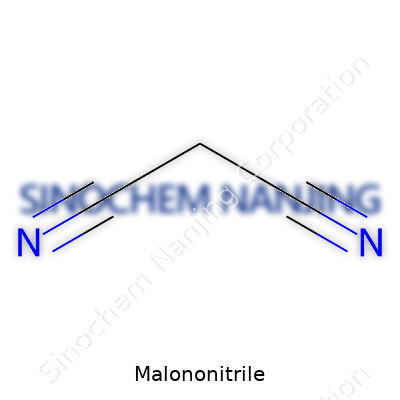
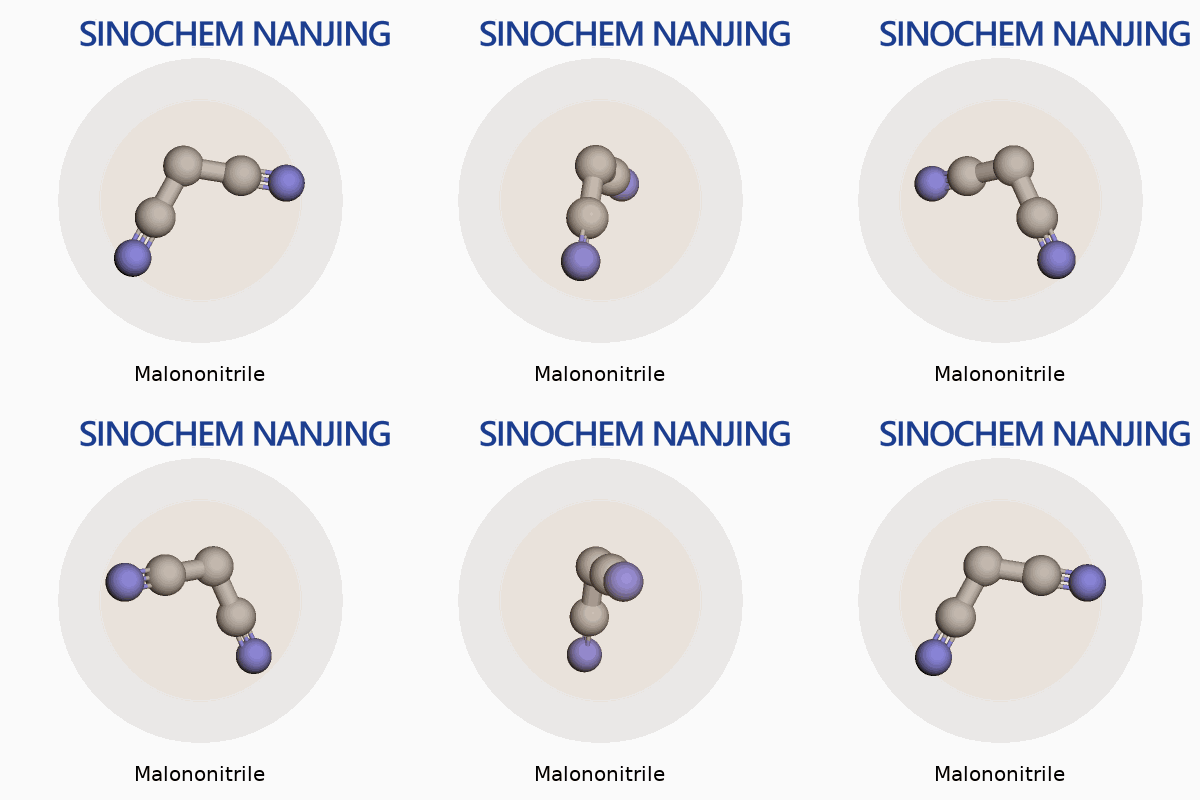
| Names | |
| Preferred IUPAC name | Propanedinitrile |
| Other names |
Propanedinitrile Malonylnitrile Cyanoacetonitrile |
| Pronunciation | /ˌmæl.oʊˈnoʊ.nɪˌtraɪl/ |
| Identifiers | |
| CAS Number | 109-77-3 |
| Beilstein Reference | 1209227 |
| ChEBI | CHEBI:17562 |
| ChEMBL | CHEMBL51178 |
| ChemSpider | 5668 |
| DrugBank | DB02170 |
| ECHA InfoCard | ECHA InfoCard: 100.003.158 |
| EC Number | 204-658-1 |
| Gmelin Reference | 69324 |
| KEGG | C00794 |
| MeSH | D008288 |
| PubChem CID | 8670 |
| RTECS number | OO4900000 |
| UNII | 78XXS43A01 |
| UN number | UN2811 |
| Properties | |
| Chemical formula | C3H2N2 |
| Molar mass | 66.06 g/mol |
| Appearance | Colorless to pale yellow liquid |
| Odor | Odorless |
| Density | 1.119 g/cm³ |
| Solubility in water | Miscible |
| log P | -0.20 |
| Vapor pressure | 0.016 hPa (20 °C) |
| Acidity (pKa) | 11.11 |
| Basicity (pKb) | 11.50 |
| Magnetic susceptibility (χ) | -26.2·10⁻⁶ cm³/mol |
| Refractive index (nD) | 1.378 |
| Viscosity | 2.38 mPa·s (25 °C) |
| Dipole moment | 5.2633 D |
| Thermochemistry | |
| Std molar entropy (S⦵298) | S⦵298 = 188.7 J·mol⁻¹·K⁻¹ |
| Std enthalpy of formation (ΔfH⦵298) | 106.3 kJ/mol |
| Std enthalpy of combustion (ΔcH⦵298) | -1183 kJ·mol⁻¹ |
| Pharmacology | |
| ATC code | V03AB36 |
| Hazards | |
| GHS labelling | GHS02, GHS06, GHS07 |
| Pictograms | GHS06, GHS07, GHS09 |
| Signal word | Danger |
| Hazard statements | H301, H312, H315, H319, H332, H335 |
| Precautionary statements | P210, P261, P280, P301+P312, P304+P340, P312, P330, P405, P501 |
| NFPA 704 (fire diamond) | 3-2-1 |
| Flash point | 140°C |
| Autoignition temperature | 525 °C |
| Explosive limits | Explosive limits: 1.4–7% |
| Lethal dose or concentration | LD50 oral rat 25 mg/kg |
| LD50 (median dose) | LD50 (median dose): 15 mg/kg (oral, rat) |
| NIOSH | SN2100000 |
| PEL (Permissible) | 3 mg/m3 |
| REL (Recommended) | 3 ppm |
| IDLH (Immediate danger) | 25 mg/m3 |
| Related compounds | |
| Related compounds |
Acetonitrile Succinonitrile Methylenemalonic acid |



