Magnesium Diamide: A Closer Look at Its Journey, Uses, and Future
Historical Development
Chemists exploring metal amides have usually focused on lithium or sodium variants, but magnesium diamide represents an intriguing chapter in this niche. The early days of magnesium diamide highlighted plenty of trial and error, as early researchers juggled moisture sensitivity and issues around purity. The understanding that magnesium, a more abundant and less expensive metal than lithium, can form its own stable amide compound seeded numerous experiments through the 20th century. Its role often got overlooked because flashier alkali metals took the spotlight, but as chemists dug deeper, magnesium diamide started emerging as a backbone material for specific organic syntheses and as a potential tool to mediate interesting reactions where lithium diamide introduced too much reactivity.
Product Overview
Magnesium diamide, known also as magnesium bis(amidide), carries the formula Mg(NH2)2. The commercial product typically appears as a white powder or crystalline material. It does not jump out on a list of household reagents but means a lot to anyone trying to steer reactions down a selective path, especially when extra finesse is needed due to sensitivity of neighboring groups. The compound wins points in universities and specialty labs for its cleaner behavior compared to alkali-based cousins, and storage often involves airtight vessels to stave off untimely hydrolysis.
Physical & Chemical Properties
Anyone handling magnesium diamide quickly realizes it reacts strongly to moisture. In dry conditions, the powder remains stable, keeping that pale color. In the lab, a whiff of ammonia escapes as soon as any water vapor sneaks in. Solubility in organic solvents runs low—ether and THF work in a pinch but won't dissolve it completely. Unlike lithium or sodium analogs, magnesium imparts a degree of predictability in coordination chemistry, allowing tighter control in multistep syntheses. Thermal decomposition tends to release ammonia and magnesium nitride, so excessive heating usually leads to wasted material and an acrid smell.
Technical Specifications & Labeling
Bottles arrive with hazard markings for caustic substances and fine particulate, usually reminding handlers to keep away from moisture and wear skin and eye protection. Labs that order the compound tend to double-check for batch purity using spectroscopic techniques, since traces of magnesium oxide or ammonium salts creep in under humid shipping conditions.
Preparation Method
Creating magnesium diamide in the lab starts with a reaction between magnesium metal or its alkoxide and liquid ammonia, often in the absence of oxygen. The process feels both simple and risky, as one bump of water can derail everything, sending ammonia flying. Key to a good yield comes from using fresh, dry reactants and keeping reaction vessels under inert gases like argon. Sometimes researchers go the extra mile and use vacuum distillation to purify the resulting solid, especially where even tiny impurities interfere with later reactions.
Chemical Reactions & Modifications
In organic synthesis circles, magnesium diamide plays a duet of base and nucleophile. It enables amination reactions that need a gentle touch—introducing nitrogen atoms to molecules with delicate scaffolds. Compared to more rambunctious alkali metal amides, it brings order to selectivity, chemoselectivity, and functional-group tolerance. For modifications, scientists often try to substitute the amide groups to tailor reactivity, but in practice, even minor structural tweaks lead to big changes in solubility and stability. Several teams have explored its role in metalating arenes, making magnesium diamide a sort of unsung hero in transition metal catalysis.
Synonyms & Product Names
The world of chemical synonyms never fails to cause confusion: magnesium amide, magnesium(II) diamide, and magnesium bisamide all reference the same stuff. Trade catalogs sometimes bundle it under obscure formulas or historic names, though academic papers typically prefer the “magnesium diamide” title for precision.
Safety & Operational Standards
Handling magnesium diamide feels different from typical inorganic salts. One learns to dodge dust clouds, as inhalation burns nasal passages and eyes sting from ammonia. Full PPE is the minimum; good airflow and dry boxes do the heavy lifting, especially in teaching labs. Training sessions cover fire risks, since stray powder ignites with water and leaves caustic burns on contact. Spill protocols matter: ethanol neutralizes small residues better than chasing powder with mops, while gloveboxes or Schlenk lines make the safest workspace for transfer and weighing.
Application Area
The compound rarely enters mainstream industry but provides value where it counts. Polymer and pharmaceutical chemists sometimes turn to magnesium diamide for precise nitrogen introduction, favoring it over lithium reagents that prove too harsh. In academia, it has become a mainstay for teaching students about the nuances of amide chemistry at the intersection of organometallic and main-group element reactions. Early-stage electronics R&D sometimes leverages it for custom synthesis, grinding small batches for functionalized materials.
Research & Development
Innovation continues as scientists test magnesium diamide in ever more complex syntheses. Cross-coupling chemistries keep it in the conversation, particularly in attempts to sidestep palladium-catalyzed routes and chase more sustainable pathways. Teams worldwide publish on its involvement in C-H activation and heterocycle formation, eager to pinpoint greener, scalable alternatives to legacy methods. Funding follows these ideas with the hope of translating bench-scale reliability into pilot-plant practicality.
Toxicity Research
Health risks with magnesium diamide focus on immediate issues—eye and lung irritation, chemical burns, and acute ammonia exposure. To date, there is no robust evidence pointing to carcinogenicity or chronic toxicity at typical exposure levels. Still, acute toxicity can be nasty, underscoring the need for careful handling and speedy response to accidental contact or inhalation. Animal studies remain limited, primarily on short-duration inhalation or ingestion, leaving big data gaps related to environmental persistence and long-term occupational effects. Most chemists respect magnesium diamide simply because it behaves unpredictably when wet or mishandled.
Future Prospects
Magnesium diamide shows promise as synthetic chemistry pushes toward more environmentally conscious processes. Its lower cost, moderate reactivity, and a safer profile compared to more dangerous bases turn it into an appealing alternative for precise, scalable reactions. Ongoing research looks to fine-tune preparation methods—for example, using renewable ammonia sources and capturing byproducts to curb waste. As demand rises for materials built with less toxic and non-precious metals, magnesium diamide sits ready for a breakout role in specialty chemical manufacturing and green chemistry. The path forward depends on wider understanding of its risks, reward, and performance in both academic and commercial labs.
What is Magnesium Diamide used for?
Behind the Formula: What Is It?
Magnesium diamide, known in labs as Mg(NH2)2, holds a spot on the shelf alongside other niche magnesium compounds. It’s not something most people encounter outside chemistry classrooms or industrial settings. This powdery substance gets the most attention in research and specialty manufacturing, where it acts as a reagent—helping drive reactions you won’t find in your backyard workshop.
Big Impact in Hydrogen Storage
I’ve spent years watching how energy storage shapes the technologies we depend on, from off-grid solar systems to electric vehicles. The hunt for better hydrogen storage materials never slows down. Magnesium diamide shows real promise here, and it’s something researchers keep circling back to. The compound proves useful for storing and releasing hydrogen under manageable conditions. Its unique chemistry allows it to absorb and release hydrogen at relatively low temperatures, which helps avoid the cost and danger tied to using extreme heat or pressure.
Solid-state hydrogen storage looks like it will matter more as governments and companies chase clean energy targets. Magnesium diamide steps up in complicated blends with lithium hydride and magnesium hydride, two mainstays in advanced storage projects. Successful blends manage to store more hydrogen per unit than older mixtures, making portable and stationary hydrogen power more appealing.
Helping Out in Organic Synthesis
Organic chemists—myself included some years back—lean on a toolkit of strong bases for creating the bonds that build up medicines and polymers. Magnesium diamide fits this role well. It pushes certain chemical reactions toward completion, helping make products like antibiotics, plastics, and dyes. Companies making specialty chemicals favor it when they want reliable, strong, nitrogen-rich conditions.
Some research labs use magnesium diamide to create new materials that could act as sensors or catalysts, both of which shape everything from water purification to electronic devices. If a company is chasing a patent for a next-generation polymer, chances are good someone on the team tried out magnesium diamide as part of their process.
Challenging Magnesium Diamide’s Drawbacks
This compound isn’t simple to handle. It reacts strongly with water and gives off ammonia gas, which you don’t want to breathe in. Strict controls keep it stable—dry boxes, sealed flasks, and lots of training. Workers involved in its use need up-to-date safety equipment, and facilities must ensure no water can leak where it’s stored or handled. My own lab stuck warnings everywhere and set up ammonia detectors to avoid accidents.
Safe disposal continues to pose a problem in smaller labs and factories. Many environmental guidelines demand special procedures for magnesium-based waste, especially anything that can release ammonia into the air. Responsible companies have detailed safety protocols, but there’s still room for better practices across the field. Cleaner chemistry methods, maybe supported by automated handling, could cut down exposure and incidents.
What’s Next for Magnesium Diamide?
I see magnesium diamide sticking around in advanced applications, especially hydrogen storage and custom synthesis. Research funding supports new safety technologies that make its handling less risky. If process innovations spread, more industries might adopt it for energy and specialty chemicals. Public universities lead the way in finding cleaner production and smarter storage solutions. Breakthroughs in these areas will let businesses benefit from magnesium diamide without creating new hazards.
What is the chemical formula of Magnesium Diamide?
What’s Behind Mg(NH2)2
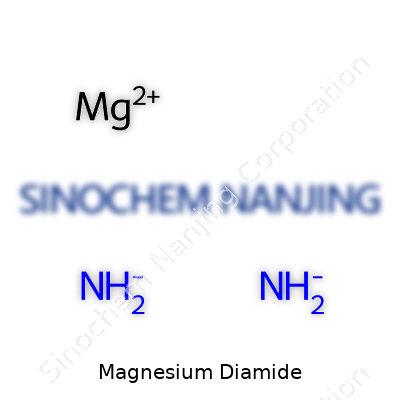
Magnesium diamide’s chemical formula is Mg(NH2)2. It breaks down to one magnesium atom bonded to two amide groups. Simple at first glance, but this structure opens up a world of uses in advanced chemistry and materials science. I remember the curiosity that came with seeing those subscripted numbers during college labs, trying to visualize how atoms like magnesium connect with nitrogen and hydrogen from the amide part. Understanding this structure helped clarify not just formulas on paper, but also how real substances behave in applications.
The Role of Magnesium Diamide in Modern Chemistry
It’s no secret that research labs turn to magnesium diamide when they need a strong base for organic synthesis or need to tweak catalyst properties. Unlike more common compounds, magnesium diamide steps up in situations where traditional bases or nucleophiles fall short. Chemists often prefer it for reactions like amination, where the transfer of an amine group can make or break a drug ingredient or specialty polymer.
Magnesium, as an element, sits high in the reactivity series, so its compounds bring a punch to any reaction. In magnesium diamide, the magnesium helps stabilize the reactive amide groups, allowing chemists to pull off complex molecular transformations. My experience with lab synthesis reminds me how picky certain chemicals can be, and relying on compounds like Mg(NH2)2 in those tricky moments made the difference between wasted hours and textbook success.
Safety and Environmental Impact
Working with magnesium diamide means taking safety seriously. The substance can react with moisture in the air, releasing ammonia and heat, which risks fire or toxic exposure. Laboratories that handle this compound stick with strict protocols: gloves, glasses, ventilated hoods, and air-tight containers. These steps keep people safe but also respect the environment by preventing the careless release of ammonia, which can harm both indoor air quality and ecosystems.
Industries using magnesium diamide have a real responsibility to truck in proper handling and disposal methods. Some manufacturers invest in closed-system equipment and recycling processes to limit waste. That comes at a cost, but cutting corners can lead to dangerous accidents or fines—which I’ve seen firsthand cost more than just money.
Responsible Innovation and Potential Solutions
Keeping a close eye on the sourcing and use of magnesium diamide matters more now than ever. As specialty chemicals become a staple in pharmaceuticals, electronics, and mining, ethical handling gets more complicated. Researchers work on substitutes and greener methods, exploring compounds that deliver the same reactivity with less risk or easier disposal. Collaboration between universities, companies, and regulators brings new ideas into the lab, turning yesterday’s hazards into tools for safer progress.
Magnesium diamide proves how a clear chemical formula reflects more than numbers. Behind each bond and element, there’s a landscape of discovery, risk, and chance for better practices. Recognizing the balance between utility and responsibility makes the difference as chemistry keeps moving forward.
Is Magnesium Diamide safe to handle?
Why Magnesium Diamide Matters
Magnesium diamide shows up in some circles as an unusual chemical, mainly in labs working with organometallics or advanced synthesis. Stories about handling compounds like this stick with me, not because of any heroic chemistry, but because my knuckles still remember the sting from one slip-up with a related reagent years ago. People like to assume everything in a chemical storeroom is dangerous. Magnesium diamide doesn’t always get flagged as strongly as, say, sodium, but it asks for just as much respect.
Physical Properties and Hazards
At a glance, magnesium diamide appears as a white solid—nothing especially foreboding. This isn’t a compound you’ll meet in household products, nor is it a staple in undergraduate teaching labs. It reacts fiercely with water and sends off ammonia gas, which pulls moisture from eyes and lungs and ruins your day faster than a surprise pop quiz. If you get it mixed with skin oils or water, or even catch a whiff from a poorly sealed bottle, it can burn and cause respiratory distress.
Handling and Personal Safety
I know some chemists see gloves and eye protection like seatbelts—annoying to wear until you wish you’d put them on. With magnesium diamide, laboratory gloves, tight-fitting goggles, and a decent lab coat make all the difference. You need a dry box, or at a minimum, a bone-dry environment. I still remember watching a senior researcher deftly measure out powder under argon, while the rest of us held our breath—not because she looked nervous, but because any hint of water could have set off a reaction.
Ammonia release is no joke. Coughing fits from stray fumes can leave you rattled, and in strong enough doses, it does more than irritate. Fume hoods or a glove box with good circulation are a must. Never leave these containers open longer than needed. Wiping down surfaces after a session isn’t just for show, either—dust and residue can linger and react with regular lab moisture.
Evidence and Best Practices
Research teams published multiple safety assessments in journals like the Journal of Chemical Health and Safety. They list magnesium diamide’s reactive nature on par with other amides such as sodium amide, both of which can ignite spontaneously under the right set of mistakes. A 2018 incident in a European academic lab, reported by the Royal Society of Chemistry, forced an evacuation because contaminated gloves set off an ammonia cloud after contact with a benchtop spill.
Most workplaces lay out strict protocols—consulting the Material Safety Data Sheet, using air-free transfer tools, and proper storage far away from humidity or incompatible chemicals. Anyone learning or teaching chemistry gets reminded again and again: ask for help if you aren’t sure about a reagent. There’s a reason insurance companies care so much about updated safety training records.
Improving Safety Culture
Old habits—like “just wipe it up later”—need constant unlearning. Posting clear, visible reminders and holding reviews where team members swap stories about near-misses can shift behavior better than a dry policy document buried in email. When everyone takes pride in a safe workspace, incidents drop. For anyone new to handling magnesium diamide, don’t rush. Read, ask, wear your gear, and keep your bench clean. Reliability grows from tiny choices, not grand gestures.
How should Magnesium Diamide be stored?
Understanding Magnesium Diamide and Its Character
Magnesium diamide often finds its way into chemistry labs because of its strong reactivity. I remember my first encounter with it during an internship at a university lab. I was fascinated, though also nervous. You learn quickly that this white powder isn’t just another chemical on the shelf. Its hunger for moisture and strong reactivity with water set it apart.
Why Handling Magnesium Diamide Deserves Respect
Each time we opened the bottle in that lab, a surge of nervousness would cross our faces. All it takes is a small mistake—the tiniest bit of water vapor in the air—and you’re faced with ammonia gas and heat. This kind of chemical reaction isn’t something you want taking place on your workbench, much less in storage.
I’ve seen some startling incidents, too. Someone tried to transfer magnesium diamide in a humid area once. Within seconds, the foul smell of ammonia filled the air, and alarms went off. Cleaning up that mess taught the team something important: this chemical asks for our attention both in storage and in use.
Storage Lessons: What Works and What Hurts
Chemists often share storage tips over coffee. Most agree on one thing—dryness saves trouble. Storing magnesium diamide in a moisture-free environment isn’t just caution, it’s wisdom earned through years of practice. A glass jar with a tight seal works better than plastic. Good quality desiccators, preferably with silica gel, keep it dry and dependable.
Temperature matters, too. Warm, fluctuating climates speed up the risk of unwanted chemical changes. In my lab experience, we set aside a cool cabinet, away from sunlight or heat sources. Room temperature often suffices, just as long as things stay stable. Freezers might seem tempting, but the risk of condensation when you open the door can spell disaster.
Why Proper Labels Matter More Than You Think
My old chemistry professor hammered this point in: proper labeling keeps everyone safe. Too often, a vague scribble on a lid leads to confusion or worse. Full labels—include the name, concentration, and hazard warnings—keep the message clear. Safety data sheets nearby also help back up good habits.
Labs can get chaotic, especially with new students eager to try their hand at synthesis. Consistent reminders—store it in a dry place, no water, and reseal the jar tightly—stop bad habits from taking root.
Solutions for Busy Workplaces
Larger companies sometimes install dedicated dry rooms with humidity monitors. It sounds fancy, but in smaller setups, simple measures work. A clear routine—always check the seal, store away from acids, and inspect stock regularly—brings peace of mind. Each step can be built into training sessions or routine audits.
Placing magnesium diamide away from incompatible chemicals comes from a good respect for real-world risks. In a warehouse, nobody wants to see oxidizers stacked nearby. A chemical spill in the wrong neighborhood can start something nobody wants to finish.
Trust Grows With Experience and Shared Stories
Magnesium diamide demands careful storage, not just for regulations but for safety’s sake. I have learned from the mistakes of others and shared my own to spare newcomers a close call. Over time, this steady, no-nonsense approach becomes a habit—a habit built on experience, not on chance.
What are the hazards of Magnesium Diamide?
What Is Magnesium Diamide?
Magnesium diamide turns up in industrial labs and some chemical manufacturing. You won’t find it on grocery shelves, but its strong reactivity means safety can’t take a back seat. Folks use it as a strong base or reagent, especially when working with organic synthesis or complex metal compounds.
Health Dangers: Straightforward Risks
If I walked into a workspace with powdered magnesium diamide scattered on the bench, I’d worry about breathing it in. The compound reacts with water quickly, releasing ammonia gas on contact. Ammonia can scald your lungs or throat and make your eyes burn. Even a trace in the air, or getting a small amount in your eyes, leads to rapid irritation.
Contact with skin might sound less serious, but the truth is more stubborn. Magnesium diamide often burns because it reacts with moisture in human skin, triggering both corrosive and toxic effects. A person who’s worked cleanup in industrial labs would agree: one splash or dust cloud needs fast and thorough washing—just soap and water, not fancy tricks.
Reactivity: A Chain Reaction Waiting to Happen
Magnesium diamide gets jumpy around water and air, making storage tough. Manufacturers have to store it in special containers, free from leaks, and always far from humid areas or wash stations. The combination with water produces flammable hydrogen and ammonia gases, and both pose fire and explosion hazards. One small oversight—leaving a cap loose, letting rainwater in, ignoring spilled powder—can lead to gas buildup or even a fierce fire.
Growing up around rural workshops, some folks think a little carelessness won’t matter. But experience shows that even seasoned hands can underestimate how fast reactive chemicals kick off trouble. Magnesium diamide belongs in that group—you can’t leave it alone on a shelf, trusting memory. You need reinforced storage, clear labels, and regular safety drills.
Environmental Spill Impact
Spilling magnesium diamide into soil or water creates more than just an ugly scene. The reaction with water releases ammonia, which disrupts aquatic life. I remember seeing local news about an ammonia leak destroying fish in a pond. Magnesium diamide spills hit harder, since the product keeps breaking down and producing toxic byproducts. Environmental cleanup teams often face a bigger job than first expected, as the chemicals keep reacting long after the first response.
Groundwater can carry ammonia and other breakdown products farther than many realize, threatening nearby communities or crops. Fast reporting and cleanup can limit damage, but these jobs cost time and money—much more than the price of proper storage at the start.
Stopping Problems Before They Start
Handling magnesium diamide safely means following hard rules, not cutting corners. Chemical workers need gloves, eye protection, and face shields. Routine training matters; I’ve sat through many safety classes, and the lessons stick for a reason. Routine drills and clear instructions helped prevent bigger accidents in the plants I visited.
Asking manufacturers to use less hazardous substitutes works only for some processes. Until then, regulators and employers have a duty not to leave any worker guessing about protective steps. Simple things—locked cabinets, color-coded lids, and signs at every doorway—save lives. Just like with power tools, respect and discipline make the difference.
Care for people and for the environment starts by knowing the risks, not pretending they aren’t there.
| Names | |
| Preferred IUPAC name | Magnesium diazanide |
| Other names |
Magnesium amide Magnesium azanide |
| Pronunciation | /maɡˈniːziəm daɪˈæmaɪd/ |
| Identifiers | |
| CAS Number | 7786-27-6 |
| Beilstein Reference | 1209276 |
| ChEBI | CHEBI:37190 |
| ChEMBL | CHEMBL572501 |
| ChemSpider | 12309 |
| DrugBank | DB15816 |
| ECHA InfoCard | 03b84dc8-1c46-4eae-82f1-847e2c6e415f |
| EC Number | 215-268-5 |
| Gmelin Reference | 62234 |
| KEGG | C429636 |
| MeSH | D008268 |
| PubChem CID | 16211661 |
| RTECS number | MW7175000 |
| UNII | 9BQM6Q9U4M |
| UN number | UN2023 |
| Properties | |
| Chemical formula | Mg(NH2)2 |
| Molar mass | 44.383 g/mol |
| Appearance | White powder |
| Odor | Odorless |
| Density | 1.024 g/cm³ |
| Solubility in water | Decomposes in water |
| log P | -0.84 |
| Vapor pressure | Negligible |
| Acidity (pKa) | 36 |
| Basicity (pKb) | pKb ≈ 3.0 |
| Magnetic susceptibility (χ) | +13000.0e-6 cm³/mol |
| Refractive index (nD) | 1.535 |
| Dipole moment | 0 D |
| Thermochemistry | |
| Std molar entropy (S⦵298) | 55.6 J K⁻¹ mol⁻¹ |
| Std enthalpy of formation (ΔfH⦵298) | -113 kJ/mol |
| Std enthalpy of combustion (ΔcH⦵298) | -819.1 kJ mol⁻¹ |
| Pharmacology | |
| ATC code | V09AX02 |
| Hazards | |
| GHS labelling | GHS05, GHS07 |
| Pictograms | GHS05,GHS07 |
| Signal word | Danger |
| Precautionary statements | P261, P280, P305+P351+P338, P304+P340, P310 |
| NFPA 704 (fire diamond) | 3-1-2-W |
| Autoignition temperature | 970 °C |
| Lethal dose or concentration | LD50 Rat oral: 280 mg/kg |
| LD50 (median dose) | LD50 (median dose): Oral rat LD50: 280 mg/kg |
| NIOSH | MN14000 |
| PEL (Permissible) | 10 mg/m3 |
| REL (Recommended) | 7 mg/m³ |
| IDLH (Immediate danger) | Unknown |
| Related compounds | |
| Related compounds |
Ammonia Lithium amide Sodium amide Calcium amide |



