Magnesium Chloride Hexahydrate: Past, Present, and Future
Historical Development
Magnesium chloride hexahydrate started gaining attention when industrial chemists and manufacturers in the 19th century dug deeper into sea salt extraction and brine mining. Looking back, settlements near salt lakes produced crude versions long before chemists isolated it with modern precision. People worked with it as an ingredient in mineral-rich brines for textile treatments and as a coagulant in tofu making across East Asia. Early transformations in heavy industry during the 1930s made it vital, especially after global demand for lightweight metals and high-purity salts expanded. Once experts realized it could be produced from both seawater and underground brines, production costs dropped and availability increased. Past generations may not have known about all of magnesium chloride’s uses and dangers, but exploitation of this compound supported entire economies built near natural sources, and some communities still rely on these age-old extraction techniques today.
Product Overview
Magnesium chloride hexahydrate appears as moist, white to colorless crystalline flakes or granules, often slick and slippery to touch—a familiar sensation in laboratories and chemical plants. In warehouses, dense bags labeled with its industrial code line the shelves, destined for water treatment plants, de-icing trucks, or pharmaceutical manufacturers. This hydrated form contains six molecules of water alongside every magnesium chloride unit, making it one of the more stable compounds in the magnesium family. Common synonyms include E511 (as a food additive), magnesium dichloride, and mag chloride, yet each nickname centers on its core value—a steady, predictable performer in chemical processes.
Physical and Chemical Properties
Magnesium chloride hexahydrate has a chemical formula of MgCl2·6H2O, with a molar mass around 203.3 g/mol. It melts at about 116°C, which feels lower than many might expect, but that’s due to the high water content woven into its structure. It dissolves rapidly in water, releasing enough heat for the solution to feel warm. Professional use draws on its high solubility and hygroscopic nature, while handling storage requires attention to avoid clumping from moisture uptake—a lesson sometimes learned the hard way after a humid day in the stockroom. Contact with strong bases forms magnesium hydroxide, and strong acids bring out magnesium’s reactivity, but the hexahydrate usually sits as a stable, mild-mannered substance under normal conditions.
Technical Specifications & Labeling
Industry standards set minimum purity levels at 98% for water treatment, higher for pharmaceutical or food uses, with careful monitoring for heavy metals and trace contaminants. Labels must include the chemical name, hydration level, storage precautions, lot number, and hazard symbols as defined by regulatory agencies. Strict batch testing checks for arsenic, lead, and other metals, while labeling must include correct hazard pictograms, such as "Irritant," and safety-related messaging. Reliable companies provide certificates of analysis with every shipment. Weight, batch, expiration, and manufacturer details stay front and center, and older style bags often bear the telltale marks of regulatory ink stamps. In regulated markets, the label’s legibility and compliance often reflect the seriousness of the supplier toward product quality.
Preparation Method
Manufacturers pull magnesium chloride hexahydrate from two main channels: solar evaporation of seawater or brine and chemical reaction-based extraction. In a brine field, concentrated magnesium-rich waters flow into shallow ponds, where evaporation leaves behind salts that get separated by washing, filtering, and drying steps. The resulting mixture passes through repeated recrystallization to reach the purity demanded by industry. Some producers start with magnesite (magnesium carbonate) or dolomite and treat these with hydrochloric acid, before refining through crystallization and centrifugal drying. Both routes depend heavily on weather, plant design, and quality of raw feedstock, as well as experience in handling stubborn, sticky intermediate products. Every production team develops its own tricks for squeezing every last bit of usable compound from their process.
Chemical Reactions & Modifications
Magnesium chloride hexahydrate performance in the lab comes from its strong solubility, allowing quick production of magnesium-based compounds. Reacting with sodium carbonate or sodium hydroxide gives magnesium carbonate or hydroxide, which industry then draws into water treatment or flame retardant markets. Heated to drive off water, the hexahydrate sheds steam and forms the anhydrous salt—a raw material for producing magnesium metal through electrolysis. In pharmaceutical processing, combining it with ammonium salts can yield magnesium ammonium compounds, which play a role in specialized chemistry. It’s not all gentle reactions; under high temperatures and dry conditions, decomposing magnesium chloride produces hydrochloric acid gas, mandating strict ventilation protocols in every plant.
Synonyms & Product Names
Chemists and manufacturers know magnesium chloride hexahydrate under a slew of names. E511 marks its approval as a firming agent in foods. Others call it mag chloride flakes, hexahydrate flakes, bishydrate chloride, or hexamag. Regulatory documents reference it as magnesium dichloride hexahydrate or sometimes just “MgCl2•6H2O.” Bag labels vary with language and market—“cloruro di magnesio esaidrato” on shipments to Italy, “chlorure de magnésium hexahydraté” in Francophone countries, and “sechswasserhaltiges Magnesiumchlorid” in German texts. I’ve often seen both old- and new-style trade names scrawled onto the same containers, a nod to both tradition and changing regulations.
Safety & Operational Standards
Direct skin contact causes mild irritation, especially on damaged or sensitive skin, and safety goggles plus nitrile gloves quickly become standard-issue. Workers avoid breathing in dust by masking up, using dust extraction, and working in well-aired spaces. Storage involves sealed containers kept away from moisture, oxidizing chemicals, and food items. When I worked in field labs, accident reports rarely involved acute toxicity, but slips from spilled mag chloride pellets sent more than one worker to the clinic. Environmental discharge controls remain tough, especially in regions where brines could upset local soil or aquatic balance. Emergency teams reference safety data sheets with up-to-date information, outlining first aid and spill protocols.
Application Area
Road maintenance departments rely on mag chloride hexahydrate during icy months, as it lowers the freezing point of water and works well at temperatures where rock salt fails. In dust control, it draws moisture from the air to bind road particles and suppress flying grit on highways. Water utilities dose it into treatment plants to remove impurities, while some food manufacturers use it to coagulate soy milk or adjust mineral content in bottled water. Magnesium chloride finds use in textile dyeing, flame retardant production, and paper manufacturing, and it sometimes acts as a hardener for cement and concrete. Talking with colleagues in different industries proves its value as a jack-of-all-trades, able to fill multiple niches cost-effectively.
Research & Development
Current research explores mag chloride’s performance in advanced de-icing chemicals and new applications in eco-friendly cement mixes. Materials scientists look at its role in capturing carbon dioxide for environmental programs. Medical researchers examine magnesium’s potential in therapies for muscle and nerve disorders, noting differences between hydrated and anhydrous forms. My own time in the lab saw early prototypes for magnesium-based solid electrolytes deploying variants of this salt, aiming to boost the next generation of rechargeable batteries. Academic partnerships with industry back efforts to refine separation and purification steps, especially as demand for high-purity magnesium compounds rises. Researchers measure trace contaminants using technology that would have seemed like science fiction a few decades ago.
Toxicity Research
Toxicologists report low acute toxicity in humans at standard exposure levels. Most health issues stem from chronic high oral intake, leading to digestive upset, diarrhea, and—at extreme levels—electrolyte imbalance or hypotension. High concentrations in groundwater raise public health alarms, especially in regions with poor regulatory oversight or heavy industrial activity. Lab animals exposed to high magnesium chloride doses over extended periods showed kidney changes and blood pressure impacts, though these outcomes usually require ingestions far beyond routine medical or nutritional exposures. Regulatory reviews support current exposure guidelines, but ongoing research focuses on long-term environmental effects and vulnerable populations, such as those with preexisting kidney disorders.
Future Prospects
Magnesium chloride hexahydrate’s future tracks the rising need for safe, cost-effective de-icing, dust control, and water treatment technologies. Anticipated growth in lightweight metal production fuels interest in greener synthesis pathways. Engineers developing new electrochemical processes for magnesium metal see magnesium chloride as a springboard for low-carbon industry. Environmental concerns push researchers to figure out ways to recover and recycle it from industrial waste streams. New medical studies look at magnesium supplementation as a treatment for chronic conditions, while agricultural experts experiment with soil conditioners based on modified mag chloride blends. The search for ways to reduce regulatory risks, tighten safety controls, and create more sustainable supply chains keeps both management and lab teams working overtime. Entrepreneurial chemists and manufacturers find more ground to cover as industries look for practical, scalable, and safe chemical solutions to modern challenges.
What is Magnesium Chloride Hexahydrate used for?
Roads, Ice, and Keeping Cars on the Move
Magnesium chloride hexahydrate usually shows up in late winter news reports. Folks might know it as the stuff trucks spray on highways before a snowstorm. Road crews count on it because it melts ice at lower temperatures than rock salt, holding onto moisture and sticking to pavement. This limits those thick layers of ice that make every step a gamble and keeps traffic flowing. What I’ve seen in cold regions is that roads treated with a magnesium chloride mix clear up faster and drivers get places with less trouble.
Pools, Paper, and Soaking Away Stress
Down the street from me, someone poured a bag of magnesium chloride hexahydrate flakes into their backyard hot tub, and another neighbor swears their skin feels better after a soak. These bath salts turn up in spa products and swimming pools. The dissolved mineral gives water a silkier feel and sometimes soothes dry skin and sore muscles. You might notice it on ingredient lists in wellness products promising to ease tension because magnesium is known to relax muscles.
The paper industry relies on magnesium chloride hexahydrate too. It helps pulp bond during the papermaking process and keeps certain papers from breaking down or turning yellow as fast, giving books and magazines a little more life. Factories like it because it doesn’t cause the same machinery wear that harsher chemicals do.
Food, Supplements, and Health
Doctors prescribe magnesium supplements to people who battle muscle cramps or certain heart problems. Sometimes, the form they choose contains magnesium chloride hexahydrate. Unlike some magnesium compounds, this one absorbs well in the gut, which is important if someone struggles with low magnesium from illness or medication. Some brands sell “magnesium oil” sprays, which are actually water solutions of this chemical, for applying directly to skin. I’ve tried these after long days on my feet—sometimes it helps, sometimes not, but plenty of people say it gives relief.
Food processors also turn to magnesium chloride hexahydrate for its ability to set tofu from soy milk. Without this mineral, tofu wouldn’t get that familiar texture. In Japan and other countries, the product shows up as nigari, trusted for centuries in food preparation.
A Safe Bet for Dusty Roads and Crops
Drive through rural farm regions in summer and you’ll often see magnesium chloride hexahydrate used to tamp down dust on gravel roads. Spray-on treatments help keep dust from ruining nearby crops and causing breathing problems for people and animals. Municipalities like this method because it lasts for weeks, even after stretches of dry weather. Farms looking to balance fertilizer might use magnesium chloride as a soil supplement. Healthy fields grow stronger when they get enough magnesium, especially if soil tests show a deficiency.
Looking at the Bigger Picture
Magnesium chloride hexahydrate isn’t a secret weapon—it’s a workhorse. The benefits reach from city streets to quiet gardens. Most people don’t notice it unless they’re looking, but they benefit all the same. Companies marketing these products must follow strict safety guidelines. Environmental health counts, so runoff from the roads needs monitoring, and using food grade sources remains important in supplements and food processing. Researchers should also continue to check for any long-term effects from regular exposure, so people can keep relying on it with confidence.
What is the chemical formula of Magnesium Chloride Hexahydrate?
Understanding Magnesium Chloride Hexahydrate
Everyday lives touch magnesium chloride hexahydrate more than most realize. Found in the bags of de-icing salt spread on winter sidewalks, in aquariums to maintain mineral balance, and even in the supplements people take for magnesium deficiency, this compound has made itself useful across many fields. Unpacking its chemical makeup gives a chance to see why it performs so reliably where it shows up.
Breaking Down the Formula: MgCl2·6H2O
Magnesium chloride hexahydrate carries the formula MgCl2·6H2O. This means one part magnesium chloride comes bound with six water molecules. The "hexahydrate" specifies those waters, not just as something trapped in a powder, but locked into the structure in a way that changes how the whole chemical behaves. The ability to absorb water so keenly makes this form different from its anhydrous cousin, especially in storage and use.
Why Magnesium Chloride Hexahydrate Matters
Magnesium, an essential mineral, keeps muscles and nerves firing as they should and bones strong. Chloride, too, supports digestion and hydration. Hexahydrate’s water-holding nature turns it into a humectant for road de-icing, keeping surfaces wet and slippery ice at bay. People working in agriculture add it to animal feed or soil for the same reason — making nutrients more accessible and keeping dust down.
Aquarium keepers rely on it to bounce magnesium levels in saltwater tanks back to where coral thrives. From a chemistry set to a city snowplow, the importance of magnesium chloride hexahydrate quietly runs beneath many routine activities.
Health, Safety, and Environmental Awareness
Handling a bag of MgCl2·6H2O seems simple, but anyone who has spilled a handful on the floor will tell you how quickly it pulls in moisture from the air. Left open, it turns to a watery puddle over time. The ease with which it mixes into water makes it quick to use in industry, though this same feature calls for careful storage away from humidity.
Concerns about run-off from roads treated with de-icing salts have grown in recent years. Studies by the U.S. Geological Survey show higher chloride levels in streams near heavily salted highways. High concentrations can harm aquatic life, so city crews now train to deliver only as much as needed. Ordinary households can take these same lessons — using the right amount, sealing packages, and thinking about where the residue might go — to keep the benefits while cutting down on environmental impact.
Solutions and Best Practices
Choosing magnesium chloride hexahydrate involves a balance. For icy roads or slick parking lots, its effectiveness shines with less damage to vegetation and road surfaces compared to some salts. Still, limiting runoff by using efficient application equipment and switching to pre-wetted salt can make a difference. For personal or aquarium use, clean storage and proper dilution go far.
The story does not end at the formula. MgCl2·6H2O brings science into everyday actions, from winter walks to growing food or building better aquariums. Understanding and respecting the chemistry behind it helps everyone make smarter choices for health, wallet, and world.
Is Magnesium Chloride Hexahydrate safe for human consumption?
Understanding the Compound
Magnesium chloride hexahydrate seems like a mouthful. At its core, it’s a salt—magnesium joined with chlorine and water molecules. Most people run into it as a de-icing agent on winter roads or see it listed on supplement bottles. It pops up in everything from tofu production to bath salts. Once you start looking, you’ll notice it in quite a few places.
How It Enters Our Diets
I’ve found magnesium chloride hexahydrate sold as a “magnesium supplement” in both tablet and liquid forms at local health stores. Labels often boast claims about muscle recovery, sleep aid, or digestion. Others tout its use in making “nigari,” a coagulant for tofu. Some people add magnesium flakes to bathing water claiming skin absorption.
Is This Compound Safe?
A lot rides on purity and how much you take. Food-grade magnesium chloride hexahydrate passes through strict quality controls. Industrial-grade doesn’t, so taking road salt would be a disaster. The body needs magnesium for nerve function, muscle movement, and even energy production. Dietary guidelines put the recommended daily intake for magnesium in adults at roughly 310-420 mg, according to the National Institutes of Health.
The U.S. Food and Drug Administration (FDA) recognizes magnesium chloride as “generally regarded as safe” when used as intended in food. Common symptoms of too much magnesium are diarrhea, nausea, and cramps. Rarely, in folks with kidney problems, magnesium can build up and cause real trouble—low blood pressure, irregular heartbeat, even cardiac arrest.
In my experience, doses found in off-the-shelf supplements usually stay well below danger zones, but doubling up on products boasting “magnesium boost” can push intake too high without much warning. Purified, food-grade magnesium chloride hexahydrate, taken as the label suggests, doesn’t cause issues for people with healthy kidneys.
Making Responsible Choices
Supplements, no matter how natural they sound, still need honest labeling. I’ve seen some suppliers cutting corners—listing “magnesium chloride” without verifying heavy metal content or using industrial instead of food-grade sources. Counterfeit and mislabeled products have turned up in online stores too. Pureity and source matter.
Consumers should always check for recognized certifications or third-party testing. Pregnant women, nursing mothers, and people with kidney conditions shouldn’t use magnesium chloride hexahydrate before checking with a healthcare provider.
Ways to Lower Risks
Companies could do more. Clearer labeling on supplement bottles and fortified foods helps. QR codes linking to certificates of analysis or transparent supply chain information would benefit everyone. Education matters, not scare tactics. If people see “safe for food use only,” they’ll stop confusing bath flakes with dietary products.
Doctors play a big part too. More conversations about supplement use helps head off accidental overdoses, especially in people who take multiple products. It’s easy to shrug off recommendations, but I’ve seen more than one friend land in a doctor’s office after loading up on “healthy” salts without checking labels.
Final Thoughts
Magnesium chloride hexahydrate fills a real need for people short on magnesium, but details count. Dose, quality, and personal health status create the line between benefit and risk. Looking out for yourself starts with reading the label, and talking to someone who knows their stuff about supplements makes a world of difference.
How should Magnesium Chloride Hexahydrate be stored?
Why Storage Matters More Than You’d Think
Not many folks outside of the science or manufacturing world give much thought to a salt like magnesium chloride hexahydrate. Yet, poor storage can ruin an entire batch, send project costs soaring, or compromise everything from lab experiments to highway de-icing efforts. It’s a chemical that soaks up water from the air much like an old sponge left on the counter. That’s the real-life risk you face if you tuck it onto an open shelf or near a sink, thinking it’s safe from harm.
Humidity Turns a Good Product Bad
Walk into a warehouse during a humid summer and you’ll hear managers talk about ruined bags, stickiness, or clumping. That’s magnesium chloride hexahydrate pulling water from every humid breeze. Hygroscopic means it thrives on drinking up moisture and will turn into puddles if left to its own devices. Forgetting to seal a container brings headaches in the form of costly waste and frazzled workers cleaning up a chemical mess.
Beyond the mess, contamination starts sneaking in once the chemical absorbs water and dust settles on the damp clumps. Every time I’ve seen someone try to use a batch exposed to air and moisture, there’s some regret involved. That batch won’t give predictable results in a lab or application, and safety officers worry about slip hazards around spilled or spilled-over crystals.
Smart Practices at Work
Back in my days managing a research storeroom, clear buckets with screw tops became my go-to. They stopped humidity in its tracks and kept out curious critters and workers looking for shortcuts. Simple glass jars with tight lids work just as well in smaller labs. Even if a space looks clean, air still sneaks in, so a true airtight seal must become the habit. Leaving a bag rolled up or using plastic wrap doesn’t help much over the long haul.
Cool storage extends the life of magnesium chloride hexahydrate. High temperatures can speed up clumping and boost unwanted reactions. Most chemicals prefer cooler spaces to hot ones, and magnesium chloride hexahydrate is no different. I learned the hard way; one summer, an un-air-conditioned closet turned neat, flowy powder into a goopy lump.
Choosing the Right Containers
Plastic bottles or jars made for chemicals usually outlast regular containers. They keep out water, resist corrosion, and can be labeled without the ink running. For big operations, drums with gasketed lids offer security and stack easily. Whatever the size, the idea stays the same: block out all air and moisture.
Labels matter. It’s no use keeping chemicals safe if no one knows what’s inside. Every jar or bucket must carry clear markings: “Magnesium Chloride Hexahydrate,” handling instructions, and a hazard warning. In too many storerooms, faded or missing labels led to mistakes with unknown powders. Well-marked materials help everyone do their jobs safely.
Safety Routines Make a Difference
Magnesium chloride hexahydrate poses little risk in everyday use, but those who handle it should wear gloves and eye protection. Cleanup stays quick and simple if spills happen in a controlled way, not in a sticky puddle from slow leaks or open bags. Good storage supports good habits all along the line — not just in keeping the chemical dry but in making sure workers know what they’re handling and how to avoid mistakes.
Better Outcomes With Small Effort
Smart storage isn’t fancy. It comes down to airtight containers, dry and cool rooms, bold labels, and staff who care enough to reseal everything the right way every time. The price of skipping these steps multiplies. Waste climbs. Performance drops. Anyone who’s wrestled a lump of damp salt instead of measured crystals understands that a little planning goes a long way toward keeping magnesium chloride hexahydrate ready for use and free from trouble.
What are the differences between Magnesium Chloride Hexahydrate and other forms of magnesium?
The Many Faces of Magnesium
Magnesium plays a role in bone health, nerve function, and energy production. Doctors and nutritionists talk a lot about magnesium, but finding the right type can confuse even people used to reading supplement labels. Among the variety, Magnesium Chloride Hexahydrate often grabs attention, but it isn’t the only game in town. Other types crop up in stores—magnesium oxide, citrate, sulfate, and glycinate to name a few.
What Sets Magnesium Chloride Hexahydrate Apart?
I’ve come across folks using Magnesium Chloride Hexahydrate in everything from garden fertilizers to de-icing solutions on winter roads. Its main draw in health circles springs from how well the body seems to pick it up. Researchers tested absorption rates and found that, compared to forms like magnesium oxide, the body holds onto the magnesium from Magnesium Chloride Hexahydrate far more effectively. This matters for people dealing with deficiency, muscle cramps, or certain heart problems, where every bit of absorbed magnesium makes a difference.
In my own experience, people looking for fast-acting results often reach for Magnesium Chloride Hexahydrate because it dissolves easily in water. Adding it to a glass of water creates a clear solution, not a gritty mess, and folks sensitive to digestive issues find it easier on the stomach than some tablets or capsules made from magnesium oxide or sulfate. For those needing topical applications, this hexahydrate form can also work in bath flakes or sprays, as it absorbs through the skin quickly.
Comparing with Other Common Magnesium Forms
Walk through any pharmacy aisle and magnesium citrate jars line up with magnesium oxide and glycinate. Each one offers a particular benefit. Citrate mixes well in liquid and can help people with constipation, given a gentle laxative effect. Magnesium oxide might tempt shoppers with its high magnesium weight per pill, but studies show it moves through the intestines with little absorption. Glycinate often lands in bedtime supplements because it doesn’t upset the stomach and tends to support sleep and relaxation.
The science shows real variations—not all forms deliver the same bang for your buck. According to findings published by the National Institutes of Health, magnesium chloride (the parent to hexahydrate) brings a balance of high absorption and mildness on the gut. In my professional work, people struggling with malabsorption or digestive discomfort gravitate toward the chloride or glycinate forms, often staying away from oxide and sulfate, which may bother sensitive stomachs.
Challenges and Solutions
Magnesium supplements aren’t risk-free. Some complaints include diarrhea, stomach pain, or even irregular heartbeat if someone takes far too much. Another hurdle—misinformation floats around on social media, leading people to pick trendy products without knowing how absorption works. I’ve seen patients surprised that their chosen supplement barely budges their blood magnesium levels.
Clear labeling and straightforward advice from pharmacists or healthcare providers can make a world of difference. Education on matching the right magnesium to the specific need should go hand-in-hand with supplement sales. Anyone dealing with ongoing symptoms should talk with their doctor and maybe even check magnesium blood levels before starting a new supplement.
Choosing Wisely
Magnesium Chloride Hexahydrate stands out for people who need reliable absorption and gentleness on the stomach. Not every supplement fits every person—knowing the differences can keep health goals on track, without unwanted side effects. Reliable sources and professional advice remain key to picking the right supplement for healthy living.
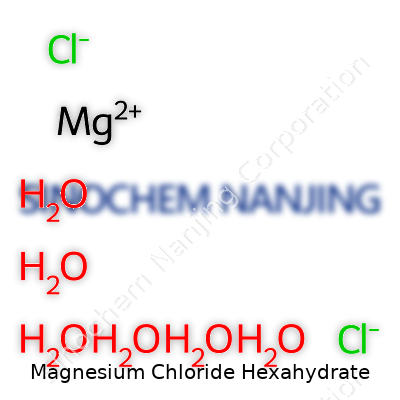
| Names | |
| Preferred IUPAC name | Magnesium chloride hexahydrate |
| Other names |
Magnesium dichloride hexahydrate Magnesium chloride, hexahydrate Magnesium chloride (MgCl2), hexahydrate |
| Pronunciation | /mæɡˈniːziəm klɔːˈraɪd hɛk.səˈhaɪdreɪt/ |
| Identifiers | |
| CAS Number | 7791-18-6 |
| Beilstein Reference | 3566856 |
| ChEBI | CHEBI:32599 |
| ChEMBL | CHEMBL1200841 |
| ChemSpider | 159410 |
| DrugBank | DB09361 |
| ECHA InfoCard | 100.028.267 |
| EC Number | 200-051-6 |
| Gmelin Reference | 67696 |
| KEGG | C14150 |
| MeSH | D008274 |
| PubChem CID | 24574 |
| RTECS number | OM2975000 |
| UNII | V1IY7XP94G |
| UN number | UN2816 |
| Properties | |
| Chemical formula | MgCl2·6H2O |
| Molar mass | 203.30 g/mol |
| Appearance | White crystalline solid |
| Odor | Odorless |
| Density | 1.569 g/cm³ |
| Solubility in water | 167 g/100 mL (20 °C) |
| log P | -1.55 |
| Vapor pressure | 17 mmHg (20 °C) |
| Acidity (pKa) | 6.0 |
| Basicity (pKb) | 7.61 |
| Magnetic susceptibility (χ) | -1.2×10⁻⁶ |
| Refractive index (nD) | 1.422 |
| Viscosity | Viscous liquid |
| Dipole moment | 6.23 D |
| Thermochemistry | |
| Std molar entropy (S⦵298) | 244.0 J·mol⁻¹·K⁻¹ |
| Std enthalpy of formation (ΔfH⦵298) | -1886 kJ/mol |
| Std enthalpy of combustion (ΔcH⦵298) | -2600 kJ/mol |
| Pharmacology | |
| ATC code | A12CC05 |
| Hazards | |
| Main hazards | Causes serious eye irritation. |
| GHS labelling | GHS07, GHS09 |
| Pictograms | GHS07, GHS09 |
| Signal word | Warning |
| Hazard statements | H319: Causes serious eye irritation. |
| Precautionary statements | P264, P270, P305+P351+P338, P337+P313 |
| NFPA 704 (fire diamond) | 1-0-1 |
| Lethal dose or concentration | LD50 Oral Rat 8100 mg/kg |
| LD50 (median dose) | LD50 (median dose): Oral (rat): 8100 mg/kg |
| NIOSH | RN0122 |
| PEL (Permissible) | PEL: Not established |
| REL (Recommended) | 50 mg/m³ |
| IDLH (Immediate danger) | No IDLH established |
| Related compounds | |
| Related compounds |
Magnesium sulfate Magnesium oxide Magnesium carbonate Magnesium perchlorate Calcium chloride |



