Lithium Nitride: More Than Just a Chemical Curiosity
A Brief History Stamped by Curiosity and Usefulness
Humans tend to find uses for the stuff they dig up and smash together, and lithium nitride shows how chemical curiosity can turn into practical science. Discovered in the 1800s—back when chemists pushed the limits of their glassware—lithium nitride was born from the simple combination of its elements. Early researchers isolated it from the reaction of lithium metal with nitrogen gas. Anyone who's handled lithium in the lab will understand the fascination with a material that forms so readily yet behaves so differently from its sodium or potassium relatives. It's not just another weird product of the alkali metals; lithium nitride turned out to have a set of features that make it special outside textbook diagrams. Early uses centered on its place in chemical laboratories as a controlled way to carry and release lithium, pivoting to modern uses as energy and tech spaces noticed its unique tricks.
What It Is and Why Its Features Matter
Lithium nitride is a reddish or purple crystalline solid, looking nothing like the soft, silvery metal most people picture when thinking about lithium. The color alone signals unusual features among alkali metal compounds. Forming this compound takes basic lithium metal, but unlike most of its chemical cousins, lithium nitride holds together in a crystal lattice that's tough and dense. Sitting at the crossroads of reactivity and stability, it can handle moderate temperatures but still reacts quickly with water—a sign of real chemical energy. Its melting point, close to 813°C, sets it apart from softer-spoken alkali metal salts, suggesting deeper applications where high temperature performance pays off.
Physical and Chemical Identity
Anybody who's handled lithium nitride in the lab knows it comes with both color and punch: this stuff shows off a striking red hue and disintegrates with a hiss if it hits moisture. Each crystal packs lithium and nitrogen atoms into a solid framework, letting chemists tap into both its reactivity and its structural reliability. Walk into a lab and you’ll notice the handling precautions. The product feels chalky to the touch if handled in dry conditions, but the reaction with water (or even moisture from the air) can generate dangerous ammonia fumes and heat. From that reaction, it’s clear this isn’t a compound to treat lightly—one small spill on a damp bench confirms its reputation almost instantly. Technical grades display high purity but trace elements matter, particularly for research into electronics or battery chemistry, where even tiny contaminants can skew results.
Technical Specs and Accurate Labeling
You never really get a shortcut with lithium nitride—purity and consistency count. Labs order it by exact weight, often sealed in glass or metal tubes. The industry stresses the right label: chemical composition (Li₃N), hazard warnings, date of manufacture, and batch identification. No one looks at these labels lightly; even a small error or smudged warning can lead to disaster in the lab. Common industry specifications include purity by mass (often above 98 percent) and particle size details, because reactivity jumps as powder becomes finer. It’s not about bureaucracy; it’s about surviving your workday.
So, How Is Lithium Nitride Prepared?
The classic preparation comes straight out of the chemical playbook: heat metallic lithium in an atmosphere of nitrogen. It’s not a reaction that you want to rush—too hot and the product decomposes, too cool and the reaction doesn’t go forward cleanly. Most researchers use sealed reactors, controlling the temperature around 500°C to help lithium nitride crystals form slowly and thoroughly. This tried-and-true route avoids introducing excess impurities, helping chemists get closer to theoretical yields. Some labs experiment with different methods—like plasma-assisted synthesis or solid-state approaches—to improve crystal quality or reduce particle size, especially in electronics research. Still, the standard recipe serves as the backbone for both large-scale manufacture and fine laboratory work.
Chemical Reactions and Tweaks
One thing that jumps out about lithium nitride is how willing it is to react further. Expose it to water, and it produces ammonia in a hurry, along with lithium hydroxide. This property lets researchers use it to make ammonia under cleaner, lower-energy conditions than the old Haber-Bosch approach, although scaling up remains a challenge. Heat it with certain metal halides and you get new lithium-based ceramics or battery materials—everyone chasing solid-state energy storage wants to tweak these reactions. Its ability to absorb hydrogen makes it attractive in hydrogen storage research, but controlling the reversibility remains a major research focus. The fact that tiny changes in temperature or particle size can change its performance keeps a lot of scientists busy.
Names in the Field: Synonyms and Trade Titles
Walk down the aisle of a well-stocked chemicals storeroom and you might see lithium nitride listed as "trilithium nitride" or "lithium azanidylidenelithium". Trade catalogs might feature it under its formula Li₃N, skipping the fancy names because users care more about clarity than wordplay. Some specialty brands assign unique trade names for specific grades, especially when purity or particle size jumps up for use in research or electronics. That said, most professionals stick to "lithium nitride" on the bottle—short, clear, limits confusion.
Safety Demands Respect
Anyone who spends much time in the lab knows safety guidelines for lithium nitride aren’t for decoration. Even a small spill can trigger clouds of ammonia, which stings eyes and lungs. The fine powder reacts instantly with water, so humidity control and protective gloves aren’t suggestions—they’re daily rules. Researchers train in handling lithium nitride using dry boxes, inert atmospheres (often argon or nitrogen), and double containment. Emergency procedures mean knowing exactly where to find neutralizing agents and fresh air. Waste handling won’t tolerate shortcuts: neutralize residues before disposal and never mix different reactive chemicals. Engineering controls and personal protective equipment keep potential accidents from turning serious, providing a layer of security in settings both large and small.
Stretched Across Many Industries
Lithium nitride earns its pay in spaces far from the classroom. Battery researchers explore it as a precursor for lithium-rich solid electrolytes, looking for stability and speed in ionic transport. Its use in hydrogen storage research stands out, with teams drilling into its high hydrogen uptake and potential for reversible cycles—a hopeful path toward practical fuel cells. It can even absorb and release nitrogen, bringing promise for gas separation systems. On smaller scales, chemical syntheses take advantage of its vigorous reactions: specialty organic compounds, new ceramic materials, and advanced coatings all tap into its properties. While parts of industry stick with better-known lithium compounds, those seeking next-generation materials keep lithium nitride on their shortlist.
The Science Never Rests: R&D and the Search for an Edge
Research on lithium nitride rarely slows down—there’s always a new challenge. A lot of teams focus on pushing hydrogen storage density higher, hoping to unlock clean transportation. Some develop hybrid materials that embed lithium nitride within ceramic matrices to boost conductivity while taming its reactivity. In solid-state battery research, the aim includes creating stable interfaces that resist breakdown while shuttling lithium ions back and forth. Other groups probe the basics—measuring conductivity, investigating defects, and mapping thermal expansion—trying to squeeze every advantage from its structure. Publications highlight a tug-of-war between power and safety, with every advance scrutinized for both technical merit and real-world hazards. It’s a race without a finish line, driven by the promise of better batteries, smarter sensors, and greener chemistry.
Toxicity: Not Just Academic Worry
Toxicity research for lithium nitride lives at the intersection of chemistry and medicine. Its quick production of ammonia marks it as hazardous: inhaling combustion or reaction byproducts can lead to lung irritation, coughing, and, in bad cases, chemical burns. Touching the powder, especially with damp skin, may cause burns or allergic-type reactions. Studies on environmental impact point to risk mainly when large quantities contaminate water supplies—fish and other aquatic life can’t handle sharp increases in alkalinity or ammonia. Animal studies remain limited, but those available suggest careful handling, clear protocols, and respect for both acute and chronic exposure matter.
Looking Ahead: Unwritten Chapters
Lithium supplies face stress as the world leans on rechargeable batteries, and lithium nitride represents only a small slice, but a critical one. Future development calls for greener production methods that waste less metal, use less energy, and produce fewer hazardous byproducts. Researchers dream up new modifications—atomic doping, nanoscale engineering, encapsulating lithium nitride for safer handling—to squeeze out better performance. Regulatory agencies may set tighter controls if occupational risks show up in industrial settings or new toxicology findings emerge. There’s no shortage of questions: will lithium nitride finally break through as a key battery material, or will it anchor the next generation of hydrogen technologies? Ultimately, lithium nitride stands as an example how solid chemistry can steer big ideas for safer, cleaner, and more efficient technology, even if the path forward never runs in a straight line.
What is Lithium Nitride used for?
The Real Uses Behind the Name
Lithium nitride hardly pops up in casual conversation, but it shows up in places most people don’t expect. With its reddish tint and formula Li3N, this compound often helps shape technology without grabbing headlines. My chemistry days taught me that no material stands alone—lithium nitride’s value always comes from how it interacts with other elements. It’s not something tossed around in a test tube for fun or display. Researchers and industry professionals see it as both a tool and a stepping stone for things with a much larger footprint.
Making Lithium Metal Even More Useful
Battery power rarely leaves the news. Phones, electric vehicles, and even gigantic solar storage depend on advances in lithium-based energy. Lithium nitride matters here because it reacts with hydrogen to release ammonia and hydrogen gas. Scientists often use it to produce high-purity lithium hydride. Lithium nitride itself doesn’t end up in your phone battery, but companies and labs often run tests with it during battery research to see how lithium behaves. Testing improvements in batteries often begins with simple chemical reactions like these, where lithium nitride helps refine new approaches. Reliable data starts with the right materials, and people count on lithium nitride to supply those results.
Mediating Chemical Change
One job lithium nitride handles well involves creating ammonia under controlled conditions. Some chemists use it as a hydrogen storage material, since it soaks up hydrogen quite efficiently. In my experience, finding creative ways to store and release energy quickly rests on materials like this—often unglamorous, always essential. Lithium nitride stores hydrogen at lower temperatures compared to some metals, making it attractive for specific lab and industry tasks. More research still goes into unlocking safer ways to handle hydrogen. As labs and companies push for cleaner power, every step forward in hydrogen production also sharpens the importance of such materials.
Powering Synthesis Pathways
Another, sometimes overlooked, role comes in the production of specialty glasses and ceramics. Lithium nitride shows up as a facilitator in some cutting-edge processes. Because it reacts so readily, it turns into an enabler for transformations in glassware that must withstand heavy temperatures, or perform electrical tricks in experimental setups. One time, I encountered a ceramic research project where small chemical tweaks, using niche compounds like lithium nitride, led to stronger, lighter materials. For industries chasing long life in their parts—from aircraft to satellites—these improvements mean lower costs and greater reliability down the line.
Looking Toward Safer Handling and Broader Supply
Lithium nitride isn’t something you want to spill in the lab. It reacts quickly with moisture in the air, releasing ammonia gas, which can be a safety problem. Workers need well-ventilated spaces and solid protective equipment. With demand for high-tech materials rising, companies have to ensure safe storage, transparent supply chains, and education for everyone handling it. Simple steps, like labeling containers clearly and investing in better training, cut down on risks and keep workplaces safer.
What’s Next for Lithium Nitride
As battery tech matures and new demands pop up in clean energy fields, expect more research into better uses for lithium nitride. Projects focused on recycling and more sustainable chemical production may soon rely on its unique abilities. I keep seeing students and professionals share stories of unexpected discoveries once they dive deeper into hands-on applications. Truth is, the next tech breakthrough can come from sidelined compounds like lithium nitride, especially if we put enough care and attention into understanding what they really offer the world.
What is the chemical formula of Lithium Nitride?
The Essentials: What Makes Up Lithium Nitride
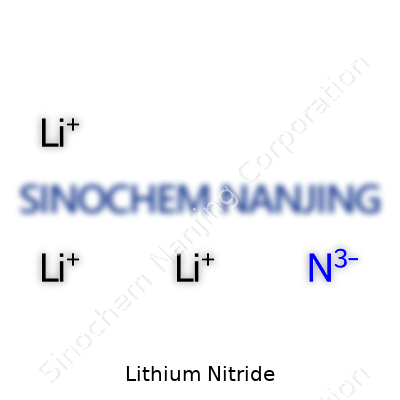
Lithium nitride usually shows up in chemistry textbooks as Li3N. A lot of people see those symbols and move on, but there’s a story behind this simple trio—a lesson that’s shaped my view of both science and the world. Li3N forms as lithium, a reactive metal, teams up with nitrogen, which makes up most of our air. One atom of nitrogen combines with three atoms of lithium, not just because that’s what the formula says, but because nature follows certain patterns. Lithium brings a single positive charge to the table, and nitrogen welcomes three electrons. Together, the charges add up to something pretty stable. That’s important if you’re trying to build batteries that don’t just burst into flames.
Real Impact: Why Lithium Nitride Matters
Knowing what makes up lithium nitride does more than help students ace exams. Li3N takes on a unique deep red color—uncommon in the world of salts—and stores even more value in the lab. This compound reacts with water to release ammonia, sometimes creating challenges and accidents if someone isn’t careful. Some chemists I’ve met say that’s what keeps the job interesting; nature rarely gives out freebies. Scientists use lithium nitride to make other chemical compounds. There’s been talk about using it in next-generation batteries thanks to the way lithium moves inside it, promising longer battery life and lighter weight for electronics, cars, and even drones. I’ve worked with engineers who hoped this nitride could solve overheating issues in lithium batteries—no more flaming laptops or cars stranded on the highway. They say progress often starts with something as simple as understanding how three atoms can come together.
Facts That Drive Curiosity
Li3N forms rapidly when lithium comes in contact with nitrogen gas, but the reaction takes serious heat—over 400°C—so it’s not something you’ll see in a regular classroom. It’s been used as a nitrogen source for making ammonia, which feeds the world by helping create fertilizer. Some researchers point to Li3N’s potential as a hydrogen storage material, paving the way for cleaner energy. Back in 2020, a research group in Europe reported that lithium nitride can absorb large amounts of hydrogen, then release it with moderate heat. These breakthroughs come from small details—how atoms sit together, how scientists manipulate their bonds. It’s a reminder for me that one overlooked symbol in a formula could transform entire industries, or at least the way we charge our phones.
Challenges and Looking Forward
Not everything is smooth sailing with lithium nitride. Exposure to moisture spells trouble, as it breaks down fast and releases ammonia, which affects air quality and can harm people or lab animals. Lab safety rarely makes headlines, but anyone who’s ever cleaned up a spill knows just how stubborn and dangerous these accidents get. Better storage solutions and clear labeling help reduce the risk; keeping chemicals in dry, tightly sealed containers cuts down on incidents. Conversations with chemists and safety officers showed me that health and safety education matters just as much as learning the formula. More research on lithium nitride’s behavior, especially outside ideal lab settings, could ease the way for broader adoption in energy and electronics fields. Every time I see Li3N, I remember that no formula exists on its own. Discoveries come from getting the small details right and preparing for the day when a red salt might power the next big leap in technology.
Is Lithium Nitride dangerous or toxic?
How Lithium Nitride Reacts to Everyday Life
Few people think about lithium nitride. It's a reddish, crystalline solid used most often in labs or industrial settings. In my college days, I watched professors handle it while lecturing on unusual materials. Its main act? Reacting with water. Pour a drop of water onto lithium nitride, and you get a hissing, fizzing response—ammonia gas bubbles up, and heat pours out quickly. This shouldn’t happen outside of controlled places. Throw some lithium nitride in a glass of water at home and you invite risk—not just from burns, but from breathing in toxic gas. Sadly, accidents happen most often when people underestimate a substance because it doesn’t look menacing.
Risks Beyond the Chemistry Lab
Lithium nitride reacts fiercely with moisture—not only water, but even humid air. That means skin can get burned with only slight contact. Eyes and lungs fare worse. Breathing in the dust or the ammonia it generates leaves a person coughing, with eyes stinging and lungs protesting. Workers in industries using lithium nitride need good gloves and masks, and well-ventilated workspaces. Stories travel fast in the chemical trade about burns and hospital visits after small spills or leaks, usually because someone let their guard down. Even a closed bag of lithium nitride left open near a sink turns sloppy in a hurry, as ambient moisture triggers its chemical moods.
Health Effects Are Real
Accidental contact makes for a rough day. Healthy skin doesn’t handle the caustic character of lithium nitride’s hydrolysis products. These include lithium hydroxide—a strong base that eats at flesh—and ammonia, which burns lining tissues. I used to know a technician who dismissed the early warning signs, thinking a tingling in his fingers would fade. He ended up with red, blistered skin on two fingers. Eyes can suffer long-term damage from a single splash. Breathing in even a little ammonia gas is enough to cause coughing fits, watery eyes, and breathing trouble, especially for those with asthma or other lung problems.
Untangling the Real-World Hazards
Lithium nitride doesn’t belong near food, water, or children. Proper containers keep it dry and safe in warehouses and science classrooms. Prudent companies invest in training and warn their staff about the risks, relying on years of occupational health research. The literature is clear on the dangers—studies show that repeated exposure irritates airways and damages tissues. Outside the workplace, spills and exposures remain rare, but potential remains real. Emergency rooms have documented skin burns and chemical bronchitis after careless handling. Reports published in chemical safety bulletins back up these findings, aligning with what industrial hygienists see on the ground.
Handling Hazards, Building Safety Around People
Responsibility grows with knowledge. Wearing goggles, gloves, and a mask doesn’t just protect you, but also coworkers and anyone at home waiting for you. Facilities with strong training programs, prompt cleanup protocols, and well-stocked emergency supplies prevent most mishaps. Good ventilation and secure storage work better than relying on luck. Universities and factories have learned those lessons, sometimes after painful mistakes. Sharing experiences and supporting ongoing education keep communities safe. Chemical safety isn’t just about rules—it’s about respecting the real power locked in common-looking solids like lithium nitride. That attention keeps both workers and bystanders out of harm’s way, day in and day out.
How should Lithium Nitride be stored?
Why Attention to Storage Matters
Lithium nitride holds a strange kind of power. The compound reacts aggressively with moisture and even small mistakes in handling or storage can result in unexpected, sometimes dangerous, results. I’ve seen a fair share of labs lost in distraction, only to pay for it later with fizzing, hissing piles where there should have been quiet containers. The stakes feel high because lithium nitride isn’t just thirsty for water—it transforms on contact, forming ammonia and lithium hydroxide, releasing heat and hazardous gas. Anyone who wants to keep things safe, whether in a chemistry classroom or a research warehouse, can’t ignore the basics here.
Using Real Barriers
There’s no escaping the need for tight, dry storage. Glass bottles usually don’t cut it, not unless they are sealed against air and water vapor. I’ve found the practical route involves double containment. One solid screw-cap bottle sealed inside another, paired with a desiccant packet, drops the risk almost to zero. A good desiccator cabinet, flushed with dry argon or nitrogen, adds insurance. The truth is, air sneaks in where you least expect it. Even small leaks doom the best intentions.
Paying Respect to Temperature
Lots of folks forget about temperature in these conversations. Lithium nitride won’t explode in the cold, but higher temperatures push up pressure inside sealed containers and tempt moisture to sneak past weakened caps. Most chemical storerooms rely on climate control, keeping everything stable, but this stuff deserves a spot far from any water source, far from windows or radiators. I've seen storerooms sweat in unseasonably warm weather, putting all that careful work at risk. Not treating temperature like a co-conspirator invites disaster for a substance like this.
Emergency Preparation Isn't Optional
Some people treat safety training as a formality, ticking boxes without real attention. Workers handling lithium nitride need better than that—a clear path from the chemical to the emergency shower, and gloves that fit before the first container is opened. I always keep mineral oil handy as a temporary stopgap if a spill occurs, because it smothers moisture instantly. Ammonia monitors, steady airflow, and quick access to eye protection don’t just sit on the shelf; they get used and inspected. These aren’t luxuries. They’re tools for survival in case something slips—because it often does.
Transparency Builds Trust
Responsible handling means sharing what works and what fails—no secrecy, no ego. Regulatory bodies like OSHA offer good guidelines, but local publication of incidents and lessons learned pushes safety higher. Audits don’t belong in a locked office drawer. People on the ground need real examples, not sanitized manuals. Sharing that last week’s reaction happened because a gasket failed or the desiccator gel turned pink helps more than pages of technical warnings. That spirit of open learning builds reliability, and it’s essential for building trust across teams, companies, and industries.
The Bottom Line
Lithium nitride commands respect. Storing it means learning the lesson before the hazard shows up, not after. Careful containment, dry air, cool rooms, and clear communication give everyone a fighting chance. These aren’t empty rituals. Real safety grows from real action, and that demands a lot more than a dusty shelf in the back room.
What are the physical properties of Lithium Nitride?
What Sets Lithium Nitride Apart
Lithium nitride isn’t a flashy compound, but it holds its own among materials chemists and battery researchers. Sporting the formula Li3N, this solid displays a deep red to dark purple color—an unexpected hue in a world where many compounds keep things dull. Pick up a piece (in a glove box, of course), and you’ll see it’s more brittle than tough, so much so that a gentle squeeze with a spatula can break it into smaller chunks. The crystal structure lives in the hexagonal camp, meaning the arrangement of lithium and nitrogen atoms lends itself to layered planes. This unique structure doesn’t just shape its appearance, but also steers several important characteristics.
Density and Hardness
The density of lithium nitride comes in at a light 1.27 grams per cubic centimeter. You can put it side by side with sodium chloride, and lithium nitride would barely tip the scale. That low density stems from the lightweight lithium atoms, and it makes transporting or storing the compound less of a logistical hassle. Hardness doesn’t make lithium nitride suitable for tough jobs—it’s fragile, snaps easily, and powders with little force. Everyday materials like glass or metal survive harsher conditions where lithium nitride fails.
Thermal Behavior and Reactivity
Heating lithium nitride tells another story. This compound melts not at room temperature, but only at about 813 degrees Celsius. Anybody handling it in labs with high temperatures has to keep that number in mind. Lithium nitride starts to decompose if pushed to 2,700 degrees Celsius, especially if there’s not much nitrogen around to keep things in balance. Holding a test tube of lithium nitride in the open air doesn’t end well, as even the moisture in the air can attack it. The nitride captures water molecules and forms lithium hydroxide and ammonia, a combination that demands cautious handling and airtight storage.
Electrical and Ionic Properties
On the conductivity spectrum, lithium nitride leans toward fast lithium ion movement. Researchers jumped on this trait, probing its roles in next-generation batteries. While not a champion among typical electrical conductors, it allows lithium ions to move rather quickly at moderate temperatures—think of it almost as a testing ground for new ideas in solid electrolytes. The compound bridges the space between insulators and full-blown conductors, offering a path to high-conductivity solid-state batteries. Lithium nitride may not solve the grid storage puzzle just yet, but the ion mobility sets a roadmap for future research.
Color and Visual Cues
In a lab, visual clues help chemists spot problems before they grow. Lithium nitride’s deep red tint signals its quality and purity. Too much discoloration, or fading to gray, points to air exposure or contamination. Any shift in appearance can tell a sharp observer that something failed in storage or that humidity broke through the container seal. A little hands-on experience with this compound trains the eye to catch these shifts, keeping experiments safe and data reliable.
Challenges and Approaches for Real-World Use
Moisture sensitivity trips up anyone who tries to use lithium nitride outside controlled settings. Glove boxes and dry rooms dominate any workspace where this material makes an appearance. The challenge goes beyond labs—if lithium nitride played a larger role in industry or energy storage, engineering airtight containers would become a design requirement, not an afterthought. Advances in solid-state batteries might lean on lithium nitride, but only if protective strategies keep the compound away from the water in our air.
Understanding these properties helps not just researchers, but anyone planning to move lithium nitride out of books and into working equipment. Its light weight, layered nature, high-temperature stability, and rapid lithium ion movement hold promise—but only as long as we remember its fragile, reactive side.
| Names | |
| Preferred IUPAC name | lithium azanidylazanide |
| Other names |
Lithium azanidylide Trilithium nitride |
| Pronunciation | /ˈlɪθiəm ˈnaɪtraɪd/ |
| Identifiers | |
| CAS Number | 12031-65-1 |
| Beilstein Reference | 3537527 |
| ChEBI | CHEBI:64007 |
| ChEMBL | CHEMBL1201659 |
| ChemSpider | 14090 |
| DrugBank | DB14597 |
| ECHA InfoCard | ECHA InfoCard: 100.029.718 |
| EC Number | 215-237-7 |
| Gmelin Reference | 7061 |
| KEGG | C18643 |
| MeSH | D008090 |
| PubChem CID | 9930859 |
| RTECS number | OU8400000 |
| UNII | N3P47G21GJ |
| UN number | UN3288 |
| Properties | |
| Chemical formula | Li3N |
| Molar mass | 34.83 g/mol |
| Appearance | Red or purple solid |
| Odor | Odorless |
| Density | 1.27 g/cm³ |
| Solubility in water | decomposes |
| log P | -0.346 |
| Vapor pressure | Negligible |
| Acidity (pKa) | Acidity (pKa): 33 |
| Basicity (pKb) | pKb = 15.82 |
| Magnetic susceptibility (χ) | +1200.0e-6 cm³/mol |
| Refractive index (nD) | 2.023 |
| Dipole moment | 0 D |
| Thermochemistry | |
| Std molar entropy (S⦵298) | 44.08 J·mol⁻¹·K⁻¹ |
| Std enthalpy of formation (ΔfH⦵298) | -167.6 kJ/mol |
| Std enthalpy of combustion (ΔcH⦵298) | -447 kJ/mol |
| Pharmacology | |
| ATC code | N05AN01 |
| Hazards | |
| GHS labelling | GHS02, GHS05, GHS07 |
| Pictograms | GHS02,GHS05,GHS07 |
| Signal word | Danger |
| Hazard statements | H260, H314, H318, H400 |
| Precautionary statements | P261, P280, P304+P340, P305+P351+P338, P310, P422 |
| NFPA 704 (fire diamond) | 3-1-2-W |
| Autoignition temperature | > 270°C |
| Lethal dose or concentration | LD50 (oral, rat): >2000 mg/kg |
| NIOSH | CY8225000 |
| PEL (Permissible) | Not established |
| Related compounds | |
| Related compounds |
Sodium nitride Potassium nitride Rubidium nitride Caesium nitride |



