Lead Fluoroborate: More Than Just a Chemical Formula
Looking Back: The Historical Roots
In the world of industrial chemistry, lead fluoroborate stands as one of those compounds that quietly shaped part of the manufacturing backbone for the modern age. Its story doesn’t boast headline moments, but it runs deep—especially in the surface finishing sector. Earlier in the past century, metal plating methods pushed past simple salt baths and shifted toward more efficient formulations for improved results. Chemists noticed that certain electrolytes created better conditions for smooth, even, and adherent metal finishes. Lead fluoroborate entered the toolbox as folks recognized its ability to keep lead ions floating easily in solution, essential for both quality control and consistency. The shift wasn't just about chemistry knowledge; strict labor rules and better worker protections pushed compounds showing lower volatile fume emissions or easier handling on job sites. For decades, lead fluoroborate supported industries seeking both performance and a higher standard of safety.
Understanding the Compound
Lead fluoroborate carries the formula Pb(BF4)2, a detail that reveals a lot about its role and behavior. In its pure form, it looks like a white, crystalline powder that dissolves readily in water. The solubility stands out: it keeps lead ions available in the electroplating bath without gumming up the works. Unlike some other lead salts, it neither cakes up under normal storage conditions nor decomposes easily at room temperature, so industrial users get a reliable product across shipments and storage times. It doesn’t take much humidity to keep it stable, which means you don’t see dusty air or bothersome clumping in storage bins.
Digging Into Specifications and Labeling
You won’t find many bells and whistles on the packages. Labeling has to meet the standards set by chemical handling rules, including hazard warnings and instructions, particularly because both lead and fluoroborate bring their own risks. Material data sheets focus on heavy metal handling, recommended personal protective equipment, and disposal steps. In the United States, clear label requirements reflect not only OSHA guidance but also the specific attention given to lead ion compounds due to environmental and health histories associated with misuse and mishandling.
Preparation and Chemistry: Trials and Tinkering
Manufacturers usually start with lead oxide or lead carbonate, add a splash of hydrofluoric acid and boric acid, then carefully manage the reaction temperature to avoid runaway acid boils or gas releases. Getting high purity in the product means careful measurement and controlled mixing—there’s no shortcut here. Once the mixture settles, cooling and filtering pull out stray particles and undissolved residues. The resulting solution either dries under reduced pressure to yield the solid, or stays in liquid form for direct shipment, depending on what the end-user needs for their specific process. This process rarely changes because the chemistry is well-known and efficient.
Getting Specific: Physical and Chemical Qualities
Any seasoned industrial chemist knows to respect both the lead and the boron-fluorine structures in this compound. Lead brings density and toxicity, while the fluoroborate group acts to up the solubility and regulate ion concentration in the bath. Physical handling reveals how the crystal structure fits easily into water, mixing almost as fast as table salt with only gentle agitation. The combination doesn’t corrode steel tanks outright but eats into less-resistant materials if care slips. In my own experience, one splash on an exposed copper wire can tell you right away—surface pitting and darkening happen quickly and remind you of the compound’s strength.
Synonyms and Market Names
The chemical rarely travels under aliases in trade. Forms like lead tetrafluoroborate or lead(II) fluoroborate show up in technical catalogs, but the compound stays mostly under its full chemical name in any regulated market. Though a few older documents use terms like ‘plumbous fluoroborate,’ these fell out of favor as chemical safety labeling improved across the board.
Real-World Reactions and Modifications
Once it hits the bath, lead fluoroborate undergoes simple but powerful chemistry. Electrical current in the bath moves lead ions toward the cathode, allowing a smooth metal layer to form, while the BF4 part keeps the solution stable and resists unwanted precipitation. Over time, a used solution builds up either sludge or trace contaminants. Operators respond by filtering or adjusting concentrations, sometimes topping off with additional acid or distilled water to keep metal concentration and acidity in check. Trying to cut corners usually ends with poor plating adhesion, rough finishes, or contaminated products, so most shops stick closely to established recipes and monitor conditions with simple but regular tests.
Demands of Safety and Operational Standards
Lead fluoroborate demands respect in any workplace. Safety standards—especially from regulatory bodies—come down hard due to chronic toxicity risks of lead exposure. In my time supervising a plating shop, we invested in well-sealed tanks, forced-air extraction, and frequent worker health checks. Operators suit up in gloves, eye protection, and aprons, even for minor tasks. The EPA and similar regulatory agencies worldwide strictly control disposal of any rinse water or spent bath, making sure no stray lead finds its way into waste streams. Reclaiming spent solutions often saves both money and environmental headaches, since improper disposal fines arrive quickly and can cripple small outfits.
Where It Works: Plating and Beyond
Surface finishing keeps the biggest market, with lead fluoroborate leading old-school, high-reliability applications in electrical connectors, switchgear, and battery plates—anywhere a robust, corrosion-resistant conductive layer counts. In aerospace and heavy equipment, demand for very dense, durable coatings has kept this electrolyte in use despite the rising challenge from newer, less toxic chemistries. Occasional research interest comes from material scientists looking to tweak alloy compositions or improve deposit structure. Most other lead compounds used for pigments or glass don’t match the properties or efficiency this electrolyte delivers.
Research, Development, and Changing Attitudes
Laboratory teams continue working hard to find alternatives that provide the same level of performance without the baggage of lead handling. Over the past ten years, I’ve seen advances in boron-based and silver-based electrolytes, but reliability and cost limit their adoption so far. In academic circles, chemists treat this compound as a benchmark to test new methods for solution stability or deposit optimization. New ligands, modified bath additives, and control systems pop up in literature, but industry remains slow to change without financial or regulatory push. Stakeholders keep an eye on environmental research linking occupational lead exposure to long-term health problems, and those findings sometimes drive changes faster than market forces alone.
Understanding and Managing Toxicity
Lead’s toxicity carries a heavy legacy. Decades of research shows its ability to build up silently in workers, raising the risk of neurological and kidney damage. Handling protocols have tightened as awareness increased. In my own circles, I’ve worked with teams running routine blood lead level checks and keeping medical logs, not only for regulatory compliance but also as a signal of basic employer responsibility. No system proves foolproof—spills and splashes happen—but rapid cleanup and education keep risk under control as much as possible. Fluoroborate itself adds fewer acute dangers, though its acidity can worsen the impact from skin contact.
Looking Ahead: What Comes Next
Industrial chemistry always changes in response to both regulation and innovation, and lead fluoroborate walks a thin line these days. Many see it as a necessary evil—highly effective but challenging to replace, especially in legacy systems built around its dependability. More manufacturers want alternatives that decrease hazardous waste and make processes safer across the board, driving research into greener electrolytes powered by rare earth metals or even novel organic frameworks. Until new solutions meet cost and reliability requirements, lead fluoroborate keeps its place in the toolkit. The next decade will likely see further restrictions and tighter process controls, but even with all the trouble, the compound’s efficiency and performance keep it in the mix—at least for now.
What is Lead Fluoroborate used for?
Why Lead Fluoroborate Matters
Anyone who has spent time in metal finishing circles or chemical manufacturing knows certain compounds rarely make the mainstream news, yet quietly shape entire industries. Lead fluoroborate is one. With a practical background in industrial chemistry, I’ve witnessed its influence up close, especially in the world of electroplating. This isn’t an obscure additive; it’s essential for operations that keep electronics, infrastructure, and machinery running smoothly.
Lead Fluoroborate in Electroplating
Think about all those shiny, tough layers on car parts, circuit boards, or plumbing fixtures. Much of their resilience comes from a finishing process called electroplating. Lead fluoroborate stands out because it brings a combination of solubility and stability to plating baths. In practice, it helps make smoother, denser coatings possible, cutting down on flaws or defects that can lead to early product failure.
In my earlier days working with plating lines, technicians often relied on lead fluoroborate when creating thick lead-based or tin-lead deposits. It keeps the solution conductive and allows even coverage over odd shapes. Fixing those problems after the fact means lost production and extra costs, so there’s real pressure to get the chemistry right from the start. Because of its predictable behavior, this chemical has become a staple for quality-minded shops.
Other Industrial Uses
Beyond electroplating, lead fluoroborate finds a home in specialty batteries, especially for heavy-duty uses. Early experiments with backup power systems in telecom or emergency lighting often called for advanced lead-based chemistries, and researchers appreciated how stable this compound remained under demanding cycles. Sometimes, it appears in soldering fluxes and ceramics, mostly as a way to deliver lead in a manageable, easily dissolvable form. Those applications taught plenty of process engineers that the delivery method matters almost as much as the recipe itself.
Safety Concerns and Environmental Responsibility
Lead compounds have earned a reputation for toxicity, and for good reason. Decades of research tie exposure to serious health issues. Having worked in facilities with strict health protocols, I can say that safe handling isn’t an abstract concern; it makes a real difference for workers and nearby communities. Regulatory agencies keep tightening controls on lead processing, driving manufacturers to look for less-hazardous substitutes. Still, some applications resist easy replacement due to technical demands.
Responsible users don’t treat disposal lightly. Growing up near a lake polluted by industrial runoff, I’ve seen what happens when chemical waste enters the environment unchecked: wildlife sickens, water becomes unsafe, and entire local economies struggle. Companies have to invest in proper containment, recycling, and waste treatment if they want to avoid repeating those mistakes. Technology does offer hope—closed-loop systems and better recovery methods keep more lead out of nature and inside controlled cycles.
Pushing for Safer and Smarter Approaches
Curiosity and caution both play a part in progress. Demand for safer workplaces and cleaner environments keeps pressure on chemical producers to innovate. Ongoing research into alternative compounds and greener processes may soon shrink the industrial need for lead fluoroborate. For now, people who work with it benefit from training, strong oversight, and a willingness to learn from past failures. The industries that rely on these chemicals do not exist in a vacuum; every improvement in safety or sustainability directly affects real lives.
Is Lead Fluoroborate hazardous to health?
An Overlooked Compound in Industry
Walking through an industrial plant, you come across names on drums that sound like half a chemistry lesson. Lead Fluoroborate is one of those. Used in metal electroplating and surface finishing, it helps create sleek coatings and precise metallic finishes. The element “lead” trips a warning for anyone who spent time in science class.
Companies working with this compound have plenty of technical know-how. How often, though, does that translate to concern for the people running buffing wheels, cleaning tanks, or handling waste? My own father worked around plating chemicals, and I still remember stories about thick gloves and ventilation fans that never seemed to keep the air totally clear.
Lead: No Safe Level
Doctors agree that lead, at any level, brings harm. Blood lead tests in children show this metal causes nervous system issues, lowers IQ, and stunts growth. Adults exposed to high amounts end up complaining about headaches, stomach pain, or even kidney problems. Federal agencies set workplace limits, but few would claim that exposure under these levels leaves no risk. The danger grows with time. Repeated low-dose contact builds up.
The fluoroborate part isn’t harmless either. Fluorides, in certain forms, can irritate skin, eyes, and lungs. People working in facilities can face coughing, burning eyes, or skin rashes. Many never know what’s causing their problems until a doctor picks up unusual symptoms.
Regulations Don’t Replace Caution
OSHA draws a line for airborne exposure to lead and asks employers to train staff, offer protective gear, and test workplace air. That makes for a binder full of rules, but even top-down safety plans fall apart. Maybe a face mask doesn’t fit right, or someone skips handling instructions on a busy shift. Mistakes slip through cracks, and workers bear the burden. The Environmental Protection Agency demands strict disposal methods because contaminated wastewater can ruin rivers and ground soil, and that hits communities living downstream.
Trouble spills beyond lab walls. Accidents release compounds into air or water, often without warning. Fires or spills in storage areas can lead to emergency cleanups that put responders at risk—especially if community leaders don’t know the real hazards involved.
Paths Toward Safer Workplaces
Switching to less toxic chemicals should get more attention. Every time industry pulls away from lead, overall risk drops. Until that shift, strong local checks do more than just fill out a checklist. On-site monitoring, real-time testing, and strict inventory control prevent surprises.
Training workers on specifics, not just basic chemical hazards, builds a culture that doesn’t settle for the lowest bar. Unions and worker groups pressing for transparency often spark safety changes faster than official enforcement. In my experience, employees listen to someone who has dealt with the aftermath of unsafe exposure more than they do to any poster on the break room wall.
Community Awareness Matters
People living near industrial areas deserve to know what gets stored and handled nearby. Clear reporting, fast communication after accidents, and routine environmental testing make all the difference. Families shouldn’t have to wonder if an odd smell or water taste links back to what happens behind a chain-link fence. Protecting workers and neighbors starts with honest talk about risk, not just numbers in a rulebook. No one wants their health or their kids’ future to be just a footnote in a safety report.
How should Lead Fluoroborate be stored?
Why Lead Fluoroborate Storage Matters
Lead fluoroborate is a heavy-duty chemical often used in metal finishing, especially for electroplating. It doesn’t just sound dangerous; it packs real hazards. Anyone who’s worked in a plating shop or an industrial lab can tell you about the white powder and clear liquid forms that never fail to command respect. A small mistake with storage can endanger health and wreck expensive equipment, so treating it like a household chemical just isn’t an option.
Choosing the Right Containers
Not every barrel or storage bin can handle lead fluoroborate. Steel and copper react with it, and that’s the last thing anyone needs—corrosion or contamination in storage creates risks of leaks and spills. Industrial sites I’ve worked with use high-density polyethylene (HDPE) drums or tanks, and sometimes glass containers for laboratory amounts. This material resists both the acidic nature and the corrosive action of the chemical, which means less chance of slow leaks or sudden messes.
Environmental Controls Matter
Keeping the barrel in the right spot changes everything. Moisture in the air can turn storage headaches into real emergencies. Lead fluoroborate grabs water out of the air (that’s “hygroscopic”), and with enough humidity, you end up with lumps, ruined batches, or even chemical reactions you didn’t ask for. In real-world terms, this chemical belongs in a dry place. The warehouse needs to be well-ventilated, so any lingering fumes don’t stick around and cause damage to lungs or equipment. It helps to label the storage area and drum clearly. Nobody wants to find out the hard way what’s in a container, especially if things go sideways.
Personal Safety Always Comes First
Lead causes real health problems—it doesn’t just mess up a process, it can mess up a body. Even a bit of exposure, over time, ends up in your bloodstream and your bones. Fluoroborate adds irritant risks. Good shops keep full PPE—gloves, safety glasses, lab coats, and chemical-resistant aprons—right next to the chemical. During any transfer, spills or splashes aren't just possible, they’re likely, so proper PPE isn’t optional. Trained staff can spot trouble before it spreads, and regular checks for leaks or stains around the drum make a dramatic difference.
Regulatory Compliance
It's not just about safety in the warehouse; handling lead compounds comes with strict legal oversight. OSHA and EPA have clear requirements on labeling, containment, and allowable airborne levels. Fines aren’t the only risk; people get hurt if shortcuts creep in. In day-to-day work, sticking to documented procedures helps. That means keeping lids on drums, updating inventory logs, and making sure emergency eye-wash stations are nearby and tested.
Disposal and Contingency
Every chemical has an end-of-life, and lead fluoroborate can’t get tossed in the trash. Companies use certified hazardous waste handlers, following the right paperwork trail. Nobody enjoys dealing with a spill, but accident plans—spill kits, neutralizing agents, and clear instructions—protect both people and property. In a world where budgets get tighter, some managers push for shortcuts. Based on what I’ve seen, every time someone tries to cut corners with this stuff, it costs more long-term—either through fines, downtime, or health crises.
Building a Culture of Respect for Hazards
Lead fluoroborate storage separates pros from amateurs. The best teams I know treat their chemicals and their people with equal seriousness. With sound storage, tough oversight, and open communication, those barrels stay out of the news and out of people’s lives. That’s the best anyone can do.
What are the chemical properties of Lead Fluoroborate?
What Makes Lead Fluoroborate Stand Out
Lead fluoroborate doesn’t show up in everyday conversation, yet it holds a real spot in the world of chemical manufacturing and electroplating. With the formula Pb(BF4)2, it delivers a double punch: you get the familiar toxicity and density of lead, paired with the reactive, highly soluble nature of the fluoroborate ion. Water and organic solvents take to it easily, so handling the compound means watching not only for direct exposure but also potential environmental contamination. In direct comparison to other lead salts, lead fluoroborate dissolves quite cleanly and creates a conductive solution, which plays a key role in its use.
Why Solubility and Reactivity Matter
Lead fluoroborate’s strengths rest on its solubility, especially in water. This feature gives industrial engineers an efficient option for lead plating processes. Dissolving well means even small amounts make an impact, driving smoother and more uniform deposition of lead on metal surfaces. Physical properties draw attention for another reason — the substance doesn’t just sit in a beaker. When it hits moisture, it sets the stage for reactions capable of releasing harmful gases like boron trifluoride, a highly volatile, toxic gas with corrosive bite. The ions themselves act as strong oxidizers, so leaving this compound near organic material or reducing agents spells trouble.
Working with a Double-Edged Sword
Lead is no playground material. Touching, inhaling, or swallowing even tiny amounts can bring on lead poisoning, a condition that attacks organs and nerves with serious health fallout. Fluoroborate ions, by their nature, carry a risk of corrosiveness that puts skin, eyes, and lungs at risk on contact. Time in an industrial lab drove home just how strict safety needs to be around these chemicals: full-face respirators, acid-resistant gloves, and fume hoods never seemed excessive, especially once you realize how quickly gases or fine particulate drift beyond containers.
Balancing Risk with Regulation
Regulatory bodies like OSHA and the EPA don’t pull punches about lead compounds. Rules require efficient exhaust systems, careful labeling, and routine blood lead testing for staff. Keeping air and wastewater free from trace contaminants calls for expensive filtration, plus trusted spill response tools. In my own work, scrupulously following storage protocols meant fewer scares. Containers don’t simply need tight lids — they demand clear hazard markings and secondary containment, far from acids, bases, or combustibles.
Looking for Safer Solutions
The properties that make lead fluoroborate popular for plating and surface treatments also spark debate. Many industries have thrown effort into finding alternatives that give the same electrical conduction or surface hardness with far less human and environmental risk. For example, tin, silver, and even some innovative newer alloys offer lower toxicity and still check the requirements for many treatments. Pressure mounts both from within the industry and from regulatory agencies, so research labs invest increasing resources into greener alternatives and recycling procedures for existing lead-based wastes.
The Bottom Line
Lead fluoroborate cuts a complicated figure. Its chemical properties gave industries a tool for efficient metal finishing, but the risks hang overhead from the day you order your first drum to the day you decommission your last tank. Staying ahead means not just knowing how this salt works, but also building safety and sustainability into every layer of the process.
How is Lead Fluoroborate handled and disposed of safely?
The Reality of Working with Lead Fluoroborate
Lead fluoroborate carries a reputation for being hazardous, both in terms of handling and disposal. Its risks stem directly from the lead content and the corrosive nature of its chemistry. I remember spending long hours in plating shops where a misstep with this chemical spelled big trouble, not just for personal health, but also for the environment.
Direct contact, inhalation of dust or fumes, or getting any splash on unprotected skin can quickly turn a normal day in the shop into a medical emergency. Even small doses build up over time, damaging the nervous system, kidneys, and other organs. That’s not hype. Statistics from OSHA regularly show higher lead exposure cases among workers handling such compounds. Each time someone overlooks a mask or skips gloves, the risk jumps.
PPE and Ventilation Matter
Protective gear isn’t a suggestion with lead fluoroborate. Goggles, gloves made for acids, and well-fitted respirators all count. It gets hot and uncomfortable, but there’s no excuse for cutting corners. Water-resistant coveralls do a good job shielding skin and regular hand washing using lead removal wipes helps. It’s just part of the daily routine for those who want to make it home healthy.
Ventilated workspaces have proven themselves. A local exhaust system above tanks sucks up fumes at the source. Simple fans won’t cut it. You want filtered systems that grab airborne lead before anyone breathes it in. If a company installs air monitoring, staff can check the effectiveness and spot problem areas fast. These steps keep exposure below regulatory limits and show employees their safety comes first.
Why Storage Standards Aren’t Just Paperwork
Proper storage eats up time and money up front, but the investment pays off over years. Sealed, clearly labeled drums sit on secondary containment trays. I once saw a shop save itself from a major spill—thanks to a simple containment tray when a forklift operator missed a turn. Easy labeling keeps anyone from mixing lead compounds with anything reactive or introducing incompatible materials like sodium compounds, which can create dangerous byproducts.
Disposal Demands More Than Good Intentions
Lead contaminates soil and water fast. Once it gets out, generations pay the price. The EPA and local authorities watch these compounds closely for a reason. In my experience, the safest path is hiring certified hazardous waste crews. They pick up, transport, and process the substance following legal routes. No shortcuts, no dumping down the drain. These teams neutralize and stabilize waste, then send it to sealed landfills designed to contain heavy metals or sometimes to recycling facilities that extract usable lead safely.
At home, no one would throw a car battery into the trash. In a workshop or factory, lead fluoroborate demands the same respect. Tracking waste, documenting storage, and planning regular pickups keep companies out of trouble and shield the local water table.
Training and Personal Responsibility
People need training they actually remember. Short videos and demonstrations—far better than a stack of boring printouts. Regular drills drive home what works and what doesn’t. Everyone from supervisors to new hires benefits. Once safety routines become habit, the job gets safer for everyone.
Relying on established facts, proven equipment, and practical habits keeps lead fluoroborate from causing bigger problems. Safe handling and smart disposal spare workers and neighborhoods from needless risk. That makes all the difference.
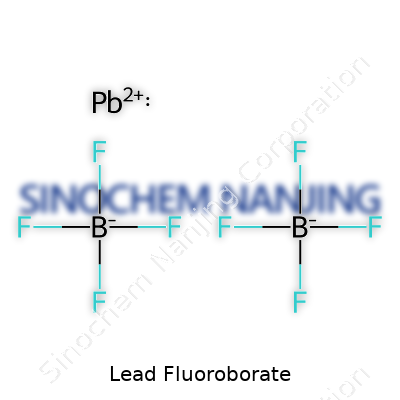
| Names | |
| Preferred IUPAC name | Lead tetrafluoridoborate |
| Other names |
Fluoroboric acid lead(2+) salt Lead(II) tetrafluoroborate Lead fluoroborate(2+) Lead(II) fluoroborate |
| Pronunciation | /ˈliːd ˌflʊə.rəˈbɔːˌreɪt/ |
| Identifiers | |
| CAS Number | 13814-96-5 |
| Beilstein Reference | 3587554 |
| ChEBI | CHEBI:91253 |
| ChEMBL | CHEMBL1201587 |
| ChemSpider | 21868275 |
| DrugBank | DB14555 |
| ECHA InfoCard | 07e3a522-9f04-4632-ba8e-88a084edc85a |
| EC Number | 237-249-4 |
| Gmelin Reference | 84611 |
| KEGG | C18771 |
| MeSH | D007924 |
| PubChem CID | 24870787 |
| RTECS number | OJ6125000 |
| UNII | 0IZ257UQ9L |
| UN number | UN2737 |
| Properties | |
| Chemical formula | Pb(BF4)2 |
| Molar mass | 367.01 g/mol |
| Appearance | White crystalline solid |
| Odor | Odorless |
| Density | 2.38 g/cm³ |
| Solubility in water | Soluble |
| log P | -2.1 |
| Vapor pressure | Negligible |
| Acidity (pKa) | - |
| Basicity (pKb) | 11.2 |
| Magnetic susceptibility (χ) | -54.0·10⁻⁶ cm³/mol |
| Refractive index (nD) | 1.52 |
| Viscosity | Viscous liquid |
| Dipole moment | 0 D |
| Thermochemistry | |
| Std molar entropy (S⦵298) | 220.2 J·mol⁻¹·K⁻¹ |
| Std enthalpy of formation (ΔfH⦵298) | -1308.8 kJ/mol |
| Pharmacology | |
| ATC code | |
| Hazards | |
| Main hazards | Harmful if swallowed, inhaled, or absorbed through the skin; causes damage to organs through prolonged or repeated exposure; causes severe skin burns and eye damage; toxic to aquatic life with long lasting effects. |
| GHS labelling | GHS02, GHS07, GHS08 |
| Pictograms | GHS05,GHS07 |
| Signal word | Danger |
| Hazard statements | H302, H332, H360Df, H373 |
| Precautionary statements | P261, P264, P271, P280, P301+P312, P304+P340, P305+P351+P338, P312, P330, P337+P313, P403+P233, P405, P501 |
| NFPA 704 (fire diamond) | 2-3-2 |
| Lethal dose or concentration | LDLo oral rat 300 mg/kg |
| LD50 (median dose) | 1320 mg/kg (rat, oral) |
| NIOSH | SA2450000 |
| PEL (Permissible) | 5 mg/m3 |
| REL (Recommended) | 2.5 mg/m³ |
| IDLH (Immediate danger) | 100 mg/m3 |
| Related compounds | |
| Related compounds |
Lead tetrafluoroborate Lead(II) nitrate Lead(II) acetate Ammonium fluoroborate Potassium fluoroborate |



