Lactose Monohydrate: An In-Depth Commentary
Historical Development
Lactose monohydrate didn’t just show up in pharmaceutical and food industry catalogs overnight. Tracing its roots takes us back to the days when dairy science began taking off, especially in Europe during the 18th and 19th centuries. Chemists discovered that the milky residue remaining after making cheese or butter left more than protein and fat—it held sugars, too. Extraction of lactose became routine for both food and scientific applications. In my own work with dairy, the shift from raw extraction to crystallization gave lactose monohydrate an edge, opening opportunities across industries. Factories in Switzerland and Germany scaled up production, following methods developed by researchers like Carl Scheele and later refining them into today’s standard processes. Today’s bulk production has roots tangled in decades of trial and error: adjustments in pasteurization, improvements in crystallization tanks, and purification steps all played a role. People recast these legacy steps for modern needs—turning a byproduct into a cornerstone for medicine, food, and beyond.
Product Overview
Most people associate lactose with milk, but lactose monohydrate takes things further. On my first visit to a tablet manufacturing site, the rows of silos filled with this powdery substance struck me. It’s white, fine, nearly odorless, with a slight sweetness. This form holds a single water molecule in its structure, giving it stability and better handling properties. Manufacturers use lactose monohydrate as a filler, carrier and even a sweetener. Within pharmaceuticals, it’s become something of a universal backbone; in foods, its appeal rests on mild flavor and digestibility for most people.
Physical & Chemical Properties
Lactose monohydrate brings a melting point near 202°C and absorbs water from the air more slowly than anhydrous forms. Its crystal structure holds onto water, helping it maintain flowability even under humidity that turns other sugars sticky. With a molecular formula of C12H22O11·H2O, this compound dissolves in water but resists most organic solvents—a useful quirk for separation tasks. Its reducing sugar properties allow it to undergo Maillard browning at elevated temperatures, a fact food scientists use to tweak flavor and color in products from baked goods to specialty cheeses. The uniformity of its crystals comes after careful control of temperature and pH in processing, something years of industrial practice have helped standardize.
Technical Specifications & Labeling
Lactose monohydrate appears on ingredient lists and drug labels with clear specifications. True quality comes down to meeting pharmacopeia standards—USP, EP, JP, and others. Heavy metals and microbial counts get tested down to parts-per-billion; pharmacopoeia-grade lactose must pass purity thresholds over 99 percent. Granule size often shows up in technical sheets, as tablet makers depend on predictable flow rates and compressibility. Labeling includes batch number, expiration date, water content, and source—often dairy or whey. Because lactose intolerance remains common, food packages must call out its presence, as mandated in food safety laws worldwide.
Preparation Method
From my experience in dairy labs, making lactose monohydrate begins with processing whey—the liquid left after cheese-making. Technicians filter and concentrate this whey, then evaporate it until the solution approaches supersaturation. Cooling triggers lactose crystals to form, with temperature and agitation determining crystal shape and purity. These crystals get separated, washed, and dried at carefully controlled temperatures to keep the monohydrate intact. Every step serves a purpose: minimize burning, prevent unwanted forms, and keep the size right for subsequent milling. The process reflects decades of small refinements—optimize drying time, tweak calcium chloride addition, prevent caking in storage bins.
Chemical Reactions & Modifications
Lactose monohydrate doesn’t just sit in storage waiting for transport. In both food and pharmaceutical labs, it reacts and modifies. Through acid or enzyme hydrolysis, it splits into glucose and galactose—a step necessary for producing lactose-free products. Oxidation leads to lactobionic acid, a compound showing promise for both food preservation and medical uses. Chemical derivatization—adding esters or ethers—enables products with altered solubility or sweetness. During Maillard reactions, heat and amino acids transform lactose into colored pigments and flavorful molecules, a trick widely used in baking. Its reducing end makes it a candidate for targeted chemical linkages, especially in drug delivery research.
Synonyms & Product Names
Lactose monohydrate has gathered a wallet full of nicknames. Sometimes bottles read “milk sugar,” other times “alpha-lactose monohydrate” or simply “lactose hydrate.” In the drug world, trade names pop up depending on the supplier: Fast-Flow Lactose, SuperTab, and Lactochem Deluxe show up on order forms. Chemists refer to its chemical registry numbers, but in the plant, staff sticks with short forms—lactose mono. Keeping up with these synonyms avoids mix-ups, since suppliers sometimes play fast and loose with trade branding.
Safety & Operational Standards
From an operational point of view, lactose monohydrate proves safe under most handling conditions. Workers gear up in protective masks and gloves because inhaling fine powders can irritate lungs—precision in powder milling keeps dust down. Food safety standards force producers to certify absence of contaminants and allergens, like traces of other proteins. Pharma regulations are tighter: good manufacturing practice codes kick in, audits comb through everything from temperature logs to allergen controls. Hazards arise not from the ingredient itself, but from slip-ups in cleaning or cross-contamination. Even with high purity, trace endotoxins or microbial residues can threaten medicine quality, so regular monitoring forms part of every plant’s routine.
Application Area
The reach of lactose monohydrate stretches across sectors. Pharmacies stock shelves with tablets and capsules that depend on its compressibility and stability. Drug formulators rely on lactose monohydrate to carry active ingredients and help them break down properly in the stomach. In the food industry, it acts as a subtle sweetener; bakers swear by its role in browning and crust formation. Dairy manufacturers use it to tweak texture or bulk up calorie content without overwhelming flavor. Even in biotech, scientists recruit lactose monohydrate as a cryoprotectant for bacterial cultures and as a nutrient in fermentation broths. Its availability and safety credentials open doors across product development.
Research & Development
I’ve seen research teams experiment with lactose monohydrate as more than a passive ingredient. Nanoparticle engineers trial it as a template for biodegradable carriers of vaccines. Materials scientists mix it into 3D printing pastes for fast-dissolving tablets. Researchers in lactose-intolerant regions push for micro-encapsulation techniques to mask digestive effects or enable slow release. The last decade has seen movement toward greener extraction methods, such as membrane filtration instead of traditional precipitation, reducing waste and water use. Chemical engineers continue chasing new cocrystallization partners that extend shelf life or enhance solubility. Across all this, patent filings for pharmaceutical modifications keep rising, promising broader medication access and new dosing forms.
Toxicity Research
Reports from toxicology labs show that lactose monohydrate, taken in normal dietary or therapeutic amounts, produces little toxicity. Lactose intolerance, a well-documented digestive reaction, makes up the primary adverse response, especially in populations with low lactase enzyme activity. Animal testing finds high safety margins, and human studies confirm its non-carcinogenic, non-teratogenic status. Anaphylaxis remains rare and generally connects back to trace milk proteins rather than the sugar itself. Even so, warnings about overuse appear in infant formulas and low-lactose specialty diets. The World Health Organization and food agencies track any emerging hazards—so far, without alarming findings.
Future Prospects
Lactose monohydrate doesn’t seem headed for obsolescence. Advances in synthetic biology point to modified lactose compounds for high-tech drug delivery systems or specialty prebiotics. Plant-based dairy alternatives still haven’t matched the functional role of lactose mono in tablet pressing, so demand in pharmaceutical manufacturing looks steady. Companies keep looking at ways to improve purity, shrink environmental impacts, and extend applications into sustainable packaging and coating materials. Consumer shifts toward clean-label ingredients might push suppliers to further transparency; traceability systems from dairy farm to finished product are already rolling out. Universities study new uses for lactose in targeted nutrition, vaccine stabilization, and even tissue engineering. As the food and pharma landscape evolves, so do the uses and perceptions of this versatile compound.
What is Lactose Monohydrate used for?
Easy to Overlook, But Often in Your Hands
Milk powder and baby formula sit on supermarket shelves and in pantries. Nutritional shakes, tablets, and sweeteners get used every day. Behind a lot of these products hides lactose monohydrate—a substance that most people pay little attention to, despite its widespread reach. Even folks who check labels regularly might not recognize this white powder or know what it’s doing in their supplements and medications.
From Pharmacy to Kitchen Counter
Walk into a pharmacy, and the over-the-counter painkillers, vitamins, and prescription tablets line row after row. Many use lactose monohydrate to hold the pill together. Without a binder that keeps each tablet consistent, doses would vary every time. I remember shadowing a pharmacist who explained that patients rely on uniform pills for safety—the right amount needs to be delivered to the body each time. Too much or too little can have real consequences, especially for medicines like heart or thyroid tablets. Scientists trust lactose monohydrate because it dissolves well and won’t mess with how the medicine works.
Lactose monohydrate isn’t just for medicine, either. Anyone who’s mixed protein powder knows about clumps and gritty mouthfeel. Companies in nutrition rely on lactose monohydrate to give shakes that smooth texture and a gentle sweetness. As a regular gym-goer, I appreciate when a protein shake actually tastes good and doesn’t settle unpleasantly. In many cases, this sugar does more than just improve taste; it helps blend the powder evenly throughout the product every time you scoop.
Safe and Familiar, But Not for Everyone
Food producers have used lactose monohydrate for generations for a reason. It comes from dairy, so it feels familiar and trustworthy. Most people digest it without a second thought. Yet, for those who are lactose intolerant, this ingredient can cause trouble. I once made the mistake of recommending chewable vitamin tablets to a friend who couldn’t handle dairy. That came with stomach aches and upset later—never again. Lactose content in pills is small, but the effects add up for some folks.
Better Solutions Mean Listening to Everyone
Doctors and nutrition experts now push for more options for people with sensitivities. Some companies have started producing “lactose-free” medications and using alternative fillers so no one feels left out. Taking the time to read labels and ask questions protects people. It feels encouraging that regulatory agencies in places like the U.S. and Europe require full disclosure of inactive ingredients.
Those who manufacture medicines, food, and supplements need to consider everyone who will use their products. I have seen allergen-free and vegan options expand on pharmacy shelves, which marks real progress. The more we talk about what goes into our foods and pills, the closer we get to everyone having the right options for them. Meanwhile, lactose monohydrate carries on quietly, proving its worth in pills, food, and nutrition. Just, maybe not in everyone’s medicine cabinet.
Is Lactose Monohydrate safe for people with lactose intolerance?
The “Hidden” Ingredient in Everyday Products
Most drug labels and food packages list lactose monohydrate in tiny print. This powder, pressed into tablets or used as a filler, sounds complicated. In reality, it’s just milk sugar with a water molecule attached. It's cheap, has a mild flavor, and works wonders for pills. If you’ve been diagnosed with lactose intolerance, spotting “lactose” on an ingredient list probably causes concern. I remember discovering that painkillers I trusted included this milk sugar after years of stomach cramps. It left me wondering if my discomfort had nothing to do with the medicine itself, but instead from this supposed “inactive” ingredient.
Lactose Content and the Risk for Sensitive Individuals
People with lactose intolerance have lower levels of lactase in their gut. Basically, this means milk sugar can ferment in the colon, producing gas, bloating, cramps, and sometimes diarrhea. Lactose monohydrate supplies almost the same amount of milk sugar as pure lactose. According to published research, one tablet often contains less than a quarter gram. Typical intolerance thresholds range from 10 to 12 grams daily—but even two grams can spark trouble for people with extreme sensitivity.
Some folks find themselves able to handle the odd pill or two, especially since the dose is tiny compared to a glass of milk. But no two bodies process lactose exactly the same way. My own reaction depends on what else I’ve eaten that day. Sometimes a small amount passes unnoticed. Other times, one tablet leads to an upset stomach within the hour.
The Pharmaceutical Dilemma
Pharmaceutical manufacturers have relied on lactose monohydrate for stability and consistency. Replacing it isn’t simple, especially when billions of tablets are pressed every year. It’s not just in painkillers or antibiotics—birth control pills, supplements, and chewable vitamins also contain lactose monohydrate. Most countries don’t require manufacturers to state the quantity of lactose, so consumers navigate their health with guesswork or by calling company hotlines.
Exploring Solutions
People react differently to small amounts of lactose. If you notice symptoms and suspect a medicine is the cause, it’s worth asking your doctor or pharmacist for alternatives. Some medications, especially in liquid form or capsules, use alternatives like cellulose or cornstarch instead of milk sugar. Pharmacists often have access to ingredient lists, even when the packaging does not show full details.
A few pharmaceutical firms recognize the struggle and are rolling out lactose-free versions, though these may cost more or remain harder to find. In some cases, compounding pharmacies can prepare custom versions without lactose. From experience, taking a lactase enzyme pill before medication has also helped minimize side effects, especially on days with multiple doses.
A Call for Better Disclosure and Options
Full transparency on packaging would let people with lactose intolerance assess their risk without guesswork. Reporting the actual lactose content on the label, not just its presence, empowers sensitive patients. Regular dialogue with healthcare professionals helps, too, as does pushing for more research into alternative excipients for commonly used pills. People should never have to choose between pain relief and a calm stomach.
What is the source of Lactose Monohydrate?
What’s Really Inside That Scoop of White Powder?
Growing up in a family where dairy played a big part in everyday meals, I took for granted how many products build on milk beyond the essentials. Lactose monohydrate, for example, tends to fly under the radar unless you spend time reading ingredient labels or taking prescription tablets. People often wonder where it comes from and whether it’s natural or some result of heavy processing. To understand the source, it helps to have a sense of the basic steps that pull this sugar out of milk and turn it into a familiar food and pharmaceutical ingredient.
Lactose in Its Natural Habitat
Lactose is a sugar found in milk, making up about five percent of the liquid. This isn't exclusive to cows; goat and sheep milk also contain lactose, as does human breast milk. Commercially, nearly all lactose monohydrate on shelves today starts from cow’s milk, mainly because there’s a big supply and the dairy industry presses hard for efficiency.
From Milk to Industrial Ingredient
Milk on its own is a hive of activity. It holds fat, protein, vitamins, minerals and, crucially, lactose. To get lactose monohydrate, companies start by skimming off the fat. The watery part left behind is called whey, and this is where the concentration of lactose jumps up. Cheese factories produce loads of whey as a byproduct, which makes for a steady starting point.
After separation, whey gets heated and filtered. This process removes most proteins and diverts the lactose-rich fraction for further treatment. It isn’t just a matter of boiling the liquid dry; purification steps follow, including filtration and the use of enzymes or acids to break down impurities. The result is a clear sugar solution.
Crystallization forms the backbone of the next step. By adjusting the temperature and water content, lactose separates out as big, blocky crystals. These crystals trap a molecule of water each—this is what turns plain lactose into lactose monohydrate. This form stands out by being less likely to clump together and by flowing smoothly, which is why it shows up in tablets, infant formulas, confectionery items and packaged foods.
Why the Source Matters
There’s been more talk in recent years about hidden sources of animal products in food and supplements. For vegans and those who don’t tolerate cow’s milk, knowing that lactose monohydrate almost always traces back to cow’s milk becomes a deal breaker. Even with heavy processing, lactose keeps its animal origin. That’s also a problem for anyone with strong allergies. The milk proteins mostly get washed away, but trace contamination might stick around.
Possible Alternatives and Label Clarity
For people who want to avoid animal products, the options remain limited. Plant-based milk sugars exist, but they lack the exact chemical structure of lactose—so they can’t serve as a one-to-one substitute in all applications. Some specialty producers are experimenting with lactose produced by fermentation, using microbes designed to build the molecule from plant sugar. This remains rare, and costs stay high for now.
Better labeling is a realistic step forward. As a parent and someone who watches for allergies, it makes sense to push for clearer ingredient lists. More detailed labeling about milk source and dairy processing helps those with dietary needs feel confident about what they’re buying and using. In my own experience, scanning for “lactose monohydrate” on medicine bottles sometimes surprises me—seeing just how common this milk-derived sugar is across seemingly unrelated products. The more transparent the sourcing, the more trust and safety for consumers navigating complex dietary choices.
What are the common applications of Lactose Monohydrate in pharmaceuticals?
Why Lactose Monohydrate Keeps Popping Up on Medicine Labels
Lactose monohydrate often shows up in pill ingredients. It’s not the flashy kind of component that gets advertised on the box, but for anyone who’s cracked open a bottle of aspirin, antibiotics, or a daily vitamin, chances are high that it’s in there. I’ve spent enough time peering at ingredients — for my own health concerns and those of family members — to notice how often this simple sugar appears. So, what’s the reason behind its popularity?
A Steady Foundation for Tablets
Every tablet needs a backbone. The chemical that carries the active medicine should be stable, safe to swallow, and easy to handle. Lactose monohydrate delivers that. It has a fine, powdery texture that blends well with all sorts of drugs. From my discussions with pharmacists and chemists, it turns out the stuff is easy to press into tablets. It doesn’t just bulk up a pill; it helps medicines stay firm and not crumble apart in the bottle or your pocket.
Helping Medicines Break Down at the Right Time
Lactose monohydrate lets pills fall apart correctly in the stomach. It has a structure that lets moisture seep in, which helps the tablet break down quickly. Nobody wants a headache tablet that falls apart in the bottle, nor one that stays solid in the gut. Drug makers use lactose monohydrate because it hits that sweet spot: it keeps things solid until it needs to dissolve.
The Workhorse in Dry Powder Inhalers
Asthma inhalers are a regular fixture in many households, including my own. Lactose monohydrate serves as the carrier for the active drug in these powders. It allows tiny doses of medicine to travel together, making it easier for the medicine to reach deep into the lungs. Inhaler design has come a long way, but lactose monohydrate sticks around because it works. Decades of use and mountains of data support its safety for this purpose.
Reliable for Patients and Manufacturers
Besides its technical uses, lactose monohydrate often provides peace of mind. It has a long safety record. Despite concerns about lactose intolerance, the amount inside a tablet or capsule rarely triggers symptoms. From a practical point of view, it keeps pills affordable. Medicines get made in bulk; costs build quickly. Lactose monohydrate keeps costs low without cutting corners on quality. That helps people get the medicines they need.
Looking at Solutions for Those Who Can’t Take It
Some folks do react to even trace amounts of lactose. For those patients, the medical industry continues to explore alternatives. Starch, cellulose, or mannitol sometimes step in, but each substitute brings its own quirks. Sometimes changing the filler can alter how a drug works, which means new tests and higher development costs. Better labelling and keeping track of patient allergies go a long way here. More access to lactose-free options in pharmacies is something people keep asking for, and it’s slowly improving.
The Bigger Picture in Drug Development
Lactose monohydrate’s steady performance has cemented its place in pharmacy cabinets and hospitals everywhere. Plenty of factors go into picking a filler, but the real measure is this: does it help people get better, safely and affordably? So far, lactose monohydrate keeps making the cut, backed up by decades of real-world results and trust from healthcare professionals.
Does Lactose Monohydrate have any side effects?
What Is Lactose Monohydrate?
Lactose monohydrate pops up all over the place. You see it in baked goods, tablets at the pharmacy, and even protein powders. I’ve noticed many folks don’t pay much attention to it because it’s just a sugar, found naturally in milk. It’s easy to think of it as harmless, but people with sensitive stomachs or special health conditions definitely notice when it’s in something they eat.
The Side Effects That Actually Matter
Anyone with lactose intolerance recognizes the struggle. For people like my cousin, who can’t drink a glass of milk without issues, even the small amount of lactose monohydrate in tablets can set off gas, bloating, or stomach cramps. That’s because their bodies don’t make enough lactase — the enzyme that breaks down lactose. According to the National Institutes of Health, about 68% of the global population has some difficulty digesting lactose, which is a much bigger chunk than people expect.
Some might think lactose monohydrate in medicine doesn’t amount to much, but anyone who’s sensitive knows that every little bit counts. You only have to see the reaction of someone who’s truly intolerant to appreciate just how unpleasant it can get. The most common symptoms: bloating, pain, nausea, excess gas, and sometimes even diarrhea. It can take anywhere from 30 minutes to two hours for symptoms to hit after consuming something that contains lactose.
Lactose Allergy: More Rare, More Serious
There’s another angle that gets less press — actual milk allergies. While lactose intolerance is uncomfortable, a milk allergy can be dangerous. It’s more common in kids but not impossible in adults, and it shows up fast with hives, swelling, and sometimes trouble breathing. As a parent, checking medication labels for lactose monohydrate has become as routine as remembering to buy bread.
The Prescription Pill Problem
Many people are surprised to learn that a chunk of prescription and over-the-counter tablets use lactose monohydrate as a filler. This matters most if someone needs to take medicine every day. For them, the small side effects — those stomach grumbles or urgent trips to the bathroom — add up. According to the Food and Drug Administration (FDA), lactose shows up in thousands of medications. This can complicate care for older adults and children who already have sensitive stomachs.
What to Do If You’re Sensitive
My advice after helping family members is to read every label. If you know you have issues, talk to your pharmacist or doctor. In many cases, there are alternatives without lactose, but you may need to ask for them specifically. Some companies try to get ahead of the problem with “lactose-free” versions of certain drugs and supplements, but these usually aren’t the default.
From a public health perspective, clearer labeling helps consumers make smarter choices. More training for healthcare professionals would keep patients from landing in uncomfortable situations, especially since pharmacists can often spot alternatives on the shelf. Better education and a more careful eye on ingredients help keep problems from slipping through the cracks.
Real Solutions for Real People
Science continues to improve how fillers get made. Researchers in pharmaceutical labs are pushing for better, more allergy-friendly ingredients. In the meantime, honest conversations at the pharmacy counter go a long way. People can take charge of their own health by checking labels, asking questions, and sharing what doesn’t sit right with them. Quality care comes from listening — and that counts for both the medical experts and the folks they’re trying to help.
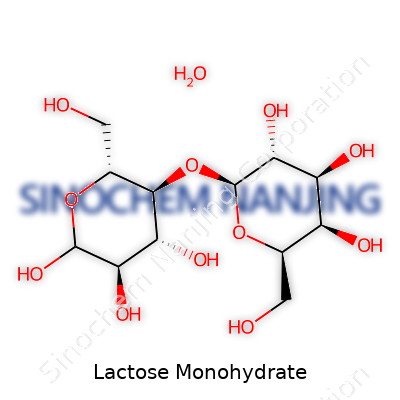

| Names | |
| Preferred IUPAC name | \[3,4,5-Trihydroxy-6-(hydroxymethyl)oxan-2-yl\] (2R,3R,4R,5S,6R)-6-(hydroxymethyl)tetrahydro-2H-pyran-2,3,4,5-tetrol monohydrate |
| Other names |
Lactose hydrate Milk sugar 4-O-β-D-Galactopyranosyl-D-glucopyranose monohydrate Lactose, monohydrate |
| Pronunciation | /ˈlæk.toʊs ˌmɒn.oʊˈhaɪ.dreɪt/ |
| Identifiers | |
| CAS Number | 64044-51-5 |
| Beilstein Reference | 1207934 |
| ChEBI | CHEBI:7961 |
| ChEMBL | CHEMBL1201201 |
| ChemSpider | 5292070 |
| DrugBank | DB09438 |
| ECHA InfoCard | 13e0bec6-8cb6-41af-aeee-3e2de35e6ba1 |
| EC Number | 200-559-2 |
| Gmelin Reference | 104154 |
| KEGG | C00243 |
| MeSH | D007787 |
| PubChem CID | 61383 |
| RTECS number | OJ7790000 |
| UNII | EWQ57Q8I5X |
| UN number | Lactose Monohydrate does not have a UN number assigned. |
| CompTox Dashboard (EPA) | XT1H9RKE3F |
| Properties | |
| Chemical formula | C12H22O11·H2O |
| Molar mass | 342.30 g/mol |
| Appearance | White or almost white, crystalline powder |
| Odor | Odorless |
| Density | 0.8 g/cm³ |
| Solubility in water | 16.1 g/100 mL (20 °C) |
| log P | -5.2 |
| Vapor pressure | Negligible |
| Acidity (pKa) | ~12.4 |
| Basicity (pKb) | The substance is considered neutral. |
| Magnetic susceptibility (χ) | -9.8e-6 |
| Refractive index (nD) | 1.427 |
| Dipole moment | 2.89 D |
| Thermochemistry | |
| Std molar entropy (S⦵298) | 427.1 J·mol⁻¹·K⁻¹ |
| Std enthalpy of formation (ΔfH⦵298) | -2227.4 kJ/mol |
| Std enthalpy of combustion (ΔcH⦵298) | -1565 kJ/mol |
| Pharmacology | |
| ATC code | A12BA20 |
| Hazards | |
| Main hazards | May cause respiratory irritation. |
| GHS labelling | GHS labelling: Not classified as hazardous according to GHS. |
| Pictograms | GHS07 |
| Signal word | Warning |
| Hazard statements | Lactose Monohydrate does not have any hazard statements. |
| NFPA 704 (fire diamond) | NFPA 704: 1-0-0 |
| Autoignition temperature | 400°C |
| Explosive limits | Not explosive |
| Lethal dose or concentration | LD50 (oral, rat): > 5,000 mg/kg |
| LD50 (median dose) | LD50 (Rat): > 5,000 mg/kg |
| NIOSH | FO0500000 |
| PEL (Permissible) | 15 mg/m³ |
| REL (Recommended) | 100 mg |
| Related compounds | |
| Related compounds |
Lactose Cellobiose Trehalose Sucrose Maltose |



