L-Tyrosine: Tracing an Amino Acid from Roots to Research Labs
Historical Development
L-Tyrosine holds a curious place in the story of science. Chemists isolated this amino acid in the mid-19th century, drawing attention as researchers unraveled the mysteries behind proteins and bodily functions. Johann Ludwig W. discovered it in 1846, eventually linking it to casein in cheese. Over time, the focus shifted to its unique side chain and how it fed into pathways forming dopamine, norepinephrine, and thyroid hormones. Generations of scientists chipped away at its complexities, uncovering health impacts and crafting methods to manufacture it at scale. Simple beginnings in a German lab turned L-Tyrosine into both a research priority and an ingredient for advanced therapies and supplements.
Product Overview
L-Tyrosine comes out as a white, crystalline powder when purified for supplements or research. It's used in capsules and protein powders, and shows up on ingredient lists in energy blends and cosmetic products. Food-tech keeps a steady demand for it, as do medical professionals seeking better parenteral nutrition and psychiatric support tools. For those struggling with stress or coping with chronic fatigue, advice from health practitioners often includes L-Tyrosine for mental clarity and alertness, though not all claims rest on firm scientific footing.
Physical & Chemical Properties
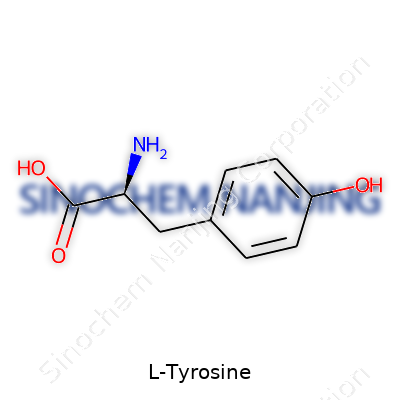
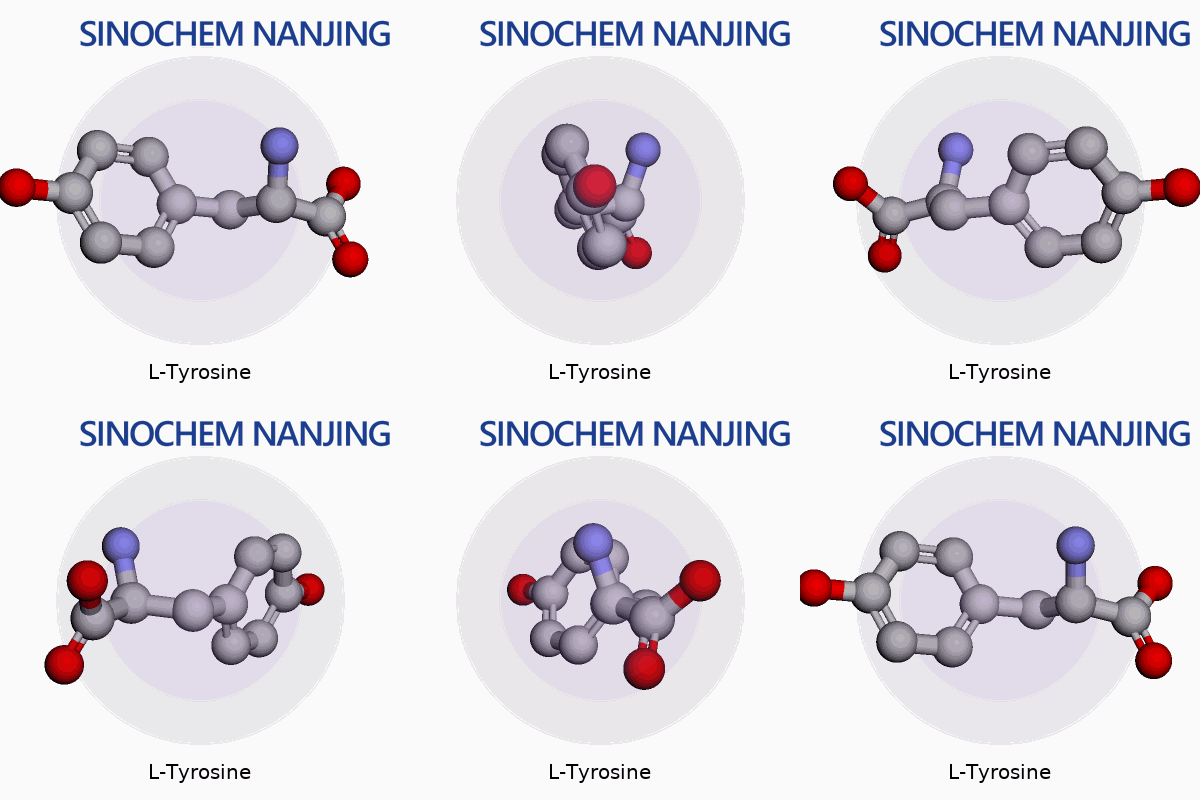
You find L-Tyrosine classified with the other aromatic amino acids. Chemically, it carries the formula C9H11NO3 and tips the scale at about 181.19 g/mol. Its slightly bitter taste gives away its identity. As a zwitterion, it carries both positive and negative charges depending on pH, letting it dissolve better in water than in organic solvents. The hydroxyl group sticking to the benzene ring gives tyrosine its edge, offering a handle for phosphorylation in cell signaling. Some research teams love how this group behaves during chemical modifications, giving them room to play with dye creation or complex peptide synthesis.
Technical Specifications & Labeling
Supplement bottles spell out L-Tyrosine as a “non-essential amino acid,” sometimes with claims about focus, alertness, or metabolism. Batch certificates break down purity, moisture content, heavy metal limits, and microbiological safety. Standards like USP or EP define benchmarks for quality. Manufacturers feel pressure to guarantee an assay range near 98-102% for food and pharma grades, checked by HPLC methods. Sports and nutrition labels follow regional rules, often adding warnings or intake recommendations. Authenticity relies on batch-to-batch testing and transparent records. Traceability matters, especially for big brands courting athletes and medical institutions.
Preparation Method
Producers make L-Tyrosine two main ways: extraction from protein hydrolysates and microbial fermentation. Early supply chains leaned on protein-rich materials like soja or casein, breaking them down and filtering the amino acid. Over the years, fermentation gained ground with biotech advances, using engineered bacteria or fungi that transform glucose into L-Tyrosine under tightly regulated fermentors. Bioreactor yields and purification steps matter for cost control and environmental impact. People in the industry keep looking for strains with better conversion rates and resistance to by-product formation, chasing efficiency and purity.
Chemical Reactions & Modifications
The reactive hydroxyl group on tyrosine’s ring allows diverse chemical modifications— from phosphorylation to diazotization and nitration. Synthetic chemists use this site in peptide coupling and conjugate formation, producing pharmaceuticals or probing proteins in cell studies. One key reaction, the iodination of tyrosine, is crucial in making thyroid hormones. Dye manufacturers sometimes reach for this amino acid to start certain colorant syntheses. In biotechnology, tyrosine analogs open the door to bioactive molecules, tagging and tracing, as well as biosensors evaluating enzyme function.
Synonyms & Product Names
On product sheets and labels, you'll spot names like 4-hydroxyphenylalanine, L-Tyr, or simply Tyrosine. In food, it might be listed as a flavor enhancer or nutritional additive. In pharmaceuticals, tyrosine could appear in combination with other aminos or as a stand-alone ingredient, sometimes wrapped in trade names for branded blends. Researchers use abbreviations such as Tyr when writing molecular sequences and discussing protein structures. Synonyms help bridge global markets and regulatory frameworks, but all point back to this single, versatile amino acid structure discovered centuries ago.
Safety & Operational Standards
Regulatory agencies, including the FDA and EFSA, place L-Tyrosine in a category of generally recognized as safe (GRAS), yet still demand thorough paperwork and robust quality checks. Producers handle its powder with attention to dust control and hygienic packaging. Operators working in pharma or food plants stick to SOPs that limit exposure and accidental inhalation. For dietary supplements, strict good manufacturing practice (GMP) policies keep contaminants out and prevent mislabeling. While the compound itself carries a low hazard profile for healthy adults at normal doses, long-term safety research and manufacturing discipline remain priorities.
Application Area
L-Tyrosine shows up in applications reaching from clinical nutrition to sports supplements. Hospitals include it in amino acid solutions for people who can't eat by mouth. Athletes, students, and shift workers often reach for tyrosine capsules, hoping for sharper focus or faster reaction, especially under stress or fatigue. In pharmaceuticals, it serves as a building block for drugs affecting the brain or hormone production. Laboratories favor it for protein synthesis and as a handle for attaching probes in biochemical assays. Food scientists add it to fortified blends or protein-enriched products to balance amino acid profiles for specific populations.
Research & Development
Study after study attempts to untangle L-Tyrosine’s impact on the human brain and performance under stress. Neurochemists investigate how taking this amino acid might change neurotransmitter levels, especially under pressure or sleep deprivation. Some small trials point to benefits for tasks requiring sustained attention or quick reflexes, though results vary. Meanwhile, R&D in biotech keeps tweaking microbial strains to churn out higher purity and more affordable tyrosine, aiming for both sustainability and speed. Elsewhere, synthetic biologists adapt enzymes to alter the backbone for new drugs and diagnostic reagents. Competition in these areas keeps this amino acid under close watch in research circles.
Toxicity Research
The literature mostly points to a strong safety record for L-Tyrosine at dosages found in diet and supplements. High doses, sometimes used in clinical studies, led to reports of headaches, heart palpitations, or mild digestive discomfort. Researchers track potential interactions with thyroid medication and MAO inhibitors, given tyrosine’s place in hormone and neurotransmitter pathways. Animal studies pushed the boundaries even further, probing for acute and chronic risks. For pregnant people, children, and those with phenylketonuria or thyroid disorders, extra caution is standard advice. Ongoing toxicity reviews aim to clarify upper intake limits as supplement use rises worldwide.
Future Prospects
L-Tyrosine lives at the crossroads of nutrition, medicine, and synthetic biology. As stress-related conditions and cognitive demand surge, interest in neuroprotective and adaptogenic ingredients grows. Precision nutrition researchers keep pushing toward individualized amino acid profiles, using metabolites like tyrosine as building blocks for tailored interventions. In industry, scalable and eco-friendly fermentation plants try to shrink carbon footprints and reduce waste. On the tech side, protein engineers work on tyrosine-derived monomers for advanced materials and nanomedicine. New findings in genomics and proteomics promise to bring L-Tyrosine further into the spotlight, as biotech and health care move toward more sophisticated, personalized solutions.
What is L-Tyrosine used for?
The Basics of L-Tyrosine
L-Tyrosine comes up a lot in conversations about supplements, stress, and mental focus. It’s one of the amino acids that our bodies rely on to build proteins. More important than the title of “building block,” though, is the fact that L-Tyrosine helps your brain make neurotransmitters. Think of dopamine, norepinephrine, and epinephrine—the chemicals tied not just to mood but also to how awake and alert you feel during the day.
Focus, Memory, and Mental Energy
Many people seek out L-Tyrosine because they’ve heard it can sharpen their focus and keep them productive when things get hectic. There’s research to back that up. One study in the journal Military Medicine followed cadets during stressful exercises. The folks who took L-Tyrosine performed mental tasks better and felt less frazzled. Anyone who has tried to power through a bad night of sleep or a packed workday knows how valuable a clear mind can be.
L-Tyrosine and Stress
From what I’ve seen, most turn to this amino acid because modern life presses hard on the gas pedal. Chronic stress burns through neurotransmitters quickly. That can leave you feeling foggy and depleted. By giving your brain a supply of raw materials, L-Tyrosine might help people stay a step ahead of fatigue, especially in high-pressure settings. Emergency responders, students cramming for big exams, and people who work inconsistent shifts bring up this supplement over and over.
Physical Performance
L-Tyrosine has gained a reputation among gym-goers too. Some athletes take it ahead of workouts to boost focus and energy, especially if they’re dragging from lack of sleep or nervousness. The supplement doesn’t act like caffeine—it won’t make you jittery—but some users say it keeps them “locked in” to routines or competitions. The science is still early, but the stories are everywhere. When training hard tears through your reserve of neurotransmitters, replenishing that pool can make a difference in performance.
Other Uses
Doctors sometimes discuss L-Tyrosine for people with thyroid issues, since it helps build thyroid hormones. That should always happen under medical supervision, though. There’s also talk online about mood support. For some, extra dopamine can erase some of the grayness during tough weeks. Past experience taught me that no supplement is a replacement for medical care—mood changes need a careful approach, especially if someone lives with depression or anxiety disorders.
What to Watch Out For
L-Tyrosine is easy to find, usually as powders or capsules in supplement stores. It’s generally safe for most people, but that doesn’t mean everybody should grab a bottle. Pregnant women, folks with thyroid disease, or people taking certain medications (like levodopa for Parkinson’s) should talk to their doctor first. I always tell people not to overdo it—your body only needs so much. High doses can give you headaches or mess with your heart rate.
Finding a Balance
Supplements like L-Tyrosine promise an edge where stress or tiredness sometimes get in the way. They can help, but they’re just one piece of the puzzle. A good diet, steady sleep, and honest conversations with medical professionals count for even more. If someone’s constantly feeling drained, the first step involves looking at the big picture. L-Tyrosine has a place, but it can’t do all the heavy lifting by itself.
Are there any side effects of taking L-Tyrosine?
A Closer Look at L-Tyrosine
L-Tyrosine often finds its way into supplement stacks for people seeking a mental edge, a mood lift, or help through periods of stress. It’s an amino acid, a building block of protein, and the body uses it to make important chemicals like dopamine, norepinephrine, and thyroid hormones. With the rush around supplements promising sharper focus and energy, people sometimes overlook what can go wrong or how their bodies might react.
Common Side Effects People Notice
Doctors and pharmacists hear about certain patterns. Taking L-Tyrosine by mouth at usual doses — usually up to 500 mg to 2,000 mg per day — doesn’t trouble most healthy folks. Upset stomach crops up as a real complaint, sometimes with headache, restlessness, or a feeling of being edgy. For those who try higher doses without consulting anyone, effects can ramp up: heart palpitations, rapid heartbeat, or blood pressure that creeps higher than usual. Nausea, heartburn, and joint pain occasionally push people to stop taking it. Even small things like feeling jittery or getting a bit of a migraine matter in daily life, especially for those juggling work and family.
More Serious Risks with Certain Health Conditions
L-Tyrosine seems harmless until someone with an underlying thyroid problem or high blood pressure takes it. For anyone with an overactive thyroid (hyperthyroidism) or Graves’ disease, adding L-Tyrosine can send thyroid hormone levels even higher, risking serious heart strain. People managing high blood pressure should also steer clear without talking to their doctor because of the risk for spikes. Those taking MAO inhibitors (a type of antidepressant) face a dangerous reaction if they add L-Tyrosine; it can send blood pressure to dangerous levels. Nothing about supplements is one-size-fits-all, and “more is better” falls apart fast for people whose bodies already have to work harder.
What Science Says About Long-Term Use
Claims swirl around L-Tyrosine’s “brain booster” potential, but the science still raises more questions than it answers. Short studies show performance benefits during stressful tasks — think soldiers and students — but nobody’s tracked what taking L-Tyrosine every day looks like after months or years. There’s always a risk with manipulating body chemistry in ways that haven’t been fully studied. Our bodies like balance, and pushing one system can quietly pull another out of sync. Supplement fatigue sets in, digestive issues build up, or sleep becomes unpredictable. I’ve spoken to endurance athletes who swear by it for big events but drop it during the regular season because of these subtle shifts.
Safer Use and Smarter Choices
L-Tyrosine catches attention because it’s found in protein-rich foods — cheese, eggs, fish, beans, chicken — and people figure supplementing it must be just as safe. But pills can hit the bloodstream faster and in higher amounts. Doctors and dietitians always remind us to look at the whole picture: Are you getting more anxious lately, noticing muscle tightness, or having trouble sleeping? Side effects creep in slowly, and separating mental stress from supplement effects can get tricky. Combining it with other stimulants (like caffeine) can make jitters or headaches worse. Keeping a journal of what you take and how you feel helps spot patterns. No supplement can replace healthy food, sleep, or finding time to recharge, even if L-Tyrosine can temporarily help with a mental lift or mood dip.
Better Answers Through Conversation
The safest route involves open talk with your healthcare provider, especially if you take medications or manage a chronic condition. Consumer labs, hospital pharmacists, and registered dietitians can sort facts from wild claims and help figure out what you truly need. I always tell readers: If a pill claims fast results, step back and ask if the fast lane matches your body’s needs in the first place. With L-Tyrosine, respect its power and listen to your body as much as you listen to the hype.
How should I take L-Tyrosine and what is the recommended dosage?
What is L-Tyrosine?
L-Tyrosine shows up as an amino acid, something the body forms from phenylalanine found in foods such as dairy, meats, nuts, and beans. Many people notice it on supplement bottles claiming a sharper mind, more energy, and relief from stress. Scientists point to its main purpose: building blocks for dopamine, norepinephrine, and epinephrine—three neurotransmitters shaping alertness and motivation. In short, your brain counts on tyrosine to keep focus steady during long workdays or tough workouts.
Why Consider Taking It?
Many reach for L-Tyrosine after hearing about its effects on stress response and mental performance. Military and sports research shows tyrosine seems to help concentration under pressure, such as hard exams, stressful jobs, or jet lag. Beyond that, people managing medical conditions like ADHD, hypothyroidism, or depression sometimes use it in hopes of an extra boost. Always remember, supplements should support—not replace—a healthy lifestyle or medical care. Any notion that a pill wipes away stress or mental fatigue oversells what nutrition science can promise.
How to Take L-Tyrosine
Pills, capsules, and powders line store shelves, but deciding how much to take calls for a little thought. Most supplements come in 250 to 500 milligram servings. A common recommendation for focus or mild stress sits between 500 and 2,000 milligrams daily, usually split into two doses. The body tends to absorb L-Tyrosine better on an empty stomach, about 30 minutes before meals. I’ve seen more people report results starting on the lower end, watching for side effects, and only increasing if needed.
Personal experience—and the experience of those I’ve spoken with—suggests that taking more does not always serve you better. Many report jitteriness or headache above the 2,000-milligram range. Too much tyrosine can raise blood pressure and interact with medications for thyroid conditions or depression. Always talk to a doctor or pharmacist before starting, especially if taking prescription drugs or dealing with chronic illness.
Finding the Right Dose
Studies say most healthy adults respond best to a single dose of 100-150 mg per kilogram of body weight before stressful events, but day-to-day usage rarely requires that much. People curious about cognitive support, especially students or shift workers, usually stay at 500 to 1,000 milligrams daily. Athletes working out in hot conditions sometimes use doses up to 2,000 milligrams. The U.S. Food and Drug Administration doesn’t regulate supplements tightly, so check for third-party testing on any product category—NSF or USP-certified bottles offer more peace of mind.
Potential Solutions for Safe Use
Starting low and ramping up slowly stands as a basic but solid rule. Watch for warning signs: rapid heart rate, high blood pressure, mood swings, or stomach pain. Pairing L-Tyrosine with plenty of water and a balanced breakfast helped me avoid nausea or headaches. Sticking with brands that clearly post ingredient lists and forbid artificial fillers adds a layer of safety. Only trust advice from medical professionals or registered dietitians, not anonymous internet posts.
Final Thoughts on Responsible Use
L-Tyrosine brings potential benefits for those facing tough mental tasks or heavy stress, but it’s not magic or risk-free. Quality sources, honest dosing, and health guidance matter more than chasing quick fixes. My strongest results always came from a full night’s sleep, exercise, and steady meals, with supplements like L-Tyrosine playing only a modest supporting role.
Can I take L-Tyrosine with other supplements or medications?
Understanding L-Tyrosine in a Real-World Context
L-Tyrosine sits on the crowded shelf of amino acid supplements. Plenty of fitness junkies chase it for mental focus, especially before a workout. I’ve seen folks at the gym loading up on shakes that claim to boost mood, focus, and even stress resistance. L-Tyrosine plays a part because it’s a building block for dopamine, norepinephrine, and other big-name brain chemicals.
What Happens When You Add Other Supplements?
It’s tempting to grab a shopping cart full of capsules promising better memory, calmer nerves, and better sleep. Mixing L-Tyrosine with things like B-vitamins, magnesium, or even other amino acids might seem harmless. Plenty of users report stacking it with caffeine, thinking it’ll amplify their focus. But excitement can run ahead of solid science.
A 2021 review in Nutrients pointed out that people often combine supplements without checking for interactions. L-Tyrosine, by raising certain neurotransmitters, can nudge your balance in ways that become unpredictable with other stimulants—think caffeine or pre-workouts loaded with beta-alanine. Those racing heartbeats or late-night jitters can creep up fast.
Real Concerns With Medications
Mixing L-Tyrosine with prescription drugs carries heavier risks. Folks on antidepressants, especially MAO inhibitors or SSRIs, need to pause. Combining these treatments can tip brain chemistry out of balance, sometimes with dangerous spikes in blood pressure or weird mood swings. Even blood pressure medications interact in weird ways because L-Tyrosine supports the same chemical chains that keep the nervous system humming.
As someone with friends in the bodybuilding space, I’ve watched peers shrug off these warnings. More than one ended up talking to their doctor after some odd side effects. The reality? Most people don’t tell their doctors about their full supplement lineup, fearing they’ll just get scolded. But a 2022 study in JAMA found that more than thirty percent of supplement users experience unplanned interactions when mixing with meds, even over-the-counter ones.
Smart Solutions: Honest Communication and Simpler Stacks
The best policy comes down to honesty and simplicity. Let your doctor or pharmacist know what you’re actually taking. If you walk up with a bag of supplements, list everything, not just the stuff you think they’ll approve of. Keeping a journal helped me notice patterns between supplements and side effects. If new issues show up after adding something like L-Tyrosine, stop and reassess.
Research changes fast. Reliable resources like the National Institutes of Health supplement fact sheets help clarify what’s studied and what’s just hyped. Doctors value patients who do some homework, ask questions, and avoid overcomplicating their health with stacks of unknowns.
Balancing physical gains, mental focus, and daily health means trusting science and lived experience. The days of mystery supplements and wild combinations are fading. Better results come through honest talk and treating your body like a long-term project, not something to hack with every new powder or pill.
Is L-Tyrosine safe for long-term use?
The Reality of Supplements in Daily Life
Finding new ways to stay sharp, focused, and balanced gets a lot of attention these days. L-Tyrosine pops up in conversations about productivity—from college students to office workers chasing deadlines. It’s an amino acid found in foods like chicken, fish, dairy, and some plant sources. People often turn to L-Tyrosine supplements because research links it to brain function, especially under stress.
What Science Tells Us
L-Tyrosine plays a role in making dopamine, norepinephrine, and epinephrine. These are chemicals our brains use to manage alertness, mood, and stress. Studies suggest a single dose helps clear-headed thinking when sleep is short, or pressure piles on. People report taking L-Tyrosine to stave off mental fatigue during night shifts, exams, or demanding projects.
The real question sticks: does taking L-Tyrosine remain safe when done every day for months or years? There’s no easy answer. Short-term trials—usually weeks, sometimes a few months—show it’s well tolerated in moderate doses. Side effects like nausea, headache, or heart palpitations rarely come up in clinical data, but nobody has looked at the supplement’s effects beyond a few months.
In my experience talking to people in wellness circles, long-term supplement use often turns into a guessing game. Supplements sell hope, not certainty, because the science stops at the clinical trial. L-Tyrosine is not an exception. Supplements on store shelves don’t live up to the careful oversight seen with prescription medications. That means more risk for contamination, mislabeled ingredients, or unexpected results, especially as people age or mix supplements.
Long-Term Use: Where Problems Show Up
Taking L-Tyrosine every day without breaks could lead to an imbalance in neurotransmitter levels. The body relies on a delicate system, and tweaking one piece too long sometimes nudges others out of place. For people living with thyroid issues, L-Tyrosine might mess with thyroid hormone production. Some research suggests L-Tyrosine supplements may not be safe alongside certain medications, such as MAO inhibitors or thyroid drugs. Anyone with ongoing health conditions—mental or physical—faces more risk and uncertainty.
People often ask if they can just test it for themselves and see. For some, things start out fine. But symptoms like headaches, gastric distress, or anxiety can creep up later. Nobody wants to find out six months down the line that something felt off for a while and never linked it back to the daily capsule.
Making Smarter Decisions
It helps to keep a realistic perspective. Eating a balanced diet still brings L-Tyrosine in naturally, without reaching for a pill bottle. The body knows best how to handle the amounts found in food.
Anyone considering L-Tyrosine for the long haul should talk openly with a doctor or pharmacist. Sharing current medications and health concerns gives professionals the tools to spot possible issues. Checking supplement quality, sticking to lower doses, and taking regular breaks all lower the risk.
Long-term safety may depend more on context than the compound itself. Supplements never stand alone; they mix with daily routines, genetics, and life changes. People who approach new supplements with curiosity, caution, and a willingness to check in with a trusted health provider put themselves in the best position for real well-being.
| Names | |
| Preferred IUPAC name | (2S)-2-amino-3-(4-hydroxyphenyl)propanoic acid |
| Other names |
4-hydroxyphenylalanine L-2-Amino-3-(4-hydroxyphenyl)propanoic acid |
| Pronunciation | /laɪˈtaɪ.rə.siːn/ |
| Identifiers | |
| CAS Number | 60-18-4 |
| Beilstein Reference | 1207173 |
| ChEBI | CHEBI:6057 |
| ChEMBL | CHEMBL902 |
| ChemSpider | 566 |
| DrugBank | DB00149 |
| ECHA InfoCard | ECHA InfoCard: 100.003.463 |
| EC Number | 1.14.16.2 |
| Gmelin Reference | 17522 |
| KEGG | C00082 |
| MeSH | D013972 |
| PubChem CID | 6057 |
| RTECS number | YD0875000 |
| UNII | 9YHU0I371Y |
| UN number | 3464 |
| Properties | |
| Chemical formula | C9H11NO3 |
| Molar mass | 181.19 g/mol |
| Appearance | White to off-white crystalline powder |
| Odor | Odorless |
| Density | 1.2 g/cm³ |
| Solubility in water | Soluble in water |
| log P | -2.26 |
| Acidity (pKa) | pKa = 2.2 (carboxyl), 9.1 (amino), 10.1 (phenol) |
| Basicity (pKb) | 8.72 |
| Magnetic susceptibility (χ) | -9.13×10⁻⁶ cm³/mol |
| Refractive index (nD) | 1.695 |
| Dipole moment | 1.35 D |
| Thermochemistry | |
| Std molar entropy (S⦵298) | 89.9 J·mol⁻¹·K⁻¹ |
| Std enthalpy of formation (ΔfH⦵298) | -518.4 kJ/mol |
| Std enthalpy of combustion (ΔcH⦵298) | -3518 kJ/mol |
| Pharmacology | |
| ATC code | A11JB |
| Hazards | |
| Main hazards | May cause eye, skin, and respiratory tract irritation. |
| GHS labelling | GHS07 |
| Pictograms | GHS07 |
| Signal word | Warning |
| Hazard statements | Hazard statements: Not a hazardous substance or mixture according to Regulation (EC) No. 1272/2008. |
| Precautionary statements | Food supplements should not be used as a substitute for a varied diet. Do not exceed the recommended daily dose. Keep out of reach of young children. Store in a cool, dry place. |
| NFPA 704 (fire diamond) | 1-1-0 |
| Autoignition temperature | 410 °C |
| Lethal dose or concentration | LD50 (oral, rat): 7,116 mg/kg |
| LD50 (median dose) | LD50 (median dose): Mouse oral LD50 = 5110 mg/kg |
| NIOSH | RN: 60-18-4 |
| PEL (Permissible) | 5000 mg |
| REL (Recommended) | 500 mg per day |
| Related compounds | |
| Related compounds |
4-Hydroxyphenylpyruvic acid L-DOPA Phenylalanine Tyramine Homogentisic acid |



