L-Glutamic Acid Diethyl Ester Hydrochloride: A Deep Dive
Tracing the History
Modern chemistry owes a lot to amino acid research, and L-glutamic acid diethyl ester hydrochloride shows how a basic compound can drive change. Researchers first explored its ester versions to break new ground in peptide synthesis. Over time, laboratories in Europe and North America pushed forward, finding unique ways to manipulate core structures. Back in the mid-20th century, this substance offered practical ways to modify glutamic acid's natural behavior, laying groundwork for peptide modification in labs and growing its reputation as a must-have in organic synthesis. Progress didn’t come overnight—decades of trial, error, and a lot of hands-on laboratory work shaped how we work with this compound today.
Product Overview
L-glutamic acid diethyl ester hydrochloride comes as a fine, off-white to very pale yellow solid powder, sometimes showing a faint odor. In most laboratories, you find it labeled with batch tracing, purity grade, and a warning about moisture sensitivity. Most commercial stock sits above 98% purity, with handling guidance clear right on the labeling. The compound's main appeal comes from how the ethyl esters change the backbone, opening doors for quick reactions. Its hydrochloride salt form helps guarantee stability, shelf life, and convenience in storage. One bag holds a lot more than just salt and base—there is a long line of innovation and safety measures behind each container.
Physical and Chemical Properties
A key feature: crystalline powder with a melting point near 110-114°C, dissolving in water, methanol, and some polar solvents. Unlike basic glutamic acid, this ester resists moisture-driven breakdown, keeping reactions on schedule. The hydrochloride keeps it stable under lab air, but humidity above 60% tends to make it clump or degrade. Its molecular formula, C9H18ClNO4, and molecular weight close to 239.70 g/mol, make it easy to handle for precise weighing and formulation. Color rarely shifts, letting researchers catch problems before they snowball. Strictly speaking, data like Boiling or Flash Point matter less with esters known for gentle handling—the real challenges come from purity, contamination, and cross-reactivity.
Technical Specifications and Labeling
Long before hitting a scientist's bench, each batch gets tracked through certificates of analysis. Labels report on appearance, molecular signature verified by NMR and IR, chloride content, and degree of esterification. I’ve seen labs get creative with tamper-proof seals and color-coding for hazardous materials, cutting down on accidental mix-ups. Storage instructions—always cool, dry, sealed—aren’t just guidelines but the line between solid science and spoiled experiments. Bar codes or QR codes often link right to digital safety sheets, matching the fast pace of research. Trace metals, total impurities, and residual solvents get special scrutiny thanks to ICH and USP standards. A sharp eye on shelf life keeps quality up, protecting both people and data.
Preparation Methods
Manufacturers take no shortcuts with synthesis. Classic methods react L-glutamic acid with ethanol in the presence of acid catalysts, pushing the esterification right to completion. Stringent distillation removes side products, with hydrochloric acid dropped in at just the right time to form the stable salt. This step matters most: without careful control, you lose yield or find too much residual acid lingering. Advanced setups use rotary evaporators and water traps, giving higher yields and better reproducibility. Side products show up as tiny peaks in chromatograms—no lab wants to see that. Skilled hands and modern spectrometry keep byproducts low, making the compound consistently reliable for high-stakes synthesis.
Chemical Reactions and Modifications
Many reactions spin off from this starting block. The ester unlocks fast peptide coupling for peptide chains, perfect for biochemical research. Protecting groups get swapped out without stripping away the backbone. Acid or base hydrolysis restores glutamic acid or yields other derivatives for specialty projects. Modification often happens on the amine or side-chain ends, where scientists tack on tags for fluorescence, magnetic separation, or drug delivery. Because the ester group resists mild conditions, it stays put through multi-step synthesis—only strong hydrolysis or enzymes shift it back to the acid. Sharper minds keep pushing new modifications, from radio-labeling to bioconjugation, seeing its value grow with every tweak.
Synonyms and Product Names
Confusion sometimes starts at the label: L-glutamic acid diethyl ester hydrochloride goes by many names, from Diethyl L-glutamate hydrochloride to L-glutamate, diethyl ester, hydrochloride. Older catalogs list it simply as Glu(OEt)2·HCl. I’ve watched international orders bump up against unfamiliar brands and codes—a reminder that cross-checking molecular structures, not just product names, safeguards research. Suppliers in North America, Europe, and Asia use slightly different labeling, making it smart to double-check before mixing stocks. No matter the name, the core chemical structure tells the full story.
Safety and Operational Standards
Routine safety practices protect everyone touching this powder. Gloves, goggles, and lab coats come standard, especially since powdered hydrochloride carries risk of irritation or allergic response. Ventilation keeps vapor down in the unlikely event moisture breaks down the ester. Levels of toxicity sit low, but accidental ingestion or skin contact have sent more than one young chemist to urgent care. Contemporary labs post emergency rinse stations and maintain easy reach to safety data sheets. Fire safety rarely poses an issue—its low flammability takes that worry off the table. Disposal means working within local hazardous waste rules, with neutralization by dilution or incineration for large lots. Consistent audits of handling logs and accident reports keep best practices alive and evolving.
Application Areas
In my experience, peptide labs order this ester salt by the kilo for solid-phase synthesis, setting it apart from other amino acid derivatives. Researchers use it as a building block for new drugs and enzymatic probes, creating both short peptides and large proteins for biotech. Modified versions end up in agrochemical studies and sometimes even medical imaging. In pharmaceutical R&D, this compound often headlines custom molecule synthesis projects, paving the way for drug discovery or mechanism-of-action studies. The ease of modification gives it an edge for rapid prototyping, helping stay ahead in fast-morphing research fields.
Research and Development
New projects pop up every year, challenging assumptions about what this compound can do. I’ve watched teams take it from simple peptide synthesis to experiments in gene editing, where modified amino acids shift protein folding or boost stability. Some universities chase after greener synthesis processes, lowering waste and tightening controls on byproducts. Others focus on automation, pushing for robots that handle the delicate steps without missing a beat. Real progress often means smaller tweaks: retooling purification, substituting catalysts, or even changing the scale of operation. When big breakthroughs hit, the whole sector takes notice—especially in areas like drug delivery and diagnostic tool development.
Toxicity Research
Studies show low acute toxicity, but the real issues start with long-term exposure or accidental misuse. I’ve seen chemists handle it for years without incident, as long as they respect the labeling and don’t cut corners with personal protective equipment. Cell culture experiments rarely report adverse effects at low concentrations, though some animal data hint at mild irritant potential. Chronic exposure remains understudied, urging responsible waste handling and spill control. Clear rules and fast reporting of incidents build a safety culture where everyone learns from past mistakes, not just their own.
Future Prospects
With biochemistry pushing for smarter, safer, and faster synthetic routes, this ester salt finds roles nobody imagined thirty years back. Custom modifications drive new drug candidates, while improved green chemistry shrinks cost and waste. Startups and university spin-offs hunt for next-gen catalysts, sometimes swapping the hydrochloride out for more eco-friendly salts or integrating AI for better process control. Regulation keeps pace, with authorities focusing on trace impurities and environmental impact. As labs move toward automation, this compound holds steady as a core part of the peptide chemist's toolkit—and likely will for decades, so long as researchers value both chemistry and safety.
What is L-Glutamic Acid Diethyl Ester Hydrochloride used for?
Science Doesn't Run Without Good Tools
Every bench chemist knows the value of a solid reagent. L-Glutamic Acid Diethyl Ester Hydrochloride, often called by a simpler name in the lab, fills an essential role in synthetic chemistry and biotech research. Ask anyone who’s spent time pipetting under fluorescent lights — not all amino acid derivatives deliver consistent results. Reliable building blocks matter. You learn that fast when a reaction that should take an afternoon turns into a three-day headache.
Launching Pad for Peptides
The molecule’s structure offers chemists a starting point for crafting more complex compounds. L-Glutamic acid sits among the standard 20 amino acids present in many proteins. Turn that amino acid into its diethyl ester form, and scientists get a more versatile compound. Researchers use it for peptide synthesis — a fundamental step in drug discovery and in designing molecules that act like mini-proteins, but with better targeted behavior.
From my time in academic research, I remember working late prepping esters for coupling reactions. Some failed attempts stuck with me. Anyone in the field can tell you: the purity of your starting material strongly affects your results. L-Glutamic Acid Diethyl Ester Hydrochloride made synthesis more predictable, meaning less wasted time and resources. Good research depends on such reliability.
A Route to Custom Molecules
Medicinal chemists regularly seek out new compounds that could later become drugs. Tweaking the glutamic acid backbone by attaching different side groups lets them explore how changes affect biological activity. The ester form of L-glutamic acid smoothly participates in these modifications. For example, the pharmaceutical world uses similar chemistry to find candidates for neurological conditions, since glutamate pathways play a big role in brain health.
If someone shares concern about unknown chemicals, transparency matters. Good suppliers provide batch reports and traceable origins for L-Glutamic Acid Diethyl Ester Hydrochloride. Researchers should always double-check data sheets for contaminants and ask about origin. Trust, but verify — especially when drug candidates for real people might follow from your lab work.
No Substitute for Precision
Glutamic acid esters also appear in the prep of specialty polymers and in some modified food chemistry. Anyone producing custom resins or coatings might find a use for this compound. The reliability of the ester hydrochloride form comes through during purification — an important detail if you care about scales larger than bench-top.
What I appreciate most: honest price-to-value. No one wants to cut corners yet watch the budget drain away. I remember labs ordering cheap but poorly characterized glutamic acid derivatives and running into constant inconsistencies. Better suppliers priced their reagents fairly and stayed committed to purity. That saves time, money, and frustration when projects hinge on repeatability.
Doing the Work Responsibly
Safety checks belong up front. Every synthetic chemist understands the importance of reviewing handling protocols and waste disposal methods. L-Glutamic Acid Diethyl Ester Hydrochloride does not pose outsized risks compared to related chemicals, but like any lab reagent, it deserves respect. Training matters. Lapses can cost more than just lost experiments — real health risks follow from inattention.
Clear safety data and transparent sourcing help build trust in research. Labs committed to responsible sourcing and safe handling set a standard worth following. Supporting scientific discovery often means relying on small, reliable reagents like L-Glutamic Acid Diethyl Ester Hydrochloride. From the outside, these details might seem minor, but from the inside, they’re the backbone of good work.
What is the chemical structure of L-Glutamic Acid Diethyl Ester Hydrochloride?
Delving into the Structure
L-Glutamic acid diethyl ester hydrochloride doesn’t get the spotlight outside of labs, but its structure tells a compelling story. At its core, this compound is derived from L-glutamic acid, one of the 20 protein-building amino acids. Chemists have taken that molecule and converted both of its carboxylic acids into diethyl esters. The result: a backbone of five carbons, with two spots—at each end—changed into esters rather than acids. That switch makes the molecule more lipophilic, easier to work with in certain reactions and not nearly as sticky as glutamic acid itself.
Breaking Down the Bonds
The chemical formula is C9H18ClNO4. At one end, two ethyl groups replace the hydrogen atoms of the original acid groups. In the middle, sticking out from the chain is an amino group (NH2), which remains untouched, and brings its own reactivity into play. Adding hydrochloride means there’s an extra HCl in the mix, forming a crystalline salt that’s more stable in the open air and easier to handle in research settings.
Why the Structure Matters in the Real World
This isn’t just abstract chemistry. I’ve handled amino acid esters like this in peptide synthesis. The ester groups make the molecule less reactive, a feature that allows you to protect the precious amino acid backbone until you need it. Salt formation (as with hydrochloride) stops the amino side from running wild with side reactions. These details shape how scientists build larger, more complicated molecules, a key move when designing medicines or materials.
What This Means in Pharmaceutical Development
Drug development often counts on protected amino acids, and this is where L-glutamic acid diethyl ester hydrochloride plays its role. The esters block unwanted reactions, while the salt ensures the amino side stays available when needed. In my experience, having this level of precise control makes a night-and-day difference between a successful synthesis and a failed batch. That’s money, energy, and time saved.
Building Trust Through Transparency
Global regulatory bodies, including the US FDA and the European Medicines Agency, frequently require traceability of raw materials—knowing exactly what goes into every tablet or injection. Structurally modified amino acids like this one have detailed identities, confirmed with methods like nuclear magnetic resonance (NMR) and infrared (IR) spectroscopy. Researchers trust data like melting point or purity certificates because those come from validated analytical procedures.
Fact-Driven Quality and Safety
Reports from the Chemical Abstracts Service and peer-reviewed articles show that structural data on compounds like L-glutamic acid diethyl ester hydrochloride help minimize contamination risks. Cross-checking structures means scientists catch impurities that could sabotage clinical trials or introduce unwanted side effects.
Paving the Way for Solutions
For those working on next-generation therapies, the chemical structure of materials isn’t a dry fact—it guides every choice. Evolving analytical approaches like high-resolution mass spectrometry ensure each batch lines up precisely with the intended molecule. Regulatory teams focus their efforts on documentation and testing to reinforce trust all the way from lab bench to pharmacy shelf.
The Road Ahead
With continual advances in organic synthesis, future iterations of glutamic acid esters will likely pack even more features, perhaps making the journey from lab discovery to patient treatment faster and safer than ever before. Understanding structure doesn’t just feed curiosity; it shapes innovation and safeguards public health.
Is L-Glutamic Acid Diethyl Ester Hydrochloride safe to handle?
Understanding What You’re Working With
Ask anyone who’s spent time in a lab: the name might sound intimidating, but L-Glutamic Acid Diethyl Ester Hydrochloride is just one of many chemical substances making rounds in biochemistry work or pharmaceutical development. It’s used for a reason—its structure mimics naturally occurring glutamate, but the added diethyl ester group changes how it interacts in various applications. Anyone planning to use it needs to know exactly what they’re dealing with before diving in.
Risk Factors During Handling
Accidental mishandling of chemicals often comes down to ignoring safety data. L-Glutamic Acid Diethyl Ester Hydrochloride enters the picture with a clear requirement: don’t take shortcuts. Most chemical suppliers attach the required Safety Data Sheet, and in this case, you’ll likely find warnings about skin and eye irritation, inhalation risks, and advice to avoid ingestion. No matter how routine your bench work feels, this compound—like so many others—doesn’t belong near an unprotected hand or open coffee mug.The risk for irritation isn’t just theory; speaking from experience, small amounts of dust or powder can settle anywhere in a workspace. It gets picked up by hands or—worse—spread by accidental touch to your face or eyes. Nitrile gloves and a proper lab coat aren’t optional. Even after a dozen years handling chemical samples, I keep safety glasses close by. It only takes one slip-up to ruin your day.
Managing Exposure and Reducing Harm
It’s almost always the case in lab routines: uranium compounds and strong acids scare everyone, but “milder” organic chemicals sometimes get overlooked. But L-Glutamic Acid Diethyl Ester Hydrochloride warrants respect. The safest choice is always closed shoes, a lab coat, gloves, and protective eyewear—especially during weighing or solution prep.
Ventilation can be your best ally here. Local exhaust—like a well-maintained fume hood—keeps even trace vapor or dust moving away from your breathing space. If your space gets stuffy or the work area calls for it, turn on the hood. The physical properties of this compound mean it shouldn’t be billowing through the air, but spills or mishandling make accidents possible.
Environmental Steps and Disposal
Most labs don’t get a weekly visit from hazardous waste auditors, but anyone who’s handled chemical inventories knows that every gram gets logged and every unused bit gets accounted for. Dumping leftovers in the sink doesn’t fly. Unused L-Glutamic Acid Diethyl Ester Hydrochloride goes into a labeled waste container. The local waste guidelines spell out where the container ends up.
My experience tells me that responsible disposal builds good habits. If your facility has a chemical hygiene officer, check in before you toss any bottle or leftover. Water systems can’t filter out every lab mistake, and the goal is always to keep chemistry where it belongs: in the lab and off the dinner plate.
A Few Final Words From Real-World Use
After years of working with thousands of reagents, I’ve learned that most safety measures feel overcautious until the day you skip them. L-Glutamic Acid Diethyl Ester Hydrochloride sits solidly in the group of compounds where care pays off. Hold yourself to high safety standards, use the proper gear, and treat every new batch as if you’re working with something unpredictable. Safety keeps labs running, lets researchers stay healthy, and means your work leads to results—not regret.
How should L-Glutamic Acid Diethyl Ester Hydrochloride be stored?
Understanding the Basics of Safe Storage
L-Glutamic Acid Diethyl Ester Hydrochloride may not stand out like more common lab reagents, but anyone working with it knows that careless storage can spell trouble. I remember my first year in a chemistry lab, where one misplaced container of a sensitive compound left everyone scrambling over a weekend cleanup. Mistakes like that stick with you. Safety in the lab often starts with thoughtful storage choices. This compound doesn’t need luxury, but it demands respect.
Temperature, Air, and Moisture: The Trifecta of Longevity
Heat and humidity love to destroy delicate compounds. For L-Glutamic Acid Diethyl Ester Hydrochloride, keeping it at room temperature shields it from breakdown. Refrigerators and freezers go too far, risking water condensation every time the bottle comes out. So, a cool, dry spot on a low shelf in a chemical cabinet works best—steady temperature, away from sunlight. Ultraviolet light speeds up the aging process, just like it does for old photographs left in the sun.
Humidity is just as dangerous. In my experience, those who dismiss the threat of moisture often regret it later. Moisture can seep through loose lids, especially on crowded shelves where containers get nudged all day. Tight lids on clearly labeled bottles shut out most trouble. Choosing containers with secure seals—think screw caps, not snap-on covers—can make years of difference. Silica gel packets can help mop up stray moisture, but they can’t save a compound if someone leaves the bottle open for half a day.
Accurate Labeling and Access Control Save Time and Lives
I’ve seen the aftermath of mix-ups caused by sloppy labels—one wrong scoop, and researchers waste hours running false experiments. Clear labels in bold print, including date received and opened, prevent confusion and track age. Marking hazards directly on the label—corrosive, irritant, or flammable—guards newcomers from nasty surprises. Beyond good labeling, storing this compound in a designated chemicals cabinet with limited access stops accidents before they start.
Spill Response: Keep It Simple but Effective
Spills will happen. Some years ago, someone I know knocked over a bottle, sending powder across the bench and into the air. Panic can make things worse, especially when nobody knows where to find a spill kit. Anyone using L-Glutamic Acid Diethyl Ester Hydrochloride should have gloves, a dustpan, and a disposal bag within arm’s reach—no digging through a closet while fumes spread. Quick action locks down danger and reduces cleanup time. Keep the storage area tidy, and you cut down the odds of tipping anything over in the first place.
Ongoing Training and Reviewing Guidance
Too often, people treat storage instructions as tedious fine print. I’ve found that revisiting storage practices during monthly safety meetings keeps everyone sharp. Sharing stories of near-misses helps new staff realize the risks are real. Relying on the latest guidelines from trusted sources—Sigma-Aldrich, Merck, or reliable safety organizations—points everyone toward best practices. Policies only help if everyone understands and follows them.
Working Toward Fewer Close Calls
Safe storage comes down to discipline and habit. A culture of respect for hazardous chemicals, backed by shared know-how, leads to fewer mistakes and healthier labs. Anyone who’s ever watched a beloved experiment dissolve into chaos because of poor storage learns quickly—cutting corners is never worth it. Care in storing L-Glutamic Acid Diethyl Ester Hydrochloride protects people and data alike.
What is the purity and grade of L-Glutamic Acid Diethyl Ester Hydrochloride typically supplied?
Understanding Purity Grades
L-Glutamic Acid Diethyl Ester Hydrochloride usually arrives in the lab as a white or off-white powder. Chemical supply houses tend to ship it out boasting a purity above 98%, with a clean certificate of analysis attached. The figure of 98% isn’t picked at random. Years in a research lab make one quick to spot the trouble an impurity can kick up, whether you’re synthesizing peptides or mapping out a neurotransmitter analog’s reactivity.
What does that 98% mean for researchers and professionals? In short, confidence. Clean reagents lead to reliable data. Impurities can bring side reactions or odd byproducts that muddle results. High-purity L-Glutamic Acid Diethyl Ester Hydrochloride takes a lot of that guesswork away. For example, when you’re carrying out esterification reactions or assembling a prodrug, low-grade chemicals could mean extra purification steps. That usually translates to lost time and higher costs. I’ve seen folks stretch a tight grant budget only to discover a cheaper “tech grade” product ends up costing more after double and triple purifications. There’s a reason good research departments keep their purchasing managers busy vetting suppliers.
Different Grades, Different Aims
Laboratory and pharmaceutical grades carry stricter standards for purity and contaminants. Analytical use usually demands a reagent at least 98% pure, with moisture, halides, or heavy metals held to tight limits. Sometimes, manufacturers go further, offering grades above 99% for especially demanding medicinal chemistry work. In specialized peptide synthesis or clinical-scale research, some scientists push for even tighter specs to escape the smallest traces of unreacted starting materials or side-products.
Lower grades do exist. Tech, industrial, or custom grades can show up in bulk chemical supply catalogs where the demands aren’t so strict. In those settings, downstream purification steps or less sensitive end-uses forgive a little bit of extra impurity. In research, though, it’s crucial to triple-check what’s in the jar, since a low-grade bottle might not disclose every contaminant. I remember seeing an undergraduate’s workup collapse due to buying “good enough” material. Months of troubleshooting finally led to analyzing the starting reagent—a costly but important lesson in verifying purity claims.
How Purity is Measured
Suppliers provide certificates of analysis based on established tests. High-pressure liquid chromatography (HPLC) or nuclear magnetic resonance (NMR) track organic impurities. Karl Fischer titration measures water content. Some companies dig deeper, screening for heavy metals with atomic absorption spectroscopy. The adding up isn’t just a formality—it’s a legal and safety safeguard. Laboratories handling scale-up or clinical pretrial batches need to guarantee traceability, especially if enrolling new molecules for therapeutic trials.
Potential Solutions to Purity Challenges
Problems come up—not every batch hits 98% right away. Purification usually falls to recrystallization or column techniques, but not everyone has the training or resources for these fixes. Open lines with suppliers can combat surprises. Reputable vendors respond to feedback, sometimes tweaking synthesis routes to bump up quality. It’s also smart for researchers to sample batch-to-batch variability independently and run their own checks, regardless of slick paperwork. Investing in staff education around analytical testing saves headaches in the end.
Keeping purity high means focusing on supply chain transparency, communication, and regular quality checks. Labs get the most out of their experiments when they source their L-Glutamic Acid Diethyl Ester Hydrochloride from vetted suppliers, pair that purchase with in-house verification, and stand ready to purify as needed. These habits—learned by hard experience—support sound science and reproducible results.
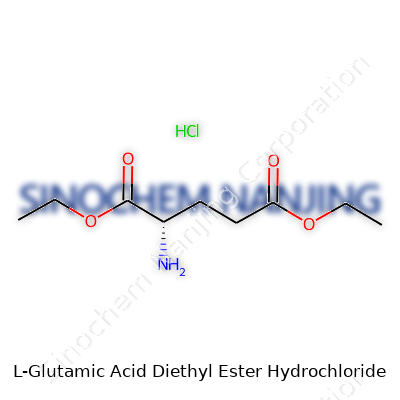
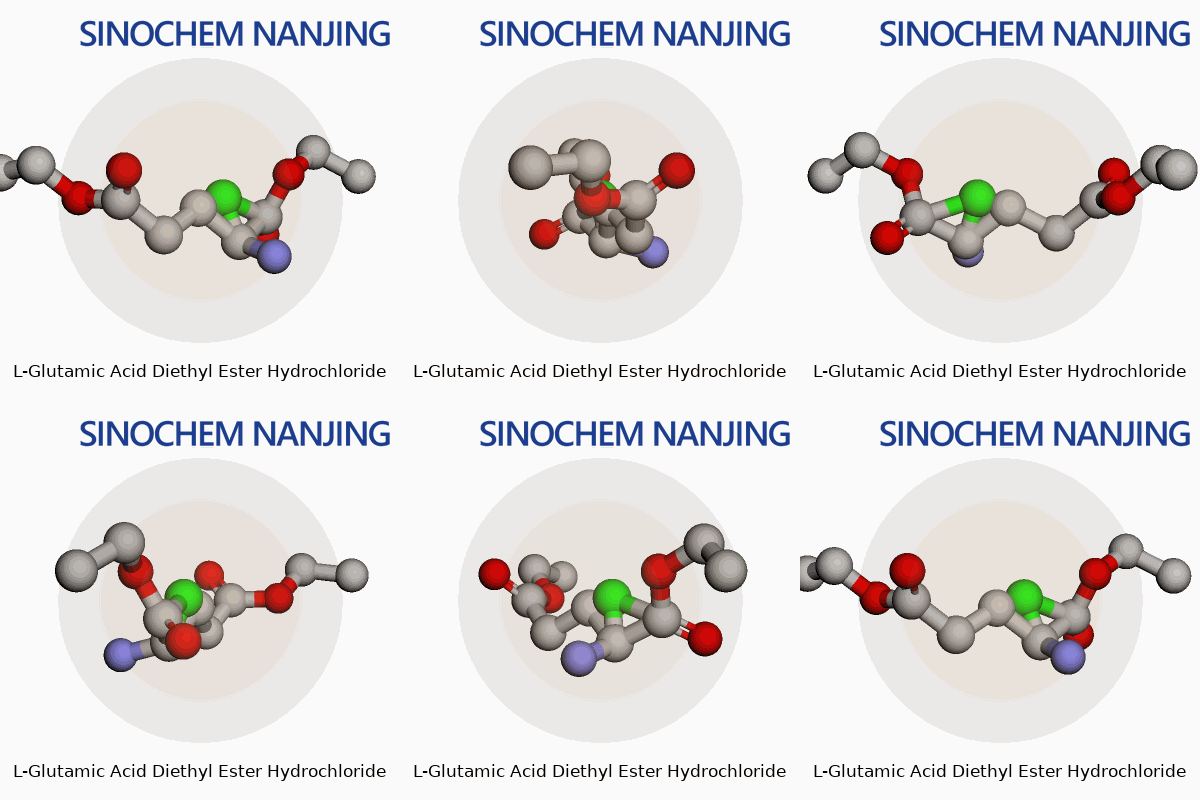
| Names | |
| Preferred IUPAC name | diethyl (2S)-2-aminopentanedioate hydrochloride |
| Other names |
Glutamic acid diethyl ester hydrochloride Diethyl L-glutamate hydrochloride L-Glutamic acid, diethyl ester, hydrochloride Diethyl L-glutaminate hydrochloride |
| Pronunciation | /ɛl-ɡluːˈtæmɪk ˈæsɪd daɪˈɛθɪl ˈɛstər ˌhaɪdrəˈklɔːraɪd/ |
| Identifiers | |
| CAS Number | '1118-89-4' |
| 3D model (JSmol) | `3D model (JSmol)`: `CCOC(=O)CC(CC(=O)OCC)N.Cl` |
| Beilstein Reference | 1718733 |
| ChEBI | CHEBI:132747 |
| ChEMBL | CHEMBL408700 |
| ChemSpider | 70412 |
| DrugBank | DB08320 |
| ECHA InfoCard | 13-1-2655327790-49-0000 |
| EC Number | 2270-27-7 |
| Gmelin Reference | 186340 |
| KEGG | C01197 |
| MeSH | D050179 |
| PubChem CID | 6857381 |
| RTECS number | MS9621000 |
| UNII | 00B82V6IJ2 |
| UN number | UN2811 |
| Properties | |
| Chemical formula | C9H18ClNO4 |
| Molar mass | 255.72 g/mol |
| Appearance | White to off-white crystalline powder |
| Odor | Odorless |
| Density | 1.1 g/cm3 |
| Solubility in water | Soluble in water |
| log P | -2.1 |
| Acidity (pKa) | 3.2 |
| Basicity (pKb) | 4.15 |
| Magnetic susceptibility (χ) | -57.9×10⁻⁶ cm³/mol |
| Refractive index (nD) | 1.464 |
| Viscosity | Viscous oil |
| Dipole moment | 14.48 D |
| Thermochemistry | |
| Std molar entropy (S⦵298) | 373.1 J·mol⁻¹·K⁻¹ |
| Pharmacology | |
| ATC code | N06AA09 |
| Hazards | |
| Main hazards | Harmful if swallowed. Causes serious eye irritation. Causes skin irritation. |
| GHS labelling | GHS02, GHS07 |
| Pictograms | GHS05 |
| Signal word | Warning |
| Hazard statements | H302: Harmful if swallowed. |
| Precautionary statements | Precautionary statements: P264, P270, P301+P312, P330, P501 |
| NFPA 704 (fire diamond) | 1-1-0 |
| Flash point | 102.4 °C |
| Lethal dose or concentration | Lethal dose or concentration: LD₅₀ (oral, rat): 2520 mg/kg |
| LD50 (median dose) | LD50 (median dose): Mouse intravenous 138 mg/kg |
| NIOSH | MW3675000 |
| PEL (Permissible) | Not established. |
| REL (Recommended) | 10-50 mg/L |
| IDLH (Immediate danger) | IDLH: Not listed |
| Related compounds | |
| Related compounds |
Glutamic acid L-Glutamic acid hydrochloride L-Glutamine L-Glutamic acid dimethyl ester L-Glutamate diethyl ester L-Glutamic acid diethyl ester hydrobromide N-Acetyl-L-glutamic acid L-Aspartic acid diethyl ester hydrochloride |



