L-Cystine Dihydrochloride: A Comprehensive Commentary
Historical Development
Stories about L-Cystine trace back to the late 19th century, after researchers started isolating amino acids from protein hydrolysates. Over the years, scientists realized how certain sulfur-containing amino acids such as cystine played a key role in human health, particularly in hair, skin, nail growth, and immune function. During the past century, advances in biochemistry and industrial chemistry have greatly improved the purification and synthesis of L-Cystine and its derivatives. Today, L-Cystine Dihydrochloride is not only found in advanced laboratories; it also shows up in supplements and specialty formulations available to ordinary consumers. Its story follows the path of many compounds that begin in the research lab and make their way into mainstream use, thanks to methodical determination by chemists eager to solve practical problems.
Product Overview
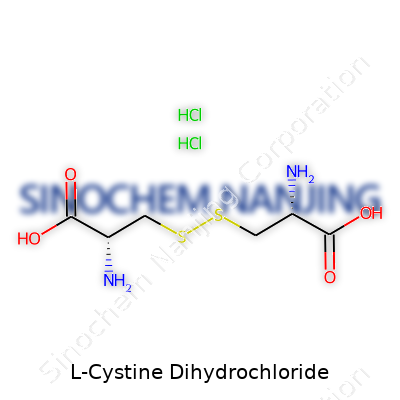
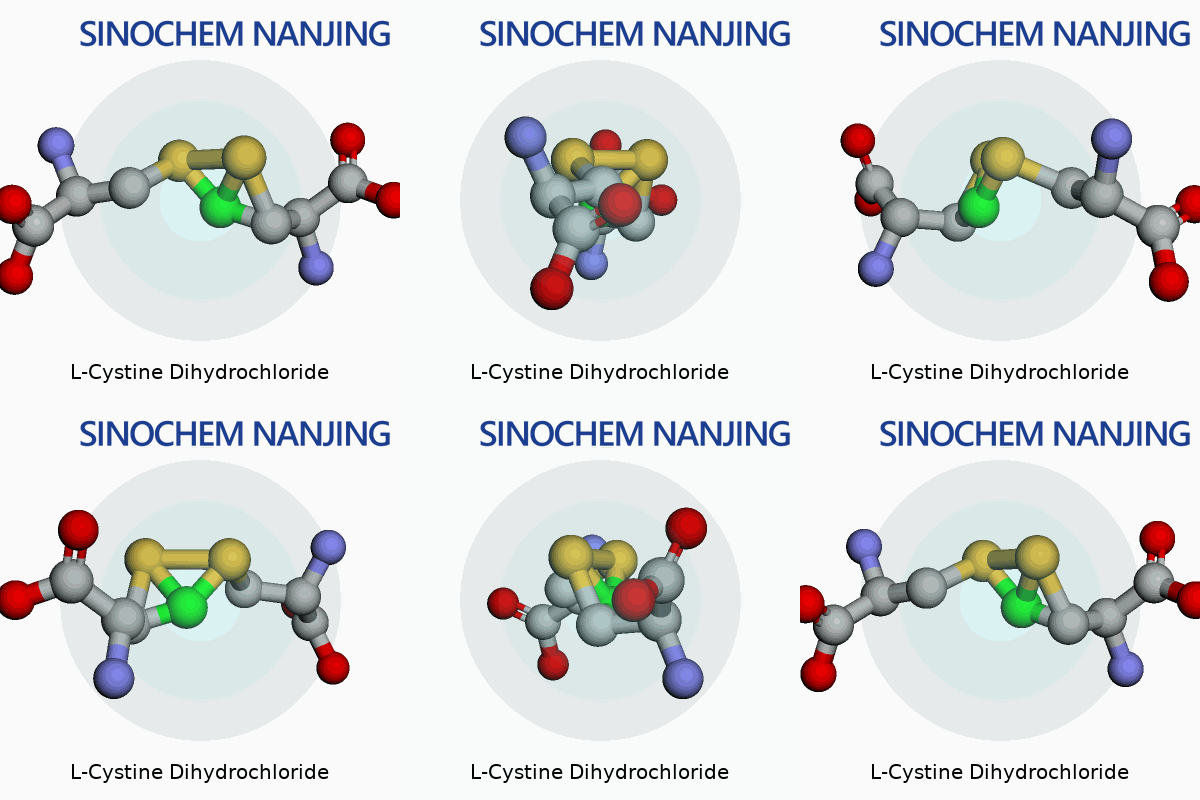
L-Cystine Dihydrochloride appears as a white or almost white crystalline powder. It is made by introducing hydrochloric acid into purified L-Cystine, which increases its solubility, making it more adaptable to pharmaceutical and food technology applications. Many people who take interest in nutrition or pharmaceuticals might encounter it as a raw material for building up cysteine or glutathione in the body, two components closely related to antioxidant capacity and metabolic health. Its structure, being a dimer of cysteine joined by a disulfide bond, gives it distinct properties in biological systems, affecting the way proteins fold and maintain shape.
Physical & Chemical Properties
L-Cystine Dihydrochloride brings a specific set of qualities to the table. Its melting point hovers between 260 and 265 degrees Celsius. Water dissolves it readily, but alcohol does not. Chemically, it consists of two cysteine molecules connected via a disulfide bridge, with two extra chloride ions. This gives the compound its high solubility and changes the way it interacts with other chemicals in solution. Inside the body or in industrial processes, these properties influence how rapidly it can be absorbed or transformed into other compounds, affecting both its technical and health-related uses.
Technical Specifications & Labeling
Pharmaceutical and nutraceutical companies rely on strict technical standards for L-Cystine Dihydrochloride. The assay, typically calculated on a dry basis, should indicate purity above 98%. Moisture content ought to stay below 1%, with negligible traces of heavy metals. Many products come labeled with storage recommendations—keep in a cool, dry place and protect from light. Lot numbers and expiration dates stay front and center, especially when used in regulated applications. Import and export of this compound usually require a certificate of analysis and clear labeling regarding both composition and intended use, to meet food safety and pharmaceutical compliance requirements.
Preparation Method
The most common way to prepare L-Cystine Dihydrochloride involves reacting purified L-Cystine with hydrochloric acid under controlled conditions. L-Cystine itself might come from hydrolyzed human hair and feathers or from fermentation by specially selected strains of bacteria, followed by extensive purification. After combining cystine with hydrochloric acid, filtration and recrystallization help isolate the final salt. Each manufacturer has to optimize these steps to avoid contamination, support traceability, and preserve the integrity of the molecule for downstream applications.
Chemical Reactions & Modifications
L-Cystine Dihydrochloride participates in several types of chemical reactions. Disulfide bond reduction turns it back into two cysteine molecules, which can then form or break other bonds as needed. Oxidation changes its chemical behavior, which becomes important in industrial processing and research, where redox states play a huge role in designing biopharmaceuticals. Chemists may also modify side chains or create derivatives for research, such as making site-specific labels for protein studies or exploring new antioxidant pharmaceuticals. Advances in click chemistry and site-specific amino acid substitution have added new tools to the arsenal, letting researchers customize L-Cystine derivatives for emerging applications.
Synonyms & Product Names
L-Cystine Dihydrochloride goes by many names, depending on the context and region. Some people speak of it simply as cystine dihydrochloride, or reference its IUPAC label: (2R,2'R)-Diamino-3,3'-disulfanediyldipropanoic acid dihydrochloride. In food technology and supplement industries, it might show up as a source of "L-cystine (HCl)" or as a specialty pharmaceutical ingredient. Global variation in labeling and naming can sometimes cause confusion when sourcing or researching it, putting extra pressure on both consumers and professionals to check CAS numbers or chemical structures rather than just trade names.
Safety & Operational Standards
Handling L-Cystine Dihydrochloride means respecting basic safety protocols. Dust inhalation should be avoided. Gloves and protective eyewear are expected in production or laboratory settings to prevent skin and eye irritation. Ingestion poses little risk in small doses—hence its use as a supplement—but large quantities might cause gastrointestinal symptoms. Laundry-style storage, far from incompatible substances and direct sunlight, can prevent degradation or contamination. Facilities working with this compound maintain logs, safety data sheets, and clear training on spill cleanup procedures to reduce workplace risk. Regulations from OSHA and FDA shape these protocols, and each organization adapts them based on hazard assessments and intended use.
Application Area
L-Cystine Dihydrochloride shows up across a range of industries. Food technologists use it as a dough conditioner, chemistry classes use it as a model disulfide, and pharmaceutical companies formulate it into amino acid infusions or oral supplements targeting hair and nail growth. Its antioxidant action and role as a precursor to glutathione make it interesting for aging, immune, and skin health research. Biochemists who study protein folding and stability appreciate the compound for its ability to introduce or stabilize disulfide bonds within or between proteins. Beyond that, it plays a role in animal feed formulations, regenerative medicine, and even specialty cosmetic products seeking natural sources of amino acids to market to the health-conscious consumer.
Research & Development
Researchers keep looking for new ways to use and improve L-Cystine Dihydrochloride. Current studies focus on its ability to boost intracellular glutathione, an area tied to oxidative stress, liver health, and chronic disease prevention. Advances in peptide design benefit from cystine derivatives that introduce stable, reversible disulfide bonds. The evolution of green chemistry drives a shift toward bio-based and fermentation-derived sourcing rather than extraction from animal byproducts. Teams designing slow-release delivery systems for amino acids also find themselves using modified cystine salts. Each new journal article or patent reveals growing interdisciplinary relevance, stretching from clinical nutrition and geriatrics to crop protection and veterinary care.
Toxicity Research
Toxicologists stress-test L-Cystine Dihydrochloride across a range of scenarios. Standard dietary doses, even with chronic exposure, show little cause for concern in healthy adults. Problems can crop up at very high doses, with symptoms involving gastrointestinal upset or rare allergic responses. Experts warn people with cystinuria—a metabolic disorder involving impaired cystine excretion—to steer clear, since excessive intake accelerates stone formation. Rodent studies and in vitro assays help set safety guidelines for use in supplements and pharmaceuticals, with most reports supporting its low toxicity profile. Allergists and clinical nutritionists stay alert for rare cases, reminding us that well-tolerated does not mean universally safe.
Future Prospects
Watching the rise of personalized health and green chemistry, L-Cystine Dihydrochloride stands to become more important. Researchers seem keen on engineering less wasteful preparation methods using microbial fermentation, reducing dependence on animal-derived raw materials. In parallel, nutraceutical brands keep exploring new blends that use L-Cystine or its derivatives to tackle oxidative stress, immune decline, or chronic fatigue. Clinical researchers design trials to see if supplementing certain populations—such as older adults or people with metabolic compromise—proves beneficial. In the lab, new labeling techniques and site-selective modification may help biologists study protein folding diseases, opening frontiers in both diagnostics and therapeutics. The increase in demand for naturally sourced, well-characterized amino acids ensures L-Cystine Dihydrochloride remains an ingredient to watch, both in industry and in everyday health routines.
What is L-Cystine Dihydrochloride used for?
Understanding L-Cystine Dihydrochloride
It’s easy to overlook the small things that help bigger things run smoothly, and L-Cystine dihydrochloride proves this true. This amino acid derivative appears on the ingredient list in everything from pharmaceuticals to nutritional supplements. L-Cystine, in its dihydrochloride form, enters the picture when precise formulations matter, especially in the science of nutrition and medicine.
Supporting Human Health on Several Fronts
L-Cystine dihydrochloride plays a direct role in protein structure. As a building block, it helps create bridges between protein strands, keeping them stable and useful. This doesn’t just happen on a lab bench—it plays out inside human bodies. Cystine supports healthy skin and nails, helps wounds heal, and makes up part of the powerful antioxidant glutathione, which keeps cells safe from daily stress.
Doctors sometimes recommend it to people recovering from surgery or injury. Some dermatologists point to cystine’s ability to encourage stronger hair and nails, drawing from research that shows its role in keratin production. It’s important that supplements keep their promises, and pure forms like L-Cystine dihydrochloride help by offering a reliable option for consistent results.
Why Food Science Leans on L-Cystine Dihydrochloride
Baking companies know the value of consistency. L-Cystine dihydrochloride acts as a dough conditioner, helping bread rise properly and slice cleanly later. The compound breaks certain bonds in gluten, making tough dough a thing of the past. Big bakeries, especially those churning out thousands of loaves, rely on this ingredient to keep products soft and evenly textured.
This compound isn’t limited to bread or supplements. It even shows up in infant formulas. Nutritionists make use of its reliable profile to help ensure babies get the essential amino acids for growth during their most critical months and years.
Safety, Quality, and Supply Chain Realities
L-Cystine dihydrochloride often comes from natural or semi-synthetic sources, including feathers or plant material. I’ve seen manufacturers grapple with price swings and supply chain issues, especially as demand for animal-free and vegan options increases. Some companies have turned to fermentation-based production, helping cut costs and align with ethical sourcing.
Regulators take this ingredient seriously. Both the FDA and the European Food Safety Authority set clear guidelines for purity and traceability. Food and drug makers now move quickly to adapt to these standards, investing in third-party testing and certifications. Anyone taking a supplement should be able to trust the label, and these checks help enforce that trust.
Pushing for More Data and Transparency
L-Cystine dihydrochloride serves a real need, but clear communication about sourcing, dosage, and safety remains essential. I talk with consumers who want more than a list of ingredients—they want to know about origins, possible allergies, and effectiveness. Known side effects rarely bother most users, but allergic reactions can happen in sensitive cases, especially when an additive comes from animal sources.
Greater research efforts within this field should continue. Understanding how much is too much, or how L-Cystine interacts with other nutrients will help. Clear labeling, responsible sourcing, and expanded research all serve the end goal: keeping people well and products safe.
Is L-Cystine Dihydrochloride safe for consumption?
Understanding What’s In Your Food
People don’t always check every ingredient on a label, yet the question of whether L-Cystine Dihydrochloride is safe for eating pops up in scientific circles and on public forums. It’s an amino acid form that shows up in some nutritional supplements, processed foods, and even certain medications. L-Cystine helps the body rebuild proteins and plays a role in skin, hair, and tissue health. Most folks who eat a varied diet already get plenty of building blocks for these proteins through natural foods like eggs, dairy products, and legumes.
What the Experts and Agencies Say
If you take a walk through official guidance, agencies like the FDA have recognized L-Cystine as Generally Recognized As Safe (GRAS). Food scientists and toxicologists have studied its effects and agree that in reasonable doses, there’s little risk for most people. High doses, well above what shows up in your average food product, might cause stomach upset or headaches. The European Food Safety Authority (EFSA) echoes this stance and has found no link to toxic effects within dietary limits.
Underlying Health and Dietary Questions
I’ve spent time talking with people who take nutrition seriously. They worry about anything unfamiliar or with a lab-sounding name. This concern makes sense in a world where additives like MSG or artificial dyes raise eyebrows. Still, science-based organizations agree on L-Cystine’s safety for the vast majority of the population. If you’re living with a medical condition that affects amino acid metabolism—cystinuria, for instance—a dietician or doctor might advise you to limit foods rich in certain sulfur-containing amino acids like cystine.
The Reality of Additives and Manufacturing
Some might be surprised to learn that L-Cystine Dihydrochloride can come from duck feathers or even human hair during the manufacturing process. For vegetarians, religious observers, or anyone with allergies, the source could matter. Transparency from food producers helps people make informed choices. As it stands, few products specify the origin of L-Cystine, and regulatory agencies haven’t pushed for detailed labeling in this area. This gap between sourcing and public information often leads to uncertainty.
Where to Find Answers—And What To Watch For
If you worry about allergic reactions or dietary beliefs, customer service departments can answer questions about their ingredient sources. A registered dietitian can explain how much L-Cystine might fit into your day-to-day meals without tipping the scales. In my own kitchen, I stick to foods where I recognize most of the ingredients, not because I distrust amino acids, but to keep things simple and transparent.
Balance, Regulations, and Reasonable Use
The real challenge comes from finding balance—making space for modern food science while keeping an eye on ethical sourcing and transparency. Federal and international agencies keep studying food safety, changing advice only when new research finds credible risks. That approach has mostly worked for food and pharma over the last half-century. Claims about miraculous health boosts from amino acid supplements typically don’t hold up in rigorous testing. No supplement replaces a balanced meal plan.
Looking Ahead
L-Cystine Dihydrochloride fits into the landscape of modern nutrition with a safety record supported by science. People with allergies or unique dietary restrictions might still have good reasons to ask questions. The best move for anyone concerned is to read labels closely, talk with qualified professionals, and use reliable resources to sort worry from well-founded caution.
What are the side effects of L-Cystine Dihydrochloride?
L-Cystine Dihydrochloride: What Happens Beyond the Label
Dietary supplements seem to pop up everywhere. It’s tempting to reach for anything that promises better hair, tougher nails, or stronger skin. L-Cystine Dihydrochloride, an amino acid-based ingredient, often finds its way into these formulas. With long scientific names, small pills, and even smaller print, it’s easy to forget that every supplement has two sides: what you get and what you might risk.
Digestive Surprises and Gut Reactions
Stomach issues hit hardest for many people who start L-Cystine Dihydrochloride. Experience and reports echo what small studies show—abdominal pain, queasiness, and diarrhea sometimes show up early. These issues seem more common when people take the supplement on an empty stomach or in higher doses. In my own circle, a relative tried it for hair growth and quit after feeling a constant belly grumble. Scientists tie these side effects to your gut’s way of breaking down extra amino acids when the body doesn’t quite need them.
Allergic Reactions and Skin Flare-Ups
Allergies don’t play favorites. Though rare, some people notice hives, itching, or rashes after taking L-Cystine Dihydrochloride. This sometimes points to sensitivities to additives used during manufacturing, so it pays to check the full ingredient list. Personally, I once saw a friend break out in red welts after swallowing an over-the-counter supplement cocktail that included L-Cystine. It was scary for her, and it proved how fast these reactions can become serious. Skin reactions equal a stop sign. Medical help matters right away.
Kidney Health: Overlooked Risks
Healthy kidneys deal with the waste products from amino acids, but too much L-Cystine may overwhelm this filter system. People living with existing kidney problems can end up with more kidney stones or even see their condition get worse. Doctors write about cystine stones, a rare type that forms when cystine builds up. Evidence points to high intake as a risk. Families with a kidney stone history should steer clear or at least check with their doctor before starting anything new.
Drug Interactions: Unseen Snags
Taking several pills each day gets tricky. L-Cystine Dihydrochloride sometimes tangles with medicines for blood pressure or insulin management. It can tweak how the body absorbs medications or even raise the risk of side effects from other drugs. Pharmacies get more calls each year from folks worried about mixing supplements and prescriptions, and some doctors suggest spacing out supplements to help reduce these problems.
Solutions: Staying Safe While Supplementing
Trustworthy advice still goes a long way. Start low, go slow, and keep a record of symptoms. Pick supplements from brands with clean labels and clear contact info, so if anything feels off, reaching out gets easy. Blood tests and regular conversations with a healthcare provider make changes in kidney function or drug effectiveness easier to spot early on. Sticking to natural food sources also gives most people all the L-Cystine they’ll ever need, without the headache—think eggs, poultry, seeds, and cheese. Safety, here, boils down to informed choices and listening to your own body’s signals.
How should L-Cystine Dihydrochloride be stored?
Storing Chemicals Means More Than Just Putting Them on a Shelf
One quick mistake in storage can turn a useful chemical into a real problem. I’ve seen more than a few labs lose precious reagents to bad storage: humidity, open bottles, and sunlight have no mercy. L-Cystine Dihydrochloride, found in research and medicine, deserves respect if you want it to perform without surprises.
Moisture: The Silent Enemy
Water can turn powders into rock-hard cakes, and in the case of L-Cystine Dihydrochloride, high humidity might speed up degradation. Even a sealed bag isn’t enough if the air in the room is thick with moisture. I remember a colleague pulling out a clumped bottle, only to discover it barely worked for his synthesis. Desiccators exist for a reason—keep chemicals like this away from water in all forms. Store it in tightly closed containers, and use silica gel or another drying agent in the cabinet.
Light: A Real Risk You Can’t Ignore
Most chemical labels don’t bother explaining how sunlight changes compounds. L-Cystine Dihydrochloride doesn’t do well with direct light. Some folks figure a dark corner is enough, but that’s not what the data says. UV light, in particular, sparks reactions that might not be obvious at first. Over weeks, you’ll get slow breakdown, maybe a yellowing powder, maybe lower yields. Store this material in an amber bottle or behind closed opaque cabinet doors.
Temperature: Not All Rooms Are Created Equal
Heat can speed up unwanted reactions even when the label doesn’t mention any “keep refrigerated” directions. Most sources say room temperature works—about 20–25 °C. Trouble is, not everyone’s lab sits at that sweet spot. Summer months turn storerooms into ovens. I once measured temps on a shelf by a window: the “room” hit well over 30 °C. L-Cystine Dihydrochloride doesn’t “melt,” but that heat slowly gnaws away at its structure. Aim for a stable, cool spot. If your building has wildly shifting temperatures, invest in an air-conditioned cabinet or at least a shaded storage area.
Labeling and Handling
A proper label isn’t just bureaucracy. Chemicals get mixed up; accidents happen when people grab what looks familiar. Double-check the container after every use. If a desiccant is present, change it out whenever it feels damp or looks pink (if it’s indicator silica gel). Gloves and masks keep fine powder away from your skin and lungs, which matters more than folks think in crowded workspaces.
Planning for the Long Haul
Don’t buy in bulk unless you run through a lot every month. Smaller bottles don’t sit around as long, so they have less chance to go bad. If you do stock up, split into tightly sealed aliquots so you only expose a small bit at a time. I’ve watched too many labs toss out expensive chemicals just because the big bottle spent all year being opened, closed, and left out for hours during busy benchwork. A simple schedule—checking storage areas once a month—catches most problems before they cost you money or time.
Clear Procedures Build Reliable Science
People often skip proper storage in the rush to get back to their experiments. Still, every wasted gram or botched reaction means setbacks. Protecting L-Cystine Dihydrochloride isn’t just about keeping the storeroom tidy—it’s about making sure every team member trusts what comes out of the bottle. Forgetting these basics cheats your results and your reputation. Solid storage means fewer headaches, better experiments, and a safer workspace.
What is the recommended dosage for L-Cystine Dihydrochloride?
Getting the Facts Straight
L-Cystine Dihydrochloride often makes an appearance in dietary supplements and amino acid formulations. It’s the oxidized dimer form of L-cysteine, a sulfur-rich amino acid that shows up in protein structures all throughout the body. You’ll find L-Cystine’s reputation linked to skin, hair, and nail health, and it sometimes appears in formulas meant to boost cell repair and recovery.
It’s easy to find people talking about amino acids and what they do, but there’s less talk about how much to take and why following that guidance means so much. Supplements aren’t just about the active ingredient. Dose changes outcome, and skipping this truth can turn a harmless routine into a risky gamble.
Where Dosage Recommendations Come From
Research-backed information remains limited for L-Cystine Dihydrochloride. Clinical trials haven’t been as robust as those for vitamins like B12 or minerals like zinc. Most data comes from animal studies, case reports, or general amino acid safety profiles.
Typical supplemental amounts for L-cystine range between 50 mg and 500 mg daily. Some skin and hair formulas edge closer to the high end. Medical sources and supplement labels rarely exceed 500 mg per day, mainly because side effects and long-term data remain scarce.
The real story hides in people’s health status. Those with certain metabolic conditions or disorders that affect sulfur metabolism may need adjusted amounts or, at times, to avoid it altogether. People with cystinuria, for example, face risks of kidney stones linked to excessive cystine in the urine.
One study published in the International Journal of Dermatology tracked hair growth supplements containing L-cystine blended with other nutrients. Subjects used daily amounts close to 100-300 mg with benefits to hair density over six months. No reports mentioned toxicity at these levels, but researchers did stress the need for physician oversight, especially with chronic use.
Quality Matters, Not Just Quantity
L-Cystine Dihydrochloride usually comes in capsules or tablets. Third-party analysis often shows a wide range in actual content compared to what’s printed on the label. People shopping online or off the shelf rarely know the quality of the batch, which adds to the uncertainty of dosing.
Testing for purity, batch consistency, and absence of contaminants should become the norm. I’ve seen athletes buy amino acids in bulk, trusting what’s stamped on the package, only to find residue or fillers after lab tests. People deserve better. Brands that submit to independent testing stand out in this crowded market, and I always suggest picking supplements that publish results.
Finding Solid Ground
It feels tempting to think more is better, or that because something is an amino acid, it can do no harm. Experience and a look at the research say otherwise. I’ve watched friends experiment with high doses of amino acids hoping for quick results, only to backtrack when stomach upset or strange side effects showed up.
Sticking close to expert-backed ranges makes sense—usually 50-500 mg a day for someone with no complicating health issues. People with chronic diseases or metabolic concerns need to talk to a physician first. Even for those in good health, it pays to check supplement labels and ask for third-party test results. Supplements can help, but skipping research and medical advice turns a simple choice into a risky move.
| Names | |
| Preferred IUPAC name | (2R,2'R)-1,1'-Disulfandiyldi(2-aminoethan-1-ium) dichloride |
| Other names |
Cystine dihydrochloride D-L-Cystine dihydrochloride L-Cystine, dihydrochloride L-Cystin Dihydrochloride Cystine, dihydrochloride |
| Pronunciation | /ˌɛlˈsɪstiːn daɪhaɪdrəˈklɔːraɪd/ |
| Identifiers | |
| CAS Number | “30925-07-6” |
| Beilstein Reference | 3572044 |
| ChEBI | CHEBI:61374 |
| ChEMBL | CHEMBL1289672 |
| ChemSpider | 21476772 |
| DrugBank | DB14498 |
| ECHA InfoCard | ECHA InfoCard: 100.033.432 |
| EC Number | 227-189-3 |
| Gmelin Reference | 42058 |
| KEGG | C00491 |
| MeSH | D03AA03 |
| PubChem CID | 20730656 |
| RTECS number | WH6650000 |
| UNII | 1K81C7I30E |
| UN number | UN3335 |
| CompTox Dashboard (EPA) | DTXSID7033755 |
| Properties | |
| Chemical formula | C6H14Cl2N2O4S2 |
| Molar mass | 337.2 g/mol |
| Appearance | White crystalline powder |
| Odor | Odorless |
| Density | 1.6 g/cm³ |
| Solubility in water | Soluble in water |
| log P | -4.3 |
| Acidity (pKa) | 1.71 |
| Basicity (pKb) | - log Kb 8.2 (lit.) |
| Magnetic susceptibility (χ) | -65.0e-6 cm³/mol |
| Viscosity | Viscous liquid |
| Dipole moment | 9.955 D |
| Thermochemistry | |
| Std molar entropy (S⦵298) | 205.9 J·mol⁻¹·K⁻¹ |
| Std enthalpy of formation (ΔfH⦵298) | -442.1 kJ/mol |
| Std enthalpy of combustion (ΔcH⦵298) | -1349 kJ/mol |
| Pharmacology | |
| ATC code | A16AA04 |
| Hazards | |
| Main hazards | Harmful if swallowed. Causes skin irritation. Causes serious eye irritation. May cause respiratory irritation. |
| GHS labelling | GHS07, GHS05 |
| Pictograms | GHS07 |
| Signal word | Warning |
| Hazard statements | H302: Harmful if swallowed. |
| Precautionary statements | P264, P270, P273, P280, P301+P312, P305+P351+P338, P337+P313 |
| NFPA 704 (fire diamond) | 1-0-0 |
| Lethal dose or concentration | LD50 (oral, rat): 8000 mg/kg |
| LD50 (median dose) | LD50 (median dose): Mouse oral 2600 mg/kg |
| NIOSH | SN4553000 |
| PEL (Permissible) | Not established |
| REL (Recommended) | Not more than 0.5 % (Karl Fischer Method) |
| Related compounds | |
| Related compounds |
Cystine L-Cystine Cysteine L-Cysteine N-Acetylcysteine D-Cystine Cystine hydrochloride |



