L-Arginine: Modern Science Meets an Ancient Molecule
Historical Development
L-Arginine has a story that reaches back over a century. Chemists Ernst Schulze and Ernst Steiger first isolated it in 1886 from lupin seedlings, marking an early milestone in the study of amino acids. Later research in the early 1900s tied L-Arginine to the urea cycle, opening the door to understanding its essential role in metabolism. This discovery gave scientists a way to track nitrogen waste removal and put amino acid research on the fast track. As analytical chemistry and nutrition science progressed through the twentieth century, its importance in human physiology became undeniable. Interest spiked in the 1980s, after Furchgott and colleagues showed how L-Arginine serves as a source for nitric oxide, giving researchers and supplement companies plenty of reasons to dig deeper.
Product Overview
You’ll find L-Arginine in sports nutrition aisles, clinical nutrition clinics, in biopharma, and in chemical catalogs. Most sources offer it as powder, capsule, or solution. Food-grade and pharmaceutical-grade are the norms, each with specific regulations for purity and contaminants. Beyond the supplement industry, biochemists reach for L-Arginine when prepping cell cultures or working with proteins. It can show up in bakery foods designed for health-conscious consumers, as well as in hospital IV formulas for patients in need of metabolic support. Quality varies by source, but reputable supplies state their amino acid content, trace elements, and batch-specific quality certificates.
Physical & Chemical Properties
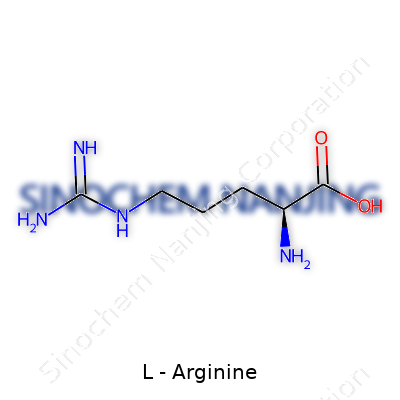
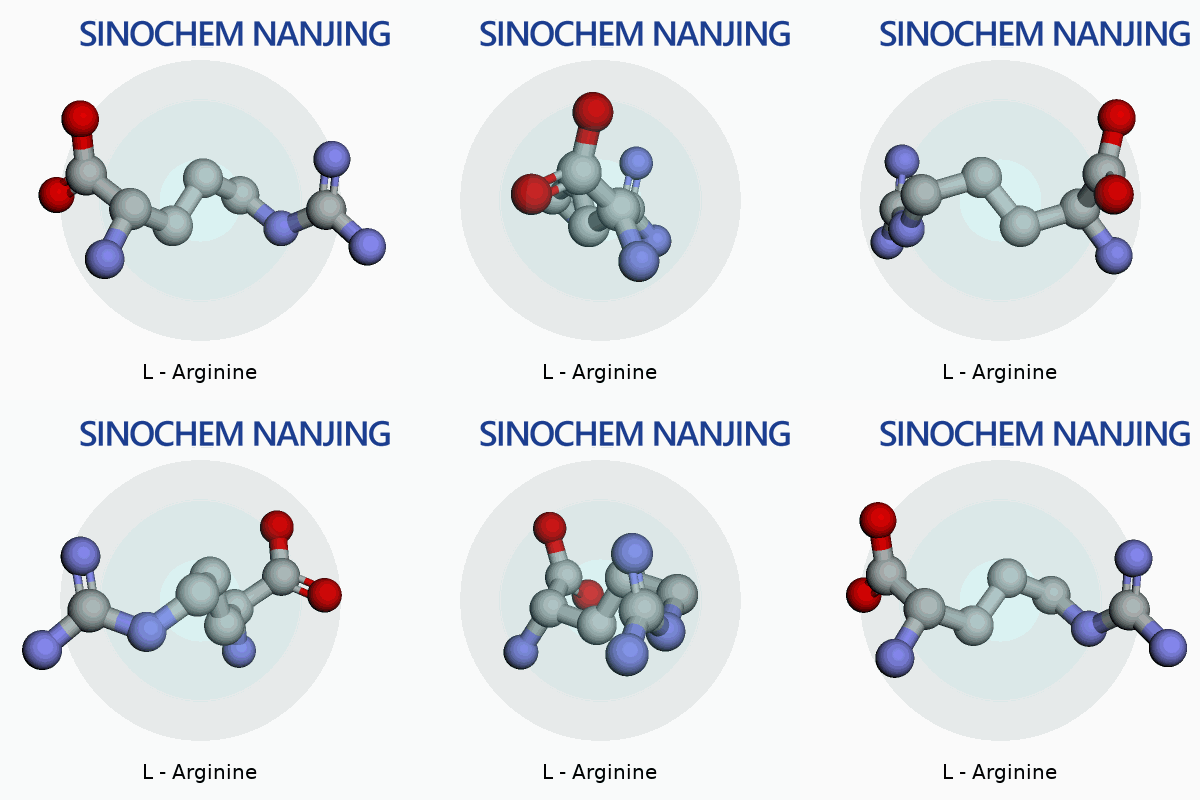
L-Arginine appears as a white, crystalline powder with a mild, almost neutral taste. It’s highly soluble in water, which makes it easy to use in a range of formulations from drinks to injectable solutions. Chemically, it shares the standard formula of C6H14N4O2. Its structure features a guanidino group that gives it unique reactivity with nitrogen-containing compounds. This structure plays a direct role in its metabolic importance and chemical modifications. The powder absorbs water from the air, so sealed packaging is essential for stability. L-Arginine solutions have a basic pH, so they sometimes need careful adjustment during product formulation.
Technical Specifications & Labeling
L-Arginine is sold with clear technical data—look for a minimum purity specification, commonly above 98%, and tight limits on heavy metals, microbial counts, and other amino acid content. Supplier documents routinely provide lot numbers, country of manufacture, and compliance statements for USP, FCC, JP, or EP codes. For supplements, U.S. labels must state serving size and daily value, along with allergen warnings if relevant. Clinical suppliers must provide details to comply with FDA and EU pharma standards, which means full traceability from raw material to finished product. Batch certificates typically verify source details, purity, and shelf life under specific storage conditions.
Preparation Method
Large-scale L-Arginine production now rarely draws from natural sources. Instead, most comes from microbial fermentation: select strains of Corynebacterium or E. coli are fed cheap sugars in bioreactors and genetically tweaked to spit out high yields. The crude fermentate gets filtered and treated with resins to capture the amino acid. Downstream steps include neutralization, precipitation, and crystal purification. Sometimes, the synthesis uses starting materials like L-ornithine or L-citrulline, though microbial methods have largely displaced these. Each process step is validated for yield, reproducibility, and contaminant removal, and newer biotech improvements continue to push yields higher while keeping costs down.
Chemical Reactions & Modifications
L-Arginine reacts in some distinctive ways. Its guanidino group participates in forming urea through the urease reaction and in generating nitric oxide when acted upon by nitric oxide synthase. Industrial chemists modify L-Arginine for peptide synthesis by creating derivatives with protective groups. Enzymatic conversion sometimes creates asymmetric or protected forms needed for drug development. Coupling L-Arginine to polymers expands its role in drug delivery and tissue engineering. It also reacts with methylation enzymes in the body, yielding methylated arginines, which have implications in cardiovascular research. After more than a century, this amino acid remains a favorite for both classic and cutting-edge chemistry.
Synonyms & Product Names
L-Arginine goes by several names across scientific and industrial communities. The IUPAC name is 2-amino-5-guanidinopentanoic acid, though few outside organic chemistry circles use that. Common synonyms include Arg, Arginium, and its salt forms, such as L-Arginine Hydrochloride or L-Arginine Base. Food and nutrition brands often stick with just “L-Arginine” on packaging. In Europe, some lists call it (S)-2-amino-5-guanidinopentanoic acid. Drug and ingredient registries assign it various numbers, including EC 200-811-1. If you spot these on a spec sheet, just remember—they all refer to the same core compound.
Safety & Operational Standards
L-Arginine’s safety standards depend on both intended use and regional regulations. As a food additive, it’s covered under the FDA’s Generally Recognized as Safe (GRAS) framework in the U.S. Supplements must follow Good Manufacturing Practices (GMP), and pharma-grade batches get tested to ensure no cross-contamination or harmful byproducts. Factories monitor particulate matter, microbial levels, and trace heavy metals per USP or JP guidelines. Safe handling means protective gloves and eyewear in manufacturing, since ingesting more than recommended amounts or inhaling dust can irritate. For clinical applications, doctors stick to established dosing protocols to limit side effects like gastrointestinal upsets or changes in blood pressure, especially for those with pre-existing health concerns.
Application Area
L-Arginine holds a spot in sports nutrition because of claims around improved performance and reduced post-exercise soreness. It’s a staple in hospital clinical nutrition, especially in solutions for wound healing or parenteral feeding for burn or trauma patients who can’t eat. Cardiologists have studied it for decades to see if adding it to diets could support people with vascular problems, given its nitric oxide link. It’s in formulas that support male fertility and feature in skin creams for its supposed effects on collagen production and inflammation. Biotech labs use it in the mix to culture cells and refold recombinant proteins, taking advantage of its role in stabilizing proteins and managing cellular stress. Some food companies explore it as a functional additive in energy bars, beverages, and meal replacements. For animal health, veterinary nutritionists add it to feed to boost growth or immune response in young livestock or pets.
Research & Development
Current research around L-Arginine runs a wide spectrum. Nitric oxide pathways get a lot of interest in cardiovascular research, particularly in studies seeking ways to manage arterial stiffness or hypertension. Exercise scientists run trials to see if boosting dietary intake changes athletic recovery, muscle metabolism, or endurance. Immunologists study the amino acid's effect on T-cell function and immune response in infection, trauma, and cancer. Newer work in biomanufacturing explores how engineered organisms could produce more efficient or tailored arginine derivatives. In drug delivery, scientists attach L-Arginine to carriers that sneak treatments into tumors or across the blood-brain barrier. Trials in critical care look at immune modulation and wound healing in people with burns, trauma, or sepsis.
Toxicity Research
Most toxicity studies put L-Arginine on the list of amino acids with low risk, at least in recommended doses for healthy adults. Some clinical trials run into problems when subjects take several grams per day: common side effects include abdominal pain, diarrhea, and nausea. People with herpes infections sometimes see recurrences, since the amino acid helps the virus replicate. There’s evidence that too much could throw off potassium balance, making careful dosing important for those with kidney issues. A few studies on animals looked at very high concentrations and found changes in blood pressure or heart rate, but these levels went far beyond what supplements offer. Some rare cases link excessive intake to worsened symptoms in people recovering from heart attack. Proper labeling and reasonable doses generally keep these risks in check.
Future Prospects
The future of L-Arginine will likely blend biotechnology, clinical innovation, and consumer wellness. Synthetic biology tools can fine-tune microbes to churn out tailored arginine variants for next-generation therapies or specialized sports fuels. If nitric oxide pathways show more consistent results in large trials, cardiovascular products and clinical nutrition brands stand to grow their markets. As researchers unlock how L-Arginine shapes immunity and cell signaling, targeted applications may surface in cancer treatment or recovery from infection. Manufacturers focus on greener processes for making pure amino acids, cutting energy and water use in large bioreactors. For health-conscious consumers, arginine shows promise in new food formats, potentially reaching beyond the realm of powders and capsules into everyday snacks, drinks, and meal replacements. Each step forward will require a balance of transparent research, clear regulations, and practical health advice from both clinicians and scientists.
What are the benefits of taking L-Arginine?
Understanding L-Arginine
L-Arginine pops up everywhere from gym conversations to the supplement aisle at the pharmacy. It’s a naturally occurring amino acid, which means the body can make it on its own, but most people get extra from protein-rich foods like meat, nuts, and dairy. Some folks turn to supplements for a boost, often looking for better workouts, improved blood flow, or support for heart health.
Why L-Arginine Matters
From my experience and what research shows, L-Arginine matters most because of what it turns into — nitric oxide. This gas signals blood vessels to open wider, supporting smoother blood flow. For someone who exercises, that can translate into more oxygen and nutrients heading to the muscles. After a heavy training session, I’ve noticed it helps me recover faster and shake off soreness.
Impact on Heart Health
High blood pressure didn’t just show up in the headlines; it runs in many families. L-Arginine offers help by supporting relaxed blood vessel walls, which keeps pressure in check. A 2016 review in the journal Current Cardiovascular Risk Reports found that L-Arginine can help lower blood pressure, especially in people with mild hypertension. Doctors sometimes look at these supplements as add-ons, never as replacements for prescribed medications.
Workout Performance and Recovery
Walking into the gym, I’ve heard lifters talk about the “pump” L-Arginine provides. That boost comes from increased blood flow, which doesn’t just feel good — it brings more nutrients to hard-working muscles. Some studies, like one in Frontiers in Pharmacology (2020), back this up. They point out that people doing resistance training often see improvements in exercise tolerance and recovery time with L-Arginine.
Supporting Immune Function
The immune system can take a beating after long periods of stress or tough physical activity. L-Arginine helps create proteins that repair tissue and immune cells. There’s evidence from clinical trials, such as in Nutrition Journal (2017), showing that hospital patients, especially those with wounds or infections, do better when L-Arginine levels are high. That’s good news for athletes and anyone struggling with recovery.
Sexual Health and Circulation
People sometimes overlook circulation when talking about health, but anyone who’s dealt with issues like erectile dysfunction knows blood flow matters. L-Arginine stacks up here, too, as research from BJU International (2019) found improvement for men with mild to moderate erectile dysfunction. It shouldn’t replace a visit to a doctor, but it does point toward a natural way to support healthy blood movement throughout the body.
Safety, Dosage, and Potential Solutions
Like any supplement, L-Arginine isn’t magic. Too much can upset the stomach or interact with medications, especially those for blood pressure or erectile dysfunction. Talking with a healthcare provider to get advice before starting supplements is always my first step. Not all brands offer quality products, either, so I stick to those with third-party testing.
L-Arginine’s real value shows up through steady commitment — getting enough through food, considering a supplement after talking with a professional, and paying attention to changes in your own body. For anyone focused on heart health, muscle repair, or better blood flow, L-Arginine stands out as a proven building block.
How should I take L-Arginine supplements?
Understanding L-Arginine
People eyeing supplements often hear about L-Arginine. This amino acid plays a role in producing nitric oxide, which helps blood vessels relax and supports healthy blood flow. I learned about L-Arginine years ago, watching athletes at my local gym toss the powder into shakes. They swore it helped them crush tough workouts and lift a little heavier.
L-Arginine shows up in fitness circles and among folks with cardiovascular concerns. Some research points out that taking L-Arginine might improve exercise capacity and even lower blood pressure slightly. The Cleveland Clinic mentions its use for men with mild erectile dysfunction because of its impact on circulation.
How Much Should You Take?
Dosage isn’t one-size-fits-all. The National Institutes of Health references studies using anywhere from 2 to 9 grams per day in divided doses. Some athletes go as high as 15 grams, but long-term safety data lacks clarity at that level.
Small doses tend to cause fewer stomach issues. Anything over 10 grams can stir up nausea, diarrhea, or cramps—nobody wants that before a workout or during a busy day. Starting with 2 to 3 grams once or twice a day and seeing how it feels often makes sense. Always check the label and consult a healthcare professional, especially if a person has heart or kidney trouble.
Timing and Absorption
Taking L-Arginine on an empty stomach usually boosts absorption. A friend who runs marathons recommends swallowing it at least half an hour before exercise. In my experience, adding it to a pre-workout routine seems to help with energy and focus. Pairing L-Arginine with a source of vitamin C may improve nitric oxide production, though the science behind this mix still waits for stronger evidence.
Benefits and Who Might Avoid It
Some folks reach for this supplement to improve performance, tackle high blood pressure, or support sexual health. The American Heart Association agrees that nitric oxide production benefits circulation, but urges caution. Healthline notes that pregnant women, kids, and people recovering from heart attacks should skip it unless their doctor gives the green light.
Drug interactions can sneak up, too. L-Arginine can increase the effect of blood pressure medications or drugs that treat erectile dysfunction. It could even worsen asthma in sensitive people. This is where honest conversations with doctors matter.
Choosing Quality and Staying Safe
Supplements aren’t tightly regulated by the FDA, so quality jumps around from brand to brand. I once spotted a suspicious bottle at a corner store with a price too good to be true—turns out, it barely contained real L-Arginine. Looking for NSF Certified for Sport or USP Verified logos often weeds out the sketchy options.
A balanced diet already provides some L-Arginine through foods like turkey, chicken, peanuts, and chickpeas. Not everyone gains extra benefits from additional supplements. For those who go this route, sticking to recommended amounts and chatting with a health expert makes the journey safer and less stressful.
Are there any side effects of L-Arginine?
Amino Acids Make Headlines
L-arginine often pops up in conversations about heart health, fitness, and sexual wellness. It’s an amino acid that the body already makes, but some people reach for supplements hoping to boost nitric oxide, support blood flow, or speed up recovery. I've spent years talking to healthcare experts and reading real stories from folks who tried supplements for different reasons. So, let’s take a closer look at what can actually go wrong with L-arginine, especially for those eyeing the pill aisle with curiosity or caution.
Not Just Harmless Powder
Plenty of people tolerate L-arginine supplements just fine. For others, it can be a different story. Common complaints sound a lot like bad food choices: stomach cramps, bloating, and diarrhea. One dose too high and you’re running to the bathroom, not the gym. For people who already struggle with digestive troubles, even a standard pill might tip the balance the wrong way. Doctors say that nausea and stomach irritation aren’t rare, especially with higher amounts.
Besides stomach upset, those taking blood pressure medication or erectile dysfunction drugs should proceed with extra care. L-arginine widens blood vessels, which can drop blood pressure further than expected. That kind of surprise can trigger dizziness or fainting, especially when standing up quickly. If someone’s managing blood pressure with medication, adding a supplement with similar effects is risky unless a doctor stays in the loop.
Heart Concerns and Medical Conditions
Supplements aren’t just a free pass because they sit next to the vitamins. After a heart attack, there’s evidence that L-arginine increases the risk of death for people older than 60. One study from Johns Hopkins underlined this exact risk, showing higher death rates after arginine use in this group compared to placebo. Individuals with asthma or cold sores also face extra risks. L-arginine can trigger airway inflammation or more frequent outbreaks of herpes simplex, since the virus uses this amino acid to multiply.
Type 2 diabetes and kidney disease bring another set of complications. People in these groups have reported changes in potassium levels and worsening kidney function. Over a decade of research shows that the supplement industry isn’t always clear about these issues, so buyers and doctors have to be extra alert.
Quality and Misinformation
Working in a health food store years ago, I watched customers trust labels to tell them everything they needed to know. That trust sometimes leads to trouble. Not every brand tests for purity or contamination, so one bottle might contain more fillers or undisclosed ingredients than another. Contaminants or high doses raise the risk of unwanted effects, even if the amino acid itself seems safe in research settings.
Moving Forward with Caution
People thinking about adding L-arginine for workouts, sexual health, or recovery should talk to someone with deep medical knowledge before starting. Doctors and registered dietitians have the background to check for drug interactions, health conditions, or personalized dosage. Reading about the risks is helpful, but experience and expert care provide the backup plan if something goes sideways. Supplements can look like a shortcut to better health, but for some, they end up creating more problems than they solve.
Can L-Arginine help with erectile dysfunction?
L-Arginine Steps Into the Spotlight
Erectile dysfunction, usually shortened to ED, often sneaks up and steals confidence from men. Searching for answers, people land on all sorts of cures, from prescription pills to herbal remedies. L-arginine, an amino acid found in meat, nuts, and dairy, frequently pops up in conversations at health food stores and internet forums. Does it really hold promise, or does hope get ahead of the evidence?
Understanding L-Arginine’s Role
Our bodies use L-arginine to make nitric oxide, a substance that relaxes blood vessels and lets blood move more easily. Penile blood flow relies on this process. Drugs like Viagra target these same pathways, but they work differently. L-arginine shows up naturally in our diets, but supplement companies sell pills and powders claiming to boost nitric oxide enough to counter ED.
The Research Picture
Studies on L-arginine for ED paint a mixed picture. Some trials show mild improvement, usually among men with mild to moderate symptoms. One Italian study looked at men taking both L-arginine and a pine bark extract. Their self-reported sexual function improved more than those using just one or the other. That example doesn’t tell the whole story. Some studies show little difference from placebo. A 2019 review in the journal Sexual Medicine, which analyzed several trials, called the evidence “promising but still inconsistent.” Sample sizes tend to run small, and the trials vary in their methods.
Is It Safe To Try?
L-arginine generally passes as safe for most healthy adults, according to the National Institutes of Health. High doses may trigger side effects – stomach pain, diarrhea, and low blood pressure pop up the most. L-arginine can also interact with some heart medications and blood thinners. Anybody with heart problems needs real medical guidance before starting new supplements.
Why It Matters
Talking about ED often feels embarrassing, but it marks bigger health issues. Vessels in the penis act as an early warning sign for wider blood flow problems. Diabetes, high blood pressure, and high cholesterol can quietly damage arteries over years. Treating ED without looking at those root causes ends up as a short-term Band-Aid. Heart doctors, urologists, and family physicians echo these concerns daily with patients.
So, What Helps Most?
L-arginine supplements may offer some help to men with mild ED, especially alongside lifestyle changes like more exercise, better sleep, and a diet rich in whole foods. The science doesn’t support using L-arginine alone as a magic fix. Investing in physical and mental health remains the bedrock. Psychological support also plays a bigger role than most realize. Men often benefit from talking to mental health professionals, especially when stress, anxiety, or relationship issues play into sexual function.
The Bottom Line for Men Wondering About L-Arginine
Real change comes from blending evidence-based choices. Supplements can play a small supporting role once an honest conversation with a qualified healthcare provider rules out underlying illness. Smart choices come from listening to science and combining personal experience with a candid chat in the doctor’s office. Claims about fast-acting, natural cures may sound appealing, but lasting results require a bit more patience—and a good look at the bigger health picture.
Is L-Arginine safe to take with other medications?
The Hype and The Reality
Health stores hype up L-Arginine. You’ll see it mixed into workout powders, or pushed as a daily supplement to boost “pump” at the gym. As someone who’s dabbled in endurance sports and tried a few supplements myself, I understand why it tempts so many. L-Arginine is an amino acid, and the body uses it to make nitric oxide—something that relaxes blood vessels and keeps blood flowing freely.
But knowing what’s safe to stack together is way more important than the buzz around one ingredient. Supporting your body can go sideways fast if you don’t pay attention to what’s going into it, especially if you already take medications.
Getting Caught Off-Guard
Taking L-Arginine with certain medications just doesn’t mix. If you’re on blood pressure drugs like ACE inhibitors or angiotensin receptor blockers, adding L-Arginine may drop pressure lower than what’s healthy. This spells out headaches, dizziness, or worse—fainting spells. Blood thinners, such as warfarin, deserve the same caution. Science shows L-Arginine might affect how platelets clump, so it pushes bleeding risk higher.
People treating erectile dysfunction with sildenafil or similar pills should be careful, too. Both L-Arginine and these meds smooth out blood vessels. Layering them can spiral your blood pressure out of control. And, anyone using nitrates for chest pain faces the biggest red flag. Adding L-Arginine here isn’t just risky; it puts you in danger.
I’ve seen how mixing supplements and medications without a doctor's input leaves people chasing their tails. One former gym buddy landed in the ER after mixing his pre-workout supplement with a beta blocker, ignoring his doctor’s warnings. Those pills and powders add up, and the effects aren’t always what you want.
Talking to Your Doctor Actually Matters
Doctors and pharmacists know why meds fit with some supplements and clash with others. When a doctor sees your whole medication list, they can spot problems that a supplement label won’t mention. Quality health advice comes from someone who sees your health history and can pinpoint the risks and benefits for you—not just anyone on social media shouting about personal gains.
Trust needs to be at the center of these choices. Regulators don’t check every supplement bottle for quality or truth in advertising. L-Arginine from one brand might be pure, but another bottle on the same shelf could carry contaminants or be dosed way off. A pharmacist or doctor will steer you to the real facts: clinical studies and established risks. Their experience beats guesswork.
Moving Forward Thoughtfully
Fads around supplements come and go. For anyone taking medications, the smartest tactic is always to check first before starting something new. If you feel unsure or confused, reach for health professionals who will listen and look at your unique situation. It's not enough to trust a label or online hype—you’ve got to protect your health and make decisions from a position of knowledge, not hope.
If you want to try L-Arginine, talk about it. Share your medications. Ask questions. That’s how you avoid bad surprises and actually help your body get stronger in the long run.
| Names | |
| Preferred IUPAC name | (2S)-2-amino-5-guanidinopentanoic acid |
| Other names |
Arginine L-2-Amino-5-guanidinovaleric acid L-Arg H-Arg-OH 2-Amino-5-guanidinopentanoic acid R-2-Amino-5-guanidinopentanoic acid L-Arginina |
| Pronunciation | /ˌɛl ɑːrˈdʒɪniːn/ |
| Identifiers | |
| CAS Number | 74-79-3 |
| Beilstein Reference | 3569531 |
| ChEBI | CHEBI:32682 |
| ChEMBL | CHEMBL1429 |
| ChemSpider | 749 |
| DrugBank | DB00114 |
| ECHA InfoCard | 03af1e4e-9b8b-46c1-9aad-f2500f59e6ae |
| EC Number | 3.5.3.1 |
| Gmelin Reference | 28997 |
| KEGG | C00062 |
| MeSH | D017382 |
| PubChem CID | 6262 |
| RTECS number | WH6780000 |
| UNII | C1F4DYS2SF |
| UN number | UN1759 |
| Properties | |
| Chemical formula | C6H14N4O2 |
| Molar mass | 174.20 g/mol |
| Appearance | White crystalline powder |
| Odor | Odorless |
| Density | 1.12 g/cm³ |
| Solubility in water | Soluble in water |
| log P | -3.5 |
| Acidity (pKa) | 12.48 |
| Basicity (pKb) | 12.48 |
| Refractive index (nD) | 1.72 |
| Dipole moment | 5.9318 D |
| Thermochemistry | |
| Std molar entropy (S⦵298) | 241.52 J·mol⁻¹·K⁻¹ |
| Std enthalpy of formation (ΔfH⦵298) | -1066.7 kJ/mol |
| Std enthalpy of combustion (ΔcH⦵298) | -3916.1 kJ/mol |
| Pharmacology | |
| ATC code | B06AX21 |
| Hazards | |
| Main hazards | Harmful if swallowed. Causes serious eye irritation. May cause respiratory irritation. |
| GHS labelling | GHS07, GHS08 |
| Pictograms | GHS07 |
| Signal word | Warning |
| Hazard statements | H319: Causes serious eye irritation. |
| Precautionary statements | P102 Keep out of reach of children. P103 Read label before use. |
| NFPA 704 (fire diamond) | 1-0-0 |
| Flash point | > 206.1 °C |
| Autoignition temperature | 466 °C |
| Lethal dose or concentration | LD50 (oral, rat): 15,900 mg/kg |
| LD50 (median dose) | LD50 (median dose): 5110 mg/kg (oral, rat) |
| NIOSH | WZJ2688000 |
| PEL (Permissible) | PEL: Not established |
| REL (Recommended) | 5000 mg/day |
| Related compounds | |
| Related compounds |
D-Arginine L-Arginine hydrochloride L-Citrulline L-Ornithine L-Lysine L-Arginine alpha-ketoglutarate |



