Isopropyl N-Butyrate: Spotlight on a Modern Chemical Compound
Historical Development
Over the last century, chemical synthesis has shaped everyday life more than most people notice. If you trace back the development of specialty esters, Isopropyl N-Butyrate comes up less often in stories than other compounds, but it has quietly influenced multiple industries since researchers first combined isopropanol and butyric acid. In the early days, production came out of need for mild, skin-friendly esters to offset harsher counterparts. Chemists found that ISO-propyl and n-butyrate created a smooth, quick-drying liquid with a gentle touch. Over time, methods shifted from batch esterification under reflux to more efficient, continuous flow operations. Today, automated production lines rely on precise ratios and careful temperature control to maximize output and safety, reflecting significant advances in chemical engineering and safety culture.
Product Overview
Isopropyl N-Butyrate lands in that family of specialty esters known for pleasant odor and smooth feel. It shows up mostly as a colorless liquid, faintly sweet, carrying enough volatility to evaporate quickly but not so much that it disappears on contact. Applications depend on this easy spread and mild behavior. Personal care formulators reach for it when bulk oils feel too greasy. Industrial chemists use its solvating power to tweak viscosity or improve spread in coatings. The flavor and fragrance industries appreciate its role as a carrier and modifier, especially when looking to smooth rough edges in complex blends.
Physical & Chemical Properties
This compound doesn’t shout for attention but offers a distinct profile: a boiling point near 177°C and a molecular weight that keeps it easily manageable in liquid storage. Solubility sits well with most organic solvents while it resists water—a trait making it reliable for non-aqueous formulations. The flash point floats just above average, so it's not a major fire risk under normal lab or plant conditions. Density lands just below that of water, adding to ease in handling and mixing. Its structure—with a four-carbon butyrate tail and a branched isopropyl head—provides that signature slick performance in end-user formulations.
Technical Specifications & Labeling
Every tank, drum, and sample bottle deserves a label that leaves no confusion: purity above 98%, minimal acid residue, and water content under tight control. Product documentation from reputable manufacturers will show GC chromatograms tracing any impurities, along with safety sheets to guide safe transport and use. Regulations require the UN number, hazard class, and clear batch numbers for traceability. Companies solving quality questions lean on ISO and REACH compliance since those frameworks set global benchmarks. Lab techs appreciate knowing if a given lot came through a stainless line or glass, as minor traces can impact certain high-purity applications.
Preparation Method
Making Isopropyl N-Butyrate starts with a simple esterification: mix isopropanol with n-butyric acid in the presence of an acid catalyst, often sulfuric acid, and apply heat. Water gets produced and needs continuous removal, usually with distillation, to pull the reaction toward completion. Most facilities recycle heat and recover solvents to tighten efficiency and reduce waste, answering both regulatory and environmental pressures. After completion, neutralization steps strip out acid, filtration eliminates solids, and vacuum distillation polishes the product. Some labs push process intensification with solid acid catalysts or membranes, but most of the output still follows the traditional liquid-phase synthesis.
Chemical Reactions & Modifications
Isopropyl N-Butyrate keeps its cool under most storage and usage scenarios. The main risks show up with strong acids or bases, which can split the ester bond, sending isopropanol and n-butyric acid back into play. High-energy environments—UV or hot flames—can break it down further and release butyric vapor with its strong, unpleasant smell. Some research groups have tried modifying the molecule by swapping the isopropyl or butyryl groups for designer esters, but that usually ends up changing the evaporation rate, safety profile, or fragrance note in ways that might suit very specific needs. Many processes just let it do its job as a carrier or feel modifier without further chemical tweaks.
Synonyms & Product Names
In catalogs, chemists run into several names for Isopropyl N-Butyrate—sometimes called Isopropyl Butanoate, propan-2-yl butyrate, or simply IPNB. Some suppliers list branded versions for personal care or food use, relying on in-house purification steps or added stabilizers. Flavors and perfumery circles use alternative nicknames specific to their supply chains. Regardless of the name change, the core structure remains: an ester bond linking isopropyl and n-butyrate, recognized by regulatory authorities and customs agencies across the globe.
Safety & Operational Standards
Safety professionals treat Isopropyl N-Butyrate with respect but not excessive caution. Eye and skin contact calls for the same PPE seen elsewhere in small molecule labs—gloves, goggles, lab coats—since repeated exposure can irritate sensitive skin. Inhalation risks rise in confined, poorly ventilated areas, so fume hoods or extraction fans matter for batch operators. Material safety data sheets flag flammability but note that vapor concentrations rarely approach critical thresholds under normal handling. Spills clean up easily with absorbents and adequate ventilation. Environmental officers watch storage tanks for leaks since small spills evaporate but concentrated releases threaten nearby water sources.
Application Area
This ester pulls weight in more places than most people notice. Cosmetics see it as a lightweight emollient, cutting through oily residues and boosting slip. Paints and coatings depend on its ability to wet surfaces and help pigments flow for smoother application. Flavorists dose it in small concentrations to round out fruity notes without overpowering a blend. Textile finishers lean on its solvent properties, while agricultural labs work it into specialty sprays. The scope widens in research settings, where it acts as a reference standard or a test solvent for custom reactions.
Research & Development
Research teams, both academic and industrial, have spent years optimizing not just the process but the performance of Isopropyl N-Butyrate. They study new catalysts and cleaner synthesis routes to answer to tightening environmental policies. Cosmetic formulators test compatibility with emerging bio-based ingredients, as the market rewards sustainable and plant-sourced materials. Analytical chemists track trace contaminants at the parts-per-billion level using sensitive mass spectrometry. Technical partnerships among companies lead to patent filings, especially when someone discovers a tweak that boosts performance or shortens the product development cycle.
Toxicity Research
Toxicologists have run acute and chronic studies, looking for irritation, sensitization, and inhalation effects. Reports usually show low dermal and oral toxicity, which matters to both workers and end-users in personal care. Regulatory authorities follow ongoing research for any evidence of bioaccumulation or environmental persistence. So far, the compound breaks down quickly and doesn’t tend to build up in biological systems. Large-scale spills can create local environmental problems, so response plans count for a lot in storage facilities. Most literature suggests that normal use in formulated products carries low risk, provided manufacturers watch contaminant levels and keep up with periodic safety assessments.
Future Prospects
With shifting pressure on consumer goods industries to improve environmental performance, attention turns to greener offsets and sustainable supply chains. Companies tinker with renewable feedstocks for both isopropanol and n-butyric acid, exploring fermentation as a cleaner alternative to petrochemical routes. Process engineers consider energy use and catalyst recyclability in their push for better sustainability scores. At the user end, formulators compare Isopropyl N-Butyrate against newer esters with even softer environmental footprints, but its performance, stability, and existing regulatory clearances keep it in rotation. Research groups keep searching for ways to improve both synthesis efficiency and product purity, lining up this unassuming ester for a steady future wherever clean, pleasant, quick-drying liquids make a difference.
What is Isopropyl N-Butyrate used for?
A Look at Daily Life: Where Isopropyl N-Butyrate Shows Up
Isopropyl N-Butyrate sounds like one more tongue-twister from a chemistry textbook, but this liquid has a straightforward job. It often works as an ingredient in products we reach for all the time—especially in beauty and personal care. People run into it in things like perfumes, deodorants, and hair sprays. This isn’t just about filling space on a label. The real draw comes from its function as a solvent and a carrier. It helps blend oily and watery ingredients, giving lotions and sprays the right feel instead of something greasy or sticky.
Behind the Scenes: Why Companies Choose It
Manufacturers rely on Isopropyl N-Butyrate because it does more than just dissolve solids. It has a low odor and evaporates without a trace, so everything left behind feels clean instead of heavy. Perfumers want a base that doesn’t clash with delicate scents. Hair care formulas often need a boost to spread evenly across strands. The low viscosity, or thinness, makes it easy to mix and easy to spray. When you don’t want a strong chemical smell overpowering a fragrance, this is one you might pick. Nail polishes use it to help colors dry faster and spread smoothly.
Health and Environmental Considerations
People sometimes worry about anything with a complicated name. Luckily, research provides a clear picture. According to regulatory agencies like the Environmental Protection Agency and the European Chemicals Agency, Isopropyl N-Butyrate hasn’t raised red flags for toxicity when used in these concentrations. Cosmetic regulators keep an eye on how much goes into a product, making sure levels don’t reach the point of irritation or risk.
As for the planet, its rapid evaporation means most of it doesn’t stick around long after use, and water treatment systems break it down further. But like all chemicals, no one should dump it straight into rivers or the ground. Factories have rules about safe handling, and regular folks should avoid pouring nail polish remover down the drain.
Challenges and Better Choices
Industries still deal with some headaches. VOCs—volatile organic compounds—like Isopropyl N-Butyrate, can add up indoors and hurt air quality. This sparks the push for greener formulas. Companies now spend money to test lower-impact replacements and recyclable packaging, but change takes time. Consumers who want to avoid any trace of synthetics have options. Reading ingredient lists on cosmetics, choosing brands that publish their safety studies, and supporting bans on unnecessary solvents all nudge the market toward safer, cleaner products.
What to Watch Going Forward
Isopropyl N-Butyrate isn’t going away tomorrow. Scientists and health experts will keep tracking its use, and so will the big agencies. Sticking to the facts—checking for up-to-date research, reading real reports, and learning about regulations—helps resist panic or hype. With ingredients like this, staying curious matters. The decisions inside labs and on factory floors end up right on our skin, so keeping the conversation grounded keeps everyone better off.
Is Isopropyl N-Butyrate safe for skin contact?
Everyday Products, Everyday Questions
People keep a close eye on ingredients in their lotions and skincare products. Isopropyl N-Butyrate shows up now and then, not grabbing headlines like parabens or formaldehyde, but anyone who checks labels probably wonders: Is it safe for my skin?
Diving Into Isopropyl N-Butyrate
This compound works as a solvent and slip agent in cosmetics, personal care products, and sometimes even cleaning formulas. Its job in a cream or lotion often centers around helping ingredients mix, spread, or absorb better. That means there’s a decent chance it could touch your skin, especially if you use hand creams or light lotions.
Ask any dermatologist or cosmetic chemist: anything placed on the skin deserves careful consideration. Personal experience with ingredient lists has taught me not to judge an unfamiliar compound by its complicated name. Usually, it comes down to what science and regulatory agencies say, plus how real skin reacts in practice.
Safety Assessments From the Science Side
Most research points toward isopropyl n-butyrate being low on the irritation scale for healthy skin when used at the concentrations found in finished skincare. The Cosmetic Ingredient Review (CIR) panel keeps a close watch on substances like these. They’ve included this one in surveys checking for irritation, allergic responses, or unexpected long-term effects.
So far, reports of skin reactions linked directly to isopropyl n-butyrate remain scarce. The compound breaks down easily, metabolizing in ways the body already understands. Some animal studies test larger amounts, but those levels don’t reflect how the chemical shows up in real-world lotions and creams. There’s a reason most regulatory agencies around the world allow its use, provided manufacturers stick with established safe levels.
Common-Sense Cautions
Personal experience lines up with expert advice: go slow with any new skincare ingredient if you have a sensitive skin history. Even the gentlest compounds occasionally bother someone whose skin reacts quickly. Patch testing works well—dab a little product along the forearm, wait two days, and see what happens before spreading it across larger areas.
There’s another angle: the cocktail of all ingredients in a product. Some blends mix high levels of isopropyl n-butyrate with strong fragrances, other solvents, or challenging preservatives. Reactions can sometimes happen from the combination, not the ingredient acting alone. Always worth checking on reputable information sources if you run into redness or itchiness after using a new product.
Good Practices for Skincare Shoppers and Makers
For anyone making or buying skincare, knowing the rules is part of protecting skin health. Regulatory bodies in places like Europe, North America, and Asia update guidelines based on new research, and reputable manufacturers keep a close watch. I always look for brands that publish full ingredient lists, follow international safety standards, and offer some transparency if questions arise.
One way forward is education—helping people sort out complicated chemical names from the real risks or benefits. Trusted sources, guidance from qualified professionals, and listening to your own body all play a role. For everyday users, that means asking questions, checking credentials, and not falling for marketing hype about “chemical-free” miracles. Responsible brands step up, do the tests, and communicate results clearly. That way, anyone can make a smart choice about what to put on their skin, including products with isopropyl n-butyrate.
What industries commonly utilize Isopropyl N-Butyrate?
Fragrance and Flavor Manufacturing
Walk into any supermarket and you’ll find shelves packed with products that rely on a pleasant scent or flavor to catch attention. Behind many of those appealing notes hides an ingredient called Isopropyl N-Butyrate. Perfumers use this compound for its ability to give off soft, fruity aromas that remind people of apples or pears. Whether a product sits in a high-end perfume bottle or a budget-friendly room spray, this ester often helps create the first impression. In the food world, it helps mimic natural flavors, showing up in chewing gum, candies, and flavored beverages. Regulatory bodies like FEMA and the EU allow careful use of it as a flavor additive, and producers keep close watch to ensure safe quantities, since trust is part of their business.
Paints and Coatings
Painters and manufacturers want solutions that cover evenly, dry well, and resist damage. Isopropyl N-Butyrate does more than just fade into the background. It acts as a solvent, helping paint flows smoothly during application. I remember working one summer in a small industrial plant and hearing constant talk about “the right balance” in paint formulations. Substances like this ester let paints dry faster and often reduce problems with streaks. Automotive coatings, wood finishes, industrial primers—each formula chases reliable performance, and this chemical delivers its part.
Cosmetic and Personal Care
Cosmetics fill people’s daily routines, from hair sprays to deodorants to creams. Formulators look for lightweight feel and a fresh scent, so Isopropyl N-Butyrate gets the nod in products needing gentle fragrances or solvents that work well with sensitive skin. Think back to times browsing in personal care aisles: the gentle apple scent in a lotion or a subtle fruity edge in a hand sanitizer may trace back to this very ester. In the regulatory landscape, the ingredient’s inclusion comes with scrutiny. European and North American guidelines support its use in personal care, provided the amounts stay within proven safe limits.
Adhesives and Industrial Applications
Anyone working in packaging or assembly lines knows adhesives must stick without messing up the production tempo. Isopropyl N-Butyrate helps thin out adhesives, giving them just the right consistency. It finds a home in formulas for tapes, glues, and labels where rapid drying and solid bond are essential. Each factory trusts that process engineers checked for toxicity and flammability—this chemical, while helpful, cannot replace the need for solid ventilation and good storage practices.
Cleaning Products
The cleaning aisle often brings together a strange mix of science and convenience. This ester slips into window cleansers, floor polishers, and multipurpose sprays. At home polishing an old dresser or cleaning kitchen tiles, people might never notice the work this chemical does. Its quick evaporation means fewer streaks and faster results. Product developers like that it fades fast, leaving less residue behind—a big plus for busy families and businesses.
Solutions and Considerations
Isopropyl N-Butyrate doesn’t stand out on a label, but lives in products that touch everyday routines. The need for careful sourcing and solid safety testing keeps suppliers busy, and regulatory oversight stays tough to protect end users. Looking at the bigger picture, manufacturers invest in alternatives if new studies suggest safer or more sustainable choices, but for now, this ester continues to put in the work across several important sectors.
What are the storage requirements for Isopropyl N-Butyrate?
Recognizing the Hazards
Isopropyl N-Butyrate pops up in flavorings, fragrances, and sometimes even in laboratories. Its sweet, fruity smell makes it useful, but storing this liquid takes careful attention because it’s more than just another bottle on the shelf. It’s flammable. Vapors can catch fire if a spark sets them off. Even without direct heat, improper storage can turn a small spill into a much bigger problem.
Cool, Dry, and Shaded: Basic Principles
Heat and sunlight speed up chemical breakdown. For Isopropyl N-Butyrate to last and stay safe, it belongs in a cool, dry place, away from windows, heaters, or any open flames. I’ve seen careless storage turn an ordinary shelf into a risky hot spot, so temperature control helps keep surprises away.
A flammable liquids cabinet provides the right kind of space. Those metal cabinets with self-closing doors and ventilation really do their job. They’re designed to keep bottles separate from ignition sources and prevent accidents from spreading. Fire codes in most workplaces actually require flammable chemicals to sit in these cabinets, not out in the open.
Tight Lids and Clear Labels
Strong seals on containers cut down the chance of leaks and keep vapor from filling the room. I always check lids before storing any chemical like this. Using original packaging goes a long way because those containers were tested to hold up under real storage conditions. Leaving the liquid in makeshift bottles or damaged cans shortcuts safety. Any spill gets absorbed into floors or shelves, making them tough to clean. Eventually, fumes linger, which isn’t good for anyone.
Labels matter, too. A clear, printed label tells you at a glance what’s inside. In emergencies, there’s no time to guess. Mixing up solvents can turn a routine task into a health risk.
No Mixing It Up: Separating Incompatibles
Putting Isopropyl N-Butyrate next to oxidizers or acids doesn’t work. These combinations turn dangerous fast. I once visited a supplier whose warehouse kept everything divided by hazard, which reduced confusion and mistakes. Their practice: if it burns or reacts, it gets its own section, far from forklifts or battery chargers.
Managing Spills and Waste
Spills are part of handling chemicals, so cleanup supplies should stay close by. That means absorbent pads, gloves, and a good disposal plan. Never tossing waste into regular trash. My own lab experience taught me that having a spill kit and clear procedures stops small problems from growing into big ones. Following local environmental regulations for disposal keeps fines and health problems off your doorstep.
Ventilation and Air Quality
Even with tight lids and good storage, some fumes escape when containers get handled. Storage spaces with good ventilation dilute vapors before they reach risky levels. I remember feeling safer in rooms where air extractors ran quietly in the background, compared to those heavy, musty air spaces where headaches creep up unexpectedly.
Training and Oversight
Everyone who touches chemicals like Isopropyl N-Butyrate should know the basics: what the hazards are, where to store each type, and what to do if there’s a spill. In companies with strong safety cultures, regular training pays off. People remember where the nearest cabinet sits, how to use a spill kit, and which steps to follow during inspections. Supervisors who pay attention to storage conditions keep small lapses from turning serious.
Building Safer Habits
Proper storage reflects more than compliance; it shows respect for coworkers and the environment. Following these principles means fewer accidents, better air, and chemical supplies that last without costly loss or damage. Experience has shown me: a bit of care up front pays off day after day, year after year.
Does Isopropyl N-Butyrate have any known hazards or toxicities?
What Science Tells Us About This Chemical
Isopropyl n-butyrate usually pops up in labs and factories that deal with flavorings, fragrances, or specialty solvents. Its mild, fruity scent gets attention in the food and cosmetic industries. Anytime a chemical enters food or skin-care products, toxicologists and regulators want detailed answers about its safety. With new chemicals, or those used in small amounts, information can appear scattered. Still, the big health agencies and academic studies have tried to pin down what is known about isopropyl n-butyrate.
Acute Effects: Immediate Hazards
Someone spilling isopropyl n-butyrate on their skin or breathing its vapors in a workplace will probably notice its low volatility. The smell alerts a person long before dangerous levels build up. Short contact with this ester brings low skin and eye irritation according to manufacturer safety data sheets and sources like PubChem and ECHA. Most people who handle it in well-ventilated spaces avoid problems. At high concentrations, the liquid can dry or redden the skin. Getting it in the eye can cause watering and stinging, much like many other organic solvents.
Swallowing is another story. Swallowing larger amounts causes nausea and stomach upset. Animal studies show that severe toxicity needs much higher doses than a worker using this in a diluted or ventilated setting would ever experience. A 1985 OECD report on esters like this one found no sign of organ damage at realistic exposures. Inhalation in small doses usually triggers only mild effects, mostly from the odor itself.
Long-Term Hazards and Carcinogenicity
Chronic exposure is the big question for any chemical in manufacturing or food. Major agencies such as the US EPA and European Chemicals Agency do not list isopropyl n-butyrate as a known carcinogen, mutagen, or reproductive toxin. It does not build up in the body, which lowers the risk of long-term harm. Long-term animal tests remain limited, so the data pool is still pretty shallow for rare or slow effects.
Toxicologists focus on esters breaking down into alcohols and acids in the body. Isopropanol and butyric acid, for example, both break down further. These ingredients already show up daily in foods and household products—another nod toward a low risk profile as long as use stays within the recommended safety limits.
Environmental Hazards
Any chemical that escapes into water or soil must be tracked for environmental safety. Isopropyl n-butyrate, like other simple esters, tends to break down quickly under sunlight and microbes. This quick degradation means it does not travel far or build up in the food chain. Safety data from both EU and North American regulators labels its aquatic toxicity as “low.” Responsible disposal still matters to avoid any accidental spikes near waterways.
Working Toward Best Practices
In jobs where exposure happens, gloves and goggles keep irritation away. Good ventilation stops strong vapor from causing headaches. Training workers to spot early symptoms, use extraction fans, and store chemicals safely keeps small risks from becoming bigger ones. Safety officers rely on up-to-date safety sheets and continued research in case new risks pop up.
Isopropyl n-butyrate’s record so far shows its hazards remain pretty manageable with routine precautions. Replacing guesswork and myth with facts—plus clear safety habits—matters most whenever introducing any chemical beyond the bench or lab.
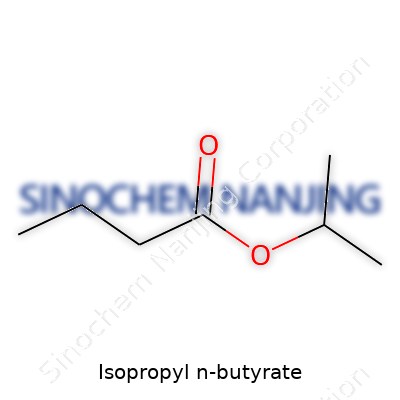
| Names | |
| Preferred IUPAC name | Isopropyl butanate |
| Other names |
Butyric acid isopropyl ester Isopropyl butyrate Propan-2-yl butanoate Isopropyl n-butyrate |
| Pronunciation | /ˌaɪsəˈprəʊpɪl ɛn ˈbjuːtɪreɪt/ |
| Identifiers | |
| CAS Number | [97-85-8] |
| Beilstein Reference | 1741584 |
| ChEBI | CHEBI:89034 |
| ChEMBL | CHEMBL504943 |
| ChemSpider | 157304 |
| DrugBank | DB14195 |
| ECHA InfoCard | 100.009.166 |
| EC Number | 203-666-4 |
| Gmelin Reference | 9584 |
| KEGG | C19601 |
| MeSH | D017342 |
| PubChem CID | 12263 |
| RTECS number | UF8225000 |
| UNII | K4Y7H4E0A2 |
| UN number | UN3272 |
| CompTox Dashboard (EPA) | DTXSID3058708 |
| Properties | |
| Chemical formula | C7H14O2 |
| Molar mass | **144.21 g/mol** |
| Appearance | Colorless liquid |
| Odor | fruity |
| Density | 0.862 g/mL at 25 °C |
| Solubility in water | Insoluble |
| log P | 2.3 |
| Vapor pressure | 0.29 mmHg (25°C) |
| Acidity (pKa) | pKa ≈ 25 |
| Basicity (pKb) | Isopropyl N-Butyrate does not have a measurable pKb as it is an ester, not a base. |
| Magnetic susceptibility (χ) | -7.56×10⁻⁶ cm³/mol |
| Refractive index (nD) | 1.4150 |
| Viscosity | 2.8 mPa·s (at 25 °C) |
| Dipole moment | 2.12 D |
| Thermochemistry | |
| Std molar entropy (S⦵298) | 402.4 J·mol⁻¹·K⁻¹ |
| Std enthalpy of formation (ΔfH⦵298) | -497.9 kJ/mol |
| Std enthalpy of combustion (ΔcH⦵298) | -3147.9 kJ/mol |
| Pharmacology | |
| ATC code | D02AX |
| Hazards | |
| GHS labelling | GHS02, GHS07 |
| Pictograms | GHS02,GHS07 |
| Signal word | Warning |
| Hazard statements | H226, H319, H336 |
| Precautionary statements | P210, P233, P240, P241, P242, P243, P261, P271, P280, P303+P361+P353, P304+P340, P305+P351+P338, P312, P337+P313, P370+P378, P403+P235, P501 |
| NFPA 704 (fire diamond) | 1 2 0 |
| Flash point | 64 °C |
| Autoignition temperature | 427 °C |
| Explosive limits | 1.0% - 8.0% |
| Lethal dose or concentration | LD50 (oral, rat): 13,400 mg/kg |
| LD50 (median dose) | LD50 (median dose): Rat oral 7.4 g/kg |
| NIOSH | NA |
| PEL (Permissible) | PEL (Permissible Exposure Limit) for Isopropyl N-Butyrate: Not established |
| REL (Recommended) | 150 mg/m3 |
| Related compounds | |
| Related compounds |
Isopropyl butyrate Isobutyl butyrate N-Butyl isobutyrate Propyl butyrate Butyl acetate Isopropyl acetate |



