Isobutyryl Chloride: A Down-to-Earth Dive into an Underappreciated Chemical
Historical Development
People often treat the story of isobutyryl chloride as a footnote in the history of organic chemistry. Back in the early twentieth century, folks needed flexible reagents for new wave industrial synthesis. Beyond the thriving dye and pharmaceutical sectors, researchers scrambled for acyl chlorides to accelerate targeted reactions. Isobutyryl chloride entered the picture as chemists needed a branched-chain building block that could perform consistently. Synthetic routes got tighter and more refined over the decades; by the 1950s, plant-scale production gained momentum, and its reputation among bench chemists kept rising. The story stretches from dusty glassware to digital monitoring, but the core goal always circles back: make something reactive, predictable, and safe, then do that at scale, again and again.
Product Overview
Isobutyryl chloride pops up on procurement lists for everything from flavor chemistry to boutique pharma. It belongs to the family of aliphatic acyl chlorides with the formula (CH3)2CHCOCl. This compound works as a nimble acylating agent. You find it as a colorless to pale yellow liquid—they say it smells sharp and slightly acrid, but every chemist recognizes the signature warning before they even uncap the bottle. Companies move drums of this stuff on strict schedules because it doesn't forgive sloppy handling, and the value of each shipment depends on its spotlessness: pure enough to transform downstream molecules, not just fill another slot in inventory.
Physical & Chemical Properties
This liquid boils at about 90°C under normal pressure and freezes just shy of room temperature, so it needs diligent storage. Its density sits at 1.048 g/cm³—no floating in water, and it sinks with conviction if leaked. Its vapor eats at the nose and lungs, showing its readiness to react. Folks who’ve uncorked a fresh bottle can testify that it hydrolyzes rapidly with atmospheric moisture, releasing hydrogen chloride gas that leaves rust on any exposed metal. Chemically, it's all about that acyl chloride group: highly electrophilic, itching for nucleophiles, and stubborn when wet.
Technical Specifications & Labeling
Labeling practices call for precision. The CAS number 79-30-1 gets written plainly. Containers need hazard symbols for corrosivity and warning statements for inhalation risks. Standard grades arrive at 97% or higher purity; the best labs demand a certificate of analysis for every drum. Material Safety Data Sheets go beyond legal formality—anyone near the stuff should know exactly what leaks and splashes mean for their daily wellbeing. The clarity around storage conditions—cool, dry, tightly sealed—is no afterthought, because sloppiness brings damaged shipments, workplace injuries, and long hospital visits.
Preparation Method
Manufacturers use an acid chloride method—typically reacting isobutyric acid with thionyl chloride, phosphorus pentachloride, or oxalyl chloride. Facilities rely on closed systems to trap escaping vapors and protect workers. Techs feed thionyl chloride slowly into cooled isobutyric acid, as the reaction spews out sulfur dioxide and hydrogen chloride gases. Scrubbers work hard to keep emissions in check. Yield depends on patience—rush this step, and product purity dips; clean up post-reaction, and every technician learns the bite of acid spills first-hand.
Chemical Reactions & Modifications
Isobutyryl chloride’s top role is in Friedel-Crafts acylations, tacking a bulky isobutyryl group onto aromatic rings. It’s known for reacting with alcohols to yield esters and with amines to produce amides. Each run 'eats' water or base if present, so operators must dry the glassware and solvents. Chemists also tag it for synthesizing active pharmaceutical ingredients, agrochemical intermediates, and fragrances. Over time, it becomes clear that smart folks rely on its predictable behavior to introduce complexity in molecular designs—without it, whole classes of industrial reactions would jam up.
Synonyms & Product Names
Ask a distributor, and you might hear names like 2-methylpropanoyl chloride, isobutanoyl chloride, or isobutyric acid chloride. Catalogs may toss out numbers or batch IDs, but most scientists stick with the IUPAC format when logging data. Local language tweaks do not change the underlying approach: wherever you look, the core structure—three methyls and a reactive carbonyl chloride—remains constant.
Safety & Operational Standards
Ask anyone who's handled isobutyryl chloride; they'll tell you stories involving hissing flasks, ruined gloves, and the unforgettable sting of acid gas. Laboratories draft strict protocols: airtight hoods, neoprene gloves, safety goggles, and immediate neutralization buckets. The chemical’s reputation among safety officers comes from its reactivity and its tendency to pound the lungs and eyes with even passing whiffs. Industrial settings demand emergency eyewash stations and real spill plans—unlike routine solvents, there’s no safe shortcut. Training programs give direct, personal stories, showing why dismissing warnings often leads to chemical burns, lost time, or legal headaches.
Application Area
Isobutyryl chloride’s sweet spot lands in active ingredient synthesis for pharmaceuticals and agrochemicals. Flavor and fragrance houses need it for complex esters, and specialty plastics companies rely on it for tailor-made polymers. Research labs keep it in stock for tweaking small molecules, developing new medicinal cores, or pushing boundaries in functional material design. You also see it in the production of photographic chemicals. The pattern in all these uses: small additions of a reactive handle turn plain chemicals into high-value products. Countless scientific breakthroughs trace their roots to careful acylations, often made possible with compounds like isobutyryl chloride.
Research & Development
R&D teams continue to probe new routes for manufacturing, aiming to lower emissions and waste. Green chemistry groups are searching for safer acyl sources or catalytic methods that avoid phosgene-like byproducts. Universities publish studies on selective acylations—hoping to squeeze more complexity out of one-pot reactions or boost selectivity for complex drug scaffolds. Industrial scientists push for inline monitoring systems to cut accidents and maintain tighter product specs. Folks understand the ugly costs tied to chemical spills or off-spec batches, so software-assisted tools have started to replace pure experience on production floors. Investment returns follow process improvements, not just volume expansion.
Toxicity Research
Toxicologists rank isobutyryl chloride as corrosive, with acute inhalation risks. Studies report damage to eyes, respiratory tract, and skin with brief exposure. Experimental work on animals shows tissue damage, so regulations cap allowable airborne concentrations in workplaces. Hospitals and poison control databases log accidental exposures—symptoms read like a recipe for misery: coughing, chest pains, burns, and fluid in the lungs. Chronic exposures matter less because facilities train rigorously to end acute problems before long-term damage sets in. Regulatory agencies, from OSHA to REACH, demand publicly available safety data, and companies keep toxicology summaries close at hand when negotiating insurance.
Future Prospects
The story of isobutyryl chloride keeps evolving. Synthetic biology teams envision biosynthetic routes to acyl chlorides, skipping hazardous feedstocks. AI and automation hand chemists the chance to run higher-yield, better-controlled acylations with less waste. Companies invest in modular systems, offering just-in-time reactions to cut inventory storage risks. The push toward safer, cleaner chemistry will pressure suppliers to rethink old manufacturing conventions. The next chapter may include more efficient, less hazardous variants for delicate applications, but the thread ties back to the same goal as ever: keep reactivity high, hazard low, and scale where demand pulls hardest. Anyone invested in the future of lab chemistry or commercial synthesis will keep an eye on ongoing improvements—and should push for safer, smarter, more sustainable uses.
What is Isobutyryl Chloride used for?
What Makes Isobutyryl Chloride Stand Out
Isobutyryl chloride rarely grabs headlines, but anyone following the pharmaceutical or chemical industries will recognize its value. It’s a colorless liquid with a sharp odor, mainly used as a building block for several important products — and the expertise behind using it means safer, more reliable results for both manufacturers and consumers.
Driving Modern Medicine
Drug development relies on chemical reactions that create safe, effective medicines. Isobutyryl chloride isn’t a medicine itself. Rather, it helps build many intermediates needed to make antibiotics, painkillers, and other treatments. Chemists reach for it while creating compounds called isobutyryl derivatives — these offer unique properties that can’t be achieved easily with other chemicals. Take the anti-inflammatory and analgesic ibuprofen, for instance; compounds like isobutyryl chloride play a crucial role in getting the right structure for pain relief.
Shaping Agricultural Products
Farmers struggle with pests and diseases, especially as climate changes bring new challenges. Isobutyryl chloride helps produce crop protection compounds, especially herbicides and fungicides. Getting effective pesticides onto fields means more reliable harvests and less waste. The chemical steps that bring these products to life are often invisible to the public, but quality and consistency depend on clear standards and strict handling.
The Backbone of Chemical Manufacturing
A lot of industrial coatings and plastics depend on precise chemical ingredients. Isobutyryl chloride allows manufacturers to snap together larger molecules that add protection and strength. I once spoke with a friend in industrial paint manufacturing. His team counted on chemicals like isobutyryl chloride to help craft resins resistant to weather and physical wear. Whenever they adjusted formulations without it, the final products simply didn’t pass durability tests.
Health, Safety, and Responsibility
Working with isobutyryl chloride carries real responsibilities. This stuff reacts strongly with water and produces hazardous gases. I saw a lab accident in college that drove the point home — one misplaced drop near a sink triggered a mini-evacuation. Strong training and safe storage protect workers and the environment. Mistakes hurt, sometimes badly, and the ripple effects can reach entire communities. That’s why companies invest in fume hoods, tightly sealed drums, and strict labeling policies.
Regulators like the EPA and OSHA keep a close eye on how chemicals like isobutyryl chloride are stored, shipped, and disposed of. Real-world experience shows that clear rules and periodic training reduce accidents. Efforts to replace harsh reagents keep growing too. Green chemistry’s rise signals that while chemicals like isobutyryl chloride have a place, smarter and safer alternatives may shape tomorrow’s factories.
Looking Ahead
Demand keeps rising for high-performance medicines, coatings, and agricultural chemicals. As the global economy changes, sourcing safe, reliable chemicals becomes crucial. Research teams and companies that uphold high professional standards help everyone benefit — from the patient who gets better medicine, to the farmer with a stronger harvest, to neighbors breathing easier thanks to smart safety strategies.
What are the safety precautions when handling Isobutyryl Chloride?
Understanding Why This Chemical Demands Respect
Isobutyryl chloride isn’t just another bottle in the stockroom. When I started out in the lab, I remember a buddy of mine nicknaming it “problem in a flask.” He wasn’t wrong. One whiff, and you’ll recognize the sharp, choking odor—not the kind you forget quickly. If a chemical can burn your skin and ruin your day just by getting a single drop on you, every move matters.
Skin and Eye Protection Must Be a Habit
You only get one pair of eyes. One splash from this stuff, and you’re looking at severe burns. I don’t mess around—nitrile gloves, goggles that seal to your face, and a face shield for more than a pipette’s worth. Standard safety glasses won’t cut it. For skin, I stick with a full lab coat with long sleeves and sometimes even a chemical apron if I’m working with a big batch. Forgetting to check gloves for holes means gambling with your hands.
Adequate Ventilation: Make It Your Baseline
Isobutyryl chloride is volatile. The fumes can seriously irritate your nose, throat, and lungs. I once watched someone pour it outside the fume hood—within seconds, others in the room got hit by nausea and fits of coughing. The lesson stuck. Fume hoods aren’t optional. If you don’t know if the ventilation’s working, don’t trust it. Test with a bit of tissue to see if the airflow pulls it in. Always treat it like it can bite, because it really can.
Storing and Handling Without Shortcuts
Ever see what happens if water gets into isobutyryl chloride? You get a violent release of hydrogen chloride gas—a nightmare for breathing and metal surfaces. Keep the container dry, use only tightly sealed glass or compatible bottles, and label everything with the date opened. I’ve seen people store it with regular acids and bases. That’s an accident in the making. Separate storage—away from water and incompatible chemicals—makes a real difference.
Spill and Exposure Responses
Sweeping up with a paper towel just isn’t enough. In my experience, spill kits that include absorbent pads and neutralizers made for acid chlorides are essential. If you get this stuff on your skin, wash right away with plenty of water for at least a quarter of an hour. Eyewash stations and safety showers—test those regularly. Emergency contacts should be posted where everybody can find them. Training drills might seem tedious but speed and muscle memory count during spills.
Waste Disposal Calls for Responsibility
Tossing residues down the drain or ignoring the regulations lands you and others in trouble. I follow my institution’s hazardous waste program to a tee. Each drop of leftover chemical and contaminated gloves or paper goes in a clearly labeled hazardous waste container. Waste service pickup happens on schedule, not “whenever there’s time.” This isn’t just to keep the building safe; nearby communities rely on responsible handling, too.
Why Culture and Personal Accountability Matter
I’ve seen corners cut, and I’ve seen the outcomes. Safety culture grows from watching out for yourself and the next person in the lab. Speak up if procedures get skipped or shortcuts start popping up. Sometimes, safety feels like extra hassle, but real experience—from chemical burns to close calls—brings it home: nobody ever wishes they protected themselves less. Training, good habits, and taking every precaution with isobutyryl chloride pay off with every shift that ends without an accident.
Real-World Solutions: Training and Tools
Keep training updated, and review chemical safety cards as part of the morning routine. Upgrade equipment regularly and don’t let cost-cutting be the reason you have to deal with a chemical injury. Keep emergency tools within arm’s reach. Share stories of close calls to keep the risks real. Most importantly, never believe that routine guarantees safety—constant vigilance does. That’s how the pros get home safe every night.
How should Isobutyryl Chloride be stored?
The Hazards in Focus
My time in a research lab taught me early that chemicals like isobutyryl chloride aren’t just exotic compounds in glass bottles—they’re aggressive, fuming liquids that bring risk into the room even before you unscrew the cap. This stuff reacts with water and most organic materials. It turns even a tiny spill into a nightmare of smoke, heat, and noxious fumes. Without serious respect for its hazards, nobody should get near it.
Why Storage Choices Matter
What happens with chemicals like isobutyryl chloride isn’t theoretical. Liquid leaks, exploded drums, or mystery odors in a warehouse are the result of people thinking a good shelf and a locked door are enough. I saw a colleague rush a corroded metal can to the fume hood, only to see white smoke rise as it hissed through a failed cap. No one in that room forgot the lesson. This compound chews through metal and many plastics, reacts even to humid air, and releases hydrogen chloride—a gas that burns lungs and eyes.
Concrete Safety Steps
Glass stands up to isobutyryl chloride’s bite much better than metal or cheap plastic. In labs that care about long-term safety, glass bottles with tight-sealing Teflon-lined caps are the norm. High-density polyethylene sometimes passes, but touching the wrong plastic by mistake introduces the risk of a slow, invisible disaster.
The story doesn’t end once it sits on a shelf. Temperature swings speed up decomposition; direct sunlight means containers degrade faster and pressure shoots up. Leaving this chemical at room temperature, away from light but still close to a busy work area, felt safe to many—until one day, a bottle ruptured in a warm, cluttered cabinet. The next time I handled this chemical, I reached for a purpose-built, vented chemical refrigerator in a storage space far from the action.
Even inside these refrigerators, secondary containment is critical. Imagine a cracked bottle slowly dripping onto cardboard. Now picture that cardboard heating, sparking, catching fire, and pulling in other nearby chemicals in a chain reaction. Using a chemical-resistant tray to catch drips turns one bad move into a minor cleanup instead of an emergency.
The Human Factor
Regulations like OSHA and GHS aren’t just about paperwork. The rules came from real accidents. Good training means understanding why every step exists—and why shortcuts open the door to disaster. Strong labeling, regular safety checks, and written records form a culture where new technicians know where each chemical belongs and how to identify trouble before it starts.
Investing in safety showers, spill kits, and fume hoods isn’t about overkill; it’s about respect for the chemical’s nature and the real risks it brings. Relying on luck or “the way we’ve always done it” courts disaster, especially when working alone or late. Teamwork and good habits—double-checking caps, logging temperatures, even just reading the safety data sheet—keep teams safe and businesses out of trouble.
Better Solutions for the Future
New composite containers, improved leak detection sensors, and stricter digital inventory systems point to a future where surprises happen less often and responses unfold faster. Yet all that technology takes a back seat to culture—real people caring about each other and knowing the consequences. Having seen well-meaning mistakes escalate, my advice always comes back to the basics: respect the chemical, lock it down tight, and never assume the job is done until you double-check everything.
What is the chemical formula of Isobutyryl Chloride?
Chemical Identity and Formula
Isobutyryl chloride has the chemical formula C4H7ClO. For anyone who’s ever stepped foot inside a chemistry lab, molecules like isobutyryl chloride stand out for both their utility and the respect they demand. With its structure based on the isobutyric acid backbone, this compound trades a hydroxyl group for a chlorine atom, creating a sharp, reactive acyl chloride. Just a glance at its formula underscores this change: swap out the -OH for a -Cl and you step straight into the world of reactive chlorides, opening new doors in organic synthesis.
Why Is This Chemical Important?
The fast reactivity of isobutyryl chloride creates opportunities, but it’s no beginner’s reagent. I remember my university days, back in organic chemistry labs, how acyl chlorides always meant double-checking procedures and upping the respect for safety gear. Gas masks weren’t for show—these fumes bite the nose and lungs. In the world beyond school, isobutyryl chloride keeps showing up as a go-to for making isobutyryl derivatives: medicines, agrochemicals, plastics, dyes, industrial coatings. Big pharma companies, for example, rely on it for building certain antibiotic structures. It’s not about fancy applications—it’s about solid, reliable chemistry.
Working With Isobutyryl Chloride
Handling isobutyryl chloride demands caution. Chlorine-containing compounds like this one react quickly with water, spitting out heat and hydrochloric acid fumes. Splash it on your hand or breathe those vapors, and you’ll remember the lesson longer than you’d like. Proper lab ventilation, gloves, and goggles help minimize risk. Storage also tells its own story: sealed glass containers, away from moisture, send a strong message about respect for reactive chemicals.
The risks make some chemists hesitate, but the chemical rewards pay off in efficiency. Coupling reactions pick up speed with isobutyryl chloride, building peptides or bootstrapping specialty polymers. It’s not the only acyl chloride out there—acetyl chloride, benzoyl chloride have their place—but isobutyryl chloride stands out for branched-chain compounds and specific intermediates.
Environmental and Health Considerations
Isobutyryl chloride brings up big questions about environmental responsibility. In the US, this chemical counts as a hazardous substance, and for good reason: improper disposal means risk to water sources, wildlife, and anyone handling waste. Stories pop up—small spills, fume leaks—reminding everyone why following procedures counts. Companies that use large amounts often invest in scrubbers or neutralization tanks, turning leftover chemicals into safer forms before disposal.
Looking Toward Better Practices
The push for greener chemistry means a close look at old habits. Teaching new chemists about isobutyryl chloride involves more than showing reactions; it means sharing stories about what’s gone wrong and how to make things right. Some researchers explore alternative reagents with fewer hazards. Others focus on closed systems and recycling leftover chemicals, aiming to shrink both danger and waste.
Every bottle of isobutyryl chloride stores not just a clear liquid but decades of lessons in chemistry, risk, and innovation. Anyone who picks up that bottle stands in a long line of experimenters, charged with pushing discovery forward and keeping safety close at hand.
What should I do in case of Isobutyryl Chloride spills or exposure?
The Real Risks Behind Isobutyryl Chloride
Isobutyryl chloride, a colorless liquid with a strong smell, shows up in chemical manufacturing and pharmaceuticals labs. It reacts aggressively with water and releases corrosive fumes, which means even a small amount on your skin or in your lungs quickly turns into a health threat. People working with this chemical often feel uneasy, and not without reason. I once spoke to a lab colleague who landed in the emergency room after a routine bottle cracked—a stark reminder that the consequences hit fast. Eyes can burn in seconds. Skin reddens and blisters. Fumes spark coughing or worse, cause breathing trouble. These aren’t just possibilities—they are things that really happen.
Immediate Actions After a Spill
Everything starts with keeping distance. Don’t try to be a hero—one person down is trouble enough. For anyone nearby, putting on proper gear matters more than anything: gloves made of nitrile, chemical splash goggles, and a well-sealed lab coat. An organic vapor respirator can make the difference between a hospital visit and a rough day at work. If a spill takes place, alert people in the area and get everyone out who doesn’t have safety gear.
Ventilation saves lives. Before trying to contain the chemical, open up any doors or laboratory hoods. Blocking the spread helps, so use pads or absorbent material to surround the leak. Covering the spill with a non-reactive absorbent, like sand or a special neutralizer, keeps the situation from getting worse. Never pour water on the spill—you’ll make toxic gas on the spot.
If You Get Exposed
If skin comes in contact with isobutyryl chloride, use the safety shower—don’t waste time with small sinks. Soak the area for at least 15 minutes and take off all clothes touched by the chemical. This is humbling, but speed here matters more than embarrassment. Reach the eyewash station if it splashes in the eyes. Rinse your eyes under a steady flow of water for at least 15 minutes—forced blinks help the water wash everything out. If someone inhales the vapor, get them to fresh air right away. If breathing troubles start, call emergency medical help. Some people try to tough it out, but symptoms climb fast—emergency services exist for a reason.
Why Preparedness Pays Off
Training before trouble hits makes all the difference. Every lab and warehouse handling isobutyryl chloride ought to have spill kits stocked with absorbents, neutralizers, and personal protective equipment ready for easy access. Routine drills teach muscle memory, so people move quicker in real trouble. Know your exits. Know your gear. Post emergency numbers right by the workspaces. Spend five minutes going over the chemical safety data sheet (SDS) with new team members. None of this is wasted time—panic never beats practice.
Building a More Secure Workplace
Leaders in chemical storage should push for secure containers, clear labeling, and strict storage away from water or bases, which trigger reaction. Laboratory spaces deserve regular review for ventilation quality. Extra costs for solid storage cabinets or up-to-date respirators will always beat the price of long-term injury. The best-run labs and plants combine equipment, training, and a habit of speaking up if something feels off.
Lessons from the front lines of chemical work show that smart planning, good equipment, and open communication keep people healthy. A splash of isobutyryl chloride doesn’t have to end in tragedy—with the right habits and a commitment to safety, workplaces hold onto great staff and send everyone home whole at day’s end.
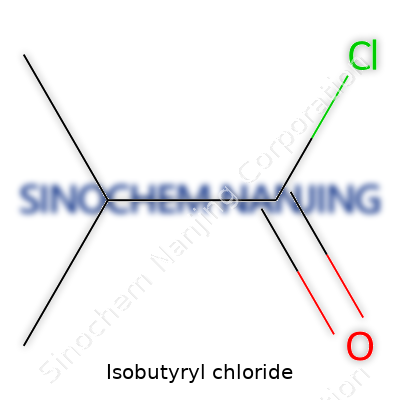
| Names | |
| Preferred IUPAC name | 2-methylpropanoyl chloride |
| Other names |
1-Chloro-2-methylpropane-1-one 2-Methylpropanoyl chloride Isobutanoyl chloride Isobutyryl chloride |
| Pronunciation | /ˌaɪsəˈbjuːtɪrɪl ˈklɔːraɪd/ |
| Identifiers | |
| CAS Number | 79-30-1 |
| Beilstein Reference | **93855** |
| ChEBI | CHEBI:82220 |
| ChEMBL | CHEMBL135653 |
| ChemSpider | 55885 |
| DrugBank | DB14138 |
| ECHA InfoCard | 100.004.162 |
| EC Number | 208-123-3 |
| Gmelin Reference | 59254 |
| KEGG | C06319 |
| MeSH | D007966 |
| PubChem CID | 7770 |
| RTECS number | WN5075000 |
| UNII | OP0DCV7SMV |
| UN number | UN2483 |
| CompTox Dashboard (EPA) | DTXSID7020289 |
| Properties | |
| Chemical formula | C4H7ClO |
| Molar mass | 106.56 g/mol |
| Appearance | Colorless to light yellow liquid |
| Odor | Pungent |
| Density | 0.936 g/mL at 25 °C |
| Solubility in water | Decomposes |
| log P | 1.87 |
| Vapor pressure | 42 mmHg (20°C) |
| Acidity (pKa) | 1.3 |
| Basicity (pKb) | pKb = 7.41 |
| Magnetic susceptibility (χ) | -5.86 × 10⁻⁶ cm³/mol |
| Refractive index (nD) | 1.397 |
| Viscosity | 0.53 mPa·s (20 °C) |
| Dipole moment | 2.40 D |
| Thermochemistry | |
| Std molar entropy (S⦵298) | 260.2 J·mol⁻¹·K⁻¹ |
| Std enthalpy of formation (ΔfH⦵298) | -233.3 kJ/mol |
| Std enthalpy of combustion (ΔcH⦵298) | -674.6 kJ/mol |
| Hazards | |
| GHS labelling | GHS02, GHS05, GHS07 |
| Pictograms | GHS02,GHS05 |
| Signal word | Danger |
| Hazard statements | H302, H314, H335 |
| Precautionary statements | P210, P260, P261, P264, P271, P280, P301+P330+P331, P303+P361+P353, P304+P340, P305+P351+P338, P310, P312, P321, P363, P370+P378, P405, P501 |
| NFPA 704 (fire diamond) | 3-3-1-W |
| Flash point | -18 °C |
| Autoignition temperature | 478°C |
| Lethal dose or concentration | LD50 oral rat 640 mg/kg |
| LD50 (median dose) | LD50 (median dose) of Isobutyryl Chloride: **820 mg/kg (rat, oral)** |
| NIOSH | MW4025000 |
| PEL (Permissible) | PEL: 5 ppm (17 mg/m³) |
| REL (Recommended) | Recommended Exposure Limit (REL): 3 mg/m³ |
| IDLH (Immediate danger) | IDLH: 50 ppm |
| Related compounds | |
| Related compounds |
Isobutyryl bromide Isobutyric acid Isobutyric anhydride n-Butyryl chloride |



