Understanding Isobutyl Nitrite: Its Journey, Uses, and Concerns
Historical Development
Isobutyl nitrite emerged in laboratories in the late 19th century, part of a wave of scientific curiosity sweeping over the organic chemicals known as alkyl nitrites. Pharmacology journals from the early 20th century describe how doctors used similar compounds to address angina and heart-related issues, chasing the blood vessel-dilating benefits. In the 1960s and 70s, isobutyl nitrite began gaining another sort of reputation as demand rose among clubgoers for its effects on mood, relaxation, and perception. Regulatory paths split: in some places, medical necessity faded in view of safety concerns, while recreational circles kept the product in demand as “poppers.” This meandering history reminds us that society’s relationship with a chemical can shift rapidly, driven both by discovery and by changing attitudes toward health and recreation.
Product Overview
Isobutyl nitrite often comes as a clear, yellowish liquid with a smell not soon forgotten—sweet but with a sharp tang. Commercial outlets sell it in small, tightly sealed bottles labeled discreetly, sometimes as room deodorizers or leather cleaners. Behind these euphemisms lurks a reality shaped by changing laws and evolving user habits: most people who purchase isobutyl nitrite today understand its real use. On the street and in online shops, product names multiply—Rush, Jungle Juice, Iron Horse—each claiming something special, but the essential ingredient tends to stay the same.
Physical & Chemical Properties
The properties worth watching come down to volatility and flammability. Isobutyl nitrite boils at a modest 67-68°C, meaning it evaporates quickly at room temperature. Its density keeps it lighter than water, and the chemical formula (C4H9NO2) tethers it to the wider nitrite group. The vapor is more than just a risk for a lightheaded effect—it poses a real fire danger. I’ve seen old bottles leak and fill rooms with a potent odor that lingers, proving quick just how little it takes to change the air. Those unfamiliar are sometimes surprised at how rapidly the chemical diffuses, causing headaches or worse if the air flow is poor.
Technical Specifications & Labeling
In places where regulation gets enforced, labeling rules insist on warning symbols—flammable, toxic, keep away from children. Some producers skirt the detail, using generic phrases to sidestep stricter requirements. Accurate labeling isn’t just about bureaucracy; it forms a first line of defense for public health. Anyone handling chemicals, especially those with as low a boiling point as isobutyl nitrite, needs immediate clarity on what sits inside the bottle. In my experience, confusion or ignorance about the contents sets the stage for accidents. Batch purity and concentration—rarely disclosed outside of labs—can mean the difference between an expected effect and a dangerous overdose.
Preparation Method
Manufacturers create isobutyl nitrite by nitrating isobutanol, running it through a careful dance with nitrous acid under temperature control. Some home chemistry attempts surface now and then, driven by supply restrictions or curiosity. They boil down (sometimes quite literally) to mixing isobutanol with sodium nitrite in an acidic environment, producing the alkyl nitrite and water as a byproduct. Risks escalate quickly: runaway reactions produce toxic nitrogen oxides, and careless distillation can start fires. I’ve seen enough reports of kitchen experiments gone wrong to know this isn’t a process for amateurs, and every batch brings the unpredictability of contaminants or byproducts.
Chemical Reactions & Modifications
Isobutyl nitrite reacts readily with strong acids and bases, the nitroso group never too far from detaching when pushed. Inhalation leads to its breakdown in the body, releasing nitric oxide—a potent vasodilator—alongside isobutanol and other metabolites. Industrial chemists sometimes tweak the isobutyl group for research, using the same nitration template to generate a series of related compounds and compare effects. These modifications can change potency, toxicity, or even shelf life. Over time, the stored chemical decomposes under light or heat, forming brownish breakdown products that no reputable chemist would claim as safe for use. Reliable storage and timely replacement matter more than some expect.
Synonyms & Product Names
Under chemical registries, isobutyl nitrite answers to several names: 2-methylpropyl nitrite, isobutyl ester of nitrous acid, and CAS number 542-56-3. Commercially, illicit or recreational channels favor catchier monikers. Buyers quickly learn to recognize Rush, Locker Room, and Blue Boy, though these names rarely align with strict composition or purity guarantees. The jumble of titles complicates efforts for poison centers and emergency doctors, as patients may not know the actual substance at play. International markets multiply confusion with translation quirks or deliberate mislabeling, blurring lines for anyone trying to nail down exactly what’s in a bottle.
Safety & Operational Standards
Handling rules demand gloves, eye protection, and good ventilation—not just in laboratories but also wherever the chemical is stored or used. Fume hoods shed much of the risk for trained staff, but consumers inhaling vapors rarely enjoy such protection. The main physical risk comes from fires started near ignition sources; old cases describe bottles exploding under heat. There’s also the danger of skin or eye contact, provoking burns and irritation. Responsible storage calls for cool, dark conditions, remote from flammable materials and out of reach of children and pets. Safer use often gets sacrificed in party settings, letting accidents slip through cracks in vigilance.
Application Area
Medical professionals once leaned on alkyl nitrites for their vasodilating action, but isobutyl nitrite’s main home now lies in recreational circles, along with limited uses as a cleaning agent. The recreational route appeals mostly to those seeking muscle relaxation and intensified physical perception. In certain subcultures, its use ties to specific social rituals and shared experience. Cases exist where workers deal with nitrite-based products in manufacturing or industrial settings, using their solvent properties. Still, the risk profile drives most industries toward alternatives, dampening wider adoption.
Research & Development
Academic labs probe deeper into isobutyl nitrite’s impact on the cardiovascular system, neurological function, and its potential for harm reduction. Comparisons with other alkyl nitrites surface in medical journals, especially as restrictions shift demand to isobutyl from the older amyl and butyl relatives. Pharmaceutical interest now centers on identifying risks and designing molecules that might offer therapeutic value with fewer unwanted side effects. Research organizations that publish toxicology data inform harm reduction, often serving as the only source rooting out urban legends about the drug’s toxicity threshold or long-term impact.
Toxicity Research
Toxicology studies consistently warn that isobutyl nitrite acts much like a sledgehammer to the circulatory system in high doses. People have landed in emergency rooms with methemoglobinemia, a blood disorder robbing cells of their oxygen-carrying power. The danger compounds for those with certain genetic conditions or when mixed with other substances like erectile dysfunction drugs or alcohol, as these combinations push blood pressure dangerously low. Cases of accidental poisoning, particularly in children or pets, show just how quickly exposure can tip over into life-threatening territory. Academic reviews note potential links to immune suppression and risky behavior, pressing public health bodies to call for better education and clearer warnings.
Future Prospects
With shifting regulation and patterns of use, isobutyl nitrite faces an uncertain future. Some countries clamp down with blanket bans, while others try licensing or taxation. Harm reduction movements push public health agencies to favor education over criminalization, arguing that true risk comes not from the chemical, but from ignorance or unsafe practices. Synthetic chemists keep hunting for compounds that keep the useful medical effects but ditch the risks. Anticipating the future for isobutyl nitrite means watching both the law and the lab: wherever policy tightens, the chemistry adapts, and as safety studies improve, users and regulators alike gain tools to protect the vulnerable.
What is Isobutyl Nitrite used for?
Everyday Encounters with Isobutyl Nitrite
People bump into isobutyl nitrite in places most wouldn’t expect. Known among some circles as a “poppers” ingredient, this chemical often pops up in club scenes and behind closed doors. Someone looking for a quick head rush or muscle relaxation probably doesn’t stop to think about the science or history behind this tiny brown bottle.
The Medical Angle
Long before pop culture caught on, doctors saw isobutyl nitrite as helpful in relieving certain chest pains. It acts as a vasodilator, which means blood vessels open wider and blood moves more freely. In tight, stressful moments of angina, the quick-release effect brings almost instant relief. That’s about as far as legitimate medical use goes these days. Safer, more controlled heart medications made isobutyl nitrite fade out from doctor's offices.
Popularity in Recreational Use
In nightclubs, some reach for isobutyl nitrite to chase a euphoric rush. They want their heartbeat to pick up and muscles to loosen, partly for the sake of enhanced sensation or easier intimacy. Most who experiment probably hear about these effects from word of mouth rather than any medical pamphlet. Marketing keeps one step ahead of regulations by labeling bottles as “room deodorizer” or “leather cleaner.” While the labels show one use, word on the street tells a different story.
Risks and Health Warnings
No one can ignore the dangers. Using this chemical outside medical supervision invites risks: sharp drops in blood pressure, dizzy spells, headaches, and risky behavior for those with heart conditions. Rare but real, some cases link isobutyl nitrite to vision problems and sudden heart complications. Information from the CDC and World Health Organization highlights organ damage with repeated misuse. Anyone thinking about using substances like these owes it to themselves to understand the full picture.
Regulation and the Community Challenge
Lawmakers struggle to keep up. Bans and restrictions often exist on the books, but the folks distributing or using isobutyl nitrite may skirt regulations using vague product labels. When a product looks like a cleaning fluid but ends up in nightlife routines, confusion grows. Law enforcement faces an uphill climb because intent can be hard to prove, and closing one loophole sometimes opens another. My own observation: patchwork rules don’t keep young people from experimenting, but honest discussion and education often have a stronger effect.
Paths to Safer Choices
People finding themselves tempted by the thrill or pressure of group settings need frank conversations. Communities do better when they talk opening about risk, offer harm reduction advice, and connect those struggling with substance use to health professionals. Anyone reading labels—whether for fun, stress relief, or something else—deserves facts without scare tactics.
Balancing legal controls, honest outreach, and access to care sets up safer outcomes. From my vantage point, transparency, peer support, and ongoing information make a bigger dent in unsafe behaviors than secretive bans ever do. Isobutyl nitrite brings a tangle of pleasure, medical legacy, and social risk—pushing us to care for ourselves and each other with open eyes.
Is Isobutyl Nitrite safe to inhale?
Street Reality of Poppers Use
In certain circles, poppers turn up at parties, clubs, even private gatherings. Isobutyl nitrite belongs to this group. Users inhale the vapors for a brief rush. People describe this as a sense of warmth, lowered inhibitions, and, for some, enhanced sexual experience. The connection between the LGBTQ+ community and nitrites runs deep, both historically and socially. But the question that echoes isn’t about the effects—it’s about safety.
What Actually Happens When You Inhale?
Isobutyl nitrite acts as a vasodilator. This means blood vessels open wider, dropping blood pressure and speeding the heart up. You feel that flush, a tingle, maybe even a light head. Science understands this part well. Doctors used similar compounds decades back to treat chest pain, but with medical supervision. Inhaling something recreationally skips every professional checkpoint.
The Health Stakes
Hospitals see the flip side: headaches, dizziness, sudden fainting, slips and falls. Some wind up with dangerous drops in blood pressure that look like a cardiac event. At higher doses, the risk doesn’t just grow—it leaps. People have passed out and hit their heads or forgotten where they were or what happened. Methemoglobinemia stands out as a shocking risk—red blood cells lose the ability to carry oxygen. You see blue lips, confusion, sometimes seizures. Staff in emergency rooms watch for these signs all the time. It’s not rare in those who try high doses or mix poppers with other drugs.
Mixing With Other Medicines: Big Trouble
Nitrites and erectile dysfunction prescriptions do not mix. People who combine the two face sudden, extreme drops in blood pressure. Some lose consciousness. Doctors warn against this combo loudly and often, yet incidents keep coming. Even without prescriptions, mixing nitrites with alcohol or stimulants ratchets up risk. Rapid heartbeat, confusion, possible arrhythmia—these can come fast.
Legal and Quality Concerns
What hits shelves isn’t always pure. Over-the-counter poppers may contain isobutyl nitrite, isopropyl nitrite, or mystery blends with unknown fillers. Labels don’t always tell the truth. Few products go through any quality control. This isn’t just a regulation-story; it’s experience. I have seen people show up to the clinic with chemical burns, not because of the nitrite itself, but due to poorly mixed, contaminated bottles.
Long-Term Effects and Dependence
Poppers encourage certain behaviors—sometimes risky sex, sometimes repeated use. Stories come through about headaches that don’t fade, forgetfulness, or damage to the nose lining. A pattern forms around chasing the same rush and ignoring warnings, and then the body adapts, seeking more each time. Users report feeling low or anxious if they stop suddenly.
Open Conversations, Better Choices
No product sold as a party drug or “room odorizer” equals safe fun—no matter what the label claims. Education helps reduce emergency room visits more than heavy-handed legal crackdowns. Understanding the risks and talking openly gives people tools for better choices. Clear conversations between doctors and clients about the reality of poppers lead to fewer dangerous outcomes. Knowing how these chemicals work and what dangers lie in the bottle empowers anyone who might be tempted to inhale.
What are the possible side effects of Isobutyl Nitrite?
What Draws People to Isobutyl Nitrite
People talk about “poppers” in nightlife, LGBTQ+ spaces, and sometimes casual parties. The active ingredient in a lot of these small bottles is isobutyl nitrite. Some go after its head-spinning rush, chasing seconds of euphoria or an easier time with physical intimacy. Curiosity got the better of me once too, and the immediate rush felt unmistakable—your face flushes, your heart thumps, maybe your head gets a bit fuzzy. But not enough folks ask what else happens inside the body or how hard those side effects can hit.
Short-Term Reactions: Not Always Harmless
Right after inhaling, most people feel a warm sensation and a fast pulse. It’s not just a comforting flush—a pounding heart stretches the heart’s work. Some people experience pounding headaches, dizziness, or sudden nausea. Vision sometimes blurs. Breathing can feel shallow, especially if someone already deals with mild asthma or allergies. One mistake I saw: a friend misjudged his own tolerance, stood up to dance, and nearly collapsed from low blood pressure. Passing out from blood rushing away from the brain can turn a party into panic fast.
Risks Below the Surface
The impact stretches beyond a few minutes of wooziness. Isobutyl nitrite lowers blood pressure sharply. This can cause fainting, which brings the risk of falls and injuries. Oxygen levels sometimes drop, giving lips or skin a bluish color—a sign to get medical attention right away. Prolonged exposure leaves folks open to methemoglobinemia, where blood carries less oxygen. From reports in clinics and emergency rooms, some users land in the ER with confusion, rapid heartbeat, and serious shortness of breath. In the most severe cases, untreated methemoglobinemia can prove fatal.
Specific Populations: More Serious Consequences
Some health risks don’t get discussed enough. Heart issues can surface even in people who never had problems before. If someone takes medications for chest pain—like nitroglycerin—the mix with isobutyl nitrite can drop blood pressure to life-threatening levels. Drugs for erectile dysfunction (like sildenafil or tadalafil) pose a similar risk. Folks with anemia, breathing disorders, or weak immune systems face much bigger dangers.
Long-Term Impact
Using isobutyl nitrite over months or years wears at the body. Nose bleeds and persistent headaches become more common. Some notice frequent sinus infections or a constant runny nose. Eye damage shows up in published studies—repeated use can weaken vision by affecting the optic nerve. Nervous system issues, like tingling in the hands or feet, appear in folks who’ve used these substances heavily. For those who already feel anxious or low, the chemical ups mood swings and the risk of depression.
Reducing Harm and Knowing the Signs
Doctors and harm-reduction advocates say people need honest info before deciding anything. If someone uses poppers, avoid mixing with other blood pressure medications and never swallow the liquid; it’s toxic. Staying hydrated, knowing personal health history, and making sure a sober friend is around can help prevent tragedy. For anyone feeling pressure to join in, remember: real friends never question a “no, thanks.”
Seeking Help
If any serious symptoms kick in—chest pain, confusion, bluish skin, or trouble breathing—medical attention can’t wait. Spotting these signs early means more effective treatment. I’ve seen how taking care of one another, asking questions, and sharing real facts can keep friends safer, even when curiosity or social pressure leads them down risky paths.
Is Isobutyl Nitrite legal to buy and use?
Knowing the Rules on Isobutyl Nitrite
If you’ve passed by certain adult shops or underground clubs, isobutyl nitrite might have caught your eye under different names like “room odorizers” or “poppers.” This little brown bottle carries mixed opinions and confusion, so anyone interested should take some time to understand how the law treats it. Rules on isobutyl nitrite in the United States don’t paint a simple picture. On one hand, the government put restrictions on alkyl nitrites back in the 1980s, worried about health risks and abuse. The Anti-Drug Abuse Act of 1988 officially banned the selling and marketing of isobutyl nitrite for human consumption. You won’t see this outlawed at the federal level for other purposes, though, like for industrial uses or even as a cleaning agent.
This selective rulebook means some shops sell isobutyl nitrite as anything except for direct inhalation. Bottles might read “liquid incense” or “leather cleaner,” hoping to get around the ban. The FDA still warns sellers and buyers not to skirt around the rules, pushing for enforcement if health claims or direct-inhalation marketing crops up. State governments add another layer of difference; places like California clamp down a lot harder than others, with their own local statutes. People have faced fines and sometimes arrests for selling or owning isobutyl nitrite, especially where the law gets interpreted with little gray area.
The Health Risks That Can’t Be Ignored
Old friends and news headlines tend to gloss over the risks when it comes to poppers. Health warnings from agencies like the CDC flag issues like blood pressure dropping dangerously low. I remember a story out of a friend’s college house party where someone ended up in the ER after mixing poppers with other stimulants—nobody thought a small bottle would lead to that kind of night. Mixing isobutyl nitrite with erectile dysfunction drugs, for example, can cause the body’s systems to crash in ways doctors have warned about for decades.
Cases of vision loss, severe headaches, nausea, and even lethal outcomes exist, not to mention dirty supplies mixed with unknown chemicals found in some products. These risks push public health authorities to stay alert, especially since bottles rarely come with honest labeling or instructions.
Education and Regulation Matter More Than Blanket Bans
Blanket bans drive sales and use further underground, locking out honest conversations on safety and personal health. It reminds me of past fights to end smoking in public spaces—progress sped up once people learned the science and the risks, not from shutting every door or punishing users. If lawmakers focused on clean labeling, trusted sources, and public health information, more folks could make informed choices without fear. Australia and the UK have tried regulated sales with safety warnings, making sure users know what they’re getting and how to avoid overdose or dangerous interactions with other drugs.
Doctors and harm-reduction groups keep pushing for more support and real-world education, not just tough talk. In the end, isobutyl nitrite’s legal status relies on patchwork rules, clever marketing, and how each state chooses to enforce the law. Buying and using poppers might be possible in some places, but risks go far beyond simple legality. Knowing the facts and looking out for each other works far better than pretending the problem will go away with a ban.
How should Isobutyl Nitrite be stored?
Handling a Volatile Chemical
Isobutyl nitrite sits on a shelf with other household chemicals that catch headlines for the wrong reasons. Found in small glass bottles and often labeled with names far more innocent than their use, this substance calls for attention from anyone thinking about storage. Safety never grows old, especially where strong-smelling, highly flammable liquids are involved.
Paying Attention to Temperature and Light
A cool, dry spot always works best. Heat nudges isobutyl nitrite toward decomposition, which raises a set of problems ranging from glass bottles breaking down, to sudden pressure changes, to leaks. I keep mine away from radiators, direct sunlight, or ovens. The fridge tends to sound like a safe bet, as long as it’s kept away from food and securely sealed. Tight lids matter. Once vapors escape, the smell quickly takes over a room.
Keeping Air and Moisture Out
Oxygen and moisture don’t play nice with isobutyl nitrite. Water exposure degrades the chemical, sometimes making the liquid cloudy or changing its odor. I use amber glass bottles for two reasons: they block out light and seal tightly. Both protect the contents better than plastic, which may interact with the chemical and cause leaks that show up as a sticky mess at bottle bottoms.
Avoiding Accidents at Home
Stories circle back every year about bottles left lying around; someone knocks them over, and the stuff gets everywhere. Respiratory and skin irritation can follow quickly. A locked metal box on a high shelf, away from children and pets, stands out as my main tip. This goes double for shared housing or apartments. I always warn roommates about strong-smelling bottles and keep a record of what's stored, so if something breaks or disappears, I know right away. Extra keys should stay with trustworthy adults.
Fire Risks Go Beyond Warnings
Isobutyl nitrite vapor catches fire fast. Static electricity, a lighted cigarette, or faulty wiring could ignite even small spills. I stay far from flames or any electrical tools while handling or transferring the chemical. Fire extinguishers sit nearby, and I keep an emergency mask in my storage area.
Respecting Laws and Common Sense
Keeping chemicals like isobutyl nitrite isn’t just about what works at home. Health Canada and the Food and Drug Administration have issued repeated warnings, as misuse and improper storage have led to poisonings and hospitalizations. Local laws change fast. Checking with pharmacies or local government before storing feels less like a hassle than an ER visit.
Best Practices for Disposal
Old or degraded isobutyl nitrite won’t improve with age. Flushing it or pouring it outside hurts the environment. Most cities accept small quantities at household hazardous waste days, though I call ahead before dropping anything off. Keeping these chemicals out of general trash protects sanitation workers and stops ground contamination.
Taking Storage Seriously
Every step between bringing isobutyl nitrite home and eventual disposal matters. I treat it as seriously as any other risky substance. Label bottles with purchase dates and don’t wait until they smell off to reconsider keeping them. One careless moment can upend an ordinary day, so storage—just like use or disposal—always deserves care.
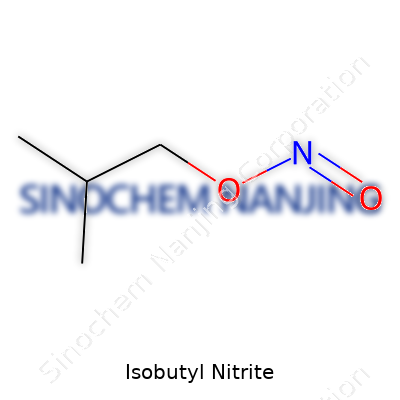
| Names | |
| Preferred IUPAC name | 2-methylpropyl nitrite |
| Other names |
2-methylpropyl nitrite isobutyl nitrite nitrous acid, isobutyl ester isobutyl nitrous acid 2-methyl-1-propyl nitrite |
| Pronunciation | /ˌaɪsoʊˈbjuːtɪl ˈnaɪtraɪt/ |
| Identifiers | |
| CAS Number | 542-56-3 |
| 3D model (JSmol) | Isobutyl Nitrite - JSmol 3D model string: ``` CC(C)CON=O ``` |
| Beilstein Reference | 741873 |
| ChEBI | CHEBI:59712 |
| ChEMBL | CHEMBL46201 |
| ChemSpider | 12385 |
| DrugBank | DB01427 |
| ECHA InfoCard | ECHA InfoCard: 100.005.401 |
| EC Number | 208-779-0 |
| Gmelin Reference | **Gmelin Reference:** 89070 |
| KEGG | C10482 |
| MeSH | D009872 |
| PubChem CID | 6541 |
| RTECS number | NL9100000 |
| UNII | YO7S2I7TAZ |
| UN number | UN2351 |
| CompTox Dashboard (EPA) | DTXSID0024362 |
| Properties | |
| Chemical formula | C4H9NO2 |
| Molar mass | **89.09 g/mol** |
| Appearance | Yellow liquid |
| Odor | ethereal odor |
| Density | 0.868 g/mL at 25 °C |
| Solubility in water | Slightly soluble |
| log P | 2.21 |
| Vapor pressure | 42 mmHg (20°C) |
| Acidity (pKa) | pKa ≈ 3.4 |
| Basicity (pKb) | pKb 10.6 |
| Magnetic susceptibility (χ) | -35.5e-6 cm³/mol |
| Refractive index (nD) | 1.356 |
| Viscosity | 0.456 mm²/s at 25 °C |
| Dipole moment | 2.334 D |
| Thermochemistry | |
| Std molar entropy (S⦵298) | 354.6 J·mol⁻¹·K⁻¹ |
| Std enthalpy of formation (ΔfH⦵298) | –198.8 kJ/mol |
| Std enthalpy of combustion (ΔcH⦵298) | -1627 kJ/mol |
| Pharmacology | |
| ATC code | V03AB22 |
| Hazards | |
| GHS labelling | GHS02, GHS06, GHS07 |
| Pictograms | GHS02, GHS06 |
| Signal word | Danger |
| Hazard statements | H225, H302, H315, H319, H335, H412 |
| Precautionary statements | P210, P304+P340, P403, P501 |
| NFPA 704 (fire diamond) | **3-4-0-W** |
| Autoignition temperature | 410 °C |
| Explosive limits | Explosive limits: 1.8–9.5% |
| Lethal dose or concentration | LD50 oral rat 130 mg/kg |
| LD50 (median dose) | LD50 (median dose) of Isobutyl Nitrite: 130 mg/kg (rat, oral) |
| NIOSH | SN2075000 |
| PEL (Permissible) | PEL (Permissible Exposure Limit) of Isobutyl Nitrite: "OSHA has not established a specific PEL for Isobutyl Nitrite. |
| REL (Recommended) | 1 mg/m3 |
| IDLH (Immediate danger) | Inhalation at 250 ppm |
| Related compounds | |
| Related compounds |
Amyl nitrite Butyl nitrite Ethyl nitrite Methyl nitrite Alkyl nitrites |



