Isoamyl Nitrite: A Deep Dive from Lab to Lifestyle
Historical Development of Isoamyl Nitrite
Isoamyl nitrite first showed up in the mid-1800s as part of a wave of nitrite compounds capturing the attention of European chemists. It wasn’t just scientific curiosity — doctors tried it for angina pectoris and noticed its powerful impact on the vascular system. Over time, its popularity grew beyond hospitals. Through the 20th century, recreational use gained steam, especially within nightlife and LGBTQ+ communities, who found new uses for its quick relaxation of smooth muscle and its signature head rush. Now, isoamyl nitrite turns up in both pharmacopeia and clubs, and the trail from early synthesis to today’s widespread, sometimes controversial, use speaks to social shifts and technological advances.
Product Overview
The clear liquid with a fruity, almost banana-like scent comes packaged in small bottles intended for single or short-term use. It’s made from a straightforward mix: amyl alcohol meets sodium nitrite under acidic conditions. Demand comes from several markets — some medical, some recreational, and some in lab settings. Each market brings different expectations for purity and safety, creating a split personality for the product. Makers face a constant push and pull between standardizing output and dealing with unpredictable consumer experimentation.
Physical & Chemical Properties
Isoamyl nitrite isn’t hard to spot in the lab. It’s an oily, yellow-tinged liquid that evaporates quickly and spreads its distinct scent almost instantly. With a boiling point right around 98°C and low solubility in water, it moves freely through organic solvents like ether and alcohol. Its volatility turns it into a potent inhalant, which underpins both legitimate medical uses and less-regulated street applications. Given its chemical structure — a nitrite ester — it reacts rapidly with reducing agents and oxidizers, emphasizing the need for careful handling and tight storage protocols. Even a brief exposure to sunlight or heat can degrade the compound, which can quickly change both smell and potency.
Technical Specifications & Labeling
You’ll find standard bottles usually have clear labels stating “Isoamyl Nitrite” or, with less candor, “room odorizer” or “liquid incense,” depending on the legal climate. Technical information often covers concentration, purity level (commonly 98% or higher), and a warning on volatility and toxic potential. Transport regulations — classified under hazardous chemicals — require bottles to use child-resistant caps, tamper-evident seals, and splash guards. Cautionary icons showing skull and crossbones, flammable liquid, and respiratory risks show regulators and manufacturers take toxicity and misuse seriously.
Preparation Method
Labs typically stick to a reaction between isoamyl alcohol and sodium nitrite under acidic conditions. Strong mineral acids, like sulfuric, trigger the nitrosation and push the reaction forward while keeping it below 10°C to limit side reactions and vapor loss. Afterward, extractions and washes pull impurities away, followed by drying with anhydrous salts. Poor temperature control or careless washing leaves toxic byproducts like unreacted nitrite or alcohol impurities, which not only lower quality but also introduce new risks during use. Commercial-scale synthesis adds molecular sieves and extraction columns to make volume production safe and clean.
Chemical Reactions & Modifications
Isoamyl nitrite easily transfers its nitrite group to strong nucleophiles and undergoes rapid reduction in the body to release nitric oxide. In the lab, chemists swap out the isoamyl group to produce a whole family of nitrite esters with slightly different physical and physiological quirks. On its own, isoamyl nitrite reacts with acids, bases, and oxidants, sometimes violently, so storage and blending stay strictly controlled. Chemical tinkering allows pharmacologists and recreational chemists to shape duration, onset, and intensity, opening new possibilities for both medical and non-medical applications.
Synonyms & Product Names
Isoamyl nitrite appears on the market under dozens of names, from trade names like “Pearl Drop” or “Rush” to less descriptive titles like “liquid gold” or “poppers.” Its technical aliases include isopentyl nitrite, 3-methylbutyl nitrite, and banana oil nitrite. The language on packaging depends heavily on regional laws; manufacturers and retailers sometimes use euphemisms or code names to avoid regulatory problems, blurring the line between medical chemical and prohibited inhalant.
Safety & Operational Standards
Using isoamyl nitrite outside of a controlled medical setting brings serious safety challenges. Its vasodilating effect can crash blood pressure, which in severe cases drops blood supply to the brain. Combined with erectile dysfunction drugs or alcohol, dangerous interactions can follow quickly. In manufacturing and packaging environments, personal protective equipment — gloves, splash goggles, face shields — becomes essential. Airflow systems keep vapor levels low and exposure risks at bay. Lab techs track temperature and pressure closely, since isoamyl nitrite’s volatility can turn a small spill into an occupational accident fast. Regulations in Europe and North America categorize isoamyl nitrite as a hazardous substance, placing strict limitations on how much can be produced, stored, and shipped. Solid training and rapid-response resources make the difference when handling nitrite esters.
Application Area
Hospitals relied on isoamyl nitrite as a life-saving vasodilator — treating angina attacks and sometimes cyanide poisoning, where its ability to form methemoglobin offset the poisoning’s worst effects. Today, these applications are rare. In nightlife, especially sexual subcultures, isoamyl nitrite remains known as “poppers,” prized for its ability to relax smooth muscle and trigger temporary euphoria. Some chemists use it as a synthetic intermediate, exploiting its potent reactivity to create novel compounds. Demand from these three markets has lasted for decades, but legal pressure and changing social attitudes continue to push and pull at boundaries between medical, recreational, and research use.
Research & Development
Scientists push the envelope on nitrite esters such as isoamyl nitrite to probe how nitric oxide mediates vascular physiology and smooth muscle relaxation. Pharmaceutical research tracks new analogues that provide the vascular benefits without the swift onset or risk of recreational abuse. Structural tweaking at the molecular level gives openings for longer-lasting effects or fewer side effects, although results so far show that balancing stability and potency remains tough. In my own research years, new esters surfaced monthly, yet only a handful advanced to clinical trials. Having a compound that is so easily inhaled and quick-acting both fascinates scientists and frustrates regulators.
Toxicity Research
Old case reports warned about headaches, flushing, and fatal drops in blood pressure. Modern toxicologists go further, looking at DNA and protein changes after exposure, including the potential for chronic methemoglobinemia. Recent studies link nitrite inhalation to immune suppression and cell damage, especially in high-use scenarios. Government labs and poison control centers logged thousands of overdoses, a worrying signal amplified during music festivals and rave seasons. In some cases, adulterants or impurities cause allergic reactions worse than expected. In my clinical years, bringing up nitrite use could explain fainting spells or heart palpitations without obvious cause — a reminder of the chemical’s systemic reach.
Future Prospects
Society’s relationship with isoamyl nitrite hasn’t settled—regulatory controls keep tightening, but underground use adapts to every new restriction. Harm reduction efforts have made some headway: testing kits for purity, standard dosing information, and emergency protocols for overdose have reduced some tragic outcomes in nightlife spaces. Researchers keep searching for safer analogues and new medical roles, shaped by better understanding of smooth muscle biology and nitric oxide signaling. On the chemistry side, there’s fresh interest in re-tooling the molecule for new applications, especially as new catalysts and reaction environments come online. Yet the divide between medical value and recreational demand remains sharp. In policy circles, honest discussion about risk, education, and safer delivery methods keeps inching forward. The future of isoamyl nitrite will pivot on whether science, medicine, and society can steer use toward benefit while minimizing harm.
What is Isoamyl Nitrite used for?
Understanding Isoamyl Nitrite’s Medical Roots
Isoamyl nitrite, part of a group once known as "poppers," started off serving a clear purpose in medicine. Back in the days before modern cardiac care, doctors reached for it to treat people suffering angina — tightness or pain in the chest caused by the heart not getting enough blood. Isoamyl nitrite relaxes blood vessels, helping blood flow more freely and letting oxygen reach the heart muscle. That matters for folks with blocked or narrowed arteries.
I remember learning in college that medics would ask the person to crush a glass capsule under a cloth and inhale the fumes. The result was almost immediate. The person would feel relief as their chest pain faded away. Hardly anyone in the hospital uses it for angina anymore, though. These days, other drugs like nitroglycerin tablets or sprays step up. They work better and are easier to control. Still, isoamyl nitrite is important from a historical point of view, showing how scientists and doctors have chipped away at heart disease, trial after trial.
Beyond Medicine: How People Use Isoamyl Nitrite Today
Isoamyl nitrite didn’t just fade into history books. Some people use it recreationally, especially in club and party scenes. Inhaling isoamyl nitrite gives a rush — a sense of warmth, headiness, and muscle relaxation. That catch-all effect on the body comes from blood vessels opening, which can lower blood pressure for just a moment or two and sometimes lead to a pounding heartbeat.
At parties or in certain communities, people at times use poppers to loosen up socially, and some say it eases sex between men by relaxing muscles. Still, the physical reactions don’t always feel comfortable or safe. I’ve seen plenty of stories about people fainting, feeling sick, or hurting themselves because of low blood pressure or dizziness. If a person uses isoamyl nitrite around open flames or with other drugs, things can get risky in a hurry.
Risks and Why Awareness Matters
Isoamyl nitrite isn’t just another inhalant. Breathing it in can bring on headaches, flushing, and the kind of lightheadedness that makes you sit down fast. Rarely, people get a reaction known as “methemoglobinemia,” a problem where the blood can’t carry oxygen well. Blue lips, confusion, or shortness of breath signal an emergency, and that’s not something to downplay.
Accidental swallowing — kids have done it by mistake — can lead to a life-threatening drop in blood pressure. I’ll never forget the shock on parents’ faces in the ER where I once volunteered. This isn’t a scare story, just a snapshot from real life.
What Could Help Address the Issue?
Education stands out as a useful first step. People deserve honest information, not just scare tactics or blanket bans. Clear labels, better public health outreach, and open conversations are what I’d want for myself or a loved one. Medical teams need ongoing awareness to spot and treat serious cases quickly, especially in communities where recreational use is common.
Laws around isoamyl nitrite vary by country. Stigma can keep people from asking for help. Reliable, nonjudgmental care often makes the difference, especially if a young person ends up in the emergency room or someone needs advice they can trust.
Isoamyl nitrite sits at the crossroads of medicine, nightlife, and public health. Understanding both its legitimate and risky sides helps everyone make better choices.
Is Isoamyl Nitrite safe to use?
A Real-World Take on Isoamyl Nitrite Safety
Isoamyl nitrite, sometimes known as “poppers,” tends to hover around the fringes of nightlife and party culture. Anyone who’s walked through a club or festival scene has probably caught the sweet chemical scent wafting through the air. Its effects show up fast: head rushes, fleeting euphoria, and blood vessels relaxing all at once. From a purely technical angle, this chemical works by dilating blood vessels, which drops blood pressure and speeds up heart rate. That’s why medical teams sometimes use similar compounds for emergency chest pain. But the party version lands outside standard medical practices.
Stories get around about folks using poppers recreationally, usually inhaling straight from a small bottle. Some people swear it makes the moment more intense, others say it’s just a cheap thrill. What hardly gets discussed at the bar is what might go wrong. Too many assume safety because use seems casual or popular. The ugly side includes headaches that feel like a drill is burrowing in, or sudden dizziness strong enough to knock someone off their stool. I’ve seen more than one friend go ghost-pale and unsteady after just a few minutes.
Beneath the Surface: The Medical Facts
Jumping from lived experience to cold facts, isoamyl nitrite isn’t harmless for everyone. It puts strain on the heart — if someone’s already got heart troubles or low blood pressure, the risks climb fast. Medical literature links exposure to heart rhythm problems, dangerous drops in blood pressure, and methemoglobinemia, a condition where oxygen struggles to bind in the blood. In rare but real cases, using these chemicals ends up with an ambulance ride. And if you mix isoamyl nitrite with erectile dysfunction drugs, you’re playing roulette with your blood pressure.
Inhaling vapors over and over can irritate the nose, throat, and lungs. Some users report persistent coughing and trouble breathing. The risk ramps up if someone has asthma. Accidental swallowing instead of inhaling brings a whole different set of problems—life-threatening ones—so keeping curiosity in check saves a lot of trouble. The fact that no prescription covers recreational use means there’s no regulation or oversight, and buyers can’t always be sure what’s actually inside the bottle. One batch might seem mild, while the next ends up way too strong.
Legal Status and Public Conversation
Laws treat the subject differently country by country, and even from state to state. Some regulate it tightly, others leave gaps a mile wide. That patchwork approach means people often hear rumors instead of facts. Teenagers and young adults swapping advice in clubs need better info and straight talk from health professionals, not just scare tactics. Real education starts outside of legal codes and scare campaigns — it’s about sharing lived experience and medical expertise openly.
Safer Paths and Honest Choices
If someone’s still thinking about experimenting, it pays to pause and weigh the risks. Being in a group of trusted friends, checking ingredients, never mixing with alcohol or prescription meds, and holding back with dosing makes a difference. Anyone with a heart condition should skip the experiment altogether; no cheap thrill is worth a trip to the ER or worse. Health isn’t about dodging fun — it’s about not letting a passing high steal away bigger possibilities. Looking out for each other, sharing honest stories, and keeping facts clear does more to keep people safe than any scare headline ever could.
What are the side effects of Isoamyl Nitrite?
What is Isoamyl Nitrite?
Isoamyl nitrite is sold in small bottles and goes by names like “poppers” in nightlife circles. People inhale the vapors for a quick rush or to relax certain muscles. It first came on the scene decades ago in clinical practice, helping with angina chest pain, but recreational users grabbed onto it for its use as a muscle relaxant, especially among certain communities.
Physical Side Effects Nobody Should Ignore
Isoamyl nitrite works fast. A person feels lightheadedness, warmth, and sometimes a racing heart. The blood vessels open wide, causing the blood pressure to drop suddenly. For some, this might feel pleasant, but this rush doesn’t last and can leave someone dizzy or faint. I remember a friend at a party who stood up too quickly after inhaling and nearly blacked out – a “head rush” that had him sitting on the floor for a while.
Short-term use can lead to headaches, flushing, and nausea. Eyes might water, and some taste a strange metallic tang in their mouths. These effects might not seem like much, but repeated exposure puts added strain on the body, especially for those already living with heart or blood pressure issues.
Risks Run Deeper Than a Quick High
The major concern with isoamyl nitrite comes from what it does in the bloodstream. By lowering blood pressure, it leaves the heart working harder to compensate. For someone with undiagnosed heart trouble, this isn’t a small risk. People sometimes talk about the “nitrite blush” and giggle about feeling wobbly, but underneath, the heart is under real stress.
Some users have developed methemoglobinemia, where oxygen can’t bind well to blood cells. That means cells and organs starve for oxygen even while breathing feels normal. Blue lips or fingers are a sign something isn’t right, and it’s happened after people swallowed the liquid by accident, thinking it works like inhaling. Medical help is needed, fast.
Eyes, too, can be affected. Reports of vision loss, with blurry or spotty vision that can linger for days, have surfaced with sustained use. For some, the damage lingered longer. This is something even regular users may not anticipate; it’s caught people by surprise in communities where word-of-mouth is the only “safety net.”
Weighing Psychological and Social Effects
There’s this idea that “poppers” are harmless fun, but that’s a narrow view. People sometimes rely on them to deal with anxiety in sexual settings. It can mask deeper issues – like pressure to perform or fit in – and it’s not a healthy long-term solution. Talking to health professionals and trusted friends helped me understand that pressure. Harm reduction groups do a lot of good, passing on honest information without judgment.
Better Choices and Safer Habits
Knowledge goes a long way in harm reduction. Never take anything from an unmarked container, and always check with a healthcare provider if you live with heart or lung conditions. Read up from trusted sources and take stories from people who’ve been there seriously. If you or someone you know feels off after use, contacting emergency help fast can make all the difference.
Governments worldwide have started regulating or banning nitrites because of these risks. Still, people find ways to get them, so education about what to look out for and how to reduce harm matters more than ever.
Seeking Trustworthy Support
The draw of isoamyl nitrite is real, especially in communities where tradition or peer norms matter. Trusted health services, open conversations, and support groups offer more than just medical advice – they give a sense of connection and empowerment. Anyone worried about the risks is not alone, and reaching out can start a new chapter built on safety.
How should Isoamyl Nitrite be administered?
Understanding Isoamyl Nitrite and Its Risks
Isoamyl nitrite, often referred to on the street as "poppers," has carried a specific, but occasionally misunderstood, role in both medicine and nightlife. Medically, it helped break down cyanide in cases of poisoning and, back in the twentieth century, helped treat certain heart conditions. These days, its main reputation ties to recreational use, but thinking about how it’s given to people—especially since misuse can do real harm—matters more now than ever.
No Room for Guesswork
Nothing in my experience has shown a more direct connection between proper technique and safety than chemicals like this one. In the medical context, doctors used small glass ampoules of isoamyl nitrite. The patient inhaled the vapors directly under careful supervision to quickly relax blood vessels and drop dangerously high blood pressure. This exactness made a difference, since too little meant poor results. Too much brought on side effects: pounding headaches, sudden drops in blood pressure, racing heartbeat.
Outside clinics or hospitals, accurate dosing falls apart. Isoamyl nitrite in party spots or unregulated products shows up in bottles. Nobody in those situations keeps an eye on blood pressure spikes or fainting. The greatest worry comes from people with blood pressure problems, breathing conditions like asthma, or those taking drugs for erectile dysfunction. Too many folks end up in emergency rooms because they didn’t realize the mix can lead to a serious or even life-threatening collapse.
Supervision: The Overlooked Key
Working in health care, I’ve seen the damage when people trust any bottle or “herbal aroma” found online. A study from the European Monitoring Centre for Drugs and Drug Addiction highlighted that nearly 8 in 10 exposures that lead to medical care relate to mistakes about product contents or improper use. Labels lie, liquids get swapped. People sometimes swallow instead of inhale—a dangerous and sometimes deadly error. This is not rare; it can—and does—happen in all kinds of circles.
Doctors never send patients home with isoamyl nitrite to “figure it out.” Safe use relies on breathing in vapor from a measured ampoule, monitored—never from a bottle at a club where your heart is already pounding from other substances.
Looking for Safer Approaches
Doing better starts with honest information. Public health outreach should translate the clinical knowledge into plain talk. Teaching users about the real risks changes outcomes—not by scolding, but by breaking down what could really happen to their bodies. Health professionals could hand out simple info sheets with every ER visit or counseling session involving drug use. Pharmacies and clinics might start pilot programs, just like they do for opioid reversal or naloxone training, showing people what to do—and what to avoid.
Regulation alone won’t fix every case, but standards for packaging and clear labels keep confusion down. Retailers should mark each product with precise warnings about inhalation and the dangers of ingesting. Signs that remind people about hazardous drug interactions could stand in nightlife venues, much like seatbelt reminders in cars.
Everyone deserves to know the full cost of a shortcut with chemicals. Sharing what I have seen and learned, it’s clear the conversation belongs not just in the hospital—but everywhere people consider their health and safety.
Is Isoamyl Nitrite legal to buy and possess?
Understanding Isoamyl Nitrite in the Real World
Isoamyl nitrite, known by some as “poppers,” shows up in certain social circles and medical settings. Its strong smell fills dance floors and makes an appearance in first aid kits for angina treatment. This little bottle stirs up confusion and debate, especially about where the law stands.
The Legal Patchwork Across the Globe
Walk into a pharmacy in some countries, and staff will frown if you ask about isoamyl nitrite. In others, it sits behind the counter with paperwork. Trying to figure out if it’s legal to buy or own brings plenty of frustration because laws don’t line up from place to place. In the United States, the government classifies most alkyl nitrites as prescription-only for certain medical uses. The Anti-Drug Abuse Act in 1988 tried to tighten controls, mainly to keep these chemicals away from teens and recreational circles. Despite these moves, head shops and online markets haven’t stopped selling the stuff under the label of “room deodorizers” or “leather cleaners.”
In the UK, things look different. The Psychoactive Substances Act of 2016 swept in with the aim to clear shelves of a whole range of legal highs, but isoamyl nitrite slipped through because lawmakers didn’t think it fit the bill. British authorities decided it didn’t hit the brain in the same way as other psychoactive substances, so adults could still buy and own it. Australia takes a stricter approach, keeping isoamyl nitrite under medical controls and moving to ban most similar nitrites outright.
Why Legal Clarity Really Matters
All this confusion leaves ordinary people guessing. Picture a young adult who stumbles across a bottle in a friend’s bag and wonders if picking some up could land them with a record, a job loss, or travel issues. Rules that don’t line up from country to country or even state to state give no safety net for honest folks who don’t want to risk breaking the law.
Unclear laws push people toward unregulated markets, making it easy for sellers to cut their product with dangerous chemicals. Hospital records tell a worrying story. Some homebrew mixes have harmed or even killed buyers. People seeing conflicting information online may not know whether they are putting themselves at risk by just carrying a small bottle.
Finding Balance: Solutions That Put Safety First
Many see an opportunity for a common sense approach. Governments should focus on clear labeling and accessible, accurate information, instead of only cracking down or forcing people into a legal gray area. Health campaigns work best when they move beyond scare tactics and give the facts: What does isoamyl nitrite do? What risks come with use? Who should stay away for medical reasons?
Legal sales tied to quality controls would cut down on harmful substitutes. Lawmakers should look at how well-regulated pharmacies handle other substances considered risky, such as codeine or cough syrup. A transparent licensing system for sellers could make room for legitimate demand while protecting public health. In places where total bans exist, community organizations and health agencies can step in to educate about real dangers—not rumors spread on forums. The world of “legal highs” will change with time, but smart, honest rules can help keep people safer.
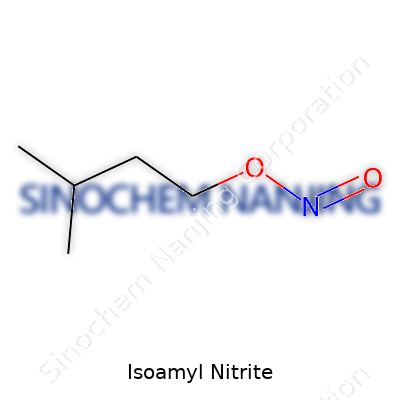
| Names | |
| Preferred IUPAC name | 3-methylbutyl nitrite |
| Other names |
Isopentyl nitrite 3-Methylbutyl nitrite Amyl nitrite BANANAS Isoamyl nitrite, isoamyl ester of nitrous acid |
| Pronunciation | /ˌaɪsoʊˌæmɪl ˈnaɪtraɪt/ |
| Identifiers | |
| CAS Number | 110-46-3 |
| 3D model (JSmol) | `isoamyl nitrite;CC(C)CCOC=NO` |
| Beilstein Reference | 1209282 |
| ChEBI | CHEBI:62827 |
| ChEMBL | CHEMBL1423 |
| ChemSpider | 54694 |
| DrugBank | DB01422 |
| ECHA InfoCard | EC 208-778-0 |
| EC Number | 203-777-6 |
| Gmelin Reference | 1488 |
| KEGG | C06581 |
| MeSH | D009907 |
| PubChem CID | 33389 |
| RTECS number | UN1225000 |
| UNII | F8VB5M810T |
| UN number | UN1261 |
| Properties | |
| Chemical formula | C5H11NO2 |
| Molar mass | **117.15 g/mol** |
| Appearance | Yellow liquid |
| Odor | strong, fruity, sweet |
| Density | 0.868 g/cm³ |
| Solubility in water | slightly soluble |
| log P | 2.8 |
| Vapor pressure | 40 mmHg (20 °C) |
| Acidity (pKa) | pKa ≈ 3.5 |
| Basicity (pKb) | 10.60 |
| Magnetic susceptibility (χ) | -65.0×10⁻⁶ cm³/mol |
| Refractive index (nD) | 1.007 |
| Viscosity | 0.776 cP (20°C) |
| Dipole moment | 1.524 D |
| Thermochemistry | |
| Std molar entropy (S⦵298) | 354.8 J·mol⁻¹·K⁻¹ |
| Std enthalpy of formation (ΔfH⦵298) | -151.9 kJ/mol |
| Std enthalpy of combustion (ΔcH⦵298) | -1758 kJ/mol |
| Pharmacology | |
| ATC code | G04BE03 |
| Hazards | |
| GHS labelling | GHS02, GHS06, GHS07 |
| Pictograms | GHS02,GHS06 |
| Signal word | Danger |
| Hazard statements | H226, H301, H311, H331, H302+H312+H332 |
| Precautionary statements | P210, P261, P264, P271, P301+P310, P304+P340, P312, P405, P501 |
| NFPA 704 (fire diamond) | 3-4-2 |
| Flash point | -20 °C (-4 °F) (closed cup) |
| Autoignition temperature | 220°C |
| Explosive limits | 1.1–7.1% |
| Lethal dose or concentration | LD50 oral rat 1300 mg/kg |
| LD50 (median dose) | LD50 (median dose): 105 mg/kg (rat, oral) |
| NIOSH | TT3850000 |
| PEL (Permissible) | PEL: 125 ppm |
| REL (Recommended) | 30 ppm |
| IDLH (Immediate danger) | 800 ppm |
| Related compounds | |
| Related compounds |
Amyl nitrite Butyl nitrite Cyclohexyl nitrite Isopropyl nitrite Methyl nitrite |



