Isoamyl Chloride: From Early Chemistry to Future Applications
Historical Development
Chemists have been tinkering with amyl halides since the 19th century, and isoamyl chloride stands out as a classic example of curiosity meeting utility. Early synthesis methods were drafted by Friedrich Wöhler’s generation, where the push to convert alcohols into chlorides kicked off a laundry list of organic transformations. As folks in the lab moved from animal-based reagents to using thionyl and phosphorus chlorides, efficiency spiked, and the stuff came out cleaner. By the mid-1900s, access to pure isoamyl chloride helped kickstart a wave of flavor and fragrance innovations, showing that the roots of this chemical reach deep into the old-school world of organic labs, yet the impact continues to ripple across modern technology.
Product Overview
Isoamyl chloride, or 1-chloro-3-methylbutane, has found its way into multiple industries, most often as a straightforward alkyl halide ready for substitution reactions. The appeal for formulators comes from its ability to act as a building block in both industrial and academic chemistry. Small-scale operations, such as specialty perfumery or tailored agrochemicals, often reach for this chemical when seeking isoamyl-derived compounds, since it handles well and does its job without too much fuss.
Physical & Chemical Properties
This clear, colorless liquid carries a sharp, biting odor that can fill the workspace within seconds, so good ventilation is much appreciated. Boiling at roughly 106°C, isoamyl chloride dissolves in common organic solvents, keeping it flexible for various recipes. Not much enjoys burning, but add a flame and expect hydrogen chloride to come rolling off amid thick, irritating smoke. The chemical holds its form under standard conditions, though prolonged exposure to moisture leads to hydrolysis, with isoamyl alcohol and hydrochloric acid as familiar byproducts.
Technical Specifications & Labeling
Suppliers usually offer isoamyl chloride in tightly sealed containers, often amber-colored to keep stray light from nudging degradation. Labels display key facts, including purity (typically exceeding 98%), density readings, refraction indices around 1.406–1.408, and storage guidelines emphasizing cool, dry, and inert conditions. The bottle design reflects decades of chemical logistics, protecting against accidental knocks and vapor leaks, a nod to the underlying health and safety expectations for anyone who lifts a flask in the lab.
Preparation Method
Synthesizing isoamyl chloride starts with a straightforward swap: isoamyl alcohol reacts with hydrochloric acid, phosphorus trichloride, or thionyl chloride. The classic route taps thionyl chloride for the most reliable yield, generating sulfur dioxide and hydrogen chloride as gassy extras that demand good air handling. Toss in a drying agent, direct the result through a fractionating column, and soon enough, isoamyl chloride comes off in pure drips. Old textbook tricks—like using a drop of pyridine to mop up stray acid—still work, though anyone with modern glassware finds the process mostly smooth sailing.
Chemical Reactions & Modifications
Chemists look at isoamyl chloride as a springboard for nucleophilic substitution. Drop in a strong nucleophile, and out comes a new isoamyl derivative: amines yield isoamylamines; sodium azide turns it into isoamyl azide; and potassium phthalimide leads straight to Gabriel synthesis territory. Folks chasing esters or ethers can start here, too. Its carbon-chlorine bond, though sturdy enough for storage, breaks in controlled hands, setting up an array of downstream applications that drive synthetic innovation.
Synonyms & Product Names
The world of chemicals is fond of aliases, and isoamyl chloride wears a few. You might see 3-methyl-1-butyl chloride, isopentyl chloride, or simply 1-chloro-3-methylbutane in older catalogs. Some trade products group it with similar amyl derivatives, but knowledgeable buyers spot the methyl group and know exactly what they’re getting.
Safety & Operational Standards
Lab veterans don’t underestimate isoamyl chloride’s bite. Splash or a sniff too close to the skin brings quick irritation, and fume hoods are standard wherever it’s handled. Spilled drops linger, so anyone cleaning up needs gloves and quick hands. Storage in a dry, ventilated spot keeps runaway hydrolysis in check. Emergency protocols call for eye washes and fresh air, with medical review recommended after significant exposure, so accident logs stay thin in busy facilities. Materials Safety Data Sheets hammer home these points, making sure every employee knows what to do before uncapping a new bottle or opening a drum.
Application Area
Isoamyl chloride punches above its weight in flavor and fragrance manufacturing, especially as a precursor to isoamyl acetate—everyone’s favorite “banana oil.” The chemical also gets plenty of attention from pharmaceutical labs working on custom drugs or intermediates. Agricultural products have benefited from small tweaks on the isoamyl backbone, broadening its utility into pest control research. Analytical chemistry pulls this halide into the fold for certain derivatization techniques, sharpening chromatographic detection in complex samples.
Research & Development
Development teams, particularly in specialty chemicals, keep targeting less wasteful production routes. Green chemistry has pushed for milder chlorinating agents and better waste treatment. Some years back, teams running continuous flow reactors found ways to pare down hazardous byproducts, hinting at future advances. Research publications keep tracking new substitutions off isoamyl chloride, each unveiling yet another compound for use in proprietary formulations. It’s no stretch to say that tweaks on the basic preparation have shrunk both cost and environmental impact, paving the way for broader industrial application.
Toxicity Research
Isoamyl chloride has earned a red flag or two in toxicity research. Rats exposed to vapors show respiratory distress, while skin or eye contact can drive strong irritation in both animals and humans. Chronic exposure brings up concerns about pulmonary sensitization, putting this chemical on the watch list in regulatory agencies. Regulatory data calls for clearly defined handling protocols, warning labels, and periodic training for at-risk users. Research continues on long-term effects, with growing interest in developing safer analogues or adding more aggressive air quality monitoring to facilities using this compound regularly.
Future Prospects
Chemists see isoamyl chloride as a reliable raw material in shifting landscapes. Future prospects include refining sustainability in production, adopting bio-derived precursors, and further automating synthesis to take a load off busy technicians. The fragrance and flavor markets are pushing for traceability and reduced impurity loads—areas where better purification pays off. As regulatory pressure tightens, manufacturers keep looking for substitutes or derivatives with improved safety profiles, yet the original molecule remains a fixture for teaching and specialty use. Partnerships between academic research and industry aim to lower waste, improve yields, and deliver new uses far beyond what the first synthetic chemists ever imagined.
What is Isoamyl Chloride used for?
Chemistry’s Workhorse with a Distinct Aroma
If you’ve ever caught a whiff of a banana-like scent in a chemistry lab, there’s a decent chance you ran into isoamyl chloride or a related compound. Isoamyl chloride doesn’t get much time in the spotlight compared to some industrial chemicals, but its role behind the scenes helps drive progress in pharmaceuticals, flavors, and research labs.
An Essential Tool in Organic Synthesis
Chemists see isoamyl chloride as a serious asset in the synthesis toolbox. Because this chemical acts as an efficient alkylating agent, it finds a home in the creation of more complex molecules. During my time in university chemistry labs, we counted on this compound when building up larger organic structures from smaller components. While safety goggles and good ventilation were non-negotiable—isoamyl chloride has an intense scent and volatile nature—its reactivity became hard to replace, especially in making esters and derivatives for research or commercial supply.
Production of pharmaceuticals often leans on reagents like isoamyl chloride. In practice, chemists use it to install isoamyl groups into larger molecules, sometimes making the difference between an inactive material and an important medicine. Not every step of drug production looks glamorous or easy, but the underlying chemistry still makes the finished product possible. When patent literature gets into real-world pharmaceuticals, references to isoamyl chloride pop up more often than I expected when I started learning about drug synthesis.
Impact in Flavors and Scents
Perfume and flavor companies also depend on isoamyl chloride to lay the groundwork for fruity aromas—think banana, pear, or apple. This starts from the compound's role in forming isoamyl acetate, the “banana oil” many people recognize from artificial flavorings in candies or drinks. Factories won’t just pour isoamyl chloride straight into the candy mix—it works as a building block, and skilled chemists handle the risky bits before finished products ever hit shelves.
I remember a mentor in the food chemistry industry who explained how every synthetic flavor arrives from a web of smaller precursor compounds. Isoamyl chloride stood out because flavor standards and regulations require careful monitoring. Any residual traces would get flagged, so manufacturers prioritize careful purification and handling—another reminder that attention to detail keeps products safe for daily use.
Handling the Risks and Looking Ahead
Isoamyl chloride brings benefits, but it comes with real hazards, too. This liquid irritates skin and eyes and gives off fumes that trigger coughing and headaches. Knowing this, research labs and factory floors rely on strong safety measures. Workers use chemical hoods, gloves, and strict handling protocols to dodge spills and harmful vapors. From my time volunteering in a lab, the lessons stuck—double-check the bottle label, never get complacent with safety glasses, and always prioritize safe storage.
Over time, industry players have shifted due to stricter health guidelines and improved ventilation systems. The push for greener chemistry also nudges researchers toward safer alternatives or refined methods for classic compounds like isoamyl chloride. Training, improved detection technologies, and a culture of safety help keep the advantages of this chemical without the old risks. Seeing this chemical’s journey from hazardous liquid in a glass bottle to a vital link in so many products taught me the weight of responsibility in handling specialized materials.
Final Thoughts
Isoamyl chloride isn’t a household name, but its fingerprints touch medicines, perfumes, and even the snacks on our shelves. It sits at the intersection of practical chemistry and industry, reminding us that the smallest building blocks help create experiences people enjoy every day—provided we respect both the promise and the precautions.
What is the molecular formula of Isoamyl Chloride?
What Isoamyl Chloride Is
Isoamyl chloride stands out in a lot of chemistry labs for a simple reason: it’s both easy to make and easy to use. Chemically, it comes down to a straight formula: C5H11Cl. If you come across this chemical, you’re dealing with a molecule made up of five carbon atoms, eleven hydrogen atoms, and a single chlorine atom. This bare-bones formula keeps a lot of us grounded in the realities of synthesis, storage, and safe handling—especially in teaching labs and workplaces focused on pharmaceuticals and fragrances.
Why the Formula Isn’t Just Academic
Some think molecular formulas aren’t as interesting as how a chemical actually looks or behaves. Truth is, missing even one element on that list can mean a totally different product. In the case of isoamyl chloride, we’re talking about an alkyl chloride that can start all sorts of reactions. It’s a precursor to isoamyl alcohol, often used for banana oil scent, and it builds a bridge into flavors, scents, and other compounds. If the formula changed—swapping just one atom—you’d land somewhere totally different: a new chemical, new risks, new applications.
Practical Importance in the Lab
Anyone who's ever spilled a chemical or tried to neutralize an unknown liquid in the lab will tell you: these formulas aren’t just numbers. With knowledge of C5H11Cl, you can track how it behaves in organic reactions, know what kind of personal protective equipment you need, and predict when it will break down. Isoamyl chloride starts with isoamyl alcohol and reacts with hydrochloric acid, kicking out water and producing the organochloride. Each atom in the formula counts in the reaction, and ignoring the chlorine—even though there’s only one—brings real safety implications.
Risks and Handling
Handling isoamyl chloride isn’t just about chemistry quizzes. It’s classified as an irritant and its vapors can bring on coughing, watery eyes, and headaches. That single chlorine in the formula is enough to put it in a group of compounds that need responsible handling. A closed hood, gloves, and careful labeling keep accidents away. Mistaking it for a harmless alcohol could put students or workers at risk. Making the formula clear can help someone pause and double-check their safety routines before pouring it out of the bottle.
Environmental Concerns and Better Practices
Chlorinated organics, including isoamyl chloride, have raised flags for their environmental persistence. Down the drain, they don’t always stop at the water treatment plant. Just knowing the structure, seeing the chlorine in the formula, prompts chemists to find safer disposal strategies. Some labs stress green chemistry alternatives where possible, and regulators keep a close eye on waste containing chlorinated compounds. Attention to detail with formulas keeps pollution in check and helps avoid regulatory trouble.
Solutions From Experience
I’ve seen what happens when you know your formulas well. Safer handling, fewer accidents, and smoother communication in the lab all spring from that foundation. Keeping formulas visible on labels, double-checking them before mixing reagents, and using digital systems to track chemical inventories lead to better outcomes. Teaching new scientists to study formulas—like that of isoamyl chloride—builds habits that last long after they leave the classroom. It all starts with knowing C5H11Cl and respecting every atom it points to.
How should Isoamyl Chloride be stored?
Understanding Isoamyl Chloride’s Risks
Anyone who has spent time around a chemistry lab recognizes the unmistakable, pungent smell of isoamyl chloride. This colorless liquid often comes up in both research and industry—maybe as a solvent, maybe in synthesis. Trouble starts when folks overlook the way they store bottles of this stuff. I’ve seen labs leave reactive chemicals in corners, warning labels collecting dust. That’s an invitation for leaks, ruined work, and far worse.
Containment Makes All The Difference
Isoamyl chloride’s vapors act fast and don’t mess around. Even a small spill can fill a lab with choking fumes and alert the fire alarm system. This isn’t just about comfort or convenience. The chemical can cause respiratory irritation, headaches, and eye problems. Getting careless with the container or letting the cap sit loose puts people at risk. The right call is always a tightly sealed container, preferably made of glass lined with some chemical resistance. If you’re using plastic, double-check compatibility; some plastics break down under the influence of chlorinated organics.
Temperature and Light: Friends or Foes?
I remember a summer in college when we lost a batch of reagents after the storeroom’s air conditioner broke. Higher temperatures speed up reactions and boost vapor pressure. Isoamyl chloride stands out as volatile, so it can turn a poorly ventilated cabinet into a ticking time bomb. The answer? Store in a cool spot, as far away from direct sunlight as possible. That reduces vapor buildup and stops the kind of chemical breakdown that leads to pressure inside containers.
Ventilation and Air Quality
Chemicals don’t just sit quietly, even behind closed cabinet doors. Trace amounts leak out over time, sometimes faster if humidity climbs. That means isoamyl chloride belongs in a vented, flame-proof safety cabinet—not your office supply closet and definitely not near food or drink. Ordinary cabinets can let fumes settle, and nobody wants to wonder about invisible exposure each day. Where I work, labs with strong airflow and working chemical hoods keep accidents at bay. OSHA and NIOSH both call for vented storage of volatile organics for that reason.
Avoid Mixing With Incompatibles
One lesson from hard experience: do not put isoamyl chloride anywhere near oxidizers or bases. Even casual proximity on the same shelf can cause trouble if there’s a spill or leak. I’ve heard stories of fires sparked by careless storage next to nitric acid or sodium hydroxide. Chemicals labeled as incompatible belong separate—sometimes in a dedicated compartment, sometimes on a different row entirely.
Label Everything, Check Often
Good habits serve as the first line of defense. Every bottle of isoamyl chloride I’ve handled gets a big, bold label with the received date. If there’s damage to the bottle, get rid of it using the right disposal protocol. Schedule regular checks to spot leaks or crusted bottle tops. Sometimes someone forgets or is in a rush, but no lab ever regretted extra vigilance. I always recommend keeping a written inventory for quick checks—makes everyone accountable and helps with emergency response.
Emergency Resources Should Stay Close
If exposure does happen, fast access to eyewash stations, safety showers, and proper respirators can make a huge difference. In my view, every lab using isoamyl chloride should have clear, posted instructions for spill response and PPE. Workers should know exactly where to reach for a spill kit or call for medical support. Most serious mishaps I’ve seen start with small incidents that spiral due to confusion.
Building Long-Term Safety Culture
No fancy storage cabinet replaces people who take ownership. Ongoing training and a strong safety culture mean fewer accidents and healthier workplaces. By storing isoamyl chloride with care, keeping records, and paying attention to details, everyone—whether seasoned chemist or new intern—stays protected.
What are the safety precautions for handling Isoamyl Chloride?
Why Handling Isoamyl Chloride Demands Attention
Isoamyl chloride pops up in some chemistry labs and manufacturing setups. Its sharp odor burns the nose, but the real danger slides in under the radar. Splatters and vapors from this chemical carry trouble for skin, eyes, lungs, and the environment. You only need to get careless once for things to go sideways. I’ve watched a colleague scramble to rinse a splash off his hand—believe me, that wasn’t just a rough day at work, it was a wake-up call.
Personal Protective Gear Isn’t Optional
Let’s talk about what really stands between a safe workday and a regrettable one: gear. Wearing chemical-resistant gloves, goggles, and a long lab coat makes a huge difference. Thin medical gloves tear up fast when exposed to something like isoamyl chloride, so thicker nitrile or neoprene gloves are the way to go. Safety goggles save more vision than folks might think. I’ve seen even seasoned lab techs swap out a scratched-up pair for a quality face shield after a near miss. Cover your arms and legs, not only because of small drips, but also fumes hugging your sleeves.
Ventilation Keeps You Breathing Easy
Fume hoods are your backbone when weighing, mixing, or pouring isoamyl chloride. The stuff evaporates quick, and breathing those vapors gets messy fast. I learned early on to check airflow in the hood before opening a new bottle. If your space feels stuffy, step outside and talk to the building manager; don’t gamble with unknown exposure. Airflow matters, not just for comfort, but to keep headaches, dizziness, and worse at bay.
Spills and Storage—Planning Beats Panic
Spillage isn’t just about mopping and going on with your day. Set up spill kits with absorbent pads and proper containers close at hand. Quick cleanup and disposal cut down on fire hazards and chemical burns. I always triple-check storage, looking for tightly sealed bottles, clearly labeled, and kept apart from incompatible substances like oxidizers and strong bases. Isoamyl chloride isn’t a fan of heat or sunlight, so a cool, dedicated chemical cabinet does the trick. Knowing exactly where to find safety showers and eyewash stations also keeps fear off your back. People who know how to respond act fast and can prevent long-term injuries.
Respect for the Environment is Part of the Job
Treated chemical waste builds trust with your neighbors and regulators. Never pour leftover isoamyl chloride down the sink or sewer. Talking with waste management or following your facility’s protocols gives peace of mind. In one shop, a clear log tracked every drop we disposed of, which meant fewer surprise audits and more time working. Accidents still happen, but honest handling and transparent procedures shield everyone from bigger trouble.
Training Has the Last Word
Experience changes how you handle isoamyl chloride. Reviews and hands-on drills help both rookies and veterans spot mistakes before they grow. Teams that talk openly about mistakes or new hazards cut back on risky shortcuts. Nobody likes more paperwork, but regular practice saves skin—literally. The right culture turns scary moments into teaching stories instead of emergencies.
What are the physical properties of Isoamyl Chloride?
Easy to Spot: Appearance and Smell
Isoamyl chloride jumps out with its clear, colorless look. Its oily texture leaves a mark on surfaces or hands, making it hard to ignore once it spills. The smell is what stands out most — strong, spicy, almost like a whiff of fermented bananas mixed with cleaning chemicals. Anyone handling it in the lab remembers it. Odd odors help flag risks: this stuff doesn’t hide, it makes itself known.
Low Boiling Point, High Volatility
On a busy benchtop, isoamyl chloride boils quickly. The boiling point hovers around 106°C, which means even average laboratory heat nudges it into vapor. A liquid that evaporates this easily needs safe storage and careful handling. My own time with it in organic labs taught me the importance of a well-ventilated hood. Once it escapes a flask, the vapor drifts fast, and it’s not pleasant if you catch a deep sniff.
Not a Friend of Water
Isoamyl chloride dislikes water. It doesn’t mix, instead forming separate layers that remind you of oil floating on broth. If it touches water, watch out—it reacts, releasing hydrochloric acid. I’ve seen containers boil over and tubing corrode just from an unnoticed drip into a damp flask. This tendency to fight with water isn’t just an academic warning; it forces you to double-check seals and glassware before every use.
Density and Handling Risks
Pour isoamyl chloride and you spot right away how it feels heavier than water. Its density sits around 0.87 g/cm³. Spills slick out in puddles, moving slower than water-based lab liquids but not quite as heavy as something like chloroform. The stuff seeps into gloves sometimes, so people who work with it use thicker, chemical-resistant types and change gloves often.
Flammability and Storage Concerns
This chemical catches fire more easily than you’d think. The flash point, near 27°C, sits dangerously close to room temperature. In poorly managed storerooms or labs without cooling, a warm day can nudge vapor levels into the risk zone. Locking it up in dedicated, flameproof cabinets is the rule, not just a suggestion. Every chemist I’ve met knows not to trust containers left in a sunny spot.
What the Numbers Don’t Show: Real-World Impact
The numbers in a material safety sheet tell part of the story. In practice, the bite of isoamyl chloride’s tears up the nose and lungs, and splashes sting skin. Its volatility turns careless habits into real emergencies. My own worst scare came during undergraduate work when a bottle cap stuck — forcing it open sprayed enough mist to close the whole room.
Solutions in Preventing Trouble
Experience drives habits. Always open and transfer isoamyl chloride under a strong fume hood. Keep absorbent spill kits nearby, and invest in reliable containers with tight fittings. Training for students and lab workers goes beyond a quick lecture on the risks — it calls for hands-on practice in spill response and personal protection. These steps help keep a tricky liquid like isoamyl chloride from turning into a major incident in academic, research, or industrial settings.
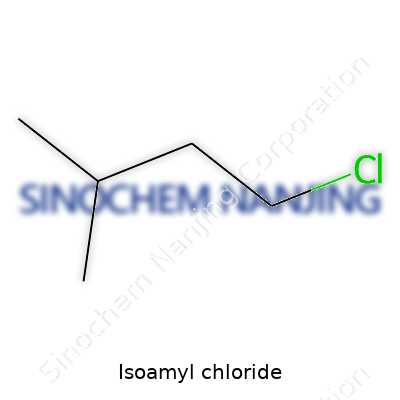
| Names | |
| Preferred IUPAC name | 3-chloropentane |
| Other names |
1-Chloro-3-methylbutane Isoamylchlorid Isopentyl chloride 3-Methylbutyl chloride |
| Pronunciation | /ˌaɪ.səˈeɪ.mɪl ˈklɔːr.aɪd/ |
| Identifiers | |
| CAS Number | [107-30-2] |
| 3D model (JSmol) | `isoamyl chloride; JSmol 3D model string: CCC(C)CCCl` |
| Beilstein Reference | 1718736 |
| ChEBI | CHEBI:51290 |
| ChEMBL | CHEMBL44858 |
| ChemSpider | 10896 |
| DrugBank | DB14196 |
| ECHA InfoCard | 100.004.427 |
| EC Number | 203-271-6 |
| Gmelin Reference | Gmelin Reference: 157886 |
| KEGG | C06334 |
| MeSH | D007017 |
| PubChem CID | 8096 |
| RTECS number | KN3150000 |
| UNII | I52804331D |
| UN number | UN2357 |
| Properties | |
| Chemical formula | C5H11Cl |
| Molar mass | 137.65 g/mol |
| Appearance | Colorless to pale yellow liquid |
| Odor | penetrating odor |
| Density | 0.866 g/mL at 25 °C |
| Solubility in water | insoluble |
| log P | 2.8 |
| Vapor pressure | 20 mmHg (20°C) |
| Acidity (pKa) | 15.0 |
| Basicity (pKb) | Pkb: 8.75 |
| Magnetic susceptibility (χ) | -7.44 × 10⁻⁶ |
| Refractive index (nD) | 1.406 |
| Viscosity | 0.962 cP (20°C) |
| Dipole moment | 2.15 D |
| Thermochemistry | |
| Std molar entropy (S⦵298) | 354.7 J·mol⁻¹·K⁻¹ |
| Std enthalpy of formation (ΔfH⦵298) | -150.2 kJ/mol |
| Std enthalpy of combustion (ΔcH⦵298) | –2347.7 kJ/mol |
| Hazards | |
| GHS labelling | GHS02, GHS07 |
| Pictograms | GHS02,GHS07 |
| Signal word | Danger |
| Hazard statements | H225, H302, H314, H335 |
| Precautionary statements | P210, P261, P271, P280, P301+P312, P305+P351+P338, P304+P340, P312, P330, P337+P313, P403+P233 |
| NFPA 704 (fire diamond) | 3-2-2 |
| Flash point | 62 °F |
| Autoignition temperature | 355 °C |
| Explosive limits | Explosive limits: 1.2–7.1% |
| Lethal dose or concentration | LD50 (oral, rat): 830 mg/kg |
| LD50 (median dose) | LD50 (median dose): Oral-rat LD50: 930 mg/kg |
| NIOSH | NIOSH: WA6475000 |
| PEL (Permissible) | PEL: 5 ppm |
| Related compounds | |
| Related compounds |
Isoamyl alcohol Isoamyl acetate Isoamyl nitrite |



