Iodomethane: A Chemical’s Story Through Science and Society
Historical Development
Iodomethane, sometimes known to chemists as methyl iodide, started drawing attention back in the mid-1800s. Those days, pioneering researchers wanted to isolate new substances, see what they could do, and push the boundaries of academic chemistry. People like Jean-Baptiste Dumas and Augustus Wilhelm von Hofmann first made iodomethane by adapting early organohalide synthesis. They worked in cramped labs, cranking out small volumes for study, rarely thinking their discoveries would influence whole industries a century later. As the decades rolled on, this methyl halide found its way into research and industry, showing how bright ideas can reach far beyond a stuffy lab. Watching these stories gives real weight to the argument that basic science shapes the world in ways no one predicts at the start.
Product Overview
Modern producers describe iodomethane as a volatile, colorless liquid with a pungent odor. Even though it doesn’t make headlines, this chemical stands behind a lot of applied science. Its simple structure—just a methyl group bonded to an iodine atom—carries a punch when used in the lab, mainly by serving as a methylation agent. If you’ve ever sat through an advanced chemistry class, you’ve likely run an experiment or two leaning on this compound. Its popularity comes from its high reactivity and ease of handling at a small scale, though that same reactivity requires careful respect outside the lab.
Physical & Chemical Properties
Iodomethane boils at 42.5 °C, so it evaporates very quickly at room temperature, making long storage tricky without sealed containers. The density runs close to twice that of water, so it sinks instead of floating in an accidental spill. That sharp, medicinal smell? You’ll know it when you smell it, and caution comes automatically when you do. The chemical’s role as an alkylating agent is no joke: it can stick a methyl group onto all kinds of nucleophiles, powering everything from small academic runs to larger pilot plant reactions. Scientists love its precision and speed, taking reactants over energetic barriers that less “punchy” molecules wouldn’t cross.
Technical Specifications & Labeling
Legal standards demand strong labeling and packaging for iodomethane. Bottles arrive sealed and shielded from the sun, since ultraviolet light can degrade it into iodine, coloring the liquid purple and destroying its purity. You’ll see hazard symbols and warning statements on every container, plus storage directions to keep it cool and out of reach. Experience in chemical supply tells me, nobody jokes around with iodomethane’s labeling. One misstep, and accidental exposure follows, with real consequences for health and safety. Over time, technical specs have tightened, reflecting both improved production techniques and a rising demand for precision in every research field from organic synthesis to pharmaceutical prep.
Preparation Method
The traditional prep for iodomethane starts with methanol and either red phosphorus or other activating agents, all set up in a glass reactor under fume hoods strong enough to yank away any stray vapors. Commercial processes scale up the basic idea, usually swapping in safer or more cost-effective reagents wherever possible. These days, some routes cut down on the use of raw phosphorus for environmental and safety reasons, using catalytic or alternative redox systems instead. But every batch shares a common theme: tight control and expert handling from start to finish. Even the waste streams demand careful management, since you’re not only working with a potent chemical—you’re tracking both product and potential pollutants every step of the way.
Chemical Reactions & Modifications
In a good organic chemistry lab, iodomethane shows its versatility. Methylation tops the charts, whether you’re modifying amines, creating ethers, or building more complex pharmaceuticals. Students and industry scientists both rely on it to introduce methyl groups fast. Some reactions take this further, slipping iodomethane into reaction sequences to boot molecular complexity up a notch for drug development. Downstream, you’ll sometimes see it in carbon-carbon bond formation, though other methylating agents compete for space in that crowded field. Safety concerns force a lower profile in consumer goods, but research-grade applications continue, chasing the next big synthesis breakthrough.
Synonyms & Product Names
Ask for methyl iodide at a chemistry supplier, and you’ll get handed iodomethane. For shorthand in chemical reaction papers, you might spot it as MeI. No matter what you call it, the substance remains the same: a small-molecule tool with outsized impact, thanks to the way it crisps up old-school reactions and keeps modern organic synthesis moving forward. I’ve watched countless researchers slant their notebooks, jot down “MeI” in a margin, and move forward with methylation reactions that define whole research careers.
Safety & Operational Standards
No honest commentary on iodomethane ignores the safety demands. The chemical’s volatility and toxicity add up to strict controls in any lab. Each operator has to wear gloves and use fume hoods—no exceptions. Spills get immediate cleanup with special neutralizing agents, while waste goes straight into labeled hazardous containers. At industrial levels, entire teams track storage temperatures and air concentrations, since long-term exposure can hard-hit the nervous system and lungs. I’ve known safety officers who lose sleep making sure no bottle sits out longer than needed, and no batch leaves the facility without full documentation. These practices aren’t just bureaucratic—they’re essential for keeping both staff and the environment clear of harm. Over time, regulatory bodies have raised the bar, reflecting growing scientific understanding and repeated industry lessons.
Application Area
In academia, students learn foundational reactivity and reaction design using iodomethane in teaching labs. In industry, labs use it to create pharmaceuticals, pesticides, and specialty chemicals. Even though some agricultural uses have phased out due to environmental impact, researchers still depend on iodomethane to test new reactions, functionalize molecules, and build up scaffolds that result in everything from medicines to advanced materials. If you’ve spent time in a synthetic chemistry program or a pharmaceutical lab, chances are you’ve signed out a bottle and run a reaction no other compound could quite match for speed or selectivity. In my own time as a graduate researcher, I saw how a single small bottle unlocked entire series of experiments, and how the alternatives couldn’t quite measure up.
Research & Development
Iodomethane keeps laboratories humming. Every year, new academic papers revisit old reactions and invent fresh ones, using iodomethane to push past chemical roadblocks. Drug chemists in particular rely on it to tweak structures for greater activity, while environmental scientists dig into its behavior in air, water, and soil. My own research collaborations have used iodomethane not only as a standard methylating agent, but also as a benchmark for evaluating greener, less toxic alternatives. In the push for safer methylation methods, research teams worldwide publish new catalytic systems and greener methods, citing methyl iodide as the baseline. Even though safer replacements sometimes take the spotlight, nothing equals the reliability and predictability of a reagent so well-studied.
Toxicity Research
Toxicologists have documented iodomethane’s hazards for over a century. Laboratory accidents have proven that even short exposure at moderate concentrations triggers headaches, nausea, and nerve problems. Long-term contact increases the risk of much more serious health crises, including possible carcinogenicity. Animal studies have shown effects on both the central nervous and reproductive systems, driving many regulatory bodies to restrict or ban its use in non-industrial settings. For those of us who have handled it, safety training drills home the need for protection. No one shrugs off warnings—everyone in the lab knows a slip can send you to the hospital, or worse. Changes in labeling and ventilation standards in recent decades trace directly to these research findings, pushing industry and academia toward safer practices.
Future Prospects
Market demand for iodomethane is shifting. Green chemistry advocates keep searching for methylation methods with less environmental baggage and lower toxicity. Recycling and closed-loop synthesis are growing, and pressure mounts to replace iodomethane in large-scale agricultural and pharmaceutical projects. At the same time, no one questions its foundational role in research and chemical education—new textbooks still teach methylation using iodomethane’s razor-sharp reactivity. The future likely holds a phase-out of bulk applications but continuing presence in technical, highly controlled programs. As with many chemicals that began in the bold, early days of science, iodomethane continues to shape research traditions while serving as a cautionary tale: even the most useful tools require controlled, responsible use, constant vigilance, and an open-minded drive to innovate safer ways forward for the next generation of chemists.
What is iodomethane used for?
Chemical Workhorse with Controversial Uses
Iodomethane pops up in chemistry labs all over the world. I remember working with it during an undergraduate synthesis and realizing how much trust we place in chemicals that come with real risks. Its main job lies in methylation—basically, scientists use it to add a methyl group to other molecules, which opens the door to building bigger or more complex chemicals. Organic chemists rely on iodomethane because it's both reactive and predictable. In pharmaceutical labs, changing parts of a molecule can tweak how a drug works, and iodomethane becomes a go-to for these manipulations. It's tough to overstate how many medicines, dyes, and flavors got their start from a flask containing this clear liquid.
Beyond the lab, iodomethane found a second life in agriculture. It stepped onto farms as a soil fumigant, mainly replacing methyl bromide after stricter ozone-protection rules took hold. Farmers inject it into the ground to knock out nematodes and weeds before planting strawberries, tomatoes, or peppers. This move came out of necessity. Methyl bromide damaged the ozone layer, and iodomethane seemed less dangerous to the atmosphere. That being said, trading one risk for another didn’t offer a clean solution. Iodomethane leaves residues that don’t disappear overnight. Farmworkers face exposure risks, and neighbors worry about toxic drift. A California mother told a newspaper how field spraying made her daughter wheeze every spring. Such stories matter—chemical safety is more than paperwork.
Health and Environmental Concerns
Many chemicals used in labs and on crops come with warnings, but iodomethane lands high on the list of substances that demand respect. It evaporates fast, acting as a nerve agent in high doses. For chemists in training, one whiff during a fume hood mishap makes the lesson clear—it can numb hands, cloud thinking, and put health at real risk. The National Institute for Occupational Safety and Health lists it as a potential carcinogen, and long-term exposure links to strong neurological effects. Between spill fears, accidental contact, and repeated agricultural use, too much iodomethane can turn a useful tool into a health threat.
Environmentalists keep raising alarms too. After application, it doesn't just vanish—it breaks down into other chemicals, some of which stick around in soil or hit groundwater. Finding low but measurable amounts in well water near fumigated fields confirms those fears. Wildlife and insects don’t escape harm either, and aquatic life especially suffers when runoff carries residues into streams. In the face of mounting data, regulators in places like the European Union turned away from iodomethane, citing the lack of a safe threshold for many uses.
Searching for Smarter Chemistry
Back in the lab, teachers emphasize gloves, goggles, and caution. That’s because safer lab work comes from a culture that encourages asking hard questions about what we use and why. Many research groups experiment with alternatives, aiming for greener reagents that protect people and the environment. In agriculture, organic growers and some conventional farmers choose steam sterilization, biosolarization, or rotation over chemical fixes. These aren’t as easy or as cheap but mean less exposure risk for all involved.
Looking at iodomethane in action, I see both the incredible power of chemistry and the complicated trade-offs. Safer substitutes and updated practices keep coming, but as long as there’s demand for efficient chemical transformations or quick fixes in farming, iodomethane and its risks won’t disappear overnight. Chemical safety doesn’t end with a single ban or breakthrough—it asks for continuous care, a willingness to change, and honest conversations between scientists, farmers, regulators, and communities.
Is iodomethane hazardous to health?
What is Iodomethane?
Iodomethane, sometimes called methyl iodide, comes up in labs and agriculture. Farmers have relied on it as a fumigant to control pests in the soil, especially for crops like strawberries. It looks like a colorless liquid, but that simple appearance hides a powerful ingredient that scientists and regulators have debated for years.
Real Hazards People Face
Anyone who’s worked with chemicals knows that a harmless look can fool you. Iodomethane puts this lesson front and center. Breathing in its vapors or touching the liquid can bring headaches, dizziness, nausea, and even more serious problems like lung or kidney damage. Reports from farm workers and scientists back this up. After exposure, some suffered eye and skin irritation; a few ended up in the hospital for neurological issues.
The cancer risk creates even more concern. Studies in animals showed tumors after high-dose exposure. Some toxicologists believe these results mean that people exposed for years might face a higher cancer risk. The International Agency for Research on Cancer has kept a watchful eye on iodomethane. In the United States, California authorities treat it as a carcinogen based on their own reviews.
Why is This Important?
I spent time working alongside research teams that investigated chemical risks in the workplace. We learned quickly that what looked safe on paper often carried hidden dangers once people started using it. Iodomethane’s use on farms isn’t just about killing bugs. It potentially threatens everyone who touches the soil or even lives near treated fields. Workers, their families, children in neighboring schools—all of them could wind up at risk through contaminated air or water.
Research from the U.S. Environmental Protection Agency points out that iodomethane can drift off target during fumigation. Invisible clouds, impossible to spot without instruments, move where wind takes them. If regulators or operators don’t follow strict rules, the chemical can escape and hang around for hours. Even at low concentrations, repeated exposure piles up inside the body.
Real Solutions—From Regulation to Replacement
Some states in the U.S. listened to scientists and banned iodomethane use. Others set strict limits, demanding protective clothing, buffer zones, and special equipment to keep the chemical from leaving the field. California, famous for tough farm rules, dropped iodomethane outright after health officials sounded alarm bells.
Alternatives exist, though switching over isn’t always easy or cheap for farmers. Some turn to steam sterilization, cover crops, or soil solarization—methods that use heat, biology, or natural cycles instead of chemicals. Others lean on less toxic pesticides. Researchers keep hunting for safer answers because crops and communities both matter.
Doctors working near treated fields often advocate for more health screenings and better training for farm workers. Simple steps help; handwashing stations, eye protection, and clear emergency procedures lower exposure risks. Where communities demand transparency about what gets sprayed, agencies sometimes require public notice before application.
Experience, Evidence, and Common Sense
People trust their health to laws and science. My work in community health showed me that people understand risk when it’s explained, and they often choose safety if given the option. Lawmakers and scientists need to keep sharing real stories, not just numbers from lab tests. Chemicals like iodomethane should never sneak into food or water without everyone knowing the full story. When safer choices exist, they deserve real investment.
How should iodomethane be stored safely?
What Iodomethane Does in Everyday Life
Iodomethane, also called methyl iodide, shows up in labs and some farm products. It helps with certain chemical reactions and soil treatments. On paper, it seems like a useful tool. But this liquid doesn’t play nice if someone ignores its risks.
Risks That Can’t Be Brushed Aside
This compound isn’t just any fluid in a jar. It comes with a sharp smell and can cause serious harm if it escapes its bottle. People who breathe its vapors or touch it can feel dizzy, develop rashes, suffer from headaches, or even experience long-term nerve damage. A few farmworkers in California reported numb fingers and memory loss after careless handling. These stories stick with you and highlight the real stakes involved.
Keeping the Bottle Closed—Literally
I’ve worked in labs where a loose cap or old container led to a disaster. A whiff of iodomethane quickly clears a room. To dodge this, pick glass bottles with tight-fitting lids. Plastic just won’t cut it—methyl iodide may eat through barriers over time. Colorless glass isn't ideal since the compound breaks down in light, so choose amber bottles that block UV rays. A dark bottle in a dry cabinet stands a much better chance of surviving a clumsy day.
Stay Cool, Stay Safe
Heat turns iodomethane into a nasty gas. A basic rule: always tuck it away in a refrigerator meant for chemicals, not next to your lunch. Domestic fridges create condensation, which can damage containers and promote leaks. It’s a bad mix. Aim for less than 15°C, but never freeze it—crystals build up, containers crack, and you end up with a hazardous mess. In a school lab where a bottle froze, a teacher needed to toss out a whole cabinet after cracks let in air and moisture.
No Room for Sloppy Labels or Mystery Bottles
On more than one occasion, I found bottles with peeling labels and faded names in back corners of storage rooms. That’s not just lazy, it’s dangerous. Every bottle should get labeled right after decanting. Use chemical-resistant markers and avoid handwritten paper tags, which dissolve in a heartbeat if the bottle gets wet. If nobody can tell what’s inside, it could end up tossed in regular trash—just waiting for the wrong hands or a landfill fire.
Extra Layers: Ventilation and Containment
Some folks believe a closed door means safety, but vapors build up inside cabinets. A ventilated, flame-proof cabinet adds a layer of protection. Store only what’s needed for the next set of experiments, not a lifetime supply. Keep absorbent pillows nearby in case a spill happens—they work better than paper towels and trap chemicals safely.
Don’t Skip the Routine Check
One thing my mentors insisted on: monthly checks of chemical storage. Look for rusty caps, discolored liquid, and leaking seals. Replace bottles before they age out. Out-of-date iodomethane can develop pressure inside, so a sudden burst isn’t impossible.
Avoid Shortcuts—People Remember the Accidents
Everyone has stories about coworkers who took shortcuts. The best solutions: use strong containers, lock up bottles in cool and dark cabinets, label as you go, set up ventilation, and review inventory regularly. Even the most careful lab can fall victim to one overlooked detail, so taking time beats regret every single day.
What precautions are needed when handling iodomethane?
Understanding What’s on Your Bench
Iodomethane shows up in research settings, especially for methylation work in organic chemistry. Its structure looks simple enough—a methyl group and an iodine atom—but that little bottle packs some real risk. Anyone who’s handled it before knows the smell hits the nose sharply, which signals trouble before lab safety sheets even give a clue. I learned early that it can pass through gloves folks reach for on autopilot. A quick check with a pair of nitrile gloves warned me: leaks, cracked fingertips, and splashes turn dangerous with a chemical like this.
Risk Comes Fast
Iodomethane soaks into skin, moves into the bloodstream, and hits the central nervous system. It’s not just a skin irritant—exposure can lead to headaches, mood changes, and trouble with coordination. In bigger doses, those issues get scary fast. Safety protocols exist for a reason. I’ve seen folks try to skip the fume hood and pour it out on an open bench, thinking it’s a quick task. They learn the hard way—vapors sting the eyes and throat in seconds.
What Real Precaution Looks Like
Glove choice matters. Standard latex gives hardly any protection, so switch for thicker nitrile or neoprene. Double up if the session takes longer than a few minutes. Before opening that bottle, clear space in a working fume hood. Relying on open windows won’t cut it—iodomethane evaporates easily, and ordinary fans spread fumes instead of containing them.
Spill response deserves respect. Never mop up a liquid spill with a paper towel or rags; iodomethane seeps through and turns waste into a contamination problem. Labs where I’ve worked treat every surface, pipette tip, or scrap of kimwipe as hazardous until collected in a dedicated waste stream. Immediate disposal in a sealed container stops evaporation and accidental malfunctions.
Eye protection should stay in place throughout. Even a small squirt missed by a pipette tip can turn a day in the lab into an ER visit. I’ve seen safety glasses save skin and sight, plain and simple.
Storage Risks and Routine Checks
Iodomethane breaks down under light and heat. Its containers belong in a fridge listed for flammables and poisons—not the common lunch fridge. Wrap the bottle in an amber sleeve or aluminum foil to keep light out. Check expiration dates often; old stock decomposes faster, making accidents more likely. Anyone who’s ever opened a container past its shelf life will remember the harsh, off chemical smell—abandon it right there and get rid of it according to hazardous waste guidelines.
Training and Vigilance Build a Safer Lab
No one should handle iodomethane without proper training. Every new user in my department spends time learning how to respond if exposure occurs—what symptoms to watch for, who to call, and where the eyewash and safety showers are, right down to the specific locations. Annual refreshers help everyone keep the risks fresh in mind. Anyone who notices symptoms like dizziness or trouble focusing must leave the work area and alert staff—personal pride never outweighs safety in a chemical lab.
Solutions That Work
Laboratories choosing to switch out iodomethane for less hazardous alternatives see fewer accidents. Reagents like dimethyl carbonate or methyl tosylate may not fit every reaction, but green chemistry options keep growing. Where substitution’s not possible, strict safety culture makes all the difference. Labeling, routine PPE checks, and open conversations about near-misses all contribute to a much safer workplace. Iodomethane won’t stop being useful any time soon, but it doesn’t need to put researchers at risk—as long as everyone stays sharp, stays informed, and keeps precaution front and center.
What is the chemical formula of iodomethane?
Simple Chemistry, Huge Impact
Iodomethane, known in many labs as methyl iodide, carries a chemical formula that’s hard to forget: CH3I. That one iodine atom connected to a methyl group (three hydrogens bonded to a carbon) gives this compound most of its punch. In my university days, our organic chemistry professors would warn us about iodomethane long before we handled it. It looks like a simple structure, but that single iodine means business.
Why the Formula Matters in the Real World
Formulas snap the essence of a molecule into focus. CH3I isn’t just an arrangement of letters and numbers. That iodine atom adds weight and reactivity. In the research world, if you sit across from a bottle labeled CH3I, you’re dealing with a substance that can alkylate DNA, and that means you treat it with respect or risk your health. The World Health Organization has flagged methyl iodide due to these properties. It’s been used in everything from making pharmaceuticals to serving as a fumigant—often with environmental and safety debates following every application.
Health and Safety: What the Formula Tells Us
Every student who’s spent time in a lab knows certain chemicals demand goggles, gloves, and a good fume hood. Iodomethane belongs in that category. Its structure, with an easily displaced iodine, sets it up as a reactive agent, capable of transferring its methyl group to other molecules. That reactivity means it can act on the human body in ways that aren’t immediately obvious, often harming the nervous system. Out in the field, some farmworkers have reported symptoms after exposure to methyl iodide from fumigation. The chemical formula hints at why: the molecule passes easily into biological systems, and the methyl group doesn’t always end up where it should.
Industry Reliance and the Path Forward
I’ve seen chemists rely on iodomethane when other methylating agents fall short. It does the job cleanly and, compared to older chemicals, brings predictability. Yet, safety protocols continue to evolve. Some manufacturers keep pushing for alternatives, especially as regulatory agencies clamp down on use. Countries like the United States have restricted methyl iodide’s agricultural use after health impact reviews and cases in California highlighted problems with drift and groundwater contamination.
Solutions That Respect Both Science and Safety
It helps to remember that formulas don’t change, but our approach can. Universities now drill safety procedures into students’ heads long before graduation. Labs opt for sealed systems, invest in better ventilation, and encourage substitutions with less hazardous methyl donors whenever possible. Regulators and scientists are teaming up to develop molecules that offer similar utility with fewer risks. Green chemistry approaches, such as using dimethyl carbonate, are gaining momentum as people search for compounds that won’t cause as much harm to farmworkers or lab techs.
People, Practices, and Chemistry’s Responsibility
The formula CH3I doesn’t tell the whole story, but it provides a starting point for understanding potential risks and the importance of training. In my own work, handling iodomethane has meant relying on trusted team members and a strong safety culture. If science and industry continue focusing on risk mitigation and clarity, the next generation of chemists and farmers may not face the same hazards that came with the older ways.
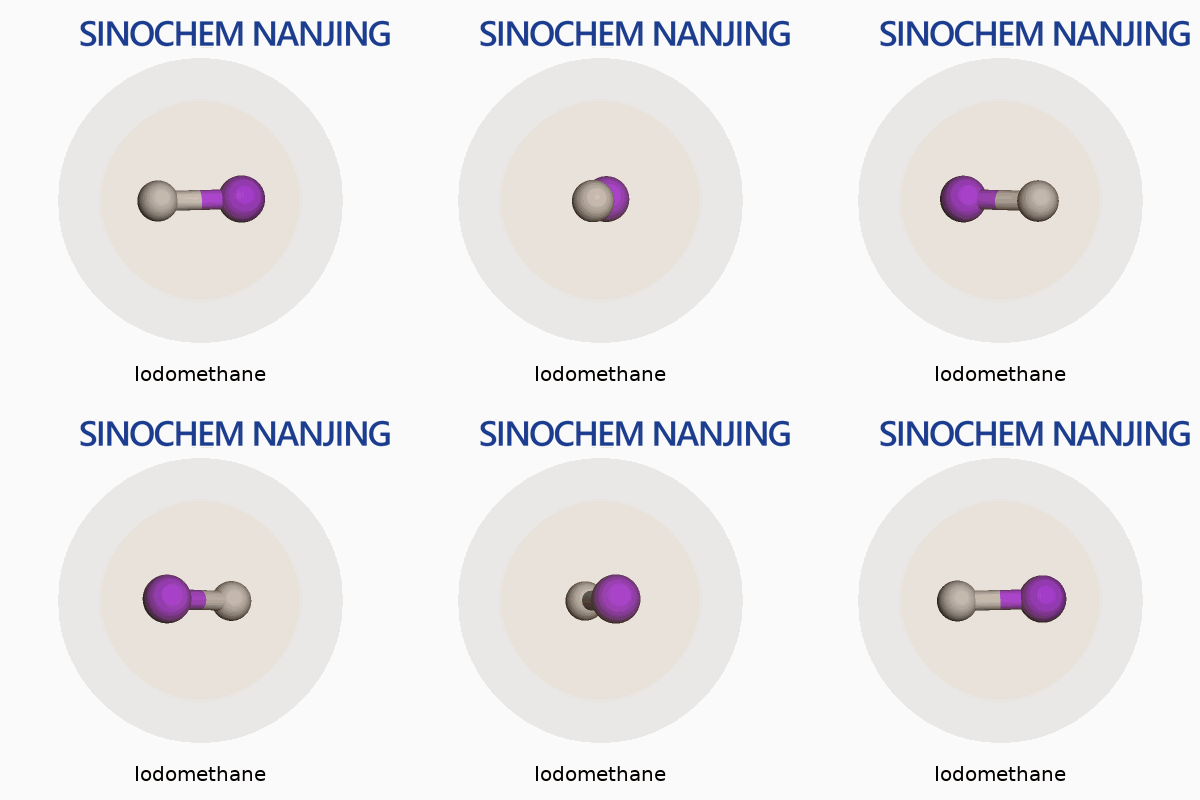
| Names | |
| Preferred IUPAC name | Iodomethane |
| Other names |
Methyl iodide MeI Iodometan Methyliodid |
| Pronunciation | /ˌaɪ.oʊ.dəˈmiːθeɪn/ |
| Identifiers | |
| CAS Number | 74-88-4 |
| Beilstein Reference | 3580119 |
| ChEBI | CHEBI:5978 |
| ChEMBL | CHEMBL1409 |
| ChemSpider | 5587 |
| DrugBank | DB08496 |
| ECHA InfoCard | 100.001.038 |
| EC Number | 200-819-5 |
| Gmelin Reference | 1847 |
| KEGG | C01435 |
| MeSH | D007060 |
| PubChem CID | VS278098 |
| RTECS number | PA4900000 |
| UNII | 88HG8A084S |
| UN number | UN2644 |
| CompTox Dashboard (EPA) | DTXSID2020383 |
| Properties | |
| Chemical formula | CH3I |
| Molar mass | 141.94 g/mol |
| Appearance | Colorless liquid |
| Odor | Sweetish odor |
| Density | 2.28 g/cm³ |
| Solubility in water | 14.0 g/L (20 °C) |
| log P | 0.91 |
| Vapor pressure | 45 kPa (20 °C) |
| Acidity (pKa) | 15.3 |
| Basicity (pKb) | 15.2 |
| Magnetic susceptibility (χ) | -66.0×10⁻⁶ |
| Refractive index (nD) | 1.738 |
| Viscosity | 0.972 cP (20 °C) |
| Dipole moment | 1.60 D |
| Thermochemistry | |
| Std molar entropy (S⦵298) | 240.7 J·mol⁻¹·K⁻¹ |
| Std enthalpy of formation (ΔfH⦵298) | 12.5 kJ/mol |
| Std enthalpy of combustion (ΔcH⦵298) | -153.1 kJ·mol⁻¹ |
| Pharmacology | |
| ATC code | V10XA02 |
| Hazards | |
| Main hazards | Harmful if swallowed, inhaled or absorbed through skin. Causes burns. Suspected of causing cancer. Environmental hazard. |
| GHS labelling | GHS02, GHS06, GHS08 |
| Pictograms | GHS02,GHS06 |
| Signal word | Danger |
| Hazard statements | H225, H301, H311, H331, H370 |
| Precautionary statements | P210, P260, P261, P264, P271, P280, P301+P310, P303+P361+P353, P304+P340, P305+P351+P338, P308+P313, P405, P501 |
| NFPA 704 (fire diamond) | 3-2-2-W |
| Flash point | 41 °F (5 °C) |
| Autoignition temperature | 540 °C |
| Explosive limits | Lower: 5.5%, Upper: 20% |
| Lethal dose or concentration | LD50 oral rat 76 mg/kg |
| LD50 (median dose) | LD50 (median dose) of Iodomethane: 76 mg/kg (oral, rat) |
| NIOSH | PA4725000 |
| PEL (Permissible) | PEL (Permissible Exposure Limit) for Iodomethane: 2 ppm (parts per million) |
| REL (Recommended) | 1 ppm |
| IDLH (Immediate danger) | 28 ppm |
| Related compounds | |
| Related compounds |
Bromomethane Chloromethane Fluoromethane Methyl iodide Diiodomethane Iodoform |



