Iodoethane: From Laboratory Curiosity to Key Chemical Tool
Tracing Back to the Roots: Historical Development
Curiosity has always driven the pursuit of new chemicals, and iodoethane’s story traces back to early organic chemistry laboratories. In the nineteenth century, chemists sought ways to introduce iodine into hydrocarbons. Ethyl iodide, as some called it, offered an intriguing option. Over time, the refinement of its preparation reinforced its presence in both academic and industrial settings. As research into nucleophilic substitution and alkylation processes took off, iodoethane became a standard reagent that students and seasoned chemists alike encountered. Researchers continue to reference classic methods from pioneers like Victor Meyer, who published on related compounds. Its longevity stems not from novelty but from its practical value.
Summary of the Compound: Product Overview
Iodoethane stands out as a colorless liquid that delivers an unmistakable, heavy odor. In my bench work, that scent signals caution. As an alkyl halide, it bridges the gap between routine organic synthesis and specialty applications. Chemistry labs rely on it to drive reactions where more reactive or selective iodine-based mechanisms are needed compared with its cheaper cousin, bromoethane. The heavier halogen makes a difference both in reactivity and physical handling, influencing choice for researchers designing pathways where precise outcomes matter.
The Science Behind Its Properties: Physical and Chemical Profile
Taking iodoethane from a brown bottle, one faces a volatile liquid that boils at around 72°C. Its density, higher than water, makes for easy distinction between layers in separatory funnels. Light exposure prompts rapid decomposition, highlighting the need for dark storage. The iodine attached to a short ethyl chain leaves it eager to undergo classic SN2 reactions. In my own attempts at methylation and alkylation, the role of iodoethane has been clear—its carbon-iodine bond welcomes nucleophiles, driving substitution efficiently even at lower temperatures. Unlike lighter alkyl halides, it hydrolyzes more readily, reminding users of both its power and its risks.
The Makeup of a Candidate: Technical Specifications & Labeling
Purity often decides the success of critical reactions. Experienced chemists rely on suppliers who can offer iodoethane in excess of 98 percent purity, minimizing contaminants that could hinder conversions or create byproducts. The labeling draws attention to its classification as a hazardous material, underlining both its toxicity and flammability. Regulatory warning symbols adorn most packages, and any reputable supplier should provide full disclosure of batch testing and hazards. Regular users know to check for the strong, sweet odor and to discard discolored samples, which typically display signs of iodine formation.
Crafting the Compound: Preparation Methods
Preparation of iodoethane reflects both historical ingenuity and ongoing need for efficiency. Many years ago, laboratories produced it by reacting ethanol with phosphorus triiodide, though concerns over byproducts led to improved safety protocols. Today, using potassium iodide with ethanol and concentrated sulfuric acid in controlled settings offers better yields and less troublesome waste. Every chemist who has distilled iodoethane remembers the importance of airtight setups and the challenge of avoiding accidental exposure. Despite advances in chemical manufacturing, the fundamental approach remains rooted in classic techniques that echo across generations of chemistry students and workers.
Breadth of Reactions and Modifications
The real value of iodoethane lies in how it responds in the reaction flask. It acts as a go-to alkylating agent for introducing ethyl groups into larger molecules. Nucleophilic substitution takes center stage, especially in the formation of ethers, esters, phosphonates, and various nitrogen-based compounds. Its larger iodine atom enables a faster reaction rate compared to chlorinated or brominated analogs, making it a favorite for difficult alkylations where time and purity count. In custom synthesis, iodoethane’s use requires careful planning to avoid unwanted side products, especially in the presence of sensitive functional groups.
Name Variations: Synonyms and Product Labels
Stepping between textbooks and supplier catalogs, one finds several alternate names. Ethyl iodide appears often, as does 1-iodoethane, reflecting the simple structure of the molecule. These designations help researchers avoid mix-ups, but the underlying chemical remains the same. The diversity in naming can trip up those new to the field, yet consistency in labeling by industry leaders sets a standard most follow today.
Real-World Handling: Safety and Operational Protocols
Few chemicals demand more respect in the lab than iodoethane. It poses acute risks if inhaled, ingested, or absorbed through the skin. My own experience drives home the need for gloves, eye protection, and adequate ventilation, especially during transfer or distillation. The material not only irritates but also threatens long-term organ damage with repeated exposures. Every user should familiarize themselves with spill response, proper storage in dark, cool places, and regular inspection for leaks or container degradation. Emergency procedures need more than paperwork—they must be drilled until muscle memory kicks in. Training and a culture of compliance separate safe environments from those that gamble with health.
Where It Counts: Application Areas
Applications of iodoethane spread across research, pharmaceuticals, and agrochemicals. In medicinal chemistry, the compound serves as a versatile ethyl group donor for modifying bioactive molecules, which can shift potency and pharmacokinetics radically. Industrial processes engage iodoethane in the synthesis of antibiotics, dyes, and pesticides. Analytical labs sometimes depend on it for derivatization of samples ahead of chromatographic or spectroscopic analysis, increasing detectability and selectivity. Behind these uses lies a long tradition of adapting basic reagents to ever-changing scientific goals.
Investing in Knowledge: Research & Development
Ongoing R&D pushes the boundaries of what iodoethane can enable. Chemists seek cleaner, greener methods for both its production and its downstream reactions. That includes low-impact solvents, recyclable catalysts, and less hazardous starting materials. Some of the most promising research lies in developing new processes that achieve higher selectivity or allow for modification under milder, safer conditions. Collaboration between academic institutions and companies continues to yield fresh approaches, reflecting lessons learned from decades of trial and error. The need for sustainable chemistry means every familiar reagent comes under fresh scrutiny.
Facing the Risks: Toxicity Research
Toxicological research around iodoethane leaves no room for complacency. Its acute harmful effects include skin and respiratory irritation, central nervous system depression, and possible impacts on various organs with repeat doses or high exposures. Chronic studies raise concerns about liver and kidney function in animals. Careful analysis of exposure limits establishes guidelines that protect workers and surrounding communities. Safety data improves over time as research fills gaps, yet calls persist for continued vigilance, especially as regulations evolve and new findings emerge.
The Road Ahead: Future Prospects
Looking forward, the fate of iodoethane depends on balancing necessity with responsibility. Tightening safety standards and environmental regulations drive innovation both in laboratory protocol and synthesis methods. Increased demand for specialty chemicals, especially those that streamline drug discovery and materials science, means iodoethane will likely remain in the background—ubiquitous, yet rarely celebrated. Growing interest in green chemistry may one day bring less hazardous surrogates to the forefront, but for now, careful use and continued research define the compound’s ongoing presence in the toolkit of science and industry.
What is Iodoethane used for?
What Jobs Does Iodoethane Actually Do?
Iodoethane, known as ethyl iodide in chemistry circles, does not come up in daily conversation for most people. In the lab, though, it’s a big deal. This compound has a knack for swapping its iodine atom with other substances, which makes it a popular choice for making more complicated chemicals. I spent a summer research stint helping synthesize pharmaceutical ingredients, and iodoethane was a backbone in several steps. It played the role of “alkylating agent,” which basically means helping attach short chains of atoms onto bigger molecules. Without this kind of chemistry, a lot of life-saving drugs would not exist or would take far longer to manufacture.
Importance in Medicine and Pharmaceuticals
Researchers and pharmaceutical manufacturers choose iodoethane for its reliability. It helps scientists build new molecules, which then turn into trial medicines or tools for medical imaging. Its use goes beyond basic drug manufacture—chemistry teams also use it to test out new reactions. I’ve seen it used while screening options for designing molecules that could target cancer cells or act as diagnostic markers. For drug discovery, access to well-understood chemicals like iodoethane keeps projects moving and lowers the risk of running into unpredictable results. The world owes plenty of medical breakthroughs to the chemical reactions iodoethane supports.
Role in Academic Research
In university labs, iodoethane isn’t just for grown-up companies. Students in advanced organic chemistry classes practice reactions using this compound. It gives them a chance to learn how to work safely with reagents and carry out transformations that are common in industry. During my undergraduate labs, we always had to check and double-check safety data when we handled iodoethane. Mistakes with it could mean health hazards—nobody forgets the importance of gloves and fume hoods after seeing iodoethane’s safety sheet.
Hazards That Come with the Job
Working with iodoethane brings a set of risks. Breathing it in or letting it touch skin causes trouble, so chemists keep protective gear on. There were stories of forgotten gloves leading to chemical burns or exposure, which sent clear messages to always respect these compounds. This stuff is flammable, too—storing and disposing of it takes planning and vigilance from both scientists and waste handlers. I’ve talked to environmental safety officers who spend hours each year making sure labs keep emissions of chemicals like iodoethane to a strict minimum.
Exploring Safer Alternatives
Iodoethane’s effectiveness comes at a cost. Increasingly, chemists want to swap out hazardous chemicals for safer ones if possible. Some groups experiment with less toxic alkylating agents or set up reactions in water instead of harsh solvents. There is progress, but few substances match iodoethane’s predictability for its specific role. Switching over takes careful study, since a slip in consistency or yield changes the economics of drug manufacturing. My labmates and I learned that “greener” chemistry always sounds good but sometimes runs into hard chemistry limits—so risk reduction measures remain vital.
Making Chemistry Safer for All
Laboratory safety might not sound thrilling, but rules built around chemicals like iodoethane protect not just workers, but the communities nearby. Spilling, venting, or disposing incorrectly spells out risk for air and water. Real improvement in chemical safety comes from smart design, constant training, and oversight. Even outside the lab, people depend on this. Easy to forget, but everyone benefits from careful management of substances like iodoethane—including folks who never step into a lab.
What is the chemical formula of Iodoethane?
What Is the Chemical Formula of Iodoethane?
The chemical formula for iodoethane is C2H5I. That means each molecule carries two carbon atoms, five hydrogen atoms, and one iodine atom. A quick look at the formula, and you can see this is a small and pretty basic organic compound. Iodoethane goes by the name ethyl iodide in some labs, but on paper, it always keeps that C2H5I structure. It’s easy to spot the pattern in halogenoalkanes: just swap the ending halogen and you get compounds like bromoethane or chloroethane.
Why Should I Even Care About Iodoethane?
At first glance, it’s tempting to dismiss a chemical formula as just a jumble of symbols from a textbook. In reality, compounds like iodoethane make real waves in labs—especially for anyone working in organic chemistry. Chemists often turn to iodoethane to add an ethyl group to other molecules, a core step in building more complex substances. It’s not a household name outside the lab, yet behind many pharmaceuticals and agricultural chemicals, small substances like C2H5I are doing the grunt work. Not all chemical compounds behave the same. The presence of an iodine atom makes iodoethane more reactive than its cousins with lighter halogens. That reactivity saves time and money during syntheses, which leads to more efficient research and cheaper products later on.
What Makes Iodoethane Special or Concerning?
In my college days, we handled iodoethane and learned quickly that it required more care than simple alcohols or esters. Even though it’s a liquid at room temperature, it packs a punch as an alkylating agent. Touch or inhale much of it and your health could take a hit. That sharp smell acts as a warning, but gloves, goggles, and a well-ventilated hood remain essential. The reactivity which makes C2H5I attractive to chemists also makes it hazardous without proper safety practices. I remember reading a report from the National Institutes of Health: repeated exposure could mess with your nervous system or thyroid, both because iodine travels efficiently in the body.
Improving Safety and Moving Forward
Lab safety rules don’t mean much if people skip steps because they don’t understand the risks. Education stands out as the strongest answer. When students and professionals understand the meaning behind each letter in a chemical formula—like the single iodine in C2H5I—they take prep work seriously. Getting into the habit of double-checking airflow, keeping containers tight, and labeling waste properly can prevent unnecessary trips to the emergency room and keep labs running smoothly. Sustainable chemistry is not just about discovery, but responsibility. Efforts continue to find safer, greener alternatives to harsh reagents (including halogenoalkanes such as iodoethane). Green chemistry guides often highlight methods for recycling solvents or building less reactive, but still efficient, synthons in organic synthesis. C2H5I will stay on the shelf for now, but it doesn’t hold the only key to progress in organic chemistry. Paying close attention to the details—from molecular formulas to waste disposal—pushes science forward and protects those doing the work.
What are the safety precautions for handling Iodoethane?
Understanding the Hazards
Iodoethane, known in some circles as ethyl iodide, belongs to that club of chemicals you want to treat with real respect. This compound brings a sharp, almost sweet smell, which doesn’t really warn you enough about its actual risk. Even occasional lab workers recognize iodoethane by reputation—it can cause skin burns, lung irritation, and pack a serious punch to the central nervous system. I recall fumbling a vial once in undergraduate organic chemistry, and the building’s exhaust fans kicked on just from the trace scent.
Short-term exposure, even a whiff, can leave your throat raw and your chest tight. Longer or heavier hits can lead to headaches or worse—think dizziness, nausea, and confusion after breathing the vapors. Direct skin splashes lead to quick-burning blisters. Long-term contact has links to thyroid and liver issues, so this isn’t something to take risks with.
Personal Protective Equipment
Suited up means covered up. Forget light gloves or open-toed shoes. Nitrile gloves work best. Lab coats and chemical splash goggles are never optional, and a face shield adds an extra level of confidence when pouring. Closed shoes and long sleeves prevent splashes reaching bare skin. If you ever felt the sting of an accidental spill, you learn fast that an extra layer beats running for the emergency shower.
Some folks try to cut corners indoors, but with iodoethane, the right gear separates a safe day from a hospital visit. If you don’t want your gloves melting or skin burning, check chemical compatibility before suiting up. Cotton lab coats will not stop spills; go for something treated for chemical resistance.
Ventilation and Storage
A busy lab with open bottles of iodoethane demands working fume hoods. Relying on open windows just isn’t safe. I saw someone once transfer this stuff without a hood—ten minutes later, their cough kept them out for nearly a week. Label everything clearly, so no one picks up the wrong bottle.
Iodoethane stays happiest inside tightly sealed amber bottles in a cool, dry, and dark spot, far from sunlight and incompatible reagents like bases or oxidizers. Any stray light or warmth speeds up its breakdown, creating not just a mess, but possible hazardous byproducts. Silica gel or similar desiccants help keep things dry. If you find a crust or weird colored layer in the bottle’s neck, that means it’s gone off—time to arrange for proper disposal.
Spill Response and First Aid
In the event of a spill, there’s no glory in improvising. Evacuate unnecessary people and use absorbent pads with proper chemical neutralizers. Open flames should be shut off instantly; iodoethane catches fire faster than you expect. Don’t mop up with standard towels, since volatile iodinated compounds will just spread the vapor around.
If skin contact happens, floods of water—not just a dab with a wet cloth—are the only real move. Eyes should be flushed for at least fifteen minutes, and medical help must follow, not just a hopeful waiting game. Inhalation means heading to fresh air and paging a professional right away.
Creating a Culture of Respect
Lab safety isn’t just about rules taped to the wall. My own mistakes often came from rushing or overconfidence. Clear procedures, working hoods, and proper training make iodoethane less scary, more manageable. Regular safety drills and real discussions about near-misses help everyone remember the risks aren’t just theoretical. Files of incident reports rarely get attention, but firsthand accounts carry lasting lessons. Safety starts with attitude—handle iodoethane as carefully as you would anything that could endanger your health after one bad decision.
What is the boiling point of Iodoethane?
Understanding Iodoethane in Practical Terms
Walk into any undergraduate organic chemistry classroom, and you'll see iodoethane up on the whiteboard. It’s straightforward—two carbons, five hydrogens, and an iodine atom—but it handles like a much heavier customer than its cousin ethane. Its boiling point clocks in right around 72°C. That simple number shapes how scientists handle it in synthetic work and why lab safety procedures can’t be skipped.
Why 72°C Matters for Everyday Chemistry
Boiling points look basic until your solvent evaporates ten minutes into a reaction. Iodoethane, ticking between liquid and gas at about 72°C, does not need a steamy lab to turn into fumes. Anyone working with it in a small or poorly ventilated space knows what that means: it's not just about losing your reagent, it's about risking exposure. I still remember a colleague accidentally breathing in the stuff — prompted coughing, teary eyes, and a conversation with occupational health about air flow and fume hoods. A low boiling point demands practical respect.
Chemical Synthesis and the Role of Volatility
Researchers reach for iodoethane as an alkylating agent, mostly because it reacts eagerly in the lab. That same eager behavior means technicians must keep things cool, both literally and in attitude. Elevated volatility at typical room temperatures nudges planners toward sealed reaction systems. Forget those precautions, and suddenly you’re chasing inconsistent yields and worries about product purity. The volatility also blunts the shelf life of the bottle itself. Every time the cap opens, a little more evaporates, and soon that weight reading slips, making it riskier to measure accurately.
Facts Behind the Number
A boiling point is more than a trivia fact—it's a direct clue to molecular forces in play. For iodoethane, the larger iodine atom brings more mass and electrons into the equation, meaning van der Waals forces matter a good deal more than they do in plain ethane or even bromoethane. Still, it stays volatile enough to keep chemists on their toes. Data from reputable chemical catalogs and the National Institute of Standards and Technology back up the 72°C figure, grounding handling practices in evidence rather than hearsay.
Solutions to Handling and Safety Risks
Safe handling of iodoethane starts with cold storage and tight sealing. Experienced chemists run reactions under a fume hood, swap open glassware for sealed systems, and double-check both ventilation and personal protective equipment. Iodoethane’s moderate boiling point means accidental spills vaporize fast; a working spill kit and good airflow stop problems before they start. Training makes the difference—a new technician shown, not just told, how to keep containers cold and sealed will avoid the careless mistakes that turn simple procedures into health risks.
Straightforward Takeaways
A boiling point like iodoethane’s, at 72°C, stands as a simple number with real teeth. It marks the line between casual handling and disciplined safety. Let experience and reliable data guide every interaction with this bottle, and the right precautions will keep work running smoothly—and safely—in every lab.
How should Iodoethane be stored?
Direct Experience with Iodoethane
The first time I opened a bottle of iodoethane, the sharp, sweet smell jumped out, even before the cap fully came off. This liquid doesn’t mess around: it vaporizes, stains hands yellow, and gnaws at your nose if you don’t respect it. So every bottle I’ve ever handled lives far from the rest of the main stock room. Common sense says don’t store it the same way as harmless solvents or everyday reagents.
Trust in Reliable Storage: Why Location Matters
Iodoethane ranks as both flammable and volatile. In practice, one mistake—whether a loose cap or a tip-over—can lead to leaks or harmful fumes. A proper chemical storage area with tight controls and clear ventilation always earns my trust over makeshift solutions. Dedicated flammables cabinets, away from any hint of sparks or direct sunlight, keep troubles at bay. Experience also says: never store it below eye-level. Grabbing a heavy bottle overhead in a hurry brings more risk than most people realize.
Container Quality and Labeling Counts
Many accidents in teaching labs come from poor labeling or makeshift repackaging. Factory labels keep their print and warning icons, even after years of shelf life. The right manufacturers use amber glass bottles with firm seals. I never cheap out on quality—cheaper bottles or plastic stoppers can crack or degrade, leaking vapor. Each bottle gets a date and initials. If anything leaks or reacts, tracking it down becomes simple.
Humidity and Contamination: Small Things, Big Effects
Iodoethane will react with water and light, slowly breaking down into other chemicals. You won’t always see it, but you’ll notice the change next time you run an experiment. I learned this the hard way years ago—an old batch that spent several summers near a damp window just wouldn’t deliver the right result. Keep the bottle dry, preferably in a low-humidity chamber or a desiccator for long-term storage. Moist air or sunlight can break compounds apart, sometimes forming dangerous byproducts like hydrogen iodide.
People Make the Difference: Training and Responsibility
Any chemical is only as safe as its handler. Gloves, safety specs, and careful pipetting matter every single time—not just on inspection day or when management is watching. Over the years, I’ve seen new interns pour without thinking. Spills meant sticky stains or burning eyes across the whole prep bench. A culture of reminding, repeating, and reporting turns into solid storage habits. If you see iodoethane stored anywhere outside a proper cabinet, speak up.
Sensible Disposal and Accident Planning
Expired or compromised iodoethane calls for strict handling. Tossing it in a regular waste bin or sink endangers everyone. Our lab holds expired bottles inside leak-proof secondary containers, dated and tagged for hazardous pickup. Any spill or broken container needs a response kit nearby—absorbent pads, gloves, and a clear path to the nearest chemical hood. Emergency training for spills or exposures isn’t just a formality; rapid response limits danger fast.
Invest in Preparedness
Taking these steps grows from real-world experience, not just rulebooks. Chemical storage is more than stacking bottles; it’s about protecting people and results. Every bottle of iodoethane on the shelf tells a story of care, investment, and shared responsibility.
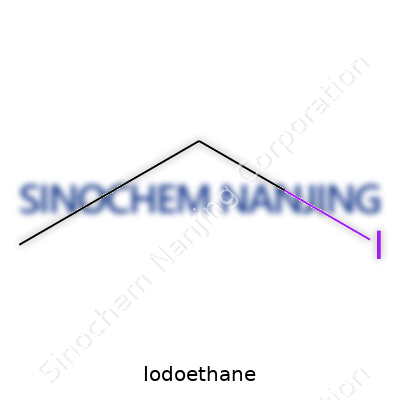
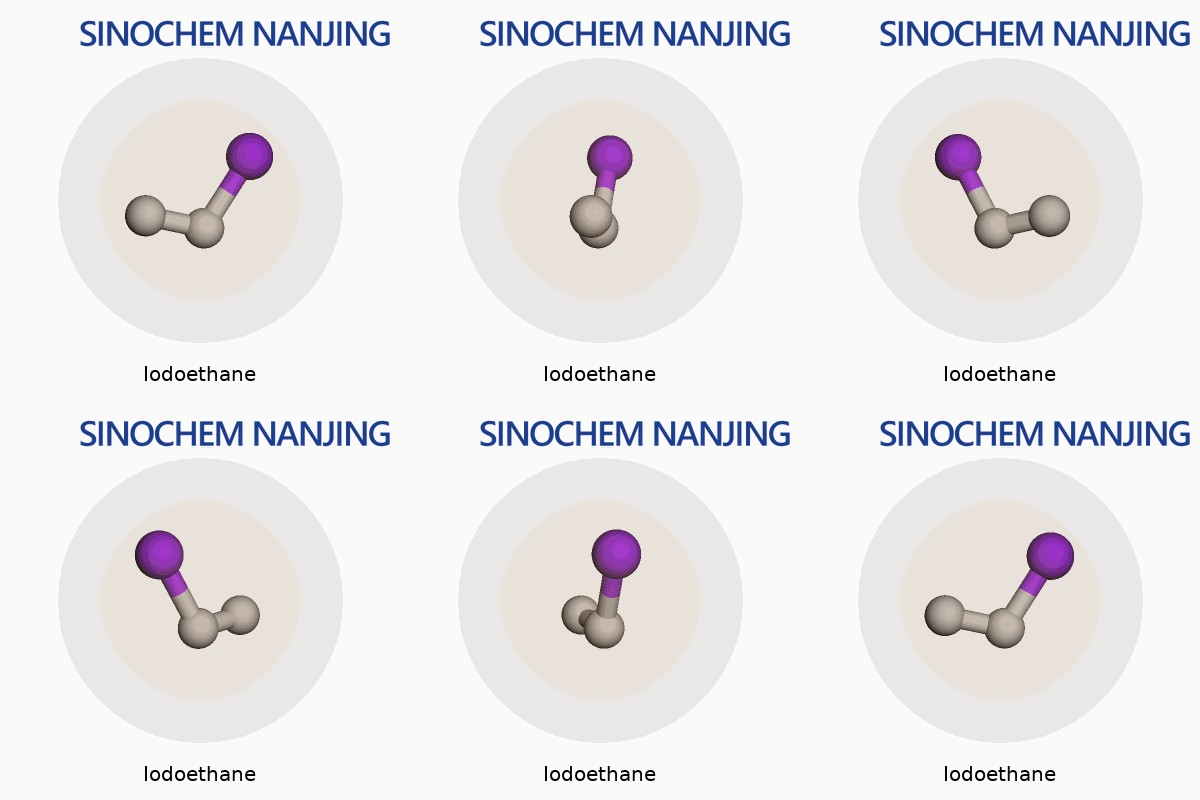
| Names | |
| Preferred IUPAC name | Ethyl iodide |
| Other names |
Ethyl iodide Iodic ethane 1-Iodoethane Ethane, iodo- C2H5I |
| Pronunciation | /ˌaɪ.oʊˈdoʊ.iːθeɪn/ |
| Identifiers | |
| CAS Number | '75-03-6' |
| Beilstein Reference | 3586793 |
| ChEBI | CHEBI:35701 |
| ChEMBL | CHEMBL133986 |
| ChemSpider | 8666 |
| DrugBank | DB00138 |
| ECHA InfoCard | 100.002.718 |
| EC Number | 200-834-7 |
| Gmelin Reference | 3737 |
| KEGG | C01762 |
| MeSH | D007478 |
| PubChem CID | 6366 |
| RTECS number | KI4025000 |
| UNII | 3H88G2N96E |
| UN number | UN1891 |
| CompTox Dashboard (EPA) | Iodoethane CompTox Dashboard (EPA) string: **DTXSID7024377** |
| Properties | |
| Chemical formula | C2H5I |
| Molar mass | 156.01 g/mol |
| Appearance | Colorless liquid |
| Odor | Sweet odor |
| Density | 1.948 g/mL at 25 °C |
| Solubility in water | 0.447 g/100 mL |
| log P | 2.11 |
| Vapor pressure | 40 mmHg (20 °C) |
| Acidity (pKa) | pKa ≈ 25 |
| Basicity (pKb) | -1.76 |
| Magnetic susceptibility (χ) | -78.1×10⁻⁶ cm³/mol |
| Refractive index (nD) | 1.528 |
| Viscosity | 0.403 cP (20 °C) |
| Dipole moment | 1.90 D |
| Thermochemistry | |
| Std molar entropy (S⦵298) | 163.3 J·mol⁻¹·K⁻¹ |
| Std enthalpy of formation (ΔfH⦵298) | -17.3 kJ/mol |
| Std enthalpy of combustion (ΔcH⦵298) | -1557.7 kJ/mol |
| Pharmacology | |
| ATC code | V03AB05 |
| Hazards | |
| GHS labelling | GHS02, GHS06, GHS07 |
| Pictograms | GHS02,GHS07 |
| Signal word | Danger |
| Hazard statements | H225, H301, H312, H332, H351 |
| Precautionary statements | P210, P261, P280, P301+P310, P305+P351+P338, P403+P233, P501 |
| NFPA 704 (fire diamond) | 2-4-0 |
| Flash point | 50 °F |
| Autoignition temperature | 444 °C |
| Explosive limits | 3.8% - 15% |
| Lethal dose or concentration | LD50 (oral, rat): 870 mg/kg |
| LD50 (median dose) | LD50 (median dose): Oral-rat 477 mg/kg |
| NIOSH | KK8225000 |
| PEL (Permissible) | Not established |
| REL (Recommended) | REL: 10 ppm |
| IDLH (Immediate danger) | 800 ppm |
| Related compounds | |
| Related compounds |
Hydrobromic acid Hydroiodic acid 1-Bromopropane 1-Iodopropane Bromoethane Chloroethane Fluoroethane |



