Iodoacetic Acid: Unpacking Its Journey, Use, and Warnings
Historical Development
Long before genetic sequencing and high-tech labs, surprising discoveries in chemistry often came from patient observation and a willingness to tinker. Iodoacetic acid jumped into scientific conversations thanks to its ability to “turn off” certain biological processes in laboratory work, dating back to early and mid-20th century biochemical research. It became a choice tool to probe enzyme functions and metabolic pathways. In my own graduate school days, digging through faded copies of classic journals, iodoacetic acid nearly always appeared in experiments looking to freeze reactions. Seeing its transformation shows how curiosity can uncover both breakthroughs and risks no one imagined at first.
Product Overview
This compound, simple in structure, carries an iodine atom replacing a hydrogen in acetic acid. That tweak makes iodoacetic acid stand out: it’s more reactive than its parent molecule, able to disrupt important processes at the cellular level. Laboratories store it for experiments that require the quick “disabling” of enzymes, mostly by targeting sulfhydryl groups in proteins. This capability has made the compound a trusted tool for studying biochemistry, aging, and cell death, as well as for developing new detection methods in chemical analysis that need tight control over enzyme activity. Its story sits at a crossroads of curiosity and caution—too easy to overuse, packed with power, demanding respect.
Physical & Chemical Properties
Solid iodoacetic acid appears as colorless or white powder with a faint, not-quite-vinegar scent. It dissolves readily in water, tossing out free ions and forming acidic solutions. Temperature changes don’t shake its stability—though that reactivity does mean it shouldn’t end up on your hands or linger in the lab’s forgotten corners. In my experience, the compound flakes and clumps a little under moist air; tight, dry storage beats out a slapdash seal. It stands as a direct-acting alkylating agent, gifted a strong hand by that heavy iodine atom, and this strength gets it both respect and a place on hazard lists.
Technical Specifications & Labeling
Strict guidelines control labeling and handling. Every bottle or vial comes with warnings in bold text, not just out of bureaucracy but because regulators learned the hard way how direct contact or careless spills can cause skin burns or worse. Labels call out concentrations, purity, and specific batch numbers for traceability. These aren’t just boxes to check—they are there for the chemist tired after a long night who needs a clear warning before pouring or weighing. Sharing a lab fridge in my early postdoc days, those labels were all that stood between safe work and a trip to urgent care. Anyone skipping proper reading or protective gear puts themselves and their colleagues at risk.
Preparation Method
Traditionally, the compound comes from halogenating acetic acid using iodine and an oxidizing agent. Chemistry professors like to mention this as one of the “neater” synthesis reactions in the toolbox because it shows how powerful a simple substitution can be. Watching the process the first time, the sharp change in reactivity stands out—tiny substitutions bring out impressive shifts in behavior. Industrial-scale production demands careful control of temperature, pressure, and isolation of hazardous byproducts. Problems in preparation often cause lingering iodine byproducts, so attention to detail separates safe finished product from something hazardous or impure.
Chemical Reactions & Modifications
Iodoacetic acid’s main trick lies in its high reactivity, especially in how it alkylates and disables sulfhydryl groups on proteins. Researchers wield it as a scalpel, shutting down enzymes like glyceraldehyde 3-phosphate dehydrogenase to probe what goes wrong when metabolism stalls. From my own undergrad labs, it was the “stop button” experiment that stuck with me—nothing like seeing a color change fade to gray when the enzyme ground to a halt. Modifications of the compound allow even more specialized effects, but the simplicity of the parent structure continues to draw in experimenters needing a reliable and dramatic result. Newer derivatives have appeared, built for targeted therapy or imaging, but they all owe something to this foundational chemical.
Synonyms & Product Names
Although I usually call it iodoacetic acid, it also goes by “iodoethanoic acid” and appears as “IAA” in shorthand. Lists of synonyms also mention “carboxymethyliodide,” which looks fancier but feels clunkier. Inside catalogues or supply orders, I always double-check the CAS number: 64-69-7, avoiding expensive shipping mishaps or unintended substitutions. In research papers, its name varies with tradition, region, and the journal’s own standards. That confusion can lead to trouble, especially for new students sifting databases for key references, so thorough cross-checking reveals a little about the global messiness of science.
Safety & Operational Standards
Iodoacetic acid isn’t friendly to eyes, skin, or lungs; long sleeves, nitrile gloves, and eye protection join lab coats every time it’s used. Fume hoods protect from the vapors and dusty spills, and training isn’t optional. Mishaps in small teaching labs showed me mistakes happen: powder clouds take just a few seconds to cause skin redness, sneezes, or those nerve-jangling “am I okay?” moments. Disposal must go through proper channels—local rules forbid flushing or ignoring even “small” remnants. Emergency showers and eye washes aren’t just decorative, and even seasoned chemists have learned the hard way from cutting corners on safety.
Application Area
Research labs, especially in the life sciences, rely on iodoacetic acid to dissect metabolism. Cancer research teams, for example, have shown its usefulness in mapping glycolysis and understanding tumor growth. The compound features in protocols for tissue preservation and as a roadblock for unwanted enzyme activity before detailed chemical analysis. It’s not just about fundamental biology, either—instrument companies use it to tweak sensors and test diagnostic methods. In my experience, one of the most memorable uses was studying nerve or muscle tissue slices, slowing their decay for microscopy. Its sheer reactivity earns it both fans and fierce warnings wherever enzymes and proteins are being analyzed.
Research & Development
Workshops and papers keep turning up new methods to refine iodoacetic acid’s specificity or safety. Recent developments focus on minimizing toxic byproducts or improving handling convenience. Teams in academia test modifications that tune the molecule’s action, hoping to land tools that dig deeper into biology without crossing ethical lines. On a broader scale, there’s real interest in seeing if related chemicals can serve as smarter enzyme inhibitors or therapeutic agents, provided they come without the side effects. In grant meetings, the compound comes up as a comparison point—a benchmark for measuring if new methods actually break new ground or just retread old territory.
Toxicity Research
There’s no dodging it—iodoacetic acid is hazardous. It damages proteins, disrupts critical enzymes, and doesn’t distinguish between lab rat and researcher. Animal studies routinely list acute toxicity, and cell studies show quick-onset harm. Regulatory agencies flagged its presence in drinking water as a “disinfection byproduct”, raising alarms about long-term health effects. Dose-response experiments, both old and new, point out problems with cumulative exposure, calling for strict containment and monitoring. Handling leaves little margin for error; my own close call came from forgotten residue on a benchtop, a reminder to retest every safety step. Health agencies recommend clear documentation, training, and robust emergency protocols, especially since iodoacetic acid’s parent group—the haloacetic acids—turned up as trace contaminants after water treatment in some cities.
Future Prospects
Interest in safer, less persistent alternatives pushes chemists to reconsider older tools like iodoacetic acid. The future likely belongs to compounds that mimic its specificity without matching its toxicity. Bio-inspired approaches, such as enzymes engineered for rapid breakdown or tightly contained synthetic biology platforms, float around in research talks. Water agencies and public health advocates push for better disinfection and monitoring techniques to keep trace amounts out of drinking supplies. In biomedical research, teams search for molecules that achieve the “off switch” effect with fewer risks. After years working both the bench and the administrative side, I’ve watched the cycle: old standards persist because they’re reliable, but new demands—especially around safety—drive innovation. Safer substitutions, transparent documentation, and smarter preparation will carry over as non-negotiable requirements wherever iodoacetic acid or related compounds are part of the toolkit.
What is Iodoacetic Acid used for?
What Sets Iodoacetic Acid Apart
Iodoacetic acid doesn’t catch the public eye like other chemicals might, but scientists depend on it for some pretty important work. It has a knack for stopping enzymes dead in their tracks by binding to certain amino acids, mainly cysteine. Picture this as flipping off a power switch in a biochemical factory. In lab settings, I’ve seen researchers use it when they need to block certain metabolic pathways—shutting off specific reactions during studies to pinpoint how cells carry out their business. It’s not glamorous, but removing just one tool from a cell’s toolbox can change everything.
Behind the Scenes in Science
In medical research, blocking enzymes offers insight into disease processes. To give an example, some cancer studies use iodoacetic acid to examine how tumor cells find workarounds when key parts of their metabolism get cut off. By understanding these escape routes, scientists hope to develop better ways to treat cancer, interrupting the same pathways tumors rely on. Biomedical labs also bring out this compound when they dissect the details of nerve function. I remember reading how neurobiologists use it to stop glycolysis in neurons during experiments, helping them see what happens to brain cells without their favorite fuel source. Experiments like these dig deep, looking for new strategies to protect the brain from injury or disease.
Environmental Concerns
Iodoacetic acid doesn’t always stay in a lab. Once in a while, it shows up as a by-product when water treatment plants disinfect drinking water using chlorine and iodine. For years, this raised eyebrows among public health experts. Nobody wants unknown chemicals showing up in the tap water, especially since some halogenated by-products have been tied to concerns like cancer. The Environmental Protection Agency keeps an eye on these substances and pushes for improved monitoring in community water systems. If I turn on the faucet, trust plays a big role—I expect what comes out to be safe, and so do millions of others. Communities sometimes demand better filtration or different disinfectants to lower the risk from these compounds. Transparency between public utilities and citizens helps people stay informed and confident in what they’re drinking.
Safe Handling and Regulation
Working with iodoacetic acid isn’t a casual thing. In the lab, the risk to workers can’t be ignored: the material can cause burns and is toxic if swallowed, inhaled, or absorbed through the skin. I’ve suited up for lesser hazards, but experienced chemists know not to take chances here. Proper gloves, fume hoods, eye protection—all part of the routine. Regulations from agencies such as OSHA and their international counterparts make these precautions non-negotiable. Anyone storing or transporting iodoacetic acid learns quickly about container safety and spill protocols, and no responsible researcher sidesteps them.
Looking Forward
Researchers keep exploring safer methods to uncover what makes cells tick, hoping to phase out harsh chemicals if possible. Water utilities invest in better technology, both for disinfection and by-product removal. I’ve watched experts from both science and public health fields propose changes, push for stricter limits, and work together to cut down risks from chemicals in tap water. Community science—folks testing their own water and sharing results—can put pressure on policymakers to act. Every step can help make research safer and water supplies cleaner. Keeping an eye on iodoacetic acid reminds us to respect chemistry’s double-edged nature and to stay vigilant, whether in a research lab or in the communities counting on safe water every day.
Is Iodoacetic Acid hazardous to health?
What Iodoacetic Acid Does in the Real World
People rarely talk about iodoacetic acid, but this chemical pops up in water treatment and labs more often than you might think. Scientists use it to inhibit certain enzymes and as a tool for studying protein chemistry. I started thinking about its effects because I once worked near a water plant where disinfection byproducts were a running concern. Iodoacetic acid belongs to the family of haloacetic acids, which turn up after chlorination or iodination of water, especially if the source contains a lot of natural organic matter. So, this isn’t just a chemical for research—regular folks almost certainly drink trace amounts, especially in cities that treat water with iodine or chlorine.
What Science Shows About Exposure
Health studies already link several haloacetic acids to problems like cancer and reproductive toxicity. Iodoacetic acid looks even stronger at disrupting cells and DNA in animal labs than its brominated or chlorinated cousins. A 2018 Environmental Science & Technology paper described how iodoacetic acid triggers more DNA damage and apoptosis than other common haloacetic acids. Researchers exposed mammalian cells and noticed a clear spike in DNA strand breaks. Animal tests show the compound can lead to liver and kidney problems.
Drinking water always contains a mix of disinfection byproducts, so singling one out feels tricky. Even so, iodoacetic acid stands out. Studies funded by governmental health agencies shaped regulation in places like the United States, focusing on five haloacetic acids by requiring low levels in drinking water. Still, iodoacetic acid isn’t on the regulatory shortlist, probably because levels are usually lower than the monitored ones. That doesn’t mean it’s harmless—just that it flies under the radar unless water factories use a lot of chloramine or iodine.
Why Precaution Matters
I felt uneasy after reading toxicology reports on rats exposed to tiny amounts of iodoacetic acid. They developed kidney swelling and lower body weights, even at levels close to those sometimes detected in public water. Babies and people with chronic conditions feel the impact first, especially since their bodies can’t handle toxin clearance as efficiently. Expectant mothers and kids probably face higher risk from repeated low-level intake.
Exposure doesn’t just come through drinking. Laboratory staff, water treatment workers, and chemical producers face higher concentrations during handling, so gloves, protective eyewear, and strict procedures reduce the risk of accidental contact or inhalation.
How to Lower the Risk
Cutting iodoacetic acid at the source works best. Water utilities balance treatment options to sanitize water and keep byproducts down. Switching from chloramine or iodine to simple chlorine limits iodoacetic acid production. Activated carbon filters (at the plant or home) can knock down a chunk of these byproducts. As an individual, I use a certified activated carbon filter in my kitchen, not because I panic, but because cutting one easy exposure route feels worth it.
Pushing for tighter public standards, better water testing, and updated regulations creates safer drinking water for everyone. Transparency from local utilities about test results matters—a lot of people would act differently if they saw what’s actually in their water.
Final Thoughts
Iodoacetic acid carries dangers far more potent than many realize, especially among the less-discussed water contaminants. While most tap water in developed regions won’t load people up with huge doses, the science points to a need for more focused attention. Policy makers should stay active in this area, and I recommend anyone concerned with water safety look at their local annual drinking water report, ask good questions, and keep up with best filtering practices at home.
How should Iodoacetic Acid be stored?
Why Care About Storage?
Iodoacetic acid isn’t something most folks have in the pantry, but for those working in labs, this white powder often sits in glassware and on chemical shelves. Cancer labs, biochemistry classes, water quality teams – the list goes on. It’s tempting to think of it as just “another chemical,” though that mindset invites trouble. This stuff brings risk. It’s not only highly corrosive, it also comes with a toxic label. Mishandled storage can mean dangerous fumes, destroyed materials, and serious harm to people nearby.
What Science Says About Risks
Decades of reports show that iodoacetic acid reacts with light, moisture, and air. Even small leaks or careless handling quickly release harmful vapors. It damages skin and eyes with surprising speed. Chronic exposure can hit organs over time, not just right away. This isn’t about paranoia, it’s about chemistry. The compound’s way of breaking down and the byproducts it creates demand some real-world respect.
Best Storage Practices: No Cutting Corners
Folks storing iodoacetic acid have clear instructions from the American Chemical Society and peer-reviewed guidelines by the likes of Sigma-Aldrich. Dry places win every time. Humidity invites trouble—clumping, decomposing, even more corrosion. Shelves in the open air put people at risk. Instead, a tightly sealed container brings peace of mind. Many reach for glass because plastic sometimes reacts with acids over time. Keep the lid tight, but don’t forget to include a proper label—nothing’s worse than mystery powder in a lab.
Temperature control lands near the top of safety checklists. Room temperature can work if the area stays cool, but fridge storage (at the 2-8°C range) locks in stability and reduces fumes. Not every lab has space, but this step prevents accidental exposure, especially if storage stretches months or longer.
Don’t Mix and Hope for the Best
Chemists say it again and again: acids like these don’t belong next to strong bases or ammonia. Combining the wrong substances launches dangerous reactions or explosions. Even the vapor from acids and bases can cross-contaminate, setting up silent hazards. Designate a spot for toxic compounds, and double-check that corrosives and reducers stay out of arm’s reach from iodoacetic acid containers.
Safety Gear Goes with Storage
Every time someone reaches for this acid, gloves, goggles, and lab coats ought to be standard. Emergency eyewash stations and spill kits show up in responsible spaces. Spills happen—real talk, everyone who’s worked in a research building has seen at least one. Simple habits—wearing the right gear and knowing cleaning procedures—turn small mistakes into safe learning moments rather than medical emergencies.
Accountability Doesn’t Stop at Labels
Chemical storage brings a mountain of rules. OSHA, EPA, and CDC all post guidelines, and for good reason. It isn’t just dodging a fine. These standards protect people—from new interns to visiting contractors. Using a logbook, tracking who handles what, and scheduling checks might sound tedious, but accidents drop fast when everyone stays on the same page.
Solutions That Actually Work
A separate storage cabinet, periodic inventory, and staff training sound basic, but consistent follow-through changes outcomes. Replacing old or damaged containers reduces leaks. Running through practice drills helps teams spot gaps before they matter. Modern labs go digital, logging chemical use and storage—this makes oversight and traceability much easier if something goes wrong.
Nobody walks into a lab planning for disaster. Storing iodoacetic acid may seem routine, yet every small step—tight containers, smart labeling, regular checks—turns what could be chaos into just another part of safe science.
What is the chemical formula of Iodoacetic Acid?
Understanding Iodoacetic Acid: A Simple Break Down
Iodoacetic acid. Just saying it reminds me of those long afternoons in the chemistry lab, weighed down by goggles and the unmistakable scent of acetone in the air. Its chemical formula, ClCH2COOH, lines up in memory just as sharply as the smell. To a lot of people, these formulas look like secret codes, but they shape nearly everything in our modern landscape.
Why the Formula Matters
A formula like ClCH2COOH provides much more than an academic answer on a test. It tells you about the building blocks inside the compound, which translates to what it can do in real life. Iodoacetic acid has three elements: iodine (I), carbon (C), hydrogen (H), and oxygen (O). Combine them in just the right way, and this acid becomes useful in ways that ripple through research labs and industry.
Practical Impacts in Science and Medicine
Growing up, I helped out at a local research center. Iodoacetic acid was tucked away in the toxic cabinet, but scientists kept using it. Why? Its formula made it a great tool for shutting down the enzyme glyceraldehyde 3-phosphate dehydrogenase. That means it could stop certain biological processes, giving researchers a window to figure out what goes on inside cells. Without understanding what those elements combine to form, those experiments would never take off.
Medical researchers rely on iodoacetic acid when studying tissue damage and metabolic pathways, especially when trying to untangle the mysteries of cancer and nerve function. It’s fascinating. The right formula provided a route for scientists to pick apart the pieces of these massive biological puzzles.
Safety Concerns and Handling
Iodoacetic acid is far from harmless. Its formula makes it capable of causing cellular damage, not just in lab dishes but in living organisms too. Working in my college biochemistry lab, I saw firsthand what could happen if someone ignored safety warnings. Cases of skin exposure and inhalation happened a few times, always followed by an immediate rush for an eyewash station or emergency shower. Those moments made it clear: proper handling makes all the difference.
Clear labeling and knowledge of that exact formula helped people know what they were dealing with. It isn’t about fearmongering. It’s about making sure no one gets hurt and that the research moves forward safely.
Solutions and Smart Usage
Education has to stay one step ahead of curiosity. Every chemistry class should devote extra time to safety protocols and hands-on demonstrations so students know how powerful and dangerous these compounds can be. Laboratories can update safety sheets and require refresher courses for anyone working with strong acids.
On a bigger scale, regulations around purchasing and storing iodoacetic acid—based on its chemical formula—help keep it away from misuse. Research labs and educators who embrace a culture built around safety and continual learning keep everyone protected while still unlocking what these molecules can teach us.
Takeaway from Everyday Experience
The chemical formula of iodoacetic acid isn’t just a bit of trivia. It’s a touchstone for research, medicine, and safety. My own years around beakers and burners taught me that understanding the makeup of every compound we touch expands more than just knowledge—it can set limits, spark discoveries, or prevent disaster. When you see ClCH2COOH on a label, you see a whole story behind those characters.
What safety precautions should be taken when handling Iodoacetic Acid?
Why Careful Handling Really Matters
Iodoacetic acid isn’t just another chemical in a bottle. It can put skin, eyes, and lungs in real danger. I’ve worked in labs where one careless moment turned a routine procedure into a frantic dash for the eyewash. This acid hampers enzymes in the body, especially ones running nerves and muscles. Even small spills can cause lasting problems if not taken seriously.
Gearing Up: Basic Protection Works Wonders
Nobody wants to get iodoacetic acid on their skin. From my own experience and professional guidance, protection starts with the right gear. Lab coats are non-negotiable. They keep arms shielded—no gaps. Tight-fitting safety goggles stop splashes from getting into eyes. Gloves should be nitrile or latex, changed if contaminated. Face shields come in handy if there’s risk of a splash, especially when transferring from bottles or mixing solutions. I never lean over open containers; splashes land upward, not outward.
Working With Good Ventilation
The sharp, irritating fumes from iodoacetic acid never play nice with noses or lungs. I always make sure to use it inside a fume hood. Hoods pull vapors away before anyone can inhale them. If the lab lacks good ventilation, opening this bottle isn’t worth the risk. It’s tempting to rush, but time saved never balances out against the pain of a chemical burn or lung irritation.
Clean Benches and Label Everything
Accidents often start with confusion. I label bottles before adding a drop of acid. I’ve seen coworkers grab the wrong reagent by mistake. Labels in bold marker or printed tape save a world of grief. I keep my bench clean so nothing else will accidentally touch the acid. Pipettes, spatulas, everything gets rinsed right after use. Never leave a mess to clean up “later.” Water and neutralizing agents stay nearby, so spills don’t escalate into emergencies.
If Things Go Wrong: Speed and Preparedness Count
Chemical burns move fast. I keep the safety shower and eyewash station in clear view before I open a bottle. If acid hits my skin or eyes, I know to flush immediately, not after fumbling for help. Emergency numbers stay posted at every entrance. Training everyone in the room makes a massive difference. I run occasional drills so no one panics under pressure.
Waste Disposal: Not Everything Goes Down the Drain
Tossing leftover iodoacetic acid can’t be an afterthought. I have seen labs face penalties for improper disposal. I follow hazardous waste rules, store waste in airtight, labeled containers, and work with the environmental health office for pickup. Pouring it down a drain or tossing it into the regular trash can pollute water supplies and risk people’s health far from the lab.
Honest Communication Matters Most
Sharing knowledge about safe handling saves lives. Nobody gains from hiding spills or close calls. I encourage new lab members to ask about every step, never mocking someone for caution. Morning reminders and clear checklists around work areas keep safety routines fresh in the mind. Trusting each other raises the bar for safety every day.
Moving Forward By Respecting the Acid
Iodoacetic acid won’t respect you, so show it respect instead. True safety doesn’t come from rules alone—it grows from habits, teamwork, and real attention to details. Experience proves that one skipped precaution can leave lasting scars, while habits shaped by respect and preparation carry everyone home safe.
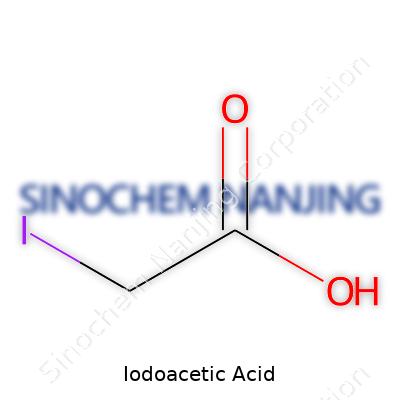
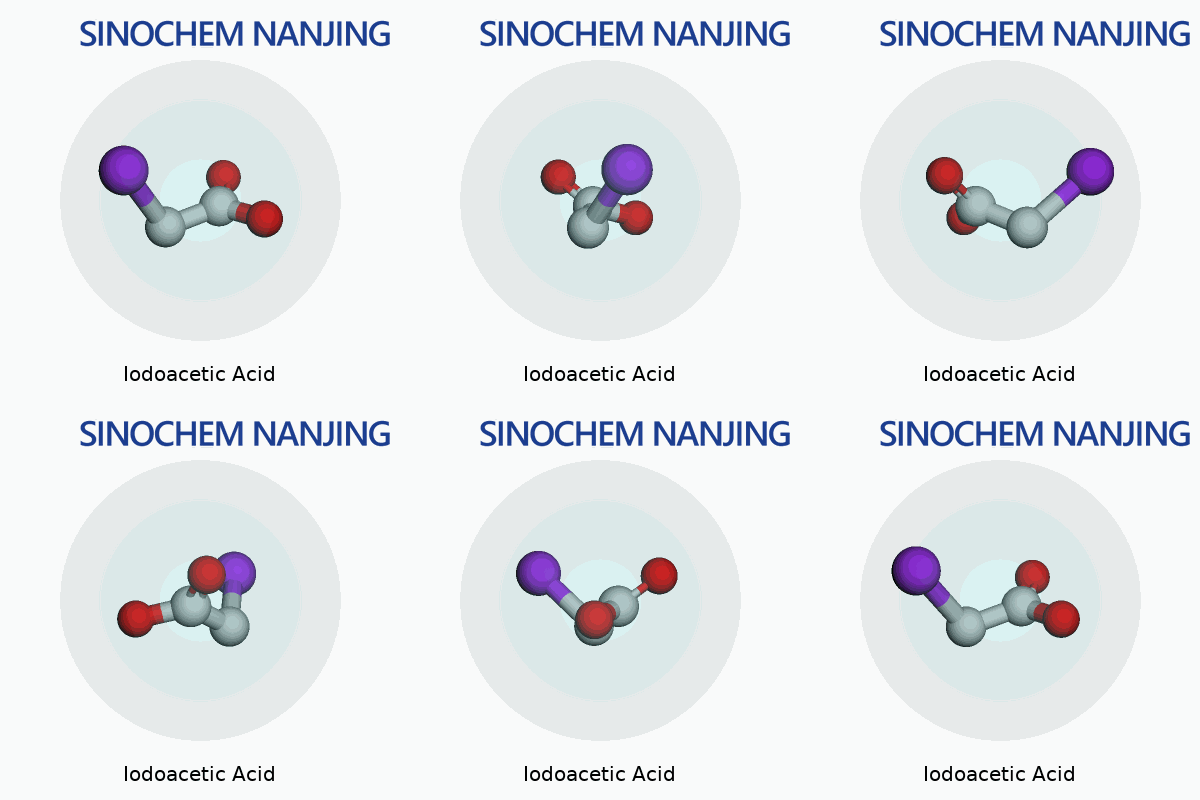
| Names | |
| Preferred IUPAC name | 2-iodoacetic acid |
| Other names |
IAA Iodoacetate Monoiodoacetic acid Iodoethanoic acid |
| Pronunciation | /ˌaɪ.oʊ.doʊ.əˈsiː.tɪk ˈæs.ɪd/ |
| Identifiers | |
| CAS Number | 64-69-7 |
| Beilstein Reference | 1209228 |
| ChEBI | CHEBI:30947 |
| ChEMBL | CHEMBL1579 |
| ChemSpider | 5465 |
| DrugBank | DB00744 |
| ECHA InfoCard | 100.965.142 |
| EC Number | 211-195-3 |
| Gmelin Reference | 8785 |
| KEGG | C02522 |
| MeSH | D007478 |
| PubChem CID | 3499 |
| RTECS number | MC5950000 |
| UNII | K50C6TK2MY |
| UN number | UN1870 |
| Properties | |
| Chemical formula | C2H3IO2 |
| Molar mass | 185.940 g/mol |
| Appearance | White crystalline powder |
| Odor | Odorless |
| Density | 1.66 g/cm³ |
| Solubility in water | Very soluble |
| log P | 0.33 |
| Vapor pressure | 1 mm Hg (20 °C) |
| Acidity (pKa) | 2.96 |
| Basicity (pKb) | 2.98 |
| Magnetic susceptibility (χ) | -57.5×10⁻⁶ cm³/mol |
| Refractive index (nD) | 1.636 |
| Viscosity | 2.57 mPa·s (20 °C) |
| Dipole moment | 5.63 D |
| Thermochemistry | |
| Std molar entropy (S⦵298) | 143.6 J·mol⁻¹·K⁻¹ |
| Std enthalpy of formation (ΔfH⦵298) | -164.7 kJ/mol |
| Std enthalpy of combustion (ΔcH⦵298) | -218.6 kJ/mol |
| Pharmacology | |
| ATC code | V09IA04 |
| Hazards | |
| Main hazards | Toxic if swallowed, causes severe skin burns and eye damage, may cause respiratory irritation. |
| GHS labelling | GHS02, GHS05, GHS06 |
| Pictograms | GHS05,GHS06 |
| Signal word | Danger |
| Hazard statements | Hazard statements: H301, H311, H314, H331 |
| Precautionary statements | P264, P270, P273, P280, P301+P312, P302+P352, P305+P351+P338, P304+P340, P312, P330, P362+P364, P391, P501 |
| NFPA 704 (fire diamond) | 3-2-2-Acidity |
| Flash point | Flash point: 110 °C |
| Autoignition temperature | 185 °C |
| Lethal dose or concentration | LD50 (rat, oral): 20 mg/kg |
| LD50 (median dose) | LD50 12.5 mg/kg (Rat, oral) |
| NIOSH | NL2975000 |
| PEL (Permissible) | PEL (Permissible Exposure Limit) for Iodoacetic Acid: Not established |
| REL (Recommended) | 0.05 mg/L |
| IDLH (Immediate danger) | IDLH: 5 ppm |
| Related compounds | |
| Related compounds |
Iodoacetamide Chloroacetic acid Bromoacetic acid Iodine monochloride Mercaptoacetic acid |



