Iodine Monochloride: A Deep Dive into Its Value, Risks, and Future Directions
Historical Roots of Iodine Monochloride
Chemists in the nineteenth century were fascinated by the potential of halogen compounds. Iodine monochloride first caught their attention as they experimented with ways to bring together two reactive elements: iodine and chlorine. The discovery answered the call for more versatile reagents needed in emerging organic chemistry labs. Early experiments revealed a reddish-brown liquid, easy to manipulate but carrying an air of caution due to its sharp, acrid fumes. Researchers began logging its properties by carefully mixing iodine crystals with chlorine gas, letting the product form beneath controlled conditions. This exploration set the stage for iodine monochloride to play roles not just in synthesis but also in quality control and industrial chemistry.
Overview of the Product
Anyone who spends time in a lab will recognize iodine monochloride by its unmistakable color—a rich red-brown that stands out among clear and pale chemicals. Distributed both as a liquid and pressed into ampoules, it doesn’t fit the shelf-life of everyday solvents. Manufacturers stamp each container with batch numbers, concentration, and purity details. The formula remains simple, but attention to sourcing high-purity iodine and chlorine turns out to be important for anyone wanting reliable results in pharmaceutical, analytical, and synthetic settings. Those who stash this compound in their chemical cabinets know it speeds up certain analytical reactions and even pops up in making dyes, lubricants, and disinfectant blends.
Physical and Chemical Properties
With a melting point near 27°C, iodine monochloride lurks as a liquid at room temperature in many lab spaces, especially during warm months. It gives off fumes that sting the eyes and nose—a clear message to ventilate work areas and handle with care. The compound proves soluble in water, benzene, and chloroform, allowing plenty of mixing options on the benchtop. Off the metrics, experienced chemists watch its aggressive oxidizing and iodinating power closely, treating spills and splashes with serious urgency. The vapor pressure and tendency to corrode glass stoppers encourage storage in PTFE-lined or specialist containers, echoing warnings from generations of laboratory manuals.
Technical Specifications and Labeling Influence Decisions
Vendors love to pitch iodine monochloride grades, from mighty reagents to tech-end products. The labels tell volumes—purity levels, water content, packaging sizes, and recommended storage temperatures. Researchers can quickly scan the specifics to pick the right batch for low-temperature work, high-precision titrations, or industrial bulk synthesis. The importance of these details can’t be overstated. A small water spike or low concentration means false results in some analytical tests. Modern production adds QR codes and digital tracking to packaging, helping laboratories trace the origin and quality of each shipment amid stricter regulations.
Preparation Methods in Action
Production usually sticks to basics: iodine crystals meet dry chlorine gas, often in sealed glassware immersed in cold baths. This method, though seemingly simple, requires patience and vigilance; over-exposure to chlorine eats away at iodine, turning the solution to unwanted byproducts. More refined processes bubble chlorine through an iodine suspension, controlling temperature and gas flow for clean yields. Some manufacturers have tried to work in solvents or tweak operating pressure to drive output efficiency, but they run into corrosion issues and product loss just like early pioneers did. Small-scale labs sometimes resort to homemade setups, but most major producers have dialed in manufacturing to limit human handling, improving both safety and purity.
Chemical Reactions and Product Modification
On the reaction front, iodine monochloride grabs attention as an iodinating agent. Organic chemists value its knack for direct halogenation—attaching iodine atoms to aromatic rings with precise selectivity. In industrial settings, it finds use for synthesis of iodinated intermediates, which later form active ingredients or performance chemicals. Analytical chemists tap it for quick titrations to detect unsaturation in fats and oils, a step critical in food quality labs. Those who modify this compound seek derivatives for increased selectivity or reduced volatility, tinkering with additives or alternate carriers when direct application would prove too aggressive or unstable. The reactivity makes this chemical a powerful tool, but the need for careful handling shadows every reaction sequence.
Synonyms and Naming Conventions
In the market or literature, iodine monochloride appears under more than one name. Some call it Iodine(I) chloride, or highlight its formula—ICL or ICl—right on the front of containers. Analytical texts reference “Iodine chloride” or “chloroiodide,” and in European settings, labels sometimes still use their Latin-based roots. No matter the label, responsible distributors supply accompanying documentation, making sure users—whether new graduates or seasoned chemists—don’t confuse it with iodine trichloride or plain iodine solutions.
Safety, Handling, and Regulatory Requirements
Tales from chemical storerooms attest to the hazards of iodine monochloride. Its vapors irritate the lungs and eyes. Liquids burn on contact with skin. Most labs store it behind fume hoods or in secure, vented cabinets, guarding both employees and the environment. Standard PPE—goggles, gloves, fitted lab coats—becomes non-negotiable, with spill kits and emergency rinses stationed nearby. Regulatory authorities in the EU, US, and Asia have clamped down hard on transport and disposal, citing risks to waterways and air. Secondary containment, notification to local safety boards, and even periodic inspections get written into protocols, reminding everyone that speed and convenience take a back seat to risk management when this reagent is in play.
Applications and Real-World Uses
Chemists lean on iodine monochloride for more than textbook titrations. In quality assurance labs, inspectors use it to measure the iodine value in edible oils, giving food producers a means to check for adulteration or spoilage. The pharmaceutical sector taps its precise halogenation abilities to shape molecular frameworks that lead to active drugs. Veterinary and sanitation industries have long explored its potential in disinfectant formulations. Dyes, lubricants, and flavoring agents draw upon its reactivity, opening a window to new colors, textures, and tastes. Demand pulses when regulations grow around food testing, forcing suppliers to ramp up output and labs to sharpen technique.
Research and Development Patterns
Curiosity keeps research alive in unexpected corners. Teams seek to improve the stability of iodine monochloride by developing better encapsulation or packaging technology. Others tinker with its synthetic uses, trying to dial up selectivity or minimize byproduct waste. Pharmaceutical and agrochemical developers look for ways to embed iodine into tricky organic frameworks, chasing therapies and crop protection solutions. Environmental labs run pilot programs to use iodine monochloride as a marker or tracer in field studies. Journals publish methods for minimizing worker exposure or reclaiming leftover reagents, reflecting a real push toward greener, safer chemistry.
Toxicity Studies and Health Safeguards
Toxicologists pulled together early data showing short-term exposure to iodine monochloride triggers coughing, breathing trouble, and eye burns. Long-term risks can include thyroid gland disruption—affecting hormone balance—if the compound enters the body over time. Case reports from industrial settings document burns and persistent lung problems among poorly protected workers. Safety trainers hammer home the need for swift decontamination and proper medical attention after spills. Most modern labs stay within regulatory limits, use extraction hoods, and train staff in emergency response. Continued animal and cell studies provide clues about chronic exposure, nudging manufacturers and users to minimize any unnecessary release or mishandling.
Looking Ahead: Promises and Challenges
Chemists see a future where iodine monochloride finds safer, more sustainable application. Collaborative efforts between industry and universities aim to build closed-system reactors, capturing vapor and reducing leaks. Packaging advances—light-resistant, pressure-rated containers—could shrink the risk of accidental exposure for both shippers and end users. Ongoing research into milder, less toxic analogues may one day replace much of its use in consumer products, shifting the risk-benefit equation toward sustainability. As food testing and medicine grow more precise, demand for high-quality reagents with traceable origins will likely grow. Everyone in the field knows that responsibility and innovation go hand in hand, especially with compounds as powerful—and potentially hazardous—as iodine monochloride.
What is Iodine Monochloride used for?
A Closer Look at Its Day-to-Day Use
Many people haven’t heard of iodine monochloride unless they spent some serious time in a lab. Truth is, this compound gets plenty of attention in places other than dusty textbooks. In chemical labs, researchers rely on iodine monochloride for titration, especially in the testing of fats and oils. For those curious about why this happens, the connection to food testing is pretty interesting.
Take edible oil, for example. Its quality control depends a lot on something called iodine value, a measure of unsaturation in fats. Iodine monochloride reacts fast and reliably with these fats, making it a favorite for analysts checking if the oils we buy are pure or if they got mixed with cheaper alternatives. As someone who studied food science, I spent countless hours running these tests. Down in the trenches, accuracy matters; using iodine monochloride gets you results that can affect brands and, more importantly, our health.
The Role in the Pharmaceutical World
Chemical labs aren’t the whole story. Medicine depends on careful chemistry, and iodine monochloride jumps in here, too. It acts as an oxidizing agent—crucial when synthesizing some drugs or producing disinfectants. Hospitals and clinics need clean tools and surfaces, especially with antibiotic resistance on the rise. Disinfectants built with iodine compounds help prevent infections and, by extension, hospital stays. There's a reason the familiar brownish-red iodine solution shows up on cuts and scrapes. Safety is often about the chemistry you don’t see.
Tackling Contaminants and Germs in Water Treatment
Clean water keeps communities healthy, but getting it isn’t just about filters and boiling. Iodine monochloride helps out as a disinfectant in some water treatment setups. It acts against bacteria, viruses, and certain protozoa—microorganisms that turn safe water into a hazard. Some backpackers rely on iodine-based tablets for their drinking supplies, which speaks to the trust placed in this chemistry.
Industrial and Manufacturing Value
Factoring industrial needs, iodine monochloride supports electronics and dyes. For instance, etching processes in circuit board manufacture can use its oxidative properties to prepare surfaces or tweak materials, helping produce better connectivity and performance. Dye companies turn to iodine monochloride when working with coloring agents, where the compound’s sharp reactivity can help make colors brighter and final products more reliable.
Weighing Benefits Against Risks
Handling iodine monochloride isn’t simple. It reacts strongly with skin, eyes, and lungs, making careful transport and storage key. Workers wear gloves, masks, and use fume hoods in labs—something I remember from handling it myself. Balancing safety while using such a reactive chemical keeps production lines running and people healthy. Regulatory agencies set strict limits, so companies need to keep up with safety training and invest in proper protective gear.
What Comes Next?
Research into safer chemicals and processes keeps moving, but until better options show up, iodine monochloride remains a reliable player for accurate lab tests, infection control, and high-tech manufacturing. Companies could step up by sharing best practices, investing in engineering controls, and regularly training staff about chemical risks. That way, the benefits stick around while the dangers get managed.
What are the safety precautions when handling Iodine Monochloride?
Serious Hazards Call for Serious Attention
Iodine monochloride draws plenty of interest as a chemical reagent in the lab. The thing about this compound—it doesn’t exactly play nice. Liquid at room temperature, deep red, and with a choking odor, it reacts with water and releases toxic fumes. Many seasoned chemists have stories of handling strong oxidizers or halide reagents. I remember my hands stinging even through double gloves after a single careless splash. The stuff demands respect.
Personal Protective Gear: Non-Negotiable
There’s no shortcut here. Suit up before handling iodine monochloride. Splash-proof goggles keep your eyes safe from corrosive surprises. Wear chemical-resistant gloves (not just any disposable nitrile variety, but ones actually rated for halogens) and a lab coat made from flame-resistant fabric. Some labs swap in rubber aprons or arm coverings, especially for larger volumes or open transfers. Closed-toe shoes and long pants round out the outfit—no exposed skin means fewer regrets.
Ventilation Matters—And So Does Smell
Relying on the air in a regular room won’t cut it. Fume hoods, those trusty boxes with roaring fans, trap the gastly vapors and whisk them out of the workspace. Iodine monochloride lets off iodine and hydrochloric acid fumes, both of which hurt your lungs and eyes. If you ever get that sharp, metallic tang in your nose, it’s time to step back and check the airflow or rethink your setup. Even in teaching labs, supervisors should demand real fume removal—not just a cracked window.
Respect the Substance—and Your Workspace
Let’s talk containment. Work with small quantities, don’t decant or transfer more than you absolutely need. Use bottles or containers that seal tightly, made from glass (since plastic warps or cracks with strong chemicals). Keep iodinated reagents away from bases, strong acids, or anything that could spark violence in a beaker. I’ve seen more than one new student scramble when mixing strong chemicals too close together; spills on a cluttered bench lead to bigger disasters.
Spill Response: Fast, Clear, and Calm
Spills happen. Panic shouldn’t. Grab a spill kit with absorbents, neutralizers meant for acidic and oxidizing agents, and reserve the first-use material for emergencies. If anyone feels faint or short of breath, get them to fresh air and medical attention without delay. Don’t try to mop up with paper towels—those can ignite or feed a vigorous chemical reaction. People who train for emergencies tend to do better when things get messy, so practice helps.
Storage and Disposal: Community Counts
Store iodine monochloride in a cool, dry, dark place—definitely away from ammonia, organic materials, or combustibles. Use secondary containment like trays or bins to catch leaks. Disposal isn’t a solo job. Most labs coordinate with licensed hazardous waste companies. Pouring leftover reagent down the drain poisons both pipes and people, and more than a few cities have cracked down hard on illegal dumping. Check local rules, and log every bit moved in or out.
Continuous Learning and Teamwork
Safety culture isn’t just paperwork—it grows from real experience, from learning new tricks, and from sharing stories about what went wrong and what saved the day. I’ve always trusted teams where folks look out for one another, double-check labels, and aren’t shy about stopping an unsafe practice. The more knowledge gets shared—about hazards, best tools, better gear—the less likely someone ends up hurt.
Bottom line: Handle iodine monochloride with the care you’d want others to show to you. Your health, and your team’s trust, depend on it.What is the chemical formula and molecular weight of Iodine Monochloride?
The Straight Facts: Formula and Weight
Iodine monochloride has the chemical formula ICL. It stands as a combination of two halogens: iodine and chlorine. To find its molecular weight, you need to look at the atomic weights of each element. Iodine clocks in at about 126.90 g/mol, and chlorine at about 35.45 g/mol. Add those together, and you land at a molecular weight of 162.35 g/mol. These numbers might seem dry on paper, but they help scientists and workers across chemistry, industry, and even healthcare know just how much of the substance they’re working with.
The Real-Life Significance
Numbers alone don’t tell stories, but real experience does. Having handled iodine monochloride in a lab, I saw what learners and professionals face. Precision counts. If you grab the wrong values, even a minor miscalculation throws an entire experiment off. Manufacturers in the chemical and pharmaceutical industries trust data like molecular weight for accurate dosing, mixing, and large-scale synthesis. Tracking purity, shelf-life, or how a reagent reacts all tie back to knowing basic numbers like these.
Iodine monochloride stands out for its sharp, reddish-brown appearance and its ability to react quickly with organic substances. It’s popular for iodination reactions—the process of attaching iodine atoms to organic molecules. Researchers and synthesis labs turn to it when other, less-reactive compounds won’t do the job. That’s not an obscure choice. ICl enables efficient production of certain drugs, dyes, disinfectants, and analytic tests.
Risks and Handling: More Than Just a Formula
ICL doesn’t just sit harmless in a bottle. Its reactivity that attracts chemists also brings dangers. In school, the instructors stressed handling it under fume hoods and keeping it away from skin, eyes, and open flames. The compound releases hazardous vapors. Even tiny spills threaten both a worker’s health and sensitive lab equipment. So, information about its formula and weight isn’t just about calculation—it’s about safety. Being exact means fewer mistakes, especially when working with chemicals that bite back.
Issues and Finding Solutions
Lab accidents often spring from guesswork or bad numbers on the bench. Solutions start with solid education: every handler should study material data sheets and participate in hands-on practice before working with iodine monochloride. Safety officers need to refresh chemical inventories, double-checking concentrations and shelf life. Regular workshops and drills help young chemists respect harsh chemicals and avoid shortcuts.
In the digital age, quick access to reliable molecular data makes a difference. Trusted databases, chemical handbooks, and even smart-phone apps exist to help double-check a value before pouring a drop. Industries that use ICl regularly should back this up with proper training, secure storage, and emergency response plans. Many accidents can be reduced through a blend of information, vigilance, and teamwork.
Importance of Verified Data
The chemical formula and molecular weight of iodine monochloride might seem like trivia, but they form the first step in safe, effective laboratory work. From student labs to chemical plants, accuracy transforms routine work into something safe and productive. Years in the lab taught me that keeping one’s basics sharp—knowing a compound’s numbers—isn’t just textbook knowledge. It’s the ground floor for chemistry that works.
How should Iodine Monochloride be stored?
A Chemical That Doesn’t Forgive Carelessness
Iodine Monochloride isn’t just another bottle on the shelf. Anyone who’s ever worked with it knows how it behaves—fuming, corrosive and eager to let you know if you’ve overlooked a safety step. My own early run-in with the stuff ended with a half-melted glove and a lesson that stuck fast. Mishandling this compound can send its fumes across a room, and just a whiff tells you why so many labs set rules for its care.
Understanding Sensitivity Pays Off
This chemical eats through metal shelving and reacts with water vapor in air. A regular glass bottle with a loose stopper doesn’t cut it. Seal it tight in amber glass, away from the light. Ordinary flasks let UV rays do their worst—causing decomposition and pressure build-up.
Even small leaks start trouble. I once saw whispy clouds sneaking from a poorly capped bottle. A simple switch to a PTFE-lined cap kept the room clean. Material choices matter more than people think. PTFE resists nearly every acid and halogen, making it a better bet than rubber or cork.
Temperature: Keeping Cool Isn’t Just a Saying
Heat speeds up chemical reactions. Storing Iodine Monochloride cool—between two and eight degrees Celsius—slows down decomposition and vapor formation. Some chemists stash it in lab refrigerators, but that means proper labeling and segregation from food or sensitive samples. I’ve found that a locked chemical fridge, labeled just for corrosive halogens, keeps things both safe and organized.
Why Dry Storage Becomes Crucial
Humidity triggers reactions. Iodine monochloride pulls water from the air, making acids that corrode containers and nearby metals. Desiccators with silica gel cut down on moisture problems. In my experience, changing out desiccants stops buildup of dangerous residues inside storage cabinets.
Ventilation and Emergency Planning
Fumes from this reagent can burn eyes and lungs—no joke for users or those passing by. Keep bottles inside fume hoods or well-ventilated rooms. Good labs post clear instructions and store backup neutralizers like sodium thiosulfate solution nearby. I’ve seen spills brought under control within minutes by teams that rehearsed emergency steps.
Accountability Stops Accidents
Access shouldn’t stay wide open. A locked chemical cabinet, sign-in log and proper training for each handler build a culture where safety isn’t just talk. When everyone checks labels, understands hazard ratings and learns not to store Iodine Monochloride near organics or alkali metals, mishaps grow rare.
Smart Storage, Fewer Regrets
A well-run lab treats each reactive chemical with respect. It’s not just about rules—it’s about people getting home at the end of the day without burns, ruined tools or health scares. Solid storage practices for Iodine Monochloride don’t just protect the chemical—they keep teams safe and labs running smoothly.
Is Iodine Monochloride hazardous to health or the environment?
Understanding the Risks
Iodine monochloride comes up in labs and certain industries that rely on halogen chemistry. You might spot it as a red-brown liquid, sharp and biting to the nose. It often acts as a reagent, so regular folks don’t cross paths with it outside specialized work environments. Still, its risks do not belong in a lab manual footnote. If this stuff leaks, spills, or goes airborne, a whole list of problems boils up, both for people and nature.
Health Hazards: Straightforward, Not Subtle
With chemicals like iodine monochloride, the biggest red flag comes from direct exposure. Just a quick whiff can burn the nose and throat. If skin comes in contact, pain and blistering follow fast. I’ve worn the goggles and gloves, and even a small slip in lab protocols can leave a mark or force an early lunch break. Breathing its vapors may lead to coughing, wheezing, and—at higher exposures—much worse. OSHA and the CDC both list iodine monochloride among substances requiring fume hoods or strong local exhaust. Splash burn stories get told because they still happen. Inhaling high concentrations pushes the line toward pulmonary edema, a condition worth dodging at all costs. Eyes, nose, skin—every entry point, there's a risk.
The risk isn’t only acute. Some halogen compounds can trigger thyroid problems or cause chronic skin irritation if someone works near them day in, day out. Safety Data Sheets flag it for good reason: repeated contact adds up, and many users carry a healthy respect, maybe even fear, for the orange warning labels on the bottle.
Environmental Impacts: Beyond The Waste Barrel
Iodine monochloride doesn’t just vanish after use. Improper disposal makes it a real environmental headache. Once outside controlled settings, it reacts quickly with water to form iodine and hydrochloric acid. That means runoff can acidify soil and waterways, killing plants and aquatic life. The EPA watches compounds like this because acidic shifts in rivers and streams spell trouble for whole ecosystems.
It breaks down into substances still reactive and corrosive. A splash in a drain may seem harmless, but catch basin pipes corrode, groundwater picks up traces, and the pollution rolls out further than folks realize. Over time, fish can die, and plant roots get scorched, shifting soil chemistry for seasons. I remember a community garden near a college losing crops when stormwater picked up lab waste upstream—nobody traced it right away, but the dead patch told the story.
Smart Handling and What Actually Helps
Some solutions cut risk in half: strong training, clear rules, personal protective gear. Scrupulous spill plans weren’t just bureaucratic red tape. They stopped small accidents from becoming news stories. Labs lean on chemical-resistant gloves, splash goggles, and fume hoods for good reason. Experienced crew members hold each other accountable, calling out shortcuts before something goes wrong.
Outside the lab, disposal procedures keep iodine monochloride out of water and soil. Neutralization before waste pickup takes time and training, but pays off. Institutions work with certified chemical waste handlers, because a shortcut in disposal comes back to bite both companies and their neighbors. Strong labeling laws and public records on hazardous chemical use build trust and keep every barrel accounted for. Community awareness also goes a long way. Knowing who to call in an emergency—environmental health, the local fire department—means small leaks don’t grow into local crises. None of this wipes out the risk, but done right, it keeps iodine monochloride where it belongs: in tightly controlled settings, under the right hands.
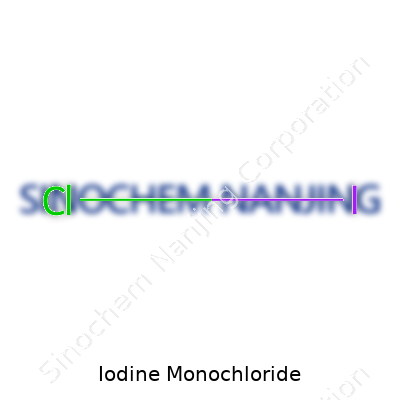
| Names | |
| Preferred IUPAC name | iodosyl chloride |
| Other names |
Iodine(I) chloride Iodine chloride Iodine monochloride Iodide chloride |
| Pronunciation | /ˌaɪ.əˌdiːn ˈmɒn.əˌklɔː.raɪd/ |
| Identifiers | |
| CAS Number | 7758-19-2 |
| Beilstein Reference | 3587153 |
| ChEBI | CHEBI:30477 |
| ChEMBL | CHEMBL1230797 |
| ChemSpider | 57921 |
| DrugBank | DB11343 |
| ECHA InfoCard | ECHA InfoCard: 034-014-00-3 |
| EC Number | 231-865-4 |
| Gmelin Reference | 7846 |
| KEGG | C01182 |
| MeSH | D007466 |
| PubChem CID | 24859 |
| RTECS number | NL1050000 |
| UNII | 9P19FZC8QT |
| UN number | UN3260 |
| CompTox Dashboard (EPA) | compToxDashboard: "DTXSID7024386 |
| Properties | |
| Chemical formula | ICl |
| Molar mass | 162.35 g/mol |
| Appearance | Reddish-brown crystalline solid |
| Odor | pungent |
| Density | 3.11 g/cm³ |
| Solubility in water | soluble |
| log P | 1.81 |
| Vapor pressure | 3.5 mmHg (25 °C) |
| Acidity (pKa) | -3.2 |
| Basicity (pKb) | -4.4 |
| Magnetic susceptibility (χ) | −37.0 × 10⁻⁶ cm³/mol |
| Refractive index (nD) | 2.004 |
| Viscosity | 2.10 mPa·s (20 °C) |
| Dipole moment | 1.20 D |
| Thermochemistry | |
| Std molar entropy (S⦵298) | 108.3 J·mol⁻¹·K⁻¹ |
| Std enthalpy of formation (ΔfH⦵298) | -17.75 kJ/mol |
| Std enthalpy of combustion (ΔcH⦵298) | -52.5 kJ/mol |
| Pharmacology | |
| ATC code | V09IA04 |
| Hazards | |
| Main hazards | Corrosive, causes burns to skin and eyes, harmful if inhaled or swallowed, releases toxic fumes of iodine and chlorine. |
| GHS labelling | GHS02, GHS05, GHS06, GHS09 |
| Pictograms | GHS05,GHS06 |
| Signal word | Danger |
| Hazard statements | H302, H314, H410 |
| Precautionary statements | H261-H314-H335-H410 |
| NFPA 704 (fire diamond) | 3-0-1-OX |
| Flash point | 113 °C (235 °F; 386 K) |
| Autoignition temperature | 128°C |
| Lethal dose or concentration | LD50 oral rat 110 mg/kg |
| LD50 (median dose) | LD50 (median dose): Oral rat LD50 = 94 mg/kg |
| NIOSH | #0046 |
| PEL (Permissible) | PEL (Permissible Exposure Limit) for Iodine Monochloride: **0.1 ppm (Ceiling as Iodine, OSHA)** |
| REL (Recommended) | REL (Recommended Exposure Limit) of Iodine Monochloride is "0.1 ppm (1 mg/m³)". |
| IDLH (Immediate danger) | IDLH: 25 ppm |
| Related compounds | |
| Related compounds |
Bromine monochloride Iodine trichloride Iodine pentafluoride |



