Hexanol: More Than Just Another Alcohol
Looking Back: The Story and Shape of Hexanol
Hexanol isn’t a household name, but that doesn’t stop it from showing up everywhere. Its roots stretch back to early organic chemistry, when researchers were just starting to unravel the family tree of alcohols. Once chemists figured out how to break plant oils and fats into pieces, Hexanol appeared as a distinct yet versatile member of the alcohol group, with a straight six-carbon backbone that draws a clear line from fossil resources and fermentation processes alike. Steam distillation of essential oils even turns up tiny amounts, as do fermentation broths from certain yeast and bacteria strains. This background shows how nature and industry keep finding ways to turn carbon chains like Hexanol into basic tools for manufacturing and innovation. Over time, makers refined their methods, focusing on efficiency and purity, including hydrogenation and hydroformylation techniques using catalysts. Just knowing how long this molecule has served as a building block for synthetic chemistry grounds its ongoing story—not just as a lab curiosity, but as a quiet workhorse.
Physical and Chemical Tenacity: What Sets Hexanol Apart
Watching Hexanol in the lab always reminds me just how ordinary and unpredictable organic liquids can be. This clear, oily liquid releases a faint, grassy scent, eerily familiar if you’ve spent time with plant extracts. With a boiling point that sits around 157 °C and a melting point near -45 °C, Hexanol shrugs off modest temperature swings but gives off thick, flammable vapors in a hot workspace. Its low solubility in water adds to the challenge: mix it in and you’ll get layers, not clarity. Yet its small polarity means Hexanol dissolves with gusto in most typical organics like ether and chloroform. As for the chemical side, that primary alcohol group makes Hexanol an eager candidate for oxidation, dehydration, and substitution. Reactions seldom drag their feet—strong acids kick off dehydration to hexene; oxidizing agents usher in hexanoic acid. Once you’ve worked with Hexanol, seeing how predictably unpredictable alcohols can be comes as no surprise.
Facts and Labels: Sorting Out Hexanol
Open any bottle in the storeroom and the label tells a short story. Hexanol often turns up as 1-Hexanol, or n-hexanol, signaling its straight-chain format—try not to mix it up with branched cousins like 2-hexanol or 3-hexanol, which carry their own quirks and uses. Under international systems, its synonyms stretch across IUPAC and trade names, but most chemists stick with the "n-hexanol" or "hexan-1-ol" label. The rules for technical grades can push purity past 98%, a must if you’re planning further synthesis or high-grade additives. Commercial stocks often mention manufacturing source and safety warnings, as industry regulators take the flamethrower properties of Hexanol seriously. Even in bulk, facilities expect labeling that squares with hazard communication standards from agencies like OSHA or the EU’s CLP—nobody can afford amateur hour with flammable solvents.
Building Hexanol: Preparation that Matters
Hexanol’s reputation as a "simple" alcohol comes from the tradition of making it using petrochemical feedstocks, which shape the availability and cost. Most industrial Hexanol gets its start from the oxo process: by reacting propylene with synthesis gas (a mix of carbon monoxide and hydrogen) in the presence of a rhodium or cobalt catalyst, chemical plants crank out aldehydes, which then get hydrogenated to the alcohol. There’s an artistry here, dialing in the right pressure, temperature, and catalysts to avoid too many by-products. Curious chemists have also looked to nature, exploring microbial fermentation. Certain engineered strains of yeast can churn out Hexanol by extending fatty acid chains, offering a smaller carbon footprint and a shot at "green chemistry" appeal. While this route still fights an uphill battle for volume and cost, it points to a future unchained from fossil origins. Laboratory synthesis can seem almost quaint by comparison, but it’s often quick work with Grignard reagents or reduction steps.
Twist and Tweak: Reactions and Modifications
Hexanol’s single, exposed alcohol group sets the stage for a range of transformations. I’ve watched as strong acids pull water away and conjure up hexenes, capitalizing on the tendency of Hexanol to lose a hydrogen and become an alkene. Mild oxidants nudge it toward hexanal; harsher conditions push on to caproic acid. Substitution reactions let you swap the -OH for halides, esters, or ethers, making Hexanol a springboard for countless synthetic projects. I’ve seen it show its value as an intermediate in pharmaceutical and plasticizer production, where the side products can matter as much as the target molecule. Customizing Hexanol for unique chemical pathways often boils down to picking the right reagent for gentle persuasion or brute force. Its lack of branching means reactions swing in favor of cleaner, predictable outcomes—good news for anyone who hates fussing with cleanup.
Safety Nets and Red Lines: Handling Hexanol
Experience shapes respect for Hexanol’s hazards. The clear, oily look disguises a volatile flammability—the vapor can ignite with little provocation, making good ventilation and grounded containers critical. Splashes sting, as the stuff irritates eyes and skin, and without gloves, a slip means hours of discomfort. Breathing in vapor packs a punch as well, causing headaches and nausea. Chemical literature shows threshold limit values established for workplace exposure, and regulations push for exhaustive hazard labeling. Storage involves more than shelving—good practice keeps Hexanol away from oxidizers and sources of ignition. The push for safer alternatives and automation in handling reflects a broader recognition that even "routine" chemicals demand serious respect, especially when scaling up for industrial use.
What Hexanol Helps Build: Uses That Count
Hexanol’s unassuming nature hides its hands in several key industries. It slides quietly into plasticizer production, acting as the base for esters added to PVC; factories need those softening agents to make flexible tubes, wire insulation, and film coatings. In the fragrance world, tiny amounts lend a green, sharp note to perfumes, echoing fresh-cut grass. I’ve seen it show up in specialty solvents, surface-active agents, and even in the backend of pesticide synthesis, where long hydrocarbon tails matter for spread and persistence. Laboratory research uses Hexanol for extracting plant alkaloids. Its reach covers both the creative and the utilitarian—chemists reach for Hexanol when a half-dozen carbons in a chain open the door for reactivity and solubility without too much volatility or toxicity.
On the Frontlines: Research and Development
Researchers find Hexanol an intriguing candidate for greener chemical processes. Advances in biotechnology now allow greater yields from engineered microbes, which means fermented Hexanol could stand toe-to-toe with petro-derived sources. New catalyst developments slash production costs and improve selectivity in hydroformylation and reduction reactions, decreasing waste. On another track, surface chemists and materials scientists tinker with Hexanol-modified surfaces to boost compatibility in nanocomposites and coatings. Academic work often links this alcohol to studies on reaction kinetics, enzyme adaptation, and even as a probe for understanding solvent-solute interactions. R&D remains hungry for routes that cut energy demands and shrink toxic by-products, with Hexanol front and center as a test case for sustainable approaches in bulk chemical manufacture.
Points of Caution: Toxicity and Human Impact
Every encounter with chemicals brings risk, and Hexanol is no exception. Acute exposure often irritates skin, eyes, and respiratory systems; workers remember rashes and headaches long after a forgotten glove or leaky flask. Digging into toxicity journals, the narrative grows complex. Animal studies indicate moderate toxicity by ingestion and inhalation, with central nervous system effects at high doses—dizziness, lack of coordination, nausea. Tests for chronic exposure suggest that regular handling with poor ventilation can deliver more than a passing headache. Environmental toxicity receives less notice: like many organics, Hexanol can damage aquatic life in concentrated spills. Regulators such as the EPA and ECHA track Hexanol as a substance meriting regular review, and safe handling practices cut down dramatically on health risks. The big takeaway is that Hexanol sits within the midsize risk category—reason for caution, not panic, underscoring the need for practiced safety rather than reckless handling or complacency.
The Road Ahead: Where Hexanol Might Go Next
Hexanol’s future sits on shifting ground. The focus on green chemistry casts a spotlight on fermentation, which might one day make petroleum-derived Hexanol a relic rather than the rule. Ramping up microbial or plant-based production calls for breakthroughs in bioreactor technology and yield improvement, especially now that markets want renewable sourcing. Regulations on volatile organic compounds push industries to refine processes for capture and recycling, shrinking environmental footprints. Application areas look set to expand: molecular researchers eye Hexanol as a starting point for designer surfactants, biodegradable solvents, and perhaps next-generation lubricants. On the toxicity front, ongoing studies aim to clarify metabolite pathways and long-term effects, especially as alternative uses in food aromas and pharmaceuticals rise. In the coming years, Hexanol will likely serve as an indicator: if sustainable industrial chemistry can shift from oil to biosynthesis, it will happen first with core intermediates like this.
What is Hexanol used for?
The Role of Hexanol in Industry and Everyday Life
Think back to a time you’ve opened a bottle of cleaning supplies and caught a whiff of a sharp, almost grassy odor. That’s often the telltale sign of an alcohol-based compound at work, and in many products, this compound is hexanol. Hexanol, a six-carbon alcohol, doesn’t just play a background role in industry—its presence shapes the performance and safety of many things we depend on daily.
Building Blocks: Chemistry at Work
In chemical manufacturing, hexanol holds a spot as a crucial intermediate. Businesses rely on it for processes that make everyday products possible. Hexanol serves as a starting point to synthesize plasticizers, which keep plastics soft and flexible. Without these, items ranging from raincoats to wire insulation stiffen and crack. Hexanol-based plasticizers keep goods durable, fighting off a throwaway culture by extending product life.
Fragrance and Flavor: More Than Just a Chemical
Hexanol brings subtlety to the world of flavors and fragrances. Its leafy, fresh scent rounds out perfumes and colognes, playing a supporting note that helps complex scents stay grounded and appealing. In food, strict regulations exist to guarantee hexanol stays at safe levels, but its impact in tiny amounts can be surprising—it blends with other natural compounds to create the signature aromas found in apples, bananas, and even certain teas. Growing up in a household that prized home-cooked meals, fresh herbs sometimes carried an unmistakable, grassy note—not unlike a diluted version of pure hexanol itself.
Solvent Power: Cleaning and Processing
Industrial cleaners embrace hexanol as a tough solvent that breaks down oils, greases, and waxes. This property helps keep factories clean and electronics manufacturing on track. Labs also draw on this solvent power when extracting chemicals or purifying samples during research and quality control. I remember visiting a small plant where workers used hexanol-containing cleaning agents to strip printed circuit boards of residue. The difference after a fresh clean-up made it easy to see why certain jobs demand more than just water and elbow grease.
Balancing Safety and Sustainability
Hexanol offers a lot, but it’s not without baggage. Exposure to large amounts can cause skin and eye irritation or even more serious problems if handled carelessly. Factories and labs using hexanol need strict occupational safety standards. Responsible storage, ventilation, and personal protective equipment—gloves, goggles, and aprons—cut down on risk, but only when workers get proper training and support. Regulators have set exposure limits, but not all manufacturers in every country put worker wellbeing first. Advocating for better oversight remains crucial.
On the environmental side, hexanol doesn’t persist in soil or water the way some chemicals do, but improper disposal can still harm aquatic life. Companies moving toward greener chemistries take a hard look at how to capture or recycle solvents. Some researchers work on bio-based routes to hexanol, using plants or microorganisms, aiming to reduce pollution and dependence on petrochemicals.
Solutions for the Future
As demand for plastics, cleansers, and fragrances continues to climb, there’s no sign that hexanol will slip quietly into the background. The continued development of safer work environments, along with investment in research for renewably sourced production methods, can keep the benefits of hexanol accessible while reducing risks. By pushing for transparent sourcing, stronger safety policies, and innovation, people can ensure this useful chemical keeps serving industry and daily life, without compromising health or the planet.
Is Hexanol safe to handle?
Getting Real About Hexanol Safety
For plenty of folks who spend time around chemicals, whether in factories, labs, farms, or workshops, hexanol pops up on a shelf more often than most think. It comes with a mild, sweet odor and belongs to a family of alcohols—a structural cousin to those in cocktails. I’ve watched plenty of newbies assume that since hexanol shares a root name with ethanol, it plays by the same rules. That mindset can lead to some risky shortcuts.
Hexanol Exposure: What Actually Happens?
Getting hexanol on your hands doesn’t always bring immediate pain, but that doesn’t mean everything’s fine. It dries out the skin in ways you only notice after hours, sometimes leaving it cracked and sore by morning. On one job mixing solvents for inks, I skipped gloves just once. By the next day, my fingertips hurt as if they’d scraped concrete. Colleagues have shared the same story—repeated contact leads to red patches or, in rough cases, blisters.
Breathing in hexanol vapor feels a bit like getting winded outside a paint store. Short stints in a closed area lead to headaches and nausea, but after a full shift, dizziness can hit hard. Long-term effects haven’t hit the news as much, yet animal research and regulatory briefings do show central nervous system hits and liver worries with hefty doses. Hexanol doesn’t carry the notoriety of benzene or toluene, yet writing it off as “just another alcohol” is a mistake that leaves workers scrambling for better safety gear after one scare too many.
Handling: How People Actually Slip Up
Safety data sheets talk about gloves, goggles, lab coats, and proper fume collection. My own experience watching techs shows most problems come from skipping steps on hot days or “just running in for a minute.” Nobody claims to be reckless, but comfort and routine can fog judgment. Hexanol loves to spill—each drop soaks into lab benches, tool handles, scrap rags. If ventilation falters or storage happens close to personal areas—peek into old stockrooms or poorly labeled containers—problems multiply. A few times a year, news turns up cases of folks sent to urgent care for breathing trouble after handling hexanol carelessly during a lunch break.
What Works Against Unsafe Practices?
Personal experience backs up clear rules: nitrile or neoprene gloves outlast latex and keep exposure to a minimum. Invest in fit-tested chemical goggles. Regular folks who handle small batches could save money by installing a ductless fume hood or at least working next to a window with a strong fan pulling air away. Eye wash stations seem easy to forget; until someone splashes hexanol, and panic sets in searching for water. Labels matter—I’ve seen old soda bottles storing hexanol get mistaken for drinking water, so keeping toxic stuff in clear, labeled containers and away from break rooms dodges disaster.
People Over Profit: Why It Matters
In the chase for productivity, minor chemical exposures often end up as afterthoughts. That attitude lands workers in ERs and hikes up insurance bills. Following safety protocols means looking out for coworkers and families—too many compounds with innocent-sounding names have outsized impacts after years of routine exposure. My own hands bear the scars of times I cut corners. New hires and seasoned vets both need brief refresher trainings and simple checklists. The safest facilities aren’t just built on good intentions; they run on habits that leave no room for shortcuts.
What are the physical properties of Hexanol?
Understanding Hexanol’s Structure
Let’s start with what sets hexanol apart. This molecule carries six carbon atoms in a straight chain, finished with a distinctive alcohol group. Hexanol flows as a liquid at room temperature, and its slight viscosity gives off an oily touch. Its clear appearance and mild, sharp odor tell you right away you’re handling something distinct from the water or household alcohol in the cupboard. Anybody who’s worked in a chemistry lab knows hexanol’s presence by smell alone — the sharp scent lingers longer than most realize.
Boiling and Melting Points: A Closer Look
Among its physical gifts, hexanol boasts a boiling point of roughly 157 degrees Celsius. You won’t see it vanish quickly from an open beaker. Compare that with ethanol at 78 degrees Celsius. The greater chain length holds hexanol’s liquid form together more tightly, thanks to those extended hydrophobic tails, and you’ll need much more heat to turn it into vapor. Hexanol melts at about -44 degrees Celsius, so even in winter, you’ll find it in liquid form on a shelf. That resiliency in extreme temperatures comes in handy for manufacturers who ship raw materials far and wide without worrying about solidification.
Solubility: A Real Challenge in the Lab
Drop hexanol in water, and you’ll notice right away it won’t dissolve well. The alcohol group tries to blend, but those six carbons fight back, making the molecule more comfortable with oils than with water. Splash some hexanol into hexane or chloroform, and the difference becomes clear — it dissolves with ease. That split personality, hydrophilic head and hydrophobic tail, makes hexanol a go-to for jobs like dissolving fats or oils where water fails. I learned this hands-on during internship days, struggling to mix oil-based vitamins until hexanol did the trick.
Density, Appearance, and Real Industry Use
Hexanol sits just a touch less dense than water. Pour it gently and you’ll watch it float on top of a water layer. This simple trick comes in handy in separation tasks, especially in places where solvent recovery really matters. Colorless and with that sharp, herbal-like aroma, hexanol stands out from standard lab solvents. I remember labs locking up hexanol bottles, not just for safety but to avoid filling the room with its lingering scent.
Applications and Health Considerations
What surprises many is how that combination of physical qualities — high boiling point, poor water solubility, oily feel — leads hexanol to key industrial roles. It works well in plasticizer production and surfactant manufacture. Used carelessly, though, its volatility can bring risk. Breathing in hexanol vapor leaves a burning sensation in the nose and throat. Skin contact creates a slow, creeping irritation. Real safety data matter here: the National Institute for Occupational Safety and Health cautions about repeated exposure, which causes headaches and drowsiness. Ventilation and gloves aren’t just suggestions — they’re must-haves.
Improving Safety and Efficiency
Facilities have turned to closed systems and spill-proof containers to cut down on exposure. Training goes a long way too; nothing replaces the sight of an old-timer showing the new folks how to pour, mix, and store hexanol without breathing in fumes. Manufacturers still look for less volatile, safer alternatives where possible, but for certain applications, only hexanol delivers the right balance of solvency and handling.
Thinking Ahead
Getting up close with hexanol means seeing all sides — not just lab numbers, but touches, smells, and practical challenges. Its role in industry, science, and even safety protocols underlines its importance. Talking with production workers, chemists, and lab managers uncovers recurring feedback: clear labeling, strong ventilation, and a respect for hexanol’s quirks remain essential for working safely and making the most of its physical properties.
How should Hexanol be stored?
Recognizing the Hazards of Hexanol
Hexanol catches attention in many lab projects—its distinct odor lingers long after a container is opened. Many of us have learned the hard way that Hexanol evaporates quickly and can irritate the skin after only brief contact. Its risk profile includes fire, health hazards, and environmental concerns, so ignoring safety doesn’t just put a person at risk; it threatens coworkers and friends down the hall.
Key Points to Safe Storage
Every bottle of Hexanol comes with opportunity and risk. The liquid ignites more readily than one might expect, so flammable storage cabinets stand as the safest home for any container. Metal cabinets with tight-fitting doors, proper labeling, and solid shelves always keep me sleep easier, especially after hearing about fires in labs that could have been avoided.
Fresh air inside the lab slows down Hexanol’s vapor concentration, lowering the risk of inhalation or explosion. I’ve worked in cramped rooms and open bays, and I’ve seen how good ventilation saves noses and, in rare cases, prevents medical emergencies. Standard exhaust hoods pull fumes away quickly; if those systems run properly, they keep everyone safer.
Container Choices Matter
Hexanol weathers through ordinary plastic or glass, but not all containers perform the same. Polyethylene bottles and amber glass jars resist chemical breakdown for months at a time. All the labels on a container must spell out “Hexanol” and note both the concentration and hazard warnings—without compromise. Smearing or fading labels during a hectic day leave others guessing, so durable markers or printed labels often save confusion.
Tight-fitting caps stop vapors from escaping, but sturdy caps also protect against spills if a bottle tips over. A messy spill demands chemical absorbent pads, a ventilator mask, and sometimes even emergency shutdowns. I’ve watched a careless transfer end up costing hours of cleanup. Double containment, with bottles stored inside chemical-resistant secondary trays, gives me confidence that even a splash won’t become a disaster.
Temperature and Distance from Hazards
High temperatures turn Hexanol vapors into a significant problem, so cool, dry storage far away from heat sources prevents trouble. Keeping it at room temperature or lower, out of direct sunlight, protects purity and lowers risk. Some mistake storing Hexanol near oxidizers like peroxides or strong acids. This error leads to dangerous reactions. A separate flammable cabinet for Hexanol, well-marked and organized, keeps everything clear to staff and emergency responders.
Daily Habits and Emergency Preparedness
Each time I work with Hexanol, I check caps, labels, and nearby chemicals before even starting a job. This pattern catches mistakes before they drift into something bigger. Safety goggles, gloves, and lab coats remain the rule, not exceptions. Spill kits sit ready, visible and stocked with all the right gear. Emergency eyewash and showers also belong close by, especially in busy facilities where someone new might not recognize the unique risks of Hexanol.
Hexanol storage isn’t just a chore on some checklist. It protects mental focus and health. Experience, vigilance, and sharing knowledge within the lab community keep unfamiliar hands from reaching for dangerous chemicals in the wrong way. Every safety measure taken with Hexanol builds trust that echoes throughout the team and into the larger world beyond the lab walls.
What are the potential health hazards of Hexanol?
What is Hexanol and Where Do People Encounter It?
Hexanol is an alcohol with six carbon atoms, used in everything from fragrances and solvents to plastic production. You might catch its faint, almost oily scent in some household products or industrial cleaners, though you probably won’t recognize it by smell alone. Factory workers, lab techs, and cleaners often deal with exposure more often than most. People outside these fields can still run into it through mishaps, spills, or poorly vented work spaces.
How Hexanol Enters the Body
Exposure comes from breathing in hexanol vapors, touching it, or accidentally swallowing it. I’ve seen first-hand just how quickly chemical fumes can irritate the throat or lungs—it doesn’t always take high concentrations or hours of direct contact. Even short bouts can raise alarms, especially in closed-in spaces without much airflow.
Short-Term Health Hazards
Breathing hexanol can make you dizzy, give you a headache, or cause irritation in your nose and throat. If liquid hexanol lands on your skin, rashes or redness pop up fast, especially for people with sensitive skin or eczema. Rubbing eyes after handling a bottle means stinging, burning, and sometimes watery eyes. Swallowing hexanol—even a small amount—leads to nausea, stomach pain, and confusion; this risk climbs for kids since symptoms sometimes show up before they say anything feels wrong.
Long-Term Health Effects
Chronic exposure builds up over time. Folks working every day with hexanol, especially without gloves or proper masks, notice dry or cracked skin, irritated airways, and sometimes trouble concentrating. Hexanol targets the central nervous system. In animal studies and in some workers, repeated inhalation messes with reflexes, mood, and memory.
What Makes Hexanol Risky?
Hexanol evaporates slowly but has a low odor threshold, which means you might not realize you’re breathing it during a busy day. It’s less toxic than some industrial solvents, but it still has punch. The chemical breaks down in the liver, but high doses overwhelm the body’s natural defenses. Its risk increases when combined with other harsh chemicals in the same workspace, which happens a lot in cleaning and manufacturing. Because hexanol isn’t the most well-known toxin, some employers and workers may skip over it when reviewing chemical safety sheets or updating safety training.
Protecting Yourself and Others
Engineering controls keep vapor levels down—open windows, local exhaust fans, and simple air purifiers all help. Wearing gloves, goggles, and long sleeves shields exposed skin. Companies benefit from regular hazard training that makes hexanol easy to spot and handle. The training should include signs of exposure and how to help people showing symptoms. Routine air quality checks reveal if levels rise too high, long before anyone gets sick.
Prompt cleanup stops small spills from turning into big problems, especially on shared work tables, lunch spots, and other common areas. Anyone using hexanol should learn to keep bottles closed and labeled. Avoid eating, drinking, or smoking anywhere near storage or spill sites. These habits—simple, but easy to forget on a busy shift—offer a long-term edge against possible health trouble.
Potential for Safer Alternatives
Many industries already look for less toxic substitutes, swapping out hexanol for greener solvents whenever possible. The push toward safer chemicals gets real support from ongoing medical studies, new product formulas, and consumer demand for safer products. Workers and users can talk with employers, store managers, and community leaders about reducing unnecessary exposure.
Everyday people rarely face high levels unless accidents or workplace mistakes put them at risk. Knowing more helps both companies and individuals spot problems early, build safer habits, and push for long-term health. Hexanol isn’t the deadliest substance out there, but understanding its hazards keeps risky surprises to a minimum.
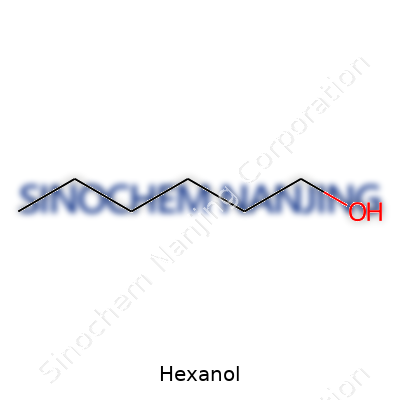
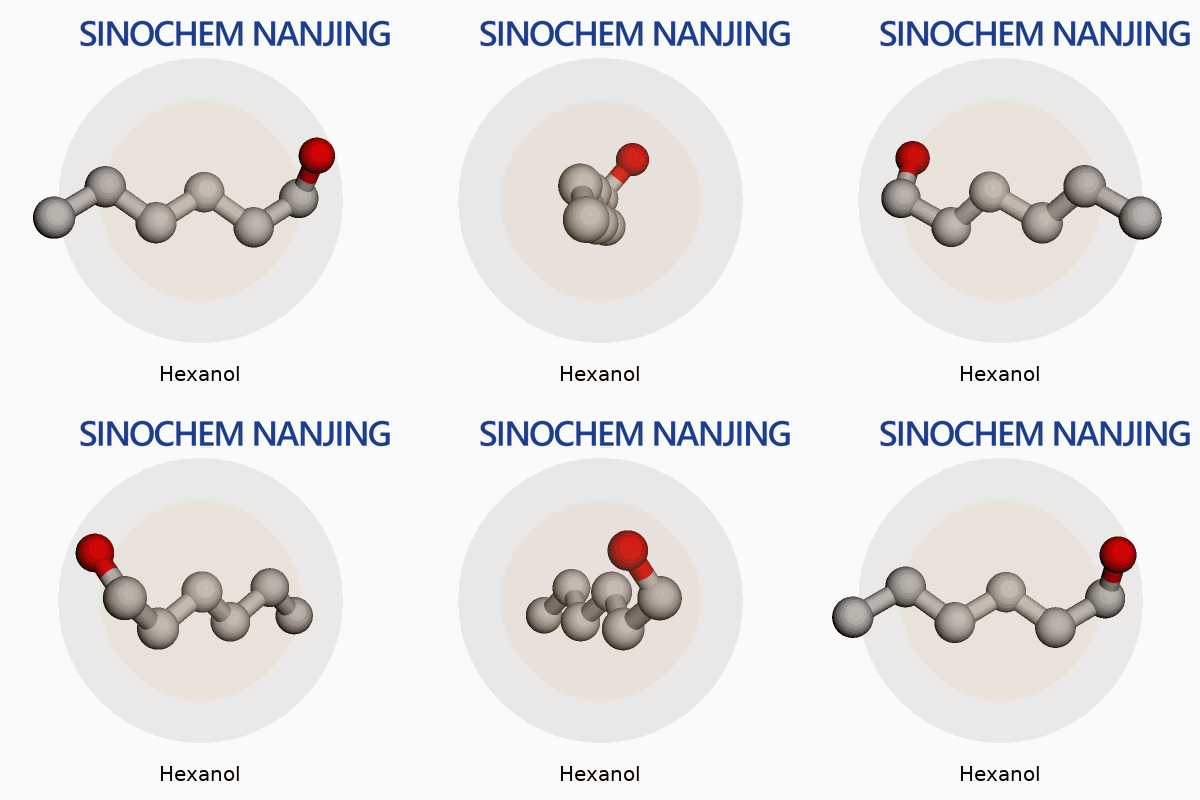
| Names | |
| Preferred IUPAC name | hexan-1-ol |
| Other names |
1-Hexanol n-Hexanol Amylcarbinol Hexyl alcohol n-Hexyl alcohol |
| Pronunciation | /ˈhɛksəˌnɒl/ |
| Identifiers | |
| CAS Number | 111-27-3 |
| Beilstein Reference | 1718734 |
| ChEBI | CHEBI:16311 |
| ChEMBL | CHEMBL511 |
| ChemSpider | 6089 |
| DrugBank | DB14025 |
| ECHA InfoCard | 07a388c2-3974-4fc8-ab6e-6be33dbcbf0b |
| EC Number | 3.1.1.60 |
| Gmelin Reference | Gmelin 22188 |
| KEGG | C02387 |
| MeSH | D006591 |
| PubChem CID | 8103 |
| RTECS number | MN9275000 |
| UNII | K887N4638M |
| UN number | UN2282 |
| Properties | |
| Chemical formula | C6H14O |
| Molar mass | 102.18 g/mol |
| Appearance | Colorless liquid |
| Odor | mild, sweet, alcoholic |
| Density | 0.814 g/cm³ |
| Solubility in water | 5.9 g/L (at 20 °C) |
| log P | 1.8 |
| Vapor pressure | 0.897 mmHg (at 25 °C) |
| Acidity (pKa) | 16.1 |
| Basicity (pKb) | 5.86 |
| Magnetic susceptibility (χ) | -7.9×10⁻⁶ |
| Refractive index (nD) | 1.417 |
| Viscosity | 6.02 mPa·s |
| Dipole moment | 1.70 D |
| Thermochemistry | |
| Std molar entropy (S⦵298) | 307.6 J·mol⁻¹·K⁻¹ |
| Std enthalpy of formation (ΔfH⦵298) | -393.5 kJ/mol |
| Std enthalpy of combustion (ΔcH⦵298) | -3890.7 kJ/mol |
| Pharmacology | |
| ATC code | N07XX |
| Hazards | |
| GHS labelling | GHS02, GHS07 |
| Pictograms | GHS02,GHS07 |
| Signal word | Warning |
| Hazard statements | H302, H315, H318, H335 |
| Precautionary statements | P210, P233, P280, P303+P361+P353, P305+P351+P338, P370+P378, P403+P235 |
| NFPA 704 (fire diamond) | 1-2-0 |
| Autoignition temperature | autoignition temperature of hexanol is 343 °C |
| Explosive limits | 1.1–7% |
| Lethal dose or concentration | LD50 oral rat 3690 mg/kg |
| LD50 (median dose) | LD50 (median dose): 2.5 g/kg (oral, rat) |
| NIOSH | UN1993 |
| PEL (Permissible) | 100 ppm |
| REL (Recommended) | 50 ppm |
| IDLH (Immediate danger) | 300 ppm |
| Related compounds | |
| Related compounds |
1-Hexanol 2-Hexanol 3-Hexanol Hexanediol Hexanal Hexanoic acid |



