Insightful Commentary on Hexadecanoyl Chloride: From History to Future Prospects
Historical Development
Back in the early days of industrial organic chemistry, fatty acid chlorides started grabbing attention for their role in changing natural fats into more practical substances. Hexadecanoyl chloride, known to many as palmitoyl chloride, grew out of these needs. Chemists discovered that transforming common biological acids—like palmitic acid—into their more reactive chlorides made it easier to create new materials. Laboratory benches and factory floors started seeing a lot more of these reagents after the 1940s, as demand for specialty surfactants, emulsifiers, and polymer building blocks grew. Some of the early research dove into producing biodegradable surfactants, looking for ways to move beyond simple soap. As industries stretched their reach, the story of hexadecanoyl chloride went from niche chemical curiosity to regular workhorse in both academic and commercial circles. The steady march of chemical science meant frequent improvements in both safety and yield, helping this chemical step into the modern toolkit for labs and plants worldwide.
Product Overview
Hexadecanoyl chloride finds its roots in palmitic acid, with a straight sixteen-carbon chain. This chemical wears several hats. On one hand, it acts as a go-to acylating agent, carrying a certain authority in reactions where stubborn hydroxyl or amine groups need to be tamed. At the same time, it fits into the production of pharmaceuticals, specialty polymers, and surfactants. Many suppliers offer this chemical at high purity in sealed glass or metal containers, often keeping it tightly regulated given its brisk reactivity with water and air. Common synonyms floating around labs include palmitoyl chloride and palmityl chloride. Researchers and technical staff alike see its CAS number: 112-67-4, stamped across bottles and paperwork.
Physical & Chemical Properties
Hexadecanoyl chloride stands as a clear to pale yellow liquid, sometimes solidifying as a waxy, crystalline mass just below room temperature. Anyone who has opened a bottle knows it gives off a pungent, acrid odor—something that makes working with it without proper ventilation a non-starter. This compound melts at around 20°C and boils beyond 350°C, showing off its long, fatty tail. The structure is mostly hydrophobic, with the highly reactive acid chloride group perched at one end. It doesn't mix with water; in fact, it reacts aggressively, often releasing hydrogen chloride gas. This blend of properties—greasy hydrocarbon backbone, reactive chloride—makes hexadecanoyl chloride both versatile and hazardous. The chemical’s solubility shines in organic solvents like chloroform, benzene, and ether. Yet, splash it with water and one quickly sees why safety protocols matter in chemistry.
Technical Specifications & Labeling
Manufacturers who ship hexadecanoyl chloride must provide purity levels, which often hit above 98%. Technical datasheets also clarify handling requirements, hazard pictograms, and storage guidelines. Labeling must comply with global GHS standards, displaying symbols for corrosivity and harmful vapors. Transport regulations, such as those by IATA or ADR, classify this compound under dangerous goods. Bottles and drums demand clear lot numbers and manufacturing dates, plus a reminder: keep sealed, away from moist air. While every shipment includes a Safety Data Sheet (SDS), proper labeling takes on extra importance for this sort of reagent.
Preparation Method
Factories and labs usually synthesize hexadecanoyl chloride by treating palmitic acid with reagents like thionyl chloride or phosphorus trichloride. Mixing these turns the bland fatty acid into a reactive, sulfurous-smelling solution. Technicians control conditions—temperature, agitation, dryness—to get high yields and minimize byproducts. After the reaction finishes, purification may happen through distillation under reduced pressure, as the product’s boiling point runs high. Over the years, greener methods have nudged chemists away from phosphorus-based reagents, with thionyl chloride remaining common for its reliability. Every pathway poses its own balance of cost, yield, and safety; academic labs might choose small-batch routes, but scale makes all the difference in industry.
Chemical Reactions & Modifications
Nothing beats the acid chloride group for sheer chemical bite. Hexadecanoyl chloride reacts with alcohols to form esters, with amines to form amides—both staple reactions in organic synthesis. These reactions usually need a base, like pyridine or triethylamine, to mop up the hydrogen chloride fumes that rise off as a byproduct. Sometimes, scientists use it to install hydrophobic tails onto polymers, enhancing properties like water-resistance. You’ll see hexadecanoyl chloride show up any time chemists need a fatty acid group bonded gently but efficiently onto another molecule. Enzymatic and microwaved innovations aim to tame its volatility, but traditional methods still hold sway for their dependability and scale.
Synonyms & Product Names
Walk into a storeroom or browse online catalogs and you’ll find hexadecanoyl chloride under several names: palmitoyl chloride, palmityl chloride, and sometimes simply C16-acyl chloride. Manufacturers might list it as Palmitoyl Chloride 98% or in a mixture stabilized for certain syntheses. Synonym variety can cause headaches, but the CAS number 112-67-4 helps cut through confusion.
Safety & Operational Standards
Working with this compound fits somewhere between caution and outright vigilance. Direct skin or eye contact brings burns fast, and inhaling vapors makes for a memorable trip to the safety shower or eyewash. Labs must vent fumes and provide full protective gear—goggles, gloves, and sturdy lab coats. Emergency protocols require access to eyewashes and spill kits, and containers stay under nitrogen or another dry gas. Factories spend plenty to ensure closed systems, reducing human exposure. Regulatory compliance reaches beyond local health and safety codes; many regions demand full reporting on use, storage conditions, and waste disposal. Training never stops, and new staff quickly learn why acid chlorides get no shortcuts.
Application Area
Hexadecanoyl chloride carries plenty of weight in specialty chemistry, making frequent appearances in pharma, surfactants, agrochemicals, and polymer industries. In medicine, it acts as a starting material for lipid-like drug molecules, especially prodrugs with improved absorption. The surfactant industry values its role in producing long-chain alkyl esters, which wind up in everything from shampoos to industrial cleaners. Materials scientists turn to it for grafting fatty tails onto polymers, tailoring properties like flexibility or water repellence. Even the electronics field dabbles in surface modifications involving acyl chlorides, showing the broad reach of this modest-seeming reagent.
Research & Development
Lab notebooks tell the story of ongoing innovation. Research teams keep searching for new uses, greener synthesis paths, and processes with less environmental impact. Recent R&D explores less hazardous reagents and one-pot syntheses, always with an eye on making chemistry safer and cheaper. Green chemistry initiatives push for alternatives to solvents and more benign catalysts. Nanotechnology groups notice that attaching fatty chains like palmitoyl to biomolecules helps with drug delivery, pushing the limits of modern medicine. Conferences keep surfacing fresh results: new ways to use hexadecanoyl chloride, better product stability, or smarter hazard controls. Investment in R&D stays robust, since rising demand for advanced materials and targeted therapeutics gives this chemical a firm seat at the table.
Toxicity Research
Toxicologists classified hexadecanoyl chloride as corrosive, with dose-dependent effects on skin and mucous membranes. Inhalation brings coughing, chest pain, and lung irritation. Animal studies showed the chemical doesn’t build up in tissue, breaking down quickly by hydrolysis. Direct contact causes burns and lesions, so most exposure comes from accidental splashes or spills rather than chronic low doses. Regulators require evidence that volatile byproducts like hydrogen chloride get vented or trapped before anyone breathes them in. Environmental impact gets managed by neutralizing waste streams with alkali before disposal. Chronic toxicity remains low, but acute exposures dictate the strict protocols seen throughout industry and research.
Future Prospects
The future for hexadecanoyl chloride sits at the intersection of market growth and evolving safety standards. As industries pivot toward sustainable chemistry, demand for long-chain acylating agents rises in biotech, nanomedicine, and materials science. Cleaner production routes—using less hazardous reagents, recycling waste, or harnessing renewable feedstocks—stand poised for adoption. The chemical’s utility in functionalizing polymers, nanoparticles, and pharmaceuticals promises steady research investment. Digitization and automation could mean safer, more controlled processes, scaling up production without the human risk. Keeping pace with green chemistry principles, firms look for every chance to cut hazards and waste. Many of these changes mean bringing in ever-more rigorous quality standards—traceability, regulatory compliance, and full transparency. Experience shows that a well-handled, well-understood reagent like hexadecanoyl chloride can power some of the most exciting advances in modern chemistry, provided careful hands stay at the controls.
What is Hexadecanoyl Chloride used for?
The Backbone of Fatty Acid Chemistry
Everyday items often hide a web of chemistry behind them, and hexadecanoyl chloride carries more weight in those stories than most people realize. This chemical, also known as palmitoyl chloride, falls under acid chlorides—powerful players in making things stick together or break apart at the molecular level. I once watched a team of lab chemists transform a batch of simple fatty acids into something new and useful. Key to the step? Hexadecanoyl chloride. Modern chemists prize its reactivity, but it also stings if you get careless—its fumes can turn air acrid in seconds.
Building Blocks for Everyday Products
Ask a synthetic chemist what makes many lubricants, soaps, or cosmetic additives possible, and this 16-carbon chain often pops up. The reason goes back to how this molecule acts like a handshake—one end grabs on tight to simple molecules like alcohols or amines. From there, you get esters or amides, which land in personal care products, waterproofing agents, and even specialized plastics. I still remember making soap in a university class and seeing oily, waxy compounds star in the process. The transformation from a simple starting ingredient to a smooth emollient can trace its path through this chemical.
Role in Pharmaceuticals and Research
Turning small molecules into medicines can seem like wizardry, but behind it sits hard chemistry. Hexadecanoyl chloride helps create lipid-based drug delivery systems and targeted therapies. These fancy-sounding solutions let active molecules reach precise places in the body, sometimes even crossing the blood-brain barrier. Researchers have published studies showing how medicines stick better to their chemical carriers after a step involving this acid chloride. It’s no shortcut—handling it means rigid gloves, tight ventilation, and strict storage. In industry, a spill spells trouble, not just from chemical burns, but also from the challenge of cleaning up a sticky, corrosive mess.
Environmental Concerns and Safety
Plenty of companies rely on this compound to keep their supply chains humming, but it brings hazards. Direct exposure irritates skin and lungs and can trigger chemical burns. Factories need well-trained teams and modern gear. Regulations like REACH in Europe and stricter EPA reviews in the US reflect a growing push for chemical safety and environmental responsibility. Fact: mismanagement led to a few notorious spills, especially in smaller, less regulated factories. That’s why engineering controls, real-time monitoring, and up-to-date training grab so much investment.
Room for Safer Alternatives
Chemists don’t stop tweaking—they look for milder, greener replacements. Some biotech firms experiment with enzymatic processes or less harmful reagents to skip hazardous steps. The challenge: scaling up without inflating costs. While hexadecanoyl chloride isn’t fading overnight, the drive for lower-impact chemicals gains steam each year. Public pressure, health data, and evolving best practices steer research and purchasing managers to rethink parts of their toolkit. In my own experience, even small upgrades in fume hoods or reagent tracking software can slash accidents and waste.
The Takeaway
From soap to drugs, hexadecanoyl chloride quietly shapes much of what modern chemistry delivers. Inside every container lies a story of risk, reward, and responsibility. Those shaping the future of chemical manufacturing already weigh those choices, knowing the next breakthrough—safer or more sustainable—could leave this compound with a smaller footprint on industry and the planet.
What are the safety precautions when handling Hexadecanoyl Chloride?
Understanding the Risks
Hexadecanoyl chloride, a mouthful even before you start working with it, packs real risks. I’ve watched colleagues lose sleep over chemical burns. That stuff reacts harshly with water and organic tissue—skin, lungs, eyes get it worst. Even slight eye contact can lead to long-term eye damage. Same goes for inhaling vapors. It’s not a chemical you brush off or forget about at the end of a work shift.
Respecting Personal Protective Equipment
Gloves aren’t a suggestion. You grab a pair of nitrile or butyl rubber gloves and check them for holes—always. A splash from hexadecanoyl chloride can land on a hand and burn through cheap, thin gloves. Safety goggles are standard, but people forget the face shield until after something splashes. Aprons, lab coats, and closed shoes keep accidents from spreading. I learned to double-check the cuffs of my sleeves are tight—no loose clothing where vapors gather. Chemical fume hoods become your friend. One whiff from an open bottle, you’ll know why.
Handling and Transfer
Every transfer means risk. It’s tempting to use that big flask just because it’s clean, but smaller containers give you more control. Forget pouring near sinks or places where water might splash—you want a dry, clean, dedicated work area. Tools, bottles, pipettes, even the funnel have to be moisture-free. Air moisture sets off the fume, which then forms hydrochloric acid. Before touching a thing, I make sure I know the emergency shower and eyewash station locations. Panic only gets worse if you don’t.
Training and Knowledge
Nobody learns this stuff on their own. Good labs train new folks until they know hexadecanoyl chloride by smell and by the shiver it sends down your spine. Accidents happen more often when shortcuts become habits. Regular refreshers work because people get rusty, even old hands. Having a standard operating procedure nearby in plain language—no jargon—keeps everyone honest. Supervisors should run drills and ask tough questions. “What do you do if this spills on your shoe?” Or, “Can you store this with ethanol?” Tough questions save toes and careers.
Storage Realities
A shelf is not just a shelf if you keep this kind of chemical around. I prefer steel or chemically resistant cabinets, always with clear labels and incompatible substances stored far away. Desiccators or special sealed containers cut down on accidental moisture contact. Everyone should know not to put bottles on high shelves; gravity and glass don’t mix well—one drop and you have a mess. Hydrochloride vapors corrode metal fittings, so monitor storage areas for warning signs.
Cleaning Up—Responsibility Doesn’t End At Use
Wiping down surfaces with plain water creates more fumes than it removes. Proper spill kits matter. I keep absorbent material, a neutralizer like sodium bicarbonate, and heavy-duty bags handy. Contaminated waste gets marked right away and taken to hazardous disposal. Nobody wants to open a trash can days later to be surprised by unknown residue.
The Path Forward
This all matters because shortcuts lead to emergency room visits. Labs see fewer injuries when they keep safety posters visible, run honest incident reviews, and give workers a voice to raise concerns. Companies that listen to those who handle the real stuff daily, not just the ones who write the manuals, avoid lawsuits and lost time. Good habits start with training, but they stick through experience and a culture built on staying alert every single day.
What is the chemical formula of Hexadecanoyl Chloride?
Straight Talk on Hexadecanoyl Chloride
Hexadecanoyl chloride carries the formula C16H31OCl. It’s often known as palmitoyl chloride, a fatty acid derivative seen in the chemistry lab much more than at your local store. So what makes this compound important, and why should anyone outside the world of lab coats care about a chemical with such a tongue-twisting name?
What It Is and Where It Shows Up
At its heart, hexadecanoyl chloride is the acid chloride version of palmitic acid. Fatty acids like palmitic acid show up in everything from soap and food to cosmetics. Once you swap that “acid” group for a “chloride,” you get a reactive building block that plays a key role in making specialty chemicals. Factories rely on chemicals like this to produce surfactants, lubricants, and even components you might find in the ingredients list of shampoos or the finish on a countertop.
Why the Formula Matters
A simple formula like C16H31OCl packs a punch if you look beneath the numbers and letters. Sixteen carbon atoms form a reliable backbone, keeping the molecule stable and flexible for all sorts of chemical reactions. The chloride group opens the door to countless transformations — it reacts fast with alcohols and amines, letting chemists stitch together more complex molecules for things like pharmaceuticals or specialty polymers.
Sustainability and Safety Check
With so much industry riding on chemicals like this, safety and responsible sourcing matter more than ever. Chlorinated chemicals sometimes come with health and environmental risks. Studies from the European Chemicals Agency point out that exposure can cause irritation or worse if handled carelessly. Companies have to keep their workers safe with clear safety protocols and good ventilation. Waste doesn’t just disappear; facilities must treat leftovers and emissions to avoid letting hazardous substances into the air or water. Cutting corners here means real harm down the road.
Many users push for more bio-based feedstocks. Sourcing palm oil responsibly or finding synthetic approaches that skip the old fossil-fuel model, researchers continue hunting for greener methods. Recent reports from the American Chemical Society track new catalysts and alternative reagents aimed at trimming environmental footprints and energy costs during production.
What’s the Fix?
Industry can make things safer by investing in modern ventilation, adopting closed systems, and providing better training for both new and veteran staff. Makers should track the entire lifecycle of their chemicals, not just what leaves the factory door. The biggest wins often come from rethinking waste — catching valuable byproducts instead of tossing them, or recycling reagents wherever possible.
Transparency matters, too. People want to know what ends up in their products, so labeling and open disclosure help build trust. This approach also nudges makers to pick safer, more sustainable ingredients. Graduates and apprentices jumping into jobs in chemical plants need rock-solid onboarding, not just a stack of old binders. Established companies gain by reaching out to local communities and explaining how they handle chemicals safely, creating a foundation of trust instead of fear.
A Final Word
Knowing the formula C16H31OCl does more than satisfy a trivia contest. It highlights how chemical building blocks shape the world around us, for good and bad. Careful stewardship, combined with innovative green chemistry, makes a difference for workers, customers, and the planet alike.
How should Hexadecanoyl Chloride be stored?
The Problem with Skipping Safety Steps
Anyone who’s worked in a chemistry lab for a while knows that certain chemicals demand respect. Hexadecanoyl chloride sits on that list, one of those substances you can’t just toss on a shelf and forget. This chemical reacts with water in the air and puts out corrosive fumes you really don’t want to breathe in. People have told stories of containers swelling and even bursting because a careless lid let in a bit too much humidity. It’s not just a mess, it can hurt someone—and it’s not a wakeup call a busy lab tech deserves.
Why the Temperature Controls Matter
Hexadecanoyl chloride breaks down if the room heats up or the bottle sits in direct sunlight. I’ve seen careless storage turn perfectly good stock into a yellow, foul mix. This happens fast in summer or when folks leave the shipping box near a sunny window. Overheating can also build up pressure inside containers, risking both leaks and ruined chemistry. I learned to keep my containers at cool, steady temperatures, nowhere near vents or radiator pipes. A standard lab fridge works well—one set aside for hazardous chemicals, not for lunches.
Airtight, Dry and Clearly Marked Wins the Day
With this chemical, air and vapor are enemies. Any dab of moisture from the air can trigger a nasty reaction right at the bottle’s mouth. Storing it in small, tightly sealed containers gives me less to lose if one fails. Good caps matter. Old, warped threads or cheap seals won’t cut it. I check lids for splits, and I always go for glass over plastic because some plastics just don’t last with an acyl chloride inside. Write clear hazard labels with the date, and don’t skip the warning symbols—the next person may not know what’s inside at a glance, and a rushed mistake is all too common.
The Value of a Dry Atmosphere
Keeping humidity low around Hexadecanoyl chloride keeps reactions at bay. In my experience, storing containers in a desiccator, along with fresh drying agent like silica gel, keeps the contents stable. A chemical-resistant desiccator kept in locked storage adds a layer of safety. I’ve seen cabinets where a spill years ago left residue that eats through shelving: a nightmare and expensive to fix. Dry, protected storage also stops the unplanned chemistry that turns an expensive bottle into waste.
Spill Response Should Not Be an Afterthought
No one plans a spill, but everyone needs a plan. I keep neutralizing agents—something basic like sodium bicarbonate—close by. Clean-up kits with goggles, gloves, and absorbent pads sit right beneath the cabinet, not locked in some drawer across the building. Quick cleanup prevents fumes and skin contact, both real risks if bottles break or lids aren’t tight.
Inside a Culture of Respectful Storage
My labs always had a designated spot for volatile water-reactive chemicals, far from sinks or lab benches where water can splash or drip. Materials like Hexadecanoyl chloride stay in their box, in a cabinet with a clear sign—no exceptions and no shortcuts, even on busy days. Steady habits and good storage keep everyone safe, protect expensive chemistry, and show respect for both the science and the people doing it.
What are the potential hazards and first aid measures for Hexadecanoyl Chloride exposure?
The Real Risks on the Job
Hexadecanoyl chloride isn’t a household name, but anyone working in laboratories or chemical plants knows it’s not something you want on your skin or near your face. This chemical goes by the formula C16H31ClO and typically shows up as a colorless or pale solid. Despite its common use in making surfactants and specialty chemicals, it brings a bucket of hazards that anyone handling it should take seriously.
Hazards: More Than Just a Skin Deep Problem
This chemical reacts strongly with water, releasing hydrogen chloride vapor. That gas stings your eyes, nose, throat, and lungs. Inhaling even a small amount can make breathing tough, cause chest pain, and sometimes trigger coughing fits. If skin comes in contact, expect redness, burning, and sometimes blisters. When it lands in your eyes, think intense pain and possible vision trouble that sticks around. Swallowing it is even more dangerous—burns along the mouth and throat, and possibly nausea or vomiting.
Its ability to cause these issues ties back to its corrosive nature. Hydrogen chloride is a strong acid, and your body simply isn’t built to handle such an assault. Even at low concentrations, it can strip the protective layers off your skin or eyes. Chemical burns tend to worsen with time if they’re not washed out right away.
My First Encounter—and Why Preparedness Matters
I remember once on a university bench, a senior accidentally splashed some hexadecanoyl chloride while transferring it. Panic followed. He froze, uncertain what to do. The instructor dashed over, guided him to the eyewash station, and started rinsing. That thirty-second delay made a big difference. By the time we got to a doctor, the redness had faded. If nobody had known the procedure, things could've ended much worse.
Solid First Aid—Every Second Counts
The moment exposure happens, speed trumps everything. Remove contaminated clothes immediately—they trap the chemical close to your skin. For skin contact, flush the area with lots of water. Keep rinsing for at least fifteen minutes. If it gets in your eyes, use an eyewash fountain until the pain eases. Don’t rub—just let the water do the work. Breathing in vapors means getting fresh air, fast. Seek medical help after any significant exposure, regardless of how mild it seems at first.
Prevention and Solutions in the Workplace
Proper handling cuts risk down to size. Chemical splash goggles, gloves made of material like nitrile, and lab coats form a good first barrier. Well-maintained ventilation keeps fumes away from your face. Never open bottles near your nose or mouth, and make sure there’s an eyewash and shower station nearby. Training isn’t just a box to tick—everyone should know immediate steps, not only supervisors or specialists.
Regular safety drills help too. Pressure to hurry can sneak in, especially when you’re rushing to finish a synthesis, but skipping protective gear or skimping on cleanup doesn’t just endanger you—it risks everyone in the lab. Some companies label pipes and storage with extra warnings and pictograms. These aren’t for show. Clear labeling helps during a spill or exposure, especially for new staff or contractors who haven’t worked with this compound before.
Responsibility for Health and Safety
Working with potent chemicals like hexadecanoyl chloride leaves no room for carelessness. Understanding its hazards and acting fast with proper first aid makes all the difference between a minor mishap and lasting harm. Strong safety habits and good communication build a workplace where everyone can go home safely at the end of the day.
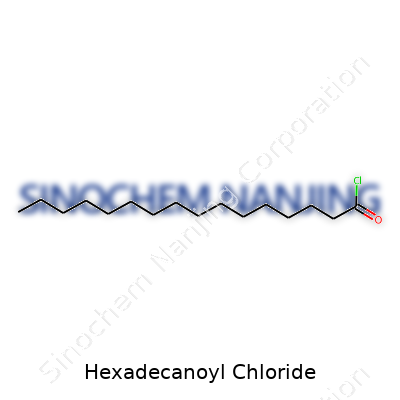
| Names | |
| Preferred IUPAC name | hexadecanoyl chloride |
| Other names |
Palmitoyl chloride Hexadecanoic acid chloride Palmitic acid chloride n-Hexadecanoyl chloride |
| Pronunciation | /ˌhɛks.əˌdiːˈkeɪ.nɔɪl ˈklɔː.raɪd/ |
| Identifiers | |
| CAS Number | 112-76-5 |
| Beilstein Reference | 1208720 |
| ChEBI | CHEBI:38900 |
| ChEMBL | CHEMBL15461 |
| ChemSpider | 51750 |
| DrugBank | DB14063 |
| ECHA InfoCard | 200-673-2 |
| EC Number | 204-677-5 |
| Gmelin Reference | 105455 |
| KEGG | C14473 |
| MeSH | D006522 |
| PubChem CID | 8165 |
| RTECS number | MO1575000 |
| UNII | F6761NVR4B |
| UN number | UN3265 |
| CompTox Dashboard (EPA) | urn:lsid:hub.compound:3759 |
| Properties | |
| Chemical formula | C16H31ClO |
| Molar mass | 305.93 g/mol |
| Appearance | Colorless to light yellow liquid |
| Odor | pungent |
| Density | 0.940 g/mL at 25 °C |
| Solubility in water | Reacts with water |
| log P | 6.73 |
| Vapor pressure | 0.05 mmHg (25 °C) |
| Acidity (pKa) | pKa -7.0 |
| Magnetic susceptibility (χ) | -6.1e-6 cm³/mol |
| Refractive index (nD) | n20/D 1.441 |
| Viscosity | 2.88 mPa·s (20°C) |
| Dipole moment | 2.39 D |
| Thermochemistry | |
| Std molar entropy (S⦵298) | 532.1 J·mol⁻¹·K⁻¹ |
| Std enthalpy of formation (ΔfH⦵298) | -377.2 kJ/mol |
| Std enthalpy of combustion (ΔcH⦵298) | -9912.8 kJ/mol |
| Hazards | |
| GHS labelling | GHS02, GHS05, GHS07 |
| Pictograms | GHS05, GHS07 |
| Signal word | Danger |
| Hazard statements | H314: Causes severe skin burns and eye damage. |
| Precautionary statements | P261, P264, P271, P280, P301+P330+P331, P303+P361+P353, P304+P340, P305+P351+P338, P310, P321, P363, P405, P501 |
| NFPA 704 (fire diamond) | 1-2-0-W |
| Flash point | 142 °F |
| Autoignition temperature | 185 °C |
| Lethal dose or concentration | LD₅₀ (oral, rat): 3,140 mg/kg |
| LD50 (median dose) | LD50 (median dose): Oral rat LD50 = 6700 mg/kg |
| NIOSH | GZ3980000 |
| PEL (Permissible) | PEL (Permissible exposure limit) for Hexadecanoyl Chloride: Not established |
| REL (Recommended) | 200-320 |
| Related compounds | |
| Related compounds |
Palmitic acid Palmitoyl-CoA Hexadecanol Hexadecanoic acid Myristoyl chloride |



