Glucamine: Unpacking Its Science, Use, and Future
Historical Development
Stories about chemical breakthroughs often start in small labs, sometimes with a problem as simple as removing excess glucose or creating a more selective binding agent. Glucamine’s origins reach back to the mid-20th century, driven by the need for gentler, more effective chelating agents and sugar analogs. Researchers pushed for better water-soluble compounds that could do their job in fields as different as pharmaceuticals and water treatment. In these early days, scientists had to balance efficacy with toxicity. Breakthroughs in organic synthesis made it easier to extract, improve, and modify compounds derived from glucose. Europe's focus on green chemistry fueled projects to adjust sugar-based compounds for safety and flexibility—a trend that continues, with patents held in Japan, the US, and the EU. These days, glucamine stands as one of the most recognized alkanolamines built from a glucose backbone.
Product Overview
Glucamine doesn’t attract headlines, but it finds work in pharmaceutical research, chromatography, and as a building block in specialty chemical syntheses. The compound stands out for its hydrophilic nature and rich supply of both amino and hydroxyl groups. Laboratories value it for tweaking pH, immobilizing biomolecules, and even forming the backbone of surfactants. Production outfits see it as an ingredient in select resin technologies and ultra-pure water applications. Its gentle yet persistent action makes it especially useful in settings where harsh chemicals would spoil delicate biomolecules.
Physical & Chemical Properties
Chemically, glucamine typically appears as a white to off-white crystalline powder, easy to dissolve in water. Its molecular formula is C6H13NO5, with a molar mass close to 179.17 g/mol. The melting point often hovers around 140–145 °C, with some variation based on sample purity and source. Glucamine’s solubility in water pushes upwards of 100 g/L at room temperature. Multiple hydroxyl groups and one primary amine make it a versatile player in hydrogen bonding, nucleophilic substitution, and mild base reactions. With a neutral to slightly basic pH in solution, it doesn't corrode most common container materials, which keeps logistical costs reasonable.
Technical Specifications & Labeling
Purity levels usually exceed 98%, with barrier packaging to guard against moisture. Modern labeling calls for the full name (1-Amino-1-deoxy-D-glucitol), assay values, water-content data (almost always below 1.5%), and country of origin. Batch records must tie back to GMP or ISO certification—not just for regulatory safety, but because pharmaceutical firms scrutinize every contaminant. Material safety data sheets highlight not only chemical characteristics but also guidance on storage, spill protocols, and downstream disposal. Ships from top suppliers often carry QR codes for digital traceability and related synthesis documents.
Preparation Method
Commercial-scale glucamine production relies on the reductive amination of glucose. Chemists treat D-glucose with ammonia in the presence of catalysts—often supported noble metals—under pressure. The process needs careful control of pH and temperature, or unwanted side products like imines and degraded sugars pile up. Labs and manufacturers alike have learned to fine-tune ammonia dosing and agitation speed; too slow, and yields lag, too fast, and one risks runaway heat. Facing the global push toward greener chemistry, firms have shifted to catalysts with lower environmental impact, and cleaner feedstocks sourced from certified non-GMO sugar producers.
Chemical Reactions & Modifications
Glucamine’s structure, rich with nitrogen and oxygen, invites chemical work. Simple acylation gives N-acyl glucamines, now indispensable as ingredients in non-ionic surfactants and cleaning products. O-alkylation opens the door to a wide range of ethers and esters, tailoring hydrophobicity and reactivity for specialty polymers or biological assays. Labs often modify the amino group, pairing it with various carboxylic acid derivatives to build stable conjugates. Research into click chemistry has enabled the attachment of fluorescent tags, allowing real-time tracking of biological processes or targeted delivery in pharmaceutical studies.
Synonyms & Product Names
The chemical marketplace offers glucamine under several guises. Synonyms include 1-deoxy-1-aminosorbitol, 1-amino-1-deoxy-D-glucitol, and D-glucamine. Some catalogues list it as N-glucosylamine. Product offerings appear under names like D-Glucamine, Glucam, and Sorbitolamine, depending on supplier. In every case, product datasheets line up molecular structure, analytical specs, and applications in water treatment, surfactants, and medical research.
Safety & Operational Standards
Handling standards for glucamine stay strict, even if the compound doesn’t carry major acute risks. Its dust can irritate eyes and mucous membranes. The chemical scores low in flammability, but warehouse managers keep stores cool and dry, since hydrolysis routes open with enough heat and moisture. Gloves and goggles come standard in any professional environment, and spill kits sit nearby to soak up leaks before the powder turns sticky and tracks beyond containment. Workers receive routine training on exposure protocols and first aid—a fact that aligns with modern regulatory requirements throughout North America, Europe, and Asia. Firefighters handling large spills rely on breathing apparatus, even though decomposition products don’t present severe hazards.
Application Area
Pharmaceutical labs prize glucamine for coupling reactions that attach drugs to carrier molecules. Its amino functionality brings a level of selectivity that helps ensure target accuracy in biopharmaceutical development. Chromatographers know it as a resin ligand, helping separate closely related compounds in complex mixtures—think blood metabolites or diagnostic markers. Industrial chemists rely on glucamine derivatives to bind metal ions, especially in trace analysis and wastewater treatment. Surfactant manufacturers blend N-alkyl glucamines into mild detergent formulas sold under natural or biodegradable labels. Medical researchers deploy it as a platform for preparing sugar-based vaccines, while nutrition scientists study its fate in metabolism. These diverse uses all come back to glucamine’s adaptability and knack for bonding with different substrates.
Research & Development
R&D teams around the world have kept glucamine in focus, not just for its chemical versatility, but because of rising interest in green chemistry and more sustainable manufacturing. Drug designers exploit its structure for targeted delivery vehicles, especially where classic synthetic carriers provoke immune responses. Analytical teams pursue new applications in separation science—the goal being greater sensitivity in detecting biomarkers for early disease diagnosis. Research in water purification now leans into modified glucamine resins to capture heavy metals, nitrate, and phosphate at trace levels. Startups in agricultural biotechnology are betting on glucamine’s ability to boost biostimulant formulations. Early work even explores biosensor platforms built from glucamine-linked oligonucleotides.
Toxicity Research
Scientists have pressed for robust toxicity data as glucamine climbed from lab curiosity to multi-use chemical. Acute oral and dermal toxicity registers low for most animal models, and no mutagenic signals have turned up in standard in vitro assays. Long-term exposure studies are limited, but the compound breaks down into simple sugars, which reduces concern about bioaccumulation. Occupational guidelines set conservative airborne limits: not because acute symptoms are likely, but to head off respiratory or dermal irritation. Regulatory checking of downstream by-products ensures that even large-scale applications, such as municipal water treatment or food-contact packaging, stay within strict safety margins. Emerging research focuses on chronic exposure at very low doses, with the intent to fully clear glucamine for more pharmaceutical and dietary supplement work.
Future Prospects
Looking ahead, glucamine stands ready for real growth in application fields where safety, renewability, and smart chemical design all matter. Synthetic biology teams may harness glucose derivatives like this one to modify proteins for advanced therapies. Environmental scientists note glucamine’s potential in reusable, selective adsorbents aimed at cleaning up persistent industrial pollutants. Auto and electronics manufacturers will likely find new uses for glucamine-modified polymers, driven by the need for lighter, high-performance, and recyclable materials. Technical progress in bioprocessing, gene therapy, and clean-label consumer goods could provide demand spikes well beyond today’s established niche markets. The compound’s track record as a well-studied, adaptable platform sits alongside rising expectations for cleaner, sustainable chemistry that doesn’t compromise on performance.
What is Glucamine used for?
Understanding Glucamine in Real-Life Applications
Glucamine stands out for its flexibility in both industries and labs. Pharmaceutical workers quickly recognize this compound as an essential building block. By mixing up how medicines react and bind together, glucamine helps bring together active ingredients that won’t otherwise play nice. Chemists rely on it to tweak solubility or to create less harmful drug delivery systems, boosting the patient experience.
The Science Behind Glucamine
This compound grows out of glucose, so it inherits natural roots but with a synthetic twist. Its unique structure, with attached amine groups, lets it take part in reactions that pure sugars can’t offer. Drug researchers use it because it can build more stable links, producing medicine that works longer or melts at just the right time in your system. Outside the pill factory, glucamine goes into everyday cleaning products. Its gentle touch means detergents and soaps with glucamine break down gunk without damaging hands or surfaces. That makes it a favorite for everything from dish liquids to specialized lab gear cleaners. Businesses wanting to shrink their environmental impact often pick compounds like this over harsher chemical cousins.
Safety and Sustainability Worries
Skeptics have every right to question safety, especially when a chemical joins your personal products or daily meds. Early research and years of observation rank glucamine low on the danger list. Still, it’s smart to keep watch. If manufacturers push glucamine into bigger and bigger production, environmental scientists should check for new contamination risks. Manufacturing uses solvents and sometimes clunky processes that can sneak pollution into factories, rivers, or neighborhoods. By keeping an eye on waste handling and process improvements, companies help make sure these benefits don’t come with a hidden cost.
Challenges That Show Up Along the Way
In my career, I’ve seen manufacturing projects stall over simple sourcing shifts. Glucamine’s glucose origin has an upside—the supply chain can lean on renewable crops. But anytime farm output faces a drought or price spike, costs ripple through the entire chain. That same agricultural link opens up bigger conversations: could communities growing these crops benefit in a meaningful way, or does most of the profit go offshore? Companies stand at a crossroads. Some will double down on local partnerships, others take shortcuts that save money but shortchange sustainability and workers’ rights.
Where Glucamine Could Head Next
The next few years could see glucamine blend into more industries. Researchers in drug design try it for new prodrugs. Engineers look at it for making materials with better properties, like plastics or coatings that break down quickly in nature. Health fans want products that clean well without poisoning water or skin—glucamine fits that wish list. Public pressure for greener products works as a real force here. By pushing companies to publish full ingredient lists and commit to smart sourcing, shoppers have some control over what ends up on shelves.
Glucamine’s journey brings together chemistry, business, farming, and everyday health. Each step adds a voice, from researchers in clean labs right up to families picking better products in stores. That mix of human experience and hard science turns a simple compound into something worth everyone’s attention.
What are the side effects of Glucamine?
Understanding What Happens with Glucamine
People use Glucamine for its potential benefits in managing blood sugar. It gets hailed in supplement discussions, especially among those searching for options to help with metabolic concerns. With all the excitement, it's important to have a grounded talk about what taking Glucamine can really feel like day to day.
How Side Effects Appear in Real Life
Upset stomach sits at the top of the list of complaints from folks using Glucamine. Nausea, sometimes waved off as just a minor inconvenience, can actually throw a wrench into meal routines and daily activities. Loose stools or diarrhea often come up in stories people share online. This can sneak up, especially if someone starts with a higher dose or has a sensitive gut. Bloating and gas, not dramatic on paper, still chip away at comfort and social confidence.
Jitters and a restless feeling sometimes make their way into the mix, leaving people tossing and turning or staring wide-eyed at the ceiling. This doesn’t hit everyone, but once it does, sleep and mood get thrown off. Then there’s the issue of headaches or dizziness. For some, these side effects resemble the feeling of skipping lunch — foggy, tired, and a bit disconnected.
Paying Attention to Serious Reactions
Rare, but still possible, allergic reactions worry both patients and doctors. Hives, swelling of the lips or face, and trouble breathing make it clear this supplement isn’t for everyone. The reality of severe side effects needs reminding, especially with something marketed as natural or plant-based, because that’s not the same as safe for all.
Blood sugar swings create another layer of concern. Glucamine gets its praise for lowering blood sugar, but that cut can turn sharp. Getting too low comes with shakiness, sweating, and confusion — symptoms that can become dangerous, especially for those already on other diabetes medications. In a few strong cases, people needed to grab fast carbs and ride out a wave of hypoglycemia they didn’t see coming.
What Makes These Side Effects Worse?
Mixing Glucamine with other medications adds risk. Not every doctor knows every supplement, but skipping this step can cause surprises. I’ve seen people at the pharmacy counter unaware that their headache pill or blood pressure tablet changes the way Glucamine behaves in their body. This can mean more intense effects or reactions they didn’t bargain for.
Personal stories drive this home better than any study. A friend tried Glucamine for a few weeks thinking it could replace her usual prescription. She wound up back at her doctor’s office feeling worse — stomach rumbling, anxious, and her blood sugar numbers swinging wildly. Coming off what seemed like a gentle supplement took coordination and patience.
Practical Ideas for Staying Safe
Talking openly with a doctor or pharmacist stands out as the most reliable way to dodge the worst side effects. People should read labels, start slow, and keep notes on how they feel each day. Spacing out new supplements, rather than stacking them, gives the body time to react in a way that’s easier to track.
Quality and transparency matter. Checking brands for third-party testing and looking up ingredient lists can lower the odds of contaminants or big inconsistencies, which pop up in the supplement world more often than people want to believe.
Taking charge of health decisions moves best with honest conversations and watching for changes both small and big. Glucamine, despite all the praise, still deserves respect and a look at the fine print.
How should I take Glucamine?
The Basics of Glucamine Use
There’s no shortage of advice about new supplements or medications, but folks usually want clear answers. Glucamine has sparked plenty of questions among people looking for reliable support for their blood sugar. Brands pitch promises, but your daily routine matters even more than flashy claims. I’ve seen people get overwhelmed by dosing instructions. For anyone feeling confused, here’s a straightforward guide based on practical experience and trusted health recommendations.
Follow What Your Healthcare Provider Says
Glucamine’s dose varies from one person to the next. Doctors consider your age, health history, what you eat, and the other pills in your cabinet. Over the years, I’ve learned that self-experimenting rarely ends well. Taking too much or skipping doses tends to backfire. At the clinic, we always tell patients to use the amount written on their prescription, not what a friend posts on Facebook. If you can’t read the label, call your doctor or pharmacist instead of guessing.
Timing and Consistency Matter More Than You’d Think
With many blood sugar helpers, consistency beats perfection. People sometimes take Glucamine with food, others take it before meals, depending on their plan. Some folks take it in the morning as part of their breakfast routine, while others prefer evenings if they feel stomach discomfort. I’ve spotted better outcomes when people pick a regular time—habits stick, and fewer doses get missed. Setting a phone reminder or putting your bottle near your toothbrush can keep you on track.
Avoid Double-Dosing and Mixing With Alcohol
It’s easy to forget a pill on a busy day. If you skip a dose, don’t double up later. Extra pills won’t make up for what you missed, and can push blood sugar dangerously low. Mixing Glucamine with alcohol throws off your body’s reaction. I’ve seen even moderate drinkers experience side effects that wouldn’t happen otherwise. Sticking to water or non-alcoholic drinks with your dose keeps things safer.
Keep Track of Side Effects
Any new supplement brings a chance of side effects. I’ve heard from patients who notice headaches, nausea, or strange feelings in their stomach. If something feels off, write it down and mention it at your next appointment. The U.S. Food and Drug Administration (FDA) lists guidance for tracking symptoms. Quick notes in your phone or on your calendar can help notice patterns. Your doctor counts on real descriptions to adjust your care plan or swap out medications if needed.
Build Healthy Habits alongside Glucamine
Medication offers more support when you also focus on what’s on your plate and how you move. Walking after meals, cutting back on sugar-sweetened drinks, and loading up veggies at dinner all help. Studies cited by the American Diabetes Association underline shorter walks can improve blood sugar just as much as medication changes. Sharing meals at home instead of eating out every night supports stable blood sugar, too.
Communicate Openly With Your Healthcare Team
No supplement or medication can do all the heavy lifting. I’ve watched honest conversations between patients and doctors reveal food triggers, hidden medication side effects, and better solutions. If Glucamine isn’t working out, it’s better to ask for new ideas than quietly struggle. Pharmacists, too, are an underused resource for checking supplement interactions. Real health progress grows from clear, real-world communication and steady routines.
Is Glucamine safe for long-term use?
Understanding the Real-World Concerns
Questions about whether new chemicals or compounds like Glucamine can be trusted over many years have only gotten louder. Having spent plenty of time poring over safety data, talking with researchers, and following regulatory debates, I know how much skepticism the average person brings to a name they don’t recognize or a chemical that pops up on a product label. People deserve honest answers and not just technical safety claims copied from brochures.
What Makes Glucamine Worth Discussing?
Glucamine shows up in a mix of products, from pharmaceuticals to cosmetics. Its chemical relatives play important roles as stabilizers or help improve how products mix together. Some drug manufacturers rely on Glucamine because it can bond well with certain active ingredients, making medicines more effective or easier to store. For a long time, scientists considered Glucamine as low risk—at least for short-term use.
Looking at Long-Term Data
Here’s where things get tricky. Rigorous, long-term human studies on Glucamine remain scarce. Animal studies offer clues: most have not shown major toxicity from typical doses. The FDA and European agencies approve certain Glucamine uses under tight rules. Still, not every approval means absolute safety for every person, over decades.
People can’t simply rely on regulatory stamps of approval or slick company websites. Over time, some chemicals that seemed harmless started showing health effects that took years to surface. One lesson learned from past pharmaceutical scandals: even effective compounds, when used daily and without careful monitoring, sometimes cause problems later.
Absorption and Metabolism
Researchers know that Glucamine gets processed by the body’s liver and kidneys. Lab results suggest the average body clears it quickly. But real-life health depends on more than lab averages. A person with liver or kidney issues might process Glucamine less efficiently, leading to higher concentrations over time. In those cases, a typical dose could become risky. Someone taking other drugs that rely on these organs could see unexpected effects, since Glucamine may interfere with other metabolic pathways or compete for the same enzymes.
What Manufacturers and Doctors Can Do
Manufacturers who use Glucamine should be proactive, not just wait for rare side-effect reports. I’d like to see more open data on how Glucamine interacts with other drugs, how fast it leaves different bodies, and whether genetic differences alter its safety profile. Companies also owe it to the public to sponsor independent, multi-year clinical tracking—no one benefits if risks only come to light by accident.
Doctors prescribing Glucamine-containing drugs ought to check in with patients on a regular basis, especially people with chronic illnesses or other prescriptions. I’ve spoken with pharmacists who often catch potential drug-drug interactions simply because they know their clients well. That kind of personal attention could make a big difference.
Taking Charge of Personal Health
Anyone who uses a Glucamine-based product regularly should talk honestly with their doctor or pharmacist, especially if odd symptoms pop up or if any new medications enter the picture. Reading up on the compound’s latest studies, not just the marketing materials, might help spot early warning signs. If something feels off, reporting it makes a difference. That’s how real-world side effects often come to light.
Real safety comes from open conversation, careful science, and listening to ordinary people who notice when something changes. The chemical industry and doctors both bear responsibility for keeping the public in the loop—especially when long-term health is at stake.
Can Glucamine be taken with other medications?
Deciding on Glucamine: Looking Beyond the Label
Glucamine grabs attention among those searching for new ways to manage blood sugar. Plenty of folks look at supplements like this as part of a larger wellness plan. Prescription drugs, over-the-counter pills, multivitamins—all line up in cabinets, so the obvious question rolls in: Is it safe to mix Glucamine with other medications? This concern deserves honest talk rooted in experience and trusted knowledge.
Mixing Meds: The Real-World Puzzle
Combining supplements and medications can land people in tricky territory. While doctors and pharmacists keep warning about possible drug interactions, real-life stories put a face to these risks. I remember a close friend stacking several natural supplements with his regular medication only to wake up feeling dizzy and weak. A quick clinic visit revealed an interaction that neither the supplement bottle nor the medication pamphlet spelled out.
Most medications run through the liver’s filtering system. Glucamine, like many natural supplements, finds its way to the same pathways. This means it can boost or reduce the effects of prescriptions. Blood-thinner users face a special warning—stacking up unknowns can tip the balance, making bruises a common sight or thinning blood more than anyone wants.
What the Science Says
Researchers track plenty of common supplement-drug combos. For example, St. John’s Wort dilutes the power of antidepressants. Grapefruit juice blocks the body from breaking down certain blood pressure medicines. With glucamine, early studies highlight possible changes in how the liver processes drugs for diabetes and heart problems.
Glucamine sometimes gets grouped with amino sugars like glucosamine. Glucosamine, often used for joint pain, has mixed results in scientific trials. Some people see a dip in cholesterol or blood sugar, but others experience no clear benefit. The bigger worry is the possible bump in blood-thinning effects or impact on diabetic meds. It is easy to think natural pills live in a separate world, but bodies do not see the difference—everything you swallow goes down the same road through your system.
Best Steps Forward
Experience says never play guessing games with health. Bring all bottles, prescription and supplement alike, to any doctor’s visit. Let the nurse or doctor see the lineup. If you find yourself in the vitamin aisle reading promises on the Glucamine label, remember these products often skip strict testing. Federal regulations for supplements don’t carry the same weight as those for prescription drugs. That leaves the buyer with most of the homework.
Pharmacists, often the unsung heroes behind the counter, see interaction warnings pop up on their screens all day. Make use of that expertise. If new symptoms appear after adding Glucamine—or any supplement—to your routine, report them right away. Caught early, small issues stay small. Waiting can turn small missteps into big problems.
Working Together for Safe Choices
Trust builds with open conversations. Ask every health provider about the impact of mixing Glucamine with your established medicine list. Look for science-backed information from groups like the NIH Office of Dietary Supplements. Supplements can help or hurt, depending on timing, dose, and personal biology. By weighing these details before adding anything new, you can chart a safer path through the often-confusing supplement landscape.
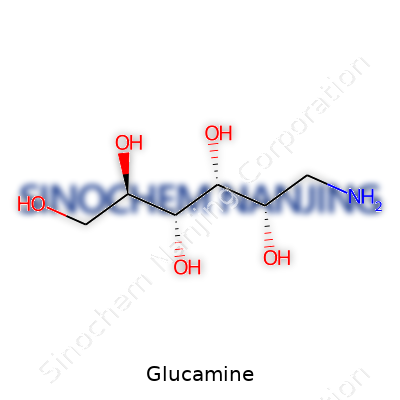
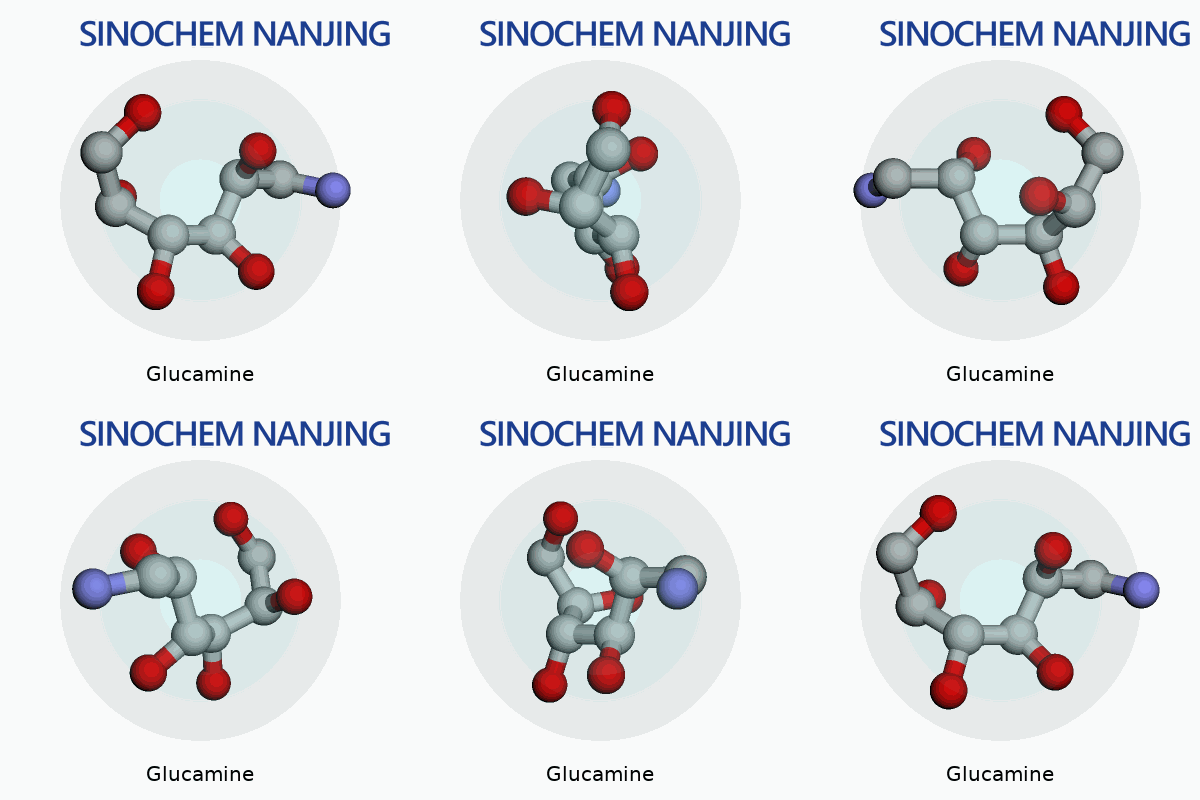
| Names | |
| Preferred IUPAC name | 1-Amino-1-deoxy-D-glucitol |
| Other names |
N-Methyl-D-glucamine Megludex Methylglucamine |
| Pronunciation | /ˈɡluː.kə.miːn/ |
| Identifiers | |
| CAS Number | 133-87-1 |
| Beilstein Reference | 3903922 |
| ChEBI | CHEBI:5417 |
| ChEMBL | CHEMBL1201080 |
| ChemSpider | 10704 |
| DrugBank | DB01324 |
| ECHA InfoCard | 11a305d0-cf49-460f-987a-132271ab1b1e |
| EC Number | 202-869-7 |
| Gmelin Reference | 85748 |
| KEGG | C00792 |
| MeSH | D-glucamine |
| PubChem CID | 75910 |
| RTECS number | MB7700000 |
| UNII | 1ZKQ20V5F1 |
| UN number | 2811 |
| CompTox Dashboard (EPA) | DTXSID8036023 |
| Properties | |
| Chemical formula | C6H15NO5 |
| Molar mass | 195.23 g/mol |
| Appearance | White crystalline powder |
| Odor | Odorless |
| Density | 1.25 g/cm³ |
| Solubility in water | Soluble |
| log P | -3.3 |
| Acidity (pKa) | 13.5 |
| Basicity (pKb) | 4.2 |
| Magnetic susceptibility (χ) | -7.8×10⁻⁶ |
| Refractive index (nD) | 1.485 |
| Viscosity | 3700-4500 cps |
| Dipole moment | 6.52 D |
| Thermochemistry | |
| Std molar entropy (S⦵298) | 160.5 J·mol⁻¹·K⁻¹ |
| Std enthalpy of formation (ΔfH⦵298) | -971.2 kJ/mol |
| Std enthalpy of combustion (ΔcH⦵298) | -3683 kJ/mol |
| Pharmacology | |
| ATC code | A11GA01 |
| Hazards | |
| GHS labelling | GHS07, GHS08, Warning, H317, H319, H335 |
| Pictograms | Storage temperature: 15°C to 25°C, Keep away from sunlight, Keep dry |
| Signal word | Warning |
| Hazard statements | Hazard statements: Causes serious eye irritation. |
| Precautionary statements | Keep out of reach of children. If medical advice is needed, have product container or label at hand. Read label before use. |
| NFPA 704 (fire diamond) | 1-0-0 |
| Flash point | Above 100°C |
| Autoignition temperature | 450°C |
| LD50 (median dose) | LD50 (oral, rat) 8,070 mg/kg |
| PEL (Permissible) | 5 mg/m³ |
| REL (Recommended) | 0.05-0.2% |
| Related compounds | |
| Related compounds |
Glucosamine N-Methylglucamine Sorbitol |



