Trichlorofluoromethane: A Chemical With a Complicated Legacy and Future
Looking Back on Its Rise
Trichlorofluoromethane, better known to a generation as CFC-11 or by names like Freon-11 and R-11, rose to fame across the middle of the 20th century. If you ever spent time in a building cooled by air conditioning before the 1990s or checked the back of a refrigerator from the previous era, you probably brushed up against it without ever realizing. Chemists first whipped it up in the 1930s, a breakthrough that changed the game for refrigeration technology, blowing past earlier approaches that relied on toxic or flammable refrigerants. For decades, CFC-11 made life more comfortable in homes, cars, supermarkets, and factories. By the time I learned about environmental issues in school, the massive global use of CFCs like trichlorofluoromethane had already left a mark on the ozone layer hanging above all of us.
Demystifying Its Core Features
CFC-11 comes with a set of features that gave it mass appeal for engineers and manufacturers. It exists as a colorless liquid or gas with a slightly sweet, ether-like smell that you might notice in industrial settings. It boils at just under 24 degrees Celsius, which means it easily vaporizes near room temperature. Thanks to its chemical stability, it resists breaking down, even under conditions that destroy lesser compounds. This stability is exactly what made it powerful both as a refrigerant and as a blowing agent for foam insulation. The technical specs, including its vapor pressure and density, meant it could be stored, shipped, and pumped with relative ease. Labels from the heyday of its production usually included information on cylinder pressure, dosages, and storage precautions—markings that remind me of how chemistry pervades practical life well beyond the lab.
Inside the Factory: How CFC-11 Was Made
The recipe for trichlorofluoromethane isn’t something to try in your garage, but its chemistry tells a story about industrial progress. Large-scale production typically involved reacting carbon tetrachloride with hydrogen fluoride in the presence of an antimony pentachloride catalyst. This process tapped into the strengths of established chemical manufacturing, and companies churned out massive quantities through the mid-late 20th century. Adjustments to temperature, pressure, and reactant ratios allowed plants to fine-tune yields, and the equipment required careful attention to leakage, corrosion, and emissions.
Chemical Reactions and Evolving Use Cases
Beyond its basic production, trichlorofluoromethane can undergo further reactions with other halogens to produce related compounds—or break down in ways that release free radicals under high-energy conditions. Researchers leaned into its reactivity when designing new refrigerants or when converting waste CFC streams to less harmful substances. CFC-11’s chemistry ended up shaping the whole family tree of halomethanes, and variations on these reactions gave rise to CFC-12, HCFC-22, and many other industrial substances. The challenge became not just how to make these chemicals, but how to use them responsibly.
Name Games and Labeling Through the Decades
Common names for this compound—Freon-11, R-11, or just the shorthand CFC-11—became woven into industry parlance. These terms still crop up in technical manuals or air conditioning instruction sheets left over from old buildings. The Synonyms page for trichlorofluoromethane reads almost like a directory of 20th-century science: F-11, UN1974, or Halon 1301 were just some of the identifiers, reflecting the shifting interests of industrial users, regulators, and researchers. Early product labels didn’t warn much of environmental issues, which only started to surface publicly in the late ‘70s and ‘80s as scientific awareness grew.
Cracking the Safety Code
Nobody who’s worked around chemicals thinks lightly about safety, and CFC-11’s own hazards sparked concern well before its environmental impacts reached the news. Breathing high concentrations could cause headaches, dizziness, or cardiac arrhythmias. The gas quickly displaced air in enclosed spaces, making asphyxiation possible if ventilation faltered. Experienced handlers respected its ability to produce frostbite on contact with skin and insisted on proper gloves and protective wear long before regulations demanded it. As research grew, operational standards evolved, sometimes prompted by avoidable accidents or workplace neglect.
From Everyday Appliances to Global Trouble
The primary uses for CFC-11 lined up with trends in comfort and building design after World War II. It kept food fresh in refrigerators that hummed day and night, kept factories and homes cool, and foamed up the insulation lining office walls and supermarket freezers. Architects and engineers used it to construct lighter, more energy-efficient buildings. Its nonflammability made it safer than the ammonia and sulfur dioxide it replaced. Yet the very quality that made CFC-11 useful—its reluctance to break down—paved the way for its notorious side effect: destruction of the ozone layer. By the late 1980s, photographs and atmospheric readings from Antarctica showing the “ozone hole” became iconic. The Montreal Protocol, signed in 1987, phased out production of CFC-11 in developed countries, and substitutes like HCFC-141b or HFC-245fa stepped in where possible. Old appliances and insulation became “banks” for lingering emissions that persist even today.
Progress and Roadblocks in Research
By the time legislation caught up, chemists and environmental scientists found themselves patching up past oversights. Researchers still track legacy emissions and hunt for leaks in old buildings using gas detectors and remote sensing satellites. Studies on chemical breakdown and atmospheric transport algorithms filled journals. Some groups experiment with safe destruction or conversion of stockpiled CFC-11, exploring catalytic processes, high-temperature incineration, or plasma processes to split up molecules before they drift into the upper atmosphere. For years, it was common to think that phasing out a single chemical would fix the problem, but the persistence of hidden sources frustrates regulators and environmentalists alike. Continued monitoring, strict restrictions on sales, and the search for greener substitutes break new ground every year. In my own experience talking with HVAC technicians and facility managers, many still run into systems from the ‘70s and ‘80s, a reminder that chemicals rarely vanish quietly.
Getting Real About Toxicity
Toxicological research on trichlorofluoromethane shows that, on its face, it posed less acute threat than many solvents and refrigerants it replaced. Acute overexposure could depress the nervous system, cause heart rhythm problems, or trigger sudden loss of consciousness. Scientists worried less about direct poisoning and focused more on long-term ecosystem harm, which shifted the whole debate from toxicology labs to atmospheric observatories. The haunting lesson here isn’t that this one chemical is uniquely evil, but that environmental impact often trails long after the immediate hazards are reckoned with. Decades after the initial phaseout, the search for replacements sharpens awareness that every solution should look ahead, not just at short-term convenience but at the long game for both health and environmental sustainability.
What Next?
Looking ahead, the legacy of CFC-11 lives on in policy, research, and industrial practice. The nuances of supply chain monitoring, equipment retrofitting, and emissions detection shape the work of everyone from environmental agencies to basement repair shops. Future prospects for handling leftover CFC-11 call for creative recycling, destruction technologies that capture halogen gases, and investment in materials that need no ozone-destroying chemicals from the start. The drive for low-impact refrigerants—like natural hydrocarbons or even new-found blends—echoes through universities, startups, and government regulations. I see hope in how young chemists view historical missteps not as failures but as signposts pointing toward better stewardship of our chemical inventions. CFC-11’s story isn’t over yet, but it pushes us to keep learning, adapting, and acting before the next invisible threat reaches the skies.
What is Trichlorofluoromethane used for?
The Uses of Trichlorofluoromethane
Trichlorofluoromethane, often known by its old trade name CFC-11, once played a big role as a refrigerant and foam-blowing agent. For decades, this chemical cooled our air conditioners, kept refrigerators running, and gave certain plastics their structure and light weight. It showed up in spray cans as a propellant and helped technicians clean electronic components.
Manufacturers favored it for its stability and non-flammability. In workshops and factories, CFC-11 made jobs safer and processes more reliable. It did not burn or explode easily. That gave folks peace of mind, especially in small spaces or older buildings where fires could wreak havoc.
In plastic and foam furniture, trichlorofluoromethane left its mark. The closed-cell foams that keep camping mats firm or couches soft once depended on this chemical. Construction companies used it to insulate buildings, figuring it slowed heat transfer and kept energy bills lower.
Environmental Risks and Changing Attitudes
Real trouble started cropping up after scientists linked chlorine-based chemicals like CFC-11 to thinning in the ozone layer. The ozone layer protects living things from the sun’s ultraviolet rays, and losing that shield means higher risks for sunburn, cataracts, and crop damage. Studies in the 1970s and 1980s—many spearheaded by chemists like Mario Molina and F. Sherwood Rowland—offered a clear answer: CFCs weren’t just floating away, they drifted high into the stratosphere and broke down ozone molecules. That changed how people thought about convenience versus consequence.
The Montreal Protocol, signed back in 1987, marked a turning point. By the mid-1990s, countries started phasing out trichlorofluoromethane. Refrigerant makers needed to find alternatives. Homeowners swapped out old appliances, government programs offered buybacks, and industry took on the cost of adapting to new fluids that did the same job with less harm.
What Still Remains
Despite efforts to move toward better substitutes, traces of trichlorofluoromethane still pop up. Some companies, especially in countries with gaps in enforcement or economic limitations, keep using it. Old foam insulation and appliances may still leak small amounts years after manufacturing stopped. That tells me policy only works when paired with verification, education, and accessible alternatives.
The latest research—based on atmospheric measurements—suggests that global emissions are falling, though not as quickly as hoped. There’s a kind of global cooperation happening, but accountability varies. Satellite data and air-sampling fieldwork stand out as tools that guide regulation. As a consumer, I’ve learned to check product material lists, ask about the refrigerant in new appliances, and recycle old ones through programs that capture these chemicals.
Building Toward Solutions
Companies now lean on hydrofluorocarbons (HFCs), which don’t break down ozone, and newer blends with lower greenhouse impacts. Research into natural refrigerants opens another path. Every update to building codes, every consumer who recycles an old fridge, and every policy that funds cleanup programs pushes progress forward. Keeping up this momentum means listening to scientific guidance, adapting regulations, and making alternatives available at every level—government, business, and household.
Trichlorofluoromethane shaped industry for generations. Its legacy teaches the value of balancing performance with long-term environmental responsibility. Change takes work, open eyes, and a willingness to keep learning.
Is Trichlorofluoromethane harmful to humans?
Understanding What We're Dealing With
Trichlorofluoromethane stands out as a compound folks recognize from its role in air conditioners and old refrigerators. The chemical goes by the name CFC-11 or R-11 and made its way into building insulation foam for decades. Companies marketed it for efficiency and convenience, but questions keep surfacing about its impact on health. This isn’t just another worrying headline—there’s a reason health authorities keep their eyes on this stuff.
Health Effects Backed by Real Evidence
You don’t need a background in chemistry to see why doctors and environmental scientists stay cautious around Trichlorofluoromethane. Even brief exposure to high levels of this compound brings a lot of risk. If you catch a whiff of it in a confined space, you might notice dizziness, headaches, and even nausea. Folks who work around CFCs share stories about feeling off or lightheaded after a few hours on the job. The Centers for Disease Control and the National Institute for Occupational Safety and Health put out clear warnings over the years. According to their research, being around this chemical affects the nervous system and can mess with how your heart works if you inhale enough of it.
Most exposures come at work. Old refrigerators leak, or insulation gets disturbed during renovations. Say you’re a contractor, and you take apart vintage air conditioners for scrap. Without proper protection, that cold blast from a leaky system contains R-11, and that enters your lungs faster than you might guess. Long-term contact with CFCs also raises the chance of liver and kidney issues—organs forced to filter out these synthetic invaders.
Why It's Still an Issue Today
Global bans put the brakes on new production of R-11 decades ago. The Montreal Protocol—probably the world’s most successful environmental treaty—phased out most CFCs before the end of the 20th century. Still, these chemicals stick around in old products and buildings. In some developing countries, black-market supply chains move old refrigerants. People searching for cheap fixes sometimes end up handling cans or foams laced with trichlorofluoromethane. Old stockpiles create fresh risks for a new generation.
A lot of companies and construction crews don’t realize how much of this stuff remains hidden in attic insulation or equipment from the 1970s and 80s. Homeowners get tempted to upgrade or demolish without calling specialized removal teams. It’s easy to create risks for yourself and the neighborhood by releasing invisible toxins into the air.
Practical Steps Forward
It’s not all doom and gloom. Steps exist to make handling these old chemicals safer. Education helps—many organizations now offer training for anyone working around vintage insulation or appliances. Local governments can do more to spread the word. I’ve seen solid outreach efforts in some cities already, but rural communities would benefit from more resources. Compliance and disposal laws need teeth. Safe removal crews need real backing, not just a list of regulations with no support.
Safer alternatives now fill the market for refrigerants and foam. Old systems don’t have to last forever if there’s motivation to upgrade. Change takes persistence and money, but letting these chemicals hang around only creates problems for workers, neighbors, and the environment. Everyone wins when dangers like Trichlorofluoromethane shrink from daily life and industry shifts to greener solutions.
What are the storage and handling requirements for Trichlorofluoromethane?
Understanding the Chemical
Trichlorofluoromethane, known in the business as CFC-11 or R-11, served for years as a refrigerant and cleaning solvent. Its popularity fell off after its effects on the ozone layer became clear, but it still turns up in older equipment and certain industries. It’s not a chemical to take lightly. Mishandling can set off environmental damage, health risks, and hefty penalties for breaking regulations.
Keeping It Contained
This chemical comes as a colorless liquid or gas with a faint, sweet smell. Exposure to air or moisture doesn’t cause immediate reaction, but that doesn’t excuse sloppy habits. Good storage starts with sturdy, corrosion-resistant containers. Steel drums with tight seals usually work best, since leaks or drips release harmful vapors. Anyone who fails to secure a drum risks dangerous fumes entering a work space, especially without good ventilation.
Location Makes the Difference
Placing these drums anywhere isn’t an option. The right storage area stays cool, dry, and shaded. Temperatures above 50°C build unwanted pressure inside the container, sometimes leading to ruptures. Keeping everything away from sunlight and heat sources—think radiators, boilers, or direct lighting—goes a long way in managing the risk. Shelves need to support the weight because spilled trichlorofluoromethane rapidly turns into a vapor that’s heavier than air. That vapor settles low and sticks around, which can cause breathing trouble and nerve effects for those stuck in a closed room. No one wants to work under those conditions.
Stacking and Spacing
Organizing containers demands space and structure. Each drum deserves enough space around it so workers can move without knocking anything over. Taller stacks tempt by saving floor space, but they make spills harder to control. Storing containers low, never more than two high, means fewer problems if something shifts unexpectedly. Every workplace benefits from clear labels, so everyone instantly knows what’s inside each drum and how to react if trouble starts.
Protecting People
Good storage only solves half the problem. Handling the chemical requires personal protective equipment—goggles, gloves rated for chemical resistance, and sometimes respirators in case of leaks. Spills can burn skin or eyes, while inhalation triggers headaches or even drowsiness. Only trained personnel should transfer trichlorofluoromethane between containers or from storage to equipment. Spills need immediate cleanup using approved absorbent materials, collected in separate drums for disposal, since leaving containers open or wiping with rags means higher risk for everyone nearby.
Disposing Responsibly
Used or leftover trichlorofluoromethane counts as hazardous waste. Dumping it down drains or into the air means breaking environmental laws. Certified hazardous waste handlers know how to break down, recycle, or destroy these compounds without destroying ozone. Anyone unsure about local rules can contact environmental agencies for updated guidelines. The world’s still cleaning up after decades of careless disposal, so each step of proper handling saves a little more of the air we all share.
Staying Informed
Keeping up with safety data, product changes, and environmental laws means fewer accidents and less liability. Workplaces with trichlorofluoromethane on site should keep safety resources posted, run refresher training, and use spill kits checked for expiry. Simple habits like these keep workers safe and help protect the environment. A little preparation always beats dealing with a major chemical release in the long run.
Is Trichlorofluoromethane banned or regulated?
The Backstory of Trichlorofluoromethane
Most people recognize trichlorofluoromethane—often called CFC-11 or R-11—by its role in air conditioners, refrigerators, and building insulation. It doesn’t pop up in everyday talk, but back in the 1970s and 1980s, this chemical quietly shaped the modern world. Engineers, manufacturers, and homeowners depended on it for its cooling qualities and low flammability. What most of us didn’t realize: each canister released to the atmosphere chipped away at the planet’s ozone layer, the atmospheric shield that keeps ultraviolet radiation in check.
Why Countries Stepped In
Scientists sounded the alarm about ozone holes after field researchers in Antarctica spotted massive thinning. Soon, hard data trickled in—higher rates of skin cancer and eye diseases, crop damage, and even harm to marine life, all tied to CFCs like trichlorofluoromethane. Health records from Australia and New Zealand tracked rising melanoma cases, directly tied to the growing ozone gap above their countries. These aren’t distant environmental puzzles—these are issues families face at the doctor’s office.
In 1987, world leaders signed the Montreal Protocol. This international treaty still stands as one of the strongest examples of governments, scientists, and industries coming together to solve a shared crisis. The Protocol committed hundreds of countries to phase out ozone-eating chemicals, naming trichlorofluoromethane among the worst offenders. Through amendments over the years, the net closed tighter on CFC-11, making production and import illegal in almost every country by the mid-1990s.
What the Ban Looks Like on the Ground
In the United States, CFC-11 has been banned under the Clean Air Act for nearly three decades. No company can legally produce or import it. Strict penalties back these rules—manufacturers caught cheating can face criminal and civil charges. R-11 has also disappeared from store shelves in the European Union, Japan, Canada, and much of the world. Customs and environmental agencies hold the line at the border.
Despite the legal landscape, things don’t always work perfectly. In 2018, scientists and satellite trackers noticed a troubling spike in atmospheric CFC-11. Those numbers led investigators to factories in East Asia, where some manufacturers had quietly restarted production. Enforcement ramped up again. This shows how easy it can be for harmful chemicals to sneak back if watchfulness slips.
Hard Truths and How to Move Forward
Strong rules mean nothing without hands-on enforcement. Agencies need steady funding: boots on the ground, monitors in the air, and cross-border teamwork, since one small leak in one corner of the world can eventually impact everyone. Better technology is part of the solution. New refrigerants and building materials don’t punch holes in the ozone, but old equipment is slow to disappear. My experience around older buildings proves this—some systems built before the ban still harbor hidden CFC-11. Safe disposal and retrofitting programs make a real difference, turning potential risks into teachable moments for both workers and communities.
People assume big problems get solved and move on. Ozone isn’t an abstract concept—it’s the difference between safe time in the sun and new health scares. The Montreal Protocol proved that science, policy, and everyday choices add up. Trichlorofluoromethane may be banned nearly everywhere, but its story reminds us: constant vigilance keeps hard-won progress from slipping away.
What are the environmental impacts of Trichlorofluoromethane?
What Trichlorofluoromethane Does to Our Atmosphere
I remember seeing those old cans of refrigerant sitting on the shelf in my neighbor’s garage. Trichlorofluoromethane, often called CFC-11, helped keep fridges cool and foam insulation light. No one thought much about what leaked out of those cans or drifted away from factories. Scientists later figured out these leaks had much bigger consequences than anyone guessed.
Ozone Gets Hit Hard
CFC-11 stays in the air for decades. Once it finds its way up to the stratosphere, sunlight zaps its chlorine loose. That chlorine doesn’t just float around harmless—it rips apart ozone molecules, leaving the planet with less protection from ultraviolet radiation. I remember learning in school how the ozone shield blocks out skin-burning rays. Without it, the risk of skin cancer rises, plants struggle, plankton growth crashes, and crops get hit. Places like Australia ended up with record cases of skin issues, not because they changed their habits, but because the sky grew weaker.
Mixing with Climate Change
Ozone breakdown isn’t the only trouble. Each molecule of trichlorofluoromethane does more warming than tens of thousands of molecules of carbon dioxide. The stuff gets trapped in the greenhouse blanket around Earth. One estimate says CFC-11 has more than 4,700 times the warming effect of carbon dioxide over a hundred years. Every puff that slips out of an old AC unit or a landfill pile adds to that invisible problem.
Global Efforts and Setbacks
The Montreal Protocol signed back in 1987 wasn’t just another document. Folks sat across tables, agreed to start phasing out CFC-11, and the world actually stepped up. Most companies followed the rules, and the ozone layer stopped shrinking so fast. The healing looked real. Then, a few years ago, researchers found rising levels of CFC-11 in the air again. They traced it back to new production, mostly in China, slipping through loopholes or dodging rules. This shows how one blind spot can drag down global progress.
Problems Closer to Home
Old appliances sitting in dumps still hold reserves of trichlorofluoromethane. Towns that lack good disposal programs unknowingly send this chemical skyward every time another fridge or foam sofa gets crushed. I’ve watched scrap yards cut corners, not because they want to hurt the planet, but because safe gas recovery costs more and takes extra work. That adds up if you’re running a tight margin.
Finding a Better Way
What turns this from a science issue into a community problem is lack of awareness and weak enforcement. Educating workers and households about proper disposal makes a difference. Supporting recycling firms that recover and destroy these chemicals means fewer chemicals drifting up to break apart the sky. Investing in new insulation and cooling tech helps reduce future risks.
Everyone pitches in by asking where their old fridge ends up. Holding companies accountable pressures them to take the clean approach. Lawmakers must plug regulatory holes and stop illegal trade before the damage multiplies. It doesn’t take a world summit—just consistent effort at every step from factory to landfill.
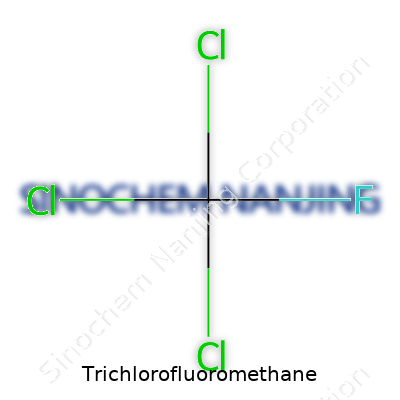
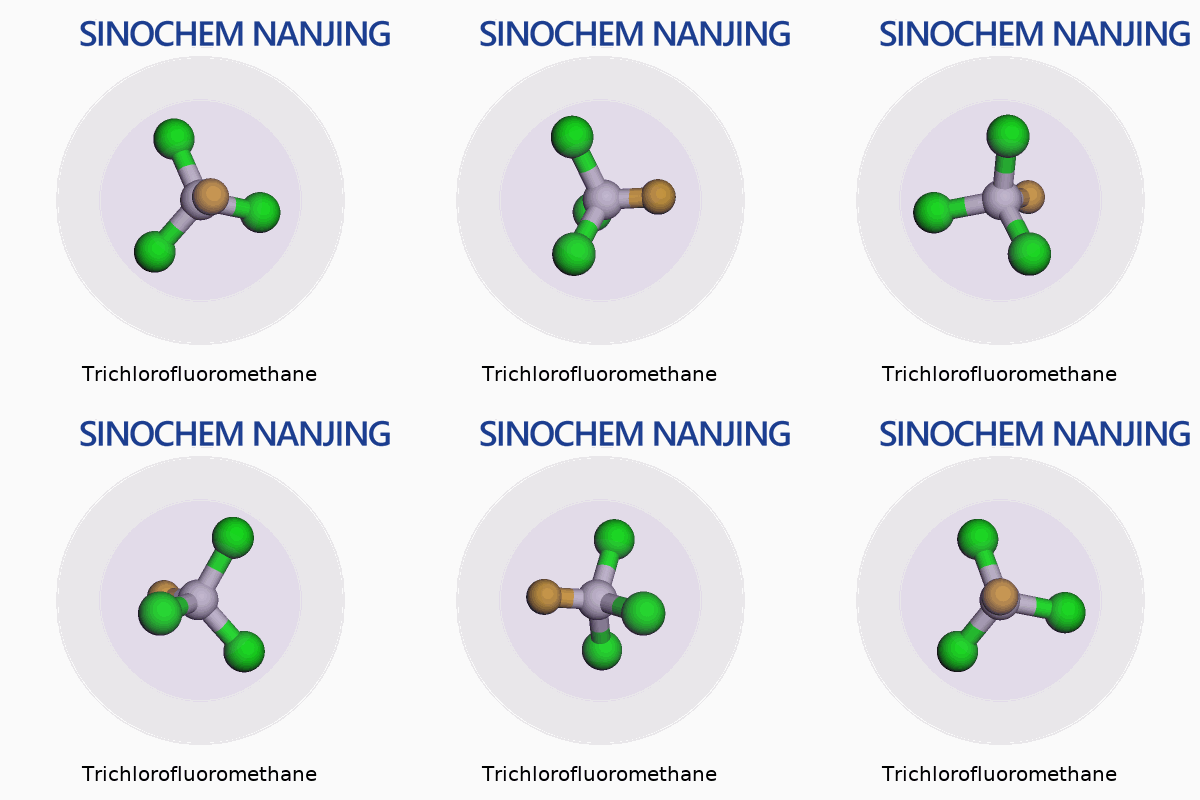
| Names | |
| Preferred IUPAC name | Trichloro(fluoro)methane |
| Other names |
CFC-11 Freon 11 R-11 Fluorotrichloromethane Refrigerant 11 Ucon 113 |
| Pronunciation | /traɪˌklɔːroʊˌflʊərəˈmiːθeɪn/ |
| Identifiers | |
| CAS Number | 75-69-4 |
| 3D model (JSmol) | `3D model (JSmol)` string for **Trichlorofluoromethane**: ``` CC(F)(Cl)(Cl)Cl ``` |
| Beilstein Reference | 3583942 |
| ChEBI | CHEBI:39276 |
| ChEMBL | CHEMBL38335 |
| ChemSpider | 5533 |
| DrugBank | DB01359 |
| ECHA InfoCard | 03aa8b86-4a60-43ef-8a3d-309193c4d84f |
| EC Number | 200-891-8 |
| Gmelin Reference | 860083 |
| KEGG | C14283 |
| MeSH | D014260 |
| PubChem CID | 5946 |
| RTECS number | PA6390000 |
| UNII | K50WQ7526I |
| UN number | UN1009 |
| Properties | |
| Chemical formula | CCl3F |
| Molar mass | 137.37 g/mol |
| Appearance | Colorless liquefied gas |
| Odor | Faintly sweetish |
| Density | 1.48 g/cm³ |
| Solubility in water | 12 mg/L (20 °C) |
| log P | 2.27 |
| Vapor pressure | 7760 mmHg (at 21.1°C) |
| Acidity (pKa) | 16.1 |
| Magnetic susceptibility (χ) | −74.0·10⁻⁶ cm³/mol |
| Refractive index (nD) | 1.422 |
| Viscosity | 0.406 cP (25°C) |
| Dipole moment | 0.51 D |
| Thermochemistry | |
| Std molar entropy (S⦵298) | 312.9 J·K⁻¹·mol⁻¹ |
| Std enthalpy of formation (ΔfH⦵298) | -286.4 kJ·mol⁻¹ |
| Std enthalpy of combustion (ΔcH⦵298) | -587.8 kJ mol⁻¹ |
| Pharmacology | |
| ATC code | N01AB01 |
| Hazards | |
| Main hazards | Harmful if inhaled, causes drowsiness or dizziness, may cause frostbite, suspected of causing cancer, harmful to aquatic life with long lasting effects. |
| GHS labelling | GHS02, GHS04 |
| Pictograms | GHS04 |
| Signal word | Warning |
| Hazard statements | H220, H280, H351 |
| Precautionary statements | P210, P261, P271, P304+P340, P403 |
| NFPA 704 (fire diamond) | NFPA 704: "2-0-0 |
| Autoignition temperature | 627°C |
| Lethal dose or concentration | Inhalation-rat 274000 mg/m3/4H |
| LD50 (median dose) | 15,000 mg/kg (rat, oral) |
| NIOSH | WT6125000 |
| PEL (Permissible) | 1000 ppm (parts per million) |
| REL (Recommended) | 0.5 ppm (3.6 mg/m3) |
| IDLH (Immediate danger) | 2000 ppm |
| Related compounds | |
| Related compounds |
Trichloromethane Chlorodifluoromethane Dichlorofluoromethane 1,1,2-Trichlorotrifluoroethane Carbon tetrachloride |



