Ethylhexyl Glycerin: Foundations, Functions, Safety, and the Road Ahead
Understanding Ethylhexyl Glycerin Through Its History
Ethylhexyl Glycerin entered the cosmetics world as an answer to changing consumer demands for safer and more sustainable alternatives to traditional preservatives. Parabens had come under fire, and the industry needed a new solution that balanced product stability with consumer safety. Skincare brands and formulators soon adopted Ethylhexyl Glycerin, noticing it could support other preservatives while delivering emollient properties. Through the years, it made its way from niche brands to mainstream shelves, often highlighted by clean beauty advocates who wanted gentler solutions for sensitive skin.
Product Overview in Everyday Terms
Whenever I scan ingredient lists for personal care products, Ethylhexyl Glycerin stands out as a multifunctional option. It keeps products fresh, fights off funk caused by bacteria, and provides a smooth, silky skin feel. Many deodorants, lotions, and cleansers include this compound, either for its softening effect or as a handshake partner for other preservatives. It offers a middle ground between harsh chemicals and unreliable “all natural” solutions, so manufacturers lean on its dependability.
Physical and Chemical Character
Clear, colorless liquid with a mild odor. Ethylhexyl Glycerin dissolves in most oils and alcohols but turns its back on water, refusing to mix in. Its chemical structure—a glycerin backbone capped with a branched ethylhexyl chain—helps it slip into formulations without clumping or separating. Its viscosity hovers between easy pouring and syrupy, which matters for product texture. It boasts a boiling point around 150°C at reduced pressure, and that stability turns out useful during high-temperature cosmetic production.
Technical Specs and Practical Labeling
Cosmetic chemists specify Ethylhexyl Glycerin by purity, moisture content, and trace residue limits, all of which get checked with modern analytical tools. Product packaging often lists it plainly by its name, required under international cosmetic regulations. Transparency builds trust. Some countries require manufacturers to show exact concentrations—usually under 1% in finished goods. Allergy warnings are rare, but responsible brands mention them if needed, especially in markets with strict labeling laws.
The Process of Creation
Glycerin from plant or synthetic sources serves as the starting point. Chemists react it with 2-ethylhexanol under acidic conditions, a process known as etherification. This reaction takes skill and honed timing: the balance between heat and reaction speed means a slip could leave behind unwanted byproducts. Manufacturers then purify the product using distillation and chromatographic techniques. In my own experience touring a chemical facility, the process felt both old-school and high-tech, blending large tanks and digital monitors.
Reactions and Modifications
Ethylhexyl Glycerin can undergo further reactions with acids or bases, tweaking its solubility or turning it into derivatives for targeted uses. Brands searching for novel textures have toyed with derivatives to see if they can create new sensations on the skin or boost preservative effects. Some early studies suggest possible use as a carrier for active ingredients, given its chemical adaptability, though mainstream market adoption still seems distant.
Synonyms and Commercial Names
Scan global regulatory databases and you’ll find Ethylhexyl Glycerin listed under aliases like Octoxyglycerin, 3-(2-Ethylhexyloxy)-1,2-propanediol, and sometimes, EHG. Brands coin catchy trade names such as Sensiva SC50 or Euxyl K 903, aiming to stand out in the B2B market. For the average shopper, though, INCI name recognition keeps the message clear.
Safety Protocols and Industry Standards
Researchers and regulatory agencies keep a close eye on the safety of cosmetic ingredients. Tests on Ethylhexyl Glycerin have demonstrated low toxicity in acute and chronic exposure models. Strict manufacturing standards, such as Good Manufacturing Practice (GMP), guide each step from sourcing to bottling. Workplaces rely on gloves and local exhaust ventilation to minimize skin contact or inhalation, just like with any raw chemical. In product formulations, keeping levels below recommended thresholds avoids irritation. The EU and U.S. FDA both accept it for rinse-off and leave-on products, with periodic scientific reviews to ensure public safety keeps pace with evolving knowledge.
Practical Uses in the Everyday World
Open almost any bottle of face cream or deodorant and you’ll likely find Ethylhexyl Glycerin among the small print. Skincare, makeup, personal hygiene products—nearly all pull this compound for its blend of antimicrobial action and skin-softening effects. It works especially well in natural and hypoallergenic formulas. Some cleaning wipes and baby wipes feature it to fend off mold even in high-moisture situations, proving that this single ingredient crosses product lines. A few industrial cleaners also make use of its dual preservative and humectant properties.
Research and New Approaches
Research journals show a steady flow of studies on Ethylhexyl Glycerin, usually exploring its ability to work in combination with natural extracts or novel preservative systems. Some scientists are mapping its interaction with skin microbiota, asking whether it can support a healthy balance instead of wiping everything out. Formulation scientists tinker with new delivery vehicles to give even distribution or prolonged effect. Patent filings keep popping up for mixtures that boost performance or cut down on environmental footprint, signaling that creativity in this field hasn’t slowed down.
Toxicity Reviews by Experts
Toxicologists have found Ethylhexyl Glycerin to be well-tolerated in most topical applications. The CIR (Cosmetic Ingredient Review) panel and the European SCCS (Scientific Committee on Consumer Safety) both listed it as safe for cosmetic use, with large safety margins below concentrations that cause irritation. The main concern shows up only with excessive use or pre-existing skin sensitivity, where mild redness might appear. Long-term animal studies and repeated patch tests in humans support its generally favorable profile compared with legacy preservatives.
Future Outlook and Emerging Opportunities
People want products that work without unnecessary risks, so the demand for alternatives to controversial preservatives keeps growing. Companies are exploring ways to increase the biobased content of Ethylhexyl Glycerin and to close manufacturing loops for greener outcomes. Ongoing collaborations between green chemists and product developers could create blends with even better safety and stability. From where I sit, any ingredient that balances safety, effectiveness, and a gentle touch stands ready to play a bigger role in tomorrow’s skincare and personal wellness industries.
What is Ethylhexyl Glycerin and what is it used for?
Looking Closer at that Ingredient List
Catch a bottle of lotion or a tube of sunscreen, flip it over, and Ethylhexyl Glycerin often pops up. It isn’t a scientific tongue-twister just for show. This chemical isn’t just there to pad out a label—it pulls some serious weight in personal care and cosmetic formulas.
Getting Down to Its Real Job
Ethylhexyl Glycerin works as a preservative booster. This means it teams up with other preservatives and gives them a hand. For example, it pairs well with phenoxyethanol, allowing products to fight off bacteria and yeast better. The product then doesn’t spoil as fast on the shelf or in your bathroom. Less spoilage, less waste.
Some brands lean on it because shoppers ask for alternatives to parabens. Parabens used to be everywhere, but concerns linked with them (including potential hormone disruption) left companies searching for other options. Ethylhexyl Glycerin stepped in.
More Than Just Preservation
Ethylhexyl Glycerin works double duty. In addition to keeping germs at bay, it softens skin and kicks up the “slip” in creams. So that body wash or serum glides on easier—no greasy feel sticking around. That comes from its roots: it’s a type of glycerin (a common moisturizer) tweaked to be more friendly to oily formulas and less sticky.
Personal experience comes in here, too. I have sensitive skin and end up scanning ingredient lists every shopping trip. A product with this ingredient might not create that stinging reaction that harsher preservatives can provoke. Studies back this up—research shows that most people tolerate it well, even kids and those with eczema.
Safety and Why It Matters
People care about what’s going into their bodies, even through their skin. Years ago, stories broke exposing the risks linked to common preservatives. The conversation quickly shifted—what’s gentler but still keeps mold out of my moisturizer? Ethylhexyl Glycerin has a safety record most ingredients would envy. The Cosmetic Ingredient Review panel checked it out and found it safe to use in the concentrations typical for skin and hair care.
Still, no ingredient works for absolutely everybody. Anyone can react to anything, given the right conditions, so patch testing still matters. From watching friends who sit on both sides of the “sensitive” spectrum, the odds of issues with this ingredient seem much lower than alternatives like harsher alcohols or some old-school preservatives.
What’s Next for Formulators?
The hunt for safe, skin-friendly, yet effective ingredients goes on. Ethylhexyl Glycerin isn’t perfect, but it stands out as a step in the right direction. Manufacturers want formulas that last, feel pleasant, and keep up with transparency. This compound supports that effort. Some companies use it along with new plant-based preservatives so shoppers get gentle, long-lasting creams and cleansers. As knowledge and habits change, the role of ingredients like Ethylhexyl Glycerin only grows.
Thinking About Your Choices
Anyone investing in skincare or home products has likely spotted trends toward “clean” or minimalist formulas. Ingredients like Ethylhexyl Glycerin sit at that intersection: not a plant extract, but far from the old fear-inducing chemicals. It’s earned a spot in modern formulas for good reason. Shoppers who care about safety and sustainability can look for transparency on the label and patch test new products—a good habit for anyone with skin.
Is Ethylhexyl Glycerin safe for sensitive skin?
Looking At Common Fears
Anyone with sensitive skin knows the constant struggle to read ingredients on every product label. You wonder if that unpronounceable name will trigger redness, itch, or the kind of stinging that makes you want to dunk your face in cold water. Ethylhexyl glycerin is one of those ingredients popping up everywhere from cleansers to moisturizers. It's not just in high-end brands. Drugstore staples use it too. Many folks feel uneasy about anything synthetic, even with a name that sounds half-natural. I used to reach for the plainest soap possible, convinced anything “extra” would mean trouble. Turns out, it pays to look deeper than the label.
Real Stories from Real Skin
Ethylhexyl glycerin acts as a preservative booster and gentle skin conditioner. Dermatologists started talking about this ingredient because it staves off bacteria, which helps keep products safer longer. That’s a plus for anyone, especially if you’ve picked up jars that grow fuzz after a month. Studies have shown ethylhexyl glycerin doesn’t irritate most people, even among those who report irritation from harsher preservatives like parabens. The rates of allergic reaction hover well below 1%, even among folks who specifically see dermatologists for patch testing. This detail got my attention: in several European studies, almost nobody reported irritation.
Personally, I steered clear of anything unknown after a bad spell with a heavily perfumed cream. Eventually, a dermatologist pointed me toward simpler ingredients and a focus on what actually works. My own skin never reacted to ethylhexyl glycerin, and talking to friends with eczema or rosacea, very few reported flare-ups after using products with this ingredient. It doesn’t mean it’s perfect, but the peace of mind helps. If your skin’s picky, allergy patch testing never hurts. Some clinics offer it, or you can dab a small amount of a new product behind your ear for a few days.
Why Ethylhexyl Glycerin Gets Used
Preserving lotions and cleansers used to mean adding lots of parabens or formaldehyde releasers. Those ingredients come up again and again as triggers for sensitive skin types. Ethylhexyl glycerin takes a milder approach by disrupting the bacteria’s ability to multiply. It’s derived from vegetable glycerin, which gives it a softer feel. Companies love it because it works without the stinging or scent that comes with alcohol-based preservatives. Most dermatologists I’ve spoken with say it’s on their “safer” list for patients who react to common ingredients.
What Could Go Wrong?
No single ingredient gets a free pass for everybody. A rare allergy can show up, even with “gentle” options. Those cases are usually contact dermatitis, showing up as a rash or itch where a product gets applied. If you run into this, wash the area and talk to a dermatologist. They’ll often recommend testing to pinpoint the cause. Most of us won’t run into issues at the concentrations used in skin care, often under 1%. For people with severely compromised skin (think open wounds or active eczema flares), skipping everything except doctor-recommended ointments makes sense.
How to Choose the Right Products
Ethylhexyl glycerin stands out as a reliable choice among preservatives for sensitive skin. Don’t let ingredient lists throw you—research matters. Check products for unnecessary fragrances or harsh alcohols, which often do more harm. Buy from companies who stand by their formulations and offer patch testing guidance. If a product delivers hydration and doesn’t cause trouble, you’ve hit the sweet spot. Keep it simple, stay curious, and listen to your skin.
Does Ethylhexyl Glycerin have any side effects or cause irritation?
Tapping into Everyday Concerns
Skin care routines often start with a hopeful swipe of a new cream or serum. It’s easy to trust what lines store shelves, but ingredient lists can feel more like alphabet soup than useful information. Ethylhexyl glycerin shows up in all kinds of products: moisturizers, wipes, shampoos, serums, even deodorants. Anyone who pays attention to ingredient labels probably notices this one popping up between preservatives and extracts. I’ve stood in drugstore aisles, searching the web on my phone, trying to figure out if a product will work with my dry, sensitive skin. One question keeps coming up online: Can ethylhexyl glycerin irritate skin or lead to side effects?
What the Science Says
Ethylhexyl glycerin gets popular because it acts as a gentle preservative booster. Research shows it can keep formulas stable, stopping bacteria from growing. Dermatology resources describe it as low-risk for most people, especially compared to old-school preservatives like parabens. In allergy clinics, patch testing sometimes picks up reactions—usually after prolonged, repeated contact. The most common side effect? Mild skin redness, sometimes with itching. Major reactions rarely show up in published hospital studies.
Checking into databases that collect consumer reports, most complaints focus on facial wipes and deodorants. My own experience echoes this. I once used a new facial wipe after a workout and noticed a red, itchy patch on my cheek. Flipping over the packaging, ethylhexyl glycerin sat fourth from the top on the list. A few days later, the irritation faded on its own, but the episode led me to pay more attention to what touches my face. Still, compared to ingredients like fragrance or certain alcohols, this one seems to cause fewer dramatic flare-ups.
Why Some People React
I’ve learned that anyone can develop a sensitivity to almost anything they put on their skin, especially if used daily. Ethylhexyl glycerin’s structure means it holds onto water, which helps it boost moisturizing effects. For most people, this keeps skin feeling soft, but anyone with highly reactive or eczema-prone skin faces a greater risk of irritation from almost any new addition. If your skin burns, stings, or breaks into small rashes after trying a new product, it makes sense to check labels closely. Avoiding scented or harsh products helps cut down risk, and so does patch testing in a small spot before using something everywhere.
Steps Toward Healthier Choices
Brands have started disclosing full ingredient lists and committing to transparency. Dermatologists recommend looking for products labeled for sensitive skin, as these tend to limit the use of harsh preservatives or extra boosters like ethylhexyl glycerin. Reading Consumer Product Safety Commission info and consulting your own skin specialist helps if you notice regular irritation. If irritation shows up more than once from similar products, keeping a simple skincare routine helps sort out what’s actually causing the reaction. The fewer ingredients, the better your odds of avoiding trouble. As with many skin reactions, a little attention to detail and some patience with your routine pays off over time.
Is Ethylhexyl Glycerin a natural or synthetic ingredient?
What Ethylhexyl Glycerin Really Is
Ethylhexyl glycerin shows up in many personal care products. If you’ve checked the back of a moisturizer or deodorant, you might have spotted it. Most people don’t know much about the ingredient, except that it helps keep products from spoiling and softens the skin. Marketers sometimes suggest it belongs in the “natural” club, hinting that it carries fewer risks. Truth sits somewhere in the gray area between what feels natural and what gets produced in a lab.
How Ethylhexyl Glycerin Gets Made
Ethylhexyl glycerin starts off as glycerin, which can come from vegetable oil or animal fat. Chemists take that base and process it using 2-ethylhexanol, a compound rooted in petroleum. These ingredients blend through a series of reactions that result in ethylhexyl glycerin. It's accurate to say the process leans heavily on industrial chemistry, even though the raw material might begin as a plant oil. Once finished, the ingredient doesn’t look or act like the original natural oil it grew from.
Cosmetic chemists would call ethylhexyl glycerin a “nature-derived” or “nature-identical” compound. That label means the ingredient slips out of its natural roots at some point, landing firmly in the synthetic category. The final molecule doesn’t exist in nature as is. It takes human intervention and several steps to reach the finished version dropped into your lotion.
Does It Matter If It’s Synthetic?
Many people read “synthetic” as a red flag. My inbox fills with questions about safer skincare, and the debate about chemicals rages online. In truth, the synthetic label doesn’t make ethylhexyl glycerin dangerous or harmless by default. Safety data published by the Cosmetic Ingredient Review shows that people rarely react with allergies or irritation. In small amounts, it tends to behave well on most skin types and helps cut down on unwanted bacteria in products.
What really matters to me, after sifting through years of research and customer concerns, is transparency. Shoppers want to make decisions based on honest information. Brands owe it to their customers to tell the whole story — not just slap the word “natural” on a label and move on. Synthetic doesn’t equal toxic, and natural doesn’t always guarantee gentle.
Finding Middle Ground in the Ingredient Debate
Some people look for natural-only skincare out of principle, allergy concerns, or environmental values. Others want effective, safe formulas that deliver benefits, regardless of their source. I see the argument from both sides. Facts show that ethylhexyl glycerin remains shelf-stable, gentle, and mildly moisturizing. The labs that create it use strict guidelines, and finished products meet modern safety standards.
If the natural label means everything to you, this ingredient might not match your standards. For anyone open to responsibly-made synthetics, ethylhexyl glycerin has built a solid reputation as a dependable workhorse in cosmetics. As shoppers, we can look for clear ingredient lists, independent safety reviews, and honest marketing — so confidence in personal care doesn’t come down to a buzzword.
Can Ethylhexyl Glycerin be used in products for children and babies?
Parents Worry for a Reason
I remember picking up lotion for my son and pausing at the ingredients. Most people want the safest option for their kids. Ethylhexyl glycerin, a compound often used to boost preservative power and keep products fresh, shows up in many personal care items. You’ll spot it in wipes, creams, shampoos, and sometimes toothpastes too. Some parents see a long chemical name and worry. That’s understandable; nobody wants to take a risk on a little one.
What Science Says About Ethylhexyl Glycerin
This ingredient works by keeping bacteria at bay and helping products last longer. Researchers have watched it in labs and on skin. Reports from Europe and the US FDA label it safe at the usual concentration levels—typically up to 1%. The Cosmetic Ingredient Review panel didn’t see irritation or allergic reaction as big problems, unless someone used much higher levels than intended. Plenty of products for adults and kids both use it within these regulated limits.
That said, some kids have extra-sensitive skin. A handful of cases in medical literature talk about mild redness or itching after repeated exposure, mostly when products spend hours in contact with skin, such as wipes used all day or creams on diaper areas. Children fighting eczema or allergies might notice irritation sooner than others. At my house, we’re careful about anything new, doing a patch test on the forearm first. It’s a small step, but it helps prevent bigger problems.
Trust in Regulation, Stay Mindful of Skin Stories
Europe’s regulators looked deeply at ethylhexyl glycerin’s track record, checking thousands of products—not just a few brands. In their review, the risk of toxicity or hormone disruption came out as virtually nil. Sometimes critics voice concern about long-term exposure, yet the studies haven’t shown build-up in the body or problems through breast milk. The European Scientific Committee on Consumer Safety concluded typical product use looked safe, even for babies, as long as no one massively exceeded recommended percentages.
On the other hand, experience shows that not every baby is average. My son, for example, flares up after certain baby wipes with additives. We switched brands after two uses and haven’t looked back. I’ve heard plenty of parents tell similar stories, switching laundry detergents, lotions, even shampoos after their kids’ cheeks turned pink. These responses tend to involve fragrance or extra preservatives more than ethylhexyl glycerin, but it’s tough to pinpoint what caused trouble when there’s a long list of ingredients.
Solutions That Give Peace of Mind
More and more parents want transparency from brands. Clear labeling—showing exact percentages and giving honest explanations—helps everyone. Patch tests, trying out new products slowly, or consulting pediatricians before regular use offers one more safety net. Brands can listen to parent feedback, cut out unnecessary fragrances, and use minimal formulas. If a baby reacts, looking for hypoallergenic products and tracking specific ingredients makes a big difference.
In the end, ethylhexyl glycerin rates low on the worry scale for most families. It’s not about complete avoidance but about paying attention. If a rash or reaction shows up, drop the product and check the ingredient list. For most babies and kids, daily care items with this ingredient work just fine. Those who notice trouble should talk with a dermatologist and keep notes for next time.
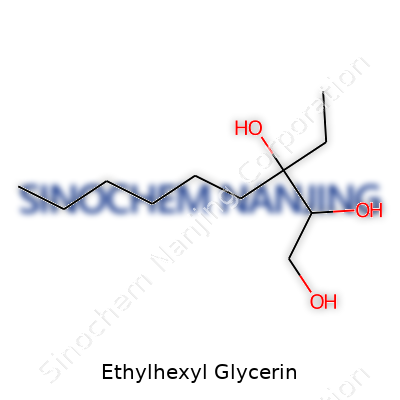
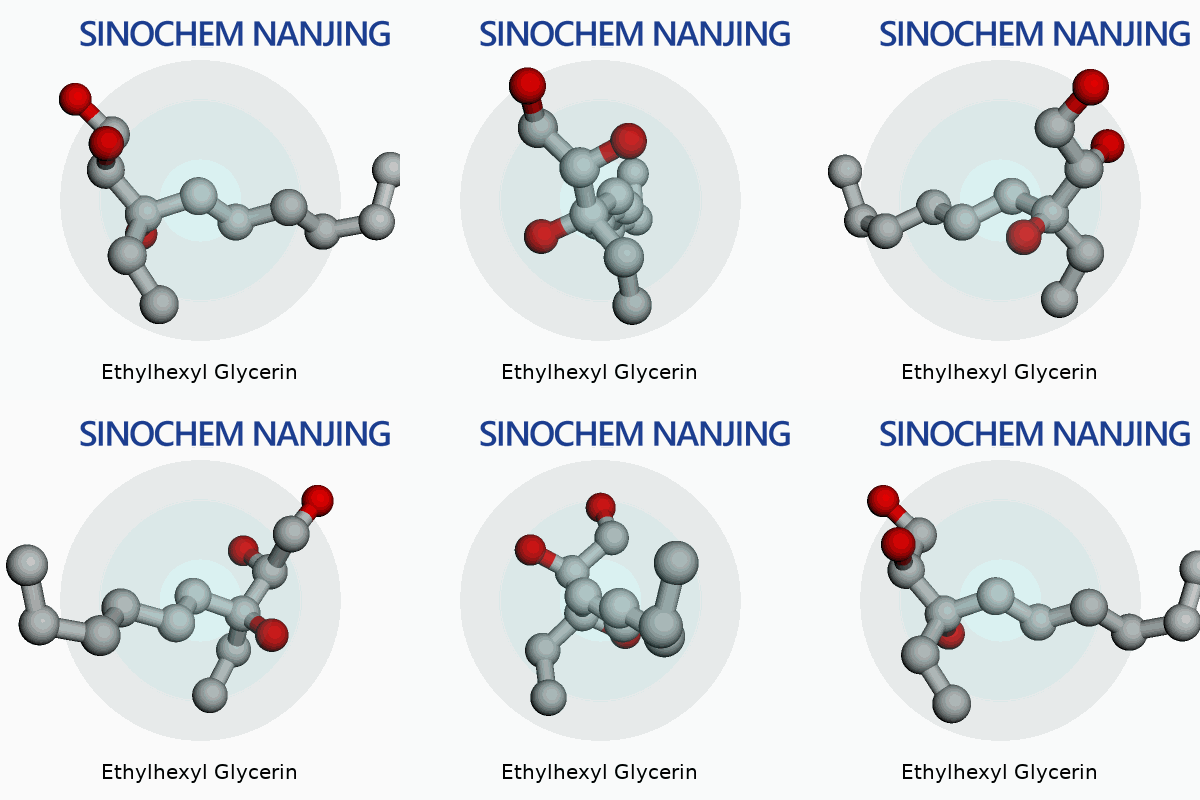
| Names | |
| Preferred IUPAC name | 3-(2-ethylhexyloxy)propane-1,2-diol |
| Other names |
2-Ethylhexylglycerin Octoxyglycerin Ethylhexylglycerol Glyceryl Ether 1-Glycerol Ether Ethylhexyl Glyceryl Ether |
| Pronunciation | /ˌiːθ.ɪlˈhɛk.sɪl ˈɡlɪs.ər.ɪn/ |
| Identifiers | |
| CAS Number | 70445-33-9 |
| Beilstein Reference | 1721307 |
| ChEBI | CHEBI:135576 |
| ChEMBL | CHEMBL3276301 |
| ChemSpider | 114480 |
| DrugBank | DB11105 |
| ECHA InfoCard | 100.231.384 |
| EC Number | 603-919-2 |
| Gmelin Reference | 82250 |
| KEGG | C18608 |
| MeSH | D000926 |
| PubChem CID | 24831533 |
| RTECS number | SJ0900000 |
| UNII | 3M7P857E613 |
| UN number | UN3082 |
| Properties | |
| Chemical formula | C11H24O3 |
| Molar mass | 246.38 g/mol |
| Appearance | Colorless to pale yellow liquid |
| Odor | Mild |
| Density | 0.948 g/cm³ |
| Solubility in water | slightly soluble |
| log P | 1.67 |
| Vapor pressure | <0.00001 mmHg (@ 25°C) |
| Acidity (pKa) | 14.54 |
| Basicity (pKb) | 11.75 |
| Magnetic susceptibility (χ) | Diamagnetic |
| Refractive index (nD) | 1.453 |
| Viscosity | 20-35 cPs |
| Dipole moment | 2.96 D |
| Thermochemistry | |
| Std molar entropy (S⦵298) | Ethylhexyl Glycerin does not have a widely reported standard molar entropy (S⦵298) value in common chemical databases or literature. |
| Std enthalpy of combustion (ΔcH⦵298) | -7195 kJ/mol |
| Pharmacology | |
| ATC code | |
| Hazards | |
| Main hazards | Causes serious eye irritation. |
| GHS labelling | Not Classified as Hazardous according to GHS |
| Pictograms | GHS07 |
| Signal word | Warning |
| Hazard statements | Not a hazardous substance or mixture according to Regulation (EC) No. 1272/2008. |
| Precautionary statements | IF IN EYES: Rinse cautiously with water for several minutes. Remove contact lenses, if present and easy to do. Continue rinsing. If eye irritation persists: Get medical advice/attention. |
| NFPA 704 (fire diamond) | 1-1-0 |
| Flash point | 113°C |
| Autoignition temperature | 210°C |
| Lethal dose or concentration | LD50 (oral, rat): 3,900 mg/kg |
| LD50 (median dose) | LD50 (median dose) of Ethylhexyl Glycerin: "5,000 mg/kg (rat, oral) |
| NIOSH | Not Listed |
| PEL (Permissible) | Not established |
| REL (Recommended) | 0.3–1% |
| Related compounds | |
| Related compounds |
Glyceryl Caprylate Caprylyl Glycol Phenoxyethanol Sodium Levulinate Sodium Anisate |



