Ethyldichloroarsine: From History to Future Directions
Historical Development
Ethyldichloroarsine, not exactly a household name, moves through the annals of chemical history in the shadow of larger stories. The early 20th century saw the rise of chemical warfare agents, when both scientific curiosity and wartime desperation drove nations down dark and innovative paths. Developed within that grim context, this organoarsenic compound grew infamous as "Dick," among other nicknames. Its earliest large-scale use traces back to World War I, where its capacity for blistering and incapacitating effects drew military attention. These were not cold experiments in distant labs. Researchers worked with minimal protective gear, and tales from the time tell of widespread illness and injury among those developing these chemicals. Watching how knowledge unraveled over the decades, there’s a constant thread of risk and haste in pursuit of military advantage. Ethyldichloroarsine’s story stands as a warning, showing what happens when scientific progress charges forward with little attention to human safety.
Product Overview
Ethyldichloroarsine doesn’t show up in many industrial supply catalogues or research lists today, mainly because of its hazardous legacy. Its chemical formula, C2H5AsCl2, tells of a compound both volatile and persistent. It once appeared in militaries’ chemical agent stockpiles and in some specialty chemical catalogs years ago for very controlled research purposes. It features a pungent, nauseating odor, sometimes likened to garlic or horseradish, which acts as a grim warning to those who might come near it. Product standards typically feature purity levels of 95% or higher for research or analytical use, but stricter legal restrictions now control even trace handling or storage.
Physical & Chemical Properties
This compound is a colorless to brownish liquid at room temperature, with a boiling point hovering around 156°C and a melting point below -50°C. Ethyldichloroarsine’s density sticks in the 1.6 g/cm³ range, making it heavier than water, and it does not dissolve in water but readily mixes with organic solvents such as benzene and ether. Its volatility at ambient temperature means vapor hazards can crop up easily, and the compound’s chemical structure brings high reactivity, particularly with water, alcohols, and various nucleophiles. This reactivity lies at the core of its toxicological effects, as the molecules can rapidly disrupt biological systems.
Technical Specifications & Labeling
Lab containers display hazard diamond labels, UN identification number 1571, and very strict handling instructions. Any technical sheet worth its salt details its high acute toxicity, corrosivity, and enviromental hazard profile. Proper specification sheets spell out measures for shelf life, stability (short in the open, reasonable in cool, inert environments), and required containment—isolation away from acids, bases, or reactive metals. Always, labels stress the need for chemical-resistant gloves, face protection, and working only in certified chemical fume hoods.
Preparation Method
Preparation typically runs through the addition of ethyl chloride to arsenic trichloride with aluminum chloride as a catalyst, a reaction path that echoes much of early organic arsenic synthesis. Operators would control temperature to minimize explosive byproducts, and yield purification through fractional distillation. Reading old lab manuals, early chemists worked without modern engineering controls or ventilation, facing direct exposure during each step. Today, anyone considering this synthesis must operate in a properly rated facility, under explicit government approval, with secure waste containment and continuous air monitoring.
Chemical Reactions & Modifications
Ethyldichloroarsine responds vigorously to nucleophilic substitution—hydrolysis with water forms arsenic acid derivatives and hydrochloric acid, and reactions with alcohols or amines generate ether and amine derivatives with equal aggression. These reactions drive the agent’s toxicity, especially under field use in moist or humid environments. Chemists can transform the ethyl or chlorines into heavier or bulkier groups, but even small chemical changes set off new toxicological risks. Across its history, modifications tended to serve military or analytical research, not civilian chemical development.
Synonyms & Product Names
Chemists and militaries throughout the world assigned various synonyms, from "ED" and "Dick" in military jargon, to ethylarsine dichloride, dichloroethylarsine, and the German "Dickstoff." Each alias points to its notoriety, cropping up in postwar inventories and regulatory registries. Many product names in the 20th-century nomenclature fell out of use as international agreements like the Chemical Weapons Convention swept stockpiles from the world’s militaries.
Safety & Operational Standards
Personal experience handling related compounds always brings to mind the need for industrial-quality fume hoods and full-face respirators when considering anything arsenic-based. Ethyldichloroarsine can cause severe burns, respiratory paralysis, and lethal systemic poisoning even at low exposure. Waste streams and residues contaminate soil and water for generations, and any accidental release requires full hazardous materials protocols, both for human responders and the environment. Engineering and administrative controls must take priority; even the tightest lab protocols sometimes come up short without team training and regular safety drills.
Application Area
Legitimate application outside historical chemical warfare is scarce. Research use persists only under strongest legal controls, focused on forensic studies, environmental decontamination research, and the development of more effective first response strategies for hazardous materials teams. No large industrial sector maintains any routine use, and environmental monitoring now aims more at identifying legacy contamination rather than new production or application.
Research & Development
A handful of academic labs and government agencies keep researching organoarsenic agents’ interactions with soils, decontamination techniques, and effects on biological systems. The cutting edge focuses on improved detection methods, rapid field tests, and novel neutralization approaches. Past decades saw too many lives altered or lost through accidental exposures during both active use and disposal, so the development of truly effective decontamination and remediation protocols stays a top priority.
Toxicity Research
Scientists have known for a century how ethyldichloroarsine attacks skin and lung cells. Its rapid hydrolysis releases corrosive acids and highly toxic arsenicals, which cell membranes absorb with tragic efficiency. Acute exposure research continues in medical toxicology, where teams chart the pathways by which blister agents damage tissue and disrupt organ function. Long-term studies address soil, water, and food chain contamination in areas impacted by past use. Unlike many other toxins, arsenic-based agents persist in the environment—requiring constant vigilance, community education, and medical outreach to affected populations.
Future Prospects
Chemical safety regulations now all but outlaw non-research possession of ethyldichloroarsine, but the work of tracking, containing, and neutralizing legacy sources continues. As a society, keeping focus on chemical weapons disarmament, and on the scientific progress needed to clean up their remnants, matters just as much as inventing the next detection tool. Future technology could enable more effective on-site decontamination or real-time exposure monitoring, reducing both human and environmental tolls. For those responsible for hazardous materials research or cleanup, the story of ethyldichloroarsine argues for unflinching respect for chemical risk and a commitment to making sure the mistakes of the past—made in war or science—aren’t repeated.
What is Ethyldichloroarsine used for?
Digging Into Ethyldichloroarsine’s History and Hazards
Ethyldichloroarsine stands out as a liquid chemical agent with a difficult story. Experts first created this compound in the early 20th century, pulling it into the messy world of chemical warfare. It gives off strong, garlic-like fumes and sticks around in the air or on surfaces. I remember reading about how its early production caused real concern, and by the 1920s, the Geneva Protocol aimed to keep such chemicals out of conflicts. Yet, the substance has managed to hold on in both historical research and in emergency preparedness.
Why Countries Paid Attention
Nations recognized ethyldichloroarsine as more than just a nasty irritant; it works as a vesicant, which means it causes blistering on skin, eyes, and even lungs. Some sources, like the US Army’s old chemical weapon manuals, show that scientists studied it to learn how to defend soldiers from exposure. Governments saw its ability to cut through crude protective layers. Its use in actual combat faded as better-protected gear and global treaties took hold, but cases like World War I remain as proof of what happens when these toxins get out.
Chemical Agents and the Lessons Learned
I once spoke with an army medic who described training in chemical response. Agents like ethyldichloroarsine taught responders what a real emergency looks like, both physically and mentally. These drills weren’t just about medical treatment but about breaks in trust from chemical threats. The medic’s story hit home: many in the medical world now look at agents like these to improve gear or organize disaster drills rather than considering actual battlefield use.
Modern Uses and Misconceptions
Some folks believe ethyldichloroarsine has a place in regular lab work or industry. That’s not the case. Modern science views it as a research relic, important only as a benchmark for testing safe handling procedures and antidotes. Chemical companies steer clear, knowing the risks far outweigh any potential benefit. Even military stockpiles don’t want it around. Disposal efforts, often watched by global watchdogs like the Organization for the Prohibition of Chemical Weapons, try to clear old stock as safely and quickly as possible.
How Society Can Respond
Doctors, researchers, and everyday people share a role in keeping hazardous chemicals like this away from harm. Fact-based education ranks high. Young scientists learn about its dangers from a distance—usually as a warning in chemistry classes. Communities push for transparency and strong chemical safety rules, which works best when leaders avoid the temptation to keep secrets.
I always come back to one thing: issues with chemical agents call for solid trust between government, science, and the public. Knowledge, clear communication, and a no-nonsense approach to regulation offer the best shot at keeping everyone safe. By focusing on what works, like bans, emergency training, and open discussion, we keep the old ghosts of chemical warfare where they belong—in the past.
What are the health hazards of Ethyldichloroarsine?
Getting to Know the Risks
Ethyldichloroarsine looks like another hard-to-pronounce name from a chemistry lab, but it harbors a dangerous past and a harsh reality. Used during wartime as a chemical weapon, this oily liquid deserves real attention for its health effects. Even in small doses, skin contact can trigger burning pain and blisters, similar to what sulfur mustard does. It’s not something anyone wants near the body or in the environment.
How the Body Responds
Touching ethyldichloroarsine quickly leads to skin redness, swelling, and severe blisters that take weeks to heal. Eyes exposed to its vapors water uncontrollably and hurt badly. If a person breathes in the fumes, lungs fill up with fluid — making it hard to catch a breath, sometimes to the point of suffocation. In my work in emergency medicine, stories of people accidentally exposed to old stockpiles keep cropping up. Quick action makes a real difference, but most folks aren't trained to recognize the signs.
Beyond the Immediate Reaction
This chemical doesn't stop at surface burns. It seeps deeper into lungs and tissues. After inhalation, a victim might develop a rattling cough, chest pain, or even bronchitis. A hefty dose can push people into shock, with the threat of organ failure. The risk of delayed symptoms makes things worse; after exposure, people sometimes wait to seek medical care since the worst effects sneak up hours later instead of instantly.
Long-Term Effects and Environmental Concerns
The damage doesn’t end with the initial incident. The World Health Organization recognizes ethyldichloroarsine as a possible carcinogen. Long after skin heals, there’s a risk for lingering lung scarring and increased cancer odds. Soil and water tainted with the chemical threaten communities, contaminating crops and affecting animal health. Countries that once stockpiled this compound for military use often struggle with cleanup decades after the end of conflict. The cost—financial as well as human—runs deep.
Why This Should Matter
Only a handful of emergency workers come fully prepared for a chemical like this. Training, protective gear, and detection equipment can make the difference — all things that demand funding and political will. Hospitals near old arsenic chemical dump sites deal with rare, difficult cases without always knowing what they’re fighting. Bringing this risk into the public conversation can give local officials reason to invest in early-warning networks and response supplies.
Real Steps Forward
Eliminating old stockpiles forms the backbone of prevention, but it takes effort to find sites, secure funding, and finish safe disposal. Simple outreach—community meetings, school demonstrations, easy-to-read posters—helps neighbors recognize the warning signs of exposure and know where to seek help. Medical workers and firefighters benefit from routine training updates and access to personal protective gear.
Ethyldichloroarsine likely won’t fade from the planet anytime soon, but practical action and honest reporting about its hazards keep communities safer. A solid approach blends public awareness, environmental cleanup, and frontline response—a tough but necessary road that puts health first.
How should Ethyldichloroarsine be stored and handled safely?
The Real Risks Behind the Chemistry
Ethyldichloroarsine is not a household name, but its hazards are well-known among those who work in chemical labs or hazardous materials management. This arsenic-based liquid used to see wartime use because of its nasty side effects: blistering of the skin, respiratory injury, and severe eye damage. Nowadays, it appears mostly in hazardous material stockpiles or legacy waste cleanups. Safety with this compound is not optional, since a single careless mistake could mean serious, immediate harm.
Common Sense Goes a Long Way
Let's not pretend that rubber gloves and a mask count as adequate protection for ethyldichloroarsine. A full-face chemical respirator becomes non-negotiable, plus gloves rated specifically for protection against chlorinated organics. Many folks overlook the feet—rubber boots, chemical-resistant, should never get skipped. This is not the time to cut corners. Even splash on exposed skin causes nasty burns, and vapor can damage airways in a flash.
The Right Place, Every Time
Secure storage matters just as much as personal gear. Forget standard closets and locked cabinets; only a chemical storage vault does the job. Keep ethyldichloroarsine tightly sealed in corrosion-resistant containers, like glass or certain plastics—steel containers can corrode and leak, leading to bigger disasters. Store containers upright, away from direct sunlight, heat, and any risk of moisture. This stuff reacts fast with water, releasing toxic vapors. I remember stories from an old chemist friend who once walked in on a leaky bottle sealed with the wrong cap—he was lucky his nose caught the garlic-like odor before the situation got worse.
Teamwork Beats Lone Wolf Handling
Handling this compound is not a one-person job. There’s wisdom in having another set of eyes and hands around, preferably someone trained for emergencies. Always work inside a chemical fume hood. It’s tempting to "just do a quick transfer," but air movement and filtration in a fume hood can make the difference between a safe operation and a trip to the hospital. Spill kits must stay close by, but don’t just let them gather dust on the shelf—everyone in the workspace should know how to use them without fumbling.
Keep Emergency Supplies Within Reach
Wash stations and emergency showers need to stay in good working order, free of clutter and within a few seconds’ reach from where you’re working. Some people skip this step, thinking accidents only happen to others, but once ethyldichloroarsine splashes on skin or eyes, wasting even a few seconds looking for help can change the outcome completely. I’ve seen what happens to labs that ignore these basics. It’s not pretty, and it’s not a risk worth taking.
A Culture of Training and Vigilance
Routine training saves more than just time on inspections—real lives depend on it. Everyone handling or working near ethyldichloroarsine benefits from regular drills and honest talks about near-misses and accidents. People who treat hazardous chemicals with respect develop habits that don’t fade at the end of a shift. The paperwork and documentation might seem over-the-top, but in this line of work, traceability and accuracy make all the difference if something ever goes wrong.
Better Solutions for a Tough Challenge
People are putting resources into better air monitors and automated systems for chemical handling. These upgrades mean fewer people exposed to risk, and stronger early-warning for leaks or exposure. Secondary containment trays under storage shelves prevent small drips from turning into headaches. Looking ahead, stricter disposal protocols, better equipment, and sharing hard-earned lessons from the field help keep this compound under control.
Staying careful, keeping up good habits, and paying close attention protects you from ethyldichloroarsine—every day, in every lab.What is the chemical formula of Ethyldichloroarsine?
Breaking Down the Chemical Formula
In science class, teachers love to drop questions about chemical formulas. Ethyldichloroarsine’s formula, C2H5AsCl2, might not come up often outside chemistry circles, but it plays a meaningful role in the story of chemical warfare and toxicology.
A Closer Look at the Compound
The name itself points to the structure. Ethyl groups, written as C2H5, combine with arsenic (As) and two chlorine atoms (Cl2). Having handled basic organic laboratory work in undergraduate labs, I remember the strong, almost alarming smell of some simple chlorinated organics. Ethyldichloroarsine isn’t just another lab curiosity—it brings a complicated legacy and more risk than most textbook illustrations.
Produced first in the years leading up to WWI, scientists and governments saw chemicals like Ethyldichloroarsine as new ways to tip the scales in battle. Adding chlorine atoms to arsenic makes the compound volatile and gives it a nasty edge, both literally in toxicity and figuratively in battle. Historical evidence points towards its harsh use in chemical warfare, often referred to as “arsenic mustard.” Symptoms from exposure include severe eye pain, blisters, and damage to lung tissue.
Importance of Chemical Safety
Handling substances like Ethyldichloroarsine takes more than gloves and goggles. In my own days training new lab techs, I never let anyone near chlorinated arsenicals without reviewing the safety data sheets. These aren’t just lab rules; strong evidence shows that skin contact or inhalation leads to poisoning and chemical burns. Guidelines from organizations like the CDC spell out emergency procedures for a reason—mistakes here can lead to irreversible harm.
This isn’t just about one old compound either. In the broader world, similar dichloro compounds have snuck into poorly regulated industrial processes. After hearing cases at professional conferences about mishandling legacy chemicals at storage sites, the risk goes further than military history. Long-forgotten heaps of chemical drums tucked in warehouses or abandoned sites put nearby communities at risk. Poisonings and ground contamination seep outwards, often only surfacing when communities notice odd health patterns.
Responsible Stewardship and Solutions
Facts speak for themselves. According to the Organisation for the Prohibition of Chemical Weapons, stockpiles of compounds like Ethyldichloroarsine are subject to strict destruction protocols. I’ve seen firsthand the logistical challenges teams face when tasked with removing or neutralizing outdated weapons agents. Safeguarding waste and deploying detection tools proves essential. Better education and clearer communication help, from school chemistry labs all the way up to national disaster response teams.
The larger goal shines through: history teaches hard lessons about chemical responsibility. Public databases, government oversight, and community reporting tie together, keeping the threats of these old toxins from repeating themselves. The legacy of Ethyldichloroarsine, sitting as C2H5AsCl2 in chemistry books, pushes us to keep safety, awareness, and solid data at the core of how society handles hazardous chemicals.
What should be done in case of Ethyldichloroarsine exposure?
Staying Ahead of Chemical Threats
Growing up near a chemical plant, I saw first-hand how fast things can change when chemicals like ethyldichloroarsine spill or leak. The stuff hits hard—not just for those in hazmat suits but for anyone nearby. Ethyldichloroarsine’s sharp, garlic-like smell doesn’t give fair warning; the danger often lingers quietly, hurting lungs, eyes, and skin in just a few breaths or seconds.
What’s At Stake
Ethyldichloroarsine wasn’t some distant threat reserved for rare scenarios. In World War I, “Agent Blue Cross” saw heavy use across battlefields, leaving scars that lasted lifetimes. Its legacy reminds us that this isn’t just lab talk—it’s a chemical that disables people quickly. Small spills, vapor leaks, or skin contact can leave permanent damage if steps aren’t taken in time.
Taking Action Right Away
Nobody waits for a decontamination tent to pop up. The first line of defense kicks in fast—move out of the exposure area as soon as possible. Relying on instincts pays off, but the clock still ticks. Skin exposed to liquid ethyldichloroarsine requires copious amounts of water and soap. Water alone sometimes spreads the chemical if the decon process isn't thorough, but waiting for a professional solution and failing to act does more harm than good.
Eye contact needs immediate, heavy irrigation with clean water. Contact lenses come out. The stinging doesn’t ease overnight, so ignoring it makes things worse. Removing contaminated gear or clothing stops the skin from taking the brunt. Tossing items into sealed plastic bags can slow vapor spread—never let them lie around for someone else to touch.
Protecting Our Responders
Trusting the skills of emergency crews saves lives, but their safety often depends on strict training, up-to-date gear, and honest communication. Ethyldichloroarsine easily pierces standard clothing; only real chemical suits hold up under fire. Medical help follows fast, with oxygen and advanced airway management keeping victims stable. Hospitals and clinics in industrial zones must run drills and keep antidote stockpiles, especially because skin injuries and long-term breathing issues linger after the rush.
Education Beats Panic
Community awareness changes everything. No one needs a chemistry degree to recognize cold sweats, shortness of breath, or sudden eye pain after a chemical alarm sounds. The more people know how to strip off outer clothes, rinse skin with water, and avoid cross-contamination, the safer everyone gets. I’ve seen school drills and workplace safety briefings cut down confusion and chaos during real incidents.
Solutions for Today and Tomorrow
Clear standard operating procedures matter, but regular reviews prove their worth. Employers, plant managers, and local leaders play a role by investing in rapid detection systems, safety training, and neighborhood outreach. Mobile decontamination units, real-time air monitoring, and easy-to-use informational hotlines build trust and improve outcomes.
Honest reporting, fast action, and a culture of safety keep people one step ahead of chemical risks like ethyldichloroarsine. Prepared communities hold the line between mild annoyance and catastrophe. I’ll always fight for tough training and shared awareness because nobody should face invisible threats alone.
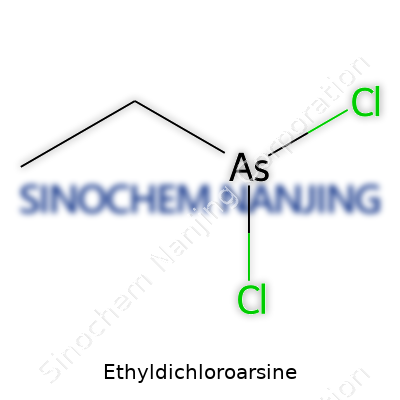
| Names | |
| Preferred IUPAC name | Dichloro(ethyl)arsane |
| Other names |
ED C2H5AsCl2 Dichloroethylarsine Ethyldichlorarsine |
| Pronunciation | /ˌɛθɪlˌdaɪˌklɔːroʊˈɑːrsaɪn/ |
| Identifiers | |
| CAS Number | 598-14-1 |
| Beilstein Reference | 605576 |
| ChEBI | CHEBI:82344 |
| ChEMBL | CHEMBL1231883 |
| ChemSpider | 20516 |
| DrugBank | DB13382 |
| ECHA InfoCard | 100.003.156 |
| EC Number | 200-855-6 |
| Gmelin Reference | 7784 |
| KEGG | C18808 |
| MeSH | D004990 |
| PubChem CID | 657487 |
| RTECS number | CN9625000 |
| UNII | 5DLR4J8EFL |
| UN number | UN1540 |
| CompTox Dashboard (EPA) | DTXSID202017 |
| Properties | |
| Chemical formula | C2H5AsCl2 |
| Molar mass | 170.93 g/mol |
| Appearance | Colorless to yellowish-brown liquid |
| Odor | garlic-like |
| Density | 1.638 g/cm³ |
| Solubility in water | Slightly soluble |
| log P | 1.85 |
| Vapor pressure | 24 mmHg (20 °C) |
| Acidity (pKa) | 13.0 |
| Basicity (pKb) | 6.0 |
| Magnetic susceptibility (χ) | -44.0·10⁻⁶ cm³/mol |
| Refractive index (nD) | 1.575 |
| Viscosity | 3.2 cP (20 °C) |
| Dipole moment | 1.18 D |
| Thermochemistry | |
| Std molar entropy (S⦵298) | 210.6 J⋅mol⁻¹⋅K⁻¹ |
| Std enthalpy of formation (ΔfH⦵298) | −23.7 kJ·mol⁻¹ |
| Std enthalpy of combustion (ΔcH⦵298) | -595.7 kJ/mol |
| Pharmacology | |
| ATC code | V10AX02 |
| Hazards | |
| Main hazards | Toxic if swallowed, inhaled, or in contact with skin; causes severe burns and eye damage; may cause cancer; environmental hazard. |
| GHS labelling | GHS02, GHS06, GHS08 |
| Pictograms | GHS06,GHS08 |
| Signal word | Danger |
| Hazard statements | H301, H311, H330, H371, H410 |
| Precautionary statements | P260, P261, P264, P270, P271, P273, P280, P301+P310, P302+P350, P303+P361+P353, P304+P340, P305+P351+P338, P310, P320, P330, P361+P364, P363, P391, P403+P233, P405, P501 |
| NFPA 704 (fire diamond) | 3-4-2- (OX) |
| Flash point | 73°F (22.8°C) |
| Autoignition temperature | 130 °C (266 °F; 403 K) |
| Explosive limits | Explosive limits: 5.1–15.6% |
| Lethal dose or concentration | LD50 oral rat 14 mg/kg |
| LD50 (median dose) | LD50 (median dose): 14 mg/kg (rat, oral) |
| NIOSH | UN1751 |
| PEL (Permissible) | PEL (Permissible Exposure Limit) of Ethyldichloroarsine: "0.001 mg/m³ (as As) |
| REL (Recommended) | 0.00003 ppm |
| IDLH (Immediate danger) | 5 mg/m3 |
| Related compounds | |
| Related compounds |
Methyldichloroarsine Phenyldichloroarsine Lewisite |



