Ethyl Iodoacetate: Looking Beyond the Laboratory
Historical Development
Ethyl iodoacetate has floated through decades of organic chemistry, its presence often taken for granted, but its role has been anything but trivial. Back in the early twentieth century, as chemists dug deeper into organic transformations, this molecule emerged as a handy intermediate. Early synthesis of ethyl iodoacetate opened doors to convenient alkylation processes and enzyme inhibition studies. Looking through old literature, you notice chemists gravitating toward it for its ability to donate an easily replaced iodine atom. Academic groups building the foundation of biochemistry also leaned on ethyl iodoacetate for exploring enzyme function, altering amino acid side chains in proteomic studies, and blocking sulfhydryl groups long before molecular biology kits existed.
Product Overview
In a bottle, ethyl iodoacetate looks unassuming—a colorless to pale yellow liquid with a pungent smell that hits sharply. Yet this chemical often punches above its weight in lab protocols and synthesis schemes. Over the years, its use spilled out of university labs and into pharmaceutical and agrochemical research, where it turned up as a building block. Chemists appreciate how quickly it gives up the iodine atom, letting them swap it out for other bits and build larger, more elaborate molecules. I remember using it to generate carboxymethylated compounds during one summer research project, and not a week went by where someone didn’t need to borrow a milliliter.
Physical & Chemical Properties
Ethyl iodoacetate has attributes that invite both curiosity and respect. With a boiling point just over 180°C and a density heavier than water, it demands proper ventilation and cautious handling. Its iodinated nature makes it more reactive than its chloro or bromo cousins. In solution, its reactivity stands out — the ester group primes it for nucleophilic displacement and the iodine atom leaves easily in substitution reactions. You don’t often see vapor wafting from the open bottle, but leaving it uncapped layers your bench with an iodine smell that clings even after a wipe-down. Simple physical facts—liquid, oily, high molecular weight—translate in practice to the need for careful pipetting, conscientious sealing, and, above all, respect for volatility and potential hazard.
Technical Specifications & Labeling
On commercial bottles, labels come thick with warning symbols: toxic, irritant, environmental hazard. Concentration matters. Blend it in too dilute a solution and it loses the magic for synthesis, but go too concentrated and you might get unexpected reactivity or exposure issues. In practice, purity is everything. Lower impurity levels mean reactions run to completion and product isolation gets easier. Several times, I’ve witnessed failed couplings traced back to an old, moisture-logged bottle of ethyl iodoacetate. Chemists learn to check labels for shelf life and store away from light, as this compound can slowly yellow over time. Labels also remind operators that this one requires not just gloves and goggles, but instinct—once you’ve smelled it, you never forget.
Preparation Method
Ethyl iodoacetate takes shape through a classical esterification pathway. Most industrial processes start with monochloroacetic acid and swap the chlorine for an iodine atom by reacting with potassium iodide. The process wraps up with ethanol and acids to forge the ethyl ester. Although the method seems straightforward on the surface, scale-up can get tricky. The need for dry conditions and precise pH control make the difference between a clean product and a messy, foul-smelling mixture. Synthetic chemists in research labs sometimes stick with smaller batches, painstakingly monitoring reaction conditions to avoid decomposed byproducts. It's tedious work but rewarding, as high-purity ethyl iodoacetate means smoother downstream chemistry.
Chemical Reactions & Modifications
Ethyl iodoacetate’s signature move involves reacting with nucleophiles — elements with a taste for the carbon atom next to the iodine. This trait makes it a staple for carboxymethylation of thiols, amino acids, and other nucleophilic sites. I’ve tried, more than once, to tweak this reaction for tagging cysteine residues in proteins. No matter how many times you set it up, there’s always a thrill in watching a simple ester reach out and permanently alter a complex macromolecule. Its potential goes beyond simple alkylation though. If you push the reaction conditions, radical and ionic side reactions can emerge, revealing unexpected avenues for method development. Ambitious chemists look at it not just as a reagent, but as a tool—something to sharpen and adapt for new questions in both synthetic and biological chemistry.
Synonyms & Product Names
Chemists know ethyl iodoacetate by more names than you’d expect. Sometimes it appears as iodoacetic acid ethyl ester or just iodoacetate ethyl ester; less often, you’ll run into obscure registry numbers or trade names. This multiplicity can cause confusion in ordering and record-keeping, especially if you deal with multiple suppliers. Most seasoned researchers develop a sort of “chemical name fluency”—double-checking purity and synonyms to ensure the cupboard holds the right bottle before starting a protocol. Mixing up the iodo, chloro, or bromo versions could spell disaster for a delicate synthesis step.
Safety & Operational Standards
Working safely with ethyl iodoacetate means more than reading the MSDS. A sharp, acrid odor signals trouble even before seeing a splash on your gloves. I’ve watched new researchers realize the importance of fume hoods and double-gloving when transferring even small quantities. Accidental exposure leaves a persistent skin irritation, with rapid onset. Every group has its folklore about a spill, a wasted afternoon, and an emergency decontamination. Proper storage, away from moisture and direct sunlight, cuts down on side reactions and keeps the bottle from turning rusty red. Strict wearing of lab coats and goggles isn’t just bureaucracy—it’s a survival tactic. Normal practice evolves into institutional memory and routine drills: know the eyewash location, ban eating in the lab, discard waste with heavy-duty labeling. These routines make the difference between routine and incident.
Application Area
Ethyl iodoacetate found its niche decades ago in organic synthesis, thriving in libraries for drug discovery, peptide modification, and enzyme inhibition. It’s tough to overstate its importance for those mapping cysteine residues in proteins or labeling specific sites in DNA and RNA chemistry. Outside research, application leaks into the world of pharmaceutical intermediates, contributing to the construction of small molecule drugs and probing reactions in glycoscience. Agricultural scientists glance at it for enzyme inhibition in pest research. Some colleagues use it for enzyme mechanism studies, treating it both as a tool and as a probe. The molecule, in effect, bridges the gap between synthetic benchwork and real-world application—appearing in new reaction development and in diagnostic toolkits for decades.
Research & Development
Innovation surrounding ethyl iodoacetate comes in waves, usually linked to breakthroughs in synthesis or discoveries about biological alkylation. Researchers sharpen its utility by modifying protocols—using milder bases to cut down side reactions, or swapping in solvents that favor cleaner product isolation. New strategies have leveraged automation to streamline its use in combinatorial synthesis, enabling faster screening of reaction conditions for pharmaceutical research. My own experience has seen advances in coupling chemistry, with ethyl iodoacetate helping fine-tune selectivity and yield in short synthetic runs. At bigger pharmaceutical firms, entire teams brainstorm about how to squeeze more efficiency from reactions where this molecule plays a supporting, but crucial, role.
Toxicity Research
Concerns about ethyl iodoacetate’s toxicity run deep and for good reason. The iodine atom, ready to leave, brings inherent risks—contact can damage skin, ingestion will cause systemic toxicity, and inhalation might affect respiratory linings. Research shows acute toxicity for aquatic organisms too. Much of academic research on its safety pivots on minimization: handling smaller scales, improving engineering controls, and constant vigilance. Getting exposed, even briefly, can mean real harm. Decades of safety data push everyone to treat it with the same caution as more obviously dangerous reagents. Even as methods evolve, the compound’s toxicity drives ongoing research into better substitutes or techniques that capture the same reactivity with less risk. In practice, the best antidote is a combination of prevention and process understanding—developing respect for the molecule’s power shapes a chemist’s habits for life.
Future Prospects
Looking ahead, ethyl iodoacetate faces competition and opportunity in equal measure. Synthetic chemists eye emerging alternatives for site-specific alkylation that sidestep toxicity and supply chain headaches tied to iodine. Yet the molecule persists in core academic and industrial settings—familiar, cheap, and reliable. Advances in bioconjugation and probe design might breathe new life into its use if safety concerns can be further addressed through microfluidic handling or green chemistry innovation. I keep seeing it pop up in exploratory patent filings, especially for next-generation enzyme inhibitors and specialized drug scaffolds. The window for reinventing ethyl iodoacetate’s role can stay open only as long as researchers remember the lessons of the past, respect its hazards, and keep pushing for smarter, safer, and faster ways to meet tomorrow’s challenges in chemistry and biology.
What is Ethyl Iodoacetate used for?
Unlocking Proteins and Enzymes in the Lab
One of the lesser-known chemicals making a real difference in the scientific world is ethyl iodoacetate. It's often found in small glass vials inside labs, waiting to help researchers study some of the most critical molecules in the body: proteins and enzymes. This compound serves as a reagent, meaning it reacts with certain chemical groups so scientists can track changes, map out parts, or temporarily block functions.
I spent a semester in a biochemistry lab, and part of my job involved preparing solutions with ethyl iodoacetate to label specific amino acids on proteins. Its main target is something called a “sulfhydryl group,” which exists in the amino acid cysteine. Protein chemists rely on this reaction to modify or block these groups, making it possible to figure out the protein’s structure or how an enzyme works. Big discoveries about enzymes, like which parts actually do the work in chemical reactions, trace back to this simple tool.
Why Blocking Matters
In research, blocking these chemical sites helps answer a big question: what happens when part of a protein can't work? Ethyl iodoacetate’s role allows researchers to pinpoint the exact spots on these large molecules that act as on-switches or off-switches. For example, if an enzyme suddenly can’t do its job after getting treated, it shines a light on which cysteine is critical. Studies like these paved the way for better medicines, including drugs for cancer and autoimmune diseases.
Connections to Drug Development
This little bottle isn’t just about curiosity—it has practical impacts. Pharmaceutical companies use ethyl iodoacetate to screen new drug candidates. Imagine a new cancer drug in early development that must interact with a target protein at a precise spot. Researchers treat the protein with ethyl iodoacetate and test if the new drug still works. If it fails, the active site might be blocked, and the drug isn’t likely to succeed. Only through steps like this can labs weed out weak compounds before clinical trials.
Handling Ethyl Iodoacetate with Respect
With all this usefulness, safety still takes priority with ethyl iodoacetate. It’s toxic and can harm if spilled or breathed in. Every research project I joined came with a safety briefing about the hazards of organic reagents like this one. Lab safety rules—good gloves, fume hoods, locked cabinets—aren’t just routine, they keep researchers and students protected from accidents.
Challenges and Alternatives
Ethyl iodoacetate is not without challenges. Toxicity and the environmental impact of chemical waste push labs to use only what’s necessary. Some research groups now hunt for safer alternatives or chemical processes with less risk. Switching to less toxic reagents cuts down on hazardous waste and lowers risks without slowing discovery.
Looking Forward
As research moves forward, chemicals like ethyl iodoacetate remain important. They give scientists the power to ask tougher questions about life at the molecular level. Progress in chemistry, biology, and medicine often starts with reagents like these. Better understanding the risks and finding newer, safer chemicals keep labs productive and responsible. The search for better science never stands still, and each small tool, used with care, makes that progress possible.
What is the chemical formula of Ethyl Iodoacetate?
The Details Behind Ethyl Iodoacetate
Ethyl iodoacetate might not show up often in dinner conversations, but anyone who’s stepped into an organic chemistry lab has probably caught its name on a reagent bottle. Its chemical formula is C4H7IO2. On paper, it looks simple: four carbons, seven hydrogens, one iodine, and two oxygens. But these basic numbers speak to something much deeper about the way chemists design compounds for both science and real-world applications.
How the Structure Matters
Every time I’ve used ethyl iodoacetate, it’s been about bringing a very reactive iodine atom to the table. That iodine isn’t just there for weight — it’s an excellent leaving group, which means it helps drive chemical reactions by making it easy to swap parts of the molecule out. This trait turns ethyl iodoacetate into a common starting point in organic synthesis. It’s a go-to for crafting more complex molecules, including drugs, agrochemicals, and compounds for biological research.
Looking closer at the chemical formula, there’s a balance in the atoms that goes beyond a quick calculation. The ethyl group (C2H5) attaches to the oxygen, making this an ester. The iodoacetate part gives the molecule its punch. Esters like this often show up in nature — sometimes delivering aromas, sometimes showing up in metabolic cycles. Tossing iodine into the mix means new reactions open up, often with impressive efficiency.
Real-World Importance
In my time working with chemical tools, I’ve noticed how ethyl iodoacetate keeps pulling its weight. Labs around the world use it for alkylation, where it adds a bit of itself to other molecules. Researchers use it to tag proteins or tweak enzyme activity during experiments. This practical value comes from the way the iodine atom makes the molecule eager to react, helping scientists build layers on molecules like an artist adds colors to a painting.
The claws of science dig deeper with the support of pure, well-understood reagents. Purity here isn’t just about avoiding a bad experiment — impurities can spark hazardous side reactions, especially when you’re working on scale. Industrial users and lab researchers both care about handling toxic or volatile chemicals safely. Ethyl iodoacetate, with its reactive iodine, sometimes gives off noxious fumes and needs careful storage away from heat and light. Focusing on rigorous handling and labeling isn’t just good practice — it’s the line between a productive experiment and a disaster.
Improving Safety and Access
The chemistry community doesn’t ignore risk. Solutions come from keeping training strong and safety data sheets within arm’s reach. Remote labs and developing regions often run into shortages or logistical hurdles. Investing in better distribution and local manufacturing would bridge that gap, delivering basic reagents like ethyl iodoacetate to every scientist who needs them.
Good science depends on trusted building blocks. C4H7IO2 may look straightforward, but its contribution unlocks endless creativity in chemical research. Whether making life-saving drugs or studying the fundamentals of biology, the right molecule, delivered safely and precisely, makes all the difference.
Is Ethyl Iodoacetate hazardous or toxic?
Handling Chemicals: Why Everyday Vigilance Matters
If you’ve spent any time in a chemistry lab, you come across names like ethyl iodoacetate that don’t mean much to outsiders. In the lab, though, one mistake with a chemical like this can turn an ordinary experiment into a serious health problem. I’ve watched colleagues in college labs fumble a bottle once and then deal with safety officers and paperwork for weeks after. The reason? Some chemicals don’t play fair with skin, lungs, or even a careless desk wipe.
What Makes Ethyl Iodoacetate Concerning?
Ethyl iodoacetate is more than just a compound used in organic synthesis and biochemical research. Inhalation, swallowing, or skin contact lets those iodine-containing molecules reach places they don’t belong. The chemical is known for being an alkylating agent, which means it can interact with DNA and proteins in your body. These interactions often trigger things you don’t want: cell damage, breathing trouble, nausea, possibly long-term effects that stack up over months or years if accidents occur regularly.
How Exposure Plays Out—Real Risks, Not Just Theoretical Ones
Ethyl iodoacetate doesn’t need large amounts to create trouble. Take skin contact—it burns, and not just for a second. Eyes will get irritated quickly. Inhalation of even small traces brings headaches, coughing, and sometimes, difficulty breathing. Years ago, I remember a graduate student mentioning a headache that wouldn’t go away after an experiment. It didn’t seem like much until lab tests pointed to mild exposure from a fume hood that wasn’t working right. That experience hammered home the lesson: small mistakes build up.
Backing Up the Claims: What the Science Says
Safety data from the National Institute for Occupational Safety and Health (NIOSH) and the European Chemicals Agency back up these concerns. Both agencies highlight the acute dangers—skin and eye damage, respiratory issues—and warn that repeated contact can add up to lasting nerve or organ effects. Animal studies show that ethyl iodoacetate disrupts nervous system function and slows normal cell growth, underlining the need for caution.
Who Uses It—And Why Regulations Matter
Labs use ethyl iodoacetate to block enzymes, label proteins, or kickstart specific chemical reactions. That sounds niche, but every year, tons of specialty chemicals like this run through university and industrial labs. The only thing standing between a simple slip-up and a hospital visit is usually a strict set of rules and working equipment—lab coats, proper ventilation, well-marked storage. Keeping those rules sharp protects the people handling the chemical and anyone sharing the lab.
Reducing Hazards: What Action Looks Like
Direct fixes go a long way. Fume hoods, gloves, goggles, and safety training aren’t suggestions—they’re what keep the small stuff from turning into emergencies. Recently, I heard about a university upgrading all older fume hoods after a student’s exposure report. That upgrade cost the school money but cut future risks across dozens of labs. Choosing less hazardous substitutes when possible also deserves more attention. Training can’t fix every slip, but clear, regular refreshers help people remember checks before a bottle even gets opened.
Final Thoughts
Exposure to hazardous chemicals feels remote to many outside lab walls, but the risk is very real for anyone handling or around ethyl iodoacetate. Respect for the facts, not just gut feeling, helps keep accidents rare and reinforces a culture of responsibility. When I step into a lab now, the first thing I check is how well the risks are being managed—not just for my own safety, but because everyone in that space shares in the consequences.
How should Ethyl Iodoacetate be stored?
Why Responsible Storage Matters
Anyone who spent time in a chemistry lab remembers the deep breath before handling something like ethyl iodoacetate. This isn’t just a regular chemical—it’s not only flammable but can also release toxic fumes if mishandled. One mistake or lazy shortcut can mean a ruined experiment, or much worse, a very real safety incident. For students, professors, and industry chemists, how you store this chemical makes all the difference.
Understanding the Hazards
Ethyl iodoacetate belongs on the list of compounds that demand attention. Exposure can irritate skin, eyes, and the respiratory system, and many lab safety data sheets note risks of allergic reactions or toxic buildup with repeat handling. It decomposes over time, especially if exposed to light, air, or moisture, releasing toxic iodine and hydriodic acid. Everyone from professors teaching undergrads to R&D professionals juggling ten projects needs to treat this compound with respect.
Storage That Makes Sense
Years ago, I watched a forgetful researcher leave a bottle of ethyl iodoacetate near a sunny window “just for the afternoon.” By evening, the sharp smell got everyone’s attention, and the safety officer’s mild fury made for a teaching moment none of us forgot. Light speeds up breakdown. Takeaway: keep this stuff in a cool, dark spot, away from direct sunlight. Chemical refrigerators, specifically designed for flammable and volatile chemicals, protect both the compound and the people working around it.
Every label, every piece of data, recommends airtight containers with solid seals. Leaving a cap loose can quickly turn a shelf into a hazard zone as vapors build up. With ethyl iodoacetate, it’s also smart to avoid containers that aren’t glass. Some plastics degrade or leach over time, which causes contamination or even dangerous reactions. Everyone on the team receives hands-on training about these basics for a reason.
Segregation Prevents Disasters
Labs aren’t just cluttered with one or two chemicals; shelves often pack dozens of reactive compounds in arm’s reach. Mixing an alkali or strong oxidizer with ethyl iodoacetate means real trouble, sometimes an explosion or fire. The best run labs use storage cabinets with clear labeling and rigid separation—separate shelves or trays keep halogenated chemicals away from inorganics and oxidizers. That simple organization step reduces near-misses and sleepless nights.
Documentation: More Than Paperwork
It’s easy to ignore inventory logs or skip that extra entry about opening a new container. But accurate records help you sustain safe working conditions. Track lot numbers, opening dates, and usage keeps teams informed about a compound’s shelf life. If a reaction goes haywire or someone gets exposed, that log might point to degraded material and turn an investigation into a fix instead of a mystery.
Common Sense Protects Everyone
In my experience, taking shortcuts on chemical storage invites problems that always cost more to fix than to prevent. Make the chemical fridge a non-negotiable stop. Keep storage cabinets well organized and away from heat, moisture, and incompatible materials. Refresh team training so that everyone on hand knows what makes ethyl iodoacetate different from sodium chloride. Every lab mishap I’ve ever witnessed came down to a lack of respect for these kinds of basics. Investing the time and money up front keeps your team, your experiments, and your facility safe.
Sources and Support
Consult trusted sources like PubChem, ChemSpider, and official chemical safety data sheets for the latest guidance. Safety officers and lab managers should review and update local protocols to align with these best practices. As researchers, we owe it to ourselves and each other to treat chemicals like ethyl iodoacetate not as routine reagents, but as substances that demand our focused attention.
What are the common applications of Ethyl Iodoacetate in research or industry?
Understanding Ethyl Iodoacetate
Ethyl iodoacetate pops up in labs and sometimes surprises people new to chemical research. This chemical looks simple on paper, but its uses run deep. I first ran into ethyl iodoacetate in a graduate biochemistry lab. The instructor handed me a tiny bottle, warning me about its pungent smell and the care required to use it safely. It’s more than a mere reagent; scientists treat it as a versatile tool, and for good reason.
Protein Research and Enzyme Studies
Most textbooks point to ethyl iodoacetate as a handy reagent for modifying cysteine residues in proteins. This matters because cysteine contains a thiol group—one of the most chemically reactive spots in many proteins. By using ethyl iodoacetate, researchers can block this segment, which helps in pinpointing how a protein works or how enzymes behave during catalytic reactions.
Scientists have used this method for decades, going back to classic experiments in the 1940s and ‘50s. The reason: it matches specificity with simplicity. If you walk through a protein lab today, you might still see the aftereffects of these early experiments powering discoveries in molecular biology or biotechnology. In pharmaceutical research, this approach often pops up during early-phase drug target validation.
Structural Biology and Proteomics
My old laboratory adviser once called ethyl iodoacetate a “chemist’s scalpel.” She watched her students add a drop to their protein solutions—careful, always with gloves and a fume hood. The benefits show up quickly. By attaching to cysteine’s sulfur atom, this reagent marks or blocks specific sites. Mass spectrometrists and protein chemists lean on it while mapping disulfide bonds, which are the pins that hold protein structures together.
A blocked cysteine prevents new bonds from forming and helps keep proteins in a reduced state. Proteomics facilities often use this reagent during sample preparation, especially before running highly sensitive measurements that hunt for changes in protein shape or structure. Students and seasoned scientists know it can spell the difference between a clean measurement and noisy data.
Organic Synthesis and Specialized Chemical Processes
Ethyl iodoacetate also shows up in organic chemistry. Synthetists use it as an alkylating agent, a sort of “builder block” added to molecules during synthesis. It’s common in the lab, especially for making α-alkylated esters, pharmaceuticals, and even a few specialty agrochemicals. Years ago, our department worked with a startup using ethyl iodoacetate to develop enzyme inhibitors—drugs designed to target bacteria by gumming up their internal machinery. These experiments rarely made headlines, but they pushed the field forward.
Beyond the lab bench, some material scientists use ethyl iodoacetate to prepare polymers with specific characteristics. Each project seems to spark a new idea; it’s one of those chemicals that keeps showing up in unexpected places.
Safety, Access, and Accountability
Working with ethyl iodoacetate demands a careful approach. It can irritate the skin, eyes, and lungs, and it doesn’t mix well with most solvents without careful handling. Inexperienced chemists sometimes underestimate these risks; too many learn the lesson the hard way. Lab supervisors post clear safety protocols and keep emergency eyewash stations nearby. Factories and suppliers stick to strict regulations, with clear paperwork and safety data sheets following every shipment.
This chemical’s power makes it irreplaceable for many researchers. For best results—whether in protein mapping, organic synthesis, or technology development—those using it combine expertise with robust oversight and an eye for detail. Science benefits most when safety and creativity go hand in hand.
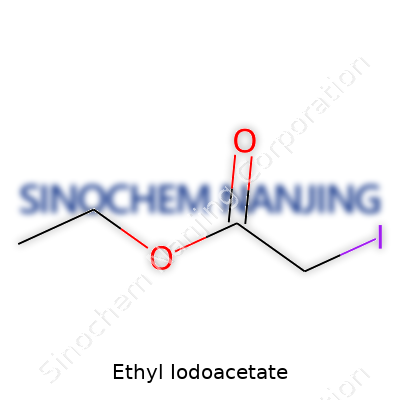
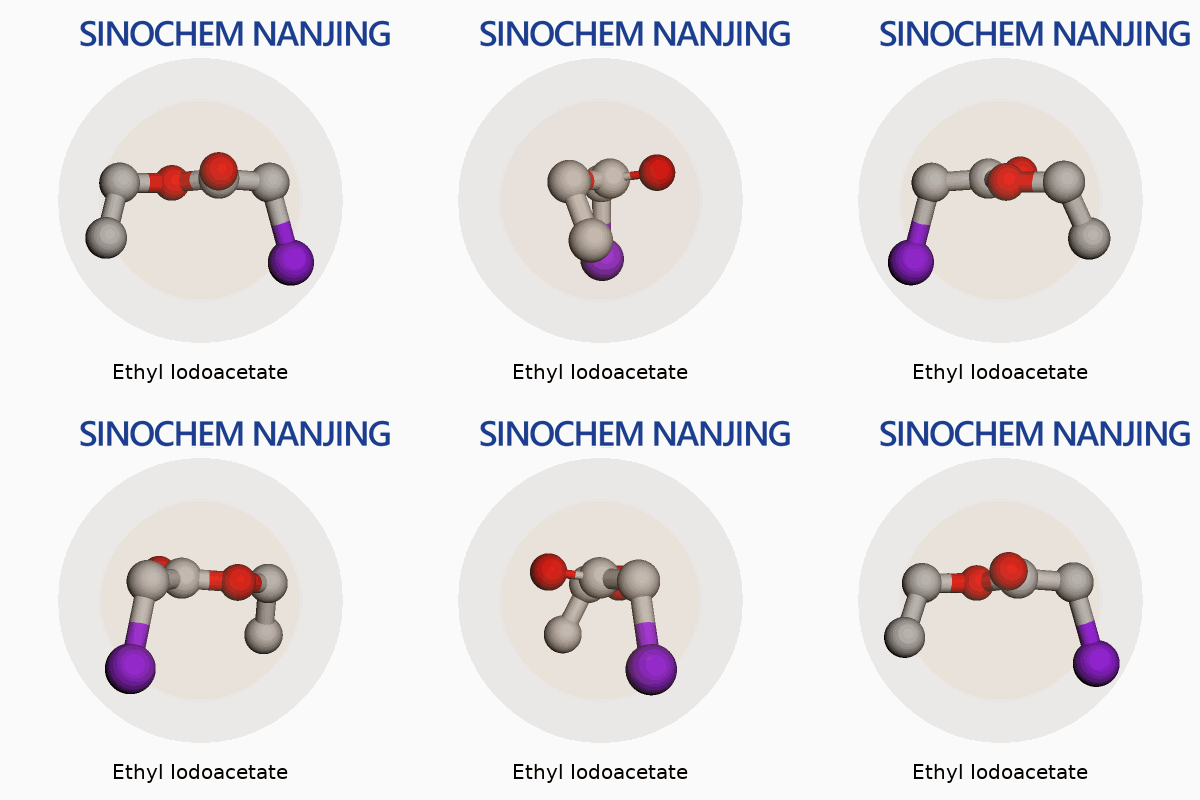
| Names | |
| Preferred IUPAC name | Ethyl 2-iodoacetate |
| Other names |
Iodoacetic acid ethyl ester Ethyl 2-iodoacetate Ethyl monoiodoacetate Ether, iodoacetic acid ethyl |
| Pronunciation | /ˈiːθɪl aɪˌoʊdoʊəˈsiːteɪt/ |
| Identifiers | |
| CAS Number | 623-48-3 |
| Beilstein Reference | 80299 |
| ChEBI | CHEBI:51413 |
| ChEMBL | CHEMBL35800 |
| ChemSpider | 8217 |
| DrugBank | DB03808 |
| ECHA InfoCard | 03c180b4-8e54-40ae-b2f6-4fdc02abcb43 |
| EC Number | Ethyl Iodoacetate" EC Number: "205-543-1 |
| Gmelin Reference | 5781 |
| KEGG | C14140 |
| MeSH | D004991 |
| PubChem CID | 61121 |
| RTECS number | KI1575000 |
| UNII | 51O2T2P3MR |
| UN number | UN3271 |
| CompTox Dashboard (EPA) | 5FC3J7YB5X |
| Properties | |
| Chemical formula | C4H7IO2 |
| Molar mass | 198.04 g/mol |
| Appearance | Colorless to pale yellow transparent liquid |
| Odor | sweet odor |
| Density | 1.968 g/mL at 25 °C |
| Solubility in water | Slightly soluble |
| log P | 0.97 |
| Vapor pressure | 0.085 mmHg (25°C) |
| Acidity (pKa) | 2.86 |
| Basicity (pKb) | 2.45 |
| Magnetic susceptibility (χ) | -75.5×10⁻⁶ cm³/mol |
| Refractive index (nD) | 1.527 |
| Viscosity | 1.728 cP (20°C) |
| Dipole moment | 1.90 D |
| Thermochemistry | |
| Std molar entropy (S⦵298) | Ethyl Iodoacetate: 324.9 J·mol⁻¹·K⁻¹ |
| Std enthalpy of formation (ΔfH⦵298) | -146.3 kJ/mol |
| Std enthalpy of combustion (ΔcH⦵298) | -665.1 kJ·mol⁻¹ |
| Pharmacology | |
| ATC code | V03AB37 |
| Hazards | |
| Main hazards | Harmful if swallowed, causes skin and eye irritation, may cause respiratory irritation, suspected of causing cancer. |
| GHS labelling | GHS02, GHS07 |
| Pictograms | GHS06,GHS05 |
| Signal word | Danger |
| Hazard statements | H302, H312, H332, H315, H319, H335 |
| Precautionary statements | P210, P261, P280, P301+P312, P305+P351+P338 |
| NFPA 704 (fire diamond) | 2-2-2-W |
| Flash point | Flash point: 113 °C (235 °F) |
| Autoignition temperature | 411 °C |
| Explosive limits | Lower: 1.9%, Upper: 12.0% |
| Lethal dose or concentration | LD50 oral rat 185 mg/kg |
| LD50 (median dose) | LD50 (median dose): 35 mg/kg (intravenous, mouse) |
| NIOSH | SQ 8925000 |
| PEL (Permissible) | Not established |
| REL (Recommended) | 200 mg |
| IDLH (Immediate danger) | IDLH: 10 ppm |
| Related compounds | |
| Related compounds |
Methyl iodoacetate Iodoacetic acid Ethyl bromoacetate Ethyl chloroacetate Methyl chloroacetate Bromoacetic acid Chloroacetic acid |



