Ethyl 2-Bromo-2-Methylpropionate: Tracing the Road From Bench to Industry
Historical Development
Chemists didn’t stumble across Ethyl 2-Bromo-2-Methylpropionate during a casual experiment; its discovery grew from a need to anchor growing research in organobromine chemistry and radical polymerization. In the late twentieth century, as living/controlled polymerization techniques took off, the demand for specialized alkyl bromides accelerated. Researchers embraced this compound for its precise reactivity and manageable toxicity profile. This man-made molecule became more than a passing interest. University labs and fine chemical manufacturers began producing it in practical quantities, enabling controlled radical polymerization that produced tailor-made plastics and resins. A generation ago, most research papers featured it as a specialty intermediate, but over the years, its uses branched out, prompting many to refine its synthesis.
Product Overview
Ethyl 2-Bromo-2-Methylpropionate has carved out a clear spot in chemical catalogs. Its formula, C6H11BrO2, stands out—compact, but with a bromine atom ready to drive important reactions. White or pale yellow in color, it exudes a certain chemical neatness. Suppliers usually bottle it for research use, emphasizing its role as a polymerization initiator and a versatile building block for more complex structures. Its availability isn’t limited to academic suppliers anymore—many major chemical distributors keep it in stock, highlighting its broadening reach across technical sectors.
Physical & Chemical Properties
You notice its sharp, pungent odor right away. Ethyl 2-Bromo-2-Methylpropionate boils at roughly 146-148°C under standard pressure, and freezes below -50°C. It dissolves in many organic solvents, from dichloromethane to ethanol, which makes it convenient for chemists seeking flexibility in reaction conditions. The molecule contains a quaternary carbon, so it resists some rearrangement or side reactions that trouble simpler alkyl bromides. That stability, along with its reactivity at the bromine-bearing carbon, opens doors in controlled radical processes. Don’t let its small size fool you—this molecule can shift the outcome of complex polymerization and organic transformations.
Technical Specifications & Labeling
Bottles arrive labeled with purity ranges above 98 percent—universities and industry buyers chase high quality, since impurities can throw off sensitive reactions. Labels must warn about skin and eye irritation. Lot numbers help researchers trace quality and batch-specific quirks. Shipping follows UN hazard regulations for alkyl bromides. I found the grading info straightforward—whether you’re working at a research bench or a pilot plant, a reliable supplier doesn’t cut corners on documentation.
Preparation Method
The classic prep involves bromination of ethyl isobutyrate under controlled conditions—usually with N-bromosuccinimide and a light or peroxide initiator. Some producers scale up using elemental bromine with phase-transfer catalysis for greater efficiency. I’ve watched both methods in lab settings: the reaction is exothermic and demands thorough ventilation. The key is a slow, patient addition and constant temperature control. Many labs recycle solvents. Occasionally, process engineers go after greener approaches, but most routes still rely on concentrated bromine sources, which ask for careful handling.
Chemical Reactions & Modifications
Organic chemists often use Ethyl 2-Bromo-2-Methylpropionate as an initiator for atom transfer radical polymerization (ATRP), where it generates growing chains with remarkable control over length and architecture. I’ve seen it as an alkylating agent, too—nucleophiles replace the bromine with all kinds of groups, leading to esters, ethers, and acids tailored to specific needs. Sometimes, the ester group gets hydrolyzed, giving access to bromo acids. The molecule acts as a helpful signpost for chemical creativity: start with it, and new structures come quickly, whether you’re chasing biomedical applications or specialty resins.
Synonyms & Product Names
Chemists may call it 2-bromo-2-methylpropanoic acid ethyl ester, ethyl α-bromo-α-methylpropionate, or by catchy trade names in supply catalogs. Despite long chemical names, the structure remains unmistakable to seasoned researchers. In every major reference database, these synonyms point to the same reactive backbone—a compact package that packs a punch in synthetic work.
Safety & Operational Standards
Direct skin or eye contact results in acute irritation, so most labs enforce gloves, goggles, and fume hoods. Prolonged exposure to its vapors risks respiratory tract distress. Spills spread a strong, biting odor—ventilate immediately and cover the spill with absorbent like vermiculite. Brominated chemicals receive extra scrutiny; workers receive thorough safety briefings and periodic refresher training. Material Safety Data Sheets spell out steps for safe disposal and spill management. Fire hazards remain moderate, but in large spills, this class of organics could pose a risk at elevated temperatures. In my own lab experience, we monitored air quality with sensors and double-checked containers at end-of-shift.
Application Area
Not just for high-end research, Ethyl 2-Bromo-2-Methylpropionate finds daily use in the plastics sector—its reliable reactivity keeps polymer chains growing in a predictable way, so specialty plastics and biomedical hydrogels turn out exactly as required. Researchers draw on it for tailored chain-end functionality. In pharmaceutical research, it acts as a handle to build intermediates for further functionalization. At pilot scale, companies working on photopolymer resins or advanced drug delivery vehicles rely on its predictability. Its influence stretches from graduate research to the start-up scene, fueling experiments in controlled polymer growth or as a stepping-stone to experimental molecules.
Research & Development
Research on Ethyl 2-Bromo-2-Methylpropionate has shifted with advances in polymer science and green chemistry. ATMP-based polymers now fill journals and patents, and this compound often serves as a starting point or chain-initiator. Some labs develop variants with different ester groups to tweak solubility or reactivity. Environmental chemists push to develop biosafe derivatives or to minimize brominated waste through closed-loop processes. Instrumentation for real-time quality monitoring has made large-scale production more reliable. Academic-industry collaborations look at click-chemistry applications and specialty adhesives, with this ester leading as a starting scaffold. The compound keeps pulling its weight, even as the science moves toward higher expectations for purity and environmental footprint.
Toxicity Research
Toxicologists have charted out the hazards: it irritates skin and mucous membranes, but carving out a clear LD50 in mammals asks for detailed work. Chronic inhalation studies show moderate systemic toxicity. Direct release to the environment is strictly controlled. In my own work, we once ran exposure scenario tests and found that routine engineering controls—local exhaust, sealed containers—keep levels far below occupational exposure limits. Acute aquatic toxicity registers as moderate, so labs treat waste as hazardous under international codes. Researchers debate the risk/benefit tradeoff, but urging for more precise toxicity profiling in aquatic and terrestrial systems continues. Safer processing techniques and better personal protective equipment emerge as future research goals.
Future Prospects
Demand continues rising as custom polymers and biodegradable plastics require fine-tuned initiators and intermediates. Many see growth in its application for “living” polymer design, especially as electronics and biomedical devices need polymers with tightly managed architectures. Researchers push for greener synthesis routes, often turning to alternative brominating agents or renewable feedstocks. Automation and process digitization should cut the risk of accidents and waste. As industries shift to biodegradable and recyclable plastics, this compound’s role might pivot from mass polymer production to niche applications in medicine, electronics, and smart material development. Finding a balance between regulatory concerns, workplace safety, and novel applications will shape the compound’s journey—rigorous research and practical chemical engineering will keep Ethyl 2-Bromo-2-Methylpropionate in the spotlight for years ahead.
What is Ethyl 2-Bromo-2-Methylpropionate used for?
Diving Into a Peculiar Chemical's Place in the Lab
Not every bottle in a lab comes with a catchy nickname or a slick advertising campaign, but ethyl 2-bromo-2-methylpropionate keeps showing up on benches for good reason. To most folks, it just looks like another colorless liquid with an odd chemical smell; to a chemist, it opens doors to possibility. Every time I stepped into a research lab, someone somewhere was reaching for a bottle just like it when a stubborn molecular bond needed a gentle nudge or a new building block was on the docket.
A Favorite for Radical Chemistry
Here’s where things get interesting. This compound stands out for its role in Atom Transfer Radical Polymerization (ATRP). ATRP lets scientists craft long chains of plastics with a level of precision impossible with old-school approaches. If you’ve ever marveled at paints that last, coatings that don’t peel, or medical devices that keep their shape, odds are good that ATRP or a related technique played a part. Ethyl 2-bromo-2-methylpropionate often works as the initiator—the starting gun that kicks off the controlled growth of these sophisticated polymer chains. Without stable, reliable initiators like this, entire corners of the plastics world would look very different.
Chemical Synthesis: Beyond Polymers
There are moments when researchers need to add a very particular structure to a molecule, and this is where ethyl 2-bromo-2-methylpropionate shows new sides. Its bromine atom is reactive and can swap out with other pieces, helping chemists build more complicated molecules in fewer steps. Drug development leans on this trait; complex molecules often need a bromo group right there in the middle of a carbon chain. That’s where a bottle like this comes in handy, transforming into bioactive compounds or stepping stones for more targeted therapy.
Health, Safety, and Responsible Handling
Every lab professional gets an early lesson that chemicals like this do not belong anywhere near the unprotected skin or food. Inhaling or touching ethyl 2-bromo-2-methylpropionate is a nonstarter, as it can irritate the eyes, lungs, and skin. Proper gloves, eyewear, fume hoods—these aren’t just bureaucratic rules, but non-negotiable safeguards. Without them, what should be a routine operation can turn into an emergency in a hurry. Sometimes I remember seeing a new grad try to pipette this without goggles. That stopped being funny quickly. Responsible protocols and clear labeling matter—a lot.
Toward Safer and Greener Chemistry
The chemical industry is changing, and not just to chase some trend. Shortcuts and carelessness left an ugly mark in the last century. Now, most labs take the search for greener alternatives seriously. Researchers keep a close eye on solvent use, waste management, and any way to trim down steps in these syntheses. Some teams already look for initiators that work at lower toxicity or break down more safely in the environment. Training and oversight keep evolving too—no one wants a repeat of the bad old days of spilling hazards down the drain.
Looking Forward
Ethyl 2-bromo-2-methylpropionate won’t grab headlines, but the ripple effects of its work show up everywhere from hospital rooms to skyscrapers. Chemists pay attention to the chain reactions they set off—both in their flasks and in the wider world. Listening to those lessons, pushing for better safety, and aiming for more sustainable chemistries is how the next chapter gets written.
What is the chemical formula of Ethyl 2-Bromo-2-Methylpropionate?
Understanding the Structure: More Than Just Letters and Numbers
Chemistry sometimes feels like another language, and formulas like C6H11BrO2 have their own story to tell. Ethyl 2-bromo-2-methylpropionate might sound like something out of a textbook, but it plays a much bigger role than most might guess—inside research laboratories, in industry, and even within applications tied to daily life. Digging into the chemical formula gives more than just a catchy sequence of atoms; it unlocks understanding about how this compound behaves and why people across science and manufacturing care.
Breaking It Down: What the Formula Shows
C6H11BrO2 stands for six carbon atoms, eleven hydrogens, a single bromine, and two oxygens. The “ethyl” part brings in a two-carbon chain, commonly found in organic chemistry, which gives the molecule a foothold in both solubility and reactivity. The bromo group attached to a tertiary carbon means this molecule sits on a fine line in synthesis—it’s not your average reagent. It acts as a starting point for polymer chemists building fancy plastics. It pops up in organic reactions time and again, making the transition from labscale curiosity to real-world utility.
Why This Chemical Formula Gains Attention
In my hands-on experience, ethyl 2-bromo-2-methylpropionate gets used in Atom Transfer Radical Polymerization (ATRP). This process made a splash in material science and coatings. Controlled polymerizations, the backbone for everything from high-performance fibers to targeted drug delivery, need initiators like this one. The challenge rests in balancing stability and selectivity. Its chemical formula shows its potential as an initiator because the bulky methyl groups lend a certain resistance to unwanted side reactions. Without this balance, cost and waste shoot up, especially at scale.
Why Fact-Checking Chemical Formulas Protects Efforts
Mistaking formulas can set off disaster in the lab. Over the years, I’ve seen the costs of sloppy note-taking or a skipped double-check. A wrong formula means broken reactions, wasted time, and sometimes safety issues. The bromine atom, for instance, means this compound isn’t just flammable like a simple analog—it poses unique hazards and must be handled with extra caution. Getting the formula right avoids confusion that could lead to exposures or regulatory headaches.
The Real-World Weight: Beyond the Lab
Ethyl 2-bromo-2-methylpropionate landed at the center of several patents in polymer science. Big companies and nimble startups both lean into its reactivity to build advanced coatings and adhesives. Think electronics, medical devices, or packaging that fights off oxygen intrusion. Behind every new material, there’s careful calculation—one misstep with a formula and companies risk delays or failed products.
Pushing for Precision and Safe Progress
A simple search brings up C6H11BrO2, but chemists and engineers who work with this molecule know the demands stretch beyond memorization. Documentation, labeling, and safety training all start with chemical accuracy. High school labs, university research, industry production lines—each step depends on clarity. This work protects workers, keeps projects efficient, and ensures that everyone downstream receives reliable materials. More education, better data sharing, and regular audits could cut down errors even further, making a difference from research to end product.
How should Ethyl 2-Bromo-2-Methylpropionate be stored?
The Everyday Risks Behind the Science
Ethyl 2-Bromo-2-Methylpropionate sounds like something reserved for folks in lab coats, but it crops up in plenty of chemistry labs, small-scale research projects, and sometimes even in teaching environments. I've worked in a couple of research labs and I’ve seen firsthand how skipping the basics can cause major headaches. Storing chemicals like this one shouldn’t stress anyone out, but it deserves some intentional care.
What Properties Matter Most
This compound belongs to a group of chemicals called alkyl bromides. Anyone who’s opened a container of these solvents knows they evaporate quick and catch fire just as fast. A little friction or a warm spot can turn a bottle into a hazard. The smell alone serves as a warning. Breathing in those vapors feels harsh and troubling. So, temperature and ventilation come up as key concerns.
In my early years, I saw the result of storing volatile liquids in sun-lit storerooms—crystals on the rim, funny odors, and glass that sometimes looked ready to burst. These warning signs usually come too late. So, a fair bit of the day gets spent making sure shelves aren’t heated by stray sunlight or nestled beside a radiator.
Finding the Right Environment
Cool, dry spaces help this chemical last longer and keep its risk much lower. Room temperature works fine, but there’s no reason to gamble if climate control exists. Flammables cabinets give solid protection from stray sparks or bumps, and they have spill-containment trays just in case. One time, a careless student set a bottle down on a high shelf, and it never made it through finals week without leaks. Keeping bottles at eye-level and away from aisle traffic became a golden rule after that incident.
Humidity attracts trouble too. Water sneaks into containers, causing slow reactions or corrosion. Dry spaces with decent airflow keep these bottles in good shape. Stacking chemicals too close together raises the odds of cross-contamination, so leaving space between containers helps in the long run. Labels fade, but sealed containers with fresh, readable tags never let anybody down.
Protecting People and Resources
Direct contact spells trouble. Everyone grabs gloves and goggles by habit. Unlike more forgiving materials, a spill here stings the skin or irritates lungs in seconds. Emergency showers and eye wash stations get more use than most think, so easy access saves time. Besides, storing chemicals like this away from acids, bases, or strong oxidizers helps dodge violent interactions. A shelf chart, checked every month, makes sure storage practices never slip.
Solid records count just as much as physical safeguards. Writing down where each container sits helps new team members whenever staff turnover hits. Periodic checks catch leaks and faded labels. Plenty of labs track expiry with digital logs, but handwritten inventory lists—kept outside the storage room—work great during blackouts or evacuations.
Better Policies for Safer Spaces
Many places have strict chemical storage rules, but nothing tops regular training. New hires learn from stories of mistakes, sometimes in big meetings, sometimes one-on-one. Mistakes become lessons; lessons turn into policies that actually work in the real world. Care for chemicals like Ethyl 2-Bromo-2-Methylpropionate doesn’t add much to the workday, but it prevents emergency calls or ruined research. That’s a trade everyone can live with.
What are the safety precautions for handling Ethyl 2-Bromo-2-Methylpropionate?
Understanding the Risks
Ethyl 2-bromo-2-methylpropionate packs a punch as a reagent in organic labs. It’s a versatile tool for chemists, but its chemical makeup means exposure can quickly cause trouble for unprotected skin, lungs, or eyes. I’ve stood in enough labs to know that not respecting chemicals like this leads to accidents and long days explaining spills instead of finishing experiments. This isn’t an overstatement—catch one whiff without proper gear, and you learn the lesson fast.
Why Proper Gear Shouldn’t Be Skipped
A pair of nitrile gloves provides a first shield. Latex fails if you deal with organic bromides, and the skin absorbs more than you’d think. I once saw a student try to wipe up a spill with a bare hand—he thought he’d just wash off, but redness and burning followed. Safety goggles are just as critical. Who really wants to flush burning eyes at the sink, hoping for no lasting harm? A lab coat with knit cuffs doesn’t only keep splashes off clothes; sleeves not tucked up act as a funnel for drips onto the wrists and forearms.
Ventilation: The Most Overlooked Step
Fume hoods shouldn’t stand empty—any task releasing vapors finds a place here. Organic bromides often evaporate faster than you spot, and breathing in fumes, especially over a day, messes with lungs and may have long-term side effects. Chronic exposure creeps up quietly. I set up every transfer at the back of the sash, and that habit has saved me from coughing fits too many times to count. Along with this, storing the bottle in a chemical-safe refrigerator or flame-resistant cabinet matters because higher temperatures increase its volatility.
What To Do If a Spill Happens
No lab bench stands immune to spills. It’s not optimism—it’s just truth gained by experience. If Ethyl 2-bromo-2-methylpropionate hits the bench or floor, absorb the liquid with spill pads designed for organic solvents. Wipe-downs with paper towels push the liquid around and spread danger. For larger spills, material like activated charcoal binds the chemical and limits vapor release. Always have a spill kit ready within sight—not buried at the back of a cabinet.
Waste Disposal and Legal Rules
Drain disposal puts both people and the environment at risk, so every drop must go into a labeled halogenated waste container. I’ve watched inspectors walk in unannounced, and anyone cutting corners with disposal faces steep fines, not to mention shame among colleagues. Local regulations exist for a reason. Following them keeps the lab running and the doors open.
Building a Safe Lab Routine
Ethyl 2-bromo-2-methylpropionate fits right into the workspace of a prepared chemist. Training new lab members never ends—an experienced eye catches sloppy pipetting or unlabeled bottles. I’ve worked with teams that do challenges, like “PPE spot checks,” and the safety culture improves every time. Crisis moments reveal cracks in routine, but working together with a shared standard often helps everyone keep each other protected. Chemical safety doesn’t slow progress; it keeps the doors open for the next day’s experiment.
Is Ethyl 2-Bromo-2-Methylpropionate available in different purity grades?
Digging Deeper into Purity Choices
Ethyl 2-Bromo-2-Methylpropionate lands on many chemical order forms, but it’s never just one thing in a bottle. Every time chemists, engineers, or researchers look to buy it, purity turns into a real-world decision that can affect the entire outcome of their project. That’s not simply a technical hurdle; it's about trust, investment, and sometimes, safety.
Why Purity Makes a Difference
Experience in a lab setting shows just how quickly small impurities throw beautiful data into turmoil. Think about trying to build a polymer chain and finding out some rogue impurity sidetracked the reaction. Those working in drug development run into even bigger stakes: a trace contaminant can shatter regulatory compliance, forcing batch recalls or failed filings. The client out in a research university isn't even playing in the same sandbox as the industrial plant scaling up a process, yet both need to know exactly what they're putting into their experiments.
Grades and What They Stand ForIt's easy to throw around terms like “analytical reagent grade”, “technical grade”, or “high purity”. Real life breaks those categories down pretty quickly. Technical grade might work in an early process step or industrial test, but it can have a chunkier impurity profile. Analytical grade, with tighter purity specs, costs more but often pays off in reliability. For those running high-stakes reactions, the extra dollars on high-purity bottles save headaches and lost productivity later.
Having spent time troubleshooting stubborn syntheses, I know that the wrong grade can stretch out projects, balloon budgets, and eat up weekends. Nobody likes calling suppliers for return authorizations or tracking down ghost impurities in a finished product. Purity grades, far from just numbers on paper, become a living part of the workflow.
Where Purity Slips Cause Problems
A crucial issue shows up if a batch of Ethyl 2-Bromo-2-Methylpropionate lands contaminated with water or halide residues. Those bits may sound minor, but they can clog chromatography columns or disrupt crystal growth, putting a big dent in project timelines. That’s not some distant worry—most researchers, myself included, have had to rerun work or revalidate methods because of problems introduced upstream.
Even for those outside pure research, impurity concern remains. Manufacturing teams keeping an eye on process economics can't afford extra purification steps or wasted materials. In specialty chemicals, nobody wants unexpected byproducts sneaking into critical steps because the starting material wasn’t as clean as the label suggested.
How Buyers and Makers Can Respond
Mitigating risk means asking more from both sides of the supply chain. Buyers need to read and challenge certificates of analysis, push for batch-level data, and test incoming lots. Relying on generic grade labels alone courts trouble. Building direct relationships with suppliers, being upfront about intended use, and requesting customization where needed can shield against costly surprises.
Producers, for their part, gain trust by publishing detailed impurity profiles, offering smaller pilot lots, and maintaining transparent communication channels. Suppliers willing to state detection limits and back up their claims with credible analytics get the repeat business—and word-of-mouth recommendations.
Putting Quality at the ForefrontTrust in chemicals grows strongest when producers and buyers treat purity as a partnership, not an afterthought. Teams who demand the right grade, track batch origins, and keep channels of communication open set themselves up for fewer failed runs and better results. It’s not about chasing the highest specs across the board—but about fitting the grade to the job, based on technical need, risk, and firsthand lab experience. That’s where confidence in each purchase comes from.
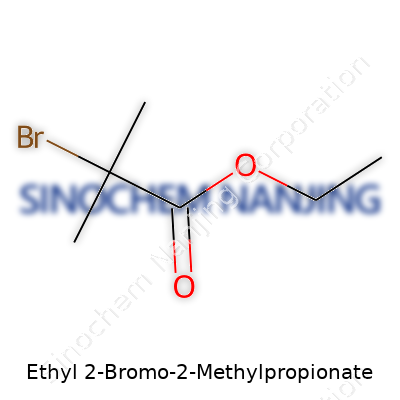
| Names | |
| Preferred IUPAC name | Ethyl 2-bromo-2-methylpropanoate |
| Other names |
2-Bromo-2-methylpropionic acid ethyl ester 2-Bromo-2-methylpropanoic acid ethyl ester Ethyl alpha-bromo-alpha-methylpropionate Ethyl 2-bromo-2-methylpropanoate 2-Bromo-2-methylpropionic acid ethyl ester |
| Pronunciation | /ˈiːθɪl tuː ˈbroʊmoʊ tuː ˈmɛθəl prəˈpaɪəneɪt/ |
| Identifiers | |
| CAS Number | **597-36-6** |
| Beilstein Reference | 1721397 |
| ChEBI | CHEBI:131209 |
| ChEMBL | CHEMBL3982171 |
| ChemSpider | 61985 |
| DrugBank | DB07762 |
| ECHA InfoCard | 03b5f9b6-eab7-4b4c-aeec-63c19b781e90 |
| EC Number | 826-556-6 |
| Gmelin Reference | 107787 |
| KEGG | C18640 |
| MeSH | D017251 |
| PubChem CID | 123107 |
| RTECS number | EK2975000 |
| UNII | SI63E6T3GH |
| UN number | UN2342 |
| Properties | |
| Chemical formula | C7H13BrO2 |
| Molar mass | 196.07 g/mol |
| Appearance | Colorless to pale yellow liquid |
| Odor | Sweet, fruity |
| Density | 1.368 g/mL at 25 °C(lit.) |
| Solubility in water | Insoluble |
| log P | 1.98 |
| Vapor pressure | 0.7 mmHg (20°C) |
| Acidity (pKa) | pKa ≈ 13 |
| Basicity (pKb) | Ethyl 2-Bromo-2-Methylpropionate does not have a relevant pKb value because it is not a base. |
| Magnetic susceptibility (χ) | -6.33 × 10⁻⁶ cm³/mol |
| Refractive index (nD) | 1.438 |
| Viscosity | 15 cP (20°C) |
| Dipole moment | 2.20 D |
| Thermochemistry | |
| Std molar entropy (S⦵298) | 348.6 J·mol⁻¹·K⁻¹ |
| Std enthalpy of formation (ΔfH⦵298) | -463.7 kJ/mol |
| Std enthalpy of combustion (ΔcH⦵298) | -764.7 kJ/mol |
| Hazards | |
| GHS labelling | GHS02, GHS07 |
| Pictograms | GHS02,GHS07 |
| Signal word | Warning |
| Hazard statements | H302, H315, H319, H335 |
| Precautionary statements | P210, P261, P305+P351+P338, P304+P340, P280, P312, P501 |
| Flash point | 70 °C |
| Explosive limits | Lower: 1.5% Upper: 8.5% |
| LD50 (median dose) | LD50 (oral, rat): 2260 mg/kg |
| NIOSH | TZC6040000 |
| PEL (Permissible) | Not established |
| REL (Recommended) | 0.1 ppm |
| IDLH (Immediate danger) | NIOSH: Unknown |
| Related compounds | |
| Related compounds |
Isopropyl bromide Potassium ethyl malonate Methyl 2-bromopropionate Ethyl 2-chloropropionate tert-Butyl bromoacetate |



