Methanethiol: An Honest Look from the Lab Bench to the Real World
Historical Development
Every chemist remembers the first time they crossed paths with methanethiol. The stinging, rotten-egg odor sticks with you—unforgettable, boundary-crossing, relentless. For centuries, nobody really wanted to get close unless absolutely necessary. Early 19th-century scientists, drawn by its unmistakable stink, learned how to separate it from natural sources like petroleum and animal matter. By the mid-1900s, as organic chemistry advanced, researchers isolated methanethiol intentionally, pushing it from a troublesome byproduct to an industrial player. The substance played a humble role in early analytical labs, usually as something you wanted to scrub out of your apparatus. Now, methanethiol finds itself woven throughout industries and academic research, having moved past its reputation as just a smelly annoyance.
Product Overview
Methanethiol, sometimes called methyl mercaptan, often fits into the world of chemicals that get overlooked until they make their presence known—usually by odor. As a colorless gas, it occurs both naturally and artificially. In nature, methanethiol comes from biological processes involving the breakdown of proteins, popping up in everything from marshland to your own digestive system. In industrial settings, companies use it in polymer manufacturing, pesticides, and as a warning agent in natural gas—taking advantage of its powerful smell. It's been crucial in the synthesis of methionine, an amino acid added to animal feed, turning an infamous compound into an essential contributor to the food chain.
Physical & Chemical Properties
Hard to miss on smell alone, methanethiol carries a boiling point just shy of 6°C and remains gaseous at room temperature unless pressurized. It's soluble in water and many organic solvents, mixing easily and slipping through barriers you would expect to hold out heavier chemicals. The thiol group lurking within its structure—just a sulfur and a hydrogen clinging to a single carbon—makes it reactive, especially with oxidizers. That sulfur atom causes real problems for metals, leading to tarnish and corrosion. Flammability adds an extra layer of risk in factories and transportation, so respect for engineering controls comes from bitter industrial lessons.
Technical Specifications & Labeling
If you find yourself handling methanethiol in bulk, you learn to recognize its hazard labeling—skulls, flames, environmental warnings. Transport is never taken lightly, given the flammability and toxicity. Technical spec sheets stress the need for proper ventilation, active monitoring, and sealed equipment. Methanethiol's threshold limit value hovers near one part per million—a small error can mean big consequences. Handling standards haven't changed much over the decades because the chemical won't compromise; exposure still means headaches, nausea, and long-term health risks if not addressed.
Preparation Method
Lab preparation usually involves the reaction of methanol with hydrogen sulfide, a marriage brokered by a catalyst such as aluminum oxide at elevated temperatures. Industrial processes scale this up, feeding massive volumes of gas over engineered beds, wringing out as much methanethiol as possible before it slips away. Each step demands close control over temperature and flow rates, not just for efficiency, but to avoid dangerous escapes or explosions. Some labs still use older batch methods, but most favor continuous flow for both yield and safety.
Chemical Reactions & Modifications
Methanethiol isn't known for sitting quietly. Chemists have a long tradition of pushing it through oxidation to form formaldehyde and sulfur dioxide, sulfoxides, or even disulfides for further applications. Its thiol group makes it ideal for functionalizing other organics, sticking that sulfur exactly where biochemists or materials scientists want it. Methanethiol participates in alkylation reactions and can form thioethers, adding value to pharmaceuticals and specialty chemicals. On the downside, poorly managed reactions mean uncontrolled releases or byproduct generation.
Synonyms & Product Names
While academics might stick with “methanethiol” or “methyl mercaptan,” many workers in the field simply call it “mercaptan,” often contextually obvious among peers. Its catchy abbreviated descriptor, MeSH, pops up throughout industry safety documents and product labels. If you’ve spent enough time in chemical plants, you’ll notice the unique shorthand and know instantly what you’re dealing with—nobody confuses it for methylamine or other volatile organics once you’ve smelled it.
Safety & Operational Standards
Methanethiol counts as both a toxic and flammable material, so working with it demands a mindful approach. Every chemist and plant operator knows the routine—fume hoods, personal protective equipment, monitors set for sulfur compounds. One slip-up lingers in your memory much longer than other lab mishaps. Even with modern detection and ventilation, leaks can sneak up, and a single spark spells disaster. Studies tie chronic low-level exposure to nervous system and respiratory effects. Regulations from agencies like OSHA and the EPA strictly set minimum standards, but workplace culture—sticking to those standards every time—makes the real difference. Automation, regular training, and constant air monitoring come from hard-earned lessons, not corporate policy alone.
Application Area
Beyond its starring role as a warning additive in odorless gases, methanethiol supports agriculture by feeding into synthetic methionine production—essential for modern livestock farming. Pesticide and fungicide manufacturers lean on its sulfur chemistry to knock out plant disease. Once in a while, food scientists venture into flavor chemistry, though they nearly always regret a small spill in a sensory lab—no professional ever forgets cleaning up after that. In the field of plastics, methanethiol helps initiate polymerization reactions, accelerating the production of everyday items. Environmental testing teams use it as a marker for sulfur cycles in soils, marshes, and sewage works, underscoring how chemicals with a shaky public reputation find legitimate value in supporting public health.
Research & Development
Recent years brought new attention to methanethiol as part of the sulfur cycle across ecosystems. Microbiologists studying gut flora track its formation and metabolism, linking it to both health and disease. Without understanding methanethiol traffic in the digestive system, doctors and scientists miss key clues about conditions ranging from colon cancer to chronic halitosis. Analytical chemists develop better sensors, pursuing more accurate detection in trace gas mixtures. Environmental researchers keep tabs on emission control and atmospheric chemistry, hoping to limit methanethiol’s contribution to air quality problems.
Toxicity Research
Methanethiol’s effects on health landed it on regulatory lists decades ago for good reason. Acute exposure symptoms—eye irritation, headaches, nausea—present themselves quickly, making escape or intervention possible if someone recognizes the odor. Chronic exposure brings longer-term worries about neurological effects, and respiratory irritation can spiral for those with preexisting conditions. Current studies push for clearer understanding of low-level, long-duration impacts, especially for workers in agriculture and chemical plants. Researchers keep looking at detoxification routes in mammals and developing treatment protocols for accidental exposure. Nobody wants their legacy to be another chemical-induced occupational disease, so the pressure to clarify risk stays high.
Future Prospects
Methanethiol’s future will follow both regulation and innovation. As industries adapt to tighter air quality standards and green chemistry initiatives, companies develop better capture, conversion, and neutralization technologies. There’s an arms race to create cleaner processes and find uses for waste sulfur—instead of venting it or letting it leach from manure systems, maybe one day facilities will profit from recovery and transformation. Methanethiol’s unique chemistry means continued relevance in materials science, catalysis, and biochemistry. Success depends on balancing utility with control, pushing for systems that keep both workers safe and communities free from unintended exposure. Across academia, industry, and the environment, the journey isn’t over—methanethiol remains a reminder that sometimes the most challenging chemicals force the most meaningful progress.
What is methanethiol used for?
What is Methanethiol?
Methanethiol shows up in news reports from time to time, often described by its signature smell—like rotten cabbage or garlic. The name alone sets off alarms, partly due to safety incidents and partly because people can pick it up even at vanishingly low concentrations. It sits among the smallest molecules containing both sulfur and carbon, with the formula CH3SH. While the odor can clear a room, its applications stretch across industries and provide enough value to keep production running.
Main Uses in the Industrial World
Natural gas producers use methanethiol as a warning agent. By introducing distinct odors to gas, even a tiny leak gets attention before bigger risks can build up. This approach saves lives, and governments require these additives in many parts of the world. Imagine sitting at home and suddenly detecting a sharp, sulfurous whiff from your stove — you’ll check for a leak right away, and gas supply teams count on this reaction.
Oil refineries and plastics manufacturers also rely on methanethiol, sometimes to make other chemicals. It serves as a building block for producing methionine, an essential amino acid. Animals and humans both rely on methionine in diets, so large-scale animal feed operations depend on a steady supply. Synthetic methionine supplements, partly created from methanethiol, help chickens and livestock develop properly.
Role in the Chemical Industry
Beyond direct applications, methanethiol finds a role in creating a long list of products people use every day. Producers often use it to manufacture pesticides, which keeps pests away from crops. With global populations rising and food security a constant concern, every extra bushel harvested matters. Methanethiol-based chemicals support farm yields. The chemical is also used to create jet fuel additives, helping clean up combustion and keep engines running smoothly.
Environmental Impact and Worker Safety
Methanethiol’s strongest challenge involves safety and the environment. Leaks can lead to strong odors and could spark emergency evacuations in neighborhoods near plants. Routine handling puts workers in contact, so chemical plants invest heavily in protective equipment, regular drills, and monitoring sensors. Growing up near an industrial area, I remember how emergency services took odor complaints seriously, sometimes shutting down intersections if levels rose above certain thresholds.
Strict regulations and continuous monitoring technologies make a measurable difference. In 2022, the US Chemical Safety Board reviewed incidents in plants using methanethiol, and their findings showed that proper training prevented worst-case scenarios more than once. Public health depends on these precautions, not just in homes, but for those who work with the chemical daily.
Pushing for Safer and Greener Alternatives
Companies and researchers keep searching for ways to minimize risk. Better leak detection devices now use laser sensors and AI-powered controls for faster reaction times. Some innovators experiment with substitutes or process tweaks, aiming to dial down the amount of methanethiol needed. Public demand plays its part too. People want fresh air and fewer pollution events, forcing industry and regulators to step up safety standards.
Methanethiol will likely remain important for years to come, with new tools and strategies needed to keep its benefits while cutting down real-world risks.
Is methanethiol hazardous to health?
Understanding Methanethiol
Methanethiol, often recognized by its strong, rotten cabbage stench, pops up in both nature and the lab. Folks sometimes cross paths with it near landfills, sewage plants, and pulp mills. Chemically, it forms when organic matter breaks down, either in soil, water, or even inside our own bodies. I’ve spent time working alongside wastewater engineers, and the familiar whiff of methanethiol at treatment plants still sticks in my memory. Its presence alone can clear a room, which says a lot about its potency even before talking toxicity.
Where Exposure Happens
Most people outside of industrial settings won’t handle methanethiol directly. Still, you can inhale small amounts in big cities, especially near industrial zones or garbage dumps. In the food industry, it’s sometimes added in minuscule amounts as a flavoring, though the sharp odor usually blocks much use. Lab techs and plant operators face much more concentrated exposures. The Occupational Safety and Health Administration (OSHA) pays close attention to air quality for this very reason, ranking methanethiol high on their hazard watchlist. NIOSH and OSHA both set a ceiling limit of 10 parts per million for workplace air; that tight cap speaks to real risks from prolonged exposure.
Health Risks: The Science and Human Experience
Breathing in methanethiol can trigger headaches, dizziness, nausea, or irritation of the eyes, nose, and throat. At very high levels, it can mess with the nervous system, cause breathing trouble, and even knock someone out. Hospital case reports from industrial accidents back up these facts; severe exposures have led to fainting and disorientation among workers. I’ve chatted with emergency responders who responded to chemical leaks, and they’ll quickly tell you they don’t linger when methanethiol fills the air. Prolonged contact in poor ventilation raises the stakes. Skin and eyes get irritated quickly, with risk increasing for those already sensitive to chemicals. No long-term studies point to cancer links, but nobody enjoys working where chronic respiratory problems might build up.
Why Methanethiol Matters
It’s tempting to laugh off strong odors as just a bad smell, but methanethiol signals more than discomfort. It reveals underlying problems in waste handling, chemical storage, or industrial process controls. I’ve seen city councils respond to flare-ups of the compound in residential neighborhoods, with residents reporting headaches and sleepless nights. These public complaints spark investigations and sometimes uncover larger environmental spills or old infrastructure failures. Families with asthma or other breathing issues notice fast, adding urgency for action and even relocation in rare cases.
Smart Steps Forward
The good news is industries are getting better at monitoring and containing methanethiol. Companies now install detectors in high-risk areas. Regular training for workers makes a difference; people learn to spot leaks early and use proper ventilation and personal protective gear. Local governments can invest in odor tracking and rapid response teams to investigate public complaints seriously. On the research side, cleaner technology holds promise for breaking down methanethiol harmlessly before it escapes. Preventing exposure depends on a mix of solid regulations, tough enforcement, and a willingness to listen to workers and communities living near high-risk operations.
Living with Chemical Risks
No chemical risk vanishes with a single rulebook. Methanethiol isn’t the most dangerous toxin out there, but it doesn’t take much to disrupt people’s health or quality of life. Smell alerts folks early; it’s rare to miss a leak. That provides a head start, but long-term safety rests on vigilance and teamwork among regulators, businesses, and citizens. If you live or work near a landfill or factory, keeping track of strong odors and reporting them still matters. Transparency from industry and prompt public health follow-ups build trust—and sometimes, spare someone from a trip to the ER.
What does methanethiol smell like?
Experience Meets Chemistry
It’s easy to forget about some of the strange things our noses tell us until one day an odor hits with the force of a slap. Methanethiol is one of those smells. Anyone who has walked past a sewage treatment plant, visited a paper mill, or cracked open a rotten egg knows it—sharp, sour, gasoline-touched, a kind of natural warning. It smells a bit like a whole load of cabbage left to rot, combined with a familiar whiff of skunk spray. This chemical carries quite a punch, even at very low concentrations. My first run-in with it happened in a high school science lab, and nobody in the room could ignore it. Teachers joked that if you didn’t know what it was, you’d definitely want to forget.
Why Does Methanethiol Matter?
There’s a good reason methanethiol triggers such an intense reaction. The nose evolved to flag down compounds that signal danger—poison, spoilage, contamination. Methanethiol is one of those red flags. We don’t call it nose-blindness when it comes to this stuff. It’s also the main ingredient responsible for the stink in decomposing organic matter and the reason smelly gas leaks sometimes get picked up so quickly—utility companies add sulfur compounds that work like a big, smelly alarm system to keep people safe. Methanethiol finds its way into all sorts of places, from nature to industrial processes, to the digestive system of cows and people.
Rooted in Everyday Challenges
A rotten cabbage smell in your kitchen doesn’t just mean a spoiled vegetable. It often signals bacteria breaking down proteins and releasing sulfur compounds. Wastewater plants deal with this constantly, and so do some unlucky car passengers trapped downtown when the wind blows the wrong way. For workers in processing plants or sewage facilities, exposure isn’t a minor irritation—the smell lingers, sometimes making you gag. Repeated exposure may even cause headaches or nausea, showing there’s more to this than simple stinkiness. Science journals have documented acute symptoms from short-term exposure and even more serious effects if someone’s forced to breathe this air constantly at work.
Real-Life Solutions, Backed by Evidence
Dealing with this isn’t just about holding your breath or running away at the first whiff. Industries have to blend technology, training, and regulations to reduce exposure and remain responsible. Respirators and proper ventilation do a lot, but so does the simple act of detection. Installing sensors that can spot sulfur compounds in the air before humans start to suffer works well. One plant in Sweden saw incident calls drop by more than half after rolling out these detectors, according to occupational health records. Cooks and food processors rely on cleaning schedules and careful storage to avoid cross-contamination that sets this gas free. Even in our homes, staying on top of refrigerator cleaning and prompt trash removal keeps the smell at bay.
Understanding the Source
Methanethiol won’t go away any time soon. It’s woven right into nature's cycles. Human noses play a key part, but technology and prevention go further to stop small sniffs from turning into big health risks. Knowing what a strong, sulfurous stink means helped me recognize problems at home and in classrooms. It didn’t fix the problem, but it put me one step ahead in dealing with it. For anyone who smells methanethiol today, the stink serves as a warning, born from a mix of biology, chemistry, and life experience.
How is methanethiol stored and handled safely?
Let’s Talk About Methanethiol: Smelly and Serious
Methanethiol, known for its skunky odor, gets attention for all the wrong reasons. Folks who’ve worked near wastewater plants or natural gas pipelines sometimes joke about its stink, but there’s nothing funny about handling it. This stuff, used in chemical manufacturing, gas leak detection, and even in some pulp mills, packs a punch when mishandled. Its smell can wake up the neighborhood, but the dangers go far beyond the nose.
Immediate Dangers: Flammable and Toxic
Most people don’t realize how flammable methanethiol is until someone waves a safety sheet in their face. It catches a spark faster than dry leaves in July. Exposure can send someone to the hospital with headaches, respiratory issues, and worse. That’s no surprise, considering it shares traits with other volatile sulfur compounds. Just a wisp in the wrong place can create a fire risk, turn the worksite into a hazardous zone, or alert regulators faster than a broken alarm.
Storage Is No Joke
Safe storage calls for grounded, tightly sealed containers. Forget tossing a drum in the corner of a warehouse. Industry advice — and every supervisor I ever met — insists on storing it away from heat, open flames, or sparks. Outdoor storage with shade, secondary containment, and good ventilation beats crowbarring methanethiol indoors, where it can linger. Temperature control matters too; warm rooms or hot days ramp up pressure inside tanks. Double-check pressure relief valves and gaskets, since a single flawed seal can fill the air with rotten egg stench and risk lives.
The Importance of Personal Protective Equipment
Everyone in chemical work gets drilled on PPE, but with methanethiol, it’s even more serious. Not just basic gloves, but chemical-resistant suits, splash goggles, and face shields. Engineers and emergency planners know that one mistake can mean overwhelming vapors. No one wants to discover their mask filter gave out halfway into a cleanup. I’ve seen workers trust their nose to warn them, only to realize the body adapts to smells quickly — you lose awareness before you know it.
Training Isn’t Optional
No manual can replace hands-on drills. When I started in the field, the old-timers hammered three points: know your exit route, have emergency showers operational, and always keep a buddy close. Simulation exercises get everyone familiar with leak response and medical emergencies. Complacency creeps in fast if folks don’t stay up to date. Emergency responders in places like Texas and Louisiana, where big refineries operate, have seen what a small vapor leak can do without quick thinking.
Engineering Controls and Monitoring Matter
One lesson from industrial sites: don’t rely on luck. Ventilation systems, gas detectors, and automatic shutdown systems offer early warnings. Regular inspections find wear and tear before it triggers an emergency. In places with recurring use, fixed gas monitors and alarms allow control rooms to act without waiting for an operator to smell trouble. Most facilities track storage performance with digital logs now, flagging even minor fluctuations in pressure or volume.
Keep the Public Out and Stay Transparent
It’s not just about workers. Storage sites need fencing, warning signs, and restricted access. After a minor incident in my old town, community leaders demanded more details on what chemicals sat nearby. Responsible operators run drills with local fire departments and keep open lines of communication. Information sharing can prevent panic and speed up response if something goes wrong. Trust builds over time, but one bad odor can wreck a reputation.
Improvement Grows with Experience
Lessons stack up in the chemical business. Methanethiol, for all its uses, doesn’t cut corners on safety. Practical training, investment in equipment, careful planning, and respect for neighbors build strong safety records. Folks who handle it with care protect both people and business.
What industries commonly use methanethiol?
A Pungent Tool for Big Jobs
Anyone who has stood near a pulp mill or cracked open a rotten egg has caught a whiff of methanethiol. The smell alone is unforgettable. Still, this compound plays a bigger role in day-to-day life than most people realize. Its presence stretches across a range of industries, each finding unique ways to put this strong-smelling gas to work.
Pulp and Paper: Clearing the Way for White Sheets
Pulp mills rank among the top users of methanethiol. Giants like International Paper and Georgia-Pacific put this compound to use during wood pulping. Methanethiol acts as a reducing agent, helping break down the lignin that binds wood fibers together. Without it, that pile of wood chips would never turn into polished notebook paper. The industry keeps a close watch on air emissions because of health and environmental concerns. According to the U.S. Environmental Protection Agency, pulp and paper facilities must control and capture the compound to prevent air pollution and complaints from communities living nearby.
Petrochemicals: Finding Leaks Before Disaster Strikes
Methanethiol steps in as an odorant, especially for natural gas companies. Natural gas has no smell—impossible to detect leaks without help. Utility companies add methanethiol in trace amounts so customers can smell a leak right away. This simple move prevents accidents and saves lives every year. In my own experience, a routine safety drill at a local plant circled around methanethiol’s distinct smell—everyone in the group recognized it instantly, which proves that safety tools don’t always look high-tech.
Specialty Chemicals: Building Blocks Behind the Scenes
Some companies use methanethiol as a basic ingredient when crafting more complex sulfur-based chemicals. These go on to serve industries from agriculture to pharmaceuticals. Methyl mercaptan plays a part in making methionine, an essential amino acid added to chicken and livestock feed. This supplement helps healthy growth in animals and supports food supply chains. Chemical engineers have figured out how to extract, store, and transform methanethiol carefully, as its toxicity demands careful handling every step of the way.
Wastewater Treatment: Smell Signals for Trouble
Methanethiol acts both as a nuisance and an early warning flag in wastewater facilities. As organic matter breaks down, methanethiol can be released—a sure sign that sulfur compounds are forming somewhere under the tanks. Operators rely on that sharp, rotten odor to track down problems before they get worse. Covering tanks and investing in better ventilation equipment remains essential. Innovations such as activated carbon filters have shown real promise at trapping sulfur compounds and improving air quality for workers and neighbors alike.
Possible Solutions and Looking Ahead
Despite its usefulness, methanethiol’s strong odor and toxicity bring health and environmental challenges. Built-in leak detection and stricter air filtration technologies have become a priority for companies with large emissions. Community monitoring, regular safety training, and smart engineering have become the real gamechangers here. For both industry workers and everyday people living near these plants, early action makes a difference. Factoring in both health risks and operational needs shows the real-world balance industries must strike—turning a noxious gas into a valuable, well-managed resource.
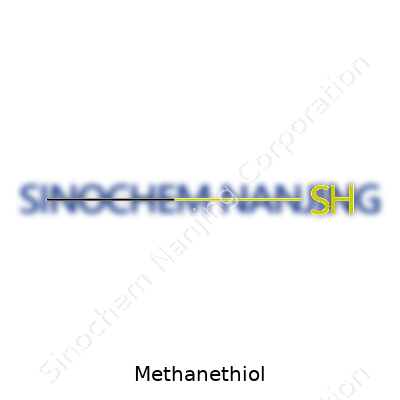
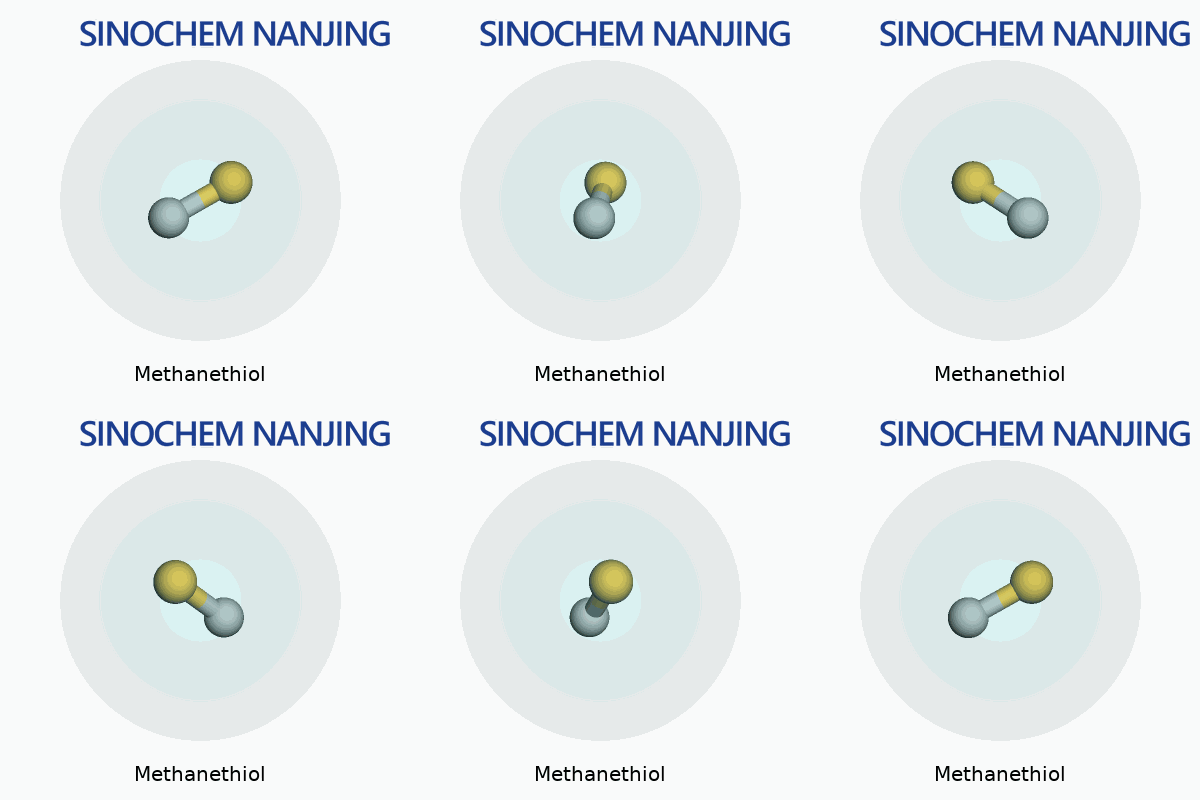
| Names | |
| Preferred IUPAC name | Methanesulfane |
| Other names |
Methyl mercaptan Thiomethanol |
| Pronunciation | /ˌmɛθ.eɪˈθaɪ.ɒl/ |
| Identifiers | |
| CAS Number | 74-93-1 |
| Beilstein Reference | 1209221 |
| ChEBI | CHEBI:16183 |
| ChEMBL | CHEMBL1366 |
| ChemSpider | 834 |
| DrugBank | DB02774 |
| ECHA InfoCard | 100.001.007 |
| EC Number | 200-822-1 |
| Gmelin Reference | 652 |
| KEGG | C00255 |
| MeSH | D008754 |
| PubChem CID | 10039 |
| RTECS number | PY6300000 |
| UNII | N4828L5J2Z |
| UN number | UN1064 |
| CompTox Dashboard (EPA) | DTXSID3039244 |
| Properties | |
| Chemical formula | CH4S |
| Molar mass | 48.11 g/mol |
| Appearance | Colorless gas with a distinctive putrid smell |
| Odor | Unpleasant, garlic-like, rotten cabbage |
| Density | 0.867 g/mL at 25 °C |
| Solubility in water | soluble |
| log P | 0.79 |
| Vapor pressure | 3630 mmHg (at 25 °C) |
| Acidity (pKa) | 10.4 |
| Basicity (pKb) | 3.8 |
| Magnetic susceptibility (χ) | -29.6×10⁻⁶ cm³/mol |
| Refractive index (nD) | 1.385 |
| Viscosity | 0.0126 mPa·s |
| Dipole moment | 1.60 D |
| Thermochemistry | |
| Std molar entropy (S⦵298) | 148.65 J·mol⁻¹·K⁻¹ |
| Std enthalpy of formation (ΔfH⦵298) | -21.0 kJ·mol⁻¹ |
| Std enthalpy of combustion (ΔcH⦵298) | -483.6 kJ·mol⁻¹ |
| Pharmacology | |
| ATC code | V03AB38 |
| Hazards | |
| GHS labelling | GHS02, GHS04, GHS06, GHS07, GHS08 |
| Pictograms | GHS06,GHS04 |
| Signal word | Warning |
| Hazard statements | H225, H301, H331, H311, H400, H410 |
| Precautionary statements | P210, P260, P271, P272, P273, P280, P284, P301+P310, P304+P340, P305+P351+P338, P320, P330, P377, P370+P378, P391, P403+P233, P403+P235, P405, P501 |
| NFPA 704 (fire diamond) | 4-2-0-SA |
| Flash point | -18 °C |
| Autoignition temperature | 470 °C (878 °F; 743 K) |
| Explosive limits | 3.9–21.8% |
| Lethal dose or concentration | LC50 rat 675 ppm/4H |
| LD50 (median dose) | LD50 (median dose): Rat oral 220 mg/kg |
| NIOSH | PA8200000 |
| PEL (Permissible) | PEL = 10 ppm (parts per million) |
| REL (Recommended) | 0.5 ppm |
| IDLH (Immediate danger) | IDHL: 150 ppm |
| Related compounds | |
| Related compounds |
Methanethiol disulfide Dimethyl sulfide Ethanethiol Methanol |



